Monday, November 28, 2022
The Godmother's Secret by Elizabeth St.John presents a new angle to the Princes in the Tower story
The author’s heroine – Lady Elysabeth (St.John) Scrope, who narrates – is someone who would have had a front-row seat to key events and was linked by blood, marriage, or promise to nearly all the major players. Yet I hadn’t heard of her. It feels like her story has been hiding in plain sight all these years, just waiting for someone to discover it. The Godmother’s Secret is a wonderful novel: well-paced, richly characterized, and infused with the author’s theme of how loyalties can influence choices and divide families.
The wife of Yorkist baron John “Jack” Scrope of Bolton Castle, Elysabeth is also the older half-sister of Lancastrian heiress Margaret Beaufort. In the year 1470, Henry VI, last king of the Lancastrian branch of the Plantagenets, asks Elysabeth to witness the birth of, and stand as godmother to, the newborn York heir, thus “placing a cuckoo in the York nest,” as Margaret puts it. Though wary of this undesired responsibility, Elysabeth takes her holy oath to safeguard young Ned's welfare very seriously, even as it sets her against family members and even her husband. Her narrative charts the complex, dangerous path that follows the rise and fall of Fortune’s wheel, as various individuals from the York and Lancaster contingents challenge one another, often with subterfuge, and seek ascendancy.
Besides Elysabeth herself, one of the few who holds the York princes’ welfare close to her heart, there are many other finely delineated characters. The incessant scheming of Margaret Beaufort, with her unique blend of piety and maternal ambition, proves incredibly vexing for her older sister. That said, Elysabeth feels protective towards Margaret, who was forced to marry too young and remains devoted to her only son, Henry Tudor. The love story between Elysabeth and husband Jack unfolds in a moving way, even as she weighs whether to assert her will and flout his wishes. This is also the rare story that fleshes out the personalities of the young princes, Ned and Dickon. The era was an uneasy time for royal children.
This epic novel moves quickly, though it’s worth slowing down to savor the language (“men may fight across hill and dale, but the women draw their own York and Lancaster battle lines across planked and herb-strewn chamber floors”). Elysabeth has multiple secrets to keep, including the Princes’ fate, but another is the existence of her own sovereynté – the agency to decide things for herself. Her determination to chart her own path underlies her actions in this well-researched and engrossing book.
The Godmother's Secret was published in October; thanks to the author for sending me a Kindle copy. See also my earlier reviews of the author's Lydiard Chronicles: The Lady in the Tower, By Love Divided, and Written in Their Stars.
Tuesday, November 22, 2022
Mademoiselle Revolution by Zoe Sivak presents the Haitian and French Revolutions from a new viewpoint
In 1791, Sylvie de Rosiers, eighteen and beautiful, is the cosseted only daughter of a coffee planter in Saint-Domingue, a French colony in the West Indies. Her father’s status means she was born free, unlike the Black mother she never knew, and she disdains politics in favor of standard feminine pursuits. But the island’s enslaved people are rising in rebellion. After she sees Vincent Ogé executed for his racial justice activism, Sylvie realizes her complicity in the horrific system.
The action scenes are strikingly written as Sylvie and her half-brother Gaspard narrowly escape being killed and, eventually, sail to Paris, where they stay with their kindly aunt. Among their neighbors are the Duplay family and their soon-to-be-famous tenant, Maximilien Robespierre. As Sylvie’s mind expands through their conversations, she falls into an affair with Robespierre’s confidante and mistress, Cornélie Duplay, though admires Robespierre deeply and can’t get him off her mind.
It takes audacity to insert a fictional character amidst the French Revolution’s major players, but Sivak manages to pull it off. That said, Sylvie can be reckless—leaving the house in pearls with impoverished sans-culottes nearby isn’t the brightest move—and the prose occasionally lands heavily. The scope is impressively wide-ranging as Sylvie, from her unique vantage as a woman of color, observes the shifts between different political factions and realizes her power and its limitations.
Cinematic details unfold on the page as violent discord plays out on Paris’s streets and Sylvie ponders the similarities and differences between the two revolutions. Thought-provoking and passionate, this story marks Sivak as an author worth watching.
Mademoiselle Revolution was published by Berkley in August (I reviewed it for the Historical Novels Review, from a NetGalley copy).
Thursday, November 17, 2022
Historical novel showcase for University Press Week 2022, part 2
Monday, November 14, 2022
Celebrating University Press Week 2022 with a historical novel showcase (and resources for potential authors)
Happy University Press Week! Held this year on November 14-18, this annual celebration recognizes the excellence and innovations in university press publishing. The event is sponsored currently by the Association of University Presses, which revived it in 2012, meaning it's now in its 11th year. University presses are known for publishing the latest in scholarly research via monographs and journals. Authors and readers may not realize, though, that many university presses are also active publishers of fiction for a general readership. The historical novels from these presses often have a regional focus or common theme, such as Western fiction or international fiction in English translation. That said, university presses don't chase the latest trends, so you'll find topics and settings treated here that may not be picked up by large commercial publishers. As such, they make an integral contribution to the historical fiction landscape.
Interested in considering a university press for your historical fiction manuscript? Please see Finding a Publisher at the AUP site, and look especially at the subject area grid to see which member presses publish fiction. You typically won't need a literary agent, but if you have one, they can assist with the process. Also see Who can be published by a university press? While authors of scholarly monographs may need a terminal degree, this varies by genre and doesn't usually apply to fiction.
Now on to the books! Below are eight new and upcoming historical novels from university presses. This is the first of two posts.


Douglas Bauer's The Beckoning World, just out from the University of Iowa Press, tells the story of a coal miner who achieves his dream of playing major-league baseball in the early 20th century, against the background of the Spanish influenza pandemic. (Published November 2022)


Columbia University Press has published translations of many works of literature from Asia. Translated into English by Pao-fang Hsu, Ian Maxwell, and Tung-jung Chen, Puppet Flower by Yao-Chang Chen dramatizes the Rover incident of 1867, a political crisis ignited by the wreck of an American merchant ship in southern Taiwan and subsequent acts of retaliation, as seen from multiple viewpoints. (To be published April 2023)
Patricia L. Hudson's debut novel, Traces, reveals American frontier history from the viewpoints of Rebecca Boone, wife of Daniel, and two of their daughters, Susannah and Jemima, combining detailed historical research with logical supposition. Read more about it in the author's interview for The Southern Review of Books and in the Historical Novels Review's New Voices column. It was published by the University of Kentucky Press's Fireside Industries imprint, which focuses on stories of rural America and Appalachia. (Published November 2022)
Saturday, November 12, 2022
Review of Olesya Salnikova Gilmore's The Witch and the Tsar, myth-inspired historical fantasy set in 16th-century Russia
Daughter of Mokosh, an ancient earth goddess, Yaga is a skilled healer who helps clients who visit her hut in the remote Russian woods. Though centuries old, she appears no more than thirty and misses living in a community, but she’s learned her lesson about involving herself in human affairs. That is, until Anastasia Romanovna, the tsaritsa, calls upon their longtime friendship. Anastasia has been poisoned, and after healing her, Yaga returns to Moscow and the royal court to safeguard Anastasia’s life—and finds herself facing characters with whom she has a painful history, and who may be manipulating Tsar Ivan to their own dreadful purposes.
Set amid the political turmoil of 16th-century Russia, a woefully underutilized setting in fiction, The Witch and the Tsar incorporates impressive world-building—the necessary scaffolding for an immersive experience in both historical fiction and fantasy. The novel is about as ideal a crossover between the genres that it’s possible to achieve, with vivid details on colorful period clothing, palace décor, and the brooding taiga as well as otherworldly rituals and capricious divine beings. Though packed with bursts of action, the story is quite thoughtful and paced accordingly.
The overall tone is dark, though Yaga’s chicken-legged hut, Little Hen, is adorable and lightens the mood on occasion. Yaga can be overly naïve, given her true age and experience, though Gilmore succeeds in showing her emotional growth and the full range of her mortal and divine natures. This deep-dive into Russian history and folklore presents a rich cultural panorama.
The Witch and the Tsar was published by Berkley/Ace on September 20; I reviewed it for November's Historical Novels Review. The novel will be published in the UK by HarperVoyager in December.
Tuesday, November 08, 2022
The historical novels of Irish writer Eleanor Fairburn are available again
Eleanor Fairburn (1928-2015), whose real name was Eva (Lyons) Fairburn, was a highly regarded historical novelist and mystery writer. She wrote under various pseudonyms; you can find a lengthy biography of her, with details on her work, at the National Museum of Ireland. Within the historical fiction genre, she specialized in re-creating the lives of medieval and Renaissance women who had unfairly been forgotten and whose actions were frequently deemed scandalous in their time.
Most of her historical novels were never published in the United States, and I only became aware of them because I'd been collecting fiction about royalty. Novels about royal women were in vogue in the UK in the 1960s-1980s, and among them, Fairburn's novels stand out for their deft portraits of complex heroines and the circumstances they lived through. The books weren't easy to find (many were published before I was born), and some never appeared on the secondhand market because they were so rare.
In 2010, I wrote a review of Fairburn's The Golden Hive for this blog, as part of one of the reading challenges that were so popular then. Its subject is Nesta of Deheubarth, an 11th-century Welsh noblewoman who became a mistress of England's King Henry I. The Golden Hive was published in 1966, and the writing still had a freshness that drew me in. If you follow Elizabeth Chadwick on social media, you'll know that she's also written a novel about Nesta (The King's Jewel) that will be out in April 2023, and I look forward to seeing her take on the character.
After my post went up, I was excited to get an email from the author herself. She thanked me for the review, said it was a nice surprise to find it, and that she was hoping to interest her publisher in reprinting. I wrote back that I hoped that would happen. Fast forward twelve years, and the other day I came upon new editions of Fairburn's novels on Amazon, published by the Fairburn Estate, with new introductions and beautifully designed covers. Thanks to the rise of indie publishing, more readers today will be able to easily obtain her books without going through used book dealers.
Their subjects are as follows. Links go to the Kindle editions, but they're also available in paperback.
The Cecily Quartet, photo at top, is a series of four novels about Cecily of York, mother of Edward IV and Richard III during England's War of the Roses, imagining her life from childhood through old age. The note on Amazon says the series was republished for its 50th anniversary.
Crowned Ermine reveals the life story of heiress Anne of Brittany, who became twice queen of France in the 15th century.
Fairburn's The Green Popinjays is about Lady Lucia de Thweng, termed the "Helen of Cleveland." The author's first historical novel, it delved into the life and motivations of a woman of notoriety from 13th-century Yorkshire who married three times, divorced one of her husbands, and had several children out of wedlock. Read more about Lucia at the Cleveland & Teesside Local History Society.
The White Seahorse covers the life of Graunya "Grace" O'Malley, Irish pirate queen during the Elizabethan era.
and The Golden Hive is detailed as above. Three of Fairburn's mysteries written as Catherine Carfax, with settings ranging from Victorian England to then-contemporary France and Ireland, are also newly available. If you decide to pick any of these up, please let me know your thoughts!
Sunday, November 06, 2022
Serena Burdick's The Stolen Book of Evelyn Aubrey tells a Victorian tale of family mystery and delicious revenge
In 1898, after ditching her stolid fiancé, Evelyn dives headlong into a passionate marriage with William Aubrey, a writer basking in the success of his recent debut novel. She expects their life at his ancestral home, Abbington Hall, to center on their shared literary interests—Evelyn is penning her own book—but a bout of writer’s block transforms William into a cold, jealous creature who steals her manuscript and publishes it under his own name.
Much later, in 2006 Berkeley, California, Abigail Phillips finds a photograph of her late mother with a young man—the father she knew nothing about—and learns he was the great-grandson of Evelyn Aubrey, a redhead with Gibson Girl looks who she strongly resembles. Abigail travels to England to learn about the mysterious Evelyn, who vanished the same day William’s scandalous final book was published.
As with many multi-period novels, the historical thread is the more compelling, with twists aplenty and a period-accurate theme of sexist double standards. “It still surprises him that I am his equal, and it surprises me that he would think of me as anything less,” writes Evelyn about her new husband in her journal—words that hit home.
To give her a deeper character arc, Burdick makes Abigail a directionless woman in her early thirties (she seems much younger), and Abbington Hall’s current residents accept her story with astonishing ease. Abigail’s journey toward maturity is ultimately touching, and the mystery of Evelyn’s fate unfolds in both timelines with growing suspense. This gothic-tinged novel tells an empowering tale of betrayal and delicious revenge.
The Stolen Book of Evelyn Aubrey was published by Park Row/HarperCollins in the US on November 1 (I reviewed it for November's Historical Novels Review).
Tuesday, November 01, 2022
Gill Hornby's Godmersham Park takes a witty, observant look at Jane Austen's family
Hornby’s protagonist is Anne Sharp, who arrives at the comfortable estate of Godmersham Park in rural Kent in 1804 to become governess to Fanny Austen, eldest daughter of Jane’s brother Edward. Anne is brand new to this role; she was raised as the beloved only daughter of a respectable man who mysteriously cast her off after her mother’s death, leaving her only a small annual income of £35. (We learn why as the novel progresses. Although little is known of the historical Anne Sharp’s background, Hornby makes a logical guess at the reason.)
Perplexed by her unexpected circumstances, Anne, aged 31, needs to walk a fine line with her exacting new mistress, Elizabeth Austen. “Miss Sharp” must be intelligent but not too clever; she must be proper and respectable without attracting male attention. Most of all, she should avoid all excesses, including – ironically – any enthusiasm for female education: “You are not here to turn my daughter into a bluestocking,” Mrs. Austen tells her. “Oh, but of course—” she replies, though we learn that “Anne could think of little else finer.”
Although Anne must tamp down her passionate nature with the large Austen brood – as Fanny informs her, new babies arrive with regularity – Hornby brings Anne’s complex persona alive for readers, who can delight in the keen observations and wry remarks she isn’t allowed to speak aloud. Anne’s status as not-quite-family, not-quite-servant makes her an outsider in nearly all respects, which gives her a uniquely perceptive viewpoint on household goings-on. As a boy, Edward Austen had the advantage of being adopted by wealthy distant relatives, and his fortune, when compared to his siblings, creates an unbridgeable divide that Hornby describes with crisp, elegant detail: “The Austens, she now saw, were of the same family and yet two distinct classes. She was witnessing here both sides of the fairy tale.”
![]() |
| author Gill Hornby |
Brimming with the perennial Austen themes of social class and the precariousness of women’s financial situations, Godmersham Park presents a richly evoked Georgian atmosphere, nuanced family dynamics, and numerous quotable lines of witty dialogue. The novel is a treasure for all lovers of character-centered historical fiction, both Austen devotees and not.
Godmersham Park is published in the U.S. by Pegasus Books today, and this review is part of the author's blog tour with Austenprose PR.
PURCHASE LINKS
AMAZON | BARNES
& NOBLE | BOOK
DEPOSITORY | BOOKSHOP | GOODREADS
AUTHOR BIO
Gill Hornby is the author of the novels Miss Austen, The Hive, and All Together Now, as well as The Story of Jane Austen, a biography of Austen for young readers. She lives in Kintbury, England, with her husband and their four children.
TWITTER | FACEBOOK | BOOKBUB | GOODREADS
Saturday, October 29, 2022
New historical novels on my wishlist for winter and spring 2023
Which ones are you interested in, or are there others you're eagerly anticipating? I'm not sure when I'll get to these since my review schedule is packed over the next few months, but I hope to read them eventually. For a more comprehensive look at historical fiction for 2023, please see the Historical Novel Society forthcoming title listing or this Goodreads list.
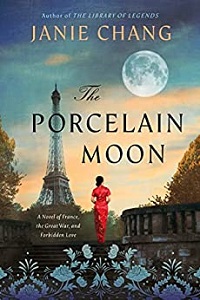
Janie Chang's newest novel (after The Library of Legends, which I enjoyed very much) takes her to WWI-era France, showing a Chinese woman's friendship with a Frenchwoman during a time of great strife, and what happens after secrets from the past are revealed. William Morrow, Feb. 2023. [see on Goodreads]
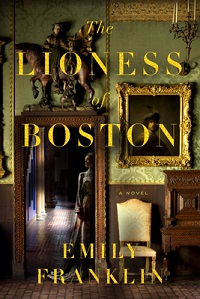
The "Lioness of Boston" in Emily Franklin's novel is outspoken Gilded Age philanthropist and art collector Isabella Stewart Gardner, centering on how she became a leading light of the Boston art scene. Godine, April 2023. [see on Goodreads]
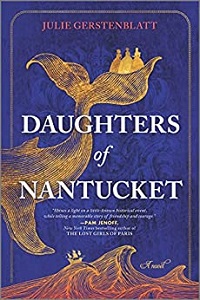
Another New England-set historical novel, and a debut for Gerstenblatt: the intertwining stories of three women of Nantucket as the island's great fire breaks out in 1846. The trio includes a captain's wife, a free Black merchant, and astronomer Maria Mitchell. MIRA, March 2023. [see on Goodreads]
The tagline of "Three women. Five centuries. One secret" gets me very curious! An Englishwoman, an ancestress of the novel's contemporary heroine, was put on trial for witchcraft in the early 17th century. Three women are linked by the gendered violence they've all faced, and perhaps by something else. I sense this will appeal to readers of Sarah Penner's The Lost Apothecary as well as fans of witch-themed fiction. St. Martin's, March 2023. [see on Goodreads]
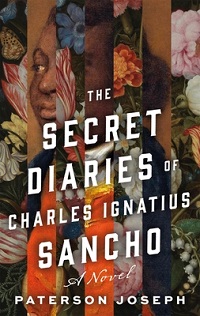
Last week, the author was a presenter at Library Journal's latest Day of Dialog sessions for librarians. Charles Ignatius Sancho is a historical figure, a man who was born on a slave ship and became, among other achievements, an abolitionist, merchant, writer, and the first Black man to vote in Britain in the 1770s. The publisher describes his fictional diaries as "for fans of Bridgerton," which may be true, although this sounds like a very different (less fluffy, for one) sort of read. Henry Holt, April 2023. [see on Goodreads]
Because this title was postponed from the fall, there's been a lot of buzz about it on social media already. Kennedy's debut novel was a gothic feast, so I'm expecting the same of this new book, in addition to a deep dive into regional color and lore. It's described as a multi-period tale set partly in the Depression-era Ozarks that follows three women linked by family and an evil presence. Lake Union, Feb. 2023. [see on Goodreads]
I do enjoy Gothic sagas, and this one has classic elements: a supposedly cursed old mansion in Victorian England, a governess, creepy night-time noises, and creepier secrets. But the heroine in Lumsden's novel is a recent widow rather than a naïve ingenue, and I look forward to seeing what other tropes are upended. Dutton, Feb. 2023. [see on Goodreads]
Kate Morton's novels are auto-buys for me (she's among my favorite authors, and though they only appear every few years, they're worth waiting for) so of course I had to list her upcoming book here. Set mostly in Australia, Homecoming moves between contemporary times and 1959 as a journalist investigates a notorious, decades-old tragedy. Mariner, April 2023. [see on Goodreads]
Set in the British-ruled Caribbean following the Emancipation Act of 1834, this debut novel follows a courageous woman from a Barbados plantation in search of the five children who were sold away from her during slavery. As with Paterson Joseph's novel, above, Shearer was a speaker at LJ's Day of Dialog. [see on Goodreads]
Another of the debuts on this list, Kai Thomas's novel also takes place in the 19th century and covers a lesser-known part of North American history: the story of the Black and Indigenous people whose life stories played out along the Underground Railroad in the U.S. and Canada. Viking, Jan. 2023. [see on Goodreads]
Verble is a literary historical fiction writer and Pulitzer finalist (for her debut, Maud's Line) who's an enrolled citizen of the Cherokee Nation. In Stealing, her fourth novel, she tells the story of a Cherokee child sent to live at a Christian boarding school, the harsh treatment and abuse she endures, and her determination to break away. Important history retold as fiction. Mariner, Feb. 2023. [see on Goodreads]Monday, October 24, 2022
Philippa Gregory's Dawnlands, third in her Fairmile series, continues her 17th-century family saga
Having risen from poor servant to respectable London matriarch, the now-elderly Alinor is a wise, knowing presence. Her brother Ned, who despises monarchical rule, returns from Boston with a courageous young Pokanoket woman he rescues from enslavement. Unsurprisingly, he takes Monmouth’s side. Livia Avery, a truly irritating character, continues her inveterate scheming as lady-in-waiting to James II’s queen.
From a moonlit march through the Somerset countryside to a Barbados sugar plantation’s brutal conditions, the sense of place is particularly strong. As in all good multigenerational sagas, the story—lengthy but never dull—offers the pleasures of seeing a family expand and flourish; Alinor’s great-granddaughters from Venice are becoming significant characters. The ending signals more to come.
Dawnlands will be published by Atria/Simon & Schuster in November, and I'd submitted this review for Booklist's Oct. 15th issue.
- It is odd to think of Alinor, a woman in her late sixties here, as having great-grandchildren nearly of marriageable age, and I had to do some thinking about whether the math worked out. I believe it does, or can, when you consider how young they all were when she and her descendants had children.
Thursday, October 20, 2022
Unnatural Creatures by Kris Waldherr takes a fresh, revelatory look at the women from Frankenstein
Reading Frankenstein and its characters isn’t strictly necessary before beginning Kris Waldherr’s stellar companion novel/tribute, Unnatural Creatures, but you’ll gain greater appreciation for the author’s accomplishment the more prior knowledge you have. (Disclaimer: I hadn’t read the original but took advantage of a summary found online.)
Unnatural Creatures – the title has several meanings – homes in on the perspective of three women who were secondary characters in Shelley’s novel. Caroline, Victor Frankenstein’s devoted mother and the wife of one of Geneva’s syndics (city officials), worries about her family’s future. Elizabeth Lavenza, Caroline’s exquisitely beautiful ward, has been raised alongside Victor and, out of love and gratitude for being rescued as a child, knows that she’ll marry him after she’s grown. Fate steps in, however, and Elizabeth find her loyalties divided when her affections turn in a different direction. The third viewpoint is that of Justine Moritz, a disabled servant Caroline takes in after saving her from an abusive mother.
This is no thinly derivative work of fan fiction but a fully realized historical novel that takes advantage of the tensions in the setting of late 18th-century Geneva, as revolutionary unrest spills over from Paris. By drawing the spotlight away from Victor and toward the women in his life, we gradually view evidence for the monster's creation. This amplifies the sense of brooding dread. He lurks in the background – sensed, perhaps glimpsed in shadow, but initially unseen by our protagonists until the terrible truth is made clear.
Further details about the plot are best left for you to discover on your own, save that Waldherr adds considerable dimension to characters from the original work that will have you considering it, and them, in a fresh way going forward. Electrifying and creepy, with considerable insight into societal roles and expectations for women, Unnatural Creatures is a perfect read for the spooky season.
Unnatural Creatures was released by Muse Publications this month, and thanks to the author for sending me a PDF.
Thursday, October 13, 2022
Review of Harlem Sunset by Nekesa Afia, second in the Harlem Renaissance mystery series
Things should be looking up for Louise: besides her job, she just moved in with her girlfriend, Rosa Maria Moreno, and loves dancing the night away in a bright red dress and heels. But despite having solved the Girl Killer case, Louise remains haunted by its resolution. Also, after being kidnapped as a teenager, she had saved herself and her fellow victims and still deals with the resulting fame and trauma.
Afia presents a credible portrait of a young 1920s-era Black woman striving to overcome PTSD and reclaim her life. Then Louise’s situation becomes more troublesome. On the morning after her 27th birthday celebration, Louise awakens on the floor of the Dove next to her friends, with one of the girls she’d rescued years ago—who she’d just met again the night before—stabbed to death alongside them. To the cops, Rosa Maria appears guilty, so Louise turns detective to clear her lover’s name.
The pace is snappy, the historical atmosphere cleanly evoked without excessive detail. As Louise ponders a motive, she combs through the dead woman’s past as well as her own.
This novel works better as a character-centered crime novel than a traditional amateur sleuth tale, since the mystery plot gets digressive and has some implausible aspects. Louise’s friends and family members are an intriguing bunch with realistically drawn relationships, though, so much so that I find myself eager to pick up Dead Dead Girls to see them again—even knowing whodunit.
Harlem Sunset was published by Berkley in August, and I'd reviewed it for August's Historical Novels Review.
Friday, October 07, 2022
Jess Kidd's The Night Ship takes an innovative approach to a 17th-century maritime disaster
A parallel story depicts Gil, also nine, who comes to stay with his cantankerous fisherman grandfather on Beacon Island off Australia’s west coast, the site of the Batavia shipwreck, in 1989. Both children are inquisitive, motherless misfits with active imaginations. While Mayken explores the lower decks in male disguise, worried about a reported monster, Gil’s presence inflames an ongoing feud with another family.
Tension runs high in both tales, which are closely interwoven. There are whimsical, even funny moments, but physical and psychological horrors flourish in this well-researched, spellbindingly dark and folklore-infused novel as the plot advances. As one character opines, “The greatest shame of humankind is the failure of the strong to protect the weak.” Recommended especially to Alma Katsu’s fans.
The Night Ship is published this month by Atria/Simon & Schuster, and I reviewed it for Booklist's Sept. 1 issue.
Some other notes: When this book arrived as an assignment, I was a little nervous, since the historical event it's based around is... pretty horrific. The wreck of the Batavia is terrible enough, but things get worse from there (see more at Wikipedia, but be alert to potential spoilers). But I am glad I read the book, since the approach the author took was very creative, and each of the timelines pulls equal weight. Even though the protagonists are children, the book isn't aimed at that age group. There are hints at background events in the story that only adult readers are likely to catch and understand. And if you're looking for a creepy, atmospheric read for the spooky season, this will fit.
Tuesday, October 04, 2022
Heather B. Moore's In the Shadow of a Queen introduces Queen Victoria's rebellious daughter Princess Louise
“Nothing is private when you are the daughter of England’s sovereign,” writes Heather B. Moore in her biographical novel about Princess Louise, succinctly stating her heroine’s predicament and illustrating the difficult path she navigates as she gingerly moves out of Queen Victoria’s shadow and into a role that offers greater fulfillment.
Sadly, Louise’s childhood is dominated by her father Prince Albert’s early death and her mother’s stifling control and refusal to emerge from mourning. Each of Victoria’s unmarried daughters, in turn, is expected to serve as her personal secretary, a role she thinks Louise is too excitable and strong-willed to handle. Louise’s few friendships are supervised, and her associations with outsiders strictly limited.
A good part of the novel involves the husband hunt, a challenging task since there are few good options. Moore nimbly sketches in the political background that overshadows Louise’s choices (many potential fiancés are objectionable to either the Danes or the Prussians, whose families Louise’s older siblings married into, and who are in a territorial dispute). Also, the Queen doesn’t want her to reside abroad. Louise finds the whole process embarrassing, and it’s clear why that is. How could anyone possibly be themselves while dating – to use a modern term – under the view of multiple chaperones?
The standout scenes are those where Louise asserts her independence: perfecting her sculpting abilities to the point where she wears down her mother’s objections to further training; stepping from her carriage into the halls of the art school; daring to visit physician Elizabeth Garrett at her home and pose questions about women in medicine. Queen Victoria’s sense of royal dignity is such that, when Louise does get engaged, she demands that her future husband call her “Princess Louise” all the time – even in private! Louise is her own woman, though, and knows that’s not the type of marriage she wants.
![]() |
| author Heather B. Moore |
The novel is published by Shadow Mountain Publishing today, October 4th, and my review is part of the blog tour with Austenprose PR (I read it from a NetGalley copy).
AMAZON | BARNES & NOBLE | BOOK DEPOSITORY | BOOKSHOP | GOODREADS
AUTHOR BIO
Heather B. Moore is
a USA Today best-selling and award-winning author of more than
seventy publications, including The Paper Daughters of Chinatown.
She has lived on both the East and West Coasts of the United States, as well as
Hawaii, and attended school abroad at the Cairo American Collage in Egypt and
the Anglican School of Jerusalem in Israel. She loves to learn about history
and is passionate about historical research.
Friday, September 30, 2022
Martha Conway's The Physician's Daughter follows an ambitious mid-19th-century career woman
While Vita Tenney is a lively character, living up to her name, she isn’t anachronistically feminist. She strives to win her father’s approval with her obvious intelligence and devotion to science, and it’s heartbreaking to witness him cut her down. Even worse, he accuses her of trying to replace her brother: Freddy, one of the hundreds of thousands of Union soldiers who died in the Civil War.
Knowing she’ll need money and a man’s support to achieve her goal, Vita works out a secret arrangement with a would-be suitor: Jacob Culhane, a war veteran with plans to start a business. The idea is that their marriage will be in name only, but with their growing attraction, that may not last. Also, in an era when a woman’s dowry automatically becomes her husband’s when she marries, Vita needs Jacob to keep his word.
Full of little details on clothing, pastimes, and customs, Martha Conway’s novel whisks readers away to a long-ago time that somehow doesn’t seem so distant because the characters and their struggles are so relatable and timeless: Vita’s uphill battle to be taken seriously in a world that devalues female intellect, and Jacob’s efforts to surmount mental trauma, since he had been held captive in the Andersonville prison camp. We also see the path chosen by Vita’s mother, Marie, who tamped down her own scientific pursuits and found more socially acceptable outlets for them. Generations of women with stifled ambitions. Quotes from period sources start off each chapter, and they’re simultaneously amusing and sad. Freddy, though he lives only in others’ memories, has a notable presence. Even Vita’s father earns sympathy, since there are clues his mind is no longer what it was.
Vita grows throughout the book, discovering that to succeed in medicine, people skills and empathy are just as important as anatomical knowledge. She hadn’t counted on that. Learning how to listen, she realizes, is key. Although the novel lacks flashiness (not a deficit in my view), it’s replete with the richly colored emotions of ordinary people striving for a place in their changing world. This is a novel worth owning in print, too, since the physical book is gorgeous.
I reviewed this book from a personal copy, and the review forms part of the blog tour with Historical Fiction Virtual Book Tours. The Physician's Daughter was published by Zaffre in the US on September 1st.
Tuesday, September 27, 2022
Interview with Alana White, author of The Hearts of All On Fire, a mystery of 15th-century Florence
One day while reading National Geographic Magazine, I happened upon an article about the assassination plot to murder Lorenzo and Giuliano de’ Medici on a Sunday morning during Mass in Florence Cathedral in 1478. At the time, the Medici family were the leaders of the most powerful political faction in Florence. One brother was killed, one escaped in a most dramatic way. Since I’ve always loved reading historical fiction, I looked for the book with this amazing event at the heart of the story. I couldn’t find one—so, I determined to write it myself.
The more research I did into the time and these fascinating people, the more hooked I became. Lorenzo and Giuliano de’ Medici, Sandro Botticelli, Leonardo da Vinci, and my protagonist, Guid’Antonio Vespucci, a lawyer at the time and a bone deep Medici family supporter, were exact contemporaries. Threading together their stories has been equally challenging and enlightening.
Your first mystery with Guid’Antonio Vespucci featured the esteemed lawyer in his middle years. What inspired you to set this next volume further back in his past?
At the end of the first book, The Sign of the Weeping Virgin, Guid’Antonio is appointed ambassador to Rome. Since this is, in fact, what happened, the story resolves with him going there. I did not want to take the series to Rome—I wanted us to remain in Florence. I feared I had painted myself into a corner, but then realized I could go back five years to 1473 and stay in the City of Flowers. This offered all kinds of wonderful possibilities. For one thing, I could bring back to life the characters I had fallen in love with while writing Weeping Virgin, people who, unfortunately, fell victim to the assassins in the Cathedral. Speaking of the assassination, by retreating a few years, I could show that infamous plot as it begins to swirl around Guid’Antonio while he goes about his daily life and his investigations.
As in The Sign of the Weeping Virgin, in the new title, The Hearts of All on Fire, Guid’Antonio finds himself looking into solving two different crimes – which lead him into many corners of the city and into dark territory. I enjoyed all the details of the setting and the gradual disentangling of both mysteries, but it couldn’t have been simple to plot out. Why do you find yourself gravitating towards writing novels of such scope and complexity?
This is an absolutely wonderful question. I think it comes from the many connections pulling at Guid’Antonio. As I say, these are real people; a lot of research has been done about them all. Renaissance Florence is a rich tapestry, and it is also a minefield. I can’t write about Guid’Antonio without writing about his friends; Lorenzo de’ Medici, for one, strides across a huge stage. These are mysteries, so there must be a crime, one that hits Guid’Antonio close to home, so that we care about him as he untangles the who, how, and why, while protecting those he loves and moving up the ladder of power in Florence.
Then, too, since he is a lawyer, he has court cases—this is his job, his employment. Though I managed to avoid having a court scene in Weeping Virgin, in Heart he does have a big day in court, one I wanted to reflect the tragedy of betrayal by those who should love us against the theme of hope in the end. I wanted the primary mystery and the court case to dovetail and eventually come together. This also provides my “hero’s moment,” when Guid’Antonio fights for truth and justice, digging into and baring his soul to take a personal stand in court for someone who has absolutely no power.
And no, this was not simple to plot out. Many days I wanted to tear my hair, trying to figure out how I would poison one person at a table of five men and manage to kill my intended victim in the midst of the most popular festival day of the Florentine year. I drew that trestle table with five plates on it many times over, working out the logistics. It is really a matter of making connections along with Guid’Antonio as he enters the arena of piecing things together; as he says at one point, “an untended glance here, a slip of the tongue there.” Guid’Antonio is always paying attention—something the reader may not realize until the story’s end. I enjoy working with this time in history. Guid’Antonio has no DNA samples to consult, no firearms residue. He has himself and his wit. (And he can be a little sneaky.)
Several dogs are part of the plot of the novel, including Orsetto, Guid’Antonio’s adorable puppy. What interested you in this theme?
As a pet-lover myself, to me, it seems natural that Guid’Antonio would have a dog. As I designed the plot, I realized Orsetto, or Little Bear, could serve a real purpose in the story. In this instance, it is two-fold: Guid’Antonio is in his late thirties and not yet a father. He has no heir. In Florence at this time, this would have been a real concern for him. He has a lot of love to give and he gives a lot of love to Orsetto. At the same time, Guid’Antonio must experience a tremendous loss—or at least, temporarily. Orsetto provides that vehicle (but never fear. I don’t mind offering the spoiler that his puppy boy is fine in the end.) I also hope Guid’Antonio’s love for his dog reflects the kind of man he is without me pointedly saying that in the story.
What aspects of this novel did you enjoy researching the most? Did any subjects turn out to be especially difficult to dig into?
First, one of my supporting characters is a woman physician. I am so delighted I could create a woman doctor and stay true to the 1400s. This was possible thanks to two excellent works of nonfiction, The Renaissance Hospital, by John Henderson, and Doctors and Medicine in Early Renaissance Florence, by Katherine Park. Their work enabled me to bring Dottoressa Francesca Vernacci and the world of 15th-century medicine in Florence to life. From them I learned there were at least two women doctors in Florence.
![]() |
| Guid'Antonio Vespucci |
As for especially difficult—I don’t know what I would do without Renaissance Italy scholars. I simply could not ignore the fact that Guid’Antonio is an esteemed lawyer. But what kind of cases would he handle? What punishments were deemed appropriate for various crimes? Again, several books paved the way (for example, Criminal Justice and Crime in Late Renaissance Florence by John Brackett). I’m currently writing Book III, which involves a tricky inheritance case—one that leads directly to the animosity fueling that Cathedral assassination. In my scenario, Guid’Antonio handles the court decision favoring the Medici family. I have found one excellent article written about that decision—and it is so complicated, I plan to contact the fellow who wrote it to request his help in slicing through it for the reader. I have found that these scholars love to engage.
What attracts you to the historical mystery genre?
Historical fiction has always been my favorite genre. As a youngster, I devoured books like The Man in the Iron Mask and Ivanhoe. Later, I was drawn to the Ellis Peters’s Brother Cadfael mysteries set in medieval England. They have been an inspiration to me. I also especially like the more recent C. J. Sansom Matthew Shardlake series, along with S. G. MacLean’s Damian Seeker. The Shardlake novels are especially textured, and The Seeker is my kind of guy.
What has your experience with publishing with Atmosphere Press been like?
Working with this hybrid press has been wonderful in every way. The staff are friendly and immediately responsive to my every question, no matter how small. I find the fact they usually get back to me within the day amazing. And their covers are lovely. Florence Cathedral is in the background on the Weeping Virgin cover; their designer researched how the Cathedral actually looked in the 1400s to be certain his rendering was correct. At my suggestion, they added Guid’Antonio’s mastiff to that cover. And then for Hearts, at my request they included his little dog, Orsetto, who is a curly-haired Lagotto Romagnolo. In every instance, Atmosphere Press goes above and beyond for their writers. Finding them has been a blessing.
Thank you, Alana!
Find more about the author and her novels at her website, www.alanawhite.com.