Showing posts with label bibliographies; visual previews. Show all posts

Friday, June 13, 2025

The latest trend in historical fiction: the 1960s

Has everyone come around to the realization that novels written now and set in the '60s are considered historical fiction?  Even more, this tumultuous era is the hottest thing in the genre, with themes zeroing in on civil rights, the counterculture movement, women's empowerment in the workplace and at home, and the Vietnam War.  One of my guest contributors had called this, over a decade ago, and if you haven't read Richard Sharp's engaging essay "The Sixties: The New Frontier for Historical Fiction," I think you'll find it rings just as true today.  "There are many shelves to fill," he wrote (in 2014) about the scarcity of fiction that grappled with the complexity of the era. Now, it seems, an increasing number of authors are beginning to do so, recreating the fabric of the times for readers who didn't live through it (as well as those who did).  The fourteen novels below focus on women's experiences, generally speaking. Needless to say, many social issues from the '60s are still very relevant.

In the Family Way by Laney Katz Becker

In 1965, a cast of suburban women struggles with complex personal and family issues, with unexpected changes arising after a pregnant teen moves in with a Jewish couple and their family, in order to help out after they learn they're expecting a second child.  Harper, June 2025.


LA Women by Ella Berman

Friendship, jealousy, competition, and betrayal form the backdrop to the complicated relationship between two female writers in the star-studded atmosphere of 1960s Los Angeles.  Berkley, August 2025.


The Book Club for Troublesome Women by Marie Bostwick

Members of book club for suburban housewives in early '60s Virginia awaken to the empowering possibilities of feminism after reading and sharing thoughts about Betty Friedan's groundbreaking and controversial new book, The Feminine Mystique. Harper Muse, April 2025.
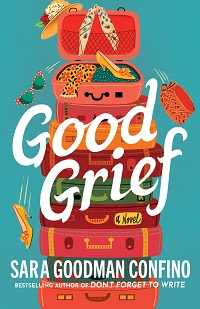

Good Grief by Sara Goodman Confino

After Ruth Feldman overstays her welcome at her daughter-in-law's home, the two women, both widows grieving their late husbands, struggle to get along but may find a way of moving forward in quietly playing matchmaker for the other.  Gently humorous family-centered fiction set in 1963.  Lake Union, August 2025.


One Last Vineyard Summer by Brooke Lea Foster

Summer by the water on sun-kissed Martha's Vineyard: what could be more relaxing?  Not so much for a Columbia grad student who returns home at her mother's request and uncovers old family secrets; a split-time novel (1965 and 1978). Gallery, July 2025.


On Isabella Street by Genevieve Graham

Graham, a bestselling Canadian novelist, sets her latest novel in '67 Toronto and overseas in Vietnam as two women living in the same apartment building deal with personal, political, and social turmoil in the city they call home. Simon & Schuster Canada, April 2025.


The Song of the Blue Bottle Tree by India Hayford

In this novel of survival and resilience, set in 1967, an independent young woman who can see ghosts returns to her long-estranged ancestral home in Arkansas, meets up with a Vietnam vet, and finds herself unexpectedly craving interpersonal connections. Kensington, March 2025.


Etiquette for Lovers and Killers by Anna Fitzgerald Healy

Promoted as "a love letter to uncivilized behavior," Healy's debut novel, set in 1964, features a young woman in sleepy small-town Maine who stumbles upon a series of domestic mysteries that soon escalate into serious trouble. Sounds fun.  Putnam, July 2025.


People of Means by Nancy Johnson

A young college student in Jim Crow-era Georgia and her daughter, a professional woman in 1992 Chicago, decide what risks to take in the interest of racial justice.  William Morrow, February 2025.


Confessions of a Grammar Queen by Eliza Knight

The illustrated cover art for Knight's new historical has a cool vibe. The sexist, male-dominated publishing industry in 1960s New York may have met its match in copyeditor Bernadette Swift, who strives to become a CEO.  Sourcebooks, June 2025.


Once You Were Mine by Elizabeth Langston

In this dual-period family drama set in 1968 and the present day, a modern genealogical researcher looking into her mother's family tree uncovers generations-old secrets in a small North Carolina town.  Lake Union, February 2025.


These Heathens by Mia McKenzie

Doris Steele, a Black teenager in 1960s Georgia who's shocked to realize she's expecting a baby, travels to Atlanta with her former teacher for an abortion and has her eyes opened wide to experiences that would be considered scandalous back home.  Random House, June 2025.


Bees in June by Elizabeth Bass Parman

There may be a bit of magic in this tale of self-discovery and hope featuring a grieving mother in an abusive marriage in small-town Tennessee whose world opens up after she begins employment as a cook at a local diner.  Set in 1969. Harper Muse, September 2025.


Wayward Girls by Susan Wiggs

Each of the six teenage girls in Wayward Girls was confined to the Good Shepherd Catholic reform school in 1968 Buffalo, New York, for different reasons, and forced to work in the institution's laundry. Can they band together to pursue justice and set themselves free?  William Morrow, July 2025.

Thursday, April 28, 2022

Twelve intriguing historical fiction debuts for 2022

In the publishing world, debuts command a lot of attention. Media outlets appreciate hearing about new voices and learning what these authors bring to their chosen genre and to literature in general. Readers get introduced to new authors whose careers may be worth following. With this in mind, below are twelve works of historical fiction written by first novelists, with settings ranging from medieval times through the 20th century.  (Look out for a subsequent post focusing on second novels.)


The Hacienda by Isabel Canas

Promoted as Mexican Gothic meets Rebecca, The Hacienda is suspenseful Gothic fiction set around a (literally) haunted house in 1820s Mexico, at the time of the country's war for independence. Berkley, May 2022.  [see on Goodreads


Beheld by Christopher M. Cevasco

Christopher Cevasco, former publisher of the historical-speculative magazine Paradox (I was a longtime subscriber), debuts with Beheld: Godiva's Story, a dark re-imagining of the legend of Lady Godiva (Godgyfu) and her naked ride through the town of Coventry in the 11th century. Lethe Press, April 2022. [see on Goodreads]


Theatre of Marvels by Lianne Dillsworth

Theatre of Marvels is Lianne Dillsworth's debut about a young mixed-race actress from London's East End confronting issues of identity and violence against women in Victorian times. Harper, April 2022. [see on Goodreads]


Woman of Light by Kali Fajardo-Anstine

Kali Fajardo-Anstine's first novel Woman of Light is described as a multigenerational western saga about an indigenous Chicano family and their ancestral stories, set in the 1930s and earlier; the heroine, Luz Lopez, is a tea-leaf reader who sees visions of those who came before her. One World, June. [see on Goodreads]


Lessons in Chemistry by Bonnie Garmus

Bonnie Garmus's debut is currently on the NYT bestseller list, an impressive feat! Lessons in Chemistry takes on 1960s-era misogyny with sly humor via the tale of a scientist, Elizabeth Zott, who becomes the star of a cooking show and develops an avid following.  Doubleday, April 2022. [see on Goodreads]


The Book of Everlasting Things by Aanchal Malhotra

Aanchal Malhotra's debut is a multi-layered novel about art, politics, and cross-cultural romance, set against the backdrop of the struggle for Indian independence and the subsequent Partition in the 1930s-40s. Flatiron, December 2022. [see on Goodreads]


The Tobacco Wives by Adele Myers

The Tobacco Wives by Adele Myers delves into the lives of the bigwigs in North Carolina's tobacco industry in the '40s. A young seamstress notices increasing health problems among their wives (her clients) and faces a difficult choice; should she speak up? William Morrow, March 2022. [see on Goodreads]


I Am Not Your Eve by Devika Ponnamballam

The lead title from UK publisher Bluemoose for 2022, Devika Ponnambalam's debut novel takes the historical figure Teha’amana, the young teenage bride of painter Paul Gauguin in late 19th-century Tahiti, seeing events from her viewpoint. A story of identity, art, and colonialism. Bluemoose, March 2022. [see on Goodreads]


The Whalebone Theatre by Joanna Quinn

This coming-of-age epic spans from the post-WWI period through occupied France in WWII and follows a girl and her eccentric family on a large Dorset estate as she grows up and finds her own place in the world. Knopf, October 2022.  [see on Goodreads]


Mademoiselle Revolution by Zoe Sivak

The French Revolution and Reign of Terror are seen from a new angle in this debut which features a biracial heiress from Saint-Domingue (later called Haiti) who flees violence in her home country and travels across the globe, only to be engulfed in another revolution. Berkley, August 2022. [see on Goodreads]


Briefly, A Delicious Life by Nell Stevens

An interesting premise: in Mallorca in the 19th century, when writer George Sand and her lover Chopin  visit in the hopes he'll recover his health, another presence encounters them: the ghost of a young woman who died in the 15th century, and who falls in love with Sand (who can't see her). Scribner, July 2022. [see on Goodreads]


Pandora by Susan Stokes-Chapman

Secrets surrounding an ancient Greek vase spill over into Georgian London when Pandora "Dora" Blake, a would-be jewellery designer, investigates the vase following its arrival at her uncle's antique shop. Harvill Secker (UK), January 2022. [see on Goodreads]

Friday, February 19, 2021

24 new and forthcoming historical novels in honor of Black History Month

Looking for some intriguing historical reads to add to your TBR piles?  February is Black History Month, and while many of these books are forthcoming later this spring, summer, or fall, the gallery below should give you reading ideas throughout the rest of the year.  With settings spanning the previous few centuries, these novels center Black voices, present vibrant characters, and reveal many stories previously untold in historical fiction. They're from a mix of established authors and talented newcomers. Links for each novel go to its Goodreads page. Some of these titles have been featured on the blog before but are worth mentioning again.


Nekesa Afia's Dead Dead Girls (Berkley, June) opens a new mystery series set in 1920s Harlem, while WWII fiction fans will want to glom onto Kaia Alderson's Sisters in Arms (William Morrow, Aug.) focuses on members of the "Six Triple Eight," the all-Black battalion of the Women's Army Corps and their notable service overseas. Denny S. Bryce's Wild Women and the Blues (Kensington, March) is an exciting multi-period story set in Jazz Age Chicago and contemporary times, featuring a talented dancer. Artist, novelist, and poet Barbara Chase-Riboud is perhaps best known for her historical novel Sally Hemings, from 1979; her latest, The Great Mrs. Elias (Amistad, Aug.), is the first novel about Hannah Elias, a wealthy Black woman from early 20th-century America. Stacy D. Flood's The Salt Fields (Lanternfish, Mar.), a novella, follows a man on his train journey from South Carolina to a new life up north, and The Conductors (Mariner, Mar.), Nicole Glover's historical fantasy debut, introduces Hetty Rhodes, a former conductor on the Underground Railroad, in her crime-solving career in Philadelphia after the Civil War.


Kaitlyn Greenidge's Libertie (Algonquin, Mar.), set during Reconstruction, takes as inspiration one of the first Black women physicians in America. Set during the same timeframe in Georgia, The Sweetness of Water by Nathan Harris (Little, Brown, July), another debut, centers on two brothers, hoping to earn enough money to head north to find their mother, who are hired to work on a white farmer's land. The Civil Rights movement is the focus of Suzette D. Harrison's The Girl at the Back of the Bus (Bookouture, Feb.), which alternates between 1955 Montgomery, Alabama, and the present. An infant girl's kidnapping in 1930s Harlem prompts an investigation in Karla FC Holloway's historical mystery Gone Missing in Harlem (TriQuarterly, Apr.)  Ladee Hubbard's The Rib King (Amistad, Jan.), set in the early 20th century, incorporates a tale of how racist iconography is used to sell food products, rib sauce in this case, and how this exploitation played out among those affected.  When Stars Rain Down by Angela Jackson-Brown (Thomas Nelson, Apr.) takes us to small-town, Depression-era Georgia with the story of a young Black woman coming of age during a time when the KKK is wreaking havoc in her community.


The debut novel from acclaimed poet Honorée Fanonne Jeffers, The Love Songs of W.E.B. Du Bois (Harper, May) investigates one family's journey in Georgia across two centuries. From the queen of African American romance, Beverly Jenkins' latest, Wild Rain (Avon, Mar.) is the love story between a female rancher in 19th-century Wyoming and a man slated to interview her for a Black newspaper. Sadeqa Johnson's Yellow Wife (Simon & Schuster, Jan.), set in the mid-19th century, recounts the tale of a young woman hoping to be granted her freedom but who finds herself returned to slavery and working in a notorious Virginia jail (based on a true story). Robert Jones, Jr.'s The Prophets (Putnam, Feb.) is getting a lot of buzz for its lyrical portrait of the love between two enslaved men on a Mississippi cotton plantation. Situated in the same Southern locale as her Mama Ruby series, Mary Monroe's Mrs. Wiggins (Kensington, Mar.) takes place in Depression-era Alabama and follows a determined woman who engineers a supposedly perfect life until secrets start unraveling. Bethany C. Morrow's So Many Beginnings (Feiwel & Friends, Sept.)called "a Little Women remix" in the subtitle, tells the story of four Black sisters — you can guess their names — growing into young women in the Freedmen's Colony of Roanoke Island during the US Civil War. 


Latest in Walter Mosley's Easy Rawlins historical crime series, Blood Grove (Mulholland, Feb.) takes place in Vietnam-era southern California, circa 1969. In The Personal Librarian (Berkley, June), bestselling novelists Victoria Christopher Murray and Marie Benedict team up to reveal the life of Belle da Costa Greene, librarian for J.P. Morgan in early 20th-century NYC, who passed as white to move up in her career field. Vanessa Riley has two historicals out this year: first Island Queen (William Morrow, July), unveiling the story of Dorothy "Doll" Kirwan Thomas, born into slavery, who became an entrepreneur, major Caribbean landowner, and royal mistress. An Earl, the Girl, and a Toddler (Kensington, Apr.) continues her Rogues and Remarkable Woman multicultural Regency romance series. Dawnie Walton debuts with The Final Revival of Opal & Nev (37 Ink, Mar.), described as an oral history of an early '70s rock band featuring a proto-Afro punk female artist and white English folksinger. And Harlem Shuffle (Doubleday, Sept.), by two-time Pulitzer winner Colson Whitehead, focuses on a family man in '60s Harlem who gets pulled into crooked activity and finds himself living a double life.

Which books are on your personal wishlists?  Please leave recommendations for these and any others in the comments.

Thursday, December 12, 2019

Looking for a historical novel set in Paris around the WWII years?

If so, you have plenty to choose from. Most are set during the war, with some extending to just before or after.  These covers have a noticeable element in common, too.


Wednesday, August 28, 2019

'Tis 50 Years Since: 1969 in historical fiction

The Historical Novel Society's definition of historical fiction includes novels set at least 50 years before the writing, or those written by someone who wasn't alive at the time they were set. If you follow these guidelines, current novels taking place in 1969 are now considered historical fiction. So, for any readers who think the '60s are too recent to be "historical"... well, next year, the 1970s will start getting included under that umbrella (!!).

The final year of the tumultuous 1960s saw a number of iconic events, including Woodstock, the moon landing, the continued Vietnam War, the Manson murders, Chappaquiddick, and the Stonewall riots. It's also the year I was born, so I'm soon to become historical myself. For that reason, I'm especially interested in historical fiction set in '69. These novels re-create the world I was born into but didn't personally experience.

Below are ten historical novels taking place during 1969 (including some published a year ago or more; this is cheating a bit).  I'm looking forward to reading them.

And for further reading:: author Richard Sharp's guest post, The Sixties: The New Frontier in Historical Fiction, is one of my favorite essays on this site. It does a great job of putting in perspective why it's important for authors to continue examining the '60s and writing novels set back then.


America Was Hard to Find by Kathleen Alcott

Alcott covers events of the Cold War era (one plot strand takes place in '69) in her story of a couple, their brief affair, their son, and their involvement in major socio-cultural events. I love the cover design. Ecco, May 2019. [see on Goodreads]


Adamson's 1969 by Nicole Burton

A young Englishman attends American high school in '69 and gets caught up in many events of the day/year. Apippa, Oct. 2018. [see on Goodreads]


The Girls by Emma Cline

Searching for a place to belong, an impressionable California teenager gets drawn into the world of a dangerous cult during the summer of '69.  Inspired by the Manson murders. Random House, 2016. [see on Goodreads]


The Fourteenth of September by Rita Dragonette

The coming-of-age story of a nineteen-year-old woman, recipient of a military scholarship leading to a nursing career, who finds her future in limbo after awakening to the antiwar movement. She Writes, 2018. [see on Goodreads]


Summer of 69 by Elin Hilderbrand

In this book described as the author's first historical novel, Hilderbrand presents the individual stories of the Levin siblings as they live through and experience pivotal events of that summer in Nantucket.  Little, Brown, June 2019. [see on Goodreads]


Cementville by Paulette Livers

The residents of a small Kentucky factory town face the aftermath of Vietnam when local soldiers' bodies return home, spurring seismic change in Cementville.  Counterpoint, 2014. [see on Goodreads]


Matterhorn by Karl Marlantes

The NYT bestselling epic of the Vietnam War, written by a decorated veteran who served in combat as a Marine overseas and based his first novel on his own experiences. [see on Goodreads]


Where the Crawdads Sing by Delia Owens

This top-selling print book for the first half of 2019, taking place in coastal North Carolina in 1969, is a story about a lonely young woman from the marshlands, her coming of age, the era's prejudices, and a mysterious murder. This one has been on my TBR since it came out.  Putnam, 2018. [see on Goodreads]


GodPretty in the Tobacco Field by Kim Michele Richardson

Richardson's second novel takes place in the rural Kentucky mountains in 1969 and traces the coming of age of a young woman with big dreams. Kensington, 2016. [see on Goodreads]


Summer of 69 by Todd Strasser

The Woodstock music festival and the Vietnam draft figure in this autobiographical novel that's pitched as taking readers on a "psychedelically tinged trip of a lifetime." Candlewick, 2019. [see on Goodreads]

Tuesday, March 12, 2019

A Women's History Month gallery: 10 new and upcoming novels about historical women's lives

In celebration of Women's History Month, and the focus on fiction from small and independent publishers on this blog during March, here are 10 recent and upcoming novels about women from history: biographical novels, as they're often called.


Hedy Lamarr, Hollywood screen star and underrated scientist. Sourcebooks, March 2019. [see on Goodreads]


Berthe Morisot, who follows her dreams of becoming an artist in 19th-century Paris. Regal House, March 2019. [see on Goodreads]


Harriet Tubman, the renowned American abolitionist and "conductor" along the Underground Railroad.  Arcade, May 2019. [see on Goodreads]


Sofonisba Anguissola, the accomplished Renaissance-era painter.  Bagwyn Books, January 2019. [see on Goodreads]


Elizabeth Stuart, known as the "Winter Queen" of Bohemia, daughter of James I of England and ancestress to today's British royal family. ECW Press, June 2019. [see on Goodreads]


Makeda, the legendary Queen of Sheba. Blank Slate, April 2019. [see on Goodreads]


Lulu Hurst, late 19th-century vaudevillian and stage magician known as the "Georgia Wonder." Hub City Press, May 2019. [see on Goodreads]


Sarah Jacob, a 12-year-old Welsh girl who supposedly lived without food in the mid-19th century.  Bellevue Literary, May 2019. [see on Goodreads]


Maile, a Hawaiian chief's daughter who marries John Harbottle, Captain Cook's translator, in the late 18th century. Shadow Mountain, April 2019. [see on Goodreads]


Lady Virginia Courtauld, an Italian-born glamorous, rule-breaking, progressive socialite in 1950s Rhodesia. Bloomsbury, August 2019. [see on Goodreads]