


This'll be short because I find laptop keyboards hard to type on. All in all, a pretty successful day. We filled two boxes with galleys, books, and other goodies and mailed them off to EIU, where they will probably sit for a week until I get back to work. Lots of historical fiction on offer at the show. The big books this season, at least historical-wise, seem to be Karleen Koen's Dark Angels (signing tomorrow afternoon), Jed Rubenfeld's The Interpretation of Murder (many, many galleys at the booth - several hundred if not more), Diane Setterfield's The Thirteenth Tale, Michael Cox's The Meaning of Night, Lee Smith's On Agate Hill... among others, but these are the ones I'm remembering. I got copies of everything on my list for Friday, so it was a worthwhile trip in that respect. I ended up with two of some things, one to send for review and one to keep. Plus, of course, some finished copies of various popular fiction for the library collection.
After around 2:30pm, both of us were beat, but the shuttles weren't running until 3:30, so we decided to sit in on a session about reinventing one's literary career. It seemed on paper to be geared only towards those authors whose careers needed reworking, but it turned out to be very interesting. The five panelists - one publicist, one marketing director, one agent, one publisher, and one author - all discussed specific examples of authors who were able to reinvent themselves or their careers after their first (or second) novels failed to earn enough sales. The agent of the group, Marly Rusoff, gave Robert Alexander as an example of someone who managed to segue well into another genre (she called him a "historical suspense" writer; he's written two novels about the Romanovs for Viking, and has a third in progress). As Ms. Rusoff told it, as R.D. Zimmerman he had sold a small but respectable number of mysteries - in the thousands of copies - but as Alexander, the sales figures reached for The Kitchen Boy reached over 100,000 copies. Has anyone read his R.D. Zimmerman novels? I may check them out when I get home.
After a delicious dinner at a local Ethiopian place, we were exhausted and decided to turn in. Another long day tomorrow.
Friday, May 19, 2006


Thursday, May 18, 2006
BEA Travel Diary, Day 1
All we've done so far today BEA-wise is walk to the convention center from the hotel (about five blocks east) and pick up our badges, so not terribly much to report today. We're staying at the Holiday Inn Central on Rhode Island Ave in the downtown area - the designated "librarians' hotel," in the hopes that stereotypes will hold true and the hotel will be quiet. Alas, the hotel put us in a room right across the hall from the elevator, so this may or may not work out.
It took us about 6 hours to get to Washington, DC, from Columbus, Ohio (where we spent last night), and then another hour to get to the hotel from the outskirts of the city. The streets downtown are a total nightmare. Lots of roundabouts, lots of one-way streets, and lots of cars that like to sit still at green lights. It's fortunate that the convention center's so close, because the shuttle bus ride back here this afternoon took twice as long as our walk over. I think we may end up walking tomorrow morning, too.
We did, however, manage to scope out the exhibit halls while we were there, at least from the balcony floor above - the place is going to be a zoo tomorrow, so now we at least have a plan for which booths we want to visit first. They're on two different levels, which is going to mean a lot of escalator-riding tomorrow and Saturday. The big-name trade publishers are on the bottom floor, while attendee shipping and the autographing booths are two long flights up, on the same level with the specialty publishers (religious, children's, foreign language, etc). I've also heard that Charles Frazier will be at the show Sunday morning signing galleys of Thirteen Moons, so we'll probably try to get to that before heading up to New England later this weekend.
After a so-so dinner at a restaurant in Chinatown (reminder to self: remember that dishes with brown sauce are usually pretty bland) we headed back to the hotel for resting up. Tomorrow's going to be a long day. Each of us has a couple tote bags for carting stuff around, and I've got my comfortable shoes laid out for tomorrow, so I think we're as set as we're going to be.
It took us about 6 hours to get to Washington, DC, from Columbus, Ohio (where we spent last night), and then another hour to get to the hotel from the outskirts of the city. The streets downtown are a total nightmare. Lots of roundabouts, lots of one-way streets, and lots of cars that like to sit still at green lights. It's fortunate that the convention center's so close, because the shuttle bus ride back here this afternoon took twice as long as our walk over. I think we may end up walking tomorrow morning, too.
We did, however, manage to scope out the exhibit halls while we were there, at least from the balcony floor above - the place is going to be a zoo tomorrow, so now we at least have a plan for which booths we want to visit first. They're on two different levels, which is going to mean a lot of escalator-riding tomorrow and Saturday. The big-name trade publishers are on the bottom floor, while attendee shipping and the autographing booths are two long flights up, on the same level with the specialty publishers (religious, children's, foreign language, etc). I've also heard that Charles Frazier will be at the show Sunday morning signing galleys of Thirteen Moons, so we'll probably try to get to that before heading up to New England later this weekend.
After a so-so dinner at a restaurant in Chinatown (reminder to self: remember that dishes with brown sauce are usually pretty bland) we headed back to the hotel for resting up. Tomorrow's going to be a long day. Each of us has a couple tote bags for carting stuff around, and I've got my comfortable shoes laid out for tomorrow, so I think we're as set as we're going to be.
Monday, May 15, 2006
Historical fiction course at Manchester University
I found this course description while surfing around today:
EN 3131: The Historical Novel
It's an undergraduate course in the English Department at Manchester University. Looks like a great selection of reading material, from Philippa Gregory to Bernard Cornwell to Umberto Eco. No American authors or settings in the bunch as far as I can tell, unless you count Janice Radway (an American academic who wrote a critical study of the romance field). My book's on their recommended reading list, which I was surprised and pleased to see.
It's nice to see historical fiction getting some attention in academic circles. Why couldn't they have taught such a course when I was in school?
EN 3131: The Historical Novel
It's an undergraduate course in the English Department at Manchester University. Looks like a great selection of reading material, from Philippa Gregory to Bernard Cornwell to Umberto Eco. No American authors or settings in the bunch as far as I can tell, unless you count Janice Radway (an American academic who wrote a critical study of the romance field). My book's on their recommended reading list, which I was surprised and pleased to see.
It's nice to see historical fiction getting some attention in academic circles. Why couldn't they have taught such a course when I was in school?
Sunday, May 14, 2006
Books I've read recently
I feel very guilty for not spending more time with my mammoth review book, but given that I'm not taking any other reading material on vacation with me, the book and I will be spending some quality time together very soon. So that's my excuse for blogging instead of reading.
Here are shorter reviews of some other novels I've read recently.
Iris Gower, Destiny's Child. London and NY: Severn House, 1999. 218pp.
This is a re-release of the author's 1974 Robert Hale novel Bride of the Thirteenth Summer, written under the name Iris Davies. Margaret Beaufort, descendant of John of Gaunt and mother of Henry VII, is the protagonist. There's no question in my mind why it was retitled, even though she did in fact marry Edmund Tudor (and give birth to his posthumous son) in her thirteenth year. It's a fast and, from what I can tell, fairly accurate read, at least in terms of major people, places, and dates. However, one part that didn't ring true was the portrayal of Margaret's relationship with the much older Edmund Tudor as a love match; the novel doesn't delve into Margaret's religious piety, either, but then many novels of the period don't. I enjoyed Gower's Welsh sagas considerably more than I did this one, but it wasn't bad.
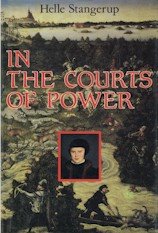 Helle Stangerup, In the Courts of Power. Trans. Anne Born. London: Macmillan, 1987. 378pp.
Stangerup is a well-known Danish author, according to the jacket, though this appears to be the only novel of hers translated into English. It's a shame, because In the Courts of Power is an excellent historical novel. Christina of Denmark, the heroine, may be best known to English-speaking audiences for her snarky reply to Henry VIII's marriage proposal: that is, that she would gladly become his fourth wife if she had an extra head to spare. Interestingly, Christina was the great-niece of Henry VIII's first wife, Katharine of Aragon. Those of you who don't have the Hapsburg family tree memorized can conveniently find Christina's genealogy on the novel's endpapers.
However, as Stangerup wisely shows us, Christina's role in European politics wasn't limited to her witty repartee. She came from a long line of female regents of various European lands, and she was destined to become one herself. Christina, her brother Hans, and her sister Dorothea are raised by a succession of aunts after their father, Christian II of Denmark, is deposed by his uncle and imprisoned. Married off at a young age to the elderly Duke of Milan, she returns home to the Hapsburg court when he dies. There, she falls in love with Rene of Orange, but, forbidden to marry him, finds peace and unexpected happiness in her marriage to Franz of Lorraine. However, their wedded bliss is all too brief. She spends the rest of her life dealing with political matters, such as Lorraine's continuing troubles with France; she also schemes to help her branch of the family regain Denmark's throne. Her story plays out over a wide canvas that encompasses nearly all of western Europe during the Renaissance. Stangerup occasionally lets us see the action from the viewpoint of commoners living outside of royal circles, which helps provide a comprehensive picture of the times.
Despite the large cast of characters, and my general unfamiliarity with the subject (aside from the basic genealogical relationships), I didn't find the novel hard to follow at all. I highly recommend it to anyone wanting to know more about 16th century Europe's political scene, and one particular woman's role in it. Even better, the novel can be purchased fairly cheaply off ABE.
Margaret Ball, Duchess of Aquitaine. NY: St. Martin's Press, 2006. 384pp.
This is one of the better novels about Eleanor of Aquitaine, Queen of England, and one of the few that delves into her younger years. I reviewed this for Booklist, so instead of repeating myself, I'll link to the review on Amazon. On this page you'll also find the gorgeous cover art, which was painted by noted fantasy artist Kinuko Craft. The original can be found at the Duirwaigh Gallery.
I do read other historical novels besides those on royal women, but I seem to have been on this kick recently. Thanks for putting up with it for the time being.
Here are shorter reviews of some other novels I've read recently.
Iris Gower, Destiny's Child. London and NY: Severn House, 1999. 218pp.
This is a re-release of the author's 1974 Robert Hale novel Bride of the Thirteenth Summer, written under the name Iris Davies. Margaret Beaufort, descendant of John of Gaunt and mother of Henry VII, is the protagonist. There's no question in my mind why it was retitled, even though she did in fact marry Edmund Tudor (and give birth to his posthumous son) in her thirteenth year. It's a fast and, from what I can tell, fairly accurate read, at least in terms of major people, places, and dates. However, one part that didn't ring true was the portrayal of Margaret's relationship with the much older Edmund Tudor as a love match; the novel doesn't delve into Margaret's religious piety, either, but then many novels of the period don't. I enjoyed Gower's Welsh sagas considerably more than I did this one, but it wasn't bad.
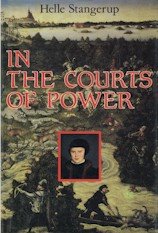 Helle Stangerup, In the Courts of Power. Trans. Anne Born. London: Macmillan, 1987. 378pp.
Stangerup is a well-known Danish author, according to the jacket, though this appears to be the only novel of hers translated into English. It's a shame, because In the Courts of Power is an excellent historical novel. Christina of Denmark, the heroine, may be best known to English-speaking audiences for her snarky reply to Henry VIII's marriage proposal: that is, that she would gladly become his fourth wife if she had an extra head to spare. Interestingly, Christina was the great-niece of Henry VIII's first wife, Katharine of Aragon. Those of you who don't have the Hapsburg family tree memorized can conveniently find Christina's genealogy on the novel's endpapers.
However, as Stangerup wisely shows us, Christina's role in European politics wasn't limited to her witty repartee. She came from a long line of female regents of various European lands, and she was destined to become one herself. Christina, her brother Hans, and her sister Dorothea are raised by a succession of aunts after their father, Christian II of Denmark, is deposed by his uncle and imprisoned. Married off at a young age to the elderly Duke of Milan, she returns home to the Hapsburg court when he dies. There, she falls in love with Rene of Orange, but, forbidden to marry him, finds peace and unexpected happiness in her marriage to Franz of Lorraine. However, their wedded bliss is all too brief. She spends the rest of her life dealing with political matters, such as Lorraine's continuing troubles with France; she also schemes to help her branch of the family regain Denmark's throne. Her story plays out over a wide canvas that encompasses nearly all of western Europe during the Renaissance. Stangerup occasionally lets us see the action from the viewpoint of commoners living outside of royal circles, which helps provide a comprehensive picture of the times.
Despite the large cast of characters, and my general unfamiliarity with the subject (aside from the basic genealogical relationships), I didn't find the novel hard to follow at all. I highly recommend it to anyone wanting to know more about 16th century Europe's political scene, and one particular woman's role in it. Even better, the novel can be purchased fairly cheaply off ABE.
Margaret Ball, Duchess of Aquitaine. NY: St. Martin's Press, 2006. 384pp.
This is one of the better novels about Eleanor of Aquitaine, Queen of England, and one of the few that delves into her younger years. I reviewed this for Booklist, so instead of repeating myself, I'll link to the review on Amazon. On this page you'll also find the gorgeous cover art, which was painted by noted fantasy artist Kinuko Craft. The original can be found at the Duirwaigh Gallery.
I do read other historical novels besides those on royal women, but I seem to have been on this kick recently. Thanks for putting up with it for the time being.
Friday, May 12, 2006
Yet more bits and pieces
I've been busy with library book ordering and BEA preparations, not to mention cleaning the house/doing laundry before we head out east for 10 days. I've also got a 700-page review book to read with a two-week turnaround, so things may be quiet on the blog for a little while. (Fortunately, it looks pretty good.) So, just some little things of note for now.
A short and rather sarcastic review of Alison Weir's Innocent Traitor, from the Sydney Morning Herald. I admit it, I bought my copy from a British bookseller.
A review of Caroline Preston's Gatsby's Girl from a local Charlottesville, Virginia, newspaper.
And another review, this time of Jane Harris's The Observations, from the Telegraph (UK).
Divine Inspiration: an article on the popularity of biblical historical novels, from the San Jose Mercury News, syndicated from the LA Times. Mary Roarke, the article's author, recently wrote a biblical novel of her own, Two Women of Galilee, which coincidentally is the book I'm reading now.
More on Erica Jong, mostly biographical. I didn't realize, and should have, that her third husband was the son of historical novelist Howard Fast.
A short and rather sarcastic review of Alison Weir's Innocent Traitor, from the Sydney Morning Herald. I admit it, I bought my copy from a British bookseller.
A review of Caroline Preston's Gatsby's Girl from a local Charlottesville, Virginia, newspaper.
And another review, this time of Jane Harris's The Observations, from the Telegraph (UK).
Divine Inspiration: an article on the popularity of biblical historical novels, from the San Jose Mercury News, syndicated from the LA Times. Mary Roarke, the article's author, recently wrote a biblical novel of her own, Two Women of Galilee, which coincidentally is the book I'm reading now.
More on Erica Jong, mostly biographical. I didn't realize, and should have, that her third husband was the son of historical novelist Howard Fast.
Tuesday, May 09, 2006
"She was a voracious reader of historical novels...
... particularly those about the glories and trials of Ireland." If that's not enough to make you read Dorothy Gibson Cully's obituary (she died, age 86, on June 3, 2005), perhaps you might read it for her family's dark and twisted sense of humor.
After that, read the Chicago Tribune article about it. Courtesy of Sarah Weinman's blog.
After that, read the Chicago Tribune article about it. Courtesy of Sarah Weinman's blog.
Monday, May 08, 2006
Historical novels in search of an author
On the off-chance that any historical novelist reading this needs a subject for a new writing project (um, right), may I humbly suggest one of the following medieval women. Royal women and royal mistresses are in vogue, so the timing would certainly favor such topics. (Nest of Deheubarth is another good example, but you've read plenty about her lately, and who would buy a novel about an obscure Welsh noblewoman these days? Besides me, that is. Sigh)
(1) Sybilla Corbet. Mistress of Henry I (one of the many), mother of his illegitimate children (again, one of the many). She married Herbert Fitz Herbert, whose father was Henry I's chamberlain, and apparently bore children to both her husband and King Henry over a period of thirty years. She must have had considerable influence with the king, since her eldest daughter, Sybilla, became queen consort to Alexander I of Scotland.
(2) Alice Perrers, mistress of Edward III, who supposedly stole rings from Edward's body while he lay on his deathbed. (Though this is likely a false rumor.) Fortunately, I just read that Candace Robb is at work on a novel about her. According to her online newsletter, A Gift of Scarlet will be published in the UK in April 2009. That's three long years away. I will be patient.
(3) Isabelle of Angoulême, queen consort to King John. Jean Plaidy has written a novel about Isabelle's rivalry with the French queen at the time, Blanche of Castile (The Battle of the Queens), but surely Isabelle deserves her own novel... one that covers her marriage to the son of her former fiancé, Hugh of Lusignan. Besides, in every novel I've read about her, she's portrayed as a heartless bitch.
(4) Joan of Navarre, queen consort of Henry IV, widow of the Duke of Brittany, who was falsely accused of witchcraft after Henry's death. What more potential for drama could any writer need? Witch Queen by Maureen Peters is a novel about her life, though it's short and rather superficial.
(5) Mary, the daughter of King Stephen who became Abbess of Romsey. Abducted against her will by Matthew, Count of Flanders and Boulogne, Mary was forced into marriage with him. They had two daughters before she returned to her much calmer life at Romsey. Her story certainly offers plenty of drama, though the romantic aspect might be lacking. But if you can't wait for a more in-depth novel about her, why not read Princess, Nun, and Wife by Judy Walker, which Romsey Abbey sells in their gift shop for £6.99.
Who else would you like to add to the list, royal or not, medieval or not?
(1) Sybilla Corbet. Mistress of Henry I (one of the many), mother of his illegitimate children (again, one of the many). She married Herbert Fitz Herbert, whose father was Henry I's chamberlain, and apparently bore children to both her husband and King Henry over a period of thirty years. She must have had considerable influence with the king, since her eldest daughter, Sybilla, became queen consort to Alexander I of Scotland.
(2) Alice Perrers, mistress of Edward III, who supposedly stole rings from Edward's body while he lay on his deathbed. (Though this is likely a false rumor.) Fortunately, I just read that Candace Robb is at work on a novel about her. According to her online newsletter, A Gift of Scarlet will be published in the UK in April 2009. That's three long years away. I will be patient.
(3) Isabelle of Angoulême, queen consort to King John. Jean Plaidy has written a novel about Isabelle's rivalry with the French queen at the time, Blanche of Castile (The Battle of the Queens), but surely Isabelle deserves her own novel... one that covers her marriage to the son of her former fiancé, Hugh of Lusignan. Besides, in every novel I've read about her, she's portrayed as a heartless bitch.
(4) Joan of Navarre, queen consort of Henry IV, widow of the Duke of Brittany, who was falsely accused of witchcraft after Henry's death. What more potential for drama could any writer need? Witch Queen by Maureen Peters is a novel about her life, though it's short and rather superficial.
(5) Mary, the daughter of King Stephen who became Abbess of Romsey. Abducted against her will by Matthew, Count of Flanders and Boulogne, Mary was forced into marriage with him. They had two daughters before she returned to her much calmer life at Romsey. Her story certainly offers plenty of drama, though the romantic aspect might be lacking. But if you can't wait for a more in-depth novel about her, why not read Princess, Nun, and Wife by Judy Walker, which Romsey Abbey sells in their gift shop for £6.99.
Who else would you like to add to the list, royal or not, medieval or not?
Sunday, May 07, 2006
Nest of Deheubarth speaks
Isabella of France has tagged me for the "me, too" meme, and Nest of Deheubarth is more than happy to respond.
I am: Nest of Deheubarth, daughter of Rhys ap Tewdwr, estranged wife of Gerald de Windsor, the so-called Helen of Wales.
I want: to live happily ever after with the man I love... but if he dies or puts me aside, I'm sure I can find someone else.
I wish: people would stop hating me because I'm beautiful.
I hate: the Powys clan for killing so many loyal Deheubarthians on their murderous rampages through the Welsh countryside. It's not Owain's fault he's related to those evil bastards.
I miss: my children, but not enough to give up my darling Owain.
I hear: that my husband Gerald is pretty upset with me.
I wonder: why Prince Henry didn't marry me and make me queen of England instead of that holier-than-thou Matilda. Rumor has it she'd rather be a nun, for God's sake! A lusty fellow like him deserves better.
I regret: absolutely nothing, even though it means hiding out in Welsh caves with Owain instead of living the royal lifestyle I'm accustomed to.
I am not: going back to my boring life with Gerald if I have anything to say about it.
I dance: best when I'm in the bedchamber.
I sing: mournful songs about my brilliant father, Rhys ap Tewdwr, to remind everyone of my royal blood. After all, his descendants are going to rule England one day.
I cry: for the lost glory of Deheubarth, but maybe my sullen brother Gruffydd will manage to win it back.
I am not always: to blame for the trouble I cause. After all, Helen wasn't the real cause of the Trojan War, either.
I made: every man that saw me fall in love with me. If they didn't, they obviously had other leanings.
I write: plaintive letters to my favorite daughter Angharad, since Owain wouldn't let me keep her with me.
I confuse: the men who were my children's fathers - I just can't keep straight which child belongs to whom. After all, there were five of them... or was that six? See what I mean?
I need: a strong handsome man in my life, even if he's not the guy I'm married to.
I should: stop wondering what that hunky constable of Cardigan Castle is up to, but I like to have a backup plan in case anything terrible happens to Owain.
I start: minor civil wars whenever I sleep with someone new.
I finish: with one man before hooking up with someone else. Well, except for that dullard Gerald, but you really didn't expect me to stay with him forever, did you?
I tag: Lady Tess, once she's more settled in her new locale, and Sarah C. Perhaps Boudica or some nice Roman chap would like to chime in?
I am: Nest of Deheubarth, daughter of Rhys ap Tewdwr, estranged wife of Gerald de Windsor, the so-called Helen of Wales.
I want: to live happily ever after with the man I love... but if he dies or puts me aside, I'm sure I can find someone else.
I wish: people would stop hating me because I'm beautiful.
I hate: the Powys clan for killing so many loyal Deheubarthians on their murderous rampages through the Welsh countryside. It's not Owain's fault he's related to those evil bastards.
I miss: my children, but not enough to give up my darling Owain.
I hear: that my husband Gerald is pretty upset with me.
I wonder: why Prince Henry didn't marry me and make me queen of England instead of that holier-than-thou Matilda. Rumor has it she'd rather be a nun, for God's sake! A lusty fellow like him deserves better.
I regret: absolutely nothing, even though it means hiding out in Welsh caves with Owain instead of living the royal lifestyle I'm accustomed to.
I am not: going back to my boring life with Gerald if I have anything to say about it.
I dance: best when I'm in the bedchamber.
I sing: mournful songs about my brilliant father, Rhys ap Tewdwr, to remind everyone of my royal blood. After all, his descendants are going to rule England one day.
I cry: for the lost glory of Deheubarth, but maybe my sullen brother Gruffydd will manage to win it back.
I am not always: to blame for the trouble I cause. After all, Helen wasn't the real cause of the Trojan War, either.
I made: every man that saw me fall in love with me. If they didn't, they obviously had other leanings.
I write: plaintive letters to my favorite daughter Angharad, since Owain wouldn't let me keep her with me.
I confuse: the men who were my children's fathers - I just can't keep straight which child belongs to whom. After all, there were five of them... or was that six? See what I mean?
I need: a strong handsome man in my life, even if he's not the guy I'm married to.
I should: stop wondering what that hunky constable of Cardigan Castle is up to, but I like to have a backup plan in case anything terrible happens to Owain.
I start: minor civil wars whenever I sleep with someone new.
I finish: with one man before hooking up with someone else. Well, except for that dullard Gerald, but you really didn't expect me to stay with him forever, did you?
I tag: Lady Tess, once she's more settled in her new locale, and Sarah C. Perhaps Boudica or some nice Roman chap would like to chime in?
Saturday, May 06, 2006
Reviews of Obscure Books:
Anne Bell, Daughter of the Dragon
Bell, Anne. Daughter of the Dragon. London: Robert Hale, 1978. 176pp, hardbound. 1-7091-6679-6.
This older novel about Nest of Deheubarth, called "the Helen of Wales" for her beauty and her amorous exploits, is fortunately easier to find than Eve Trevaskis's Lord of Misrule, reviewed previously. Although no date is given, the novel begins in the late 11th century, with Nest as a young girl, and concludes in her middle age, as she watches proudly over her numerous children. In between, Bell takes us through Nest's tumultuous life. Born the daughter of Rhys ap Tewdwr, Prince of Deheubarth, young Nest makes an immediate impression on Prince Henry of England during his family's royal visit to her father's court. After Rhys is killed in an attack led by his cousin (which occurred in AD 1093), Nest is brought to England, where she becomes Henry's mistress. Refreshingly, Bell depicts Nest's relationship with Henry as one based on gratitude rather than love or infatuation. While Nest is certainly willing, she accedes to Henry's request because she feels she can do no better. After the birth of Nest's two sons, Henry marries her off to Gerald of Windsor, one of his strongest supporters. She grows to love Gerald and bears him five children. But after years of seeming stability in her life, Nest feels restless; when she makes the impulsive decision to abandon her family by absconding with Owain ap Cadwgan, Prince of Powys (and brother to her late father's enemies), she is following her heart for the first time in her life. Bell portrays Nest's midnight abduction from Pembroke Castle by Owain as a grand romantic escapade, one that ends only with Owain's death. When Nest makes contact again with her grown children many years later, they are surprisingly understanding - one aspect of the novel that didn't ring true. However, Gerald is less forgiving, and refuses ever to see her again. But a happy ending for Nest still awaits in the arms of widowed Stephen Cedricson, the handsome Norman who had brought her to England many years before.
I enjoyed this smoothly written novel, and despite its brevity, I felt that Bell managed to create a realistic personality for Nest. Despite her notoriety, she's no ultra-feminist. All the same, while she pays the price for her impulsive actions, she doesn't ever regret them. Bell has a gift for describing scenery; the Welsh hills in particular come alive. Although Welsh politics of the time remain mostly in the background, they are explained well. For the most part, Nest's story as depicted here is true. She did have many lovers (including King Henry, though their affair may have continued during her marriage) and bore children to each of them, including her husband, and she continues to be known as Helen of Wales because her abduction by Owain led to a minor civil war. Nest also left quite a legacy. Her grandson (by daughter Angharad) was Gerald of Wales, aka Welsh chronicler Giraldus Cambrensis, and her later descendants by Gerald were known as the FitzGeralds, or Geraldines, rulers of southern Ireland through Tudor times. For more information, see Nest: The Helen of Wales.
Daughter of the Dragon includes some interesting historical conjecture. Gwenn Meredith (see note below) states that Nest likely went to England in 1081 as a political hostage, while Rhys died in 1093; therefore, she wouldn't have been in Wales at the time of her father's death. Bell indicates that Robert of Gloucester, Empress Matilda's loyal half-brother, was Nest's son, and there's a scene where he brings his wife Mabel Fitzhamon home to visit her. I was suspicious about this initially, but since then, I've been doing background reading, and opinion on whether Nest was Robert's mother seems to be mixed. There are some historians that don't dismiss it outright, in any case. After Owain's death, Bell comments that things may have been different if Owain's child by Nest had survived. However, it appears that they did have two children, Llywellyn and Einion, and at least the latter survived to have descendants. The novel concludes with Nest's marriage to Stephen, constable of Cardigan Castle (though the jury's still out on whether they ever officially wed). My favorite novel about Nest remains Eleanor Fairburn's The Golden Hive, which is considerably longer (and more romanticized, I'll admit), but this is a nicely told version of her life as well.
In sum: A brief but very readable novel about a famous Welsh princess, a retelling possibly more accurate than I originally thought.
For further reading: Gwenn Meredith, "Henry I's Concubines," Essays in Medieval Studies 19 (2002): 14-28. If your library subscribes to Project Muse, you can read the article here. I'm no expert, so if anyone reading this knows more about the historical background, please comment.
This older novel about Nest of Deheubarth, called "the Helen of Wales" for her beauty and her amorous exploits, is fortunately easier to find than Eve Trevaskis's Lord of Misrule, reviewed previously. Although no date is given, the novel begins in the late 11th century, with Nest as a young girl, and concludes in her middle age, as she watches proudly over her numerous children. In between, Bell takes us through Nest's tumultuous life. Born the daughter of Rhys ap Tewdwr, Prince of Deheubarth, young Nest makes an immediate impression on Prince Henry of England during his family's royal visit to her father's court. After Rhys is killed in an attack led by his cousin (which occurred in AD 1093), Nest is brought to England, where she becomes Henry's mistress. Refreshingly, Bell depicts Nest's relationship with Henry as one based on gratitude rather than love or infatuation. While Nest is certainly willing, she accedes to Henry's request because she feels she can do no better. After the birth of Nest's two sons, Henry marries her off to Gerald of Windsor, one of his strongest supporters. She grows to love Gerald and bears him five children. But after years of seeming stability in her life, Nest feels restless; when she makes the impulsive decision to abandon her family by absconding with Owain ap Cadwgan, Prince of Powys (and brother to her late father's enemies), she is following her heart for the first time in her life. Bell portrays Nest's midnight abduction from Pembroke Castle by Owain as a grand romantic escapade, one that ends only with Owain's death. When Nest makes contact again with her grown children many years later, they are surprisingly understanding - one aspect of the novel that didn't ring true. However, Gerald is less forgiving, and refuses ever to see her again. But a happy ending for Nest still awaits in the arms of widowed Stephen Cedricson, the handsome Norman who had brought her to England many years before.
I enjoyed this smoothly written novel, and despite its brevity, I felt that Bell managed to create a realistic personality for Nest. Despite her notoriety, she's no ultra-feminist. All the same, while she pays the price for her impulsive actions, she doesn't ever regret them. Bell has a gift for describing scenery; the Welsh hills in particular come alive. Although Welsh politics of the time remain mostly in the background, they are explained well. For the most part, Nest's story as depicted here is true. She did have many lovers (including King Henry, though their affair may have continued during her marriage) and bore children to each of them, including her husband, and she continues to be known as Helen of Wales because her abduction by Owain led to a minor civil war. Nest also left quite a legacy. Her grandson (by daughter Angharad) was Gerald of Wales, aka Welsh chronicler Giraldus Cambrensis, and her later descendants by Gerald were known as the FitzGeralds, or Geraldines, rulers of southern Ireland through Tudor times. For more information, see Nest: The Helen of Wales.
Daughter of the Dragon includes some interesting historical conjecture. Gwenn Meredith (see note below) states that Nest likely went to England in 1081 as a political hostage, while Rhys died in 1093; therefore, she wouldn't have been in Wales at the time of her father's death. Bell indicates that Robert of Gloucester, Empress Matilda's loyal half-brother, was Nest's son, and there's a scene where he brings his wife Mabel Fitzhamon home to visit her. I was suspicious about this initially, but since then, I've been doing background reading, and opinion on whether Nest was Robert's mother seems to be mixed. There are some historians that don't dismiss it outright, in any case. After Owain's death, Bell comments that things may have been different if Owain's child by Nest had survived. However, it appears that they did have two children, Llywellyn and Einion, and at least the latter survived to have descendants. The novel concludes with Nest's marriage to Stephen, constable of Cardigan Castle (though the jury's still out on whether they ever officially wed). My favorite novel about Nest remains Eleanor Fairburn's The Golden Hive, which is considerably longer (and more romanticized, I'll admit), but this is a nicely told version of her life as well.
In sum: A brief but very readable novel about a famous Welsh princess, a retelling possibly more accurate than I originally thought.
For further reading: Gwenn Meredith, "Henry I's Concubines," Essays in Medieval Studies 19 (2002): 14-28. If your library subscribes to Project Muse, you can read the article here. I'm no expert, so if anyone reading this knows more about the historical background, please comment.
Friday, May 05, 2006
More bits and pieces
I'm hoping to write a longer post later, but I've been overwhelmed with various HNS- and work-related things.
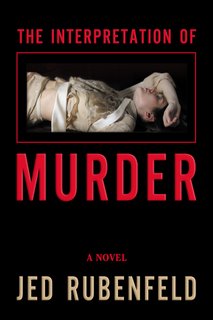 The nice folks in marketing at Henry Holt & Co have sent me the jacket art for Jed Rubenfeld's The Interpretation of Murder, to satisfy the curiosity of those people who have been looking for it online. You can find a plot description at the Holtzbrinck site.
In other news...
I'm not familiar with the novels mentioned (anyone?) but this article implies that some of the novels on the shortlist of the Sunday Times Fiction Prize (South Africa) are historical fiction:
Bookslut has a new piece on the Cadfael medieval mystery series by Ellis Peters. It is a nice article that will undoubtedly garner Cadfael some new fans - always a good thing - but I'm confused by the comment that Cadfael is "a sleuth who has captured the British imagination for the last few decades while evading the American audience." I may not be typical of the American audience, but aren't historical mystery fans generally familiar with this series? The books are benchmarks in the genre, as far as I'm concerned.
Finally, an interview with Brenda Rickman Vantrease, who wrote the excellent medieval novel The Illuminator, from Nashville Scene. It's an enjoyable profile, but please, enough with the librarian stereotypes. It is much more typical for school librarians to be friendly, approachable, and to have a sense of humor than the opposite.
 The nice folks in marketing at Henry Holt & Co have sent me the jacket art for Jed Rubenfeld's The Interpretation of Murder, to satisfy the curiosity of those people who have been looking for it online. You can find a plot description at the Holtzbrinck site.
In other news...
I'm not familiar with the novels mentioned (anyone?) but this article implies that some of the novels on the shortlist of the Sunday Times Fiction Prize (South Africa) are historical fiction:
"Two of the short-listed fiction titles — 'Garden of the Plagues' by Russel Brownlee and 'The Good Cemetery Guide' by Consuelo Roland — are debut novels, while advocate Andrew Brown's 'Coldsleep Lullaby' is his second, pointing to the emergence of a new set of eloquent voices.
Significant too, is the renewed interest with which many of these writers are turning to South African history, to deliver new tales and give substance to the rise of a historical fiction genre in local English writing."
Bookslut has a new piece on the Cadfael medieval mystery series by Ellis Peters. It is a nice article that will undoubtedly garner Cadfael some new fans - always a good thing - but I'm confused by the comment that Cadfael is "a sleuth who has captured the British imagination for the last few decades while evading the American audience." I may not be typical of the American audience, but aren't historical mystery fans generally familiar with this series? The books are benchmarks in the genre, as far as I'm concerned.
Finally, an interview with Brenda Rickman Vantrease, who wrote the excellent medieval novel The Illuminator, from Nashville Scene. It's an enjoyable profile, but please, enough with the librarian stereotypes. It is much more typical for school librarians to be friendly, approachable, and to have a sense of humor than the opposite.
Tuesday, May 02, 2006
Today's historical mystery special
A few bits and pieces on historical mysteries today...
Steve Lewis, aka my dad, has taken over Ed Gorman's series of ProFile interviews with contemporary mystery writers. The first entry includes a profile of Mary Reed and Eric Mayer, the husband-and-wife team who coauthor the John the Eunuch series (6th century Byzantium) for Poisoned Pen Press. Later interviews will appear in Mystery*File as well.
The Crime column from Toronto's Globe and Mail (15 April) has a very nice review of Margaret Doody's Mysteries of Eleusis, 5th in her Aristotle series (which Americans may have to purchase through Canada and the UK). This article will probably stop being free in a couple weeks, so if you're interested, check it out now.
And from Publishers Marketplace:
According to her agent's website, Lisa McDonald, an Australian author, also writes historical gothic romances as Joanna Challis.
Steve Lewis, aka my dad, has taken over Ed Gorman's series of ProFile interviews with contemporary mystery writers. The first entry includes a profile of Mary Reed and Eric Mayer, the husband-and-wife team who coauthor the John the Eunuch series (6th century Byzantium) for Poisoned Pen Press. Later interviews will appear in Mystery*File as well.
The Crime column from Toronto's Globe and Mail (15 April) has a very nice review of Margaret Doody's Mysteries of Eleusis, 5th in her Aristotle series (which Americans may have to purchase through Canada and the UK). This article will probably stop being free in a couple weeks, so if you're interested, check it out now.
And from Publishers Marketplace:
Lisa McDonald's MURDER ON THE CLIFFS, a historical mystery series featuring Daphne du Maurier as the amateur sleuth, to Hope Dellon at St. Martin's, in a nice deal, in a three-book deal, by Kim Lionetti at BookEnds.
According to her agent's website, Lisa McDonald, an Australian author, also writes historical gothic romances as Joanna Challis.
Monday, May 01, 2006
HNS Editors' Choice books announced
In case you haven't seen this on the main HNS list, the editors' choice novels for May were posted this morning. My personal pick was Sally Gunning's The Widow's War, which I've already recommended to a bunch of people, but there are some other great-sounding novels here too. While surfing around this morning, I found a blog written by John Barlow, whose novel Intoxicated was another EC pick. He has a timely post up at Slate about his experiences working with 17th Street Productions, the book packager who owns part of the copyright to that plagiarized book everyone's talking about.
Anyway, there's always such variety in the Editors' Choice lists. As usual, the novels reflect a wide range of locales, subgenres, and time periods. I know that some historical periods and settings are consistently more popular than others, both with reviewers and the reading public, but the EC novels never emphasize one setting over another. Somehow, it really pleases me to see this.
And on the lighter side for today...

Which of Henry VIII's wives are you?
this quiz was made by Lori Fury
While I have no desire to be called the "Flanders mare," and don't think I own any ugly shoes (well, except those old sneakers...), the idea of being the only one of Henry VIII's wives to outlive him for long does have a certain appeal.
Anyway, there's always such variety in the Editors' Choice lists. As usual, the novels reflect a wide range of locales, subgenres, and time periods. I know that some historical periods and settings are consistently more popular than others, both with reviewers and the reading public, but the EC novels never emphasize one setting over another. Somehow, it really pleases me to see this.
And on the lighter side for today...
Which of Henry VIII's wives are you?
this quiz was made by Lori Fury
While I have no desire to be called the "Flanders mare," and don't think I own any ugly shoes (well, except those old sneakers...), the idea of being the only one of Henry VIII's wives to outlive him for long does have a certain appeal.
Sunday, April 30, 2006
Bibliographies for novels
Miss Snark has suggested that bibliographies within novels are "last century." She's already stated that she doesn't deal with historical fiction, so this may explain her remarks. (And, as mentioned previously, Da Vinci Code and novels of its ilk are not historical fiction regardless of what the newspapers think, even though I'd like to see bibliographies for those types of novels, too... for the same reasons as given below.)
In a way, she's right. Bibliographies for novels are very last century - as well as 9th century, 16th century, 18th century, and so forth. They're very common in historical novels, and calling them either outdated or undesired ignores the need that many readers have to learn more about the novels' historical subjects, right then and there. Who better to lead readers in this direction than the author? And on the chance that a reader feels an author messed up in his/her research, or if an author provides a non-traditional interpretation of a historical character's actions, a bibliography compiled by said author can be helpful in another way as well.
Miss Snark suggests that bibliographies be placed on author websites rather than in the novels themselves. Many historical novelists do this, and it is a good way of drawing in new readers. However, this doesn't do current or prospective readers much good unless they're told that such a bibliography exists, and is on the author's website.... or if readers generally go immediately to an author's website upon reading a novel. (I wouldn't assume that all readers will do so.)
I also don't know how such a bibliography would become outdated, because normally bibliographies contain only those books used by the author in the course of his/her research for a given novel. As such, those lists aren't likely to change, unless the author suddenly realizes that a major source was omitted (oops).
If the author's already going to be providing an author's note, historical epilogue, etc. - which are incredibly helpful to readers, and which I personally appreciate - why not make things easier for readers and list some sources right there? Bibliographies aren't written for marketing one's novel to people who haven't read it, although they certainly can be used as such. They're meant to guide existing readers of a novel in learning more about a subject, and in providing insight into the author's research methods. And if so, where better to put such a list of resources than the end of the book. If an author has a website, sure, put it there too. We aren't talking dissertation-length bibliographies here, so the publisher can relax. A page or two of major research sources (or less) is all that most novels provide. Anything longer can go online.
A trawl through my personal library quickly reveals a number of historical novels containing bibliographies or narrative lists of research sources at the end. I submit the following list:
Tracy Chevalier, The Lady and the Unicorn
Bernard Cornwell, The Pale Horseman
Emma Donoghue, Life Mask
Clare Dudman, 98 Reasons for Being
Sarah Dunant, The Birth of Venus
Mary Sharratt, The Vanishing Point
Beverly Swerling, Shadowbrook
Barry Unsworth, The Songs of the Kings
All very 21st century novels, indeed. What do you think - are these authors out of the loop? Should unpublished novelists who "play with history," or who "base their novels on solid fact and research," follow their example, or ignore it?
In a way, she's right. Bibliographies for novels are very last century - as well as 9th century, 16th century, 18th century, and so forth. They're very common in historical novels, and calling them either outdated or undesired ignores the need that many readers have to learn more about the novels' historical subjects, right then and there. Who better to lead readers in this direction than the author? And on the chance that a reader feels an author messed up in his/her research, or if an author provides a non-traditional interpretation of a historical character's actions, a bibliography compiled by said author can be helpful in another way as well.
Miss Snark suggests that bibliographies be placed on author websites rather than in the novels themselves. Many historical novelists do this, and it is a good way of drawing in new readers. However, this doesn't do current or prospective readers much good unless they're told that such a bibliography exists, and is on the author's website.... or if readers generally go immediately to an author's website upon reading a novel. (I wouldn't assume that all readers will do so.)
I also don't know how such a bibliography would become outdated, because normally bibliographies contain only those books used by the author in the course of his/her research for a given novel. As such, those lists aren't likely to change, unless the author suddenly realizes that a major source was omitted (oops).
If the author's already going to be providing an author's note, historical epilogue, etc. - which are incredibly helpful to readers, and which I personally appreciate - why not make things easier for readers and list some sources right there? Bibliographies aren't written for marketing one's novel to people who haven't read it, although they certainly can be used as such. They're meant to guide existing readers of a novel in learning more about a subject, and in providing insight into the author's research methods. And if so, where better to put such a list of resources than the end of the book. If an author has a website, sure, put it there too. We aren't talking dissertation-length bibliographies here, so the publisher can relax. A page or two of major research sources (or less) is all that most novels provide. Anything longer can go online.
A trawl through my personal library quickly reveals a number of historical novels containing bibliographies or narrative lists of research sources at the end. I submit the following list:
Tracy Chevalier, The Lady and the Unicorn
Bernard Cornwell, The Pale Horseman
Emma Donoghue, Life Mask
Clare Dudman, 98 Reasons for Being
Sarah Dunant, The Birth of Venus
Mary Sharratt, The Vanishing Point
Beverly Swerling, Shadowbrook
Barry Unsworth, The Songs of the Kings
All very 21st century novels, indeed. What do you think - are these authors out of the loop? Should unpublished novelists who "play with history," or who "base their novels on solid fact and research," follow their example, or ignore it?
Friday, April 28, 2006
It's all about meme
Lady Tess tagged me to answer this meme, so here goes.
Six minutes to yourself - how would you spend them:
Probably sleeping!
Six bucks to spend right now - how would you spend it:
I'd get a paperback at Borders, if I was allowed a little extra to cover the tax. Picking just one is too hard, though.
Six items you'd leave behind if your house were on fire:
(1) Old musty books I know I'll never read; (2) overstuffed blue recliner that's covered in cat hair; (3) my turntable and LP collection; (4) all the empty boxes in the closet under the staircase; (5) boxes of old library science magazines; (6) the little wads of paper that my cats love to bat around
Six items you'd grab if your house were on fire:
(1) My husband (2) my cats (3) my computer (4) my book collection (5) cabinet with my genealogy files (6) dolls I inherited from my grandmother. This is cheating, but it's all in good fun :)
Six words you love:
Let's go to Indy this weekend.
(home of a major shopping mall, two Trader Joe's, a Wild Oats, the Cheesecake Factory, and not one but two Half Price Books outlets)
Six things you want to accomplish before you leave the earthly plane: (1) Read all of the books that I own; (2) travel more - especially to Europe, Australia, and New Zealand; (3) write another historical fiction reference book; (4) live long enough to retire and move back to New England; (5) go back to New York City and have another great meal at Mitali East, followed by a trip to The Strand; (6) finish the cross-stitch tapestry I've been working on for eons.
Anyone else want to play?
In other news, I added my books to Librarything last night, uploading them all from Readerware. The upload ran all night, and I woke up to find I'm #4 in the system (even after removing 500 dupes because the system hiccupped on a bunch of titles). Looks like about 10% of my books don't have ISBNs, so they're not reflected in my public catalog.
Last but not least, a little BSP: as of fall 2006 I'll be a tenured Associate Professor of Library Services at EIU. My tenure and promotion applications were approved on Monday. Yay!
Six minutes to yourself - how would you spend them:
Probably sleeping!
Six bucks to spend right now - how would you spend it:
I'd get a paperback at Borders, if I was allowed a little extra to cover the tax. Picking just one is too hard, though.
Six items you'd leave behind if your house were on fire:
(1) Old musty books I know I'll never read; (2) overstuffed blue recliner that's covered in cat hair; (3) my turntable and LP collection; (4) all the empty boxes in the closet under the staircase; (5) boxes of old library science magazines; (6) the little wads of paper that my cats love to bat around
Six items you'd grab if your house were on fire:
(1) My husband (2) my cats (3) my computer (4) my book collection (5) cabinet with my genealogy files (6) dolls I inherited from my grandmother. This is cheating, but it's all in good fun :)
Six words you love:
Let's go to Indy this weekend.
(home of a major shopping mall, two Trader Joe's, a Wild Oats, the Cheesecake Factory, and not one but two Half Price Books outlets)
Six things you want to accomplish before you leave the earthly plane: (1) Read all of the books that I own; (2) travel more - especially to Europe, Australia, and New Zealand; (3) write another historical fiction reference book; (4) live long enough to retire and move back to New England; (5) go back to New York City and have another great meal at Mitali East, followed by a trip to The Strand; (6) finish the cross-stitch tapestry I've been working on for eons.
Anyone else want to play?
In other news, I added my books to Librarything last night, uploading them all from Readerware. The upload ran all night, and I woke up to find I'm #4 in the system (even after removing 500 dupes because the system hiccupped on a bunch of titles). Looks like about 10% of my books don't have ISBNs, so they're not reflected in my public catalog.
Last but not least, a little BSP: as of fall 2006 I'll be a tenured Associate Professor of Library Services at EIU. My tenure and promotion applications were approved on Monday. Yay!
Thursday, April 27, 2006
Another major HF deal
From today's Publishers Marketplace. Royalty novels are in vogue, but this should come as no surprise. BTW, "significant deal" = somewhere between a quarter/half million $.
Carolly Erickson's BIRD OF PARADISE: A NOVEL OF THE EMPRESS JOSEPHINE, about the Caribbean seductress whose sexually adventurous life and bold personality led her to the heights as Napoleon's wife and ultimately to the depths of imprisonment, to Charles Spicer at St. Martin's, in a significant deal, in a two-book deal, by Russell Galen at Scovil Chichak Galen Literary Agency (world English).
Carolly Erickson's BIRD OF PARADISE: A NOVEL OF THE EMPRESS JOSEPHINE, about the Caribbean seductress whose sexually adventurous life and bold personality led her to the heights as Napoleon's wife and ultimately to the depths of imprisonment, to Charles Spicer at St. Martin's, in a significant deal, in a two-book deal, by Russell Galen at Scovil Chichak Galen Literary Agency (world English).
Wednesday, April 26, 2006
Stolen from Publishers Marketplace
Wow, this is some deal:
Ariana Franklin's THE MISTRESS OF THE ART OF DEATH and THE SERPENT IN THE GARDEN, billed as "Kathy Reichs in the 12th Century," to Rachel Kahan at Putnam, in a major deal, for seven figures, by Helen Heller at Helen Heller Agency (US).
It's a wonderful thing to see an excellent historical novelist finally get the attention she deserves (not to mention the dough...) even if she had to use a pseudonym to do it. And she's returning to the 12th century, too, after a brief sojourn during the pre-WWII era. Hurrah.
Ariana Franklin's THE MISTRESS OF THE ART OF DEATH and THE SERPENT IN THE GARDEN, billed as "Kathy Reichs in the 12th Century," to Rachel Kahan at Putnam, in a major deal, for seven figures, by Helen Heller at Helen Heller Agency (US).
It's a wonderful thing to see an excellent historical novelist finally get the attention she deserves (not to mention the dough...) even if she had to use a pseudonym to do it. And she's returning to the 12th century, too, after a brief sojourn during the pre-WWII era. Hurrah.
Forthcoming historical novels
At long last, I've updated the Historical Novel Society's forthcoming books page, at least for American titles. From what I understand, British publishers' catalogs don't appear as frequently as those for American publishers, so the UK listings are pending.
I've already realized one I've missed - Michael Cox's The Meaning of Night (WW Norton, Sept) and probably others, but after days of searching through catalogs, Amazon, Publishers Weekly, etc., my mouse hand's pretty sore, so I'll stop for now. If there's anything obvious I'm missing, please leave details in the comments, and I'll add them shortly.
I've already realized one I've missed - Michael Cox's The Meaning of Night (WW Norton, Sept) and probably others, but after days of searching through catalogs, Amazon, Publishers Weekly, etc., my mouse hand's pretty sore, so I'll stop for now. If there's anything obvious I'm missing, please leave details in the comments, and I'll add them shortly.
Tuesday, April 25, 2006
Bits and pieces
Little things I've picked up here and there.
Alison Weir's next historical biography will be on Katherine Swynford, the heroine of Anya Seton's classic novel Katherine. I've heard rumors that Weir's novel about Lady Jane Grey, Innocent Traitor, will be out in the US next spring, but no official word from the publisher yet. I'm impatient and ordered a copy from a British bookseller last weekend.
An interview with Malaysian novelist Vyvyane Loh about her novel Breaking the Tongue. What do you think of this technique of hers?
More on Geraldine Brooks and her Pulitzer. Her next novel sounds most intriguing:
Oh, and the Gallery of Reusable Cover Art has been updated.
Alison Weir's next historical biography will be on Katherine Swynford, the heroine of Anya Seton's classic novel Katherine. I've heard rumors that Weir's novel about Lady Jane Grey, Innocent Traitor, will be out in the US next spring, but no official word from the publisher yet. I'm impatient and ordered a copy from a British bookseller last weekend.
An interview with Malaysian novelist Vyvyane Loh about her novel Breaking the Tongue. What do you think of this technique of hers?
As Breaking the Tongue comes to its end, there is a section where the text is suddenly written in Chinese characters. The author excluded an English translation, deliberately shutting out English-only readers, leaving them to grope their way through via context and insinuation, only half-joking when she says she wanted her readers to “work a little”.
More on Geraldine Brooks and her Pulitzer. Her next novel sounds most intriguing:
...She is now working on another piece of historical fiction, tracing the history of a real-life Jewish manuscript from the 14th century.
Oh, and the Gallery of Reusable Cover Art has been updated.
Monday, April 24, 2006
Seek and ye shall find this blog
There's a saying in the library community that only librarians like to search; everyone else likes to find.
Because I'm a librarian-type and part of my job involves teaching undergraduates how to search databases properly, it has been very interesting for me to go through my SiteMeter stats and see how people are finding this blog. Slightly less than half of the visitors come across the site via Google, Dogpile, or some other search engine, rather than by referral from other blogs (or directly).
Among the most common search terms used:
"jed rubenfeld cover image" (sorry, don't have one)
"the interpretation of murder" (title of novel by Mr. Rubenfeld; mentioned in one of the Galleys to Grab posts)
"silent in the grave" or "deanna raybourn" (about 10 of these per day; buzz is building early for this January 2007 release)
"rosalind laker books"
various other book and author titles, including some for "eve trevaskis" (perhaps there is more of a market for her books than I thought)
However, the people who searched on these terms no doubt expected something different than what they got.
"reading the past series" (a series of British nonfiction books that sounds interesting but I have nothing to do with)
"headless women" (at least five occurrences; I'm not sure I want to know)
"past life reading" (potentially intriguing, but you won't find that here)
"read last boleyn free online" (sorry, no free full text of this copyrighted work available here, or anywhere; it isn't that expensive, really)
"big heavy chains" (no clue)
In the librarian world, we call these "false drops" or "false hits." But if you came here accidentally and like what you see, please visit again soon.
Because I'm a librarian-type and part of my job involves teaching undergraduates how to search databases properly, it has been very interesting for me to go through my SiteMeter stats and see how people are finding this blog. Slightly less than half of the visitors come across the site via Google, Dogpile, or some other search engine, rather than by referral from other blogs (or directly).
Among the most common search terms used:
"jed rubenfeld cover image" (sorry, don't have one)
"the interpretation of murder" (title of novel by Mr. Rubenfeld; mentioned in one of the Galleys to Grab posts)
"silent in the grave" or "deanna raybourn" (about 10 of these per day; buzz is building early for this January 2007 release)
"rosalind laker books"
various other book and author titles, including some for "eve trevaskis" (perhaps there is more of a market for her books than I thought)
However, the people who searched on these terms no doubt expected something different than what they got.
"reading the past series" (a series of British nonfiction books that sounds interesting but I have nothing to do with)
"headless women" (at least five occurrences; I'm not sure I want to know)
"past life reading" (potentially intriguing, but you won't find that here)
"read last boleyn free online" (sorry, no free full text of this copyrighted work available here, or anywhere; it isn't that expensive, really)
"big heavy chains" (no clue)
In the librarian world, we call these "false drops" or "false hits." But if you came here accidentally and like what you see, please visit again soon.
Sunday, April 23, 2006
Galleys to Grab at BEA, Part Three
These titles come from the official galleys-to-grab list appearing in Publishers Weekly's current issue. I don't know if non-subscribers can view the link, but the full article is here. A couple of these are repeats from my previous posts.
Lee Smith, On Agate Hill, Algonquin (Oct). "A Reconstruction-era epic that follows a woman's life from orphanhood to widowhood."
Jed Rubenfeld, The Interpretation of Murder, Holt (Sept). "Reimagines Sigmund Freud as a literary crime-solver in New York City, while on his 1909 visit to America with protégé and rival Carl Jung." Judging by my SiteMeter stats, lots of his fans are googling this title.
Kathleen McGowan, The Expected One, Touchstone (Aug). "Tale of a descendant of Mary Magdalene based on 20 years of research."
Doug Marlette, Magic Time, FSG (Sept). "Tale of a New York City newspaper columnist who returns to Mississippi to face his repressed past, just as an unsolved civil rights case opens."
Seems like a shorter list than usual for PW, but I'm sure there'll be plenty more - including the ones I posted about already. PW has a separate list for children's and young adult titles here.
Lee Smith, On Agate Hill, Algonquin (Oct). "A Reconstruction-era epic that follows a woman's life from orphanhood to widowhood."
Jed Rubenfeld, The Interpretation of Murder, Holt (Sept). "Reimagines Sigmund Freud as a literary crime-solver in New York City, while on his 1909 visit to America with protégé and rival Carl Jung." Judging by my SiteMeter stats, lots of his fans are googling this title.
Kathleen McGowan, The Expected One, Touchstone (Aug). "Tale of a descendant of Mary Magdalene based on 20 years of research."
Doug Marlette, Magic Time, FSG (Sept). "Tale of a New York City newspaper columnist who returns to Mississippi to face his repressed past, just as an unsolved civil rights case opens."
Seems like a shorter list than usual for PW, but I'm sure there'll be plenty more - including the ones I posted about already. PW has a separate list for children's and young adult titles here.
Subscribe to:
Posts (Atom)