


I own a pretty sizeable collection of Robert Hale novels, most of which are novels about royalty that were published between the 1960s and early 1990s. Seemed to have been a specialty of theirs. As isn't surprising when a publisher starts pumping out large numbers of books on a certain style/subject, the quality varies.
For example, I was favorably impressed by the Eve Trevaskis novel on Piers Gaveston I reviewed earlier this year, and should try another one of hers sometime. Last time I read one of Alison Farely's, it was quite good as well. But I was less than enthused about Beatrice May's Sister to Jane, a novel about Lady Katherine Grey. This week I attempted another novel about her, Jean Evans' An Heir for the Tudor, and put it down after 50 pages. She portrays Katherine as a naive and not-too-bright young woman who's not shy about telling friends and acquaintances that she deserves to be queen instead of Princess Elizabeth. Obviously she hadn't learned anything by her late sister's example. And if you were to believe the plot, you'd think Elizabeth had nothing more to worry about during her reign than make sure her troublemaker cousin never married. Ugh. I own a number of Jean Evans' novels - many are hard to find - but am not sure I'll rush to pick up another.
No point collecting books you don't want to read. We do have limited space around the house...
I'm curious, though - are there any good novels about this tragic historical figure? (I own a couple more, but haven't read them.) She deserves better than the treatment these two authors have given her.
After that failed evening's reading, I've moved on to a historical fantasy novel I'm determined to squeeze into HNR's November issue. (Yes, the official deadline was 9/15, but I'll still be editing over the next week.) Why? Because I requested it via email on a Friday, and the publicist decided to send it via overnight FedEx, so it got here last Saturday. (This is very rare, and expensive, I suspect.) I felt guilty hanging onto it until February when I knew I'd be reviewing it myself, and I hadn't taken anything else for review this quarter. Fortunately, it's a fast and excellent read, so I'm zooming through it, and should have it read - and reviewed - well before my own deadline. And my saying so here will make it so, right?
Wednesday, September 27, 2006


Sunday, September 24, 2006
Historical novels in LibraryThing
Last night, while cataloging books in LibraryThing, I started looking at how many other LibraryThing users owned copies of my recent purchases. As it turns out, few were shared by more than a handful of people. (Insert deep thoughts about my seemingly quirky reading preferences. ) Hmm.
Then I got a silly idea. What if I used LibraryThing as a tool to gauge the popularity of individual historical novels?
(Add disclaimers about the likelihood of LibraryThing users' reading preferences being similar to those of the entire reading population, etc. I never claimed this was scientific, so just look at this little study for what it is. However, the Historical Fiction group on LT has 230 members, so it is a popular subject there...)
I looked at all historical novels published in the USA between January and June 2006, according to the HNS forthcoming books page (which I compiled; it's essentially comprehensive as far as US trade publishers go). There were 200-odd in total. Then I looked them up in LibraryThing and saw how many people owned them. I've arranged them in descending order by number of copies, so the most popular historical novels are first. Only novels with 10 or more owners in LT are given. If anyone wants the complete list (in Excel) to satisfy your curiosity, email me. Direct all complaints about my faulty methodology to /dev/null. (And no, this didn't take anywhere near as long to compile as you'd think.)
The results surprised me. Do they surprise you?
249 copies - Julian Barnes, Arthur and George, Knopf
174 - Sarah Waters, The Night Watch, Riverhead
160 - Sara Gruen, Water for Elephants, Algonquin
121 - Sarah Dunant, In the Company of the Courtesan, Random House
94 - Matthew Pearl, The Poe Shadow, Random House
76 - Javier Sierra, The Secret Supper, Atria
63 - James Morrow, The Last Witchfinder, William Morrow
62 - Elizabeth Peters, Tomb of the Golden Bird, William Morrow
57 - Bernard Cornwell, The Pale Horseman, HarperCollins
55 - Arturo Perez-Reverte, Purity of Blood, Putnam
48 - Debra Dean, The Madonnas of Leningrad, William Morrow
41 - Jane Harris, The Observations, Viking
40 - Boris Akunin, The Death of Achilles, Random House
37 - Louis Bayard, The Pale Blue Eye, HarperCollins
35 - Eva Rice, The Lost Art of Keeping Secrets, Dutton
35 - Stephen Wright, The Amalgamation Polka, Knopf
32 - Katharine Weber, Triangle, Farrar, Straus, & Giroux
31 - Edward Rutherfurd, The Rebels of Ireland, Doubleday
30 - Katharine McMahon, The Alchemist's Daughter, Crown
30 - Martin Davies, The Conjurer's Bird, Crown
28 - Alan Furst, The Foreign Correspondent, Random House
28 - Karen Essex, Leonardo's Swans, Doubleday
27 - Jane Urquhart, A Map of Glass, MacAdam/Cage
26 - Julia Alvarez, Saving the World, Algonquin
24 - Anne Easter Smith, A Rose for the Crown, Touchstone
24 - Carrie Tiffany, Everyman's Rules for Scientific Living, Scribner
24 - Laura Esquivel, Malinche, Atria
23 - Dominic Smith, The Mercury Visions of Louis Daguerre, Atria
22 - Anne Perry, Dark Assassin, Ballantine
22 - Carol Goodman, The Ghost Orchid, Ballantine
21 - Emily Barton, Brookland, Farrar Straus & Giroux
21 - Ivan Doig, The Whistling Season, Harcourt
21 - Susan Carroll, The Silver Rose, Ballantine
19 - Kerry Greenwood, Cocaine Blues, Poisoned Pen Press
19 - Marie Arana, Cellophane, Dial
19 - Sara Gran, Dope, Putnam
17 - Conn Iggulden, Emperor: The Gods of War, Delacorte
17 - Judith Lindbergh, The Thrall's Tale, Viking
17 - Robert Alexander, Rasputin's Daughter, Viking
16 - Manda Scott, Boudica: Dreaming the Hound, Bantam
16 - Shan Sa, Empress, HarperCollins
15 - Jason Goodwin, The Janissary Tree, Farrar Straus & Giroux
15 - Karen Harper, The Last Boleyn, Three Rivers
14 - Elizabeth Aston, The True Darcy Spirit, Touchstone
13 - Jenny White, The Sultan's Seal, W.W. Norton
13 - Kevin Baker, Strivers Row, HarperCollins
13 - Peter Hobbs, The Short Day Dying, Harvest
13 - Susan Straight, A Million Nightingales, Pantheon
12 - Amanda Elyot, By a Lady, Three Rivers
12 - Ariana Franklin, City of Shadows, William Morrow
12 - Athol Dickson, River Rising, Bethany House
12 - Steve Hockensmith, Holmes on the Range, Minotaur
11 - Gilles Rozier, The Mercy Room, Arcade
11 - Peter C. Brown, The Fugitive Wife, W.W. Norton
11 - Posie Graeme-Evans, The Uncrowned Queen, Atria
11 - Sally Gunning, The Widow's War, William Morrow
11 - W.E.B. Griffin and W. E. Butterworth IV, The Saboteurs, Putnam
10 - Charles Todd, A Long Shadow, William Morrow
10 - Laurien Gardner, A Lady Raised High, NAL
10 - Mary Sharratt, The Vanishing Point, Mariner
Friday, September 22, 2006
Upcoming appearance...
Please pardon a little BSP, I don't get to do this often.
I'll be one of about 20 authors appearing at the Illinois Authors' Luncheon, to be held Friday, October 6th, from 12:30-2pm at Navy Pier in Chicago (rooms 201-204). The luncheon is part of the Illinois Library Association annual conference, and is open to anyone interested in supporting Illinois libraries. The featured speaker is Audrey Niffenegger, author of The Time Traveler's Wife. Tickets for the lunch are $65 (on-site); details on the ILA conference website.
After the luncheon, I'll be chatting with attendees and selling/signing copies (at a nice discount) of Historical Fiction: A Guide to the Genre for anyone interested. I may bring some copies of my first book, too (The Information Professional's Guide to Career Development Online). Should be fun.
Tuesday, September 19, 2006
I need another vacation
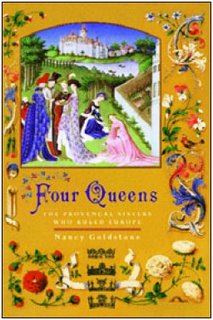 ... and a better subject line. Ye gods, my schedule. I'll be teaching 3 workshops in a 24-hour period, starting tomorrow afternoon, and they're all on different topics. At least I've got my prep work done. I'll be relaxing tonight by watching Dancing with the Stars. Yes, it's silly, I don't care...
Something tells me readers of this blog will be interested in these upcoming works.
To the left:
Four Queens: The Provençal Sisters Who Ruled Europe, by Nancy Goldstone - to be published by Viking next April. A joint biography of Marguerite, Eleanor, Sanchia, and Beatrice of Provence, "four accomplished sisters who rose from near obscurity to become the most powerful women in Europe."
From Publishers Marketplace last week:
Jacqueline Kolosov's The Red Queen's Daughter, which imagines a life for Mary Seymour, the daughter of Henry VIII's last wife Katherine Parr, as she struggles to resist love and other courtly entanglements and strives to fulfill her destiny as white magician and protector of the Virgin Queen, sold to Alessandra Balzer at Hyperion, in a pre-empt, by Sara Crowe at Harvey Klinger. (No estimated pub date listed.) Her website describes it as YA historical fiction/fantasy.
Since I just mentioned my review of McKay's previous novel (also from PM):
Canadian rights to The Birth House author Ami McKay's THE VIRGIN CURE, to Diane Martin at Knopf Canada, in a significant deal, by Helen Heller at Helen Heller Agency.
And from the news desk:
Janet Maslin (New York Times) finds Michael Cox's The Meaning of Night quite convoluted and windy. I haven't read it yet. Has anyone?
Sunday, September 17, 2006
Weekend reading
Two more of my Booklist reviews are online at Amazon: Sebastian Faulks' Human Traces (which credits my editor, Brad Hooper, instead of me; the actual magazine has it right) and Ami McKay's The Birth House.
Friday afternoon when I got home, I found (amidst the piles of chick lit, paranormal romance, and other books I can't assign) an envelope from Random House with a brand-spanking-new copy of Charles Frazier's Thirteen Moons. It happens to be a duplicate, so this one's mine, all mine. Did I start reading it right away? Of course. I'm on p.80 and I must say, it's more than living up to the hype. After the past six weeks of blah reading, with a couple exceptions, I'm finally enjoying fiction again.
Friday was also the due date for November's HNR reviews, and most of them were sent between 6pm and midnight. It's amusing how predictable it is. Everything that's arrived, I've pasted into my file, but there are a few stragglers that I'll chase up tomorrow.
Enjoy what's left of the weekend, people. We're heading to Champaign for shopping and dinner.
Friday, September 15, 2006
I stole this meme from Sarah Weinman
It's Friday, so let's have a little fun. Here are the rules: Pick a historical novel. Change one letter in the title. Describe the plot. Hopefully you'll find that the book just writes itself.
See the post from Weinman's blog here; this game seems a lot easier with mysteries for some reason.
My submissions:
CLAN OF THE CARE BEAR:
In prehistoric Europe, young Ayla takes refuge with members of a peculiar species who couldn't possibly be human.
THE FATAL CROWD:
King Stephen and his cousin, Empress Maud, are trampled underfoot by rampaging peasants sick of hearing rumors about their affair.
THE QUEEN'S FOOD:
Let's chow down with Mary Tudor and her courtiers.
HARUM:
A multi-period epic of Salisbury Plain and its very secret and scandalous history.
TALES OF PASSION, TALES OF POE:
The many lives and secret sorrows of Edgar Allan P.
A DARK AND DISTANT WHORE:
Reay Tannahill's sweeping Victorian epic about a cold and haughty courtesan.
SHYGUN:
The Elizabethan adventurer who would have conquered feudal Japan - if he weren't so timid.
SWORE AT SUNSET:
Don't let the sun go down on King Arthur, damn it.
You can do better than this, I'm sure. Your contributions are more than welcome.
Thursday, September 14, 2006
And now, the news
Historical fiction's been appearing in the press a lot lately.
Newsweek's 9/18 issue will have an exclusive interview with Charles Frazier about his latest, Thirteen Moons, but you can read it online now. They call it a "gorgeous book." I want to read it, although I admit I'm probably one of the three people on earth who has neither read Cold Mountain nor seen the movie... still haven't read Da Vinci Code either, for that matter. Someone take away my reviewing license now.
Historical settings, fictional characters, winning combination - so concludes USA Today in their profile of hot historical novels for the fall season.
Ted Clarke from the Weymouth (MA) News (my in-laws' hometown paper) has a piece on how to read historical fiction and why. It's a very good article, quite lengthy too. It even mentions the HNS definition of historical fiction, and provides the URL for Susan's Squidoo page at the end.
Took a glimpse at my site stats yesterday and saw that the number of visitors this blog gets per day has doubled since last week. Why? Everyone and their brother is googling "Thirteenth Tale" and, what do you know, an entry of mine from June 5 appears on the first page of search results. The novel's out now. Anyone else read it?
Wednesday, September 13, 2006
This quiz seems to be catching
Rural area - check.
Lots of grain growing around here - check.
Dizziness, mental impairment, hallucinations - no comment, but it HAS been a long week, and it's only Wednesday.
Dizziness, mental impairment, hallucinations - no comment, but it HAS been a long week, and it's only Wednesday.
Which Medieval Plague Do You Have?

Congratulations! You have St. Anthony's Fire! Today known Ergotism, this illness is caught through ingestion of a fungal infection of grain, usually rye. If you are not already, you soom are going to be suffering from dizziness, hallucinations, and a sensation of burning in the limbs, thus giving the disease its name. It could result in gangrene. The good news: there is a 60% chance you will survive it! The bad news? You will wish you had not. You will have lingering symptoms for the rest of your life, including mental impairment and being more susceptible to it in the future rather than having immunity. You probably live in a rural town undergoing a very wet winter to have caught this skin-reddening sickness.
Take this quiz!

Quizilla
Join
Make A Quiz More Quizzes Grab Code
Tuesday, September 12, 2006
Highlights from Random House's spring list, and more randomness
The blogosphere is the fastest means of information transmission around, I swear. My review of Sara Donati's Queen of Swords is posted on her blog, though it's not out yet in Booklist. It'll probably be out in the Sept. 15 or October 1 issue.
One of the nice ladies from Acquisitions brought a huge box from Random House to my office yesterday afternoon. Okay, so I'm weird, but I always look forward to this box arriving, because it has a couple dozen catalogs from all the RH imprints and other publishers for which they act as distributors. However, since I spent the afternoon figuring out whether a new e-journal package deal would save our library money, rather than drooling over forthcoming novels, I took the box home. Here are some highlights.
- Sheridan Hay's The Secret of Lost Things (Doubleday, March) - "a young Australian woman takes a job at a vast, chaotic emporium of used and rare books in NYC and finds herself caught up in the search for a lost Melville manuscript." Not historical, but could be fun.
- Michael Wallner's April in Paris (Doubleday/Talese, April) - written up as a suspenseful love story about a German soldier and a French Resistance fighter in occupied Paris. Part of the publisher's new series of international fiction, something I applaud. This one's from Germany.
- Alison Weir's Innocent Traitor, about Lady Jane Grey, will be out from Ballantine in February but everyone seems to know this already.
- Judith Merkle Riley's long-awaited The Water-Devil (Three Rivers, Jan) is the 3rd volume in her Margaret of Ashbury trilogy.
I haven't posted about most of these on the HNS forthcoming books page. I may do that this coming weekend.
This has nothing to do with historical fiction, but I want a copy of linguistics guru David Crystal's The Fight for English: How Language Pundits Ate, Shot, and Left, and not just because I enjoy the title.
Meanwhile, I'm about halfway done with Beatrice May's Sister to Jane, a very short Robert Hale novel about Lady Katherine Grey that I'd hoped to review here, but it's not very good and I probably won't finish it. It's a quick read, though. (Does that count as saying something nice?)
Monday, September 11, 2006
Always say something nice
Authors in the biblioblogosphere (I confess I like that word) regularly go online to vent about bad reviews. You don't hear too much from the other side. How do you feel about writing negative reviews? Even if the book was a real stinker, in your humble opinion, do you ever hesitate to express your thoughts because you're afraid of hurting the author's feelings? Do you tone down your review as a result? Do you avoid writing the review altogether?
Or, on the contrary, have you ever written a negative review so sarcastic and witty that you're gleefully proud of it?
Lots of questions here.
I often hear the word "fair" bandied around. Reviewers feel that their analyses have to be fair. I appreciate the sentiment, but am not sure it's applied in the way it's intended. The word is often used to mean "balanced," i.e., reviewers should always find something positive to say even when they hated a novel and wanted to fling it across the room. Yet the opposite never holds true. If you truly loved a novel, chances are you won't go out of your way to find something critical to comment on.
To me, the dictionary definition of the word "fair" seems more appropriate - free from bias, dishonesty, injustice. In other words, reviewers should be open-minded and judge a novel based on what it is. There are certainly kind (or kinder) ways to express criticism, I'm not disputing that, and I have no problem with it either. And yes, it can help to assess a novel's appeal to other readers if you find a book's simply not your type. That falls into my definition of "fairness," and is different from its being "balanced." (Though you may quibble.)
For a classic example of how "always say something nice" can be taken to the extreme, check out Philip Hensher's review of James Thackara's The Book of Kings, published in the Guardian's Sunday Observer in September 2000. Ouch! You have to admit it's funny, though (or at least I can). If you felt a novel deserved it, could you picture yourself writing a review like this?
What does the word "fair" mean to you, as a reviewer, as a reader, or even as an author?
Sunday, September 10, 2006
A cover art comparison
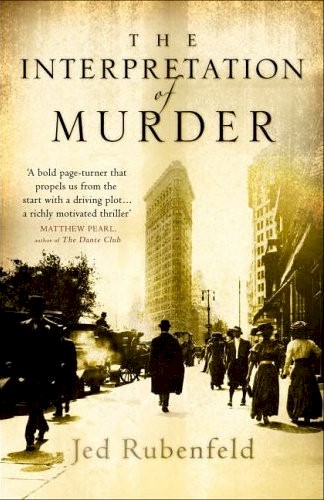 | 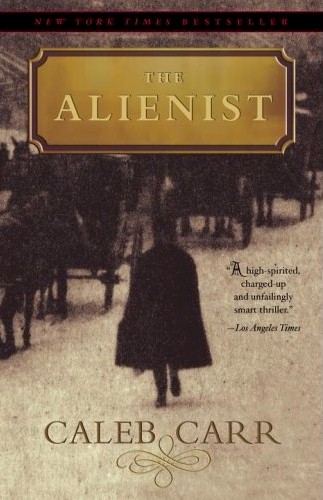 |
Two literary thrillers about murder and psychiatry in turn-of-the-century New York City... two similar covers. (Look at the central figure.) These are the British versions.
Many reviewers have already compared the two novels because of their similarity of theme. I can't call this as strong a trend in cover art as the "headless bodice" type - seems to be more of an attempt to attract the audience of one to the other - but do you know of any other covers that resemble these? Anyone read either, or both?
Saturday, September 09, 2006
This isn't a real post
Yes, I am still alive - mostly. Hard to believe it's been a week since I wrote anything here. Things have been so incredibly busy at work and with conference stuff that I've barely had time to think about historical fiction, let alone read it... although I've finally found a novel it looks like I'll be able to finish: Ann Parker's Iron Ties, and I need to get it read so that I can use it as my final book for the NoveList piece I started last weekend. I also understand that I have another Booklist review book arriving soon (it's always a surprise).
Up way too early on a Saturday, but at least I've updated the HNS website and gotten my email down to a manageable level. Yawn, though. I think I'm going back to bed.
In the meanwhile, if you haven't taken a gander at Jeri Westerson's interview with Margaret Frazer and Sharan Newman, medieval mystery novelists, it's worth reading. Some interesting comments on the relationship between historical novelists and academia, and publishing in the US and UK, among other things.
Saturday, September 02, 2006
Saturday afternoon at the library, and some upcoming picks
It's around 3pm, the crowds have started to disperse (such as they were, on this very slow Saturday of Labor Day weekend), and I've already written brief reviews of four out of five novels for my November "What We're Reading" column for NoveList. Since I'm totally incapable of reading fiction at the reference desk, it's a good time to go through the list of forthcoming historical novels and pick out some titles that look to be worth reading. (It's either that or read the scintillating letters-to-the-editor column from the local paper, which someone happened to leave behind on one of the study tables; reading them always makes me want to move back to Boston. Which would you choose?)
Last week, I went through the online catalogs from Penguin, Time Warner, and Simon & Schuster imprints, and posted blurbs for the historical novels found therein. If you haven't been to the HNS forthcoming books page in a while, you'll find some new things there.
Janice Graham's The Tailor's Daughter (which Amazon seems to be mixing up with Maggie Bennett's novel of the same name), out in October from St. Martin's, features a deaf woman in Victorian England who "sets off on a treacherous journey that will lead her into a world of deception, murder, and madness." It boasts a nice blurb from Philippa Gregory. And I know I've seen that cover image before, somewhere...
Not that it needs any more publicity than it's getting, but I've been hearing great things about Charles Frazier's Thirteen Moons. I almost took it for myself to review for HNR before "reader's block" hit me, and figured I owed it to the novel to send it to someone else. Forthcoming October 3rd from Random House.
My review of Barry Unsworth's The Ruby in Her Navel is finally posted on Amazon, if you look for the Booklist mention. Also October, from Doubleday/Talese. I warned you about the major spoilers in the Publishers Weekly review, though, so beware. The novel's definitely worth reading, and no, there's not a word in my review about its taking at least 75 pages for the plot to get moving. (Which I blogged about several months ago, if anyone remembers.) Why not? Because I only had 175 words to work with, and I decided it didn't matter in the end.
Isabel Allende has a new book forthcoming in November, Ines of My Soul, a biographical novel about Chile's founding mother. I've yet to read her Zorro, but I was impressed by both Daughter of Fortune and Portrait in Sepia; among other things, they taught me that "magical realism" wasn't a literary style to be feared.
I've also been hearing very good things about Donna Gillespie's Lady of the Light, volume 2 in a series that began with The Light Bearer, which finally found an American publisher after years of being available only in German.
What novels are you looking forward to?
Friday, September 01, 2006
Conference stuff, revisited
A quick note - the HNS conference board of directors will be accepting proposals for talks/workshops/panels/etc for the 2007 conference through the end of September. The online form is here. The conference will be held in Albany, New York, from June 8-10, 2007. (Yes, I've blogged about this before, but just a friendly reminder...)
If anyone has questions about the conference, please leave a comment here, or feel free to email me. The campus IT staff is going to be taking our email down (again, argh) for the long weekend, so if you need a quick answer, use sarah.johnson@historicalnovelsociety.org instead of the one on my profile.
In the meanwhile, I'm going to be spending the weekend at the reference desk (Saturday), packing up review books (Sunday), and getting ready for Tuesday meetings (Monday). Not terribly exciting, no. In between, I may attempt to get through more of this novel I started last week, or I may put it on hold and start reading linguistics stuff again. Not sure.
Thursday, August 31, 2006
Saying goodbye to ourselves
[Preface: I wrote this essay for the November 2004 issue of the Historical Novels Review. Since the fall semester has just begun at Eastern Illinois U., and the freshmen are looking younger than ever, it seemed an appropriate time to repost it. This was meant to be a discussion on why we shouldn’t pigeonhole ourselves in our definitions of “historical fiction,” but also why we can’t help doing it; it can be read as a sequel of sorts to the definition article/conference talk that's posted on the HNS website (which I wrote two years earlier, in 2002).
If you want to read the current Mindset List, published annually by Beloit College in Wisconsin, you can find it here. Enjoy.]
As some of you know, I work full-time as a reference librarian in a university library. Each autumn, when the freshmen arrive on campus, the librarians remark on how much younger the new students look than last year’s crop. Of course, they’re the same age as always, while we’re the ones who are growing older. Nobody really wants to admit that. Still, it is true that the age gap between the library staff and brand new university students gets wider all the time.
Each year, academics across the United States refer to the famous “Mindset List,” produced by Beloit College in Wisconsin, to put themselves in the shoes of the young people that they’re instructing. The list takes elements of history and popular culture and views them from the perspective of the younger generation. At my library, we print out each new edition as it’s published, and place it at the reference desk for our own edification.
Most of today’s new university students were born in 1985 or 1986, and are considered the Class of 2008. Here are some history-based examples from recent years’ Mindset Lists that describe their viewpoints. The details given in parentheses are my additions. For these students:
- Most of them know someone who was born with the help of a test tube. (Louise Brown, first test tube baby, born July 25, 1978)
- They have no idea that Americans were ever held hostage in Iran. (Last hostages freed January 20, 1981)
- They have no meaningful recollection of the Reagan era, and did not know he had ever been shot. (March 30, 1981)
- There has always been an heir to the heir to the British throne. (Prince William born June 21, 1982)
- The drinking age has always been 21 throughout the country (USA). (National Minimum Drinking Age Act of 1984, signed into law on July 17)
- The precise location of the Titanic has always been known. (Wreck discovered September 1, 1985)
As its co-editor Tom McBride, Keefer Professor of the Humanities at Beloit College, states: “The Mindset List, among other things, is a reminder of that [new] world—a world that makes education a tougher yet more fascinating job than ever. In saying hello to the new generation, which [educators] labor mightily to understand, but with mixed results, they are saying good-bye to themselves.”
Today’s new university students have a vastly different perspective on the past than even people of Generation X – those individuals born in the 1960s and 1970s – do. Each generation has its own perspective on what connotes history, and it can be a very personal definition. It’s an odd kind of culture shock. As historical novel readers, we’re used to envisioning the lives of people who lived generations, or at least one generation, earlier than ourselves. It can be disconcerting to realize, via publications such as the Mindset List, that younger generations might feel about us the way we feel about, well, characters in historical fiction.
According to the official HNS definition, a historical novel should have been written at least fifty years after the events described, or have been written by someone who wasn’t alive at the time. We acknowledge that this definition is arbitrary, because we can’t please everyone. It benefits us to be precise. After all, we can’t review everything. But the more I think about people’s varying definitions of “history,” particularly those of the younger generation, it occurs to me that it benefits us just as much to be flexible.
This point became clearer to me when looking through the backlist catalogue of Scholastic, a major publisher of children’s and young adult fiction. They publish four series of fictionalized diaries of teenagers and older children who lived in different historical periods. I recently spotted one of the latest entries from the Dear America series, Ellen Emerson White’s novel Where Have All the Flowers Gone: The Diary of Molly McKenzie Flaherty. Set on the American home front in 1968 Boston, Massachusetts, it describes one teenage girl’s personal Vietnam-era experience as she volunteers in a military hospital, sees war protests firsthand, and fears for her brother, fighting for his country on the other side of the world. Is it set more than fifty years in the past? No. Was the author alive at the time the novel depicts? Yes. But is it historical fiction? Members of the novel’s teenage audience, who were born nearly twenty years after the novel takes place, would probably think so.
I can also recall, while growing up, being fascinated by Judy Blume’s 1977 children’s novel Starring Sally J. Freedman As Herself, about a ten-year-old Jewish girl from New Jersey who winters in Miami Beach with her mother and brother. Like any child of her age, her curiosity runs away with her at times. She dreams of swimming as beautifully as movie star Esther Williams, with her elegant bearing and super-white teeth. Having been deeply affected by the death of her cousin Lila in the Holocaust, Sally seriously wonders if her next-door neighbor may be Adolf Hitler in disguise. Back then, I didn’t really care whether Blume’s novel was “historical fiction” or not – I just thought it was a good story. But it did make me consider how World War II influenced the day-to-day lives of Jewish Americans, many of whom lost family members in concentration camps overseas. They didn’t teach you about this sort of thing in school – how average people were changed by historical events – and they probably still don’t. But this is what historical fiction is all about.
Lest anyone feel I’m being pedantic by selecting two children’s books as examples, take Charlotte Bingham’s The Moon at Midnight, a fairly new saga set in the fictional English fishing village of Bexham in 1962, over forty years ago. One of Bingham’s main points was to show the contrasting values between members of the Greatest Generation and their children, who don’t seem to care about the sacrifices their parents made for them during World War II. Reading this novel, its historicity is well evident, at least to a reader (like me) who didn’t live through those events firsthand.
All of these thoughts were brought home to me via a discussion on the Internet discussion group rec.arts.books.hist-fiction, on which fans of the genre post messages about their interests. Several readers agreed that they couldn’t conceive of “historical fiction” as anything set during or after World War II, because it was an event they lived through. On the other hand, historical fiction can be a valuable tool in demonstrating the differences between now and then, even if the “then” isn’t that far away in actual years. Reading these novels can be a real eye-opener, showing us how many things – social conditions, politics, and the influence of contemporary events in our daily lives – have changed.
It may be true, as an HNS member suggested in a recent letter to the editor, that many readers of this magazine prefer to read about eras long past. I enjoy this type of setting myself, and they’re certainly popular with reviewers. But occasionally reading a novel set within the last forty years, one with significant historical content, brings home to me the fact that times have changed considerably more than I might believe.
Of course, there’s another advantage to reading these novels. Thanks to historical novelists who write about the recent past, a past that many of us still remember well, we don’t have to “say good-bye to ourselves,” as the Mindset List suggests. We can relive those times just as often as we’d like – and we can introduce the younger generations to them, too.
Tuesday, August 29, 2006
In which I spend way too much money at Amazon UK
Yes, most of the money I make on my writing projects goes to support my book-buying habit...
This morning while browsing Fay Sampson's website, I noticed she has a new book out. One I've never seen mentioned anywhere else. Hmph. The Land of Angels, about Queen Bertha of Kent and the coming of St. Augustine of Canterbury, as her website reports, was published on July 31st by Robert Hale. Given that her earlier The Flight of the Sparrow went out of print before I could buy it, and it took me five more years of searching before I found a copy of the darn thing, I went right to Amazon UK and ordered her latest. Despite the outrageous price, which included a £1.99 "sourcing fee" because it's a special order. I almost suspect it's out of print already, because Hale novels normally aren't this hard to obtain...
Did I mention it has a really cool cover?
To assuage my guilt at the £2.99/book shipping price plus the £3.49/order shipping price, which I'd be paying regardless, I added a copy of Edward Charles's In the Shadow of Lady Jane to my shopping cart.
Now I just have to wait until mid-October until my books arrive, and my credit card gets charged the $80 or so I paid for both of these. I must be nuts.
Friday, August 25, 2006
It's not you, it's me
(Anyone else see that Seinfeld episode?)
After attempting and setting aside four novels in rapid succession, I've come to the conclusion that the problem is neither the novels, nor the authors' skills - it's me. Yikes. This is the first time in maybe 7-8 years that I haven't had a novel on the coffeetable, nightstand, etc., waiting to be picked up and read. I have several thousand sitting on my bookshelves, but they don't appeal at the moment. It's a weird feeling.
Basically, I think I need to read something besides fiction for a short time (if I read anything at all). Fiction in general, that is, not just historical fiction - as one of the four was a contemporary chick lit/mystery that I read 3/4 of the way through before skimming to the end. (As an aside, the one novel that managed to hold my attention within the last week and a half was Megan Abbott's excellent Die a Little, a crime/noir set in 1950s LA. I'll write up a summary of that one for my next NoveList column.)
What have I been reading instead, you ask. The answer is - linguistics essays. This may seem like the most boring topic in the world to you, but au contraire, they're fascinating reading for anyone interested in how language works, and is used. Back when I was in grad school, I bought a book of essays by Geoffrey K. Pullum called The Great Eskimo Vocabulary Hoax, and Other Irreverent Essays on the Study of Language. I read a few of them back then, but am reading the rest of them now.
The essays are hilarious, if you enjoy dry humor as well as the author's successful attempts at making fun of stuffy people. (Linguists are not snobs.) For the title essay, Pullum explains why the myth of Eskimos having countless (200? 400? how many really?) words for snow is completely false. And why writers should stop using that cliché in trying to describe quantities that are, quite simply, indescribable.
Pullum's also a contributor to the lively and popular Language Log, a collaborative blog hosted at the University of Pennsylvania. (One of my former profs is another contributor, but I won't name drop... too much.) If you enjoy writing, or words in general, it's worth checking out and bookmarking.
But bringing the topic back to historical fiction and other writerly stuff: here are some entries from the Language Log that may appeal.
Novelist Frank Delaney (the multi-period epic Ireland) says that the Irish language has no word for sex. The linguists prove him wrong.
The bane of the author's life, copy editors, and their false claims about what is and isn't grammatical.
Dorothy Dunnett has been cleared of anachronism. Ditto for Patrick O'Brian. (Not surprising.)
Ever try to analyze Dan Brown's writing style? They've done it for you, and it's not pretty.
TGIF and all that. I'm going to read another of those essays now. (BTW, the Cookson and Lewis novels - that wasn't just me. I don't think.)
Wednesday, August 23, 2006
Historical novel title changes...
I've been browsing older historical novel deals in Publishers Marketplace and have come across some interesting data on title changes. As I'm sure you know, titles of novels are occasionally changed after they're sold, usually for marketability purposes.
The following are examples of this phenomenon: when the publishers bought these novels from the authors' agents, they had different titles than the ones you'd recognize. Do you prefer the newer titles, or the older ones?
Diana Gabaldon's Lord John and the Chamber Pot became Lord John and the Private Matter
Jenni Grizzle's Beyond the Mists of Midnight became Jennifer St. Giles's The Mistress of Trevelyan
Linda Holeman's Linny Gow became The Linnet Bird
Deborah Larsen's Two Falling Voices became The White
Kate McCafferty's Cot became Testimony of an Irish Slave Girl
Lilian Nattel's The Theater of Consolation became The Singing Fire (not The River Midnight as I originally reported, sorry - my mistake)
Mary Rourke's Mary and Joanna became Two Women of Galilee
Jed Rubenfeld's The Name of Action became The Interpretation of Murder
Frances Sherwood's Threshold became The Book of Splendor
Anne Easter Smith's Of Blood and Roses became A Rose for the Crown
Debbie Taylor's The Mistress and the Dwarf became The Fourth Queen
Edmund White's The Life of Frances Wright by Mrs. Trollope became Fanny: A Fiction
I tend to agree with all of them, with the exception of the Larsen - Two Falling Voices sounds like the more evocative and appealing title to me.
Monday, August 21, 2006
The 50-page rule
How long do you continue to read an unenjoyable book before giving up?
Nancy Pearl - reader's advisor extraordinaire, author of Book Lust, and model for the librarian action figure - came up with the Rule of 50: "If you still don't like a book after slogging through the first 50 pages, set it aside. If you're more than 50 years old, subtract your age from 100 and only grant it that many pages."
More and more, I'm discovering that life's too short to read novels that I'm not enjoying, or simply am not in the mood to read, even if I feel I should read them. Until recently, I kept bookmarks to mark my place in novels I never got around to finishing. For example, my copy of Dorothy Dunnett's King Hereafter still boasts one of these, ten years after my valiant attempt at reading it (please don't send me hate mail because of this). I got about halfway through. I don't know if I do this to assuage any possible feeling of guilt on my part, or if it's my lame attempt to avoid the obvious truth - that there are so many other books out there that, most likely, I'll never get around to picking these novels up again.
I don't have a hard and fast rule for these things. Review books, I'll slog through regardless of enjoyment (but fortunately, I do enjoy most). And I'm occasionally rewarded for my efforts - sometimes novels surprise me and turn out to be better than originally anticipated.
My latest two rejectees are Catherine Cookson's The Silent Lady and Hilda Lewis's I, Jacqueline. The former was Cookson's final novel, which she dictated to her husband from her sickbed - she was very ill at the time. I found the plot convoluted and the characters unappealing, and I really wonder if it would have been published if Cookson wasn't the author. I made it through about 30 pages. I, Jacqueline, a biographical novel of Jacqueline, Countess of Hainault, started off well, but the heroine was of the TSTL type - so naive and wishy-washy that I spent most of the novel (the half I read, anyway) cringing from her poor decisions.
It's possible I just wasn't in the right mood to read any of these novels. But I'll probably never know.
Saturday, August 19, 2006
Idle observations on shelving
I'm writing today from Newington, Connecticut (my hometown), where I'll be until tomorrow. En route to Boston yesterday, we stopped at the New England Mobile Book Fair in Newton Highlands, which a friend had told me about - despite living in the area for years, I'd never been there before. Contrary to its name, the bookstore is not mobile; it resembles a warehouse, with no windows, high ceilings, and books absolutely everywhere.
The interesting part is that aside from new arrivals and nonfiction, which are mostly grouped by category, adult fiction was arranged by publisher rather than by genre. Ace to Zebra, in other words (although Zebra was probably with other books from Kensington; I didn't pay attention). Books from different but related imprints (part of the same company division, maybe?) were shelved together - Ballantine and Del Rey, for instance. Those from Knopf and Crown, on the other hand (both Random House imprints, different divisions), are not. Within each publisher group, books are grouped by format (hb, pb, tpb), and then arranged alphabetically by author.
Yes, I tried to figure out the system; it's the librarian in me, I admit. I think it's probably based on how books arrive at the store, so it makes unpacking easy.
The store has a self-service kiosk where you can look up a book and find out who the publisher is, plus a customer service counter, where you could ask a human being about it. The shelves themselves were of the utilitarian, tall, metal, open-backed type. The overall selection was excellent, once you dug deep enough.
I was bemused by the arrangement, since it doesn't facilitate browsing for the majority of folks (who won't know the details on who-owns-who in the publishing industry, and don't care who published what, either). It allows for an odd sort of serendipity, and I guess it must work - the place has been in business for years - but I didn't see anyone else, besides me, browsing the shelves.
Tuesday, August 15, 2006
Tuesday afternoon, random notes
I'm starting to dislike Blogger's insistence on titles, but I do like the Moody Blues... and it fits. Just sitting here figuring out what to make for dinner, UPS is pulling up outside, and I'm about to start cataloging (via Librarything and Readerware) the piles of books that arrived recently. Oh, and the Donati review has been written and turned in, on the same day, even (this is not typical) - 200 words exactly, and not another review book in sight. Yet.
The burning question Entertainment Weekly has on the upcoming Sofia Coppola film Marie Antoinette is: "Will audiences buy the blend of period detail and deliberate anachronism (for example, Coppola's Marie is a sneaker-wearing punk who listens to Siouxsie and the Banshees)?" Um, what? But the Wikipedia article agrees with this raucous auditory image, so of course it must be right... I thought A Knight's Tale - which uses a similar technique - was amusingly unpredictable in a campy sort of way, but it wasn't based on a historical character. I'm not sure I'm going to like Marie Antoinette - maybe I'm too old for this "modernizing the historical character" business.
In other historical film notes, I saw Tristan and Isolde on DVD this weekend and turned it off about halfway through. Gorgeous scenery, but slow-moving, and I didn't care for Tristan much at all.
I don't often mention children's books here, but this one looks interesting (from Publishers Marketplace):
Sibert Honor author and illustrator James Rumford's BEOWULF, a retelling of the classic tale of good and evil using only Anglo-Saxon words, to Kate O'Sullivan at Houghton Mifflin Children's, in a nice deal, by Jeff Dwyer at Dwyer & O'Grady (NA).
I studied Anglo-Saxon once upon a time - took a semester-length course while I was in undergrad at Drew University, circa 1989. I wish I could remember more of it, but we did read Beowulf in the original.
Saturday, August 12, 2006
Deep thoughts on reviewing...
Here's an ethical issue I've been struggling with recently. Deep thoughts for a Saturday morning, I know, but I'm mostly awake for a change and am not going to question it.
Generally, I believe - have always believed, as far as my own reviews are concerned - that book reviews should stand on their own; that regardless of requirements in length, they should be written so that every word counts; and, as a consequence of this, that I don't feel right about going into detail on my thoughts about a book before (and, to a lesser degree, after) the actual review is written and/or published.
(Yes, that was a long sentence. If I remembered even 1/4 of what I learned in my linguistics grad program, I could probably diagram it, but I don't, so I won't...)
I even feel a little funny about mentioning the books I'm in the process of reviewing, which may be going too far even for some people. I have no problem discussing these things in private email, generally. But I know the number of hits that come to this site because people are searching for book reviews, and I'm concerned that casual surfers - and even egosurfing authors - will pick up on my thoughts about a book before the review's published. And that goes against my feeling that a review should stand on its own, etc.
On the other hand, the folks at Booklist (their blog, Likely Stories, is linked from the left-hand sidebar here) regularly list the books in their to-be-reviewed pile. They go into detail about their opinions on passages within novels, as well as their general approach to a review they're still writing. I have a lot of respect for the staff there (and not only because they asked me to review for them). They've also been in the "review" business far longer than I have, which is a mere seven years so far. I find their blog fascinating because it goes into the little details that I also deal with often, though don't talk about much here. Like the problems with reviewing and quoting from uncorrected proofs, my dislike of reviewing from photocopied galleys (sometimes necessary), the challenge of staying original even when reviewing similar books... and so forth.
Also, talking about good books in a public forum (like a blog) does give them additional publicity. This isn't, and shouldn't be, the ultimate goal of the book reviewer, though as a reader, I certainly do like to spread the word about worthwhile novels. The converse, I suppose, could be said for my going into greater detail (than a review allows) on what I didn't like about a book.
And finally, given that reviews are just one person's opinion, namely my opinion in this case, how much does this matter in the grand scheme of things anyway? (Probably not a good excuse, here.)
Anyway, if they are comfortable with posting details on reviews-in-progress, who am I to question it? Is it time for me to start rethinking my own position on the issue?
I have been testing the waters, to some degree, by not-so-subtly hinting at the book I'm currently reading for review. I still feel a little not-right about it, I admit, which is one of the real reasons why I deleted my earlier post about Hudson Lake, the novel I covered for HNR Online last week.
What do you think - should reviews stand on their own? Is it appropriate, or helpful, to post thoughts about them in advance of the review's publication? Or, third option, am I simply thinking about this issue way too much?
Book sale alert
I've been surfing around this morning - as usual - and noticed that Greenwood is having an up-to-50%-off sale on a number of history (and other) titles from 2005 and earlier. They publish the "Daily Life Through History" series, the volumes of which have potential use for historical novelists looking for an introductory reference. My library owns a number of them. Details here.
As a disclaimer, I'll mention that another imprint of Greenwood published my book, though they didn't ask me to post about this sale, and I don't benefit financially (or otherwise) from mentioning it. Just thought it would be of possible interest to readers and writers.
As a disclaimer, I'll mention that another imprint of Greenwood published my book, though they didn't ask me to post about this sale, and I don't benefit financially (or otherwise) from mentioning it. Just thought it would be of possible interest to readers and writers.
Thursday, August 10, 2006
Words fail me ...
I'm home today, about 300 pages into my 550-page review book (not 600pp, as I originally said), and it looks like a rainforest outside - lovely, don't know if I'm up for running out to the bank and PO today after all.
Normally when I read a novel for review, I keep a pen and sheet of paper nearby so that I can jot down little notes, impressions, phrases to use in the review. So far with this current review book, though, I haven't written down a single thing. This is both good and bad - good, because it means I've been too wrapped up in the novel to do so, but bad, because a 210-word review will be the end result of this process, like it or not, and I'm not doing myself any favors by failing to think about what I want to write.
For some reason (and maybe this indicates something deep and meaningful about my character, I don't know) I've nearly always found it easier to write critical reviews than glowing ones. When I think about it, it's probably because I'm nearly always able to pinpoint what I don't like about a novel, what doesn't work for me, but it's harder to focus on exactly what does work - especially if nearly everything in the novel does work.
Tuesday, August 08, 2006
I can procrastinate anything
So I took this afternoon off work in the hopes I'd settle down and read my latest 600-page review book, but it just wasn't happening. Nothing against the book, which really is quite good (Sara Donati's latest). Instead, I ended up going through Amazon and collecting info on forthcoming historical novels for 2007, which you'll see if you click on the link. Yesterday, I did the exact opposite, reading the review book rather than posting all of the forthcoming title info I'd collected over the past few weeks. No, this is not my normal means of motivation, but it seems to be working at the moment.
I spotted these on Publishers Marketplace today, and they look good:
Edgar Award-winning Eliot Pattison's BONE RATTLER, a new mystery series featuring a Scottish-born indentured servant and sleuth, who solves related murders and suicides in a colonial New England backdrop of the often violent collision of Native American, European, and African cultures while providing startling insights into the founding of the United States, to Keith Wallman at Carroll & Graf, in a two-book deal, by Natasha Kern at Natasha Kern Literary Agency (NA).
And hey, a librarian novel involving intrigue:
Emilio Calderon's debut novel THE CREATOR'S MAP, about a Spanish architect in the 1930s caught in a web of intrigue involving a librarian, a prince and a map, to Scott Moyers at Penguin Press, for six figures, in a pre-empt, by Thomas Colchie, on behalf of the Antonia Kerrigan Literary Agency (NA).
Monday, August 07, 2006
Amusing Amazon matches
Back from Chicago, some $500 poorer (hotel, dinners out, shopping...) and enjoying the last two weeks of, er, getting lots of work done, before the students return on the 21st.
Very occasionally I check my book ranking on Amazon, but I see today that it's down to #810,304, which doesn't really bother me because (1) most libraries buy it from Baker & Taylor, Ingram, etc., rather than Amazon, and (2) there are a bunch of used copies on Amazon that people would probably buy first, including the cheapest one, with this description: "2005 Hardcover. Has considerable wear and/or hi-lighting/underlining. Your purchase benefits the Brooklyn Public Library." Which makes me wonder what the story is behind that. (And who'd want to buy it, anyway?) Did some reader go crazy with a highlighter in the library, with my book? Shame.
But it's this set of matches that amuses me the most:
Customers who bought this item also bought:
The Economic Implications of Aging Societies: The Costs of Living Happily Ever After by Steven A. Nyce
Supremely American: Popular Song in the 20th Century by Nicholas E. Tawa
African American Literature: A Guide to Reading Interests by Alma Dawson
Genreflecting: A Guide to Popular Reading Interests Sixth Edition by Diana Tixier Herald
Inside the Minds of Mass Murderers: Why They Kill by Katherine Ramsland
Books 3 and 4 in this list are part of the same series as mine. The connections between my book and 1, 2, and 5 on that list, though, not quite as clear.
Thursday, August 03, 2006
Where does the time go?
I've barely blogged anything all week, and here it is Thursday night, I work tomorrow, then we're leaving for a weekend in Chicago right after...
Anyway, if you were fortunate (?) enough to catch the post from last weekend that I deleted, you can find the novel I was talking about here, reviewed on the Historical Novels Review Online page - I posted all of these reviews earlier today, after the HNR Online editor sent them to me. The review in question is the one at the very end. Excellent novel overall, despite the aforementioned issues with the lack of a clear plotline until partway through. I read it from an ARC, which was in POD format, though I later discovered (after checking the publisher's website, and double-checking with the author) that the paperback won't be officially released until next February. Until then, you can purchase the e-book version. If you think a novel set in 1926 rural Indiana sounds like it would be boring, think again. I don't know many other novels that convey the Roaring '20s quite so well.
Anyway, if you were fortunate (?) enough to catch the post from last weekend that I deleted, you can find the novel I was talking about here, reviewed on the Historical Novels Review Online page - I posted all of these reviews earlier today, after the HNR Online editor sent them to me. The review in question is the one at the very end. Excellent novel overall, despite the aforementioned issues with the lack of a clear plotline until partway through. I read it from an ARC, which was in POD format, though I later discovered (after checking the publisher's website, and double-checking with the author) that the paperback won't be officially released until next February. Until then, you can purchase the e-book version. If you think a novel set in 1926 rural Indiana sounds like it would be boring, think again. I don't know many other novels that convey the Roaring '20s quite so well.
Monday, July 31, 2006
Publishing news du jour
I really ought to come up with more creative titles for these posts where I just include news bits and such... anyway, here are some things Publishers Marketplace had to report recently. I also added a bunch of new links to blogs I've been following (on the sidebar).
Harry Turtledove's THE BATTLE OF TEUTOBERG FOREST, about one of the most important battles in history, in which German tribes repelled the Roman legions; it was Rome's Vietnam and marked the limits of their expansion, sold to Marc Resnick at St. Martin's, in a nice deal, by Russell Galen at Scovil Chichak Galen Literary Agency (NA).
[Someone posted on the HNS list last year, asking for books about this battle; I wasn't able to find many. I bet this one'll be popular.]
Journalist Vanora Bennett's PORTRAIT OF AN UNKNOWN WOMAN, the story of Sir Thomas More's ward, a woman torn between Hans Holbein, who arrives to paint the More family's portrait, and her former tutor, with the shadow of More hanging over all of their lives as the Reformation sweeps into full swing and King Henry VIII contemplates a rift from the Catholic Church as Protestant heretics grow increasingly bold, sold to Laurie Chittenden at William Morrow, in a pre-empt, for publication in 2007, by Eric Simonoff of Janklow & Nesbit.
[Wow, that's all one sentence]
Ildefonso Falcones's THE CATHEDRAL OF THE SEA, set in 14th century Barcelona, telling the lives of the citizens caught up in the 80-year construction of the Church of Santa Maria - those who devoted their lives to building it, or who sheltered there as political or religious refugees, to Jane Lawson at Doubleday UK, in a nice deal, by Sandra Bruna Literary Agency.
Finally, although you won't see anything about this on Publishers Marketplace, my editor's been asking me about a 2nd edition of Historical Fiction: A Guide to the Genre, since the field's been so hot lately. Looks like I'll probably be starting work on it this fall... most likely a supplement rather than a full-fledged 2nd edition, though, so it doesn't end up being 800+ pages like the previous one. I better get my typing gloves ready...
Sunday, July 30, 2006
Picking five favorite historical novels is difficult
... but I couldn't resist making the attempt. Following the lists posted by Carla Nayland, Susan Higginbotham, and Elizabeth Chadwick, here's my contribution. This wasn't an easy decision. I rarely read any novels more than once, and in thinking of which five titles to include here, I decided to list those novels that stood up to multiple rereadings. You can call this my selection of "desert island novels," in a sense. It's quite an eclectic list, now that I think about it. These are in no particular order.
(1) Sharon Kay Penman's Welsh trilogy: Here Be Dragons, Falls the Shadow, and The Reckoning.
It comes as no surprise to me that Penman's novels have appeared on the lists of several other HF bloggers. For me, nobody brings the personalities and politics of royal medieval England and Wales to life quite as well as Penman. Of the three, Here Be Dragons is my favorite, since I particularly enjoy reading novels about royal women of whom little has been written, and I thought Penman did a superb job bringing the story of Joanna, bastard daughter of King John, and her husband Llywelyn Fawr to life. Excellent evocation of the historical setting, characterizations, and plotting; what more can be said?
(2) Alison McLeay, Passage Home (UK title, The Wayward Tide) / Sea Change (UK title, Sweet Exile).
These are my sentimental favorites - old-fashioned romantic epics in the best sense of the term. In The Wayward Tide (I prefer the British titles), Rachel Dean, a girl living with her dysfunctional family on the Newfoundland coast in 1827, develops an immediate bond with a restless wanderer named Adam Gaunt. She follows him first to Liverpool and then to the frontier West, learning the hard way that men can't be held against their will. Sweet Exile begins a generation later with Kate Summerbee, daughter of a Mississippi riverboat captain, whose life becomes intertwined with those of Adam Gaunt and his son Matthew. Few British authors write about America, but McLeay has the setting as well as Kate's warm, humorous Southern voice down pat. Both Rachel and Kate are survivors, strong-minded yet true to their time, and Adam Gaunt makes for an ideal romantic hero, humanly flawed yet larger than life. Plus, in the course of both novels, McLeay courageously pulls off plot-wise what few authors of romantic fiction would dare try. For me, these novels can't be beat for their sweep, emotional impact, and sheer entertainment. It's disappointing to me that McLeay's subsequent novels, while enjoyable, didn't live up to the promise of the first two.
(3) Barbara Vine, Anna's Book (UK title, Asta's Book).
This is a masterpiece of historical suspense, set in London in the earlier and later parts of the 20th century, as Ann Eastbrook tries to uncover the truth about the birth of her late aunt Swanny, and its relationship to the ghastly murder of a young woman decades earlier. In alternating sections, Ann's grandmother Anna Westerby, a Danish immigrant in 1905 London, meticulously records events from her day-to-day life in a series of journals. Not coincidentally, Ann discovers that the journal pages corresponding to the dates of Swanny's birth are missing. This is an excellent historical puzzle that details the struggles and prejudices faced by newly arrived immigrants in the early 20th century. As a character, Anna isn't likable at all, yet it's hard not to sympathize with her plight. The pieces of the mystery fit together perfectly; the novel's execution is nothing less than brilliant. Despite knowing the ending, I'm still able to read it over and over.
(4) Catherine Gavin, The Snow Mountain.
How inappropriate of me to choose a novel based on a premise that, as we know, historically did not happen. I should be ashamed of myself. The love story that Gavin creates for Russia's Grand Duchess Olga, the 23-year-old daughter of Nicholas and Alexandra who, along with her family, was murdered by the Bolsheviks in 1918, is totally fictional. Still, it's a very moving tale, and I enjoy this novel for the way it gives insight into the personalities of four young women normally thought of as children, but who were really adults and young adults perfectly capable of knowing their own minds. Olga's romance with a Russian soldier who serves her family can't help but be overshadowed by the reader's knowledge of her tragic, unavoidable end.
(5) Morgan Llywelyn, The Wind from Hastings.
Llywelyn's first novel was the only one she set in Wales, and I don't think it's the best she's written; that honor belongs to 1916, in my humble opinion. Yet it's on my favorites list because it's one of the first historical novels I ever read - it was published in 1978 - and it does a wonderful job of portraying a well-known historical era, events leading up to the Battle of Hastings, from a different point of view. In keeping with the times, Edyth of Mercia has no say whatsoever in who she marries, and her true character reveals itself when she finally accepts her fate as wife and queen to Harold Godwineson, the murderer of her first husband, Griffith of Wales. Llywelyn wrote this novel in a deceptively simple style, and her novel is both moving and thought-provoking.
Numerous runners-up as follows, in alphabetical order.
Jane Alison, The Love-Artist
Willa Cather, Death Comes for the Archbishop
Robert Goddard, Painting the Darkness
Hella Haasse, In a Dark Wood Wandering
Cecelia Holland, Railroad Schemes and Rakossy
Margaret Irwin, The Bride
Catherine Jinks, The Notary
Katherine Neville, The Eight
Orhan Pamuk, My Name Is Red
Iain Pears, An Instance of the Fingerpost
Rebecca Ryman, Olivia and Jai
Nigel Tranter, The Master of Gray trilogy
Richard S. Wheeler, Second Lives
Janice Woods Windle, Hill Country
Saturday, July 29, 2006
Saturday's trip to the remainder store
Observant readers may notice that yesterday's post (on the book without a plot) is gone. No big deal; I just decided I didn't want to repeat myself too much when I wrote the review.
Mark and I went up to Champaign this afternoon, though walking around in this 90-degree heat wasn't much fun. After lunch, we stopped and looked around a bit at the B&N, where I made a mental list of some books I want to buy. Then, after giving up on the Showcase of Homes on the western side of Champaign (not the most attractive area; right next to the water treatment plant), we headed back home on I-57 South, stopping at the local outlet mall in Tuscola along the way. The mall is outdoors, and it's about half vacant - I'll be surprised if it's still there in five years. For now, though, it still boasts a Book Warehouse, one of those chain remainder stores you often find in such venues.
I haven't bought anything there in a couple years (and, I know, I should feel guilty for buying anything there at all, given that authors don't get royalties off remaindered books). Besides, the stock hardly ever changes. Today, though, they had a number of fairly new titles on the shelves, marked down to $6.99 each. One of them was Azhar Abidi's Passarola Rising, which I reviewed for Booklist in January - a mere six months ago. It made it on the cover of Viking's winter catalog, by which I assume it was supposed to be a big hit. Well, it apparently wasn't, despite being a charming little historical fable that reading groups would likely appreciate. This may be a title that will do better in paperback; the fact that Amazon only boasts two reader reviews for it (one by Klausner) is a sign that it hasn't been widely read. The remaindered Passarola Rising sat next to piles of several other recent historical novels which I recognized as having been published in February and March.
Not a huge surprise, really - just another sign that shelf life for books isn't anywhere near as long as it used to be.
Thursday, July 27, 2006
Historical film news
On the off-chance you're not sick of TOBG movie discussions by now: British historian slams Portman's period piece. David Starkey has commented on the choice of American actors for the film of The Other Boleyn Girl. I'd say ouch, but this is not a big surprise. Still, I confess I don't get this one remark of his, so maybe someone can enlighten me: "It's another example of how all historical figures have to be portrayed on screen with American accents to appeal to an American audience." I don't think this is really true - Americans generally love to hear British accents in the movies. I also assumed Portman et al would be sporting British accents for the film, like Gwyneth Paltrow did in Shakespeare in Love. Plus, um, Eric Bana is Australian. Comments, anyone? Would you rather have seen British actors, and if so, whom?
Yet another: Hollywood stars head to Britain. A brief note on Cate Blanchett's upcoming reprisal of her Elizabeth I role in The Golden Age, among other things.
Yet another: Hollywood stars head to Britain. A brief note on Cate Blanchett's upcoming reprisal of her Elizabeth I role in The Golden Age, among other things.
Wednesday, July 26, 2006
Albany HNS conference news
Um, that wasn't really supposed to be a rant yesterday, but I'm guessing it came across that way. I've talked about my dislike of spoilers here before, and that was a classic example.... but in retrospect, I probably sounded like I didn't have enough caffeine. (Which would be true.) Anyway.
This morning I posted the call for presenters for the next Historical Novel Society conference, to be held in Albany, NY, next June 8-10, 2007. This form is for potential speakers only... general registration will open around November 1st. But we sold out last time, so if you're interested in going, mark your calendars!
The conference is less than a year away - hard to believe - and I hope to meet some of you in person there. (Blogger table at dinner?) I'm the registration coordinator/budget person for this go-round, plus I'm doing the website work as usual. My friend and fellow board member Trudi Jacobson is the program chair, so any detailed programming-related questions can go to her (details on the form), or you're welcome to post general comments here, too.
Tuesday, July 25, 2006
Spoiler alert
Normally I use this space to point out upcoming historical novels, interesting new websites, etc., but today I'm doing the opposite - advising readers to avoid something. I've noticed that Barry Unsworth's The Ruby in Her Navel, subtitled "a novel of love and intrigue in the 12th century," has repeatedly come up in my "if you liked XX, try this one" Amazon recommendations for historical fiction. That's why I'm mentioning this now, even though the book won't be published until October (US/Canada) and September (UK). Here's a link to the catalog description at Random House's site, should you be interested.
I read this novel myself last month in ARC and would recommend it; the review hasn't been published yet, so that's all I'll say for now. That's all well and good, but there's a problem. The Publishers Weekly review - which is the first piece of narrative text anyone sees on the Amazon page - gives away the entire plot, by which I mean THE ENTIRE PLOT. Ahem. Okay, maybe there's a tiny bit they didn't reveal, but if you enjoy suspenseful literary novels set in medieval times, don't read the PW review, or your reading experience will be at least partly ruined. And while I'm complaining, I'll also mention that the review gets two major facts wrong. (So there?)
Seriously, I hate this sort of stuff.
Monday, July 24, 2006
A Da Vinci Encore...
From today's Publishers Marketplace:
Robin Maxwell's COMPANIES OF NIGHT, which imagines the early, formative years of Leonardo Da Vinci as seen through the eyes of his mother, Caterina, [sold] to Kara Cesare at Dutton, by Kimberly Witherspoon and David Forrer at Inkwell Management (NA).Also, in the interest of fairness, here's a link to a much more enticing blurb for the novel I blogged about yesterday - taken from the St. Martin's Press reading groups site. It's amazing what a difference a good synopsis makes, isn't it? Note the title change, too, for the upcoming US edition (to be published this October).
Sunday, July 23, 2006
It's baffling...
... how any novel could have made it up to #11,000 in Amazon UK's sales rankings with a synopsis like this. Good lord. I hope, for the author's sake, that that blurb didn't really make it onto the dust jacket.
I understand that the publisher was informed about it two months ago, but it remains unchanged, so I'm not sure what to think.
(p.s. Since a couple people have emailed to point out the popularity of the author, and the reason the book's likely selling, I feel obliged to add - I know this, I was just being sarcastic :-), but you have to admit - that blurb is ridiculous, no?)
Saturday, July 22, 2006
Saturday's bits and pieces
Some good news today: the campus email/web shutdown was postponed, so I won't have to spend today (one of my 2 summer weekend days to work the ref desk) helping patrons use the print journal indexes (which they hate) and trying to keep myself occupied with non-Internet pursuits for eight hours. Also, the 90+ degree (and 80%+ humidity) heat wave of the past week finally broke, which is a big relief, because the heat just exhausts me. On the other hand, today I'm expecting a couple patrons in the library whose problems really require the help of either a personal counselor or attorney, neither of which I am, am qualified to act as, or have any desire to be. So today shall be, I expect, "interesting" if not challenging.
Some bits and pieces of historical novel fare.
It's finally been revealed who will be playing Mary Boleyn (opposite Natalie Portman as Anne, and Eric Bana as Henry VIII) in the upcoming film version of The Other Boleyn Girl. I think Scarlett Johansson's a decent choice; what think you? But I'm puzzled by the choice of Rue McClanahan to play Lady Jane Rochford... that'll make for quite an age difference between Anne and her sister-in-law, who were relatively of the same age in "real life," and it makes me wonder what other changes will be made to Gregory's novel for the film (and to history, for that matter).
A link to this story has been passed around the web so many times over the past several days that nearly everyone's probably seen it, but what the heck: here's USA Today's profile of Kathleen McGowan, in which she reveals she's the descendant of a secret marriage between Jesus and Mary Magdalene, the subject of her upcoming novel The Expected One. I read it a few months ago in ARC, and while it's a creatively told story overall, it does take quite a while to hit its stride, and I don't think critical reception will be favorable. On the other hand, with a backstory like this, people will be talking about it widely anyway, if not reading it. The author photo in the article isn't flattering at all, incidentally. She signed my ARC at BEA in June, and she's more attractive than the photo makes her out to look.
And in her online newsletter, Jennifer Donnelly writes about her upcoming novel The Winter Rose, sequel to The Tea Rose (an Irish-American romantic saga that came out 2 or so years ago, and which I really enjoyed). Looking forward to the new one. I found it listed on Amazon UK, with a November 2006 publication date, and Donnelly mentions that it'll be appearing from Hyperion in the US next spring.
Thursday, July 20, 2006
Lightening things up a bit
The other day, I had a brief e-mail exchange with a publicist about one of their house's upcoming novels - one that was being promoted as a humorous historical, something they felt was unique for the genre. "Have you read many historicals with a funny side to them?" he asked me, and I pondered the question. To my surprise, I really had not, although I hadn't thought about it much previously. I even took a quick browse through my bookshelves, but it was difficult to come up with more than a couple dozen titles, out of the thousands that I own and/or have read, that I'd consider truly humorous.
I know humor is often a matter of personal taste, but even with my rather sarcastic sense of humor in mind, I like to think I'd have recognized it in historical fiction if I saw it. To me, it seems much more common in other genres. In romance, it's easy to find examples, from the witty repartee of Regency couples (and these do count as historical fiction in my book, but what of titles outside this category?) to the wacky adventures of many heroines in contemporary romance. There's plenty of humor in mystery, fantasy, sf as I recall. But when it comes to non-genre-crossing, "straight" historical fiction, it seems quite rare. Am I wrong?
Possible reasons for this phenomenon, and more than one could be right:
(1) Historical novelists are a staid, humorless lot. (No, I don't really believe this)
(2) History is a Serious topic, filled as it is with battles, death, pestilence, arranged marriages, class conflict, etc., and adding humor to one of these topics would feel disrespectful and horribly inappropriate.
(3) Many historical novels are either biographical or about particular historical events, and sometimes people's lives (or particular happenings) just weren't funny. Not much you can do about that.
(4) Similarly, many historical novelists use their work to explore the Mysteries of the Universe, the Meaning of Life, and other philosophically deep and profound topics, and those tend not to be funny, either. Or they're not treated as such.
(5) Humor is something that's relatively hard to do well in fiction; it has to come naturally or it just doesn't work. One has to have the personality and writing ability to carry it off.
What else? This is disregarding, of course, the unintentionally funny historical - those with horrible anachronisms, lame dialogue, etc., etc.
Anyway, it has been interesting for me to note some titles I'd read that I thought were truly funny in places, and recognize how often these authors are praised for their unique voice. I enjoyed reading Jane Harris's debut novel The Observations, with its wisecracking, self-deprecating heroine, fearlessly optimistic despite her truly rough past; Bernard Cornwell's The Last Kingdom (and undoubtedly others I haven't read), for his gleefully dry British wit; Karen Mercury's The Hinterlands, which puts its characters in hilarious situations; and James Morrow's The Last Witchfinder, loftily narrated by Newton's own Principia Mathematica, with its sarcastically sly observations on the book world (and which serves as a counterpoint to the sobering main topic of the book, the witch trials of the 17th century). I'll also add Catherine Jinks's incredibly funny medieval novel The Notary, in which the eponymous narrator does his best to keep his lustful nature under control while investigating a murder alongside a Dominican monk. (More on this title later; it's Australian-only, as far as I know.)
Maybe your experience is different from mine, however, and if so, I'd love to hear your recommendations and/or thoughts on the subject. (I believe this topic was touched upon in someone else's blog within the last couple months, but for the life of me, I can't find the relevant entry.)
Monday, July 17, 2006
HNS Editors' Choice books for August
These are online at the Historical Novel Society website now. 17 titles this time, out of a total of 250-odd for the issue (it's going to be a big one). I haven't posted the complete table of contents yet, because last time I posted them early, we started getting requests from publicists and authors right away - and the editors don't have the issue in hand yet. Barring any problems, the issue will probably be back from the printer within a couple weeks.
My personal pick this time was Gretchen Craig's Creole family saga Always and Forever, and yes, the price is correct on the review - $3.99 for U.S., $5.99 for Canada. Zebra has been pricing its debut novels very competitively. How can you go wrong at that price? Also on the list is Sarah C's review of Ruth Downie's Medicus and the Disappearing Dancing Girls. Anyone read any of the others?
My personal pick this time was Gretchen Craig's Creole family saga Always and Forever, and yes, the price is correct on the review - $3.99 for U.S., $5.99 for Canada. Zebra has been pricing its debut novels very competitively. How can you go wrong at that price? Also on the list is Sarah C's review of Ruth Downie's Medicus and the Disappearing Dancing Girls. Anyone read any of the others?
Saturday, July 15, 2006
The Bibliomaniac's Prayer
(A little gem I recently discovered... very appropriate, too. Today we travel north to Champaign, where bookstores await. -- slj)
Keep me, I pray, in wisdom's way
That I may truths eternal seek;
I need protecting care to-day,--
My purse is light, my flesh is weak.
So banish from my erring heart
All baleful appetites and hints
Of Satan's fascinating art,
Of first editions, and of prints.
Direct me in some godly walk
Which leads away from bookish strife,
That I with pious deed and talk
May extra-illustrate my life.
But if, O Lord, it pleaseth Thee
To keep me in temptation's way,
I humbly ask that I may be
Most notably beset to-day;
Let my temptation be a book,
Which I shall purchase, hold, and keep,
Whereon when other men shall look,
They'll wail to know I got it cheap.
Oh, let it such a volume be
As in rare copperplates abounds,
Large paper, clean, and fair to see,
Uncut, unique, unknown to Lowndes*.
--Eugene Field (1850-1895)
*William Thomas Lowndes (17xx-1843), compiler of the Bibliographer's Manual of English Literature (1838).
Friday, July 14, 2006
The double-stacking has begun
 Alas, it's a sad day in Bookland when I have to resort to hiding one shelf of books behind another in an effort to conserve space. Especially on my fancy glass-door bookshelf, pictured at left... I like this one not only because it's impressive-looking, but also because it keeps dust and, well, cat fur out of places they don't belong. (The three cats here love books... though not in a good way. One loves to rub up against them, which bends the edges of paperbacks; one sits on them; and then there's Tortie, who likes to perforate cardboard covers with her teeth. I've learned not to leave books out in piles for very long, lest they be tortified.)
I've also, unfortunately, had to begin storing some books horizontally on top of other shelves of books. Not ideal, I know, especially for the books underneath, but at least these are fairly light. Over the past couple days I've been trying to gather up all my older Hale novels and fit them into this cabinet, since they're all the same size, and two shelves' worth fit inside perfectly - I can still get the doors closed without major hassles. But eventually all the fuzzy-wuzzies and beanie babies on the top shelf will have to vacate, in favor of more books.
This has opened up some space on the shelves downstairs, but it doesn't solve the overall storage issue. I've detected one space downstairs where another stack of shelves just might fit (in my husband's office), but it may be time to ruthlessly weed my collection, picking out books I know I'll never read and donating them to the library and/or annual book sale. I'm not sure why I feel the need to keep so many around the house when I work in a building with a million volumes, plus ready access to interlibrary loan. It's a problem. Not sure exactly what to do to solve it, though.
p.s. Happy Bastille Day, everyone. Anyone else ever listened to the lyrics of La Marseillaise? Talk about bloody imagery. The Star Spangled Banner is pretty tame in comparison. "Qu'un sang impur abreuve nos sillons" - indeed. In 9th grade French class, we really didn't know what we were singing about, I realize now.
Tuesday, July 11, 2006
Novels of three legendary queens
I'm gearing up for a longer post one of these days. Problem is, I'm swamped with my real job (which at the moment involves communicating with publishers and vendors about my library's access to electronic journals) and proofing the August issue of the HNR, which will be four pages longer than last time... lots and lots of reviews.
In the meantime, I heard via the gals at HistoricalFiction.org (where I lurk on occasion) that Margaret George's next novel will be on Elizabeth I; on her website, she says she'll be heading to England to do research on the later years of Elizabeth's reign. Hmm, popular subject, Queen Elizabeth. On one hand, I've been very impressed by most of George's novels (except for Mary, Called Magdalene, which started off well but which I ultimately didn't care for), and I'll read anything she writes. On the other hand, Elizabeth I is the most common historical fiction subject by far, and I'm wondering whether there's anything new to be said. I'll be interested to see George's take on her, in any case.
(Notes for the curious: in WorldCat, an electronic catalog of worldwide library holdings, no less than 316 English-language novels are listed with "Elizabeth I-Queen of England, 1533-1603" as a subject heading. Including some duplicates to account for multiple editions of the same title, no doubt. The most popular is the hardcover US edition of Victoria Holt's My Enemy the Queen, with a whopping 1,635 owning libraries.)
My review of her upcoming novel Helen of Troy was finally posted on Amazon, if anyone's real curious about that. It's interesting. Some reviews that I've read talk about the Trojan War lasting 10 years, which is traditional; but in the review, I gave the length as 20 years, which is the length of time Helen remained in Troy, as the Spartans et al declared war on Troy not long after Helen and Paris fled. It's all in the author's afterword.
Lastly, a deal from Publishers' Marketplace:
To quote, it's "the story of Nefertiti's life told by her younger sister Mutnodjmet." A most refreshing subject, as there have been comparatively few novels written about Nefertiti, and none of them recent. Read more about this upcoming novel here (the author's Publishers Marketplace page) and here (her website, which looks like it's partly under construction, but the PM page links to it). We should be able to read Nefertiti in print a year from now.Michelle Moran's historical novel NEFERTITI, to Allison McCabe at Crown, in a pre-empt, by Anna Ghosh at Scovil Chichak Galen Literary Agency (NA).
Friday, July 07, 2006
POD titles worth reading:
Sophie Ferrer's The Jewess of Kaifeng
I thought I might use this space to cover, on occasion, some historical novels that were published the POD route. I reviewed Sophie Ferrer's The Jewess of Kaifeng for the Historical Novels Review three years ago, when the print magazine was still covering POD titles the editors felt were worthwhile. (They're included in the online magazine now.)
I bought Ferrer's novel on a whim, after browsing the Xlibris bookstore for historical fiction - which I still do on occasion. The first sentence grabbed my attention: "Macao, 1690. In the flickering candlelight, they looked more like ghouls than men of God." A setting I knew nothing about, and with that opening, I wanted to read more.
Here's an excerpt from the first chapter. My original review follows (from the Historical Novels Review, Issue 25, August 2003).
 THE JEWESS OF KAIFENG
Sophie Ferrer, Xlibris, 2003, $20.99, pb, 184pp, 1401065295
This well-written historical adventure/romance set in 17th century Macao and Kaifeng probably won’t find a mainstream publisher due to its unique and "unmarketable" setting. However, I’d love to be proven wrong. In 1690, Father Nicolo Pasio, Jesuit friar and occasional assassin, is given orders to infiltrate the Jewish enclave in the Chinese city of Kaifeng in order to steal its sacred Torah. Because Jews first settled in Kaifeng long before the birth of Christ, their scriptures may contain the most authentic version of the Old Testament in existence. But Nicolo has a secret that he dares not reveal to his Jesuit leaders, and his growing love and respect for Rebecca, a Chinese Jewess who closely guards her people’s heritage, cause him to rethink his loyalties. There’s sufficient action to keep the pages turning, and Ferrer’s characters are more finely drawn than those of most adventure novels. No one could have been more surprised than I to learn that the ancient Jewish settlement of Kaifeng is recorded as historical fact. This is a large-format paperback with small print, slightly more expensive than usual, but I believe it to be worth the money. -- Sarah L. Johnson
I should add, you can buy it at the Xlibris bookstore for $3 less than Amazon, and the author will undoubtedly get more royalties, too.
I bought Ferrer's novel on a whim, after browsing the Xlibris bookstore for historical fiction - which I still do on occasion. The first sentence grabbed my attention: "Macao, 1690. In the flickering candlelight, they looked more like ghouls than men of God." A setting I knew nothing about, and with that opening, I wanted to read more.
Here's an excerpt from the first chapter. My original review follows (from the Historical Novels Review, Issue 25, August 2003).
 THE JEWESS OF KAIFENG
Sophie Ferrer, Xlibris, 2003, $20.99, pb, 184pp, 1401065295
This well-written historical adventure/romance set in 17th century Macao and Kaifeng probably won’t find a mainstream publisher due to its unique and "unmarketable" setting. However, I’d love to be proven wrong. In 1690, Father Nicolo Pasio, Jesuit friar and occasional assassin, is given orders to infiltrate the Jewish enclave in the Chinese city of Kaifeng in order to steal its sacred Torah. Because Jews first settled in Kaifeng long before the birth of Christ, their scriptures may contain the most authentic version of the Old Testament in existence. But Nicolo has a secret that he dares not reveal to his Jesuit leaders, and his growing love and respect for Rebecca, a Chinese Jewess who closely guards her people’s heritage, cause him to rethink his loyalties. There’s sufficient action to keep the pages turning, and Ferrer’s characters are more finely drawn than those of most adventure novels. No one could have been more surprised than I to learn that the ancient Jewish settlement of Kaifeng is recorded as historical fact. This is a large-format paperback with small print, slightly more expensive than usual, but I believe it to be worth the money. -- Sarah L. Johnson
I should add, you can buy it at the Xlibris bookstore for $3 less than Amazon, and the author will undoubtedly get more royalties, too.
Thursday, July 06, 2006
New links of interest
Today I handed in my file for the latest HNR issue, along with my publishing column, so I haven't had much time to blog of late. But I have been keeping an eye out for historical novel news, websites, blogs, etc. Here are some interesting sites to explore.
Website of Sam Barone, author of Dawn of Empire, an early Bronze Age (Mesopotamia, circa 3158 BCE) historical adventure out in August from William Morrow - and next January from Century, for UK readers. Spotted this one via AuthorBuzz.
Blog from Shakespearean actor David Blixt, author of the forthcoming The Master of Verona (St. Martin's Press, summer 2007) . According to his press release, the novel "explains the origin of the famous Capulet-Montague feud from Shakespeare's play Romeo & Juliet. "
Article on literary jewels dug from the layers of history, from the Times. A bunch of historical novels discussed here.
Website for John Speed and his first novel The Temple Dancer, a novel of 17th century India (St. Martin's Press, August). I love the "Cover Concepts" section here, under "Pleasures and Delights." View possible choices for the novel's cover, along with comments from the author on the rejected versions. Then check out "Cover Evolution," which is a multimedia demo of how the final cover design was created. It takes a while for the software to load, but it's fascinating stuff - watch how a woman from a classic European painting is transformed into the temple dancer of the title. A couple reviewer friends who read ARCs gave it the thumbs-up, and I'm looking forward to getting a copy myself.
As for me, I'm around halfway through Morgan Llywelyn's 1916 in preparation for a "readalike" article on her and her novels. The other Llywelyn novels I've read go much further back in Irish/Welsh history - Lion of Ireland (11th C), The Wind from Hastings (1066; my personal favorite), Grania (16th C) - but I'm really enjoying 1916 as well. It's all about events leading up to the Easter Rising, as if you couldn't guess from the title. And since there look to be three (and soon to be four, if you count the upcoming 1999) more novels in her ongoing Irish Century series, if I read the rest, I'll be kept busy reading for a while.
Tuesday, July 04, 2006
Fergie's historical novel
I just saw this bit on Miss Snark's blog about Sarah Ferguson's historical novel deal (as reported in Ladies' Home Journal) and went looking around for confirmation. St. Martin's Press is said to be the big NY publisher who bought the rights to Hart Moor, a novel based on the life of one of her 18th century Irish ancestors, the red-headed Lady Margaret Hart Moor.
Details here and here and here. Apparently this is old news; these articles date from over a year ago. Can't find it on Publishers Marketplace, though.
None of Hart Moor is written yet; it was reportedly sold based on an idea alone. So we'll all have to be patient.
Details here and here and here. Apparently this is old news; these articles date from over a year ago. Can't find it on Publishers Marketplace, though.
None of Hart Moor is written yet; it was reportedly sold based on an idea alone. So we'll all have to be patient.
Monday, July 03, 2006
Write them while they're hot
We all know that trends in fiction come and go, and authors usually can't write fast enough to keep up with them. But if you have a historical novel manuscript on one of these hot topics languishing in a bottom drawer, why not dust it off and try to find a publisher now? You don't want to miss the boat.
Mary Magdalene
Knights Templar
Jane Austen
biblical women
Royal women - extra points if they're one of Henry VIII's wives, or Marie Antoinette
Male artists and their women
Edgar Allan Poe
Psychiatry and/or madness
Old New York
Historical vampires
Regency/Napoleonic spy novels - extra points if chick lit
Think about it. How many current historical novels fit into one of these categories -- or, even better, more than one?
(Inspired by a Dilbert cartoon from last week that's making the rounds)
Subscribe to:
Posts (Atom)