


Emotionally involving and morally complex, Fables & Lies doesn’t hold back on its realistic view of the period, including Freyja’s family members’ individual stances toward the Nazis. It also demonstrates how deeply the regime infiltrated the archaeological field in an attempt to distort the historical record toward their racial ideology. I haven’t read another WWII novel like it. My thanks to Elisabeth for answering my questions in such depth!
~
What inspired you to write about the ancient artifacts known as Priam’s Treasure, specifically during the WWII years?
I am a great lover of the ancient world. In my reading, I came across the story of the archaeologist, Heinrich Schliemann, who not only proved Troy existed but also discovered a fabulous cache of gold there known as Priam’s Treasure.
 |
| Sophia Schliemann, wife of Heinrich Schliemann, wearing “Helen’s jewels” |
During WW2, the treasure was kept in the Pre and Early History Museum situated next door to Gestapo Headquarters and SS House in Berlin. I was intrigued with the journey of this priceless trove which was smuggled out of Turkey then “bequeathed” to the German people by Schliemann. Now it is held by the Pushkin Museum in Moscow. Its ownership remains hotly debated by all three countries.
When researching the Trojan gold, I discovered the little-known story of German museum curators who protected their nation’s (and the world’s) treasures from constant aerial bombardment. As such, I wanted to tell their tale, which contrasts with the Nazis plundering both private and public collections across Europe.
 |
| Priam’s Treasure, in the Pushkin Museum |
There are many WWII novels out there, yet I haven’t read a story like this one, one that spans from the beginning of WWII to the fall of Berlin, seen from the viewpoint of a German woman. Can you reveal more about your writing process: how you worked to create this intimately detailed storyline across the length of the war?
The book is very much about the experience of ‘ordinary’ Berliners rather than battles and acts of great heroism. Instead, I show courage can be found in the smallest acts of defiance. My protagonist, Freyja Bremer, is a museum assistant who works for Direktor Wilhelm Unverzagt. However, Unverzagt is also a Nazi who joins Himmler’s SS Ahnenerbe Ancestral Heritage Research Institute to protect himself and his museum. As such, the novel has two major plotlines: the mission of the German museum curators; and the work of the more fanatical SS Ahnenerbe scholars to promulgate the “Aryan Myth” and conduct racial studies to justify conquest, dispossession and murder.
Sustaining a narrative spanning nearly six years was difficult but necessary if I was to convincingly combine the two plots. The spine of the novel follows Freyja’s love affair with Darien Lessing, an archaeologist who shows her the rot beneath the Regime’s lies as they strive to protect the museum’s collections. Intertwined is Freyja’s forced marriage to Kaspar Voigt, one of the Ahnenerbe’s racial studies scholars, and her quest to discover what her husband’s research entails.
To structure the novel, I identified various highpoints in the history of the safekeeping work and the Ahnenerbe’s activities to act as anchors in the narrative. I then placed these against major events in Berlin such as the RAF’s saturation bombing, American daylight raids, and the Soviet advance on the city and its collapse. The broader events of the war stay in the background with news of key invasions filtering through via rumors or Goebbels' propaganda.
When we first meet Freyja, she’s 21, working in Berlin’s Pre and Early History Museum in 1939, and she’s been inculcated in Nazi propaganda, including the pseudoscience related to Aryan race myths. It’s clear, though, that she has her own mind, and her conversations with Darien have her questioning so many things she’s been taught. How do you strike a balance between creating a sympathetic character and giving her a realistic perspective for a young woman living in this place and time?
Good question! It was a huge challenge to write the book from the perspective of a “child of the Reich” who goes on a journey to enlightenment. Hitler understood the importance of indoctrinating children. The education system was immediately attacked in 1933 with only Nazi teachers employed. The curriculum was limited, with physical fitness a priority. Girls were destined to be wives and mothers, boys to be soldiers. Between the age of 10-18, boys and girls were also required to attend programs run by the Hitler Youth or the League of German Maidens. Nazis worked hard to alienate children from parents who may have harbored anti-fascist sentiment, actively encouraging them to inform on them.
There was a seductive element to teaching children they were superior due to the “Aryan Myth” which asserted they were part of the “Master Race” who were “bearers of culture” compared to “sub-humans” who “destroyed culture,” i.e., Romani, Slavs, People of Colour and, most particularly, Jews.
Knowing this, I could not ignore Freyja’s indoctrination as many novels do when depicting “good” German protagonists. However, there are ameliorating factors in Freyja’s life that allows her to listen to the heretical views of an outsider like Darien Lessing. At 21, she represents a cohort that was exposed to liberal education before falling under the domination of Nazi dogma in their impressionable teens. Freyja also has the benefit of living with her father who acts as a moral compass due to his Christian beliefs. She shows integrity in remaining silent about her father’s resistance activities, and subsequently allows herself to be trapped in marriage to an SS scholar in order to protect him. In doing so, I hopefully show early on Freyja is innately caring and unwilling to betray those whom she loves.
Nevertheless, to reveal the operations of the SS Ahnenerbe, I was faced with the ethical dilemma of first marrying the brainwashed Freyja to the ethnologist, Kaspar Voigt, who sees her as the ideal Aryan wife. I saw it as the only credible plot device to reveal his despicable actions. It was disturbing to write the earlier scenes where Freyja is enthralled by Kaspar, who is a famous explorer when they first meet. I knew I was spouting dangerous rhetoric but, in doing so, I also reveal how persuasive esoteric Nazi beliefs were to those cocooned within its realm. As Primo Levi said: ‘When understanding is impossible, knowing is necessary.’
When I first encountered him in the novel, I hadn’t realized Wilhelm Unverzagt, director of the museum where Freyja works, was a historical figure. He certainly left a divided and controversial legacy, as is initially hinted when he advises Darien to move his academic focus to “a Germanic perspective of prehistory” for better career opportunities. You’ve brought considerable complexity to his portrayal. How did you develop your interpretation of him?
The novel is based, in part, on Wilhelm Unverzagt’s story but is a fictional account. I struggled greatly in understanding his true nature. Was he a true believer or simply a pragmatic opportunist who was prepared to make a deal with the devil? He certainly showed extraordinary courage when protecting Priam’s Treasure, ultimately defying a Hitler Order. I read many German journal articles about his life to glean insight into his character. And I was lucky enough to gain access to his day journals from 1944-46, together with some personal correspondence and a detailed account written by his wife post war.
Unverzagt was in no way involved in the more heinous activities of the Ahnenerbe’s racial studies program. However, despite his considerable international reputation, he was prepared to twist history to serve power. In the end, I concluded he was a charismatic chameleon who managed to succeed under whichever regime he lived. He died lauded for his work reconstituting the Pre and Early History Museum in East Berlin which included exhibits looted and then returned by Russia – but, alas, not Priam’s Treasure.
I hadn’t been familiar beforehand with the astonishing history of Berlin’s Jewish Hospital, and the heroism of both halves of interfaith couples during the war. How did you decide to include these details within the novel?
The Jewish Hospital certainly was a hidden gem which I chanced upon in researching the history of Berlin’s Jews. There was a brief mention in one text about Jewish doctors working there who were married to Gentile “Aryan” women thereby giving them “privileged” status which provided a limited degree of protection. The hospital became the only place that provided medical treatment to Jews, perversely healing them before sending them to the camps. Ultimately, it became the last transit camp in Berlin and then a refuge in the final Soviet assault. Finding reference to the hospital was a moment of serendipity as it provided the inspiration for a sub-plot exploring the persecution of “mixed race” couples. The hospital doctors faced terrible ethical choices under threat of deportation. And the pressure placed on their Gentile wives to divorce them thereby condemning their husbands to certain death was sustained and cruel. To tell their stories I created the characters of Darien’s sister, Parisa, who is married to Dr Leon Epstein. Freyja’s encounter with the couple opens her eyes to the true plight of the Jews and leads her to resistance.
What were some useful or especially interesting discoveries you made during your research in Germany?
“Walking the ground” upon which an historical novel is set is invaluable. I retained an expert guide who escorted me on an extensive personalised walking tour of Berlin over two days. This included the eerie experience of donning a hardhat and head torch to enter the pitch-black interior of the ruins of the Humboldthain Flak Tower, the only remaining example of three such “Flakturm” built during the war. These fortresses boasted three-meter-thick concrete walls and housed thousands of people during air raids. They also had huge cannons on their rooves to bring down enemy aircraft. The exhibits from various museums were stored in the tower erected near the Zoo. The tour (run by a speleology society) certainly gave me a taste of what it would have been like to shelter in one of these goliaths as Freyja did during the Soviet siege.
As you shared in your author’s note, the manuscript that became Fables & Lies had a very long gestation period. What kept you going, and what continued leading you back to it?
Ask my husband and he’ll tell you I am very persistent! I love escaping into both research and my imagination. The genesis for Fables & Lies was a contemporary novel I finished in 1994 after becoming fascinated with Schliemann’s life. At that time mystery shrouded the disappearance of Priam’s Treasure after the Soviets insisted it was lost in transit in the chaotic aftermath of the war. Various theories were postulated as to its whereabouts or destruction – including my rather improbable plot of locating it in suburban Sydney. Imagine my dismay (and delight) when I read in the newspaper the Russians admitted they’d hidden the treasure for nearly 50 years. My mystery became redundant and the manuscript was relegated to the bottom drawer.
Over the next ten or so years, I became obsessed with the Etruscans, which led to writing the three books in the A Tale of Ancient Rome trilogy. When those novels were finished, I was drawn yet again to Priam’s Treasure. How had it come to be in the Pushkin Museum? Why had the Russians lied about possessing it? I dusted off the manuscript to rewrite it as an historical novel covering the true story of the Trojan gold during WW2.
Researching a novel 30 years ago was a vastly different experience than now. Previously, I’d been limited to books in my local library. Now I had access via the internet to numerous German sources. Historians included the Axis viewpoint rather than presenting the war purely from the Western Allies’ perspective. I planned a simple plot featuring two female protagonists – a German woman (Freyja) striving to protect the treasure, and a Soviet Trophy Brigade Major whose mission was to steal it. However, when I learned about the SS Ahnenerbe, I was drawn to tell a more complex story exploring Himmler’s Master Plan. But I’m currently writing The Pinocchio Door which will finally reveal the Soviet side of the tale!
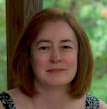
Elisabeth Storrs has a great love for history and myths. She is the award-winning author of A Tale of Ancient Rome trilogy which was endorsed by Ursula Le Guin, Kate Quinn and Ben Kane. Now her obsession lies with Trojan treasure and twisted Germanic prehistory in her new release, Fables & Lies: A World War II Novel. Elisabeth is also the founder of the Historical Novel Society Australasia and the $155,000 ARA Historical Novel Prize. She lives in Sydney with her husband in a house surrounded by jacarandas.
Good question! It was a huge challenge to write the book from the perspective of a “child of the Reich” who goes on a journey to enlightenment. Hitler understood the importance of indoctrinating children. The education system was immediately attacked in 1933 with only Nazi teachers employed. The curriculum was limited, with physical fitness a priority. Girls were destined to be wives and mothers, boys to be soldiers. Between the age of 10-18, boys and girls were also required to attend programs run by the Hitler Youth or the League of German Maidens. Nazis worked hard to alienate children from parents who may have harbored anti-fascist sentiment, actively encouraging them to inform on them.
There was a seductive element to teaching children they were superior due to the “Aryan Myth” which asserted they were part of the “Master Race” who were “bearers of culture” compared to “sub-humans” who “destroyed culture,” i.e., Romani, Slavs, People of Colour and, most particularly, Jews.
Knowing this, I could not ignore Freyja’s indoctrination as many novels do when depicting “good” German protagonists. However, there are ameliorating factors in Freyja’s life that allows her to listen to the heretical views of an outsider like Darien Lessing. At 21, she represents a cohort that was exposed to liberal education before falling under the domination of Nazi dogma in their impressionable teens. Freyja also has the benefit of living with her father who acts as a moral compass due to his Christian beliefs. She shows integrity in remaining silent about her father’s resistance activities, and subsequently allows herself to be trapped in marriage to an SS scholar in order to protect him. In doing so, I hopefully show early on Freyja is innately caring and unwilling to betray those whom she loves.
Nevertheless, to reveal the operations of the SS Ahnenerbe, I was faced with the ethical dilemma of first marrying the brainwashed Freyja to the ethnologist, Kaspar Voigt, who sees her as the ideal Aryan wife. I saw it as the only credible plot device to reveal his despicable actions. It was disturbing to write the earlier scenes where Freyja is enthralled by Kaspar, who is a famous explorer when they first meet. I knew I was spouting dangerous rhetoric but, in doing so, I also reveal how persuasive esoteric Nazi beliefs were to those cocooned within its realm. As Primo Levi said: ‘When understanding is impossible, knowing is necessary.’
 |
When I first encountered him in the novel, I hadn’t realized Wilhelm Unverzagt, director of the museum where Freyja works, was a historical figure. He certainly left a divided and controversial legacy, as is initially hinted when he advises Darien to move his academic focus to “a Germanic perspective of prehistory” for better career opportunities. You’ve brought considerable complexity to his portrayal. How did you develop your interpretation of him?
The novel is based, in part, on Wilhelm Unverzagt’s story but is a fictional account. I struggled greatly in understanding his true nature. Was he a true believer or simply a pragmatic opportunist who was prepared to make a deal with the devil? He certainly showed extraordinary courage when protecting Priam’s Treasure, ultimately defying a Hitler Order. I read many German journal articles about his life to glean insight into his character. And I was lucky enough to gain access to his day journals from 1944-46, together with some personal correspondence and a detailed account written by his wife post war.
Unverzagt was an example of one of the many classical historians “Römlinge” who made a Faustian Bargain to advance their careers by switching their focus to German prehistory. Wounded in WWI, he was clearly embittered by Germany ceding Polish territory. In the early 1930s, he was persecuted by an academic rival who leveled accusations that Unverzagt was part Jewish, resulting in the loss of his professorship. This, in turn, led to his oversight of his museum being threatened. In response, he sought the protection of the SS Ahnenerbe and the patronage of both Himmler and Göring.
Unverzagt was in no way involved in the more heinous activities of the Ahnenerbe’s racial studies program. However, despite his considerable international reputation, he was prepared to twist history to serve power. In the end, I concluded he was a charismatic chameleon who managed to succeed under whichever regime he lived. He died lauded for his work reconstituting the Pre and Early History Museum in East Berlin which included exhibits looted and then returned by Russia – but, alas, not Priam’s Treasure.
The Jewish Hospital certainly was a hidden gem which I chanced upon in researching the history of Berlin’s Jews. There was a brief mention in one text about Jewish doctors working there who were married to Gentile “Aryan” women thereby giving them “privileged” status which provided a limited degree of protection. The hospital became the only place that provided medical treatment to Jews, perversely healing them before sending them to the camps. Ultimately, it became the last transit camp in Berlin and then a refuge in the final Soviet assault. Finding reference to the hospital was a moment of serendipity as it provided the inspiration for a sub-plot exploring the persecution of “mixed race” couples. The hospital doctors faced terrible ethical choices under threat of deportation. And the pressure placed on their Gentile wives to divorce them thereby condemning their husbands to certain death was sustained and cruel. To tell their stories I created the characters of Darien’s sister, Parisa, who is married to Dr Leon Epstein. Freyja’s encounter with the couple opens her eyes to the true plight of the Jews and leads her to resistance.
What were some useful or especially interesting discoveries you made during your research in Germany?
“Walking the ground” upon which an historical novel is set is invaluable. I retained an expert guide who escorted me on an extensive personalised walking tour of Berlin over two days. This included the eerie experience of donning a hardhat and head torch to enter the pitch-black interior of the ruins of the Humboldthain Flak Tower, the only remaining example of three such “Flakturm” built during the war. These fortresses boasted three-meter-thick concrete walls and housed thousands of people during air raids. They also had huge cannons on their rooves to bring down enemy aircraft. The exhibits from various museums were stored in the tower erected near the Zoo. The tour (run by a speleology society) certainly gave me a taste of what it would have been like to shelter in one of these goliaths as Freyja did during the Soviet siege.
 |
| author Elisabeth Storrs |
As you shared in your author’s note, the manuscript that became Fables & Lies had a very long gestation period. What kept you going, and what continued leading you back to it?
Ask my husband and he’ll tell you I am very persistent! I love escaping into both research and my imagination. The genesis for Fables & Lies was a contemporary novel I finished in 1994 after becoming fascinated with Schliemann’s life. At that time mystery shrouded the disappearance of Priam’s Treasure after the Soviets insisted it was lost in transit in the chaotic aftermath of the war. Various theories were postulated as to its whereabouts or destruction – including my rather improbable plot of locating it in suburban Sydney. Imagine my dismay (and delight) when I read in the newspaper the Russians admitted they’d hidden the treasure for nearly 50 years. My mystery became redundant and the manuscript was relegated to the bottom drawer.
Over the next ten or so years, I became obsessed with the Etruscans, which led to writing the three books in the A Tale of Ancient Rome trilogy. When those novels were finished, I was drawn yet again to Priam’s Treasure. How had it come to be in the Pushkin Museum? Why had the Russians lied about possessing it? I dusted off the manuscript to rewrite it as an historical novel covering the true story of the Trojan gold during WW2.
Researching a novel 30 years ago was a vastly different experience than now. Previously, I’d been limited to books in my local library. Now I had access via the internet to numerous German sources. Historians included the Axis viewpoint rather than presenting the war purely from the Western Allies’ perspective. I planned a simple plot featuring two female protagonists – a German woman (Freyja) striving to protect the treasure, and a Soviet Trophy Brigade Major whose mission was to steal it. However, when I learned about the SS Ahnenerbe, I was drawn to tell a more complex story exploring Himmler’s Master Plan. But I’m currently writing The Pinocchio Door which will finally reveal the Soviet side of the tale!
~
Elisabeth Storrs has a great love for history and myths. She is the award-winning author of A Tale of Ancient Rome trilogy which was endorsed by Ursula Le Guin, Kate Quinn and Ben Kane. Now her obsession lies with Trojan treasure and twisted Germanic prehistory in her new release, Fables & Lies: A World War II Novel. Elisabeth is also the founder of the Historical Novel Society Australasia and the $155,000 ARA Historical Novel Prize. She lives in Sydney with her husband in a house surrounded by jacarandas.
Connect with Elisabeth through her website or Triclinium blog. You can find her on Facebook, Instagram, Goodreads, Amazon, Pinterest, LinkedIn, and Bookbub. Subscribe to her newsletter for monthly inspirational interviews.


I’ve requested this after I read your review. This period in history interests me.
ReplyDeleteThat's great - hope you'll enjoy it also.
Delete