"John Alden says that for some, fear is profit. My mother says that for many, fear is purpose. The union of the two is deadly. An unholy marriage indeed."
Back in 2002, I read Mary Beth Norton’s In the Devil’s Snare, her nonfiction book about the 1692 Salem witchcraft trials. This groundbreaking text demonstrated connections between the victims and accusers dating back to their earlier lives on the violent frontier of northern New England (now Maine).
Lucretia Grindle mines this same rich vein of research in The Devil’s Glove, first in a promised trilogy about Salem and the circumstances that led to the tragedies, a time when the Devil was said to walk in Massachusetts.
The story has a mix of fictional and real-life characters, including Captain John Alden, above (son of the Mayflower passenger of the same name). While Salem history buffs will perk up at some of the other names, I won’t spoil the details for readers who haven’t heard of them – aside from saying that the heroine, seventeen-year-old Resolve Hammond, is the author’s invention. She and her mother, Deliverance, a native of the Channel Island of Jersey, are herbalists who tend to the village women of the tiny settlement of Falmouth. They live alone, with Resolve’s father away for two years on a trading mission.
In 1688, when the local minister calls for Mistress Hammond to tend to Goodwife Hobbs, a dying woman, Resolve’s mother whispers to herself, “Why did they not use charcoal?” She quickly recognizes what others don’t – that Avis Hobbs, who is with child, was poisoned – and she wonders why the antidote wasn’t used. Unfortunately, it’s too late to save the poor woman. The Hammonds secretly suspect that Abigail Hobbs, the victim’s oddly unchildlike ten-year-old daughter, dispensed the poison, but who would believe them?
The Devil’s Glove isn’t a crime novel or a thriller, although Grindle’s previous novels fit these genres. I’d call it a historical novel with strong overtones of psychological suspense that arise naturally from the milieu. The author knows the forces that motivate people to commit dark deeds, particularly the fear that gripped the populace in this remote place. The Indians who attacked the villagers years beforehand, the French, the Catholics – all are seen as threats to the Puritan community. For this reason, Resolve and her mother, who sheltered with the sachem Ashawonks and her people during King Philip’s War, keep their knowledge, affinities, and French ancestry to themselves.
With firm roots in the complex historical politics of the region, this is an atmospheric read with a haunting sense of place and unsettling twists in the character arcs. You don’t have to be a Salem witch aficionado to read the book, but if you are, you’ll appreciate the detailed backstory to the infamous events that happened there.
The Devil's Glove was published by Casa Croce Press in May. I picked it out from NetGalley as a Read Now title.
Tuesday, June 27, 2023
Thursday, June 22, 2023
Crow Mary by Kathleen Grissom evokes the viewpoint of a heroic Indigenous woman in 19th-century North America
Through fiction, authors can grant little-known historical figures a deserving spotlight. Revealing the astonishing heroism of an Indigenous woman she’s wanted to write about for years, Grissom’s luminous third novel accomplishes this superbly.
In 1872, sixteen-year-old Goes First of the Crow people agrees to marry a “Yellow Eyes” (white) fur trader named Abe Farwell. The alliance benefits her tribe, and he needs a Native wife to help make his planned trading post successful.
The narrative delves into the trying realities of their cross-cultural marriage, which begins so promisingly. They relocate from Montana to western Canada’s Cypress Hills, where “Crow Mary” (her English name) single-handedly rescues five Nakoda women from a violent, drunken gang following a horrific massacre, an event with momentous repercussions.
Via her eloquent first-person voice, readers experience her world intimately: family life, nature’s changing seasons (early October is “the moon when the redwing blackbirds gather”), and the vast cultural differences she encounters. Through many trials and heartbreaking indignities, Goes First remains true to herself in this empathetic, indelible portrait of courage and integrity.
Crow Mary was published by Atria/Simon & Schuster on June 6th. I wrote this review for Booklist's historical fiction issue, which came out on May 15. The real Crow Mary's great-granddaughter wrote the foreword to the novel. This is Grissom's third historical novel, after The Kitchen House and Glory Over Everything.
In 1872, sixteen-year-old Goes First of the Crow people agrees to marry a “Yellow Eyes” (white) fur trader named Abe Farwell. The alliance benefits her tribe, and he needs a Native wife to help make his planned trading post successful.
The narrative delves into the trying realities of their cross-cultural marriage, which begins so promisingly. They relocate from Montana to western Canada’s Cypress Hills, where “Crow Mary” (her English name) single-handedly rescues five Nakoda women from a violent, drunken gang following a horrific massacre, an event with momentous repercussions.
Via her eloquent first-person voice, readers experience her world intimately: family life, nature’s changing seasons (early October is “the moon when the redwing blackbirds gather”), and the vast cultural differences she encounters. Through many trials and heartbreaking indignities, Goes First remains true to herself in this empathetic, indelible portrait of courage and integrity.
Crow Mary was published by Atria/Simon & Schuster on June 6th. I wrote this review for Booklist's historical fiction issue, which came out on May 15. The real Crow Mary's great-granddaughter wrote the foreword to the novel. This is Grissom's third historical novel, after The Kitchen House and Glory Over Everything.
Saturday, June 17, 2023
Sandra Worth's epic novel Tomorrow We Will Know presents the swan song of imperial Constantinople
Sandra Worth has established a literary career around historical novels about real people during the Wars of the Roses and early Tudor period. Now, ten years after the publication of her last book, she pivots partly around the world with a stunningly detailed historical epic about the final years of imperial Constantinople in the mid-15th century.
All three of the main characters once lived, although one whose early life isn’t well documented is given a different name (you can read more in the comprehensive author’s note).
At first glance, Zoe Notaras has an illustrious life ahead: she’s the beautiful auburn-haired daughter of a high-ranking noble family in the Eastern Roman Empire, her father is immeasurably wealthy, she’s a talented musician, and she’s well-versed in literature. But she has the misfortune to be her mother’s least favorite child, for reasons she doesn’t know, and since childhood she’s had a crush on Constantine of Mistras, the emperor’s younger brother and heir, who’s destined for a marriage of state.
Constantine, over twenty years older than Zoe, has been widowed twice and bears a heavy mental load after his brother dies and he ascends the imperial throne. Though bolstered by fortified walls, Constantinople’s geographic position makes it vulnerable to attack by the Ottoman Empire; the city is also heavily reliant on outside support. Also, with his people bitterly divided about potential union with the Pope in Rome, Constantine XI finds himself in a no-win situation with a dwindling range of options.
The historical circumstances are nimbly revealed through the characters’ experiences. Although undoubtedly devoted to his country, and to Zoe – whose love he eventually returns – Constantine makes several key misjudgments and fears that a famous prophecy (implying his reign will be the empire’s last) will hold true. The arrival of a Genoese nobleman named Justiniani Longo who vows to defend Constantinople seems the answer to his prayers, but Justiniani falls in love with Zoe, complications ensue.
Worth has devoted extraordinary attention to her settings, creating a banquet for the senses on the page, from the glittering palace décor to the lemon-scented breeze along the shoreline. Zoe may seem somewhat idealized at times, but she remains easy to root for; her main fault is that she’s too trusting and romantically inclined, which leaves her unable to see flaws in others. The 53-day siege of Constantinople, which extends through much of the book’s second half, takes you step by step through the military decisions of both Constantine’s forces and those of Mehmet, the Ottoman Empire’s young and ruthless sultan – and their personal consequences.
Replete with human passions and deep-rooted courage, Tomorrow We Will Know brings readers front and center into a major turning point in history.
The novel was independently published in February; thanks to the author for the e-copy.
All three of the main characters once lived, although one whose early life isn’t well documented is given a different name (you can read more in the comprehensive author’s note).
At first glance, Zoe Notaras has an illustrious life ahead: she’s the beautiful auburn-haired daughter of a high-ranking noble family in the Eastern Roman Empire, her father is immeasurably wealthy, she’s a talented musician, and she’s well-versed in literature. But she has the misfortune to be her mother’s least favorite child, for reasons she doesn’t know, and since childhood she’s had a crush on Constantine of Mistras, the emperor’s younger brother and heir, who’s destined for a marriage of state.
Constantine, over twenty years older than Zoe, has been widowed twice and bears a heavy mental load after his brother dies and he ascends the imperial throne. Though bolstered by fortified walls, Constantinople’s geographic position makes it vulnerable to attack by the Ottoman Empire; the city is also heavily reliant on outside support. Also, with his people bitterly divided about potential union with the Pope in Rome, Constantine XI finds himself in a no-win situation with a dwindling range of options.
The historical circumstances are nimbly revealed through the characters’ experiences. Although undoubtedly devoted to his country, and to Zoe – whose love he eventually returns – Constantine makes several key misjudgments and fears that a famous prophecy (implying his reign will be the empire’s last) will hold true. The arrival of a Genoese nobleman named Justiniani Longo who vows to defend Constantinople seems the answer to his prayers, but Justiniani falls in love with Zoe, complications ensue.
Worth has devoted extraordinary attention to her settings, creating a banquet for the senses on the page, from the glittering palace décor to the lemon-scented breeze along the shoreline. Zoe may seem somewhat idealized at times, but she remains easy to root for; her main fault is that she’s too trusting and romantically inclined, which leaves her unable to see flaws in others. The 53-day siege of Constantinople, which extends through much of the book’s second half, takes you step by step through the military decisions of both Constantine’s forces and those of Mehmet, the Ottoman Empire’s young and ruthless sultan – and their personal consequences.
Replete with human passions and deep-rooted courage, Tomorrow We Will Know brings readers front and center into a major turning point in history.
The novel was independently published in February; thanks to the author for the e-copy.
Sunday, June 11, 2023
State of the historical fiction industry: a report on this #HNS2023 conference panel
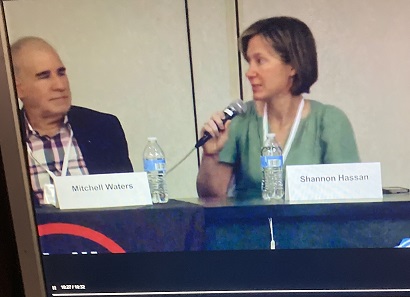
In between numerous work commitments, I’ve been spending the last week attending (virtually) the Historical Novel Society’s conference, which has been taking place in person down in San Antonio, Texas, and via Zoom. I was up bright and early on Saturday morning for the 8am State of the State: Publishing in All Its Forms panel, aka the editor/agent panel – in which four representatives from the industry responded to questions about trends and current issues in historical fiction relating to traditional publication. The panelists were Amy Durant, editorial director at Sapere Books in London; Shannon Hassan, agent at the Marsal Lyon Literary Agency; Marcy Posner, agent at Folio Literary Management; and Mitchell Waters, agent at Brandt & Hochman, all of whom work with historical novelists. The moderator was author Maryka Biaggio, HNS conference board member and editor/agent liaison.
This was a plenary session, very well-attended in person, and with around 70 virtual attendees at the highest point. While the panelists were enthusiastic about historical fiction and its potential to reach readers, the overall tone relating to the industry was sobering. Publishers are understaffed, and aside from a few chosen titles, books aren’t getting the editorial or marketing attention they used to. Agents are overworked and taking on additional tasks to get authors the support they need. Authors should get their manuscripts in as close to publishable shape as possible before submitting their work. They should also realize that they’ll need to take on many marketing activities themselves.
With all that said, let’s look in more detail at what was discussed on the panel.
Regarding trends in historical fiction: Mitchell Waters feels authors should write the book they need to write but also look around at what’s being published currently: “If you haven’t seen any books on a certain period, ask yourself why that is.” It’s hard to anticipate trends, but there are enduring themes and topics. He’s found that some editors are reluctant to go back too far in time with historicals, like before the mid-19th century. Marcy Posner said it’s hard to chase trends because they will change, and editors can be fickle; she echoed Waters’ comments that authors should write that they want and write it well. Amy Durant looks for consistently popular subjects: Tudor, medieval, Victorian, and military fiction (naval and aviation). Shannon Hassan underscored the importance of contemporary relevance for historical fiction subjects, using an example of recent novels about the Trojan War.
What about World War II? This question has reappeared at the last several conferences. I dare say many of the attendees were curious whether it was still hot or not. Waters admitted to feeling fatigue with the number of submissions dealing with WWII and the Holocaust, and there was a sense that some publishers were pulling back from the era, but with this topic and others, he emphasized the importance of a fresh approach: that there must be something to interest readers other than the quality of the writing.
On editing and marketing: it’s definitely the case (as mentioned by Marcy Posner) that less effort is being placed on these aspects by publishers, compared to years past. Some top books receive a great deal of attention, while others don’t; publishers are making choices about which titles to devote most of their time to. Authors and their agents must pick up the slack. Shannon Hassan said that coming to this conference gives authors a great start (my own thoughts on this: it can help them not only learn the craft but establish a network that helps them navigate the industry). Mitchell Waters noted that he has to spend less time on revisions with authors, that they need to have their books “closer to ready to go.” He cited an example where he once spent 18 months getting a manuscript ready for publication, but he can no longer do that since the volume of work has “increased exponentially.” He described a manuscript he missed out on acquiring (and which later got a good book deal), which he regrets, because he was too busy. Shannon Hassan echoed that she doesn’t have time to provide detailed feedback on queries, and it may not even be appropriate if she doesn’t fall in love with a book. Marcy Posner echoed this, saying she’s now doing the job of five people (relating to editing, marketing, counseling authors, etc.). The gist: editors and agents are swamped, something authors should keep in mind when querying.
Maryka Biaggio then asked the panelists about the issue of cultural appropriation – writing outside your own ethnicity – which generated conversation in the virtual chat room. The topic comes up frequently at HNS conferences; audience members have asked the same question of speakers at this conference, and I also remember it being asked at the in-person 2019 conference and the virtual event in 2021. The responses from industry representatives have been consistent, and I agree with the Zoom chat comment that it feels like writers (those not from the cultural group they want to write about) keep asking the question as if they’re hoping for a different response.
From Amy Durant: it’s important for writers to be sensitive to these issues, do their research, think carefully about their characters, and also question whether they’re the best person to be telling this story. Mitchell Waters tackled the issue from a marketing standpoint as well, in asking writers to consider if people will be interested in them as the author of the book, if the characters’ experiences are too far away from their own. Generally: write the best story you can, do diligent research, approach your subjects with sensitivity. For a related question dealing with depictions of LGBTQ characters in history, since there’s increased industry and reader interest in marginalized lives, Marcy Posner mentioned the importance of showing the joyful aspects of these characters’ lives, not only the struggles they face.
I didn’t make notes about the question dealing with why people might want to leave an agent, or vice versa, or the number of authors they signed from conference meetings, although the latter was a small number. Other notes from the Q&A: Waters shared some of the positive aspects of historical fiction: that people have an underlying reason to want to read it, aside from whatever beautiful writing they come across: it offers a rich canvas about a wide range of time periods (though he acknowledged some are trendier than others). The ‘60s and ‘70s are popular settings, which provides a sense of nostalgia. Advice for midlist authors: they should realize they’ll be responsible for doing additional work before submitting and after publication. He mentioned Rosamunde Pilcher’s The Shell Seekers as the author’s breakout book. She’d written many earlier novels, but The Shell Seekers was a more substantial book in many ways (in terms of scope, setting, and length – my thoughts) that allowed her to break out of the midlist. However, her situation is unusual, especially today, with publishers having less time to devote to books. Also, the phrase “fictional novel” or “fiction novel” (redundant!) looks bad in a query letter.
On prologues: These insights were especially interesting and on point. Waters mentioned they’re so frequent now because “readers have no patience” and “need to know from the first page what the stakes are.” Prologues can be a useful way of signaling to readers about events later in the plotline and can motivate readers to continue. There’s been considerable debate in the industry about whether they’re helpful. Regarding marketing strategies, Amy Durant commented that it can be hard to market an author with just a single book, so she looks for the potential for a series. (Sapere publishes many novels in series.) A question from the audience on artificial intelligence and synopses: the panelists discussed the pushback against AI (such as the model clauses for publishing contracts newly developed by the Authors’ Guild, as mentioned by Hassan). Amy Durant mentioned AI could be used as a tool for synopsis ideas, but writers should take care to write them in their own words.
So there you have it. Optimism about historical fiction, tempered with realism about the industry. The recording isn’t up yet, so this writeup is based on two pages of scribble. My fellow attendees: if I missed anything important or got anything wrong, please drop me a note or comment!
This was a plenary session, very well-attended in person, and with around 70 virtual attendees at the highest point. While the panelists were enthusiastic about historical fiction and its potential to reach readers, the overall tone relating to the industry was sobering. Publishers are understaffed, and aside from a few chosen titles, books aren’t getting the editorial or marketing attention they used to. Agents are overworked and taking on additional tasks to get authors the support they need. Authors should get their manuscripts in as close to publishable shape as possible before submitting their work. They should also realize that they’ll need to take on many marketing activities themselves.
With all that said, let’s look in more detail at what was discussed on the panel.
Regarding trends in historical fiction: Mitchell Waters feels authors should write the book they need to write but also look around at what’s being published currently: “If you haven’t seen any books on a certain period, ask yourself why that is.” It’s hard to anticipate trends, but there are enduring themes and topics. He’s found that some editors are reluctant to go back too far in time with historicals, like before the mid-19th century. Marcy Posner said it’s hard to chase trends because they will change, and editors can be fickle; she echoed Waters’ comments that authors should write that they want and write it well. Amy Durant looks for consistently popular subjects: Tudor, medieval, Victorian, and military fiction (naval and aviation). Shannon Hassan underscored the importance of contemporary relevance for historical fiction subjects, using an example of recent novels about the Trojan War.

What about World War II? This question has reappeared at the last several conferences. I dare say many of the attendees were curious whether it was still hot or not. Waters admitted to feeling fatigue with the number of submissions dealing with WWII and the Holocaust, and there was a sense that some publishers were pulling back from the era, but with this topic and others, he emphasized the importance of a fresh approach: that there must be something to interest readers other than the quality of the writing.
On editing and marketing: it’s definitely the case (as mentioned by Marcy Posner) that less effort is being placed on these aspects by publishers, compared to years past. Some top books receive a great deal of attention, while others don’t; publishers are making choices about which titles to devote most of their time to. Authors and their agents must pick up the slack. Shannon Hassan said that coming to this conference gives authors a great start (my own thoughts on this: it can help them not only learn the craft but establish a network that helps them navigate the industry). Mitchell Waters noted that he has to spend less time on revisions with authors, that they need to have their books “closer to ready to go.” He cited an example where he once spent 18 months getting a manuscript ready for publication, but he can no longer do that since the volume of work has “increased exponentially.” He described a manuscript he missed out on acquiring (and which later got a good book deal), which he regrets, because he was too busy. Shannon Hassan echoed that she doesn’t have time to provide detailed feedback on queries, and it may not even be appropriate if she doesn’t fall in love with a book. Marcy Posner echoed this, saying she’s now doing the job of five people (relating to editing, marketing, counseling authors, etc.). The gist: editors and agents are swamped, something authors should keep in mind when querying.
Maryka Biaggio then asked the panelists about the issue of cultural appropriation – writing outside your own ethnicity – which generated conversation in the virtual chat room. The topic comes up frequently at HNS conferences; audience members have asked the same question of speakers at this conference, and I also remember it being asked at the in-person 2019 conference and the virtual event in 2021. The responses from industry representatives have been consistent, and I agree with the Zoom chat comment that it feels like writers (those not from the cultural group they want to write about) keep asking the question as if they’re hoping for a different response.
From Amy Durant: it’s important for writers to be sensitive to these issues, do their research, think carefully about their characters, and also question whether they’re the best person to be telling this story. Mitchell Waters tackled the issue from a marketing standpoint as well, in asking writers to consider if people will be interested in them as the author of the book, if the characters’ experiences are too far away from their own. Generally: write the best story you can, do diligent research, approach your subjects with sensitivity. For a related question dealing with depictions of LGBTQ characters in history, since there’s increased industry and reader interest in marginalized lives, Marcy Posner mentioned the importance of showing the joyful aspects of these characters’ lives, not only the struggles they face.
I didn’t make notes about the question dealing with why people might want to leave an agent, or vice versa, or the number of authors they signed from conference meetings, although the latter was a small number. Other notes from the Q&A: Waters shared some of the positive aspects of historical fiction: that people have an underlying reason to want to read it, aside from whatever beautiful writing they come across: it offers a rich canvas about a wide range of time periods (though he acknowledged some are trendier than others). The ‘60s and ‘70s are popular settings, which provides a sense of nostalgia. Advice for midlist authors: they should realize they’ll be responsible for doing additional work before submitting and after publication. He mentioned Rosamunde Pilcher’s The Shell Seekers as the author’s breakout book. She’d written many earlier novels, but The Shell Seekers was a more substantial book in many ways (in terms of scope, setting, and length – my thoughts) that allowed her to break out of the midlist. However, her situation is unusual, especially today, with publishers having less time to devote to books. Also, the phrase “fictional novel” or “fiction novel” (redundant!) looks bad in a query letter.
On prologues: These insights were especially interesting and on point. Waters mentioned they’re so frequent now because “readers have no patience” and “need to know from the first page what the stakes are.” Prologues can be a useful way of signaling to readers about events later in the plotline and can motivate readers to continue. There’s been considerable debate in the industry about whether they’re helpful. Regarding marketing strategies, Amy Durant commented that it can be hard to market an author with just a single book, so she looks for the potential for a series. (Sapere publishes many novels in series.) A question from the audience on artificial intelligence and synopses: the panelists discussed the pushback against AI (such as the model clauses for publishing contracts newly developed by the Authors’ Guild, as mentioned by Hassan). Amy Durant mentioned AI could be used as a tool for synopsis ideas, but writers should take care to write them in their own words.
So there you have it. Optimism about historical fiction, tempered with realism about the industry. The recording isn’t up yet, so this writeup is based on two pages of scribble. My fellow attendees: if I missed anything important or got anything wrong, please drop me a note or comment!
Thursday, June 08, 2023
Katherine Reay's A Shadow in Moscow shows two courageous women's lives in Russia during the Cold War
There are some historical settings most comfortably observed from a safe distance, like the pages of a novel. We can be simultaneously gripped by the characters’ world and relieved we aren’t living through the same dark, pressure-laden environment. Such is the case with Cold War Russia, where Katherine Reay’s A Shadow in Moscow takes place.
The story alternates between two women in different eras, both of whom risk their lives in spying against the Soviet regime.
In 1980, Anya Kadinova is a senior at Georgetown University through her home country’s Foreign Studies Initiative, enjoying a romance with a fellow student, a spring break trip, and the freedom to read English-language novels. But her “case officer,” an upwardly mobile young man with the KGB, keeps a close eye on her movements and meets with her monthly to exchange news. After Anya returns to Moscow, she intends to emulate her parents and conform to the Soviet ideal, but when the KGB targets her good friend, she’s compelled to reach out to the CIA.
A second plotline set years earlier features Ingrid Bauer (not her real surname), a native of Vienna, who grows up in a household full of secrets she doesn’t always understand. A decade after her world was shattered during WWII, she weds Leo, a Russian man she barely knows, and settles into life in Moscow, knowing she must keep her maternal British heritage to herself. As her husband’s career expands (Ingrid suspects he’s with the KGB), their lifestyle becomes more opulent while the family’s sense of paranoia increases. No one suspects that she, a model Soviet wife and much-admired hostess and museum worker, could be passing secrets to the British.
The dialogue-heavy plotline ensures quick pacing for the story, which immerses us in the ultra-tense environment of a totalitarian regime where the state takes primacy over individual freedoms or thought. Homes and public phones are frequently bugged, and the steps the protagonists take in the “dry cleaning” process – losing any enemy agents on their trail – are elaborate and time-consuming.
Although Ingrid’s astonishing success (she comes to influence world politics at the highest level) feels far-fetched at times, the novel does demonstrate the clandestine heroism of the two women, whose roles are kept so closely guarded by their handlers that they aren’t aware of one another except by code name. The setting, within the living memory of many people today, is chilling and makes one admire the courage of anyone who dared to reach out from behind the Iron Curtain.
A Shadow in Moscow will be published by Harper Muse on June 13. This review is part of the book's online tour coordinated by Austenprose PR.
The story alternates between two women in different eras, both of whom risk their lives in spying against the Soviet regime.
In 1980, Anya Kadinova is a senior at Georgetown University through her home country’s Foreign Studies Initiative, enjoying a romance with a fellow student, a spring break trip, and the freedom to read English-language novels. But her “case officer,” an upwardly mobile young man with the KGB, keeps a close eye on her movements and meets with her monthly to exchange news. After Anya returns to Moscow, she intends to emulate her parents and conform to the Soviet ideal, but when the KGB targets her good friend, she’s compelled to reach out to the CIA.
A second plotline set years earlier features Ingrid Bauer (not her real surname), a native of Vienna, who grows up in a household full of secrets she doesn’t always understand. A decade after her world was shattered during WWII, she weds Leo, a Russian man she barely knows, and settles into life in Moscow, knowing she must keep her maternal British heritage to herself. As her husband’s career expands (Ingrid suspects he’s with the KGB), their lifestyle becomes more opulent while the family’s sense of paranoia increases. No one suspects that she, a model Soviet wife and much-admired hostess and museum worker, could be passing secrets to the British.
The dialogue-heavy plotline ensures quick pacing for the story, which immerses us in the ultra-tense environment of a totalitarian regime where the state takes primacy over individual freedoms or thought. Homes and public phones are frequently bugged, and the steps the protagonists take in the “dry cleaning” process – losing any enemy agents on their trail – are elaborate and time-consuming.
Although Ingrid’s astonishing success (she comes to influence world politics at the highest level) feels far-fetched at times, the novel does demonstrate the clandestine heroism of the two women, whose roles are kept so closely guarded by their handlers that they aren’t aware of one another except by code name. The setting, within the living memory of many people today, is chilling and makes one admire the courage of anyone who dared to reach out from behind the Iron Curtain.
A Shadow in Moscow will be published by Harper Muse on June 13. This review is part of the book's online tour coordinated by Austenprose PR.
PURCHASE LINKS
AMAZON | BARNES
& NOBLE | BOOKSHOP | GOODREADS | BOOKBUB
AUTHOR BIO
Katherine Reay is a national bestselling and
award-winning author who has enjoyed a lifelong affair with books. She
publishes both fiction and nonfiction, holds a BA and MS from Northwestern
University, and currently lives outside Chicago, Illinois, with her husband and
three children.
WEBSITE | TWITTER | FACEBOOK | INSTAGRAM | PINTEREST
| GOODREADS
Thursday, June 01, 2023
Interview with Stephanie Cowell about her new historical novel The Boy in the Rain (and giveaway)
Please help me welcome novelist Stephanie Cowell to the blog. Her newest novel, The Boy in the Rain, focuses on the enduring love affair between two young men in Edwardian-era Nottinghamshire and London: Robbie Stillman, an art student; and Anton Harrington, a banker who later achieves prominence as a socialist speaker. Because of the brutal legal punishment for homosexuality at the time, as well as the social opprobrium, the two must conceal their intimacy from the world.
I've known Stephanie for many years through the Historical Novel Society and am happy to see the novel she's worked on for so long appear in published form at last. It's out from Regal House today.
I'm offering a giveaway at the end of the post since I wanted to give another historical fiction enthusiast the opportunity to read it. I'll be arranging for the novel to be sent directly from a bookseller to the winner's address (via either Amazon or Blackwell's, for non-US readers).
Thanks for Stephanie for doing a Q&A for my site!
How did the complex love story between Robbie and Anton capture you to such a degree, compel you to tell it, and get it out into the world?
The two men came to me in a sort of vision while walking down the outside wood steps of an old country house and haunted me from 1984 until I sold the novel a few years ago. I would put it away for four or five years at a time. I did not know if they came from some deep mystical place inside myself or had really lived in the past.
Reading the novel, and immersing myself in the viewpoints of Robbie and Anton, was such an intense experience. Their relationship, and how it changes over the years, feels so real and vibrant. How did you go about re-creating the worlds of gay men in Edwardian England?
The world they lived in came gradually in bits as I read many social history books of the times. It was the personalities of the two men which fascinated me and how, though their strengths and needs changed, they still felt their real home was with each other. When I was a young teenager, my mother told me about Oscar Wilde’s imprisonment for two years with hard labor, which he had to suffer for loving another man. It made her so angry. But I couldn’t put in much of the danger of the law against homosexuality in the novel at first, because I have always had a difficult time putting my characters in danger.
When I was writing my last big revision, Covid had arrived. I was alone in my apartment in NYC, the world epicenter of the epidemic for a time, hearing all the ambulances rush below my window. Those months, a real sense of danger came into the novel, the feeling that we didn’t know when we too would catch it. I wondered if it was anything like men’s fear of being dragged from their lives. Actually, Robbie likely didn’t have to hide much with his London artistic friends, but Anton had to be very cautious in his world. The boys’ brothel was based on something I had come across in my research.
George Langstaff, the country vicar who takes in and becomes a guiding force for Robbie, quickly became a favorite person of mine. How did his character come about?
I was raised without religion. At the time I began the early drafts of the novel (1984) I was drawn to the Church of England. At the same time, I was working on my novel Nicholas Cooke in which the main character becomes a priest. I joined an Anglican church in NYC. I think Mr. Langstaff’s character is much drawn from the father of a dear friend who was such a guide to me and who, with his wife, took me in to live when I was 18 and had to leave home. His passionate typing and heaps of books and way of walking and being went into creating George. He played the piano clumsily too. The vicar was also drawn from the small English rector in my own church.
Early 20th-century England was a time of huge political and social change. What drew you to this atmosphere for your setting?
The political and social worlds were not in the novel in the early drafts, though the book contained the story of how Anton had been forced by his father to separate from the penniless girl who was bearing his child. A friend who read the novel then said, “I think a guy like Anton would go up to Parliament to try to change laws to help the poor.” I began to revise that way.
I was also compelled by what I read about poverty in England at that time. I think the first book I read was by Jack London, who went to London and lived among the poor in disguise. It’s called People of the Abyss. It was the oddest thing when the Labour and Liberal parties were trying to get a bill passed to help the poor and aged in 1910, that the King, Edward VII, bullied the House of Lords into passing it. And of course, as a character points out in the novel, these high taxes on the wealthy meant that it would be harder to sustain the lives of the country house owners, such as the Crawleys of Downton Abbey. It was awful back then. Ploughmen would live on twelve shillings a week, and no one in their family had anything but bread and tea. And children of five or six would work in factories and mines twelve hours a day.
I enjoy how your historical novels delve into the lives of artists – painters like Robbie, authors, actors, musicians, and more – and the challenges they face in pursuing their craft. What do you hope readers take away from your work about the role of art in people’s lives, and in society?
I don’t think I ever wrote about anyone who was not an artist in some way! That was my world when I grew up. It was inconceivable to be anything but an artist, writer, dancer, actor. And of course, we all faced difficulties in making a living. Louise, Anton’s ex-wife who lives in a lovely London townhouse and knows people with money, helps Robbie to make a living painting portraits. There was a need for that then, following the footsteps of the great artist John Singer Sargent.
It is an oddity in the book that eventually Robbie is painting the wealthy to support Anton’s political campaign whose aim is to tax the wealthy! I guess I would like to show once again how precarious an artistic life can be. It was in my previous books showing how hard Mozart, Monet and Shakespeare struggled. When I was a single mother trying to make a living from music, we had trouble paying basic bills. The phone was shut off several times. Then I’d have to go down to the payment office to charm and distract them into turning it on again or give them a check that I “forgot” to sign!
In your author’s note, you talk about the lengthy writing process behind The Boy in the Rain and how you kept returning to the story in between publishing other novels. I was glad to have the opportunity to read it at last, and that you persevered! Did you have any favorite parts of the writing process, or key moments in the creation that you’d like to share?
I had to persevere because Anton and Robbie and their friends simply would not let me go. The novel kept almost being sold in earlier versions, and then editors would decide they wanted something easier to market, but its long gestation gave me a chance to develop the complex way the men related to each other. In some odd way they are both parts of me.
Stephanie Cowell has been an opera singer, balladeer, founder of Strawberry Opera and other arts venues, including a Renaissance festival and an outdoor arts series in NYC. She is the author of Nicholas Cooke, The Physician of London, The Players: A Novel of the Young Shakespeare, Marrying Mozart, and Claude & Camille: A Novel of Monet. Her work had been translated into nine languages and adapted into an opera. Stephanie is the recipient of an American Book Award.
6/10: And the giveaway has ended. Thanks to all who entered, and congrats to Pam! I'll be in touch via email.
I've known Stephanie for many years through the Historical Novel Society and am happy to see the novel she's worked on for so long appear in published form at last. It's out from Regal House today.
I'm offering a giveaway at the end of the post since I wanted to give another historical fiction enthusiast the opportunity to read it. I'll be arranging for the novel to be sent directly from a bookseller to the winner's address (via either Amazon or Blackwell's, for non-US readers).
Thanks for Stephanie for doing a Q&A for my site!
How did the complex love story between Robbie and Anton capture you to such a degree, compel you to tell it, and get it out into the world?
The two men came to me in a sort of vision while walking down the outside wood steps of an old country house and haunted me from 1984 until I sold the novel a few years ago. I would put it away for four or five years at a time. I did not know if they came from some deep mystical place inside myself or had really lived in the past.
Reading the novel, and immersing myself in the viewpoints of Robbie and Anton, was such an intense experience. Their relationship, and how it changes over the years, feels so real and vibrant. How did you go about re-creating the worlds of gay men in Edwardian England?
The world they lived in came gradually in bits as I read many social history books of the times. It was the personalities of the two men which fascinated me and how, though their strengths and needs changed, they still felt their real home was with each other. When I was a young teenager, my mother told me about Oscar Wilde’s imprisonment for two years with hard labor, which he had to suffer for loving another man. It made her so angry. But I couldn’t put in much of the danger of the law against homosexuality in the novel at first, because I have always had a difficult time putting my characters in danger.
When I was writing my last big revision, Covid had arrived. I was alone in my apartment in NYC, the world epicenter of the epidemic for a time, hearing all the ambulances rush below my window. Those months, a real sense of danger came into the novel, the feeling that we didn’t know when we too would catch it. I wondered if it was anything like men’s fear of being dragged from their lives. Actually, Robbie likely didn’t have to hide much with his London artistic friends, but Anton had to be very cautious in his world. The boys’ brothel was based on something I had come across in my research.
George Langstaff, the country vicar who takes in and becomes a guiding force for Robbie, quickly became a favorite person of mine. How did his character come about?
I was raised without religion. At the time I began the early drafts of the novel (1984) I was drawn to the Church of England. At the same time, I was working on my novel Nicholas Cooke in which the main character becomes a priest. I joined an Anglican church in NYC. I think Mr. Langstaff’s character is much drawn from the father of a dear friend who was such a guide to me and who, with his wife, took me in to live when I was 18 and had to leave home. His passionate typing and heaps of books and way of walking and being went into creating George. He played the piano clumsily too. The vicar was also drawn from the small English rector in my own church.
Early 20th-century England was a time of huge political and social change. What drew you to this atmosphere for your setting?
The political and social worlds were not in the novel in the early drafts, though the book contained the story of how Anton had been forced by his father to separate from the penniless girl who was bearing his child. A friend who read the novel then said, “I think a guy like Anton would go up to Parliament to try to change laws to help the poor.” I began to revise that way.
I was also compelled by what I read about poverty in England at that time. I think the first book I read was by Jack London, who went to London and lived among the poor in disguise. It’s called People of the Abyss. It was the oddest thing when the Labour and Liberal parties were trying to get a bill passed to help the poor and aged in 1910, that the King, Edward VII, bullied the House of Lords into passing it. And of course, as a character points out in the novel, these high taxes on the wealthy meant that it would be harder to sustain the lives of the country house owners, such as the Crawleys of Downton Abbey. It was awful back then. Ploughmen would live on twelve shillings a week, and no one in their family had anything but bread and tea. And children of five or six would work in factories and mines twelve hours a day.
I enjoy how your historical novels delve into the lives of artists – painters like Robbie, authors, actors, musicians, and more – and the challenges they face in pursuing their craft. What do you hope readers take away from your work about the role of art in people’s lives, and in society?
I don’t think I ever wrote about anyone who was not an artist in some way! That was my world when I grew up. It was inconceivable to be anything but an artist, writer, dancer, actor. And of course, we all faced difficulties in making a living. Louise, Anton’s ex-wife who lives in a lovely London townhouse and knows people with money, helps Robbie to make a living painting portraits. There was a need for that then, following the footsteps of the great artist John Singer Sargent.
It is an oddity in the book that eventually Robbie is painting the wealthy to support Anton’s political campaign whose aim is to tax the wealthy! I guess I would like to show once again how precarious an artistic life can be. It was in my previous books showing how hard Mozart, Monet and Shakespeare struggled. When I was a single mother trying to make a living from music, we had trouble paying basic bills. The phone was shut off several times. Then I’d have to go down to the payment office to charm and distract them into turning it on again or give them a check that I “forgot” to sign!
In your author’s note, you talk about the lengthy writing process behind The Boy in the Rain and how you kept returning to the story in between publishing other novels. I was glad to have the opportunity to read it at last, and that you persevered! Did you have any favorite parts of the writing process, or key moments in the creation that you’d like to share?
I had to persevere because Anton and Robbie and their friends simply would not let me go. The novel kept almost being sold in earlier versions, and then editors would decide they wanted something easier to market, but its long gestation gave me a chance to develop the complex way the men related to each other. In some odd way they are both parts of me.
~
6/10: And the giveaway has ended. Thanks to all who entered, and congrats to Pam! I'll be in touch via email.
Sunday, May 28, 2023
Gail Tsukiyama's The Brightest Star shines a spotlight on American actress Anna May Wong
With the recent, long overdue focus on Asian representation in Hollywood, the time is ripe to look back on an industry trailblazer. Following her many previous well-received sagas, Tsukiyama offers a riveting biographical novel about Anna May Wong (1905–61), a third-generation Chinese American whose prominent acting career spanned silent films, early television, and the stage.
Wong’s intimate voice, in this imagined account, rings so clear that readers may be tempted into believing they’re reading an actual memoir. Growing up amid her parents’ laundry business near Los Angeles’ Chinatown, Anna skips school to visit nickelodeons and vows to appear on screen herself. She achieves remarkable success, always striving to give audiences authentic Chinese portrayals, though is stymied by stereotypical parts, anti-miscegenation laws, and paternal pressure to abandon her “shameful” profession.
For greater freedom, Anna travels to Europe, where she befriends Marlene Dietrich and Josephine Baker. With its rich supporting cast, the novel emphasizes the friendships and family relationships that help Anna thrive, while her many disappointments (like losing a leading role in The Good Earth to a German actress in “yellowface”) catch at the heart.
At times, the narrative breezes rather quickly through Anna’s accomplishments, but overall, this stirring story about the drive and courageous spirit of a talented, barrier-breaking American icon works magnificently.
The Brightest Star will be published by HarperVia on June 20th; I reviewed it for Booklist's historical fiction issue, which came out on May 15th. The review was the magazine's Review of the Day on May 17th.
Wong was recognized with a star on the Hollywood Walk of Fame in 1960, and the U.S. Mint issued a quarter with her image in October 2022; she was the first Asian American to appear on U.S. currency. Hers is a fascinating story of talent and determination that deserves readers' attention. You can view many of her films (and clips from them) at the Gallery of Anna May Wong channel on YouTube.
Wong’s intimate voice, in this imagined account, rings so clear that readers may be tempted into believing they’re reading an actual memoir. Growing up amid her parents’ laundry business near Los Angeles’ Chinatown, Anna skips school to visit nickelodeons and vows to appear on screen herself. She achieves remarkable success, always striving to give audiences authentic Chinese portrayals, though is stymied by stereotypical parts, anti-miscegenation laws, and paternal pressure to abandon her “shameful” profession.
For greater freedom, Anna travels to Europe, where she befriends Marlene Dietrich and Josephine Baker. With its rich supporting cast, the novel emphasizes the friendships and family relationships that help Anna thrive, while her many disappointments (like losing a leading role in The Good Earth to a German actress in “yellowface”) catch at the heart.
At times, the narrative breezes rather quickly through Anna’s accomplishments, but overall, this stirring story about the drive and courageous spirit of a talented, barrier-breaking American icon works magnificently.
The Brightest Star will be published by HarperVia on June 20th; I reviewed it for Booklist's historical fiction issue, which came out on May 15th. The review was the magazine's Review of the Day on May 17th.
Wong was recognized with a star on the Hollywood Walk of Fame in 1960, and the U.S. Mint issued a quarter with her image in October 2022; she was the first Asian American to appear on U.S. currency. Hers is a fascinating story of talent and determination that deserves readers' attention. You can view many of her films (and clips from them) at the Gallery of Anna May Wong channel on YouTube.
Thursday, May 25, 2023
Code Name Sapphire tells a story of family, love, and a daring Holocaust rescue
Pam Jenoff’s newest WWII novel takes its inspiration from an astonishing attempt by Belgian resistance fighters to stop a train heading to Auschwitz and rescue its Jewish occupants from certain death. How did they plan it? What mindset was required of those who risked their lives to undertake such a secretive, dangerous task?
The aspects of how the participants strategize and carry out the passengers’ liberation are the most gripping of the story. By the time we reach this episode, we’ve become familiar with the characters, their relationships, and how desperate choices propelled each of them to act.
Three women’s lives converge in occupied Belgium in 1942. Hannah Martel, a Jewish refugee from Nazi Germany who had secretly drawn and printed subversive political cartoons, disembarks in Antwerp after her Havana-bound ship is turned away in Cuba and forced to return to Europe. Lily Abels, her cousin and once-close friend, whom Hannah hasn’t seen for a decade, willingly shelters her at her comfortable Brussels home. Now married to a doctor and the mother of a ten-year-old son, Lily takes pride in her Belgian citizenship and believes it will ensure her safety.
Having seen her fiancé killed in a pogrom back home, Hannah knows better, and realizes that her past activities make her a top German target. She needs to flee the country as soon as possible through unofficial channels, and her search leads her to Micheline, the young leader of the Sapphire Line, a clandestine network dedicated to rescuing downed Allied airmen and shepherding them out of Europe via the Pyrenees.
Although the cousins start to regain the close rapport they had in childhood, Hannah’s daring clandestine activities bring danger to Lily’s doorstep. She also grows intrigued by Micheline’s brother, Matteo, who happens to be a man from Lily’s past. All three women are flawed individuals who make mistakes they must quickly recover from: Lily, whose complacency leads her to deny the tragic reality facing all Belgium’s Jews; Hannah, who knowingly risks Lily’s safety; and Micheline, who must root out a mole in the Sapphire network.
Readers who enjoy WWII historical fiction about the resistance have plentiful choices, and the broad-brush characterizations mean this novel doesn't rise above the crowd as much as it could. The love triangle, which relies on coincidences of time and place, also feels unnecessary. The historical framework on which the plot is scaffolded, though, is well worth learning about through the story, which examines how people’s bravery bursts forth when circumstances demand it.
Code Name Sapphire was published by Park Row in February, and I read it from a NetGalley copy.
The aspects of how the participants strategize and carry out the passengers’ liberation are the most gripping of the story. By the time we reach this episode, we’ve become familiar with the characters, their relationships, and how desperate choices propelled each of them to act.
Three women’s lives converge in occupied Belgium in 1942. Hannah Martel, a Jewish refugee from Nazi Germany who had secretly drawn and printed subversive political cartoons, disembarks in Antwerp after her Havana-bound ship is turned away in Cuba and forced to return to Europe. Lily Abels, her cousin and once-close friend, whom Hannah hasn’t seen for a decade, willingly shelters her at her comfortable Brussels home. Now married to a doctor and the mother of a ten-year-old son, Lily takes pride in her Belgian citizenship and believes it will ensure her safety.
Having seen her fiancé killed in a pogrom back home, Hannah knows better, and realizes that her past activities make her a top German target. She needs to flee the country as soon as possible through unofficial channels, and her search leads her to Micheline, the young leader of the Sapphire Line, a clandestine network dedicated to rescuing downed Allied airmen and shepherding them out of Europe via the Pyrenees.
Although the cousins start to regain the close rapport they had in childhood, Hannah’s daring clandestine activities bring danger to Lily’s doorstep. She also grows intrigued by Micheline’s brother, Matteo, who happens to be a man from Lily’s past. All three women are flawed individuals who make mistakes they must quickly recover from: Lily, whose complacency leads her to deny the tragic reality facing all Belgium’s Jews; Hannah, who knowingly risks Lily’s safety; and Micheline, who must root out a mole in the Sapphire network.
Readers who enjoy WWII historical fiction about the resistance have plentiful choices, and the broad-brush characterizations mean this novel doesn't rise above the crowd as much as it could. The love triangle, which relies on coincidences of time and place, also feels unnecessary. The historical framework on which the plot is scaffolded, though, is well worth learning about through the story, which examines how people’s bravery bursts forth when circumstances demand it.
Code Name Sapphire was published by Park Row in February, and I read it from a NetGalley copy.
Wednesday, May 17, 2023
Good Night, Irene by Luis Alberto Urrea reveals the heroism of WWII's "Donut Dollies"
With cinematic authenticity and deep emotional understanding, Urrea opens readers’ eyes to the female Red Cross volunteers who served overseas during WWII by delivering donuts, coffee, and homestyle friendliness to U.S. troops. The author’s mother, herself a minor character, was one of these women, who were nicknamed “Donut Dollies.”
Fleeing a violent relationship, gregarious Irene Woodward gets partnered with tall Indiana farmer Dorothy Dunford, cementing a tight bond of sisterhood. Their personalities and the writing itself crackle with energy as Dorothy drives their truck across England and the continent, following orders on where they’re most needed.
The servicemen greatly appreciate their work on the front lines, and the novel’s sense of realism grabs hold as the women become trapped in a French town crawling with Nazis.
War engulfs everyone in its path, as does the mental strain of constant danger, though Irene’s romance with a fighter pilot boosts her inner strength. WWII fiction fans, who have an abundance of options, should embrace this vivid, hard-hitting novel about the valiant achievements of these unsung wartime heroines.
Good Night, Irene will be published by Little, Brown on May 30th; I wrote this review for Booklist. In an interview with Publishers Weekly, the author discusses how character of Irene is based on his mother, Phyllis, and her experiences during the war as a volunteer with the American Red Cross. Dorothy is based on her best friend Jill Pitts Knappenberger. Jill, a resident of Champaign, Illinois, lived until 102 and shared her memories of the war and Phyllis with the author.
Read more in his guest essay for the New York Times, where he discusses piecing together the life story of his mother, and how her service as a Red Cross Clubmobiler (Clubmobiles were the vehicles they drove) has been neglected in the historical record.
See also the article "Clubmobile Gal" at the Warfare History Network for more context as well as photos of Jill, Phyllis, and their American Red Cross Clubmobile, the Cheyenne.
Fleeing a violent relationship, gregarious Irene Woodward gets partnered with tall Indiana farmer Dorothy Dunford, cementing a tight bond of sisterhood. Their personalities and the writing itself crackle with energy as Dorothy drives their truck across England and the continent, following orders on where they’re most needed.
The servicemen greatly appreciate their work on the front lines, and the novel’s sense of realism grabs hold as the women become trapped in a French town crawling with Nazis.
War engulfs everyone in its path, as does the mental strain of constant danger, though Irene’s romance with a fighter pilot boosts her inner strength. WWII fiction fans, who have an abundance of options, should embrace this vivid, hard-hitting novel about the valiant achievements of these unsung wartime heroines.
Good Night, Irene will be published by Little, Brown on May 30th; I wrote this review for Booklist. In an interview with Publishers Weekly, the author discusses how character of Irene is based on his mother, Phyllis, and her experiences during the war as a volunteer with the American Red Cross. Dorothy is based on her best friend Jill Pitts Knappenberger. Jill, a resident of Champaign, Illinois, lived until 102 and shared her memories of the war and Phyllis with the author.
Read more in his guest essay for the New York Times, where he discusses piecing together the life story of his mother, and how her service as a Red Cross Clubmobiler (Clubmobiles were the vehicles they drove) has been neglected in the historical record.
See also the article "Clubmobile Gal" at the Warfare History Network for more context as well as photos of Jill, Phyllis, and their American Red Cross Clubmobile, the Cheyenne.
Saturday, May 13, 2023
Daughters of Nantucket follows three women during the island's Great Fire of 1846 and its aftermath
Nantucket’s Great Fire of 1846, a turning point in the life of the island and its residents, was a historical catastrophe that’s relatively little-known today. In her debut, Gerstenblatt tells an emotionally gripping tale from the viewpoints of three determined Nantucket women whose personal stories resonate as strongly as that of the terrible event they live through.
Meg Wright and her husband, Benjamin, a free Black couple, anxiously await the birth of their next child while aspiring to move their cobbler shop to a prominent spot on Main Street. Standing in their way is Eliza Macy, a whaling captain’s wife anxious about her family’s finances; her husband Henry’s years-long voyage was extended, the bank won’t approve another loan, and her son-in-law’s business competes with the Wrights’ store.
Eliza’s stance kindles a conflict with friend and neighbor Maria Mitchell, an astronomer and librarian at the Nantucket Atheneum who hides her attraction to another scientifically-minded young woman. Tensions emerging from racial prejudice and clandestine desires are already heating up when the fire breaks out, forcing everyone to choose what’s most valuable to them.
Nantucket stands apart for many reasons: thirty miles from the Massachusetts mainland, it’s grown prosperous through the production of whale oil (“sleeping liquid gold”), and with many husbands absent, the women are self-sufficient by necessity. The island’s widespread Quaker beliefs also grant women equal standing. The social milieu and geographical environment, from the bustling downtown to the Wrights’ multiethnic New Guinea neighborhood, integrate well into the plotline.
Wisely, Gerstenblatt doesn’t force the women into a contrived sisterhood but allows their individual personalities and principles to shine. Seeing the women through each other’s eyes—particularly Eliza, whose self-image contrasts with outsiders’ views—adds new facets to the character portraits. Engaging to the finale (which leaves one plot thread tantalizingly open), this novel would be a great book club choice.
Meg Wright and her husband, Benjamin, a free Black couple, anxiously await the birth of their next child while aspiring to move their cobbler shop to a prominent spot on Main Street. Standing in their way is Eliza Macy, a whaling captain’s wife anxious about her family’s finances; her husband Henry’s years-long voyage was extended, the bank won’t approve another loan, and her son-in-law’s business competes with the Wrights’ store.
Eliza’s stance kindles a conflict with friend and neighbor Maria Mitchell, an astronomer and librarian at the Nantucket Atheneum who hides her attraction to another scientifically-minded young woman. Tensions emerging from racial prejudice and clandestine desires are already heating up when the fire breaks out, forcing everyone to choose what’s most valuable to them.
Nantucket stands apart for many reasons: thirty miles from the Massachusetts mainland, it’s grown prosperous through the production of whale oil (“sleeping liquid gold”), and with many husbands absent, the women are self-sufficient by necessity. The island’s widespread Quaker beliefs also grant women equal standing. The social milieu and geographical environment, from the bustling downtown to the Wrights’ multiethnic New Guinea neighborhood, integrate well into the plotline.
Wisely, Gerstenblatt doesn’t force the women into a contrived sisterhood but allows their individual personalities and principles to shine. Seeing the women through each other’s eyes—particularly Eliza, whose self-image contrasts with outsiders’ views—adds new facets to the character portraits. Engaging to the finale (which leaves one plot thread tantalizingly open), this novel would be a great book club choice.
Daughters of Nantucket was published by MIRA in March; I reviewed it from NetGalley for May's Historical Novels Review. Maria Mitchell is a historical figure; the other two protagonists are fictional.
Wednesday, May 10, 2023
Historical fiction award news: Pulitzer, Langum Prize, the Anthonys, and Walter Scott Prizes
There's quite a bit of news to report about historical novels which recently won or are finalists for literary prizes.
Most prominently: the Pulitzer Prize for Fiction was shared (for the first time) by two novels, Trust by Hernan Diaz and Demon Copperhead by Barbara Kingsolver. Trust counts as historical fiction; set in the world of corporate finance in early 20th-century NYC, the story unfolds through four different accounts, and each gets progressively closer to the truth. Read my review here.
And the Anthony Award finalists for Best Historical (these have a mystery/crime focus) include:
The Lindbergh Nanny, Mariah Fredericks
Danger on the Atlantic, Erica Ruth Neubauer
Most prominently: the Pulitzer Prize for Fiction was shared (for the first time) by two novels, Trust by Hernan Diaz and Demon Copperhead by Barbara Kingsolver. Trust counts as historical fiction; set in the world of corporate finance in early 20th-century NYC, the story unfolds through four different accounts, and each gets progressively closer to the truth. Read my review here.
Also announced this week was the Langum Prize in American Historical Fiction, which went to Mercury Pictures Presents by Anthony Marra. As the press release notes, it "explores an unusual and carefully researched perspective into World War 2. Split between Hollywood and an Italian prison camp, the novel follows several interconnected lives at the point when America is just about to enter the war and shortly after." The finalist was The Magic Kingdom by Russell Banks, which I reviewed earlier this year.
The shortlist for the 2023 Walter Scott Prize was released in early April, and contains the following:
These Days, Lucy Caldwell, about the Belfast Blitz
The Geometer Lobachevsky, Adrian Duncan
Act of Oblivion, Robert Harris
The Chosen, Elizabeth Lowry
The Sun Walks Down, Fiona McFarlane
Ancestry, Simon Mawer
I Am Not Your Eve, Devika Ponnambalam
See more about all of them on the Goodreads list for the Walter Scott Prize (there's a section further down that page for nominees).
The Harris, McFarlane, and Mawer novels have US editions. For US residents interested in obtaining any of the others (or other British or Aus/NZ titles for that matter), since Book Depository is sadly defunct, Blackwell's also offers free international shipping, as does Fishpond.
The winner will be announced in mid-June.
See more about all of them on the Goodreads list for the Walter Scott Prize (there's a section further down that page for nominees).
The Harris, McFarlane, and Mawer novels have US editions. For US residents interested in obtaining any of the others (or other British or Aus/NZ titles for that matter), since Book Depository is sadly defunct, Blackwell's also offers free international shipping, as does Fishpond.
The winner will be announced in mid-June.
And the Anthony Award finalists for Best Historical (these have a mystery/crime focus) include:
The Lindbergh Nanny, Mariah Fredericks
Danger on the Atlantic, Erica Ruth Neubauer
In Place of Fear, Catriona McPherson
Under a Veiled Moon, Karen Odden
Anywhere You Run, Wanda M. Morris
Lavender House, Lev A.C. Rosen
See more at the Bouchercon website. Other historicals made the finals for other prizes, including Harini Nagendra's The Bangalore Detectives Club, which is up for Best First Novel.
Under a Veiled Moon, Karen Odden
Anywhere You Run, Wanda M. Morris
Lavender House, Lev A.C. Rosen
See more at the Bouchercon website. Other historicals made the finals for other prizes, including Harini Nagendra's The Bangalore Detectives Club, which is up for Best First Novel.
Tuesday, May 09, 2023
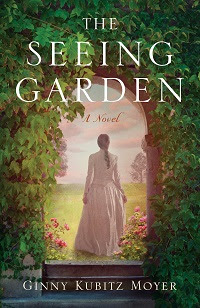
Ballrooms and Butlers: The Grand Estates of the San Francisco Peninsula, an essay by Ginny Kubitz Moyer
Ginny Kubitz Moyer is here with a post about historic country estates and their gardens, the setting for her new release The Seeing Garden, which is published today. The gorgeous photos are from her research visits.
I’ve always had a fondness for stories set in big country estates. Whether it was The Secret Garden as a child or Rebecca as a teenager or Downton Abbey as an adult, the idea of the grand house has always captivated me. As a native Californian, though, I always thought these stories happened in other places. The world of butlers and ballrooms never existed anywhere near my home in Silicon Valley, did it?
Actually, it did.
In the late nineteenth and early twentieth centuries, the San Francisco Peninsula was home to dozens of lavish country estates. San Franciscans who made their money in mining, banking, utilities, or the railroad—or who inherited fortunes from fathers who had—found that a leisurely country lifestyle could be theirs in the rolling hills of the Peninsula. The infamous fog of San Francisco dissipates as one moves south, making the area even more enticing, and good railroad links ensured an easy commute back to offices in the city. These factors led to the proliferation of estates throughout present San Mateo County, on land that was previously inhabited by Mexican rancheros and, prior to that, by the Ohlone people.
Today, entering the world of these estates takes a fair amount of imagination. In researching The Seeing Garden, I marveled at how much the Peninsula has changed in one hundred and fifty years. Although some of the mansions still exist as private residences, many of the biggest estates were razed long ago to make way for housing or businesses. In the city of San Mateo, for example, the site of the estate owned by businessman Antoine Borel is now primarily shops and office buildings. There’s no trace of his large house or the pond and rocky walls that were built to look like the mountain passes of Borel’s native Switzerland.
One and a half miles north, a high-rise apartment building dominates the skyline at what was once the El Cerrito estate, the oldest one on the Peninsula. At the time of The Seeing Garden (1910), El Cerrito was owned by Eugene de Sabla, Jr., co-founder of Pacific Gas & Electric Company. Although the estate was eventually sold and subdivided, one lovely piece that remains is the Japanese garden commissioned by De Sabla. Designed by Makoto Hagiwara (who also designed the Japanese Tea Garden in Golden Gate Park), the garden is now part of a private residence on a suburban street. A plaque on the site notes that it is listed in the National Register of Historic Places, and its serene beauty can be glimpsed through the gates along the street.
In the nearby city of Belmont, Ralston Hall is a sleeping beauty of a mansion on the grounds of Notre Dame de Namur University. Once upon a time, it was the home of William Ralston, founder of the Bank of California. After Ralston’s death by drowning in San Francisco Bay in 1875, the house changed owners and at one point even served as a sanitarium. Now owned by the university, for many years it was available for event rentals. Sadly, it’s now closed, awaiting a fairy godmother philanthropist who can cover the cost of necessary seismic retrofits. Walking around the grounds offers a tantalizing glimpse of the mansion that counted Mark Twain among its guests.
Today, the most accessible of the estates is Filoli in Woodside. It was completed in 1917 for William and Agnes Bourn, and is now open to the public, inviting visitors to walk through the airy Georgian Revival house and savor the well-tended gardens. I was in my twenties when I first visited Filoli, on a spring day when the wisteria was in full bloom, and it felt like stepping into one of the novels I loved. That visit planted the seed which eventually turned into Oakview, the fictional estate in The Seeing Garden. While writing the novel, I visited the Filoli gardens often to see what would be blooming in different months. I’ve had few research experiences more enjoyable than that.
Of course, it’s all too easy to focus on those who owned the big houses. In reality, the estates were kept afloat by fleets of gardeners, maids, butlers, housekeepers, and other employees. The kitchen at Filoli offers a display of census reports, showing the staggering number of people who worked there. Each estate was a microcosm of the larger society; class divisions were inescapable and much was owned by very few. Arguably, little has changed.
But one of the joys of writing historical fiction is its sense of possibility. Imagination is free, research frequently is, and anyone who is inspired by a certain period can travel back in time through the act of storytelling. As I wrote The Seeing Garden, the Peninsula of the great estates was a captivating place to call home.
Ginny Kubitz Moyer is a California native with a love of local history. A graduate of Pomona College and Stanford University, she is the author of the new novel The Seeing Garden (She Writes Press). An avid weekend gardener, she lives in the San Francisco Bay Area with her husband, two sons, and one rescue dog. You can learn more about her at ginnymoyer.org.
~
Ballrooms and Butlers: The Grand Estates of the
San Francisco Peninsula
Ginny Kubitz Moyer
Actually, it did.
In the late nineteenth and early twentieth centuries, the San Francisco Peninsula was home to dozens of lavish country estates. San Franciscans who made their money in mining, banking, utilities, or the railroad—or who inherited fortunes from fathers who had—found that a leisurely country lifestyle could be theirs in the rolling hills of the Peninsula. The infamous fog of San Francisco dissipates as one moves south, making the area even more enticing, and good railroad links ensured an easy commute back to offices in the city. These factors led to the proliferation of estates throughout present San Mateo County, on land that was previously inhabited by Mexican rancheros and, prior to that, by the Ohlone people.
Today, entering the world of these estates takes a fair amount of imagination. In researching The Seeing Garden, I marveled at how much the Peninsula has changed in one hundred and fifty years. Although some of the mansions still exist as private residences, many of the biggest estates were razed long ago to make way for housing or businesses. In the city of San Mateo, for example, the site of the estate owned by businessman Antoine Borel is now primarily shops and office buildings. There’s no trace of his large house or the pond and rocky walls that were built to look like the mountain passes of Borel’s native Switzerland.
One and a half miles north, a high-rise apartment building dominates the skyline at what was once the El Cerrito estate, the oldest one on the Peninsula. At the time of The Seeing Garden (1910), El Cerrito was owned by Eugene de Sabla, Jr., co-founder of Pacific Gas & Electric Company. Although the estate was eventually sold and subdivided, one lovely piece that remains is the Japanese garden commissioned by De Sabla. Designed by Makoto Hagiwara (who also designed the Japanese Tea Garden in Golden Gate Park), the garden is now part of a private residence on a suburban street. A plaque on the site notes that it is listed in the National Register of Historic Places, and its serene beauty can be glimpsed through the gates along the street.
![]() |
| Gates to the Japanese garden, formerly part of the El Cerrito estate |
In the nearby city of Belmont, Ralston Hall is a sleeping beauty of a mansion on the grounds of Notre Dame de Namur University. Once upon a time, it was the home of William Ralston, founder of the Bank of California. After Ralston’s death by drowning in San Francisco Bay in 1875, the house changed owners and at one point even served as a sanitarium. Now owned by the university, for many years it was available for event rentals. Sadly, it’s now closed, awaiting a fairy godmother philanthropist who can cover the cost of necessary seismic retrofits. Walking around the grounds offers a tantalizing glimpse of the mansion that counted Mark Twain among its guests.
![]() |
| Ralston Hall, the sleeping beauty |
Today, the most accessible of the estates is Filoli in Woodside. It was completed in 1917 for William and Agnes Bourn, and is now open to the public, inviting visitors to walk through the airy Georgian Revival house and savor the well-tended gardens. I was in my twenties when I first visited Filoli, on a spring day when the wisteria was in full bloom, and it felt like stepping into one of the novels I loved. That visit planted the seed which eventually turned into Oakview, the fictional estate in The Seeing Garden. While writing the novel, I visited the Filoli gardens often to see what would be blooming in different months. I’ve had few research experiences more enjoyable than that.
![]() |
| The Filoli Gardens |
Of course, it’s all too easy to focus on those who owned the big houses. In reality, the estates were kept afloat by fleets of gardeners, maids, butlers, housekeepers, and other employees. The kitchen at Filoli offers a display of census reports, showing the staggering number of people who worked there. Each estate was a microcosm of the larger society; class divisions were inescapable and much was owned by very few. Arguably, little has changed.
![]() |
| The Filoli mansion, Woodside, California |
But one of the joys of writing historical fiction is its sense of possibility. Imagination is free, research frequently is, and anyone who is inspired by a certain period can travel back in time through the act of storytelling. As I wrote The Seeing Garden, the Peninsula of the great estates was a captivating place to call home.
![]() |
| the author in the Filoli Gardens |
~
Ginny Kubitz Moyer is a California native with a love of local history. A graduate of Pomona College and Stanford University, she is the author of the new novel The Seeing Garden (She Writes Press). An avid weekend gardener, she lives in the San Francisco Bay Area with her husband, two sons, and one rescue dog. You can learn more about her at ginnymoyer.org.
Thursday, May 04, 2023
Review of Kate Morton's Homecoming, her latest intricate, multi-stranded generational mystery
Large old houses, families haunted by history, and suspenseful multi-stranded plots that reveal shocking truths: these are Kate Morton hallmarks, and nobody writes them better. What’s notable here is how she blends these familiar ingredients into an epic page-turner that offers surprises even for longtime fans.
In 2018, London-based journalist Jess Turner-Bridges flies back to Sydney after learning that her sharp-witted grandmother Nora, who raised her after her mother left, fell from her attic stairs. Nora’s half-conscious mutterings, combined with her own distant childhood memories, prompt Jess to revisit the past.
She’s stunned to uncover accounts of a terrible crime from 1959 in a small town in South Australia’s Adelaide Hills, when Isabel Turner and her three oldest children went out for a picnic on Christmas Eve on their idyllic Georgian-style estate and were found dead hours later by a deliveryman. Baby Thea, Isabel’s youngest, had vanished from the scene. The unsolved mystery was explored in a bestselling true-crime account published in America, but Nora had never breathed a word about it or her own connection to it.
The breathtakingly intricate narrative, which intercuts two eras, unfolds from a multiplicity of viewpoints. Throughout this lengthy tale, Morton maintains a tension that has readers weighing potential clues in every line, but she’s always one step ahead with new twists and possibilities. The book-within-a-book device, which circles through Isabel’s eventful final day and the subsequent police inquiry, is masterfully structured and raises even more questions for Jess.
Settings are firmly anchored and contrasted: the promise of postwar new beginnings, the pressures of family life, and the beautiful, wild landscape of rural South Australia, overlaid by ancient secrets and dark tragedy. Along the way, Morton probes mother-child relationships from various angles and examines the power of story itself. This novel is utterly transporting.
Homecoming was published in April by Mariner in the US, and I reviewed it from NetGalley for May's Historical Novels Review. This is Kate Morton's seventh novel; I've read them all, and it's probably my second favorite, after The Distant Hours. The US cover is at the top, the Australian one further down. Read more about how her own life influenced the Australian setting of the book in a New York Times profile.
Sunday, April 30, 2023
A short trip to the Holy Island of Lindisfarne in the early 18th century
There’s a strange magic to Holy Island, to Lindisfarne; a strange magic that sustains her. (quote from In Darkened Corners)
In 2014, as part of a driving trip from London up to Northumberland and back, my husband and I spent a day on Lindisfarne, an island off England’s northeast coast which is accessible by causeway from the mainland at low tide. We visited the ruins of Lindisfarne Priory, the site of an ancient monastery attacked by Vikings in the late 8th century, as well as the 16th-century castle.
It's a place steeped in historic atmosphere. We did a lot of walking and looking out at the sea, and we’ve always wanted to go back. In the photo below, you can see Bamburgh Castle in the distance: another landmark perched at the edge of the water, further down the coastline.
So when I read about Johanna Craven’s new historical fiction series set on Holy Island, as it’s called, I knew I had to read it, and the author recently offered a prequel short story, In Darkened Corners, as a free download. I read it in between longer novels.
Lindisfarne’s proximity to Scotland is important in the story, which takes place just prior to the 1715 Jacobite Rebellion. Julia Mitchell (her surname isn’t mentioned until halfway through) runs a curiosity shop on Lindisfarne while raising her young son, Bobby, the product of a brief liaison with a Scotsman. Her father had disowned her after discovering her pregnancy, but Julia has made ends meet with her brothers’ support, by selling unusual vintage items, and by taking in a lodger. But when her three brothers reach a political tipping point – now that there’s a German-born monarch on the English throne – and leave the island to join the Jacobite cause, Julia refuses to get involved. Events quickly make it clear to her, however, that she may not have a choice.
The author packs considerable character development and setting details into this shorter format, evoking the sounds of the sea, the majestic patterns of light and shadow in the sky, and the overwhelming sense of remoteness. The deliberate pacing and secretive atmosphere add to the sense of foreboding. One caveat: when Julia finds herself in uncomfortable circumstances, she doesn’t put up much resistance. The situation resolves too quickly, and I would have liked more explanation.
During the story, Julia comes across Highfield House, the abandoned home of the wealthy Blake family, gone now for twenty years. According to the blurb for Firelight Rising, the first full-length book in the series, which comes out in June, the Blakes return to Holy Island and get caught up in new conflicts. I have the book preordered and hope to see Julia again there too, if only as a secondary character.
You can download In Darkened Corners for free via the author’s website (PDF) or via BookFunnel (various other formats). Both books have beautifully designed covers, too.
In 2014, as part of a driving trip from London up to Northumberland and back, my husband and I spent a day on Lindisfarne, an island off England’s northeast coast which is accessible by causeway from the mainland at low tide. We visited the ruins of Lindisfarne Priory, the site of an ancient monastery attacked by Vikings in the late 8th century, as well as the 16th-century castle.
It's a place steeped in historic atmosphere. We did a lot of walking and looking out at the sea, and we’ve always wanted to go back. In the photo below, you can see Bamburgh Castle in the distance: another landmark perched at the edge of the water, further down the coastline.
![]() |
| On Lindisfarne, looking out to Bamburgh Castle in center (Photo by Mark Johnson, 2014) |
So when I read about Johanna Craven’s new historical fiction series set on Holy Island, as it’s called, I knew I had to read it, and the author recently offered a prequel short story, In Darkened Corners, as a free download. I read it in between longer novels.
Lindisfarne’s proximity to Scotland is important in the story, which takes place just prior to the 1715 Jacobite Rebellion. Julia Mitchell (her surname isn’t mentioned until halfway through) runs a curiosity shop on Lindisfarne while raising her young son, Bobby, the product of a brief liaison with a Scotsman. Her father had disowned her after discovering her pregnancy, but Julia has made ends meet with her brothers’ support, by selling unusual vintage items, and by taking in a lodger. But when her three brothers reach a political tipping point – now that there’s a German-born monarch on the English throne – and leave the island to join the Jacobite cause, Julia refuses to get involved. Events quickly make it clear to her, however, that she may not have a choice.
The author packs considerable character development and setting details into this shorter format, evoking the sounds of the sea, the majestic patterns of light and shadow in the sky, and the overwhelming sense of remoteness. The deliberate pacing and secretive atmosphere add to the sense of foreboding. One caveat: when Julia finds herself in uncomfortable circumstances, she doesn’t put up much resistance. The situation resolves too quickly, and I would have liked more explanation.
![]() |
| Lindisfarne Castle (photo by Mark Johnson, 2014) |
During the story, Julia comes across Highfield House, the abandoned home of the wealthy Blake family, gone now for twenty years. According to the blurb for Firelight Rising, the first full-length book in the series, which comes out in June, the Blakes return to Holy Island and get caught up in new conflicts. I have the book preordered and hope to see Julia again there too, if only as a secondary character.
You can download In Darkened Corners for free via the author’s website (PDF) or via BookFunnel (various other formats). Both books have beautifully designed covers, too.
Tuesday, April 25, 2023
Writing and researching a novel inspired by Irish family history, a guest post by Marian O'Shea Wernicke
Please join me in welcoming novelist Marian O'Shea Wernicke, who has a guest post about the research (including travel!) necessary for her to create her newest work of historical fiction, Out of Ireland, which is published today.
Authors of historical fiction usually enjoy doing the research for their novels. After all, one is reading about a place and time she has never seen or experienced and is not writing yet! So authors may spend months, even years, reading history, novels, examining photos, newsreels, if possible, looking at films set in the period until they feel they have a grasp of the time period as well as the setting.
But research shows that readers do not read historical fiction to learn history; they read to be entertained! A second reason they read is to be immersed into a time and place not their own by means of a story. So the trick for the writer is to weave the knowledge gained by research ever so delicately into the fabric of the story one is telling.
When I set out to write a novel inspired by the few facts I knew of my great-grandmother, Ellen Hickey Sullivan Jewett, an Irish immigrant born around 1850 in Bantry, Ireland, and who died in St. Louis, Missouri, in 1933, I realized quickly that I had to do a ton of research before I could even begin to tell the story. My most important source of knowledge about her early life in Ireland came from two letters exchanged between her daughters, my grandmother and her sister, my great aunt.
Written when they were in their 80s, the letters revealed what my grandmother remembered “about Mama’s life in Ireland.” She said she thought her mother had been born in Bantry, near the sea, that at times they had only fish and black bread to eat, that she had been forced to marry an older man she did not know or love, that they’d had a child and decided to emigrate to America. Even closer to me, my mother had known her, this Irish grandmother who’d lived with them until she died at the age of 87 when my mother was thirteen, and my mother told me stories of jumping into bed with her grandmother during fierce thunderstorms when she was a child. Her grandmother was her best friend as she was growing up in a house full of older brothers. Her real name was Ellen, but in the novel she is Eileen.
My next area of research was life in Bantry, Ireland, in the late 1860s. I am fairly well-versed in Irish literature and history, but now I began serious research into the Irish struggle for independence from the British at that time and place. My second main character is Eileen’s brother Michael, who would be involved in the Irish Republican Brotherhood, an outlawed group of Irish dedicated to the overthrow of British rule in Ireland. I decided I needed to go to Bantry, so in June of 2017 my husband and I flew to Shannon Airport, rented a car, and drove the winding, lonely road south to Bantry, where we had splurged and booked ourselves into two nights at Bantry House, the ancestral home of the Earls of Bantry.
Our stay there gave me the idea of having Eileen’s family, poor Irish Catholics who were forbidden to vote or attend a university, working on such a grand estate both in the fields as tenant farmers and in the house itself as a servant. As the guide showed us the beautiful house and explained its long history, I was imagining Eileen in such a house as a maid. Later we explored the lovely small town, and I could see Eileen being baptized and married at St. Finbarr’s Catholic Church.
Next I had to study the whole process of immigration in 1870 as many Irish were fleeing poverty and lack of opportunity in Ireland for America. People left from what is today Cobh although at the time under the British it was called Queenstown, and my characters would make the voyage on a steamship which also would have sails. I scoured the internet for the price of tickets, the supplies the steerage passengers were asked to bring, for the conditions in steerage versus in salon class on these ships, and the diseases rampant in such close quarters. I also read Joseph O’Connor’s powerful novel Star of the Sea for a wonderful fictional treatment of life at sea for immigrants. Drawings of the time, often in newspapers, were another important resource in picturing anguished scenes at the docks as families left, usually forever, all that they knew and loved for a murky future in America or Canada.
In my novel, Eileen and her husband land in Holyoke, Massachusetts, after a brief stop in Manhattan. I had lived and taught high school in Holyoke, so I was familiar with its history of Irish immigrants, many of whom worked in the mills along the river. In poking around the visitor center there on another research trip, I discovered a newspaper story of a terrible accident at a dam there and was able to use this as an important plot point.
Finally my research led to St. Louis, Missouri, my hometown, and the actual place my great-grandmother and one of her brothers ended up. My research there was most surprising. I had never heard of the Irish gangs active in the city in the late 1800s and early 1900s. Some of these gangs justified their illegal activities with the claim that they were raising money to send to the rebels in Ireland who were gearing up to fight for their freedom. In the novel, Michael is involved in one such gang, so I read several accounts such as Paddy Whacked: The Untold Story of the Irish-American Gangster for background. I examined maps of the city in the 1870s, and even found and photographed the house on St. Louis Avenue in North St. Louis where my grandmother was born. It is battered and worn, but it is still standing 139 years later!
After at least three years of research which I greatly enjoyed, it was time to start writing. Now I had the much harder task of weaving just enough of what I had learned into a story of young people that would entertain readers today as well as immerse them in a place and time they would never know except in the pages of a story.
Author Bio
Born and raised in an Irish Catholic family in St. Louis, Missouri, Marian O’Shea Wernicke is the author of the novel Toward That Which Is Beautiful, a finalist in both Literary Fiction and Romance Fiction in the 2021 Independent Book Awards, and a finalist in Multi-Cultural Fiction in the 2021 American Book Awards. The Catholic Press Association awarded the novel Honorable Mention in Fiction in 2021. She is also the author of a memoir about her father, called Tom O’Shea: A Twentieth Century Man.
A nun for eleven years, Wernicke worked in Lima, Peru for three years. After leaving the convent, Wernicke taught English as a Second Language in Madrid, and later became a professor of English and Creative Writing at Pensacola Junior College. Marian married Michael Wernicke, and they are the parents of three children. After living in Pensacola for many years, the couple moved to Austin, Texas, to be near their children and grandson. Michael died this past December, but he lives on in their children and grandchildren.
~
Writing and researching a novel inspired by
Irish family history
Marian O'Shea Wernicke
Authors of historical fiction usually enjoy doing the research for their novels. After all, one is reading about a place and time she has never seen or experienced and is not writing yet! So authors may spend months, even years, reading history, novels, examining photos, newsreels, if possible, looking at films set in the period until they feel they have a grasp of the time period as well as the setting.
But research shows that readers do not read historical fiction to learn history; they read to be entertained! A second reason they read is to be immersed into a time and place not their own by means of a story. So the trick for the writer is to weave the knowledge gained by research ever so delicately into the fabric of the story one is telling.
When I set out to write a novel inspired by the few facts I knew of my great-grandmother, Ellen Hickey Sullivan Jewett, an Irish immigrant born around 1850 in Bantry, Ireland, and who died in St. Louis, Missouri, in 1933, I realized quickly that I had to do a ton of research before I could even begin to tell the story. My most important source of knowledge about her early life in Ireland came from two letters exchanged between her daughters, my grandmother and her sister, my great aunt.
![]() |
| Photo of the author's great-grandfather |
Written when they were in their 80s, the letters revealed what my grandmother remembered “about Mama’s life in Ireland.” She said she thought her mother had been born in Bantry, near the sea, that at times they had only fish and black bread to eat, that she had been forced to marry an older man she did not know or love, that they’d had a child and decided to emigrate to America. Even closer to me, my mother had known her, this Irish grandmother who’d lived with them until she died at the age of 87 when my mother was thirteen, and my mother told me stories of jumping into bed with her grandmother during fierce thunderstorms when she was a child. Her grandmother was her best friend as she was growing up in a house full of older brothers. Her real name was Ellen, but in the novel she is Eileen.
My next area of research was life in Bantry, Ireland, in the late 1860s. I am fairly well-versed in Irish literature and history, but now I began serious research into the Irish struggle for independence from the British at that time and place. My second main character is Eileen’s brother Michael, who would be involved in the Irish Republican Brotherhood, an outlawed group of Irish dedicated to the overthrow of British rule in Ireland. I decided I needed to go to Bantry, so in June of 2017 my husband and I flew to Shannon Airport, rented a car, and drove the winding, lonely road south to Bantry, where we had splurged and booked ourselves into two nights at Bantry House, the ancestral home of the Earls of Bantry.
![]() |
| Bantry House, seat of the Earls of Bantry |
Our stay there gave me the idea of having Eileen’s family, poor Irish Catholics who were forbidden to vote or attend a university, working on such a grand estate both in the fields as tenant farmers and in the house itself as a servant. As the guide showed us the beautiful house and explained its long history, I was imagining Eileen in such a house as a maid. Later we explored the lovely small town, and I could see Eileen being baptized and married at St. Finbarr’s Catholic Church.
![]() |
| Doing research at mouth of Bantry Bay |
Next I had to study the whole process of immigration in 1870 as many Irish were fleeing poverty and lack of opportunity in Ireland for America. People left from what is today Cobh although at the time under the British it was called Queenstown, and my characters would make the voyage on a steamship which also would have sails. I scoured the internet for the price of tickets, the supplies the steerage passengers were asked to bring, for the conditions in steerage versus in salon class on these ships, and the diseases rampant in such close quarters. I also read Joseph O’Connor’s powerful novel Star of the Sea for a wonderful fictional treatment of life at sea for immigrants. Drawings of the time, often in newspapers, were another important resource in picturing anguished scenes at the docks as families left, usually forever, all that they knew and loved for a murky future in America or Canada.
![]() |
| In Bantry town facing St. Brendan’s Church |
In my novel, Eileen and her husband land in Holyoke, Massachusetts, after a brief stop in Manhattan. I had lived and taught high school in Holyoke, so I was familiar with its history of Irish immigrants, many of whom worked in the mills along the river. In poking around the visitor center there on another research trip, I discovered a newspaper story of a terrible accident at a dam there and was able to use this as an important plot point.
Finally my research led to St. Louis, Missouri, my hometown, and the actual place my great-grandmother and one of her brothers ended up. My research there was most surprising. I had never heard of the Irish gangs active in the city in the late 1800s and early 1900s. Some of these gangs justified their illegal activities with the claim that they were raising money to send to the rebels in Ireland who were gearing up to fight for their freedom. In the novel, Michael is involved in one such gang, so I read several accounts such as Paddy Whacked: The Untold Story of the Irish-American Gangster for background. I examined maps of the city in the 1870s, and even found and photographed the house on St. Louis Avenue in North St. Louis where my grandmother was born. It is battered and worn, but it is still standing 139 years later!
After at least three years of research which I greatly enjoyed, it was time to start writing. Now I had the much harder task of weaving just enough of what I had learned into a story of young people that would entertain readers today as well as immerse them in a place and time they would never know except in the pages of a story.
Author Bio
Born and raised in an Irish Catholic family in St. Louis, Missouri, Marian O’Shea Wernicke is the author of the novel Toward That Which Is Beautiful, a finalist in both Literary Fiction and Romance Fiction in the 2021 Independent Book Awards, and a finalist in Multi-Cultural Fiction in the 2021 American Book Awards. The Catholic Press Association awarded the novel Honorable Mention in Fiction in 2021. She is also the author of a memoir about her father, called Tom O’Shea: A Twentieth Century Man.
A nun for eleven years, Wernicke worked in Lima, Peru for three years. After leaving the convent, Wernicke taught English as a Second Language in Madrid, and later became a professor of English and Creative Writing at Pensacola Junior College. Marian married Michael Wernicke, and they are the parents of three children. After living in Pensacola for many years, the couple moved to Austin, Texas, to be near their children and grandson. Michael died this past December, but he lives on in their children and grandchildren.
Website: www.marianosheawernicke.com
Saturday, April 22, 2023
The Weeds unveils fascinating lost history in a feminist multi-period tale set around Rome's Colosseum
In centuries past, Rome’s Colosseum was home to abundant varieties of plant life. Returning to the Eternal City with another multi-period novel, Smith (The Everlasting, 2020) takes a creative approach, organizing her chapters by botanical family, with narrative sections introduced by plant species.
Two unnamed young women alternate viewpoints. In 1854, an assistant to Richard Deakin, an English botanist who cataloged the Colosseum’s flora, surveys the greenery while recalling her penchant for thievery and missing her female lover, who married a man.
In 2018, an American graduate student with an unsupportive advisor investigates which plants from Deakin’s book still remain on site. Through their observant, witty accounts, the protagonists contend with potential romantic partnerships and family pressures while pursuing achievements in male-dominated spaces.
One might worry that the structural concept would overshadow the plot, but this doesn’t happen; in fact, the novel exemplifies the importance of storytelling in science. The tale diverges from history in places. Erudite, playful, and filled with fury about gender inequality, it’s recommended for readers of cli-fi and feminist literary fiction.
Katy Simpson Smith's The Weeds was published by FSG last week. This is the review I contributed for Booklist, and an edited version appeared in the magazine's March 1 issue.
Some other notes:
Richard Deakin is a historical physician and botanist who compiled Flora of the Colosseum of Rome (1855). The book has been digitized at the Public Domain Review, where you can also learn about the background to the "charming volume," as it's called there. Deakin's presence in The Weeds has been fictionalized. It's easy to disappear down a rabbit hole for hours in researching the background to this book.
The structure for The Weeds is ingenious. Among the joys of reading is anticipating how each plant will fit into its section. Some are examined directly, with physical descriptions and details on their use, others metaphorically or tangentially.
Because there are no section headings indicating whose viewpoint is being shown, you have to pay close attention at first so that you're not lost. Between that and the women's lack of names, at times they feel interchangeable, which is probably deliberate on the author's part; the marginalization and diminishment of women persists over time.
One line in my original review ("The tale diverges from history in places") was edited out, maybe for space reasons, but it's nonetheless important in my overall take on the book; it would have been too spoilery to give more details.
The Weeds definitely offers much to reflect upon, from a variety of perspectives: feminist, literary, historical, and more, and it's not one I'll easily forget (I read it last October).
Two unnamed young women alternate viewpoints. In 1854, an assistant to Richard Deakin, an English botanist who cataloged the Colosseum’s flora, surveys the greenery while recalling her penchant for thievery and missing her female lover, who married a man.
In 2018, an American graduate student with an unsupportive advisor investigates which plants from Deakin’s book still remain on site. Through their observant, witty accounts, the protagonists contend with potential romantic partnerships and family pressures while pursuing achievements in male-dominated spaces.
One might worry that the structural concept would overshadow the plot, but this doesn’t happen; in fact, the novel exemplifies the importance of storytelling in science. The tale diverges from history in places. Erudite, playful, and filled with fury about gender inequality, it’s recommended for readers of cli-fi and feminist literary fiction.
Katy Simpson Smith's The Weeds was published by FSG last week. This is the review I contributed for Booklist, and an edited version appeared in the magazine's March 1 issue.
Some other notes:
The history behind this novel is absolutely fascinating! Read more in Paul Cooper's article for The Atlantic, "Rome's Colosseum Was Once a Wild, Tangled Garden." Also read more in Paul Cooper's Twitter thread from 2017, which has images from Deakin's catalog of flora and paintings of the Colosseum over the centuries. Many rare species were found there. Deakin had hypothesized they'd been carried in seed form within the fur of the African animals transported to fight in the arena in Roman times, since the plants weren't recorded anywhere else in Europe.
![]() |
| View of the interior of the Colosseum, by C.W. Eckersberg (1815). Public domain, via Wikimedia Commons |
Richard Deakin is a historical physician and botanist who compiled Flora of the Colosseum of Rome (1855). The book has been digitized at the Public Domain Review, where you can also learn about the background to the "charming volume," as it's called there. Deakin's presence in The Weeds has been fictionalized. It's easy to disappear down a rabbit hole for hours in researching the background to this book.
The structure for The Weeds is ingenious. Among the joys of reading is anticipating how each plant will fit into its section. Some are examined directly, with physical descriptions and details on their use, others metaphorically or tangentially.
Because there are no section headings indicating whose viewpoint is being shown, you have to pay close attention at first so that you're not lost. Between that and the women's lack of names, at times they feel interchangeable, which is probably deliberate on the author's part; the marginalization and diminishment of women persists over time.
One line in my original review ("The tale diverges from history in places") was edited out, maybe for space reasons, but it's nonetheless important in my overall take on the book; it would have been too spoilery to give more details.
The Weeds definitely offers much to reflect upon, from a variety of perspectives: feminist, literary, historical, and more, and it's not one I'll easily forget (I read it last October).
Sunday, April 16, 2023
Review of Katie Lumsden's The Secrets of Hartwood Hall, an innovative Victorian gothic novel
Please pardon the blog silence from the last week and more. Things have been extremely chaotic at my workplace (the EIU faculty union went on strike for six days), and reading was close to impossible under the circumstances. A tentative agreement has since been reached, and classes began again last Friday, so everyone’s taking this weekend to relax, though the situation is not yet fully resolved.
I picked up and abandoned several books over this time and finished another, but with a lesser focus than usual. Eventually I turned to a new book in a subgenre – gothic mystery – which I’ve found to be a reliable distraction from real life, and it got the job done.
You’ll know the pattern: in Victorian England, a young woman without prospects travels to a large, remote mansion to become governess for a family with a mysterious history. Servants and local villagers whisper about ghostly sightings late at night. Our heroine falls for a handsome man, but can he be trusted?
All this holds true. But the heroine of Katie Lumsden’s debut, The Secrets of Hartwood Hall, set in 1850s Somerset, isn’t a wide-eyed innocent but a 29-year-old widow, and this isn’t her first posting. Margaret Lennox had worked as a governess before wedding a clergyman who died three years into their marriage. Their union was unhappy. Margaret admits in an aside, “… but it was not as though I had ever been a good wife” – one among several hints of scandal in her past. She’s also deaf in one ear, which has made her search for a new job a challenge.
Margaret’s employer is also atypical: Mrs. Eversham, herself a widow, travels to London often on business. Margaret is directed to never let her pupil, 10-year-old Louis Eversham, out of her sight, and her mistress panics after learning Margaret took Louis, a curious and lonely child, to church in the village. Why?
To write in this subgenre, authors must know the tropes: when to incorporate them, how to invert them, and Lumsden does both very well. The novel presents an enticing mix of familiarity and the unexpected, all encased in a well-rendered Victorian milieu. As a governess, Margaret occupies an uneasy social space between servant and family member and searches for an understanding ear. She finds that – and more – in the arms of gardener Paul Carter, who adores Hartwood Hall and reassures her that there’s nothing to be frightened of. She wonders how he can possibly know that. The abandoned east wing sure sounds creepy, though, and Margaret gets a sense she’s being watched.
With so many secrets pervading all the characters’ lives, there are revelations aplenty, all brought forth at the appropriate time. My only complaint deals with one aspect of the ending, although I did understand why the author chose that route.
The Secrets of Hartwood Hall was published in the US by Dutton in late February. Michael Joseph is the publisher in the UK. Thanks to the publisher for approving my access on NetGalley.
I picked up and abandoned several books over this time and finished another, but with a lesser focus than usual. Eventually I turned to a new book in a subgenre – gothic mystery – which I’ve found to be a reliable distraction from real life, and it got the job done.
You’ll know the pattern: in Victorian England, a young woman without prospects travels to a large, remote mansion to become governess for a family with a mysterious history. Servants and local villagers whisper about ghostly sightings late at night. Our heroine falls for a handsome man, but can he be trusted?
All this holds true. But the heroine of Katie Lumsden’s debut, The Secrets of Hartwood Hall, set in 1850s Somerset, isn’t a wide-eyed innocent but a 29-year-old widow, and this isn’t her first posting. Margaret Lennox had worked as a governess before wedding a clergyman who died three years into their marriage. Their union was unhappy. Margaret admits in an aside, “… but it was not as though I had ever been a good wife” – one among several hints of scandal in her past. She’s also deaf in one ear, which has made her search for a new job a challenge.
Margaret’s employer is also atypical: Mrs. Eversham, herself a widow, travels to London often on business. Margaret is directed to never let her pupil, 10-year-old Louis Eversham, out of her sight, and her mistress panics after learning Margaret took Louis, a curious and lonely child, to church in the village. Why?
To write in this subgenre, authors must know the tropes: when to incorporate them, how to invert them, and Lumsden does both very well. The novel presents an enticing mix of familiarity and the unexpected, all encased in a well-rendered Victorian milieu. As a governess, Margaret occupies an uneasy social space between servant and family member and searches for an understanding ear. She finds that – and more – in the arms of gardener Paul Carter, who adores Hartwood Hall and reassures her that there’s nothing to be frightened of. She wonders how he can possibly know that. The abandoned east wing sure sounds creepy, though, and Margaret gets a sense she’s being watched.
With so many secrets pervading all the characters’ lives, there are revelations aplenty, all brought forth at the appropriate time. My only complaint deals with one aspect of the ending, although I did understand why the author chose that route.
The Secrets of Hartwood Hall was published in the US by Dutton in late February. Michael Joseph is the publisher in the UK. Thanks to the publisher for approving my access on NetGalley.
Subscribe to:
Posts (Atom)