


Friday again, and I took the day off (I'm maxed out on vacation time - sad life I lead, don't I), so on to more amusing topics. A recent entry in Library Journal's book blog, which referenced an article in The Book Standard, made me think about the creative promotional goodies that publishers have sent along with their review copies. Since HNR is a specialized book review journal, I'm not inundated with either books, packages, or promotional swag. But when things besides books and press releases do show up in the jiffy bags, it's kind of fun.
One of the more memorable items I've received was a small clay oil lamp, which accompanied a review copy of one of Bodie & Brock Thoene's biblical novels from Tyndale House. Pens are fairly common. My favorite is one I still have - a ballpoint pen that commemorated the publication of Lewis & Clark's journals, from University of Nebraska Press. The body was filled with some clear liquid (same one found in snow globes, no doubt) in which a tiny ship sailed back and forth on the Mississippi.
One publisher regularly sends history page-a-day calendars in December. We've used them at the reference desk for the past few years. During 2006 we've been looking at Famous Facts about the Founding Fathers. Last year, it was Day By Day in the American Revolution.
More recently, Avon sent a large box of chocolates along with the galley of Stephanie Laurens' 20th historical romance. It was very impressive: the outer box was also made of solid chocolate. I don't deal with Avon - they meant it for one of my co-editors, but listed my address on the package by mistake - so I felt I had to apologize for not sending it on to her. It was summer, and I was worried it would melt in the mail en route to Baltimore, see. (Truth be told, I'm not into chocolates, but my fellow librarians are.)
The promotional goodies do work in that I generally remember the books they accompany. They don't affect the reviews in any way, though. I wish I could say the HNR review of the Laurens novel turned out well, but from what my coworkers tell me, the chocolates were excellent.
Friday, September 29, 2006


Wednesday, September 27, 2006
Quantity and quality
I own a pretty sizeable collection of Robert Hale novels, most of which are novels about royalty that were published between the 1960s and early 1990s. Seemed to have been a specialty of theirs. As isn't surprising when a publisher starts pumping out large numbers of books on a certain style/subject, the quality varies.
For example, I was favorably impressed by the Eve Trevaskis novel on Piers Gaveston I reviewed earlier this year, and should try another one of hers sometime. Last time I read one of Alison Farely's, it was quite good as well. But I was less than enthused about Beatrice May's Sister to Jane, a novel about Lady Katherine Grey. This week I attempted another novel about her, Jean Evans' An Heir for the Tudor, and put it down after 50 pages. She portrays Katherine as a naive and not-too-bright young woman who's not shy about telling friends and acquaintances that she deserves to be queen instead of Princess Elizabeth. Obviously she hadn't learned anything by her late sister's example. And if you were to believe the plot, you'd think Elizabeth had nothing more to worry about during her reign than make sure her troublemaker cousin never married. Ugh. I own a number of Jean Evans' novels - many are hard to find - but am not sure I'll rush to pick up another.
No point collecting books you don't want to read. We do have limited space around the house...
I'm curious, though - are there any good novels about this tragic historical figure? (I own a couple more, but haven't read them.) She deserves better than the treatment these two authors have given her.
After that failed evening's reading, I've moved on to a historical fantasy novel I'm determined to squeeze into HNR's November issue. (Yes, the official deadline was 9/15, but I'll still be editing over the next week.) Why? Because I requested it via email on a Friday, and the publicist decided to send it via overnight FedEx, so it got here last Saturday. (This is very rare, and expensive, I suspect.) I felt guilty hanging onto it until February when I knew I'd be reviewing it myself, and I hadn't taken anything else for review this quarter. Fortunately, it's a fast and excellent read, so I'm zooming through it, and should have it read - and reviewed - well before my own deadline. And my saying so here will make it so, right?
For example, I was favorably impressed by the Eve Trevaskis novel on Piers Gaveston I reviewed earlier this year, and should try another one of hers sometime. Last time I read one of Alison Farely's, it was quite good as well. But I was less than enthused about Beatrice May's Sister to Jane, a novel about Lady Katherine Grey. This week I attempted another novel about her, Jean Evans' An Heir for the Tudor, and put it down after 50 pages. She portrays Katherine as a naive and not-too-bright young woman who's not shy about telling friends and acquaintances that she deserves to be queen instead of Princess Elizabeth. Obviously she hadn't learned anything by her late sister's example. And if you were to believe the plot, you'd think Elizabeth had nothing more to worry about during her reign than make sure her troublemaker cousin never married. Ugh. I own a number of Jean Evans' novels - many are hard to find - but am not sure I'll rush to pick up another.
No point collecting books you don't want to read. We do have limited space around the house...
I'm curious, though - are there any good novels about this tragic historical figure? (I own a couple more, but haven't read them.) She deserves better than the treatment these two authors have given her.
After that failed evening's reading, I've moved on to a historical fantasy novel I'm determined to squeeze into HNR's November issue. (Yes, the official deadline was 9/15, but I'll still be editing over the next week.) Why? Because I requested it via email on a Friday, and the publicist decided to send it via overnight FedEx, so it got here last Saturday. (This is very rare, and expensive, I suspect.) I felt guilty hanging onto it until February when I knew I'd be reviewing it myself, and I hadn't taken anything else for review this quarter. Fortunately, it's a fast and excellent read, so I'm zooming through it, and should have it read - and reviewed - well before my own deadline. And my saying so here will make it so, right?
Sunday, September 24, 2006
Historical novels in LibraryThing
Last night, while cataloging books in LibraryThing, I started looking at how many other LibraryThing users owned copies of my recent purchases. As it turns out, few were shared by more than a handful of people. (Insert deep thoughts about my seemingly quirky reading preferences. ) Hmm.
Then I got a silly idea. What if I used LibraryThing as a tool to gauge the popularity of individual historical novels?
(Add disclaimers about the likelihood of LibraryThing users' reading preferences being similar to those of the entire reading population, etc. I never claimed this was scientific, so just look at this little study for what it is. However, the Historical Fiction group on LT has 230 members, so it is a popular subject there...)
I looked at all historical novels published in the USA between January and June 2006, according to the HNS forthcoming books page (which I compiled; it's essentially comprehensive as far as US trade publishers go). There were 200-odd in total. Then I looked them up in LibraryThing and saw how many people owned them. I've arranged them in descending order by number of copies, so the most popular historical novels are first. Only novels with 10 or more owners in LT are given. If anyone wants the complete list (in Excel) to satisfy your curiosity, email me. Direct all complaints about my faulty methodology to /dev/null. (And no, this didn't take anywhere near as long to compile as you'd think.)
The results surprised me. Do they surprise you?
249 copies - Julian Barnes, Arthur and George, Knopf
174 - Sarah Waters, The Night Watch, Riverhead
160 - Sara Gruen, Water for Elephants, Algonquin
121 - Sarah Dunant, In the Company of the Courtesan, Random House
94 - Matthew Pearl, The Poe Shadow, Random House
76 - Javier Sierra, The Secret Supper, Atria
63 - James Morrow, The Last Witchfinder, William Morrow
62 - Elizabeth Peters, Tomb of the Golden Bird, William Morrow
57 - Bernard Cornwell, The Pale Horseman, HarperCollins
55 - Arturo Perez-Reverte, Purity of Blood, Putnam
48 - Debra Dean, The Madonnas of Leningrad, William Morrow
41 - Jane Harris, The Observations, Viking
40 - Boris Akunin, The Death of Achilles, Random House
37 - Louis Bayard, The Pale Blue Eye, HarperCollins
35 - Eva Rice, The Lost Art of Keeping Secrets, Dutton
35 - Stephen Wright, The Amalgamation Polka, Knopf
32 - Katharine Weber, Triangle, Farrar, Straus, & Giroux
31 - Edward Rutherfurd, The Rebels of Ireland, Doubleday
30 - Katharine McMahon, The Alchemist's Daughter, Crown
30 - Martin Davies, The Conjurer's Bird, Crown
28 - Alan Furst, The Foreign Correspondent, Random House
28 - Karen Essex, Leonardo's Swans, Doubleday
27 - Jane Urquhart, A Map of Glass, MacAdam/Cage
26 - Julia Alvarez, Saving the World, Algonquin
24 - Anne Easter Smith, A Rose for the Crown, Touchstone
24 - Carrie Tiffany, Everyman's Rules for Scientific Living, Scribner
24 - Laura Esquivel, Malinche, Atria
23 - Dominic Smith, The Mercury Visions of Louis Daguerre, Atria
22 - Anne Perry, Dark Assassin, Ballantine
22 - Carol Goodman, The Ghost Orchid, Ballantine
21 - Emily Barton, Brookland, Farrar Straus & Giroux
21 - Ivan Doig, The Whistling Season, Harcourt
21 - Susan Carroll, The Silver Rose, Ballantine
19 - Kerry Greenwood, Cocaine Blues, Poisoned Pen Press
19 - Marie Arana, Cellophane, Dial
19 - Sara Gran, Dope, Putnam
17 - Conn Iggulden, Emperor: The Gods of War, Delacorte
17 - Judith Lindbergh, The Thrall's Tale, Viking
17 - Robert Alexander, Rasputin's Daughter, Viking
16 - Manda Scott, Boudica: Dreaming the Hound, Bantam
16 - Shan Sa, Empress, HarperCollins
15 - Jason Goodwin, The Janissary Tree, Farrar Straus & Giroux
15 - Karen Harper, The Last Boleyn, Three Rivers
14 - Elizabeth Aston, The True Darcy Spirit, Touchstone
13 - Jenny White, The Sultan's Seal, W.W. Norton
13 - Kevin Baker, Strivers Row, HarperCollins
13 - Peter Hobbs, The Short Day Dying, Harvest
13 - Susan Straight, A Million Nightingales, Pantheon
12 - Amanda Elyot, By a Lady, Three Rivers
12 - Ariana Franklin, City of Shadows, William Morrow
12 - Athol Dickson, River Rising, Bethany House
12 - Steve Hockensmith, Holmes on the Range, Minotaur
11 - Gilles Rozier, The Mercy Room, Arcade
11 - Peter C. Brown, The Fugitive Wife, W.W. Norton
11 - Posie Graeme-Evans, The Uncrowned Queen, Atria
11 - Sally Gunning, The Widow's War, William Morrow
11 - W.E.B. Griffin and W. E. Butterworth IV, The Saboteurs, Putnam
10 - Charles Todd, A Long Shadow, William Morrow
10 - Laurien Gardner, A Lady Raised High, NAL
10 - Mary Sharratt, The Vanishing Point, Mariner
Then I got a silly idea. What if I used LibraryThing as a tool to gauge the popularity of individual historical novels?
(Add disclaimers about the likelihood of LibraryThing users' reading preferences being similar to those of the entire reading population, etc. I never claimed this was scientific, so just look at this little study for what it is. However, the Historical Fiction group on LT has 230 members, so it is a popular subject there...)
I looked at all historical novels published in the USA between January and June 2006, according to the HNS forthcoming books page (which I compiled; it's essentially comprehensive as far as US trade publishers go). There were 200-odd in total. Then I looked them up in LibraryThing and saw how many people owned them. I've arranged them in descending order by number of copies, so the most popular historical novels are first. Only novels with 10 or more owners in LT are given. If anyone wants the complete list (in Excel) to satisfy your curiosity, email me. Direct all complaints about my faulty methodology to /dev/null. (And no, this didn't take anywhere near as long to compile as you'd think.)
The results surprised me. Do they surprise you?
249 copies - Julian Barnes, Arthur and George, Knopf
174 - Sarah Waters, The Night Watch, Riverhead
160 - Sara Gruen, Water for Elephants, Algonquin
121 - Sarah Dunant, In the Company of the Courtesan, Random House
94 - Matthew Pearl, The Poe Shadow, Random House
76 - Javier Sierra, The Secret Supper, Atria
63 - James Morrow, The Last Witchfinder, William Morrow
62 - Elizabeth Peters, Tomb of the Golden Bird, William Morrow
57 - Bernard Cornwell, The Pale Horseman, HarperCollins
55 - Arturo Perez-Reverte, Purity of Blood, Putnam
48 - Debra Dean, The Madonnas of Leningrad, William Morrow
41 - Jane Harris, The Observations, Viking
40 - Boris Akunin, The Death of Achilles, Random House
37 - Louis Bayard, The Pale Blue Eye, HarperCollins
35 - Eva Rice, The Lost Art of Keeping Secrets, Dutton
35 - Stephen Wright, The Amalgamation Polka, Knopf
32 - Katharine Weber, Triangle, Farrar, Straus, & Giroux
31 - Edward Rutherfurd, The Rebels of Ireland, Doubleday
30 - Katharine McMahon, The Alchemist's Daughter, Crown
30 - Martin Davies, The Conjurer's Bird, Crown
28 - Alan Furst, The Foreign Correspondent, Random House
28 - Karen Essex, Leonardo's Swans, Doubleday
27 - Jane Urquhart, A Map of Glass, MacAdam/Cage
26 - Julia Alvarez, Saving the World, Algonquin
24 - Anne Easter Smith, A Rose for the Crown, Touchstone
24 - Carrie Tiffany, Everyman's Rules for Scientific Living, Scribner
24 - Laura Esquivel, Malinche, Atria
23 - Dominic Smith, The Mercury Visions of Louis Daguerre, Atria
22 - Anne Perry, Dark Assassin, Ballantine
22 - Carol Goodman, The Ghost Orchid, Ballantine
21 - Emily Barton, Brookland, Farrar Straus & Giroux
21 - Ivan Doig, The Whistling Season, Harcourt
21 - Susan Carroll, The Silver Rose, Ballantine
19 - Kerry Greenwood, Cocaine Blues, Poisoned Pen Press
19 - Marie Arana, Cellophane, Dial
19 - Sara Gran, Dope, Putnam
17 - Conn Iggulden, Emperor: The Gods of War, Delacorte
17 - Judith Lindbergh, The Thrall's Tale, Viking
17 - Robert Alexander, Rasputin's Daughter, Viking
16 - Manda Scott, Boudica: Dreaming the Hound, Bantam
16 - Shan Sa, Empress, HarperCollins
15 - Jason Goodwin, The Janissary Tree, Farrar Straus & Giroux
15 - Karen Harper, The Last Boleyn, Three Rivers
14 - Elizabeth Aston, The True Darcy Spirit, Touchstone
13 - Jenny White, The Sultan's Seal, W.W. Norton
13 - Kevin Baker, Strivers Row, HarperCollins
13 - Peter Hobbs, The Short Day Dying, Harvest
13 - Susan Straight, A Million Nightingales, Pantheon
12 - Amanda Elyot, By a Lady, Three Rivers
12 - Ariana Franklin, City of Shadows, William Morrow
12 - Athol Dickson, River Rising, Bethany House
12 - Steve Hockensmith, Holmes on the Range, Minotaur
11 - Gilles Rozier, The Mercy Room, Arcade
11 - Peter C. Brown, The Fugitive Wife, W.W. Norton
11 - Posie Graeme-Evans, The Uncrowned Queen, Atria
11 - Sally Gunning, The Widow's War, William Morrow
11 - W.E.B. Griffin and W. E. Butterworth IV, The Saboteurs, Putnam
10 - Charles Todd, A Long Shadow, William Morrow
10 - Laurien Gardner, A Lady Raised High, NAL
10 - Mary Sharratt, The Vanishing Point, Mariner
Friday, September 22, 2006
Upcoming appearance...
Please pardon a little BSP, I don't get to do this often.
I'll be one of about 20 authors appearing at the Illinois Authors' Luncheon, to be held Friday, October 6th, from 12:30-2pm at Navy Pier in Chicago (rooms 201-204). The luncheon is part of the Illinois Library Association annual conference, and is open to anyone interested in supporting Illinois libraries. The featured speaker is Audrey Niffenegger, author of The Time Traveler's Wife. Tickets for the lunch are $65 (on-site); details on the ILA conference website.
After the luncheon, I'll be chatting with attendees and selling/signing copies (at a nice discount) of Historical Fiction: A Guide to the Genre for anyone interested. I may bring some copies of my first book, too (The Information Professional's Guide to Career Development Online). Should be fun.
I'll be one of about 20 authors appearing at the Illinois Authors' Luncheon, to be held Friday, October 6th, from 12:30-2pm at Navy Pier in Chicago (rooms 201-204). The luncheon is part of the Illinois Library Association annual conference, and is open to anyone interested in supporting Illinois libraries. The featured speaker is Audrey Niffenegger, author of The Time Traveler's Wife. Tickets for the lunch are $65 (on-site); details on the ILA conference website.
After the luncheon, I'll be chatting with attendees and selling/signing copies (at a nice discount) of Historical Fiction: A Guide to the Genre for anyone interested. I may bring some copies of my first book, too (The Information Professional's Guide to Career Development Online). Should be fun.
Tuesday, September 19, 2006
I need another vacation
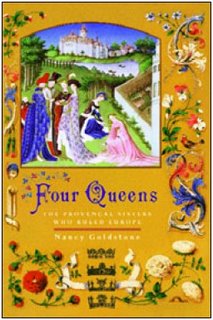 ... and a better subject line. Ye gods, my schedule. I'll be teaching 3 workshops in a 24-hour period, starting tomorrow afternoon, and they're all on different topics. At least I've got my prep work done. I'll be relaxing tonight by watching Dancing with the Stars. Yes, it's silly, I don't care...
Something tells me readers of this blog will be interested in these upcoming works.
To the left:
Four Queens: The Provençal Sisters Who Ruled Europe, by Nancy Goldstone - to be published by Viking next April. A joint biography of Marguerite, Eleanor, Sanchia, and Beatrice of Provence, "four accomplished sisters who rose from near obscurity to become the most powerful women in Europe."
From Publishers Marketplace last week:
Jacqueline Kolosov's The Red Queen's Daughter, which imagines a life for Mary Seymour, the daughter of Henry VIII's last wife Katherine Parr, as she struggles to resist love and other courtly entanglements and strives to fulfill her destiny as white magician and protector of the Virgin Queen, sold to Alessandra Balzer at Hyperion, in a pre-empt, by Sara Crowe at Harvey Klinger. (No estimated pub date listed.) Her website describes it as YA historical fiction/fantasy.
Since I just mentioned my review of McKay's previous novel (also from PM):
Canadian rights to The Birth House author Ami McKay's THE VIRGIN CURE, to Diane Martin at Knopf Canada, in a significant deal, by Helen Heller at Helen Heller Agency.
And from the news desk:
Janet Maslin (New York Times) finds Michael Cox's The Meaning of Night quite convoluted and windy. I haven't read it yet. Has anyone?
Sunday, September 17, 2006
Weekend reading
Two more of my Booklist reviews are online at Amazon: Sebastian Faulks' Human Traces (which credits my editor, Brad Hooper, instead of me; the actual magazine has it right) and Ami McKay's The Birth House.
Friday afternoon when I got home, I found (amidst the piles of chick lit, paranormal romance, and other books I can't assign) an envelope from Random House with a brand-spanking-new copy of Charles Frazier's Thirteen Moons. It happens to be a duplicate, so this one's mine, all mine. Did I start reading it right away? Of course. I'm on p.80 and I must say, it's more than living up to the hype. After the past six weeks of blah reading, with a couple exceptions, I'm finally enjoying fiction again.
Friday was also the due date for November's HNR reviews, and most of them were sent between 6pm and midnight. It's amusing how predictable it is. Everything that's arrived, I've pasted into my file, but there are a few stragglers that I'll chase up tomorrow.
Enjoy what's left of the weekend, people. We're heading to Champaign for shopping and dinner.
Friday afternoon when I got home, I found (amidst the piles of chick lit, paranormal romance, and other books I can't assign) an envelope from Random House with a brand-spanking-new copy of Charles Frazier's Thirteen Moons. It happens to be a duplicate, so this one's mine, all mine. Did I start reading it right away? Of course. I'm on p.80 and I must say, it's more than living up to the hype. After the past six weeks of blah reading, with a couple exceptions, I'm finally enjoying fiction again.
Friday was also the due date for November's HNR reviews, and most of them were sent between 6pm and midnight. It's amusing how predictable it is. Everything that's arrived, I've pasted into my file, but there are a few stragglers that I'll chase up tomorrow.
Enjoy what's left of the weekend, people. We're heading to Champaign for shopping and dinner.
Friday, September 15, 2006
I stole this meme from Sarah Weinman
It's Friday, so let's have a little fun. Here are the rules: Pick a historical novel. Change one letter in the title. Describe the plot. Hopefully you'll find that the book just writes itself.
See the post from Weinman's blog here; this game seems a lot easier with mysteries for some reason.
My submissions:
CLAN OF THE CARE BEAR:
In prehistoric Europe, young Ayla takes refuge with members of a peculiar species who couldn't possibly be human.
THE FATAL CROWD:
King Stephen and his cousin, Empress Maud, are trampled underfoot by rampaging peasants sick of hearing rumors about their affair.
THE QUEEN'S FOOD:
Let's chow down with Mary Tudor and her courtiers.
HARUM:
A multi-period epic of Salisbury Plain and its very secret and scandalous history.
TALES OF PASSION, TALES OF POE:
The many lives and secret sorrows of Edgar Allan P.
A DARK AND DISTANT WHORE:
Reay Tannahill's sweeping Victorian epic about a cold and haughty courtesan.
SHYGUN:
The Elizabethan adventurer who would have conquered feudal Japan - if he weren't so timid.
SWORE AT SUNSET:
Don't let the sun go down on King Arthur, damn it.
You can do better than this, I'm sure. Your contributions are more than welcome.
See the post from Weinman's blog here; this game seems a lot easier with mysteries for some reason.
My submissions:
CLAN OF THE CARE BEAR:
In prehistoric Europe, young Ayla takes refuge with members of a peculiar species who couldn't possibly be human.
THE FATAL CROWD:
King Stephen and his cousin, Empress Maud, are trampled underfoot by rampaging peasants sick of hearing rumors about their affair.
THE QUEEN'S FOOD:
Let's chow down with Mary Tudor and her courtiers.
HARUM:
A multi-period epic of Salisbury Plain and its very secret and scandalous history.
TALES OF PASSION, TALES OF POE:
The many lives and secret sorrows of Edgar Allan P.
A DARK AND DISTANT WHORE:
Reay Tannahill's sweeping Victorian epic about a cold and haughty courtesan.
SHYGUN:
The Elizabethan adventurer who would have conquered feudal Japan - if he weren't so timid.
SWORE AT SUNSET:
Don't let the sun go down on King Arthur, damn it.
You can do better than this, I'm sure. Your contributions are more than welcome.
Thursday, September 14, 2006
And now, the news
Historical fiction's been appearing in the press a lot lately.
Newsweek's 9/18 issue will have an exclusive interview with Charles Frazier about his latest, Thirteen Moons, but you can read it online now. They call it a "gorgeous book." I want to read it, although I admit I'm probably one of the three people on earth who has neither read Cold Mountain nor seen the movie... still haven't read Da Vinci Code either, for that matter. Someone take away my reviewing license now.
Historical settings, fictional characters, winning combination - so concludes USA Today in their profile of hot historical novels for the fall season.
Ted Clarke from the Weymouth (MA) News (my in-laws' hometown paper) has a piece on how to read historical fiction and why. It's a very good article, quite lengthy too. It even mentions the HNS definition of historical fiction, and provides the URL for Susan's Squidoo page at the end.
Took a glimpse at my site stats yesterday and saw that the number of visitors this blog gets per day has doubled since last week. Why? Everyone and their brother is googling "Thirteenth Tale" and, what do you know, an entry of mine from June 5 appears on the first page of search results. The novel's out now. Anyone else read it?
Newsweek's 9/18 issue will have an exclusive interview with Charles Frazier about his latest, Thirteen Moons, but you can read it online now. They call it a "gorgeous book." I want to read it, although I admit I'm probably one of the three people on earth who has neither read Cold Mountain nor seen the movie... still haven't read Da Vinci Code either, for that matter. Someone take away my reviewing license now.
Historical settings, fictional characters, winning combination - so concludes USA Today in their profile of hot historical novels for the fall season.
Ted Clarke from the Weymouth (MA) News (my in-laws' hometown paper) has a piece on how to read historical fiction and why. It's a very good article, quite lengthy too. It even mentions the HNS definition of historical fiction, and provides the URL for Susan's Squidoo page at the end.
Took a glimpse at my site stats yesterday and saw that the number of visitors this blog gets per day has doubled since last week. Why? Everyone and their brother is googling "Thirteenth Tale" and, what do you know, an entry of mine from June 5 appears on the first page of search results. The novel's out now. Anyone else read it?
Wednesday, September 13, 2006
This quiz seems to be catching
Rural area - check.
Lots of grain growing around here - check.
Dizziness, mental impairment, hallucinations - no comment, but it HAS been a long week, and it's only Wednesday.
Dizziness, mental impairment, hallucinations - no comment, but it HAS been a long week, and it's only Wednesday.
Which Medieval Plague Do You Have?

Congratulations! You have St. Anthony's Fire! Today known Ergotism, this illness is caught through ingestion of a fungal infection of grain, usually rye. If you are not already, you soom are going to be suffering from dizziness, hallucinations, and a sensation of burning in the limbs, thus giving the disease its name. It could result in gangrene. The good news: there is a 60% chance you will survive it! The bad news? You will wish you had not. You will have lingering symptoms for the rest of your life, including mental impairment and being more susceptible to it in the future rather than having immunity. You probably live in a rural town undergoing a very wet winter to have caught this skin-reddening sickness.
Take this quiz!

Quizilla
Join
Make A Quiz More Quizzes Grab Code
Tuesday, September 12, 2006
Highlights from Random House's spring list, and more randomness
The blogosphere is the fastest means of information transmission around, I swear. My review of Sara Donati's Queen of Swords is posted on her blog, though it's not out yet in Booklist. It'll probably be out in the Sept. 15 or October 1 issue.
One of the nice ladies from Acquisitions brought a huge box from Random House to my office yesterday afternoon. Okay, so I'm weird, but I always look forward to this box arriving, because it has a couple dozen catalogs from all the RH imprints and other publishers for which they act as distributors. However, since I spent the afternoon figuring out whether a new e-journal package deal would save our library money, rather than drooling over forthcoming novels, I took the box home. Here are some highlights.
- Sheridan Hay's The Secret of Lost Things (Doubleday, March) - "a young Australian woman takes a job at a vast, chaotic emporium of used and rare books in NYC and finds herself caught up in the search for a lost Melville manuscript." Not historical, but could be fun.
- Michael Wallner's April in Paris (Doubleday/Talese, April) - written up as a suspenseful love story about a German soldier and a French Resistance fighter in occupied Paris. Part of the publisher's new series of international fiction, something I applaud. This one's from Germany.
- Alison Weir's Innocent Traitor, about Lady Jane Grey, will be out from Ballantine in February but everyone seems to know this already.
- Judith Merkle Riley's long-awaited The Water-Devil (Three Rivers, Jan) is the 3rd volume in her Margaret of Ashbury trilogy.
I haven't posted about most of these on the HNS forthcoming books page. I may do that this coming weekend.
This has nothing to do with historical fiction, but I want a copy of linguistics guru David Crystal's The Fight for English: How Language Pundits Ate, Shot, and Left, and not just because I enjoy the title.
Meanwhile, I'm about halfway done with Beatrice May's Sister to Jane, a very short Robert Hale novel about Lady Katherine Grey that I'd hoped to review here, but it's not very good and I probably won't finish it. It's a quick read, though. (Does that count as saying something nice?)
One of the nice ladies from Acquisitions brought a huge box from Random House to my office yesterday afternoon. Okay, so I'm weird, but I always look forward to this box arriving, because it has a couple dozen catalogs from all the RH imprints and other publishers for which they act as distributors. However, since I spent the afternoon figuring out whether a new e-journal package deal would save our library money, rather than drooling over forthcoming novels, I took the box home. Here are some highlights.
- Sheridan Hay's The Secret of Lost Things (Doubleday, March) - "a young Australian woman takes a job at a vast, chaotic emporium of used and rare books in NYC and finds herself caught up in the search for a lost Melville manuscript." Not historical, but could be fun.
- Michael Wallner's April in Paris (Doubleday/Talese, April) - written up as a suspenseful love story about a German soldier and a French Resistance fighter in occupied Paris. Part of the publisher's new series of international fiction, something I applaud. This one's from Germany.
- Alison Weir's Innocent Traitor, about Lady Jane Grey, will be out from Ballantine in February but everyone seems to know this already.
- Judith Merkle Riley's long-awaited The Water-Devil (Three Rivers, Jan) is the 3rd volume in her Margaret of Ashbury trilogy.
I haven't posted about most of these on the HNS forthcoming books page. I may do that this coming weekend.
This has nothing to do with historical fiction, but I want a copy of linguistics guru David Crystal's The Fight for English: How Language Pundits Ate, Shot, and Left, and not just because I enjoy the title.
Meanwhile, I'm about halfway done with Beatrice May's Sister to Jane, a very short Robert Hale novel about Lady Katherine Grey that I'd hoped to review here, but it's not very good and I probably won't finish it. It's a quick read, though. (Does that count as saying something nice?)
Monday, September 11, 2006
Always say something nice
Authors in the biblioblogosphere (I confess I like that word) regularly go online to vent about bad reviews. You don't hear too much from the other side. How do you feel about writing negative reviews? Even if the book was a real stinker, in your humble opinion, do you ever hesitate to express your thoughts because you're afraid of hurting the author's feelings? Do you tone down your review as a result? Do you avoid writing the review altogether?
Or, on the contrary, have you ever written a negative review so sarcastic and witty that you're gleefully proud of it?
Lots of questions here.
I often hear the word "fair" bandied around. Reviewers feel that their analyses have to be fair. I appreciate the sentiment, but am not sure it's applied in the way it's intended. The word is often used to mean "balanced," i.e., reviewers should always find something positive to say even when they hated a novel and wanted to fling it across the room. Yet the opposite never holds true. If you truly loved a novel, chances are you won't go out of your way to find something critical to comment on.
To me, the dictionary definition of the word "fair" seems more appropriate - free from bias, dishonesty, injustice. In other words, reviewers should be open-minded and judge a novel based on what it is. There are certainly kind (or kinder) ways to express criticism, I'm not disputing that, and I have no problem with it either. And yes, it can help to assess a novel's appeal to other readers if you find a book's simply not your type. That falls into my definition of "fairness," and is different from its being "balanced." (Though you may quibble.)
For a classic example of how "always say something nice" can be taken to the extreme, check out Philip Hensher's review of James Thackara's The Book of Kings, published in the Guardian's Sunday Observer in September 2000. Ouch! You have to admit it's funny, though (or at least I can). If you felt a novel deserved it, could you picture yourself writing a review like this?
What does the word "fair" mean to you, as a reviewer, as a reader, or even as an author?
Or, on the contrary, have you ever written a negative review so sarcastic and witty that you're gleefully proud of it?
Lots of questions here.
I often hear the word "fair" bandied around. Reviewers feel that their analyses have to be fair. I appreciate the sentiment, but am not sure it's applied in the way it's intended. The word is often used to mean "balanced," i.e., reviewers should always find something positive to say even when they hated a novel and wanted to fling it across the room. Yet the opposite never holds true. If you truly loved a novel, chances are you won't go out of your way to find something critical to comment on.
To me, the dictionary definition of the word "fair" seems more appropriate - free from bias, dishonesty, injustice. In other words, reviewers should be open-minded and judge a novel based on what it is. There are certainly kind (or kinder) ways to express criticism, I'm not disputing that, and I have no problem with it either. And yes, it can help to assess a novel's appeal to other readers if you find a book's simply not your type. That falls into my definition of "fairness," and is different from its being "balanced." (Though you may quibble.)
For a classic example of how "always say something nice" can be taken to the extreme, check out Philip Hensher's review of James Thackara's The Book of Kings, published in the Guardian's Sunday Observer in September 2000. Ouch! You have to admit it's funny, though (or at least I can). If you felt a novel deserved it, could you picture yourself writing a review like this?
What does the word "fair" mean to you, as a reviewer, as a reader, or even as an author?
Sunday, September 10, 2006
A cover art comparison
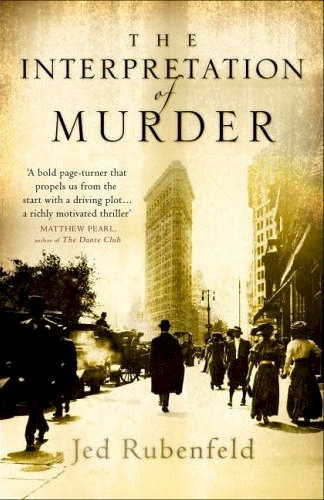 | 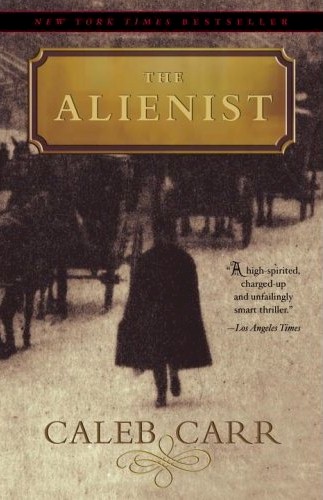 |
Two literary thrillers about murder and psychiatry in turn-of-the-century New York City... two similar covers. (Look at the central figure.) These are the British versions.
Many reviewers have already compared the two novels because of their similarity of theme. I can't call this as strong a trend in cover art as the "headless bodice" type - seems to be more of an attempt to attract the audience of one to the other - but do you know of any other covers that resemble these? Anyone read either, or both?
Saturday, September 09, 2006
This isn't a real post
Yes, I am still alive - mostly. Hard to believe it's been a week since I wrote anything here. Things have been so incredibly busy at work and with conference stuff that I've barely had time to think about historical fiction, let alone read it... although I've finally found a novel it looks like I'll be able to finish: Ann Parker's Iron Ties, and I need to get it read so that I can use it as my final book for the NoveList piece I started last weekend. I also understand that I have another Booklist review book arriving soon (it's always a surprise).
Up way too early on a Saturday, but at least I've updated the HNS website and gotten my email down to a manageable level. Yawn, though. I think I'm going back to bed.
In the meanwhile, if you haven't taken a gander at Jeri Westerson's interview with Margaret Frazer and Sharan Newman, medieval mystery novelists, it's worth reading. Some interesting comments on the relationship between historical novelists and academia, and publishing in the US and UK, among other things.
Up way too early on a Saturday, but at least I've updated the HNS website and gotten my email down to a manageable level. Yawn, though. I think I'm going back to bed.
In the meanwhile, if you haven't taken a gander at Jeri Westerson's interview with Margaret Frazer and Sharan Newman, medieval mystery novelists, it's worth reading. Some interesting comments on the relationship between historical novelists and academia, and publishing in the US and UK, among other things.
Saturday, September 02, 2006
Saturday afternoon at the library, and some upcoming picks
It's around 3pm, the crowds have started to disperse (such as they were, on this very slow Saturday of Labor Day weekend), and I've already written brief reviews of four out of five novels for my November "What We're Reading" column for NoveList. Since I'm totally incapable of reading fiction at the reference desk, it's a good time to go through the list of forthcoming historical novels and pick out some titles that look to be worth reading. (It's either that or read the scintillating letters-to-the-editor column from the local paper, which someone happened to leave behind on one of the study tables; reading them always makes me want to move back to Boston. Which would you choose?)
Last week, I went through the online catalogs from Penguin, Time Warner, and Simon & Schuster imprints, and posted blurbs for the historical novels found therein. If you haven't been to the HNS forthcoming books page in a while, you'll find some new things there.
Janice Graham's The Tailor's Daughter (which Amazon seems to be mixing up with Maggie Bennett's novel of the same name), out in October from St. Martin's, features a deaf woman in Victorian England who "sets off on a treacherous journey that will lead her into a world of deception, murder, and madness." It boasts a nice blurb from Philippa Gregory. And I know I've seen that cover image before, somewhere...
Not that it needs any more publicity than it's getting, but I've been hearing great things about Charles Frazier's Thirteen Moons. I almost took it for myself to review for HNR before "reader's block" hit me, and figured I owed it to the novel to send it to someone else. Forthcoming October 3rd from Random House.
My review of Barry Unsworth's The Ruby in Her Navel is finally posted on Amazon, if you look for the Booklist mention. Also October, from Doubleday/Talese. I warned you about the major spoilers in the Publishers Weekly review, though, so beware. The novel's definitely worth reading, and no, there's not a word in my review about its taking at least 75 pages for the plot to get moving. (Which I blogged about several months ago, if anyone remembers.) Why not? Because I only had 175 words to work with, and I decided it didn't matter in the end.
Isabel Allende has a new book forthcoming in November, Ines of My Soul, a biographical novel about Chile's founding mother. I've yet to read her Zorro, but I was impressed by both Daughter of Fortune and Portrait in Sepia; among other things, they taught me that "magical realism" wasn't a literary style to be feared.
I've also been hearing very good things about Donna Gillespie's Lady of the Light, volume 2 in a series that began with The Light Bearer, which finally found an American publisher after years of being available only in German.
What novels are you looking forward to?
Last week, I went through the online catalogs from Penguin, Time Warner, and Simon & Schuster imprints, and posted blurbs for the historical novels found therein. If you haven't been to the HNS forthcoming books page in a while, you'll find some new things there.
Janice Graham's The Tailor's Daughter (which Amazon seems to be mixing up with Maggie Bennett's novel of the same name), out in October from St. Martin's, features a deaf woman in Victorian England who "sets off on a treacherous journey that will lead her into a world of deception, murder, and madness." It boasts a nice blurb from Philippa Gregory. And I know I've seen that cover image before, somewhere...
Not that it needs any more publicity than it's getting, but I've been hearing great things about Charles Frazier's Thirteen Moons. I almost took it for myself to review for HNR before "reader's block" hit me, and figured I owed it to the novel to send it to someone else. Forthcoming October 3rd from Random House.
My review of Barry Unsworth's The Ruby in Her Navel is finally posted on Amazon, if you look for the Booklist mention. Also October, from Doubleday/Talese. I warned you about the major spoilers in the Publishers Weekly review, though, so beware. The novel's definitely worth reading, and no, there's not a word in my review about its taking at least 75 pages for the plot to get moving. (Which I blogged about several months ago, if anyone remembers.) Why not? Because I only had 175 words to work with, and I decided it didn't matter in the end.
Isabel Allende has a new book forthcoming in November, Ines of My Soul, a biographical novel about Chile's founding mother. I've yet to read her Zorro, but I was impressed by both Daughter of Fortune and Portrait in Sepia; among other things, they taught me that "magical realism" wasn't a literary style to be feared.
I've also been hearing very good things about Donna Gillespie's Lady of the Light, volume 2 in a series that began with The Light Bearer, which finally found an American publisher after years of being available only in German.
What novels are you looking forward to?
Friday, September 01, 2006
Conference stuff, revisited
A quick note - the HNS conference board of directors will be accepting proposals for talks/workshops/panels/etc for the 2007 conference through the end of September. The online form is here. The conference will be held in Albany, New York, from June 8-10, 2007. (Yes, I've blogged about this before, but just a friendly reminder...)
If anyone has questions about the conference, please leave a comment here, or feel free to email me. The campus IT staff is going to be taking our email down (again, argh) for the long weekend, so if you need a quick answer, use sarah.johnson@historicalnovelsociety.org instead of the one on my profile.
In the meanwhile, I'm going to be spending the weekend at the reference desk (Saturday), packing up review books (Sunday), and getting ready for Tuesday meetings (Monday). Not terribly exciting, no. In between, I may attempt to get through more of this novel I started last week, or I may put it on hold and start reading linguistics stuff again. Not sure.
If anyone has questions about the conference, please leave a comment here, or feel free to email me. The campus IT staff is going to be taking our email down (again, argh) for the long weekend, so if you need a quick answer, use sarah.johnson@historicalnovelsociety.org instead of the one on my profile.
In the meanwhile, I'm going to be spending the weekend at the reference desk (Saturday), packing up review books (Sunday), and getting ready for Tuesday meetings (Monday). Not terribly exciting, no. In between, I may attempt to get through more of this novel I started last week, or I may put it on hold and start reading linguistics stuff again. Not sure.
Thursday, August 31, 2006
Saying goodbye to ourselves
[Preface: I wrote this essay for the November 2004 issue of the Historical Novels Review. Since the fall semester has just begun at Eastern Illinois U., and the freshmen are looking younger than ever, it seemed an appropriate time to repost it. This was meant to be a discussion on why we shouldn’t pigeonhole ourselves in our definitions of “historical fiction,” but also why we can’t help doing it; it can be read as a sequel of sorts to the definition article/conference talk that's posted on the HNS website (which I wrote two years earlier, in 2002).
If you want to read the current Mindset List, published annually by Beloit College in Wisconsin, you can find it here. Enjoy.]
As some of you know, I work full-time as a reference librarian in a university library. Each autumn, when the freshmen arrive on campus, the librarians remark on how much younger the new students look than last year’s crop. Of course, they’re the same age as always, while we’re the ones who are growing older. Nobody really wants to admit that. Still, it is true that the age gap between the library staff and brand new university students gets wider all the time.
Each year, academics across the United States refer to the famous “Mindset List,” produced by Beloit College in Wisconsin, to put themselves in the shoes of the young people that they’re instructing. The list takes elements of history and popular culture and views them from the perspective of the younger generation. At my library, we print out each new edition as it’s published, and place it at the reference desk for our own edification.
Most of today’s new university students were born in 1985 or 1986, and are considered the Class of 2008. Here are some history-based examples from recent years’ Mindset Lists that describe their viewpoints. The details given in parentheses are my additions. For these students:
- Most of them know someone who was born with the help of a test tube. (Louise Brown, first test tube baby, born July 25, 1978)
- They have no idea that Americans were ever held hostage in Iran. (Last hostages freed January 20, 1981)
- They have no meaningful recollection of the Reagan era, and did not know he had ever been shot. (March 30, 1981)
- There has always been an heir to the heir to the British throne. (Prince William born June 21, 1982)
- The drinking age has always been 21 throughout the country (USA). (National Minimum Drinking Age Act of 1984, signed into law on July 17)
- The precise location of the Titanic has always been known. (Wreck discovered September 1, 1985)
As its co-editor Tom McBride, Keefer Professor of the Humanities at Beloit College, states: “The Mindset List, among other things, is a reminder of that [new] world—a world that makes education a tougher yet more fascinating job than ever. In saying hello to the new generation, which [educators] labor mightily to understand, but with mixed results, they are saying good-bye to themselves.”
Today’s new university students have a vastly different perspective on the past than even people of Generation X – those individuals born in the 1960s and 1970s – do. Each generation has its own perspective on what connotes history, and it can be a very personal definition. It’s an odd kind of culture shock. As historical novel readers, we’re used to envisioning the lives of people who lived generations, or at least one generation, earlier than ourselves. It can be disconcerting to realize, via publications such as the Mindset List, that younger generations might feel about us the way we feel about, well, characters in historical fiction.
According to the official HNS definition, a historical novel should have been written at least fifty years after the events described, or have been written by someone who wasn’t alive at the time. We acknowledge that this definition is arbitrary, because we can’t please everyone. It benefits us to be precise. After all, we can’t review everything. But the more I think about people’s varying definitions of “history,” particularly those of the younger generation, it occurs to me that it benefits us just as much to be flexible.
This point became clearer to me when looking through the backlist catalogue of Scholastic, a major publisher of children’s and young adult fiction. They publish four series of fictionalized diaries of teenagers and older children who lived in different historical periods. I recently spotted one of the latest entries from the Dear America series, Ellen Emerson White’s novel Where Have All the Flowers Gone: The Diary of Molly McKenzie Flaherty. Set on the American home front in 1968 Boston, Massachusetts, it describes one teenage girl’s personal Vietnam-era experience as she volunteers in a military hospital, sees war protests firsthand, and fears for her brother, fighting for his country on the other side of the world. Is it set more than fifty years in the past? No. Was the author alive at the time the novel depicts? Yes. But is it historical fiction? Members of the novel’s teenage audience, who were born nearly twenty years after the novel takes place, would probably think so.
I can also recall, while growing up, being fascinated by Judy Blume’s 1977 children’s novel Starring Sally J. Freedman As Herself, about a ten-year-old Jewish girl from New Jersey who winters in Miami Beach with her mother and brother. Like any child of her age, her curiosity runs away with her at times. She dreams of swimming as beautifully as movie star Esther Williams, with her elegant bearing and super-white teeth. Having been deeply affected by the death of her cousin Lila in the Holocaust, Sally seriously wonders if her next-door neighbor may be Adolf Hitler in disguise. Back then, I didn’t really care whether Blume’s novel was “historical fiction” or not – I just thought it was a good story. But it did make me consider how World War II influenced the day-to-day lives of Jewish Americans, many of whom lost family members in concentration camps overseas. They didn’t teach you about this sort of thing in school – how average people were changed by historical events – and they probably still don’t. But this is what historical fiction is all about.
Lest anyone feel I’m being pedantic by selecting two children’s books as examples, take Charlotte Bingham’s The Moon at Midnight, a fairly new saga set in the fictional English fishing village of Bexham in 1962, over forty years ago. One of Bingham’s main points was to show the contrasting values between members of the Greatest Generation and their children, who don’t seem to care about the sacrifices their parents made for them during World War II. Reading this novel, its historicity is well evident, at least to a reader (like me) who didn’t live through those events firsthand.
All of these thoughts were brought home to me via a discussion on the Internet discussion group rec.arts.books.hist-fiction, on which fans of the genre post messages about their interests. Several readers agreed that they couldn’t conceive of “historical fiction” as anything set during or after World War II, because it was an event they lived through. On the other hand, historical fiction can be a valuable tool in demonstrating the differences between now and then, even if the “then” isn’t that far away in actual years. Reading these novels can be a real eye-opener, showing us how many things – social conditions, politics, and the influence of contemporary events in our daily lives – have changed.
It may be true, as an HNS member suggested in a recent letter to the editor, that many readers of this magazine prefer to read about eras long past. I enjoy this type of setting myself, and they’re certainly popular with reviewers. But occasionally reading a novel set within the last forty years, one with significant historical content, brings home to me the fact that times have changed considerably more than I might believe.
Of course, there’s another advantage to reading these novels. Thanks to historical novelists who write about the recent past, a past that many of us still remember well, we don’t have to “say good-bye to ourselves,” as the Mindset List suggests. We can relive those times just as often as we’d like – and we can introduce the younger generations to them, too.
If you want to read the current Mindset List, published annually by Beloit College in Wisconsin, you can find it here. Enjoy.]
As some of you know, I work full-time as a reference librarian in a university library. Each autumn, when the freshmen arrive on campus, the librarians remark on how much younger the new students look than last year’s crop. Of course, they’re the same age as always, while we’re the ones who are growing older. Nobody really wants to admit that. Still, it is true that the age gap between the library staff and brand new university students gets wider all the time.
Each year, academics across the United States refer to the famous “Mindset List,” produced by Beloit College in Wisconsin, to put themselves in the shoes of the young people that they’re instructing. The list takes elements of history and popular culture and views them from the perspective of the younger generation. At my library, we print out each new edition as it’s published, and place it at the reference desk for our own edification.
Most of today’s new university students were born in 1985 or 1986, and are considered the Class of 2008. Here are some history-based examples from recent years’ Mindset Lists that describe their viewpoints. The details given in parentheses are my additions. For these students:
- Most of them know someone who was born with the help of a test tube. (Louise Brown, first test tube baby, born July 25, 1978)
- They have no idea that Americans were ever held hostage in Iran. (Last hostages freed January 20, 1981)
- They have no meaningful recollection of the Reagan era, and did not know he had ever been shot. (March 30, 1981)
- There has always been an heir to the heir to the British throne. (Prince William born June 21, 1982)
- The drinking age has always been 21 throughout the country (USA). (National Minimum Drinking Age Act of 1984, signed into law on July 17)
- The precise location of the Titanic has always been known. (Wreck discovered September 1, 1985)
As its co-editor Tom McBride, Keefer Professor of the Humanities at Beloit College, states: “The Mindset List, among other things, is a reminder of that [new] world—a world that makes education a tougher yet more fascinating job than ever. In saying hello to the new generation, which [educators] labor mightily to understand, but with mixed results, they are saying good-bye to themselves.”
Today’s new university students have a vastly different perspective on the past than even people of Generation X – those individuals born in the 1960s and 1970s – do. Each generation has its own perspective on what connotes history, and it can be a very personal definition. It’s an odd kind of culture shock. As historical novel readers, we’re used to envisioning the lives of people who lived generations, or at least one generation, earlier than ourselves. It can be disconcerting to realize, via publications such as the Mindset List, that younger generations might feel about us the way we feel about, well, characters in historical fiction.
According to the official HNS definition, a historical novel should have been written at least fifty years after the events described, or have been written by someone who wasn’t alive at the time. We acknowledge that this definition is arbitrary, because we can’t please everyone. It benefits us to be precise. After all, we can’t review everything. But the more I think about people’s varying definitions of “history,” particularly those of the younger generation, it occurs to me that it benefits us just as much to be flexible.
This point became clearer to me when looking through the backlist catalogue of Scholastic, a major publisher of children’s and young adult fiction. They publish four series of fictionalized diaries of teenagers and older children who lived in different historical periods. I recently spotted one of the latest entries from the Dear America series, Ellen Emerson White’s novel Where Have All the Flowers Gone: The Diary of Molly McKenzie Flaherty. Set on the American home front in 1968 Boston, Massachusetts, it describes one teenage girl’s personal Vietnam-era experience as she volunteers in a military hospital, sees war protests firsthand, and fears for her brother, fighting for his country on the other side of the world. Is it set more than fifty years in the past? No. Was the author alive at the time the novel depicts? Yes. But is it historical fiction? Members of the novel’s teenage audience, who were born nearly twenty years after the novel takes place, would probably think so.
I can also recall, while growing up, being fascinated by Judy Blume’s 1977 children’s novel Starring Sally J. Freedman As Herself, about a ten-year-old Jewish girl from New Jersey who winters in Miami Beach with her mother and brother. Like any child of her age, her curiosity runs away with her at times. She dreams of swimming as beautifully as movie star Esther Williams, with her elegant bearing and super-white teeth. Having been deeply affected by the death of her cousin Lila in the Holocaust, Sally seriously wonders if her next-door neighbor may be Adolf Hitler in disguise. Back then, I didn’t really care whether Blume’s novel was “historical fiction” or not – I just thought it was a good story. But it did make me consider how World War II influenced the day-to-day lives of Jewish Americans, many of whom lost family members in concentration camps overseas. They didn’t teach you about this sort of thing in school – how average people were changed by historical events – and they probably still don’t. But this is what historical fiction is all about.
Lest anyone feel I’m being pedantic by selecting two children’s books as examples, take Charlotte Bingham’s The Moon at Midnight, a fairly new saga set in the fictional English fishing village of Bexham in 1962, over forty years ago. One of Bingham’s main points was to show the contrasting values between members of the Greatest Generation and their children, who don’t seem to care about the sacrifices their parents made for them during World War II. Reading this novel, its historicity is well evident, at least to a reader (like me) who didn’t live through those events firsthand.
All of these thoughts were brought home to me via a discussion on the Internet discussion group rec.arts.books.hist-fiction, on which fans of the genre post messages about their interests. Several readers agreed that they couldn’t conceive of “historical fiction” as anything set during or after World War II, because it was an event they lived through. On the other hand, historical fiction can be a valuable tool in demonstrating the differences between now and then, even if the “then” isn’t that far away in actual years. Reading these novels can be a real eye-opener, showing us how many things – social conditions, politics, and the influence of contemporary events in our daily lives – have changed.
It may be true, as an HNS member suggested in a recent letter to the editor, that many readers of this magazine prefer to read about eras long past. I enjoy this type of setting myself, and they’re certainly popular with reviewers. But occasionally reading a novel set within the last forty years, one with significant historical content, brings home to me the fact that times have changed considerably more than I might believe.
Of course, there’s another advantage to reading these novels. Thanks to historical novelists who write about the recent past, a past that many of us still remember well, we don’t have to “say good-bye to ourselves,” as the Mindset List suggests. We can relive those times just as often as we’d like – and we can introduce the younger generations to them, too.
Tuesday, August 29, 2006
In which I spend way too much money at Amazon UK
Yes, most of the money I make on my writing projects goes to support my book-buying habit...
This morning while browsing Fay Sampson's website, I noticed she has a new book out. One I've never seen mentioned anywhere else. Hmph. The Land of Angels, about Queen Bertha of Kent and the coming of St. Augustine of Canterbury, as her website reports, was published on July 31st by Robert Hale. Given that her earlier The Flight of the Sparrow went out of print before I could buy it, and it took me five more years of searching before I found a copy of the darn thing, I went right to Amazon UK and ordered her latest. Despite the outrageous price, which included a £1.99 "sourcing fee" because it's a special order. I almost suspect it's out of print already, because Hale novels normally aren't this hard to obtain...
Did I mention it has a really cool cover?
To assuage my guilt at the £2.99/book shipping price plus the £3.49/order shipping price, which I'd be paying regardless, I added a copy of Edward Charles's In the Shadow of Lady Jane to my shopping cart.
Now I just have to wait until mid-October until my books arrive, and my credit card gets charged the $80 or so I paid for both of these. I must be nuts.
This morning while browsing Fay Sampson's website, I noticed she has a new book out. One I've never seen mentioned anywhere else. Hmph. The Land of Angels, about Queen Bertha of Kent and the coming of St. Augustine of Canterbury, as her website reports, was published on July 31st by Robert Hale. Given that her earlier The Flight of the Sparrow went out of print before I could buy it, and it took me five more years of searching before I found a copy of the darn thing, I went right to Amazon UK and ordered her latest. Despite the outrageous price, which included a £1.99 "sourcing fee" because it's a special order. I almost suspect it's out of print already, because Hale novels normally aren't this hard to obtain...
Did I mention it has a really cool cover?
To assuage my guilt at the £2.99/book shipping price plus the £3.49/order shipping price, which I'd be paying regardless, I added a copy of Edward Charles's In the Shadow of Lady Jane to my shopping cart.
Now I just have to wait until mid-October until my books arrive, and my credit card gets charged the $80 or so I paid for both of these. I must be nuts.
Friday, August 25, 2006
It's not you, it's me
(Anyone else see that Seinfeld episode?)
After attempting and setting aside four novels in rapid succession, I've come to the conclusion that the problem is neither the novels, nor the authors' skills - it's me. Yikes. This is the first time in maybe 7-8 years that I haven't had a novel on the coffeetable, nightstand, etc., waiting to be picked up and read. I have several thousand sitting on my bookshelves, but they don't appeal at the moment. It's a weird feeling.
Basically, I think I need to read something besides fiction for a short time (if I read anything at all). Fiction in general, that is, not just historical fiction - as one of the four was a contemporary chick lit/mystery that I read 3/4 of the way through before skimming to the end. (As an aside, the one novel that managed to hold my attention within the last week and a half was Megan Abbott's excellent Die a Little, a crime/noir set in 1950s LA. I'll write up a summary of that one for my next NoveList column.)
What have I been reading instead, you ask. The answer is - linguistics essays. This may seem like the most boring topic in the world to you, but au contraire, they're fascinating reading for anyone interested in how language works, and is used. Back when I was in grad school, I bought a book of essays by Geoffrey K. Pullum called The Great Eskimo Vocabulary Hoax, and Other Irreverent Essays on the Study of Language. I read a few of them back then, but am reading the rest of them now.
The essays are hilarious, if you enjoy dry humor as well as the author's successful attempts at making fun of stuffy people. (Linguists are not snobs.) For the title essay, Pullum explains why the myth of Eskimos having countless (200? 400? how many really?) words for snow is completely false. And why writers should stop using that cliché in trying to describe quantities that are, quite simply, indescribable.
Pullum's also a contributor to the lively and popular Language Log, a collaborative blog hosted at the University of Pennsylvania. (One of my former profs is another contributor, but I won't name drop... too much.) If you enjoy writing, or words in general, it's worth checking out and bookmarking.
But bringing the topic back to historical fiction and other writerly stuff: here are some entries from the Language Log that may appeal.
Novelist Frank Delaney (the multi-period epic Ireland) says that the Irish language has no word for sex. The linguists prove him wrong.
The bane of the author's life, copy editors, and their false claims about what is and isn't grammatical.
Dorothy Dunnett has been cleared of anachronism. Ditto for Patrick O'Brian. (Not surprising.)
Ever try to analyze Dan Brown's writing style? They've done it for you, and it's not pretty.
TGIF and all that. I'm going to read another of those essays now. (BTW, the Cookson and Lewis novels - that wasn't just me. I don't think.)
After attempting and setting aside four novels in rapid succession, I've come to the conclusion that the problem is neither the novels, nor the authors' skills - it's me. Yikes. This is the first time in maybe 7-8 years that I haven't had a novel on the coffeetable, nightstand, etc., waiting to be picked up and read. I have several thousand sitting on my bookshelves, but they don't appeal at the moment. It's a weird feeling.
Basically, I think I need to read something besides fiction for a short time (if I read anything at all). Fiction in general, that is, not just historical fiction - as one of the four was a contemporary chick lit/mystery that I read 3/4 of the way through before skimming to the end. (As an aside, the one novel that managed to hold my attention within the last week and a half was Megan Abbott's excellent Die a Little, a crime/noir set in 1950s LA. I'll write up a summary of that one for my next NoveList column.)
What have I been reading instead, you ask. The answer is - linguistics essays. This may seem like the most boring topic in the world to you, but au contraire, they're fascinating reading for anyone interested in how language works, and is used. Back when I was in grad school, I bought a book of essays by Geoffrey K. Pullum called The Great Eskimo Vocabulary Hoax, and Other Irreverent Essays on the Study of Language. I read a few of them back then, but am reading the rest of them now.
The essays are hilarious, if you enjoy dry humor as well as the author's successful attempts at making fun of stuffy people. (Linguists are not snobs.) For the title essay, Pullum explains why the myth of Eskimos having countless (200? 400? how many really?) words for snow is completely false. And why writers should stop using that cliché in trying to describe quantities that are, quite simply, indescribable.
Pullum's also a contributor to the lively and popular Language Log, a collaborative blog hosted at the University of Pennsylvania. (One of my former profs is another contributor, but I won't name drop... too much.) If you enjoy writing, or words in general, it's worth checking out and bookmarking.
But bringing the topic back to historical fiction and other writerly stuff: here are some entries from the Language Log that may appeal.
Novelist Frank Delaney (the multi-period epic Ireland) says that the Irish language has no word for sex. The linguists prove him wrong.
The bane of the author's life, copy editors, and their false claims about what is and isn't grammatical.
Dorothy Dunnett has been cleared of anachronism. Ditto for Patrick O'Brian. (Not surprising.)
Ever try to analyze Dan Brown's writing style? They've done it for you, and it's not pretty.
TGIF and all that. I'm going to read another of those essays now. (BTW, the Cookson and Lewis novels - that wasn't just me. I don't think.)
Wednesday, August 23, 2006
Historical novel title changes...
I've been browsing older historical novel deals in Publishers Marketplace and have come across some interesting data on title changes. As I'm sure you know, titles of novels are occasionally changed after they're sold, usually for marketability purposes.
The following are examples of this phenomenon: when the publishers bought these novels from the authors' agents, they had different titles than the ones you'd recognize. Do you prefer the newer titles, or the older ones?
Diana Gabaldon's Lord John and the Chamber Pot became Lord John and the Private Matter
Jenni Grizzle's Beyond the Mists of Midnight became Jennifer St. Giles's The Mistress of Trevelyan
Linda Holeman's Linny Gow became The Linnet Bird
Deborah Larsen's Two Falling Voices became The White
Kate McCafferty's Cot became Testimony of an Irish Slave Girl
Lilian Nattel's The Theater of Consolation became The Singing Fire (not The River Midnight as I originally reported, sorry - my mistake)
Mary Rourke's Mary and Joanna became Two Women of Galilee
Jed Rubenfeld's The Name of Action became The Interpretation of Murder
Frances Sherwood's Threshold became The Book of Splendor
Anne Easter Smith's Of Blood and Roses became A Rose for the Crown
Debbie Taylor's The Mistress and the Dwarf became The Fourth Queen
Edmund White's The Life of Frances Wright by Mrs. Trollope became Fanny: A Fiction
I tend to agree with all of them, with the exception of the Larsen - Two Falling Voices sounds like the more evocative and appealing title to me.
The following are examples of this phenomenon: when the publishers bought these novels from the authors' agents, they had different titles than the ones you'd recognize. Do you prefer the newer titles, or the older ones?
Diana Gabaldon's Lord John and the Chamber Pot became Lord John and the Private Matter
Jenni Grizzle's Beyond the Mists of Midnight became Jennifer St. Giles's The Mistress of Trevelyan
Linda Holeman's Linny Gow became The Linnet Bird
Deborah Larsen's Two Falling Voices became The White
Kate McCafferty's Cot became Testimony of an Irish Slave Girl
Lilian Nattel's The Theater of Consolation became The Singing Fire (not The River Midnight as I originally reported, sorry - my mistake)
Mary Rourke's Mary and Joanna became Two Women of Galilee
Jed Rubenfeld's The Name of Action became The Interpretation of Murder
Frances Sherwood's Threshold became The Book of Splendor
Anne Easter Smith's Of Blood and Roses became A Rose for the Crown
Debbie Taylor's The Mistress and the Dwarf became The Fourth Queen
Edmund White's The Life of Frances Wright by Mrs. Trollope became Fanny: A Fiction
I tend to agree with all of them, with the exception of the Larsen - Two Falling Voices sounds like the more evocative and appealing title to me.
Monday, August 21, 2006
The 50-page rule
How long do you continue to read an unenjoyable book before giving up?
Nancy Pearl - reader's advisor extraordinaire, author of Book Lust, and model for the librarian action figure - came up with the Rule of 50: "If you still don't like a book after slogging through the first 50 pages, set it aside. If you're more than 50 years old, subtract your age from 100 and only grant it that many pages."
More and more, I'm discovering that life's too short to read novels that I'm not enjoying, or simply am not in the mood to read, even if I feel I should read them. Until recently, I kept bookmarks to mark my place in novels I never got around to finishing. For example, my copy of Dorothy Dunnett's King Hereafter still boasts one of these, ten years after my valiant attempt at reading it (please don't send me hate mail because of this). I got about halfway through. I don't know if I do this to assuage any possible feeling of guilt on my part, or if it's my lame attempt to avoid the obvious truth - that there are so many other books out there that, most likely, I'll never get around to picking these novels up again.
I don't have a hard and fast rule for these things. Review books, I'll slog through regardless of enjoyment (but fortunately, I do enjoy most). And I'm occasionally rewarded for my efforts - sometimes novels surprise me and turn out to be better than originally anticipated.
My latest two rejectees are Catherine Cookson's The Silent Lady and Hilda Lewis's I, Jacqueline. The former was Cookson's final novel, which she dictated to her husband from her sickbed - she was very ill at the time. I found the plot convoluted and the characters unappealing, and I really wonder if it would have been published if Cookson wasn't the author. I made it through about 30 pages. I, Jacqueline, a biographical novel of Jacqueline, Countess of Hainault, started off well, but the heroine was of the TSTL type - so naive and wishy-washy that I spent most of the novel (the half I read, anyway) cringing from her poor decisions.
It's possible I just wasn't in the right mood to read any of these novels. But I'll probably never know.
Nancy Pearl - reader's advisor extraordinaire, author of Book Lust, and model for the librarian action figure - came up with the Rule of 50: "If you still don't like a book after slogging through the first 50 pages, set it aside. If you're more than 50 years old, subtract your age from 100 and only grant it that many pages."
More and more, I'm discovering that life's too short to read novels that I'm not enjoying, or simply am not in the mood to read, even if I feel I should read them. Until recently, I kept bookmarks to mark my place in novels I never got around to finishing. For example, my copy of Dorothy Dunnett's King Hereafter still boasts one of these, ten years after my valiant attempt at reading it (please don't send me hate mail because of this). I got about halfway through. I don't know if I do this to assuage any possible feeling of guilt on my part, or if it's my lame attempt to avoid the obvious truth - that there are so many other books out there that, most likely, I'll never get around to picking these novels up again.
I don't have a hard and fast rule for these things. Review books, I'll slog through regardless of enjoyment (but fortunately, I do enjoy most). And I'm occasionally rewarded for my efforts - sometimes novels surprise me and turn out to be better than originally anticipated.
My latest two rejectees are Catherine Cookson's The Silent Lady and Hilda Lewis's I, Jacqueline. The former was Cookson's final novel, which she dictated to her husband from her sickbed - she was very ill at the time. I found the plot convoluted and the characters unappealing, and I really wonder if it would have been published if Cookson wasn't the author. I made it through about 30 pages. I, Jacqueline, a biographical novel of Jacqueline, Countess of Hainault, started off well, but the heroine was of the TSTL type - so naive and wishy-washy that I spent most of the novel (the half I read, anyway) cringing from her poor decisions.
It's possible I just wasn't in the right mood to read any of these novels. But I'll probably never know.
Subscribe to:
Posts (Atom)