Monday, February 06, 2012

Guest post from Margaret Wurtele, author of The Golden Hour

Today Margaret Wurtele is stopping by with a guest post about using diaries and memoirs as background material.  Her debut novel, The Golden Hour, takes place in Italy during World War II.  I'm happy to have the opportunity to feature her here, as I enjoyed her book very much when I reviewed it last month. 

When Nazi soldiers take over their villa, 17-year-old Giovanna Bellini and her parents must relocate to five small rooms in the back of the house. It’s 1944, and after Italy makes peace with the Allies, Tuscany is overrun by German occupiers. This smoothly written debut presents Giovanna’s coming-of-age as she breaks away from her family’s protectiveness and finds a noble calling in aiding Italy’s partisan fighters, including her brother, Giorgio.

Wurtele captures the innocence and impetuousness of youth as Giovanna explores her attraction to a handsome Nazi lieutenant and later falls in love with Mario, a Jewish man who was badly wounded in the resistance movement. While she risks her life to keep Mario safe, her stubborn father veers between his original Fascist loyalties and his hopes for an Allied victory.

The novel is narrated by an older, wiser Giovanna, and her periodic commentary on the dangerous situations unnoticed by her younger self contributes to the suspense. Wurtele carefully looks beyond religious and cultural stereotypes, and her heroine’s character growth is moving and realistic.  (Review first published in the January 1st issue of Booklist)

The Golden Hour will officially be published by NAL tomorrow ($15.00, trade pb, 320pp). 

~

From Margaret Wurtele:

When I think of the phrase “reading the past,” it occurs to me how important diaries, journals and memoirs are to us, as readers and as writers. My novel The Golden Hour was originally sparked on a visit to Italy about six years ago. At lunch on the grounds of a Tuscan villa near Lucca, our host recounted a fragment of his family history that lodged in my head and would not let go. My character, the young Giovanna, was born that afternoon, when I was introduced to our host’s mother, then in her 80s. As I wrote, in the years following that brief encounter, the story evolved and changed, becoming my story, not theirs.

When I began to research World War II in Italy, I found all sorts of narratives of the war, military chronicles, and descriptions of life in Italy in the early forties – all fact-filled and a bit dry. But what truly drew me in and excited my imagination were first-person narratives – journals, diaries and memoirs rooted both in the time and place of my story.

I discovered, for example, Iris Origo’s absorbing War in Val d’Orcia: An Italian War Diary. This erudite Anglo-America woman, living on the opposite side of the Italian peninsula from Lucca, wrote vividly about operating a shelter on the grounds of her estate for refugee children, protecting them from the ravages of war. Her courage and generous spirit moved me, and she became the inspiration for my own character, Marchesa Lily Falconieri.

Another first-person account provided me with precious details of both time and place. Tullio Bruno Bertini’s Trapped in Tuscany is a memoir written by an American, the son of Italian immigrants. At nine years old, attempting to repatriate to their home country, his family found themselves trapped in northern Italy under German occupation. They spent the years of the war in Diecimo, a small village in the Serchio River valley, a few kilometers from where my novel is set. From him I got a feel for the hardships of the occupation, for the sequence of the Allies’ liberation of the area, for the details of day-to-day village life in those difficult times.

In Italy I found a copy of A Farm in Chianti by Maria Bianca Viviani della Robbia. It is an enthralling memoir, written a decade or so after World War II, that offered a rich and colorful description of the rural Tuscan landscape. Though much of the sense of place in The Golden Hour was informed by my own life in the vineyards and olive groves of California’s Napa Valley, this Chianti-based journal grounded me in the particulars of Tuscan agricultural life.

The Golden Hour is my first novel, but both of my earlier published memoirs drew almost exclusively on my own journals for their raw material. Taking Root is both a gardening journal and a year of spiritual reflection that chronicles an awakening in my early forties. Touching the Edge, a reflection on my son’s death on Mount Rainier, was written a couple of years after his accident, but it drew upon the raw immediacy of three volumes of diaries in which I originally recorded my horrific loss.

I, like so many people, have always kept journals, ever since I was in high school – some years more actively than others. Will all of our private notations and confidences, this accumulation of worn paper and stained leather, I wonder, be relegated to the trash heap? Or might a page or two some day be unearthed and become a source of inspiration for a 22nd century historical novel?

~

Margaret Wurtele is the author of two memoirs. She and her husband split their time between Minnesota and Napa Valley, where they are owners of Terra Valentine Winery. Visit her online at www.margaretwurtele.com.

Tuesday, January 31, 2012

A visual preview of the spring season

Here we are again with another collage of historical novel covers and descriptions.  As usual, I'm running slightly behind, which means a summer preview will be posted very soon.  In alphabetical order by author, below, are previews for 15 novels set to appear between February and May 2012, chosen out of personal interest.   Realistically speaking, I'll only get to a fraction of these in the immediate future, although I don't like to admit it. I want to read them all.

In addition to these, the Historical Novel Society's forthcoming books page lists titles set to be published between now and August.  I'll be reviewing yet more spring titles here, later - stay tuned!


Jane Borodale's excellent Book of Fires, about a young woman, pregnancy, and pyrotechny in 1750s London, was the first book I reviewed in 2010.  The Knot steps back two centuries and continues its focus on ordinary people from English history.  In its story of one man's life, it looks at love, gardening, and the translation of an Herbal in rural Somerset during the Elizabethan era. HarperPress, May.


I am undoubtedly one of the few people who hasn't read Sarah's Key; I've read quite a bit of fiction about World War II lately, but not that one. (You all can tell me if I'm missing anything.)  De Rosnay's third novel in English takes place in 1860s Paris as a woman fights to save her beloved family home from destruction during the city's renovation. St. Martin's, Feb.


There's nothing like the premise of Blue Asylum to make women grateful that they're living in the 21st century.  During the Civil War, a Southern plantation owner's wife is put away in a mental hospital for daring to express abolitionist tendencies.  The story doesn't end there, of course. HMH, April.


I enjoyed Johnson's The Salt Road (it of the gorgeous UK cover) well enough to want to pick up her third mainstream historical, this one moving from 17th-century Morocco to the more familiar court of England's Charles II.  Viking UK and Doubleday Canada, Feb.


A murder mystery set in an 18th-century Shaker community?  That seems like such an incongruous notion that despite the title, I doubt there's anything simple about this storyline.  Eleanor Kuhns' A Simple Murder, taking place in 1796 Maine, was the winner of Mystery Writers of America's First Crime Novel Competition, and the author is a librarian in upstate New York.  Minotaur, May.


I posted the US publishing deal for this title last March (it's forthcoming from Amy Einhorn Books, who also published The Help and Sarah Blake's The Postmistress, among others, so we'll be hearing plenty more about it).  I've been looking forward to it since.  Americans will have to wait a bit, as this is the UK edition.  As you might guess from the spectacular cover, it takes place in Africa: the diamond fields of 1870s South Africa, to be specific.  A self-involved young Englishwoman arrives there to marry an ambitious doctor and joins him on his smallpox station on the isolated Karoo plains, where she gets caught up in local drama.  Viking UK, March.


The Song of Achilles has been out in the UK since the autumn, and reviews have been outstanding overall. An epic of love, war, and fate in ancient Greece and a retelling of events from Homer's Iliad, it focuses on the growing relationship between Patroclus and Achilles. The legendary warrior from the Trojan War is depicted here as a romantic hero.  Ecco, March.


You all may be weary of my singing Jude Morgan's praises by now, but I couldn't resist posting the cover of his soon-to-be-released biographical novel about the Bard.  I've read many novels about Shakespeare, but have high hopes that this one will show a new side to his character.  Morgan specializes in insightful fictional portraits of famously creative men and women from history, and I expect no less from this volume.  Headline, April.


Sophie Perinot's debut novel centers on two royal women you won't have read much about before in fiction: Marguerite of Provence, who married Louis IX of France, and Eleanor of Provence, who married England's Henry III.  Sisters, close friends, and occasional rivals, their relationship endures despite the distance that separates them for most of their long lives.  For my fellow chunksterers: this one will count too.  NAL, March.


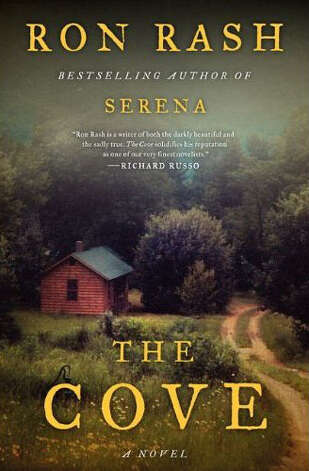
This gothic-tinged cover is so different from the pastoral scene that appeared on the ARC that I did a double take.  As with his previous novel, Serena (see news on the film version), we're back in the dark, gorgeous landscape of early 20th-century Appalachia. A novel about a mysterious stranger, a woman thought to be a witch, and a secret with dangerous repercussions in WWI-era North Carolina.  Ecco, April.


Gothic romantic suspense (with ghosts) set in an England already haunted by war... sounds like my type of book.  In the years after World War I, a young woman is charged with helping a ghost-hunter dispel the angry spirit of Maddy Clare, who died by suicide. NAL, March.


A saga about immigration to America in the mid-19th century; not an uncommon subject, but what makes this one different is the author's choice to tell it in the voices of four characters with very different cultural perspectives: a young Irishman, a Spanish society girl, and a man and a woman who are slaves.  The American Civil War forms the eventual backdrop to their stories.  Doubleday, March.


Here we have a saga of a different sort, one that explores the bonds between mothers and daughters over a century, from the 1830s to the World War II years, in the mountains of rural north Georgia.  The ongoing evolution (or not) of race relations involving African Americans and the Cherokee weaves in and out of the tale, along with elements of magical realism.  Viking, March.


Turner Publishing has been around for a while, per their website, but they're new to me... and they've been buying up a number of novels from Barbara Wood's backlist, as well as some newer titles. Wood is one of the rare historical novelists who can adapt her skills to numerous settings and eras.  This Golden Land is a saga about a female healer who travels from 19th-century England to Melbourne to pursue her calling as a midwife.  (Per Amazon, it was previously published with iUniverse.)  Turner, May.


And one more by Wood with the same release date (and an awesome cover):  The story of a Germanic-Roman woman with second sight during Christianity's early years.  Turner, May.

Saturday, January 28, 2012

A look at Rosie Thomas's The Kashmir Shawl

Multi-period novels with parallel stories linked by family connections are among my favorite types of books.  While the parts set in an earlier time take me away from everyday concerns via unfamiliar settings and period-appropriate situations, the modern sections bring everything back home again, showing how people are more connected to history than they might have thought.

A transporting story that begins in present-day North Wales and wends through the remote towns of India's Kashmir Valley during World War II, Rosie Thomas's The Kashmir Shawl offers enjoyable armchair escapism. I got it as a Christmas present and decided to read it in between the chunksters I had for review.  Partway through I realized that, at 468 pages, it qualified as a chunkster as well.

Mair Ellis never knew her grandmother, Nerys Watkins, who died before she was born.  After the death of their beloved father, Mair and her siblings discover a gorgeously patterned shawl hidden in an old chest of drawers.  Made of the softest Indian wool, and full of wonderful colors and intricate detail, the shawl also conceals an envelope with a curl of dark brown hair that doesn't match anyone in their family.

This mystery proves an irresistible opportunity for Mair, who never knew much about her grandparents' time in India.  Evan Watkins had been sent there as a Presbyterian missionary in the early '40s, and Nerys had willingly followed him there. In the hopes of uncovering their hidden history, Mair travels to the town of Leh, high in northwestern India's Himalayas.  Her investigations into her grandmother's past and the shawl's origins eventually lead her to Srinigar, the summer capital of nearby Kashmir.

Mair and Nerys, whose journeys are revealed in alternating timelines, are independent, courageous, and also lonelier than they'd like to admit.  Romantic, yet tempered with a good amount of realism, The Kashmir Shawl takes an honest look at many different aspects of love.  This may sound trite, but one of the most impressive aspects of the novel is how its unstereotypical characters react to what's expected of them.  While I never really warmed to Mair, I especially liked Nerys, who's left to fend for herself while her husband is off doing his godly work (and neither minds their separation as much as they should).  She manages to balance her role as a proper clergyman's wife with a streak of unconventionality.  Not all of her women friends fare as well.

And as you can imagine, this is one of those epics where geography has a strong and vital presence.  Srinigar, home to Dal Lake and its elaborate wooden houseboats, offers both beauty and conflict.  In the 1940s, women of the British expatriate community hold social gatherings while their men are off at war, while the calm atmosphere of the modern-day town, as seen from Mair's viewpoint, is occasionally engulfed by Muslim-Hindu violence. 

Long-held traditions endure as well.  In this age of mass production, it can be hard to fathom the years of effort that the novel's Kashmiri villagers pour into the weaving of a single shawl, but as Mair and Nerys discover, the end result is exquisite.

How the Kashmir shawl came to be in Nerys' possession isn't revealed until the book is nearly over, and it requires the introduction of a good many new characters, but the plot doesn't feel needlessly drawn out.  I won't give more away than that, because getting there is an engrossing experience, and all of the strands pull together well at the end.

The Kashmir Shawl was published by HarperCollins UK in 2011 at £12.99 in trade paperback.

Thursday, January 26, 2012

And the Scott O'Dell winner is...

I confess I was paying so much attention to the Newberys and other ALA book awards that the announcement of the Scott O'Dell Award for Historical Fiction passed me by.  This is an annual prize for a meritorious book for children or young adults (see the sponsor's website), and it comes with an award of $5000.

As revealed on January 17th, the winner for 2012 is Jack Gantos' Dead End in Norvelt (FSG, 2011), which — yes — also took home the 2012 Newbery Medal.  Read more at School Library Journal. 

This morning, I opened up my issue of Shelf Awareness and found a fantastic, very funny interview with Gantos that you can find here (scroll 2/3 down the page).  The novel's set during the summer of 1962, in Gantos's home town of Norvelt, Pennsylvania, a federally planned New Deal town named after Eleanor Roosevelt.  The Q&A has some great discussion points on the nature of historical fiction, homestead communities, and using real people as characters.

A short quote from Jennifer M. Brown's interview:

JB:  When you won the Scott O'Dell Award for Historical Fiction last week, we had to pause before realizing--ah yes, the setting is the summer of 1962, and it is historical fiction!

JG:  That's, let's see, exactly 50 years ago. I think you can get antique license plates for a 1962 car. Somebody said, "How does it feel to be given an award for a historical novel where you're the main character?" When you put it that way, I'm feeling a little crusty.
Did you realize that if you go by the (somewhat arbitrary) definition that historical novels are set 50+ years in the past, that this now includes the early '60s?  When I first started getting interested in the field, I remember talking to some readers my grandmother's age who were taken aback that WWII-era fiction was considered "historical."  They lived through that era and remembered it well.  Now that date range has moved ahead by a couple of decades.

There are advantages to working in a library with a curriculum materials center.  After reading about both awards, I searched in our online catalog to see whether we had a copy of Dead End in Norvelt - and we did!  And it was available and on display with other award winners.  So I grabbed it.

Tuesday, January 24, 2012

Award-winning historical novels at ALA Midwinter, 2012

The American Library Association's 2012 Midwinter conference just wrapped up in Dallas, and a number of literary awards were announced there.  Once again (see last year's list), historical fiction made a good showing.


Relevant winners include:

The Newbery Medal and Newbery Honor books, recognizing the best in American children's literature.

- The winner: Jack Gantos' Dead End in Norvelt, an off-the-wall adventure set in small-town America in 1962;
- The Honor books: Thanhha Lai's Inside Out and Back Again, about a Vietnamese refugee family in the American South; and Eugene Yelchin's Breaking Stalin's Nose, middle-grade fiction set in Stalinist Russia.

The 2012 Reading List Awards, which recognize the best books in eight genres.

- For Historical Fiction:  Mary Doria Russell's Doc, a reinterpretation of the life of Doc Holliday.
- On the Historical Fiction shortlist:  Dominic Smith's Bright and Distant Shores, Amor Towles' Rules of Civility, Sharon Kay Penman's Lionheart, and Beth Powning's The Sea-Captain's Wife.  [links to my reviews]
- For Fantasy, Erin Morgenstern's The Night Circus, a magical tale of lovers in a mysterious late 19th-century circus.
- For Romance, Loretta Chase's Silk is for Seduction, set in 1830s England.

ALA Notable Books, honoring excellent, important fiction for the adult reader.  (Understood to be literary fiction; the Reading List looks at genre fiction.)

- Patrick deWitt, The Sisters Brothers, a darkly comic Western; and Michael Ondaatje's The Cat's Table, in which a young boy comes of age aboard ship in the 1950s.  These were the only historical novels on the list; see the full slate for other honorees (including nonfiction and poetry).

~

On a personal note, I was notified of some very exciting news last Friday that was formally announced at ALA on Sunday night.  The awards chair phoned me to say I'd been selected as the winner of the 2012 Louis Shores Award from the Reference & User Services Association, which is given for excellence in book reviewing for libraries.  This blog was mentioned in the press release (how cool to have a press release of my own!).

Unfortunately I wasn't able to be at the conference in person ‒ I got word just after I'd finished up my afternoon reference desk shift at the library ‒ but there'll be an awards reception at the ALA Annual convention in Anaheim this summer, and I plan on being there.  No big speeches here, but I was completely surprised and thrilled, and still am.  A huge thanks to the librarian who nominated me and to the members of the award committee.

Monday, January 23, 2012

An interview with Anne Clinard Barnhill, author of At the Mercy of the Queen


How far does family loyalty extend? If the relative to whom you owed your social position asked you a favor that required you to give up your innocence and a possible chance at love, would you do it?

In Anne Clinard Barnhill's first novel, Lady Margaret (Madge) Shelton, a young lady-in-waiting, is presented with this wrenching dilemma.  Although she's in love with Arthur Brandon, a handsome courtier, Madge acquiesces when her cousin and queen, Anne Boleyn, asks her to catch the eye of Henry VIII.  If King Henry is determined to take a mistress, Queen Anne thinks, best that it be someone loyal to her.

At the Mercy of the Queen follows Madge's transformation from a quiet and pretty country girl to a young woman who is considerably wiser in the ways of the world.  Lady Margaret Shelton is a historical character, one of the three acknowledged mistresses of Henry VIII, and Anne Barnhill's perspective on her originated in an unexpected place: her own family tree.  In a genre filled with novels about the scandalous Tudor court, Barnhill's novel stands out for its fresh viewpoint, its sumptuous descriptions of food and fashion, and a portrayal of the Anne Boleyn-Henry VIII relationship that felt especially realistic to this historical fiction reader.

I'd like to thank Anne for her willingness to do this interview and hope you'll enjoy it as well.  As one of the more fun parts of her research, she's in the process of having a Tudor gown made.  Pictures below!

Madge first makes an appearance as a young, sheltered girl from the country who isn't thrilled to leave her home and become lady-in-waiting to her cousin Anne. How did you sort through the few known facts about Madge's life to come up with her character?

I've been reading about Madge for about 30 years, since I first discovered my connection to her. She is mentioned in most books about Henry VIII and Anne Boleyn. I also checked online and in a family history book I have (from my grandmother) which has about a paragraph about her. I found her family was involved in raising sheep for the wool industry and were somewhat prominent in Norfolk. Her father was sheriff and her ancestors built Shelton Hall. I began to imagine what things might have been like for her. As for her birth date, there is none I have been able to find. She was probably not quite as young as I have made her in the book, but she was younger than Anne Boleyn. I think the whole thing began when I started to consider what it would be like to have an affair with your cousin's husband. And, even more interesting, what if your cousin set the whole thing up? Why might she have done that and why might you agree?

In the novel, you portray Anne Boleyn sympathetically; she's ambitious and occasionally bad-tempered, but also gracious, dignified, and of a religious bent. She loves her husband and desperately wants her marriage to succeed. You mention that when you were 15, Anne Boleyn first captured your attention via Norah Lofts' The Concubine. What other sources, fiction or nonfiction, most influenced your portrayal of Queen Anne? Did The Concubine lead you to any other historical fiction discoveries?

I read mostly nonfiction for the first 20 years or so of my secret obsession. Eric Ives' work is wonderful. David Starkey, Alison Weir, Antonia Fraser, Warnicke, Dunn, just lots really. Then, I read all of Jean Plaidy, who I love. Philippa Gregory's The Other Boleyn Girl helped me out of the closet as I realized lots of people share my Tudor fascination. Online sources have been invaluable, though more for the second book than the first: the Anne Boleyn Files and On the Tudor Trail are great sources. I have not read as much historical fiction as I would like — I've discovered it rather late in my reading life. But I intend to change that and devour as much as I can find!

I especially loved your descriptions of the diversions and delicacies at the Tudor court: the dances, card games, sumptuous feasts, and so forth. Did you personally try out any of these things during the writing process? Which were the most enjoyable to write about?

Oh, I love to write about food and fashion! I'm having a Tudor outfit made and thus far, I have the undergarments and a French hood to match the stomacher. I've selected material for the outer wear and hope to have that completed by the time the next book comes out. So, yes, I've experienced the clothing. As for the food, it's a little rich for my taste, though I may try some recipes this year, especially for drinks such as mulled wine. I will NOT try the dove stuffed into a duck stuffed into a goose stuffed into a peacock! That sounds really awful to me!

Were there any scenes in the novel you found more challenging to write than others?

Well, I had pulled the curtain on most of the sex scenes and my agent wanted me to be more graphic. I loved writing them but they make me nervous when I think of people reading them. Really, I had fun writing the whole book — I started it to entertain myself... I really hadn't thought of trying to get it published. So I was very free to have fun!

Madge's nurse and friend, Cate, describes London as having the "scent of life." How do you get into the mindset for tuning out your current surroundings and writing about the bustle and intrigue of 16th-century London?

I go away so I can have solitude and then I read constantly from nonfiction books about the time and the people. I do have to dive in deep to get there and, once I get in, I really do not want to come out. That's why I go away — I'm not fit company for man nor beast. And I hope by surrounding myself with the books (I actually sleep with them piled across the bed, hoping to learn by osmosis I guess) I will get as real as possible.


You mention in the preface that you've wanted to tell this story for thirty years. How did the idea of your novel change over time? Were there any new tidbits you discovered that took your story in a new direction from the way you initially imagined it?

I have always had the shape of the novel in my mind, pretty much as it is now. Madge turned out to be a little younger than I expected early on. I remember being a young teen and admiring older women, copying their mannerisms, their style — all of this as I was developing my own style. Young girls can almost worship an older woman they admire — I see this in my 9-year-old granddaughter as she encounters teens and young women in their 20's. I thought that would make the whole plot work better — having the relationship between Anne and Madge the primary relationship, thought there is a love interest for Madge, Arthur Brandon. He was a surprise--just turned up on the page cocky as you please. He definitely took the story in a different direction.

Your family connection to the Sheltons intrigues me, as it gives you a unique tie to your subject. Are you a descendant of Madge herself, or of one of her siblings? How did the Shelton Family History you mention as a source aid in your research?

I'm a descendant of Ralph Shelton, Madge's brother. The book is helpful in that it gives little paragraphs about those family members who have interesting stories or roles in history. For example, there are some Sheltons who married the Founding Fathers of the U.S. and that was interesting. Another relative led the Patriots at the Battle of King's Mountain — I just love all that stuff!


How have your experiences in evaluating other authors' work, as a writing tutor and book reviewer, influenced your own fiction writing?

Hmmm. I have slowly come to the idea that I want the writing to be as smooth as possible, so that the 'writer' never gets in the way of the story. I have not mastered that yet, and probably never will, but I want the story to flow, the dream to continue uninterrupted, as John Gardner puts it. It's easy to see mistakes in someone else's work, but incredibly hard to see it in your own. I think I've become a pretty good critic over the years but it's still hard to find my own stories--to get to the heart of the story. So, it definitely helps to look at what other folks are doing--and often, I am inspired by other writers. It's easy to stay in your own head until someone comes along and shakes you up. Then, you say, oh yeah! I could try that. Reading and writing go hand in hand.
~


At the Mercy of the Queen was published by St. Martin's Griffin in January ($14.99/Can $16.99, trade paperback, 432pp + special reading group guide). This interview forms part of the Virtual Book Tour for At the Mercy of the Queen. For more information, see Anne Clinard Barnhill's website.

Thursday, January 19, 2012

Why I'm taking up the Chunkster Challenge


Did you ever notice that many historical novels are really, really long?

Above at left, we have over 4100 pages' worth of the latest in historical fiction; the shortest one - Madame Tussaud - barely qualifies for the challenge at 455 pages.  And on the right we have Oliver, who insisted on being included in the pic. If he knew I'd be including him in a Chunkster Challenge post, he might have reconsidered (he's got a bit of a belly on him).

I seem to have accepted an awful lot of epics for review, so you'll be seeing them featured here over the next few months.  Two books in the bunch are being cleverly hidden from view for now, because I've committed to reviewing them for other publications, but their identities will be revealed in time. 

So this year, while I'm trying to work off a few extra pounds on the NordicTrack, I'll also be piling on the pages.  I'm aiming for Plump Primer level (at least six chunksters) although I expect to surpass it.  Let's not forget that the new Ken Follett, The Winter of the World, is set to be published in mid-September and is technically long enough to count as two chunksters (too bad it doesn't work that way).

I guess I'd better get reading.

In which I give a tell-all interview

Okay, it's not quite that dramatic, but earlier this week, blogger and historical fiction fan Jane Steen asked me some good questions about the story behind my blog, trends in historical fiction, and other fun bookish and bloggish stuff.  You can find it at:  A Historical Fiction Book Blogger Tells All.  Thanks, Jane, for the opportunity!

Tuesday, January 17, 2012

Guest post from Julie Rose, author of Oleanna: Norway and Sweden in 1905

Today I'm welcoming Julie K. Rose to the blog to discuss the backdrop to her new historical novel, Oleanna, which takes place during the separation of Norway from Sweden in 1905.  Oleanna, published this month, is based on people from her own family history.  More details are available at oleannanovel.com.  I'll be conducting an interview with Julie in a future post.

~

When you think of Norway (if you think of it at all), what comes to mind? Stunning scenery? Vikings? A successful socially liberal society? Hot blondes?

I expect the political separation of Norway and Sweden in 1905 wasn't high on your list. It hasn't exactly been a hot-button topic for historians, or for historical fiction authors. In fact, I'll wager most readers didn't realize that Norway and Sweden were ever joined, let alone separated. Here is a brief history of how the Dissolution of 1905 came to be.

Due to the geography of the area (tall mountains, deep fjords, a dearth of arable land, and over 25,000km of coastlines running from 58°N to more than 71°N) it was difficult to create a stable, agriculture-based economy and political structure beyond small kingdoms scattered throughout the country. The Viking Age saw increased wealth and the first attempts at a unified Norway under King Harald Fairhair. Later, the (often violent) promulgation of Christianity under King Olaf Haraldsson (St. Olav) from 1015-1028 allowed him to spread his political influence, unifying most of what we know as modern Norway. Despite a brief period under the dominion of Denmark's King Knut, Norway was ruled by Norwegians, including Harald Hardrada, Olaf's nephew (yes, the same Harald who died at Stamford Bridge in 1066), until 1299.In that year King Haakon V moved the capital to Oslo; upon his death, he had no sons, so the throne of Norway went to his daughter's son, King Magnus Eriksson of Sweden. King Magnus abdicated, and his son Haakon became king—he was married to Margrethe, the daughter of the Danish king, and so their son Olaf became king of Denmark in 1376 and Norway in 1380 as King Olav IV. (Got all that?)

Life continued on in Norway for hundreds of years, as the elite in Denmark ruled over Norway, and the Norwegian nobles couldn't seem to get their act together to make a run at independence. And then a strange thing happened.

In 1814, Denmark-Norway was defeated during the Napoleonic wars, and the king was forced to cede Norway to Sweden in the Treaty of Kiel. In an attempt to retain control, the Viceroy and hereditary prince of Denmark-Norway, Christian Frederik, encouraged the burgeoning independence movement ,and a constitutional convention and declaration of independence was made on May 17, 1814. This day is still celebrated in Norway as Syttende Mai (Seventeen May) or Constitution Day.

Rosemaling decorated with floral paintings
(source: Wikipedia)
Sweden, of course, was having none of it and declared war on Norway. To keep the peace, Prince Christian Frederik relinquished his claims to the throne of Norway in return for a democratic Norwegian constitution. In return, the Norwegian parliament elected the Swedish king as King of Norway.

Suffice to say, the 91-year marriage of Norway and Sweden was not a particularly happy one; Norway tended to be liberal, parliamentary, and affiliated with the United Kingdom, while Sweden tended to be conservative, monarchial, and affiliated with Germany. Norway largely had political independence, but being yoked to rival Sweden was galling.

But one interesting thing did happen during this unhappy union: the reclamation of native folk art by the political movers and shakers. Folk art, like the graceful rosemaling, had never really died. Until well into the 20th century, many villages in Norway were extremely difficult to reach, and folk ways and art continued on as they always had.

As part of the general romantic nationalist movement in Europe during the 19th century, Norwegians rediscovered their art—the most famous examples of which are bunad, the traditional folk dress for each region of the country (which of course had never died out in most of the remote villages); and the folk tale collections of Asbjornson and Moe. Throughout the 19th century, Norwegians actively promoted pride in their country, in their art, in their culture—a useful fuel to fire what came next.

Matters came to a head in the 1890s, when Norway began to insist on its own consular offices abroad rather than common consuls appointed by Sweden. The Swedish government and king rejected this, which set in motion the events that would lead to the dissolution.

Propaganda poster from the summer of 1905:
"We love our country!"
(Line from the national anthem, written in 1814)
A coalition government was formed in 1905 to establish the separate Norwegian corps of consuls; the law was passed by the Storthing, but King Oscar II of Sweden refused to accept it, and the Norwegian coalition government resigned on June 7, 1905, declaring a dissolution of the union.

The Swedish government insisted on a Norwegian referendum to understand the citizen's view; it was held on August 13, and 99.95% of Norwegians voted in favor of dissolution. Though suffrage was not extended to women in national elections until 1913, Norwegian women still collected more than 200,000 signatures in favor of dissolution.

And so, Norwegians finally regained their independence for the first time since the 14th century. Or did they? In November another plebiscite was held in which 79% of Norwegians voted in favor of a monarchy and not a republic. This proved to be a challenge, because the hereditary lines of Norwegian kings were MIA. Who did Norway choose for its king? Oh, the irony: Prince Carl of Denmark. Carl took the name Haakon VII and, alongside his wife Maud of England, was sworn in as king on November 27, 1905. (Fun fact: the current King, Harald V, married commoner Sonja Haraldsen in 1968, the first Norwegian-born queen since Margrete Skulesdotter in 1225.)

So, what did it all mean for the people of Norway, this dissolution of the union? Norway emerged into the 20th century as an economic force to be reckoned with, growing wealthy through North Sea oil; the dissolution also brought Norway fully onto the world stage when it joined the League of Nations in 1920, and it solidified the alignment of Norway with Great Britain (which unfortunately would have terrible consequences for Norway during the world wars). Above all, though, the dissolution of 1905 gave the Norwegian people a renewed sense of pride, a fresh start in a new century. Their country had become an independent entity for the first time in 700 years. They were once again truly free.

~

Set during the separation of Norway from Sweden in 1905, Oleanna is a richly detailed novel of love and loss inspired by the life of the author's great-great-aunts.

Oleanna and her sister Elisabeth are the last of their family working their farm deep in the western fjordland. A new century has begun, and the world outside is changing, but in the Sunnfjord their world is as small and secluded as the verdant banks of a high mountain lake. With their parents dead and their brothers all gone to America, the sisters have resigned themselves to a simple life tied to the land and to the ghosts of those who have departed.

The arrival of Anders, a cotter living just across the farm's border, unsettles Oleanna's peaceful but isolated existence. Sharing a common bond of loneliness and grief, Anders stirs within her the wildness and wanderlust she has worked so hard to tame. When she is confronted with another crippling loss, Oleanna must decide once and for all how to face her past, claim her future, and find her place in a wide new world.

Julie K. Rose is an author of historical and mainstream fiction with a touch of the fantastic. She lives in the Bay Area and loves reading (especially Patrick O'Brian), watching episodes of Doctor Who, and enjoying the amazing natural beauty of Northern California. Oleanna is her second novel.

Saturday, January 14, 2012

Winner of 2011 Langum Prize for American Historical Fiction

Julie Otsuka's The Buddha in the Attic (Knopf) is the winner of the Langum Prize for American Historical Fiction for 2011. 

From the press release:  "This short, poetic book describes the experience of the Japanese 'picture brides' who were brought over in the very early part of the 20th century to marry Japanese men working in the United States, mostly as farm laborers. The writing is beautiful, and, although the book is sparse, each word carries weight."

Geraldine Brooks' Caleb's Crossing (Viking) was named an Honorable Mention:

"The mid-seventeenth century Massachusetts of Martha’s Vineyard and Cambridge provide the settings for this exquisitely and lushly written novel that explores the clash of cultures between the Puritans and the native Wampanoag inhabitants."

Five novels received a Director's Mention this year, which reflects and recognizes the number of quality submissions the award received from small and regional presses.  They are as follows:

John M. Archer, After the Rain: A Novel of War and Coming Home (Ten Roads Publishing): Following the Civil War, a wounded Union officer returns home, plagued by guilt over his comrades' deaths.

James Hoggard, The Mayor’s Daughter (Wings Press): In small-town Texas during the 1920s oil boom, a young woman and her family sit at odds over her choice of husband.

Hugh Nissenson, The Pilgrim (Sourcebooks): A Calvinist arrives in Massachusetts from England in 1622 and is consumed by spiritual conflict.

Sheila Ortiz-Taylor, Homestead (Spinsters Ink): A large lower middle-class family undergoes change in 1920s and 1930s Florida and Georgia.

Shirley Reva Vernick, The Blood Lie (Cinco Puntos Press): In this young adult novel, based on an actual incident in 1920s small-town upstate New York, a young Jewish boy is accused of murdering a young girl, who had become lost but was quite alright, for the use in supposed religious ceremonies.


For more details on these titles as well as the awards submission process, see the Langum Charitable Trust website.  Descriptions for these titles are based on the press release.

Thursday, January 05, 2012

Book review: Curiosity, by Joan Thomas

It’s a current trend for historical fiction writers to re-examine neglected historical women and bring them back into the limelight. That said, one could hardly choose a better subject than Mary Anning, a carpenter’s daughter from the village of Lyme Regis in seaside Dorset, whose unearthing of and knowledge about fossils led to some of the greatest paleontological discoveries of her time.

The title of Joan Thomas’s Curiosity refers to the “snakestones” (see the gorgeous cover) and other curios that Mary finds and sells to wealthy visitors who arrive on the coach from Bath, as well as to the quickness of mind Mary displays throughout the novel.

The term "curiosity" could also apply to Mary herself. A woman who “would never truly be appreciated in a drawing room” due to her country ways and quaint accent, she grows from a bright, inquisitive child to an independent spinster who carves her own path in a world where female contributions to science are discounted.

For readers used to tales of courtship, fancy dresses, and elegant repartee in Regency England, Curiosity will present a refreshingly different side to the era. While the Napoleonic Wars rage elsewhere, practical, constant, and confident Mary pursues her passion with determination, despite discouragement from others and a family life plagued by malnutrition and misfortune. Her father dies relatively young, leaving enormous debts, and out of ten children, only she and a brother will survive to adulthood. She sells fossils to earn money to live on, but it's often not enough.

Her story is interleaved with that of Henry De la Beche, a man who in his own way is as much an oddity as she. The son of a Jamaica plantation owner, he is expelled from military college following a prank and discovers a scientific bent while examining the bones of birds caught in his chimney.

While staying with his unaffectionate mother and her new husband at Lyme Regis, he encounters Mary and thinks her a most unusual young woman, one of the only people with whom he's free to be himself. Little is known of Mary’s private life; while Henry’s support of Mary’s work is recorded, their gradual romance as described here is an imaginative re-creation of what might have been.

Both are trapped by the restrictions of their day: Henry by an unwelcome engagement to a society-minded girl, and Mary by her poverty and low place in a world that sees her interests as unnatural, and her fossils as possible manifestations of “the devil’s work.” Early 19th-century Britain sits at the cusp of scientific change, an era described in lucid and graceful language; no previous knowledge of paleontology is required.

At this time, with Darwin's Origin of Species some 40 years in the future, the ichthyosaur 12-year-old Mary so carefully excavates from limestone causes a flurry of questions to emerge. Did it perish in the Great Flood? Was coastal Dorset once a sea-bed, long ago? What is the meaning of a “day” in the Bible, if the specimens Mary finds prove to be much older than the accepted time of Creation?

One of Thomas’s greatest strengths is her ability to depict an entire realm of scientific debate and vigor through the seemingly limited viewpoints of Mary and Henry. Although her male peers in distant London take credit for her work, the novel rightly places Mary and Lyme Regis at the center of the activity. From the beautiful descriptions of the region – in which the area’s beaches and cliffs are layered with the remains of ancient creatures – to the characters’ dialogue, reactions, and social values, everything feels on point.

This is an invigorating and quietly compelling book, and while there are no dull or dry moments, some sections seem drawn out to a great degree. The depth of detail adds, though, to an extensive picture of the characters’ lives and times.  While Mary’s story is sometimes a sad one, readers should leave it feeling great admiration for her accomplishments, as well as appreciation for how Thomas has fictionalized her life with such care and poignancy.

Curiosity was published in 2011 by Emblem, an imprint of McClelland & Stewart, in trade paperback and is available at $21.00 in Canada and the US and at £14.99 in the UK.

Wednesday, January 04, 2012

Mercury's Rise giveaway winner

It was great to see so many entries for the giveaway copy of Ann Parker's Mercury's Rise!  Thanks to all who participated. 

Following a random number drawing courtesy of Random.org, the signed book will be going to Caroline B.

Congratulations, Caroline, and I'll be dropping you an email to get your mailing address.  I hope you'll enjoy reading it as much as I did.  Also included is a bookmark giving details on the other three books in the Silver Rush mystery series.

Saturday, December 31, 2011

A New England trip - with books, of course

I've been finding it difficult to get back to blogging after nearly two weeks without posting anything. This end-of-year post contains some history, some books, and a good many pictures.  (My husband Mark was the photographer.)

Both our semesters having wrapped up, Mark and I took off for New England on December 22nd for a short trip to visit family and see some literary and historical venues.  We made our first photo stop at my favorite used bookstore, the Niantic Book Barn along the Connecticut coastline.

They have three stores, two annexes in downtown Niantic and the main store about a mile west of town.  The latter is comprised of a number of barns and outbuildings full of reasonably priced books. 


If you're anywhere in the area, make your way to this store, pronto, and bring your wish lists because they have about 500,000 books in stock at any given time.  A good deal of the fiction is either outdoors under awnings or in unheated (or unevenly heated) barns, so I wore my winter coat and gloves.  Definitely worth it, though.

They must have some locals who trade in recent purchases or review copies regularly, because this is what I ended up with, below.  (The top two are actually UK sagas about WWII given to me by my father, but they made it in the picture too, along with my photogenic orange kitty, Oliver.  My 4-ft TBR pile(s) at far left.)


Nearly all of these are historical mysteries with the exception of Mackenzie Ford's Gifts of War, which is a romance of sorts set during WWI.  Coincidentally I found the newly published sequel to Miss Dimple Disappears, which I reviewed not long ago.  Mignon Ballard's Miss Dimple Rallies to the Cause is another WWII cozy mystery set in Georgia.

I finished Philip Gooden's The Salisbury Manuscript on the plane trip home.  First in a series, it's a historical mystery set in the cathedral town of Salisbury in the 1870s.  A young London-based lawyer, Tom Ansell, is sent to retrieve the unpublished memoir written by a local clergyman's late father and spirit it away for safekeeping.  Seems the contents are rather racy and potentially embarrassing.

To Tom's unpleasant surprise, he finds himself a suspect in the canon's murder, and that mystery intertwines with archaeological discoveries from the region and odd goings-on among the townspeople.  Although he's somewhat colorless in contrast to the eccentrics he meets, his sarcastic sense of humor is visible to those who read carefully, and his lively girlfriend, a would-be sensation novelist on the lookout for new material, keeps the amusement level high.  It's a good choice for those who enjoy mysteries of the traditional British sort, and I do.

After more family visits, it was off to Boston's North Shore, where we stopped in Salem for two nights.  This is one of the best examples of a historic New England town common I've seen.


This enormous park sits in the center of the city, and a number of houses and stores face it from all directions.  Lots of pastels in alternating hues.  I bet you need special permission to paint your house a new color here.

Next we have a statue of Roger Conant, Salem's founder (and my 10th great-grandfather).  He stands across from Salem Common, looking dour and Puritan-like in his cloak.


Because of Conant's proximity to the building below, many tourists believe he had something to do with the witch trials, but he died over a decade before that.


Ah, the Salem Witch Museum.  It was 40 degrees the day we spent in Salem, which meant we didn't see many tourists on the streets even though the hotel was busy.  Later we found out why.  They were all at this prime attraction at the same time we were.  We should have read the Yelp reviews beforehand, because the presentation we saw was pretty hokey.  Mood lighting, life-size dioramas, and an over-the-top (but well-researched) soundtrack dramatize the events of the Salem witch trials.  Kids might like it, but we didn't think it was worth $9 apiece.

Next was a historic house I wish we'd taken a tour of - we'd hoped to get to one of the evening lantern tours, but I read the schedule incorrectly, and by the time I figured that out, it was too late.  This is the House of the Seven Gables made famous by Nathaniel Hawthorne in his novel of the same name.


By all accounts, it's well worth a visit, so I hope we'll be able to come back here next time we're in the area.  I put a copy of the novel in my B&N cart, too.

To all of my readers: Thanks for visiting and commenting - I appreciate your taking the time to stop by here. Hope you have a wonderful New Year, with plenty of good historical reading for 2012!

Monday, December 19, 2011

Book review and giveaway: Mercury's Rise, by Ann Parker

It takes a strong woman to survive in a late 19th-century mining town, serving up drinks and keeping the peace among the customers of her Western saloon. It takes an even stronger woman to hide her independent nature beneath a façade of feminine delicacy when circumstances demand it. In this fourth entry in the Silver Rush mystery series, Inez Stannert proves she’s up to the challenge.

In the summer of 1880, Inez leaves Leadville and the Silver Queen behind to reunite with her two-year-old son, William, who had been living with her sister, Harmony, out East for the sake of his health. While taking a stagecoach ride to their meeting point at the trendy spa town of Manitou, one of Inez's fellow passengers dies a sudden and messy death after drinking his wife’s prescription tonic.

Mrs. Pace refuses to believe a heart attack killed her husband, but her concerns are downplayed by the Mountain Springs House’s resident doctor and the local marshal. She begs Inez to help her uncover the truth, but in this world of high society elegance, medical quackery, and shady real estate dealings, truth is in even shorter supply than the whiskey Inez craves.

As always, Ann Parker fleshes out her characters and settings beyond the historical mystery subplot. Inez is caught between her desire to help another woman and her complicated family problems. Her long-absent husband, Mark, reappears and worms his way back into her life, to her disgust – and just in time to challenge their divorce. Young William no longer knows her, and while Inez gets reacquainted with her sister and child, Harmony’s husband pursues a risky investment. As for where all of this leaves Inez's relationship with her clergyman lover—well, Inez doesn't know either.

This volume will have longtime readers traveling to a new part of Colorado: the Pikes Peak region, which includes the dramatic red rock formations at the Garden of the Gods. But as Inez discovers, ironically so, Manitou is even more of a man’s world than rough-and-tumble Leadville was. A murderer may still be at large, but in order to win at this dangerous game, Inez must find a man to play her hand for her.

Between the hotel owners, its medical staff, Inez’s busybody aunt, and Inez’s charming gambler of a husband, Mercury’s Rise has a wealth of strong personalities, ones you won't have met in Western fiction before. Parker retains control of her story, however, and doesn’t let them steal the show from Inez. Determined, smart, and brave, she also shows a vulnerable side she won’t let herself acknowledge.

The storyline is complex and well detailed, with many moving parts; the scene occasionally loops back to Inez’s time in Leadville, so read the chapter headings carefully to see where you are. The natural wonders of the mountain backdrop, the foul-tasting mineral waters, and the many people desperately in search of a tuberculosis cure combine to create a setting that's richly described from many angles. It all makes for an excellent novel that’s well worth diving into.

----

Mercury's Rise was published by Poisoned Pen Press in November at $24.95/hardback or $14.95/trade pb ($31.95 or $18.95 in Canada).  Thanks to the author, I have a brand new and signed copy available to give away to an interested blog reader. Fill out the form below for your chance to win (open worldwide). Deadline Monday, January 3rd.

Sunday, December 18, 2011

New review of Diana Gabaldon's The Scottish Prisoner

My review of Diana Gabaldon's The Scottish Prisoner ran in yesterday's Globe and Mail.  Here's the link if you'd like to read my take on it.  The book's #1 on their hardcover fiction bestseller list, for the second week in a row.

Saturday, December 17, 2011

Pope Joan TV miniseries premieres tomorrow

A heads-up that Pope Joan, the film based upon Donna Woolfolk Cross's bestselling historical novel about a legendary woman from Dark Age Germany, will be broadcast as a two-part TV miniseries on the REELZ channel in the US.

The first showing is on December 18th & 19th at 8-10pm EST; there appears to be a second showing of each episode later on both evenings, starting at 11pm EST.  Check with your local TV schedule to confirm!

I'll be watching it for sure.  We switched over to satellite TV from cable earlier this year, and we actually get that station.

I've been waiting to see this film for two years.  Mark and I were in Germany when it debuted - the photo at left, taken at the Nuremberg train station, was one of many on display throughout the city.  However, the film being shown wasn't the original English-language version (added: the one being shown tomorrow and Monday) but one dubbed into German for German audiences.  My facility with the language wouldn't have been sufficiently good to follow along, alas.

See more at the REELZ website for the film or the author's home page.  If you miss this one, there's an encore presentation on New Year's Eve and New Year's Day.

Friday, December 16, 2011

Final shortlist announced for 2011 Langum Prize

Five historical novels published in 2011 have made the shortlist for this year's David J. Langum Sr. Prize in American Historical Fiction.  They are, in alphabetical order by author:

1) John M. Archer, After the Rain: A Novel of War and Coming Home (Gettysburg, PA: Ten Roads Publishing, 2011), which takes a psychological perspective on the Civil War, as seen from the viewpoint of a Union army line officer.

2) Geraldine Brooks, Caleb’s Crossing (New York: Viking, 2011), set in 1660s Martha's Vineyard and Cambridge, Massachusetts, and centering on the friendship between a minister's daughter and a young man of the Wampanoag tribe. [read my review]

3) Julie Otsuka, The Buddha in the Attic (New York: Knopf, 2011), a short literary novel describing the experiences of Japanese "picture brides" sent to marry Japanese men, mostly farm laborers, working in the US in the early 20th century.

4) Pamela Schoenewaldt, When We Were Strangers: A Novel (New York: HarperCollins, 2011), in which a young seamstress leaves her Italian mountain village to make a new life for herself in 1880s America.  [read my review]

5) Susan Vreeland, Clara and Mr. Tiffany (New York: Random House, 2011), about Clara Driscoll, Louis Comfort Tiffany's chief designer at his New York glass studio in the 1890s.

From the press release: "The winner of the 2011 David J. Langum, Sr. Prize in American Historical Fiction will be selected from one of these five books. However, still other books will be discussed in the Director’s Mention category. This year the small and often regional presses have issued an unusually large number of high quality books in American historical fiction. Several of these should be discussed and honored, even if only one, After the Rain discussed above, made it onto the formal short list."

For longer descriptions of all five nominees, and for more details on the prize itself, visit the Langum Charitable Trust website. The Trust also welcomes readers' comments on these books on their Facebook page.

Wednesday, December 14, 2011

A voyage up north with Norma MacMillan's The Maquinna Line

I'm not sure where I first came across The Maquinna Line.  It may have been while browsing Amazon.ca, or I could have spotted it on a website dedicated to Hollywood personalities.  Norma MacMillan's family saga has an unusual story behind it.  Called the author's "lost novel," the manuscript was pulled out of a closet a few years after her death in 2001.  Her husband and friends worked to find it a publisher, and it finally appeared in print last year.

MacMillan, a noted actress in her day, was known for her role as the voice of Casper the Friendly Ghost.  Folks from my generation may be more apt to recognize the name of her daughter, Alison Arngrim, famous for playing that nasty wench Nellie Oleson on Little House on the Prairie.

Ms. Arngrim wrote the foreword to her mother's book, describing her enthusiasm for writing, the times she left LA on mysterious research trips to the wilds of Nootka Island, and the subject of the book itself, which she found dark, peculiar, and a little disturbing.  There are a few shocking moments, but I didn't find the tone or focus significantly different than other historical sagas I've read.

Fortunately, the novel stands well on its own without the celebrity association.  The Maquinna Line is a classic generational saga in the tradition of James Michener and Edward Rutherfurd.  It has a good sense of place and history, though its greatest focus is on its characters and how the social strictures of the time pressure them and determine their choices.  Their lives turn out differently than they plan, and their trials and misfortunes make for very entertaining reading.

The main narrative begins in 1910 and continues through the end of WWII, and occasional flashbacks bring us back to earlier periods.  Vancouver Island during the Edwardian era offers a mix of cultures, all well represented in the tale.  An Icelandic entrepreneur opens a fancy hotel on a private island, promotes it as a tourist attraction, and raises his daughter there.  An upwardly mobile couple brings an Indian chief's daughter, a descendant of the 18th-century Chief Maquinna, to live with them as their maid; her cold yet exotic beauty proves irresistible to the area's young men.  And an adolescent boy commits a moral transgression he doesn't fully understand, one which destroys the peace in his socially conscious family.

Victoria, British Columbia, at the southern tip of Vancouver Island, is the drama's centerpiece, though it also branches out to include a lumber camp and Moachat village up north as well as other outposts.  As the novel implies, the description of the city and its people as Victorian suits them in more than one way (they're called "more English than England").

Norma MacMillan clearly had a passion for the place where she grew up, and she transformed it into a novel I kept wanting to come back to. It packs a lot of story into 276 pages.

The Maquinna Line was published by TouchWood Editions in trade paperback at $19.95 - same price in Canada and the US.  For non-Canadians, it's available at a discount on both versions of Amazon, should you so choose.

Tuesday, December 13, 2011

Book review: Chasing the Nightbird, by Krista Russell

Krista Russell's debut novel is a brisk middle-grade adventure that features an appealingly scrappy hero determined to choose his own path in life.

The Nightbird is the whaling ship where Lucky Valera, an orphan of nearly fourteen, grew up and on which he was looking forward to sailing as a full-fledged crew member. Then the half-brother he never knew existed, Fernando Fortuna, kidnaps him from the New Bedford docks. Since Lucky is under age, Fortuna sets himself up as Lucky's guardian and forces him to toil alongside him at the local mill, claiming Lucky's wages as well as his own.

Amid the brutal pace of the factory, with cotton fibers so thick in the air it's hard to breathe, Lucky befriends a fugitive slave, Daniel. (Given his difficult path to safety, Daniel reveals his personal history to Lucky a little too easily.) Lucky's acquaintance with Emmeline, a Quaker ship captain's daughter, leads to a plan: she'll help him escape on her father's ship if he agrees to help her in the abolitionist movement. This is a challenge he feels he's up to, even though he doesn't trust landlubbers.

Russell achieves a difficult balance, preserving the saltiness of the lingo while keeping the story fairly clean for the intended audience. Lucky's used to being around sailors, and readers will snicker when his mouth gets him into trouble.  There is some violence, though it's not out of place for the period or characters.

New Bedford, Massachusetts, in 1851 is a racially mixed society, and Lucky's cultural background adds to the story's complexity. A teenager of Cape Verdean heritage, he loves the Island food served by the boardinghouse landlady.  Lucky is a free person of color who doesn't see himself as similar to the former African slaves living in the city, but not everyone views things as he does.

The 1850 Fugitive Slave Act has just passed, amid controversy, and posters on the streets warn fugitives to watch out for bounty hunters. When Lucky realizes the trauma that Daniel faces if he's returned back South, his work toward abolition becomes more than lip service, and his moral journey is handled without it feeling like a lesson.

This book should be a hit for young people and librarians across southeastern New England. There don't appear to be any other historical novels about Cape Verdean Americans available, for one.  Its appeal is more than regional, though, as it presents an important slice of American history in an exciting and convincing way.

Chasing the Nightbird was published in June by Peachtree in hardcover ($15.95, 200pp).

Saturday, December 10, 2011

A look at Leaving Van Gogh, by Carol Wallace

One of the pleasures of writing this blog is having publishers mail me books they think I might enjoy.  Carol Wallace's Leaving Van Gogh was one of these; it arrived unexpectedly in my mailbox at work sometime in May.  Unfortunately, with my crazy schedule I didn't manage to get to it until now, but I'm glad I finally did.

Leaving Van Gogh fits into that growing category of literary novels that imagine artists' personalities and the background behind the creation of their masterpieces.  Dr. Paul Gachet, the physician caring for Vincent van Gogh at the time of his death, reminisces about his professional relationship with his patient and how it grew into a friendship during the seventy days Vincent spent at Auvers-sur-Oise, a small farming town northwest of Paris, in the summer of 1890.

Even if Van Gogh did hijack a narrative that was meant to focus on Dr. Gachet and the provenance of his art collection, as Wallace said in an interview with the Wall Street Journal, Gachet is equally well developed as a character.  "I cared deeply about medical problems, but what I wanted to talk about was art," he explains at the beginning.  Reasonable, humane, sympathetic, and fascinated by the human mind, Gachet is also an amateur painter who had befriended Cézanne and Pissarro and accepted paintings from them in exchange for medical help.  It's through Pissarro that Gachet is introduced to art dealer Theo van Gogh, who asks him to oversee the care of his brilliant but mentally troubled brother, Vincent, who was recently released from an asylum in Provence.

Wallace places us into Gachet's shoes as he observes Vincent, the man and the artist.  Van Gogh shows up unceremoniously on Gachet's doorstep, unwashed and ragged and overly thin, and proceeds to transform the quiet lives of Gachet and his two young-adult children with his zest for art.  We see Vincent's intensity, the full-body technique with which he applies color to canvas, and the uncanny confidence that lets him believe his work will be remembered a century down the road.  This is a wonderful novel to read for those who want to feel involved in the actual process of painting.

At the same time, Vincent remains apart from the people closest to him and seems unaware of the effect he has on them. This includes his devoted brother Theo, whose support of Vincent is draining him financially, as well as Gachet's agreeable daughter, Marguerite, who had never thought of herself as pretty until Vincent paints her at the piano.

It makes for a curious mix, and an irresistible project for Gachet, who starts out sure that the peace of the Auvers countryside, with its chestnut trees and vast wheat fields, is just what Vincent needs to cure him of his malady.  He's wrong. Not only is artistic technique in transition at the time, from realism to Impressionism, but medicine sits at a turning point that proves frustrating for its practitioners.  Not even experts can cure what they call "hysteria," if that's even what ails Vincent during his raving, near-violent episodes.  Gachet doesn't know, and the tragedy is that he is no more able to save Vincent or his brother, an obvious syphilitic, than he could his wife, Blanche, who had died of consumption fifteen years earlier.

Through its interpretations of both Gachet and his patient, Leaving Van Gogh is an affecting portrait of courage in the face of helplessness, one well worth reading for insight into the creative process at its highest and lowest points.

This is the author's first historical novel, and she provides a detailed author's note explaining what was fact vs. invention.  Although I didn't realize this when I first picked the book up, I've been reading Carol Wallace's work for some time; she is also the co-author (among other things) of The Official Preppy Handbook, which got passed around my middle school in the early '80s, and To Marry an English Lord, a dishy, informative account of American heiresses' marital successes and foibles in the Gilded Age and Edwardian eras.

Carol Wallace's Leaving Van Gogh was published by Spiegel & Grau (Random House) in April at $25.00 / $28.95 in Canada (hardcover, 268pp).