Monday, April 08, 2024

A gallery of fifteen intriguing historical novels out in spring 2024

It's been too long since I've done a showcase featuring books for the current season, which will be a terrific one for historical fiction. Here are fifteen (I had trouble cutting down the number!) recent and upcoming novels incorporating a variety of settings; I chose them partly because they feature locales, topics, and/or characters that stood out as original.


Central Asia, 2500 BCE: the narrative of a woman of the Sauromatae who grew into her people's leader, and whose life was defined by the struggle between matriarchal and patriarchal culture. Regal House, May 2024.


Small-town 18th century Massachusetts: the growing romantic bond between two married men, a minister and a physician, and how the controversy affects them and their families. Riverhead, March 2024.

1825 Scandinavia: a gothic novel of coming of age, folklore, family legacy, and witchcraft involving a local pastor’s two daughter on a remote northern island. Grove, May 2024.

Early 20th-century El Paso, Texas: the unlikely marriage between immigrants from Mexico and China who fight for their place in an unwelcoming land. Flowersong Press, May 2024.

19th-century Louisville, Kentucky: a religious home for unmarried mothers centers a tale about women’s desire for agency over their own lives. Vintage, March 2024.

1715 Cape Cod, Massachusetts, and at sea: a star-crossed love story and pirate adventure set in the decades following the Salem Witch Trials, based on historical people. Kensington, April 2024.

1950s Bombay, India: twin sisters, both with different artistic talents, strike out on different paths in a world that doesn’t respect women’s choices for their own lives. University of Nebraska Press, March 2024.

The 17th-century Caribbean: the story of how a Haitian-French woman rose to become an infamous pirate captain, based on a legend. Atria, April 2024.

1720s Paris and Louisiana: a group of young Frenchwomen travel from La Salpêtrière hospital in Paris to help populate the French colony in the New World. Harper, March 2024.

19th-century Europe and America: The story of Jewish-born women’s rights advocate Ernestine Rose, based on the author’s original research. Onslow Press, March 2024.

Late 18th-century Virginia: scandal follows a wealthy young woman rumored to have given birth to her sister’s husband’s child. Lume, May 2024.

WWI-era British Columbia: a young woman of Japanese heritage gets caught up in conflicts between the area’s white and Japanese loggers in the beautiful Queen Charlotte Islands. Caitlin Press, March 2024.

1850s Santa Fe: a nurse who journeys to New Mexico Territory finds adventure, magnificent beauty, and secrets amidst the region’s close-knit residents. Ballantine, April 2024.

1830s Nova Scotia: this Gothic, queer retelling of the “Selkie Wife” folktale involves a country midwife and the mysterious neighbor she’s drawn to. Dell, April 2024.

1940s Port-au-Prince, Haiti, and elsewhere: two childhood friends’ lives diverge and reunite over a period of decades. Tin House, April 2024.

Tuesday, April 02, 2024

After the Massacre, a guest post by Lora Chilton, author of 1666: A Novel

Thanks to author Lora Chilton for the guest post on writing a novel about her ancestral heritage, which focuses on an important yet little-known aspect of American history.

~

After the Massacre
by Lora Chilton

I learned about my Indigenous heritage in my late forties when my father revealed his Patawomeck ancestry to my siblings and me. He had been cautioned since early childhood to never tell anyone he was an “Indian” due to the threat of being kicked out of school and other penalties that had been codified when the Virginia government passed the Racial Integrity Act of 1924. He was born in 1935, a time when the “paper genocide” effectively erased the Indigenous tribes in Virginia.

My father’s pride in finally sharing his heritage opened up a whole new understanding of his life and our family. As I embraced this newfound piece of my identity, I read every article, every book, every document I could find about the Patawomeck, my ancestors who had lived along the Potomac Creek in Virginia since before the 16th century. In 2007 my curiosity was piqued even further when Chief Two Eagles Green spoke at our family reunion and shared the oral tradition stories about the survival of the tribe after the men were massacred and the women sold into slavery in the summer of 1666.

Colonial documents record the chilling words that called for the decimation of the Patawomeck tribe to “prosecute them with war to their utter destruction.... and dispose of the women and goods.” Tribal oral tradition tells that the women were sold into slavery and shipped to Barbados to work on sugar cane plantations. Tradition maintains that two or three women were able to escape and miraculously return to Virginia, thus ensuring the survival of the tribe to this very day.

While their names had been lost to time, I began to feel their story needed to be told, to honor their bravery and that of the tribe.

There are early writings from explorers in the 1600s who first encountered the Patawomeck and other Virginia tribes, noting their observations about food, hunting, dress and some of the language. Very little information about the lives of the Indigenous women was written, but there were mentions here and there about the culture and daily routines. As I imagined what their lives might have looked like, I also felt the lost language and traditional names should be used, in an effort to reclaim what had been erased. When the pandemic struck, the Patawomeck began offering language classes via zoom, providing an opportunity for tribal members to study and learn the words of our ancestors. I embraced the moment and took the children’s classes, along with my granddaughters.

Told in first person, 1666: A Novel tells the story of Ah’SaWei (Golden Fawn) and NePa’WeXo (Shining Moon), as they recall their peaceful life before the massacre, even as the tension from the English invaders they call TasSanTasSas, which means "Strangers," is building. After the massacre and the voyage on the slave ship, their experiences diverge when they arrive in Barbados and are sold to different plantations.

Barbados in the 1660s was a decadent mixing bowl of people from all over the world: those seeking refuge from persecution, others looking for opportunities to create wealth generated by the production of sugar or those folks who were enslaved and forced to labor in the sugar fields. A British colony since 1627, “Little England,” as the island was called, had a thriving Jewish community and a sizable Quaker contingent, in addition to African, North and South American slaves and other European settlers.
author Lora Chilton

When a brief window opened during the COVID pandemic, I went to Barbados to continue researching what the lives of my Patawomeck ancestors might have entailed as slaves on this foreign island. The Barbados of today is an independent nation, with an economy built primarily on tourism. There are several plantations open for tours and remnants of the ubiquitous windmills that powered the sugar production by grinding the cane into juice that was then boiled and refined. The Nidhe Israel Synagogue and Museum was a treasure trove of information about the island in the 1660s. During excavation in 2008, the original mikvah, built between 1650 and 1654, was discovered. As I stepped into the cold water of that ancient sacred bath, as I walked down Quaker Street, now called Tudor Street, where so many of the Friends did business, as I stood in “Amen Alley” behind the Cathedral of Saint Michael where the slaves had to stand outside the building to worship; I imagined how these new sights, sounds and smells impacted the lives of Ah’SaWei and NePa’WeXo. How did they process these unusual religious practices? Did they like the food? Did they have friends? I wanted to find their words, using their voices, to express the wonder and horror of all they were experiencing but also to express the deep longing to escape not just slavery but the island and to return home.

The story of the Patawomeck survival was known within the tribe for generations but mostly unknown to the rest of the world. I felt obligated to write and share the story of these women, to celebrate their bravery and fortitude that in part made the existence of the Patawomeck tribe a reality in 2024.

~

Author Lora Chilton is a member of the Patawomeck Indian Tribe of Virginia. She has worked as a registered nurse, a small business owner, an elected official, a non-profit executive and a writer. 1666: A Novel is her second work of historical fiction and is published April 2, 2024 by Sibylline Press, a publishing house dedicated to publishing the brilliant work of women over 50. The novel is available wherever books are sold. To purchase the book online, visit www.bookshop.org or www.amazon.com.

Thursday, March 28, 2024

What the Mountains Remember whisks readers to the scenic Blue Ridge Mountains with a tale of romance and self-discovery

During a week-long stay amid the mountainous beauty of Asheville, North Carolina, a young woman caught between two worlds must confront her hidden past and decide what she really wants in Joy Callaway's lushly rendered, character-centered historical novel.

It should be a dream excursion. In April 1913, Belle Newbold, stepdaughter of the gas magnate she calls Papa Shipley, accompanies family members on one of the highly publicized road trips Henry Ford makes with his friends and fellow “Vagabonds” to various points of interest across America. In this ultimate form of glamping – these scenes had me agog at the sumptuous luxury of the late Gilded Age – the group stays in tents, tended by servants who oversee their hair and elegant wardrobe and cook gourmet meals.

But for Belle, the trip spells potential danger, since she hasn’t seen mountains since she fled West Virginia. Her late father was an ordinary coal miner, not a manager, a fact her mother forbids her to reveal for fear the disclosure would plunge them into poverty again.

Also, seeing how distraught her mother was at her father’s death in a mine collapse, Belle seeks stability over love in her own marriage, one she hopes to her find in her arranged union with Papa Shipley’s family friend Worth Delafield, who owns the campsite land in Asheville. She puzzles, though, why Worth – a kind, handsome, considerate man – would agree to such a marriage himself.

After an outing to view the Grove Park Inn, an elaborate resort being built of locally sourced stone, Belle gets naturally drawn into the stories of those laboring on the project – and takes the opportunity to chronicle them when the opportunity presents itself.

All of the characters have interesting backstories that add intrigue to the unfolding plot. Belle and Worth’s growing bond follows a complicated path, since both are held back by secrets. Marie Austen Kipp, Belle’s troubled and attention-seeking step-cousin, develops into a credible antagonist without losing all the reader's empathy for her.

Callaway also draws in Asheville’s history as a mecca for tuberculosis patients due to its favorable climate, and entrepreneur Edwin Grove’s ambition to transform it into a major tourist destination. While moving toward a satisfying resolution for this atmospheric, romantic story, she shines light on the talented workmen and artisans who carried out the financiers’ glorious vision for the Grove Park Inn, which I’d love to view in person one day.

Sketch of the exterior of the Grove Park Inn by Fred Seely, 1912
(via Wikimedia Commons; public domain)

What the Mountains Remember is published by Harper Muse next week (April 2, 2024). My thanks to the publisher for sending me an ARC.

Monday, March 25, 2024

Celebrating my 18th blog anniversary with a historical fiction giveaway

It's a brighter than usual Monday this week, because today my blog is old enough to vote! I began actively blogging at Reading the Past on March 25, 2006, with a post about a presentation I'd given at the Public Library Association conference. 

Over the past 18 years, I've had 1852 posts, nearly 12,000 comments, and over 2.6 million pageviews. The most popular posts over this time have been:
  1. Ten new and upcoming historical novels I found interesting, for my 1000th blog post, from 2014
  2. Author Barbara J. Taylor's guest post about the Billy Sunday snowstorm, also from 2014
  3. Author C.W. Gortner's guest post about Marlene Dietrich, from 2016
  4. My thoughts on the similarities between two Pack Horse Librarian historical novels, from 2019
  5. The bestselling historical novels from 2012
Blogging is nowhere near as popular as it was back in the early years of this site, and I haven't had as much free time this year as I've had in the past, but I hope to continue for a while longer.

The Tower and A Wild and Heavenly Place

As a way of celebrating, I'm offering a giveaway of two historical novels I've recently reviewed here and received copies of in hardcover: Flora Carr's The Tower, about the year when Mary, Queen of Scots was confined, with her chamberwomen, in a tower in remote northern Scotland; and Robin Oliveira's A Wild and Heavenly Place, a romantic adventure/saga set in Scotland and the Pacific Northwest in the late 19th century. Links go to my earlier reviews.

This giveaway is open worldwide, though for winners not in the US or Canada, I'll likely arrange copies sent via Blackwell's rather than from me directly.

Good luck, and whether you're a new or longtime follower, thanks for reading and following along with my posts!

Update, 4/5: The giveaway has ended.  Congrats to Terry M and Nancy M.  Hope you enjoy the books, and thanks to everyone who entered!

Thursday, March 21, 2024

Finding Margaret Fuller by Allison Pataki evokes an unjustly overlooked American intellectual's life

Historical fiction can restore neglected figures to their rightful place in the public consciousness, and Pataki’s (The Magnificent Lives of Marjorie Post, 2022) sweepingly urgent, inspiring novel about the astonishing life of Margaret Fuller aims to do just that.

American feminist writer, Transcendentalist thinker, journal editor, foreign correspondent: Fuller was all of these and more, blasting through gender-based barriers insufficient to deter a woman of her intelligence and ambition. The prologue dramatizes her friends’ reaction to her tragic early death in a shipwreck in 1850, but while a sense of what-might-have-been permeates the story, readers will emerge with even greater amazement about her accomplishments.

Using first-person narrative, Margaret explores her relationships with Ralph Waldo Emerson and his circle in Concord, Massachusetts, enticingly described as a pastoral New England paradise blossoming with creative thought. Her itinerant quest for belonging is driven partly by financial insecurity.

From Nathaniel Hawthorne to Elizabeth Barrett Browning, a vibrant cast of mid-nineteenth-century luminaries comes alive alongside Margaret, who follows her desire to create original works and take action. Her salon-style “Conversations” in Boston galvanize their female participants, and in faraway Italy, Margaret finds love, political purpose, and a spiritual home. An invigorating journey of a brilliant woman always striving to achieve her potential.

Allison Pataki's Finding Margaret Fuller was published by Ballantine on March 19th; I wrote this review for Booklist's Feb. 15th issue. The quote below from Poe is used as an epigraph to open the novel.


Sunday, March 17, 2024

Stefania Auci's The Triumph of the Lions continues her saga about a prominent Sicilian dynasty

This second in a trilogy (after The Florios of Sicily, 2020) about a real-life Italian industrialist dynasty opens in 1868, as thirty-year-old Ignazio Florio takes the reins after father Vincenzo’s too-early death. “Swear to me that you will never put work before your family,” Ignazio’s grieving mother Giulia demands, but despite their opposing temperaments, Ignazio resembles Vincenzo in his dedication to the firm above all else.

Ignazio succeeds beyond anyone’s greatest plans, establishing a shipping empire alongside existing achievements in tuna canning and marsala wine. The Florios’ power, plus Ignazio’s marriage to Giovanna, a young baroness who adores him unrequitedly, guarantees their societal acceptance.

Business and family are deeply interlinked here, and Auci’s smooth narrative explores this dynamic from multiple angles, depicting the inner workings of business deals alongside personal triumphs and romantic regrets. Giovanna, a greatly sympathetic character, suffers marital neglect while raising their children, and we later see the torch pass again from father to son.

A diverting, informative saga and detailed tour of Sicily, from bustling Palermo to the picturesque outlying islands.

The Triumph of the Lions, which was translated from Italian into English by Katherine Gregor and Howard Curtis, was published by HarperVia, HarperCollins' imprint for international voices, on March 12th. I wrote this review for Booklist's March 15th issue. The Lions of Sicily is a new TV series on Hulu (which I haven't yet seen) that's based on this internationally bestselling series. There will be a third book, The Fall of the Florios, out in late August.

Saturday, March 09, 2024

Review of The Romanov Brides: A Novel of the Last Tsarina and Her Sisters by Clare McHugh

Decades before the Bolshevik Revolution and the Romanov dynasty’s terrible end, the future Tsarina Alexandra and her older sister, Grand Duchess Elizabeth, were princesses of the small German state of Hesse and by Rhine. Leading us very capably through these young women’s lives, McHugh shows how their marriages into Russia’s imperial family were by no means predestined.

Ella and Alix, as they’re called, tragically lose their mother to diphtheria but grow up alongside their siblings and an extended family that includes the rulers of Britain, Prussia, and Russia. (McHugh travels through this potentially confusing mass of royal relationships with aplomb.) As a teenager, Ella, an elegant beauty, captivates Tsar Alexander’s brother, the Grand Duke Serge, and wonders if hidden emotional depths lie behind his seriousness.

Her protectively imperious grandmother, Queen Victoria, begs her not to marry into a “country where no one of rank is safe” – and she’s right, as we know – but Ella comes to believe she’ll fulfill a higher purpose as Serge’s wife. As Ella navigates her marriage’s unexpected confines, Alix, painfully shy, remembers the bond she formed with Serge’s nephew, the tsarevich Nicky, when she visited Russia for Ella’s wedding. However, multiple barriers keep them apart.

The story remains within the characters’ inner circles, with an occasional nod to outside politics (“They believe they are owed everything and their people are owed nothing,” says Ella’s uncle Leo about the Romanovs’ autocratic rule). The intimate focus ensures a sympathetic view while emphasizing how sheltered the women are.

In this beautifully spun chronicle of love, family, and faith, McHugh carefully illustrates her protagonists’ religious views. One might wonder if a novel about both couples’ early histories (it ends in 1894) would offer enough plot to keep the pages turning, but it definitely does. The Romanov Brides will be enlightening for royalty buffs.

The Romanov Brides will be published by William Morrow on March 12th. I reviewed it initially for the Historical Novels Review, from an Edelweiss e-copy. This is one I grabbed to read myself as soon as I heard it was available!  I've read many nonfiction accounts about Romanov family members, but Alexandra and Ella don't appear in much fiction as principal characters. Their later lives are especially tragic, which may be a reason. There is an older biographical novel about the pair, Antony Lambton's Elizabeth and Alexandra, but it devolves into such bizarre scenarios at the end that it's better called alternate history. So this new novel about their earlier lives is definitely welcome.

McHugh has also written fiction about Queen Victoria's oldest daughter, Vicky, who became Empress of Germany and the mother of Kaiser Wilhelm, in A Most English Princess (2020). I look forward to seeing who she'll write about next.

Tuesday, March 05, 2024

Flora Carr's The Tower explores a dark, pivotal year in Mary, Queen of Scots' life

Carr’s taut debut recalls Maggie O’Farrell’s The Marriage Portrait (2022) in its evocation of a highborn Renaissance woman trapped against her will and desperately contriving to escape. The setting: Lochleven Castle, a stone fortress on a Scottish island, hauntingly picturesque from outside, but a dank, oppressive prison for Mary, Queen of Scots and her two chamberwomen, Jane and Marie, called “Cuckoo.”

In 1567, Mary, the embattled Catholic ruler of a Protestant country, is with child by her third husband, the despised Bothwell, and pressured to abdicate in favor of her one-year-old son, James. The women’s shifting emotional patterns, and regular flashbacks illustrating the political background, keep tension bubbling and prevent the story from feeling claustrophobic. Mary’s childhood friend Lady Seton joins the trio later, complicating their dynamics.

Mary remains captivating as she earns and feeds off others’ devotion; Carr dexterously explores how the seductive allure of royalty is undimmed by Mary’s grim circumstances, which are depicted with earthy physicality. Despite Mary’s foreshadowed downfall, this pulled-from-history event resounds as a victory for female camaraderie and cleverness.

The Tower is published today in the US by Doubleday, and this is the draft review I'd submitted for Booklist (the final version was published in the 2/15 issue).  If you know the history, it's a novel that will have you reconsidering all of the characters in a new way, including (especially) Mary, Queen of Scots.  If you don't mind some spoilers about the real history behind the story and how it ends, read more at The History Press.

Thursday, February 29, 2024

Anne Perry explores dark secrets in small-town Dorset in her newest Victorian-era novella

Over several standalone outings, Mariah Ellison, the formidable Grandmama of Charlotte Pitt from Perry’s long-running mystery series, has proved to have her own bona fides for detection. This latest holiday novella, set at the end of the Victorian era, sees Mariah arriving at St. Helens, a small Dorset village, after accepting her old friend Sadie Alsop’s invitation to stay with her over Christmas.

Mariah senses that Sadie is in trouble and needs her help, and her inner alarm is heightened when she arrives on Sadie’s doorstep and is rudely turned away by her husband, Barton. Clearly not expecting her, Barton tells her Sadie has left, and he doesn’t know if she’s ever coming back. Baffled and eventually settling in at the cozy home of Gwendolyn, a kindly older woman who never married, Mariah grows concerned about Sadie’s whereabouts (did she leave willingly, or was she abducted?), a feeling that intensifies after days pass with no answers.

Gwendolyn and a caring bookshop owner join Mariah’s unofficial investigation, which uncovers a web of malice that has overtaken St. Helens and threatens to dredge up painful secrets. As Mariah works out who’s responsible, she reflects on the fact that “everyone has a hidden side.”

Characterization is top notch, and the interactions among the diverse villagers reflect Victorian society. As Christmas mysteries go, this story turns darker than most as it delves into human nature’s most sinister aspects. At the same time, the ending grants a feeling of hope, both for the village and Mariah herself. Her abusive marriage had turned her spiteful and bitter, but she’s come to recognize these destructive patterns and consciously works to express unfamiliar emotions like gratitude and compassion.

A Christmas Vanishing was published by Ballantine in November 2023, and I reviewed it for February's Historical Novels Review.  The UK publisher is Headline.  

You may ask... it's 2024 already, so why review this book now?  Well, I hadn't gotten to read it myself until after the holidays, and Christmas doesn't play a big part in the plot other than its timing. This isn't exactly a warm and cozy read, but it's in keeping with Perry's perennial themes of justice and the complexity of human nature. It also may be Perry's final book, as she passed away in April last year.

Thursday, February 22, 2024

Looking for a reinterpretation of Lady Macbeth's dramatic life? Here are four new historical novels to tempt you.

It's a trend in historical fiction for authors to dig into the roots of vilified characters and examine whether our long-held preconceptions hold true. Feminist reinterpretations of historical women's lives are likewise popular. These two topics converge in four new and upcoming historical novels about the figure best known to us as Lady Macbeth. It turns out that Shakespeare's depiction of the 11th-century Scottish queen—as a ruthless and manipulative woman driven to madness—and her husband is not exactly historically accurate. Like other writers of historical fiction, he used creative license to tell the story he wanted.

It's rare to see four different novels about the same person (other than maybe the mythological figure Medusa) appearing so close together, an example of great minds (and their editors) thinking alike. Each author has made their choice on the approach to follow: do they begin with Shakespeare's anti-heroine?  Do they go back a thousand years in history and try to find the real Lady Macbeth, a Scottish noblewoman named Gruoch?  Or do they attempt to combine the two?  

Queen Macbeth by Val McDermid
Part of Scottish publishing imprint Polygon's Darkland Tales series of "punky, anarchic retellings of landmark moments from our past," well-known crime writer Val McDermid's Queen Macbeth is a short novel that promises to expose the "patriarchal prejudices of history" in a dark, gritty story of a queen (and her three companions - sound familiar?) fleeing a dark fate.  Out in May 2024.

All Our Yesterdays by Joel H. MorrisThe debut novel by Joel H. Morris, who holds a comparative literature PhD and has extensive familiarity with teaching Shakespeare's play, goes back to the characters' historical origins to examine the circumstances which led a young woman of royal Scottish blood (called "the Lady" here) to marry a powerful, enigmatic man as her second husband, and try to overcome the evil of an old prophecy.  Out from Putnam in March 2024.

Lady Macbeth by Ava ReidFalling into the romantasy genre (historical romantasy, to be specific!), Ava Reid's Lady Macbeth, to be published by the fantasy imprint Del Rey in August 2024, is described as a gothic reimagining of this famous character's life, a novel of dark secrets, prophecies, and occult battles featuring an ambitious female lead.

Queen Hereafter by Isabelle Schuler, or Lady Macbethad for the UK title

Gruoch, a young woman of Pictish heritage, comes of age in a violent medieval world and expects to be queen one day, as foretold in a prophecy, and becomes engaged to the royal heir, Duncan, in service of this goal... but life has a way of throwing roadblocks in her path to the throne.  Published last year in the UK by Raven Books (at right) and by Harper Perennial in the US in October 2023 (at left).

Tuesday, February 20, 2024

A Wild and Heavenly Place tells a star-crossed love story spanning late 19th-century Scotland and the Pacific Northwest

With her aptly titled novel, Oliveira (Winter Sisters, 2018) sweeps romantically inclined readers into the spectacular setting of Washington Territory in the 1870s and 1880s, when Seattle was a muddy frontier outpost primed for growth and industrial development.

Centering this epic tale is the enduring relationship between Hailey MacIntyre, a prosperous Scottish coal engineer’s daughter, and Samuel Fiddes, an aspiring shipbuilder determined to lift himself and his young sister from poverty. After Samuel saves Hailey’s brother from an accident in Glasgow’s streets, the two fall in love, despite her parents’ disapproval.

When the MacIntyres lose everything in a bank failure, Hailey’s father relocates his reluctant, traumatized family to the Pacific Northwest, where they must adjust to severely reduced circumstances. Samuel follows soon afterward, hoping to find Hailey again.

The characters aren’t quite as nuanced as those of Oliveira’s previous historical novels, but their stories are magnetic as they undergo complex personal transformations. This unique American immigration tale has a large, multiethnic cast, and the exceptionally well-evoked backdrop makes it perfect for armchair travelers seeking an absorbing emotional escape.

Robin Oliveira's A Wild and Heavenly Place was published on Feb. 13th by G. P. Putnam's Sons, an imprint of Penguin Random House. I submitted this review originally for Booklist, and the final version appeared in January.  Isn't it a beautiful cover?

Friday, February 16, 2024

Bits and pieces of historical fiction news

Cover images

I had meant to post this roundup earlier, but I've been sidelined with a cold since Wednesday and am just starting to feel human again; I didn't even feel like reading much.  Frustrating.  But on with some links. I've been collecting articles from around the web dealing with historical fiction that I felt offered particularly noteworthy insights.

In an article for Esquire, author Vanessa Chan discusses the emphasis on research in historical fiction ("There is a curious, almost voyeuristic desire to peer into an author’s process") but expresses the importance of a different approach, the one she used for her debut novel, The Storm We Made: drawing on family history and recounted memories to ground a story in its setting. Plus, she covers the importance of using oral accounts as sources when few actual records exist, or when they're about people "ignored by the Western sources."

Armando Lucas Correa explains for CrimeReads why he decided to write a psychological thriller (prompting a groan from his editor) following a successful career in historical fiction.  "If my historical novel The German Girl sold more than a million copies, she said, why would I suddenly want to switch genres?" It's all about how bits and pieces of research can lead you in new directions and how genres fall along a continuum rather than being firmly fixed. The article got me interested in reading his historical novels, and the thriller too!

Also for CrimeReads, H.B. Lyle writes about his enjoyment in incorporating colorful real-life characters into his historical spy thrillers, from Mata Hari to two bungling Royal Marines officers and more.

Author Laurie Frankel contributes a piece for the Washington Post about how her contemporary novel suddenly became "historical" because of Covid and the Dobbs decision that took away the constitutional right to abortion in the US. Rewriting her plot became necessary.  Even though I think it's a stretch to call novels set just a few years ago "historical fiction," the article does make you think about how history is changing all the time—thus shifting how people (and fictional characters) behave—and, as she writes, how that change doesn't always move in a positive direction.

The winner of the 2024 Langum Prize in American Historical Fiction is Susanna Moore, for The Lost Wife, which is inspired by a real-life woman taken captive by Dakota Indians in 1862 Minnesota, during the devastating Dakota War. American Ending by Mary Kay Zuravleff, a novel of immigrant life in early 20th-century Pennsylvania, was the finalist.

From Bill Wolfe at Read Her Like an Open Book, a Substack newsletter I follow for its focus on female writers: James McBride and Elizabeth Graver win National Jewish Book Awards. These were announced several weeks ago. McBride's The Heaven and Earth Grocery Store has already won multiple other awards, and Elizabeth Graver's novel Kantika, a multigenerational saga inspired by her grandmother's life, focuses on a Sephardic Jewish family.

This isn't historical fiction-related specifically, but since I thought readers may find this interesting: On Wednesday, when I was home sick and unable to concentrate on much, I found myself going through YouTube watching genealogy shows (my favorite), which led me eventually to a video of a lecture given by geneticist Dr. Turi King of the University of Leicester for the Royal Institution about the work she did in identifying the remains found under a Leicester car park as the lost king Richard III. The presentation is an hour long, and I found myself riveted.... it's worth watching in full as she's an excellent speaker. I learned new things even though I've read extensively about the discovery before.  Definitely recommended!

Friday, February 09, 2024

ReShonda Tate's The Queen of Sugar Hill reveals the story of Oscar winner Hattie McDaniel

Seeing this biographical novel about Hattie McDaniel, you may initially assume it traces her journey from her humble Wichita origins through her groundbreaking achievement as the first Academy Award-winning Black actor, for her depiction of Mammy in Gone with the Wind. Instead, Tate begins at that pivotal point, and in doing so tells an engrossing, less familiar story that digs deep to reveal what a dynamo McDaniel truly was.

Although accustomed to Hollywood racism, which tries to segregate African Americans and gives them on-screen roles as domestics, Hattie expects her Oscar triumph will open new doors. Sadly, this doesn’t happen. Through a charismatic first-person account that holds no emotion back, we experience all her victories, disappointments, missteps, and transformative close relationships.

As white audiences laugh at her comedic theatrical performances as Mammy, unaware they’re being mocked, Hattie draws the ire of the NAACP and its leader, Walter White, who claims she plays to demeaning stereotypes. His campaigns overshadow her later career. Hattie always works toward better roles and remains proud of her talent and background, having been a maid herself. She also recognizes that lighter-skinned Black actors have better opportunities. And despite the industry’s attempts to erase her sexuality, Hattie has an eye for handsome men and dives into new romances with passionate zest.

Novels about old Hollywood can become a dizzying whirlwind of famous names, but Tate gives her secondary characters defining moments in the spotlight. These include Clark Gable, whose supportive friendship sustains Hattie; up-and-coming stars Lena Horne and Dorothy Dandridge; and the unconventional Tallulah Bankhead. At her mansion in LA’s Sugar Hill neighborhood, Hattie throws fabulous parties and battles against restrictive covenants, just one among many little-known accomplishments. This novel, the prolific author’s first historical, is book club gold for its many discussion points. Read it to discover more about an exceptional woman who gave life her all.

The Queen of Sugar Hill was published by William Morrow on January 30 (I'd reviewed it for the Historical Novels Review's February issue).

Monday, February 05, 2024

Interview with M. A. McLaughlin about her atmospheric dual-period novel The Lost Dresses of Italy

In 1947, costume historian Marianne Baxter, a war widow, accepts the invitation of her colleague and college friend Rufina to travel to Verona to restore three Victorian-era dresses for an upcoming museum exhibition. The dresses, Marianne discovers, once belonged to Christina Rossetti, who had vacationed in Italy in 1864 and seemingly abandoned her garments, which had been hidden in an old trunk since that time. As Marianne works to get the dresses into presentable shape, she contends with the difficult museum director while looking into mysteries involving the renowned, reclusive poet. A second narrative thread features Christina on her journey to Italy, which involves a request from her late father. M. A. McLaughlin's The Lost Dresses of Italy (Alcove Press, Feb. 6) is a novel about secrets from the past, unexpected romance, and the inner lives of women that lets you travel vicariously to a beautiful, historic place and learn details about antique clothing restoration. As Marty Ambrose, the author has previously written a trilogy of mysteries about Claire Clairmont, the last surviving member of the Byron/Shelley circle. My thanks to Marty for answering questions for this blog interview!

~

The novel offers an interesting pathway into history, one you don’t often see – through the medium of clothing, and how dresses from Victorian times can tell stories about the women who wore them. What got you interested in costume history?

This is an intriguing story. I’ve always been interested in antique clothing and textiles because I learned to sew and repair fabric when I was young, but the real obsession began with an incident that occurred when I was eighteen. My mother’s Aunt Lily passed away in her late seventies—unmarried and still living in her downtown home that was full of old furniture and knick-knacks. When Mom and I were sorting through her things and, at the end of the day, we opened her cedar trunk where we found carefully-preserved, antique clothing and hand-embroidered lace handkerchiefs, along with . . . a wedding certificate. I was stunned. It turned out my great-aunt had a secret marriage, and the truth had been hidden away for years, along with her dresses.

Unfortunately, I never found the answer as to why my great aunt kept her marriage secret (my mom and I did learn that some of the family knew about it), or why she had chosen to place those particular items in her trunk, but I never forgot the incident. It remained a mystery; however, it set me on the road to building my own vintage collection, and I filed the incident away (it became central to plot of The Lost Dresses of Italy). You never know how one unexpected event like that can be re-fashioned (pun intended) into a creative project years later. Serendipity.

The descriptions of Christina Rossetti’s travels in Milan and Verona are exquisite, and I loved spending time in both places. What did you learn on your own travels to these sites?

Well, as you suggest, Italy is a magical place for a novelist. The first historical background information that I researched during my time in Milan was how the fashion industry started up again after WWII, manufacturing the exquisite fabrics for which Italy had always been famous. In particular, I studied how those textiles are produced and why the Italian silks, in particular, are so sought after (Como provides 70% of Europe’s silk). The reason is surprisingly simple: the mulberry trees planted around Lake Como attract silkworms which produce the threads that are then woven into luxurious fabrics, using the same, centuries-old processes. Of course, that meant a cruise around Lake Como!

The second part of my research was absorbing the rich details of Italian settings that were a part of Christina Rossetti’s trip there: Milan, Lake Como, and Verona. In particular, during my stay in Verona, where much of The Lost Dresses of Italy takes place, I visited the exact locales that Rossetti refenced in her letters and found within them what I call “emotional touchpoint” locations—places that set my imagination on fire—which then become significant plot points in my novel. For example, I spent a long afternoon at Juliet’s Tomb in Verona, which is such a poetic, beautifully romantic spot, that it became part of a poignant scene for Christina. I like to create settings that almost become characters in themselves, and I can’t fathom how I would do that without traveling to the actual places I include in my novels.

The Lost Dresses of Italy is a dual-period novel, but distinctive since both stories are set in the past. What drew you to writing about postwar Italy?

When I started conceptualizing the themes of love and loss in this book in 2021, our world was emerging from the Covid pandemic, and I was speculating on how we could ever start over after such a traumatic time; then, Hurricane Ian hit SW Florida in September 28, 2022, and we lost pretty much everything we owned. The level of destruction in our community was staggering, and it seemed inconceivable that we could ever “go back to normal” when so many beloved places were either severely damaged or just gone. As I thought about how to connect those feelings into a second narrative, it led me to one of the worst recoveries that I could imagine: the aftermath of WWII. I’ve read a lot of historical fiction about the time during the war, but not how the survivors found the strength to move forward.

Since I knew I wanted to set my novel in Verona, I started digging into the post-war recovery issues that Northern Italy faced: the cities had sustained massive damage, the economy was decimated, and people literally had no food or clothing. Even worse, families had been torn apart in the war between those who supported Fascism and those who opposed it. Everyone suffered. However, the Italians desperately wanted to put the war behind them, and that inspired me. Anytime people have to rebuild after a war or natural disaster, it feels overwhelming, but somehow the human spirit finds a way—with grace and courage. I wanted to portray that in my novel.

What inspired you to write about Christina Rossetti, and to imagine the inner life and adventures of this private woman?

I’ve always been fascinated by Christina Rossetti and have taught her works for a number of years. Writing in both English and Italian, she has this amazingly ability to hit perfect pitch in her poetry, such as in “Fata Morgana” (which is referenced in my novel) with lines like, “It breaks the sunlight bound on bound:/ goes singing as it leaps along . . .” Stunning. Immersing myself in her poetry again propelled me to pay attention to the sound of my sentence flow and make my prose as poetic as possible without sounding too “flowery.” But Rossetti also has always been a source of curiosity for me, too, because she wrote both delicate lyrics typical of a Victorian female poet and yet, also, erotically-charged sonnets not-so-typical of a woman of her era, such as the Monna Innominata, which translates to the “hidden woman.” How fitting since her inner life is expressed only in her poetry; she rarely revealed her personal thoughts in her letters. More specifically, she took a three-week trip through northern Italy and spoke about it in only one letter but, when she returned to London afterwards, she broke off with her suitor, and wrote that sensual sonnet sequence. So, I decided to fill in the gaps of her mysterious time there with a mystery and a romance. It certainly could have happened.

Claire Clairmont and Christina Rossetti are both members of famous literary families, while Marianne Baxter, though fictional, also has an intriguing career and a backstory that’s shaped her character. What overall qualities do you look for in choosing and crafting your historical heroines?

First of all, I love the idea of giving voice to literary women who may have been relegated to secondary roles in the lives of their more famous siblings, lovers, or husbands. They often produced amazing work that has been overlooked, as well. Claire Clairmont was overshadowed by her celebrity lover, Lord Byron, as well as her renown step-sister, Mary Shelley—the author of Frankenstein—yet Clairmont was a witty, sophisticated author in her own right. Similarly, Christina Rossetti was eclipsed by her charismatic brother, Dante Gabriel, even though her poetry was considered some of the finest penned by a Victorian poet. Clairmont and Rossetti were both independent thinkers, often pushing back against the traditional roles of women during their eras, which also makes for an interesting character. Secondly, I try to create heroines who are struggling with challenges of a woman’s life, while trying to establish their own identity. Marianne is a grieving WWII widow who goes to Italy to create a dress exhibit of Rossetti’s dresses, but she finds more than she bargained for: love, conspiracy, and betrayal. Yet she emerges from all of these unexpected and dangerous turns in her life as a stronger woman. I think we all need to read those kinds of stories where women triumph over adversity.

How does your fiction-writing career build upon your academic background and scholarly interests?

Certainly, I’ve spent most of my academic career studying and teaching authors from the nineteenth century—my particular area of expertise—including Christina Rossetti. This foundation has helped enormously when I’m researching my novels because I already know quite a bit about the literary figures I include in my books, including their works and their lives. Nevertheless, transforming these literati into fictional characters is tricky because I have to reach that sweet spot of where historical facts blend with imaginative recreations. Readers want a good story but also a level of accuracy so, if anything, writing about some of my favorite authors has made me even more meticulous in my research. I want my audience to come away with being intrigued enough to read further in an author’s work. Only then, do I feel that I have successfully done my job. Authors need to do everything they can to nudge readers into discovering these brilliant poets and writers from the past.

~

M. A. McLaughlin Bio:

Marty Ambrose-McLaughlin is an award-winning, multi-published author, including a historical mystery trilogy set around the Byron/Shelley circle in nineteenth-century Italy, which earned starred reviews in Publishers Weekly, as well as a gold medal for historical fiction in the Florida Writers Association's Literary Palm Award. She completed her M.Phil. at the University of York (England) and teaches nineteenth-century British literature, composition, and fiction writing at Florida Southwestern State College. She has also given numerous workshops in the U.S. and abroad on all aspects of creating/publishing a novel, and is a member of The Byron Society, Historical Novel Society, Florida Writers Association, and Women's Fiction Writers Association. Her latest novel, The Lost Dresses of Italy, will be published by Alcove Press in February, 2024.

Friday, February 02, 2024

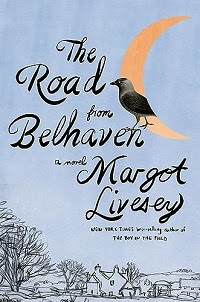
Margot Livesey's The Road from Belhaven reveals an ordinary yet uncommon woman's life in late 19th-century Scotland

Written with a graceful simplicity, The Road from Belhaven will enfold you unexpectedly quickly into the life of its heroine, Lizzie Craig, a character whose emotions are so vivid that it’s impossible not to feel for her through all her growing pains, yearnings, and mistakes.

Orphaned as a baby, Lizzie is raised by her grandparents on their property, Belhaven Farm, in Fife, Scotland, in the late 19th century. The rhythms of rural life, beautifully summoned, instill a sense of wonder as Lizzie takes pride in gathering eggs and caring for their animals through the seasons, aware that the future responsibility for the land will lie with her.

Excited to learn she has an older sister, Kate, who comes to join the family, Lizzie is slow to realize how this will affect her future. Lizzie also keeps to herself that she gets occasional flashes – “pictures,” as she calls them – of future events, which often drive her to rash decisions even though she doesn’t have the power to prevent what happens.

When Lizzie turns sixteen, a tailor’s apprentice from Glasgow, Louis Hunter, comes to help her family in the fields. Their growing relationship has her following him to the city, where she soon finds herself in the shameful situation of all too many love-struck unmarried women.

In this sense, Livesey’s novel offers a timeless story that’s made distinctive through well-wrought details: the harvest ceilidhs; the crowded bustle of Glasgow, which has Lizzie agog; the “white harled farmhouse” where her grandmother, Flora, dispenses wisdom she suspects won’t be heeded. But it’s not predictable, overall, thanks to the delicate characterizations.

Although many people – herself included – cause Lizzie undue heartache and regret, there are no true villains, other than society itself and how it curtails women’s choices. This is a beautiful book about the sharp-cornered path to maturity.

Margot Livesey's The Road from Belhaven will be published by Knopf next Tuesday, February 6th. I reviewed it from NetGalley for the Historical Novels Review. There doesn't appear to be a separate UK edition. The author is a Scottish-born writer who now resides in the US.

Sunday, January 28, 2024

Three recent nonfiction works for historical fiction readers to check out

Multiple works of critical reflection about historical fiction have been published in the last few months, a sign of the genre's vibrancy and relevance to the current moment. Two of them focus exclusively on historical novels, and a third goes behind the scenes in the American publishing industry in the modern era. Although the last one has a more general focus, a great many historical novels are mentioned in the text. I have library copies of the first and last checked out to me.

Historical Fiction Now (Eaton/Holsinger) and Big Fiction (Sinykin)
 

Historical Fiction Now, edited by Mark Eaton and Bruce Holsinger (both English professors, the latter an author of historical fiction himself), contains essays by a diverse selection of authors – novelists, critics, academics – about the present state of the genre. Some authors discuss the background to their novels’ creation, like Geraldine Brooks on The Secret Chord, Namwali Serpell on The Old Drift, Tiya Miles on The Cherokee Rose (which was recently reissued), and Katherine Howe on The Physick Book of Deliverance Dane. Other contributors examine the notion of supposed anachronisms (Holsinger), their relationship with their role in chronicling the past (Jessie Burton), and views on writing biographical fiction (Michael Lackey). Some of the essays were previously published as journal articles or introductions from the authors’ novels. Historical Fiction Now appeared from Oxford University Press in Oct. 2023.

Writing Backwards: Historical Fiction and the Reshaping of the American Canon
by Alexander Manshel (Columbia Univ. Press, Nov. 2023) has gotten a terrific amount of coverage in the popular press already, including the Wall Street Journal and Esquire. Historical novels frequently appear on syllabi for English courses at universities, and Manshel explores how and why that came to be. This volume, which I had the opportunity to browse through before mailing it off to a reviewer, focuses on literary historical fiction and how a once-denigrated genre became the genre of choice for novelists, particularly writers of color, interested in wrestling with serious themes. I hope to read the book in full more thoroughly in the coming months.

I had discussed the popularity of literary historical fiction in a 2002 speech for the AWP conference – it’s not exactly new for bestseller lists or literary prize lists to be filled with historical novels – so the line from the Esquire piece that “the genre is suddenly everywhere” made me roll my eyes a bit.

Dan Sinykin’s Big Fiction: How Conglomeration Changed the Publishing Industry and American Literature (Columbia Univ. Press. Oct. 2023) is the book I’ve been most excited to see, and I got a good start via my library's copy last night. It provides entertaining insights into how consolidations in publishing have come to shape the landscape of American fiction, including how bestsellers happened, the changing roles of editors and agents at a time when larger companies are gobbling up smaller ones, and how nonprofit and independent publishers made their mark. Highlights from the historical fiction arena include how W. W. Norton made Patrick O’Brian a huge success in the U.S., and how and why E. L. Doctorow’s Ragtime became a literary sensation. As someone who grew up reading classic historical novels and mass-market paperback fiction of many varieties, and who has followed the comings and goings of publishers’ imprints for many years as a book review editor, the topic of this book fascinates me. I’m looking forward to reading the rest.

If you've read any of these in full, let me know your thoughts!

Monday, January 22, 2024

Historical fiction award winners announced at the 2024 ALA LibLearnX conference

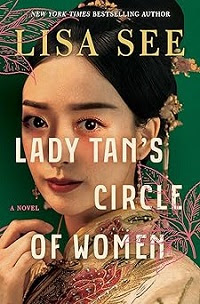
Lady Tan's Circle of Women book cover
The 2024 Book and Media Award announcements from the American Library Association's LibLearnX conference in Baltimore were broadcast over the weekend, and here are the historical novels that took home prizes. 

On the Reading List, the ALA's annual awards in eight genre fiction categories, the award for Historical Fiction award went to Lady Tan's Circle of Women by Lisa See, focusing on a female doctor navigating her career and an arranged marriage in 15th-century China.

On the Historical Fiction shortlist are:

The Bookbinder by Pip Williams - two young women in WWI-Oxford who work in the university press's bindery find their lives transformed by war.
Essex Dogs by Dan Jones - high-octane adventure during the Hundred Years' War.
Hang the Moon by Jeannette Walls - a young woman reclaims her place in the family business in Prohibition-era Virginia.
Looking for Jane by Heather Marshall - the multi-period story of three women and the battle for reproductive choice.

The winner in Mystery was A Disappearance in Fiji by Nilima Rao, a police procedural set in 1914 Fiji and focusing on an indentured servant who went missing.

On the Notable Books List are these four historical novels:

In Memoriam by Alice Winn - a love story between two British men who fight overseas in WWI.
North Woods by Daniel Mason - an epic literary tale of all the inhabitants of a small corner of Massachusetts woods over multiple centuries.
The Heaven and Earth Grocery Store by James McBride - a mystery in Pottstown, Pennsylvania, in 1972 reveals the longtime interconnections between the town's Black and Jewish residents.
The Reformatory by Tananarive Due - historical horrors at a reform school in Jim Crow-era Florida.

On the Listen List for excellence in audiobook narration:

The Adventures of Amina al Sirafi by Shannon Chakraborty, narrated by Lameece Issaq and Amin El Gamal - a historical fantasy pirate adventure set in the 12th century.
The Heaven and Earth Grocery Store by James McBride, narrated by Dominic Hoffman.

James McBride's The Heaven and Earth Grocery Store also won the 2024 Sophie Brody Medal, which is given for outstanding achievement in Jewish literature.

Congratulations to all the winners!

Saturday, January 20, 2024

Edith Holler by Edward Carey, his imaginatively weird tale set in the Edwardian theatre world (plus giveaway)

Artistic vision, wit, and the creatively grotesque intermingle in Carey’s (The Swallowed Man, 2020) literary historical fantasy. In 1901, Edith Holler is a physically fragile, curious, motherless twelve-year-old who’s lived her entire life within her large family’s historic theatre in Norwich, England because of a supposed curse.

A sprightly narrator, Edith is unsurprisingly possessed of an active imagination – too much so, the adults around her believe. After she deduces an unsavory association between Norwich’s lost children and the local delicacy of Beetle Spread (which is exactly what it sounds like), Edith writes a play about this secret history that her stern yet indulgent father agrees to stage. But when widowed Beetle Spread heiress Margaret Unthank becomes her father’s new fiancée, our heroine feels uneasy, for good reason.

Edith’s entertaining tour of the theatre’s many nooks and their inhabitants feels somewhat protracted, though the pacing quickens after Margaret appears on scene. This quirky homage to Carey’s childhood home, which bursts with personality and his expressive pencil drawings (and multiple ghosts), underscores the importance of listening to children.

Recommendation for young adults: Edith will win over YA readers with her dryly funny observations and determination to outsmart and overcome the wily Margaret.

Edith Holler was published by Riverhead in the US last October; this review was written for Booklist's September 1 issue. I haven't read Carey's previous novel, but loved his earlier historical Little, a reimagining of the woman who became Madame Tussaud. 

I also have a new hardcover copy to give away, open to US and Canadian readers.  Please add your details to the entry form on this page for a chance to win; deadline Saturday, January 27th.  Good luck!

---

The giveaway has ended. Congrats to Kellie - I'll be in touch.  Thanks to all who entered!

Monday, January 15, 2024

The Red Bird Sings by Aoife Fitzpatrick transforms a late 19th-century Appalachian story into suspenseful fiction

For her debut novel, Irish writer Aoife Fitzpatrick has ventured far from home, in time and distance, setting The Red Bird Sings in late 19th-century Greenbrier County, West Virginia – a rural place where “God hadn’t drawn many straight lines… the boundary between earth and sky was almost always curved and high.” She captures both the attractive scenery of this corner of Appalachia and its people’s proud, self-reliant character, just as a legend-inspiring murder trial is setting forth.

In June 1897, Edward “Trout” Shue pleads not guilty to causing the death of his young wife of several months, Zona, a dark-haired beauty. Believing other venues aren’t producing a sufficiently accurate take on the events, Zona’s best friend, aspiring journalist Lucy Frye, types up her own articles on her faithful Remington.

Although most of the community believes Trout to be innocent, both Lucy and Zona’s mother, Mary Jane Heaster, think he did it. They suspect Trout, a good-looking, reliable blacksmith who cared deeply for the animals brought to him, also had a darker, controlling side, since Zona had stayed isolated from her family and friends in her last days. Zona had a secret of her own, having given birth to an illegitimate daughter, Elisabeth, whom she’d given up for adoption.

Some novels hook you into the story from the first paragraph; others take time to gain momentum. With The Red Bird Sings, it took a good hundred pages – a third of the way in – before I reached the point where I had trouble putting it down. It’s structured like a collage of past and present, with chapters alternating between Lucy’s courtroom reports, the touching letters Zona wrote for the much-loved daughter she never knew, and straight narrative from the viewpoints of Lucy and Mary Jane, detailing everything leading up to Zona’s death and the trial. The overall picture felt somewhat scattered, and the characters kept at a distance. The untimely death of any young person is a tragedy, but I wished I had a clearer image of who Zona was, when she was alive.

By the end, I was completely gripped. Lucy and Mary Jane are intriguingly contrasted: Lucy is a bicycle-riding, forward-thinking modern woman whose family came into modest wealth, while the cigarette-smoking, slovenly Mary Jane invites scandal – and her husband’s ire – by abandoning her corset and claiming the ability to speak with the dead. Both being female, they share the plight of having their voices discounted, but they’re determined to pursue justice. And the late Zona herself will seemingly find a way to speak her truth aloud.

After reading the book jacket, which states the novel was inspired by a real-life murder trial, I wondered what Sharyn McCrumb, who has masterfully woven numerous stories from Appalachian folklore into contemporary and historical fiction, would do with the same roots of literary material – before realizing that she’d already done so, in her novel The Unquiet Grave, which I haven’t yet read.

I bought The Red Bird Sings (Virago, 2023) in hardcover from Blackwell’s – the cover (by Charlotte Stroomer) is so enticingly beautiful – but Americans can also grab it on Kindle, which is currently priced at just $2.99. Definitely worth it.

Thursday, January 11, 2024

Looking at Emilia Hart's Weyward, her witchy, award-winning historical debut

Emilia Hart’s Weyward won the Goodreads Choice Award in both the historical fiction and debut novel categories in 2023, a significant feat. Over 84,000+ readers have already rated it at Goodreads. While it doesn’t especially need more attention, it had been in my NetGalley queue since last winter, and the holiday break was a good time to read it at last.

With its multiple-narrative structure, theme of female empowerment, and witchy focus, it hits multiple trends. The writing is clear, the pacing brisk, and the scenes illustrating three women’s hereditary abilities to commune with the natural world of remote Cumbria, England, are the book’s strongest aspect.

In the present day, Kate Ayres flees London and her abusive boyfriend for Weyward Cottage, which she inherited from a long-forgotten great aunt. During the WWII years, teenaged Violet Ayres, never permitted to leave the grounds of her titled father’s estate or learn anything about her late mother, takes comfort in exploring local plants and wildlife, which she has an affinity for. It’s a unique touch to have Violet take notice of the delicate beauty of bees and damselflies; she’s far from a typical young woman. And in the early 17th century, motherless Altha Weyward sits on trial, having been accused of bewitching a herd of cows into stampeding over a neighboring farmer – her former friend’s husband.

As the plot explores its three protagonists’ struggle to flex their underlying strength and wield it against the forces (men) oppressing them, it becomes a classic account of good vs. evil, presented along gender lines. Each woman endures horrific circumstances, which kept my attention in hoping they’d escape and find some measure of contentment. But over time, I became so used to assuming the male characters would be heinous that it came as a surprise when one turned out to be compassionate or heroic.

Recommended for readers who enjoy some magical gothic atmosphere with their feminist historical fiction; I just wish the nuance used to depict the Cumbrian countryside and women’s powers could have been invoked in the novel’s gender relations.

Weyward was published by St. Martin's Press in February 2023, and the paperback is out next month.

Monday, January 08, 2024

My Enemy's Enemy, a guest post by Alan Bardos, author of the spy thriller Rising Tide

Historical novelist Alan Bardos is here today with a guest post about some little-known WWII history, related to wartime intelligence... the backdrop for his new spy thriller Rising Tide (Sharpe Books).

~

My Enemy's Enemy
Alan Bardos

The years leading up to Japan’s attack on Pearl Harbour saw a strengthening of diplomatic relations between Japan and Germany, and growing cooperation between their intelligence services. This is where I found inspiration for my new novel, Rising Tide.

Hitler’s long-term foreign policy goal had been to create living space in Eastern Europe. The Abwehr, German Intelligence, had therefore largely focused on the Soviet Union. They had not planned to fight Britain in 1939 and had not developed networks in Britain. This is demonstrated by the poor quality of the agents they sent to Britain, who were all caught.

By 1941, Japan and Germany knew they would have to fight America and hoped to split its resources between the Pacific and Europe, in a two-front war. The Third Bureau of the Imperial Japanese Navy’s General Staff had been gathering detailed intelligence on the British and American navies, which posed the major threat to Japan’s expansion in the Far East. In return for radio and microdot technology, they traded this information with Germany.

This relationship developed when the Germans began to run their own spy rings in America. As Westerners, their operatives could enter places which the Japanese could not, without drawing attention. One of these spy rings, the ‘Joe K’, gathered information on Hawaii’s defences for their Japanese allies. However, their reports were intercepted by British censors as they were sent from New York to Europe via Bermuda and the spy ring was broken up.
Dusko Popov
Dusko Popov, 1941
(Wikimedia Commons, public domain)

To help rebuild their American networks, the Abwehr sent one of their best agents, Dusko Popov, to the States. He was given a list of questions about America to answer. A third of the questionnaire concerned Pearl Harbour and Hawaii. It included questions about the layout of its airfields, naval defences, ammunition dumps and anti-torpedo nets. Popov’s German handler instructed him to travel to Hawaii, and some writers have suggested that he was to replace a sleeper agent called Kuehn. Kuehn was the manager of a sugar plantation, and his wife owned a beauty parlour which she used to befriend army and navy wives, who the couple grandly entertained at their home to pick up gossip.

Yoshikawa, a Third Bureau agent on Hawaii, paid Kuehn to be Japan’s eyes and ears in Hawaii after the attack on Pearl Harbour. They even worked out an elaborate system for the German to signal information to Japanese submarines off the coast of Hawaii. Yoshikawa gives a less than flattering account of his meeting with Kuehn in his book Japan's Spy at Pearl Harbour: Memoir of an Imperial Navy Secret Agent and held reservations about Kuehn’s ability to do the job.

Suspicions that rang true since Kuehn’s extravagant lifestyle attracted the attention of the FBI, and he was arrested after the Pearl Harbour attack and executed in 1942, leaving the Japanese blind to American activities in Hawaii.

J. Edgar Hoover at His Desk
J. Edgar Hoover at his desk
(Wikimedia Commons, public domain)


Dusko Popov was also unable to carry on Kuehn’s role. Popov was actually a British double agent, who tried to warn the FBI about Japan’s interest in Hawaii. However, J. Edgar Hoover, the FBI Director, did not believe Popov’s warning and prevented him from travelling on to Hawaii to link up with the German agent and gather more evidence. This is where my novel Rising Tide picks up the story. The central character, Daniel Nichols, travels to Hawaii and becomes caught up in a conspiracy that would keep America embroiled in a Far Eastern stalemate and split between the Pacific and Europe.

~

Biography:

Writing historical fiction combines the first great love of Alan Bardos’ life, making up stories, with the second, researching historical events and characters. He currently lives in Oxfordshire with his wife… the other great love of his life.

His new World War 2 series follows Daniel Nichols, a former pacifist turned crusader, as he moves from the Fleet Air Arm to Intelligence and Special Operations. The first book Rising Tide is set against the backdrop of the Japanese attack on Pearl Harbor, as Nichols is embroiled in a conspiracy to keep the USA bogged down in the Pacific and out of the war in Europe.

Blurb for Rising Tide:

November 1940.  Lieutenant Daniel Nichols, a former pacifist turned crusader, is wounded taking part in the Royal Navy’s carrier born air raid on the Italian Battle Fleet in Taranto. Six months later Sándor Braun, a British double agent, escorts a Japanese delegation around Taranto and discovers that they are planning a similar attack. But what will the target be?

Nichols, now unable to fly, joins the Naval Intelligence Division, despite growing rumours that his nerve has gone. He debriefs Braun in London and sees the implications of his discovery. Britain cannot afford to suffer further setbacks in the far East. Nichols convinces his superior officer, Ian Fleming, to allow him to travel to Lisbon in a bid to identify the target before it’s too late. The former airman uses the rumours about his lack of moral fibre as cover and poses as a deserter, with information to sell about the Taranto raid.

Braun helps Nichols to gain the confidence of German and Japanese Intelligence officers - and he is recruited to fly to Hawaii and spy on the US Navy. Convinced that the Japanese plan to attack Pearl Harbour, Nichols travels to America to inform the FBI, but his warnings fall on deaf ears. Nichols takes matters into his own hands and ventures to Hawaii, with the intention of preventing a catastrophe. But will the Englishman's intervention prove too little, too late?

Wednesday, January 03, 2024

Elizabeth R. Andersen's The Alewives brews up amusing entertainment in a medieval Alsatian city

Frau Gritta, the wife of an easygoing fellow who spends nearly all his wages on drink, is the mother of twelve children – she can hardly keep track of them all – who “were all destined to be grifters.” The family lives on Trench Lane in Les Tanneurs, the tannery quarter of the free Alsatian city of Colmar, a shabby, crowded neighborhood that announces itself with a distinctively ripe smell.

But in this first of what promises to be an entertaining medieval mystery series, it’s the Year of Our Lord 1353, and none of Gritta’s brood died during the recent plague outbreak, so other folks consider her lucky.

Since life must go on, and her family’s needs must be met, Gritta concocts an ingenious idea. She joins forces with her longtime friend, Frau Appel Schneider, and young widow Efi, an attractive but dimwitted newcomer, to brew ale for profit.

Only… their initial recipe needs work, they risk running afoul of church laws, and they doubt Gritta’s husband can be trusted with their earnings. At the same time, a thief has been absconding with treasures from the Dominican abbey, and the recent death of a meddlesome neighbor, which may not have been natural, meets with a shrug from the sheriff. A visiting Franciscan friar, tasked with finding the thief, becomes the women’s ally (or does he?). Then another body turns up, and the women decide to take up the case before the killer comes after them.

The alewives are an absolute hoot. Their boisterous, saucy humor and determination to master this challenging new business opportunity make this novel an infectiously appealing brew. The women’s friendship is one of laughter, good-natured ribbing, and hilarious advice (you won’t look at cabbage leaves the same way afterward). While they can appreciate male company, they’re wise enough – even Efi – to know the occasional dangers men can pose in their patriarchal world. Full of details on crafting a fine ale and seizing life after a traumatic time, the novel leaves you wanting more from this engaging trio of women. Fortunately, a sequel is on the way in April.

The Alewives, which was independently published, was a personal purchase. Find out more at the author's website, and read more about Colmar, a beautiful little city, at the On the Luce travel blog.