Monday, March 27, 2023

Ten upcoming historical novels for 2023 with memorable cover designs

So many novels set to appear in the coming months have cover designs that entice me to buy the book for that alone. The stories within sound just as intriguing.  Here are ten examples that caught my attention.


The First Ladies by Marie Benedict and Victoria Christopher Murray

The blossoming cherry trees of Washington, DC, are the backdrop for this collaborative novel by the authors of The Personal Librarian. The two heroines are First Lady Eleanor Roosevelt and her friend and ally Mary McLeod Bethune. Berkley, June 2023. [see on Goodreads]


California Golden by Melanie Benjamin

The colorful cover of Benjamin's latest novel, centered on a pair of sisters trying to succeed in the world of surfing in 1960s southern California, brims with nostalgia for this not-so-long-ago time. Dell, August 2023. [see on Goodreads]


The Orchid Hour by Nancy Bilyeau

Beautiful illustrations of the title flower grace the latest novel by Bilyeau, which promises to take readers into the dark world of organized crime and a clandestine speakeasy in Jazz Age NYC. Lume, August 2023. [see on Goodreads]


The Other Princess by Denny S. Bryce

Peach and purple skies glow behind the figure of Sarah Forbes Bonetta, an African princess who became Queen Victoria's goddaughter. The author's first biographical novel is out from William Morrow in October. [see on Goodreads]


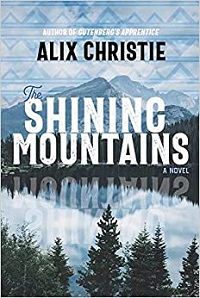
The Shining Mountains by Alix Christie

I loved Christie's first novel, Gutenberg's Apprentice; her second novel reflects her in-depth research into a character from her family history, Angus McDonald, a Scotsman who marries and raises a family with a Nez Perce woman in the 19th-century Rocky Mountains... and the cover showcases the region. High Road/Univ. of New Mexico Press, April 2023. [see on Goodreads]


The Red Bird Sings by Aoife Fitzpatrick

What a cover!  I think this is my favorite of them all: the images of nature and dramatic color contrast, which hints at a story of dark violence. Irish debut novelist Fitzpatrick pens a chilling novel about a young woman's mysterious death and justice in late 19th-century West Virginia. Virago, April 2023; no US edition yet, but Americans can preorder it on Kindle. [see on Goodreads]


Disobedient by Elizabeth Fremantle
Elizabeth Fremantle's newest historical has a jacket design with the look of Elodie Harper's Wolf Den. This one examines the life and strength of 17th-century Italian painter Artemisia Gentileschi, a survivor of sexual violence who refused to stay silent. Michael Joseph, July 2023; this is the UK cover. It will also be out in the US from Pegasus the same month. [see on Goodreads]


I, Julian, by Claire Gilbert

As stunning as stained glass in a cathedral window, Claire Gilbert's novel, I, Julian, is written as a first-person account by medieval anchoress and visionary Julian of Norwich.  Hodder & Stoughton, April 2023. [see on Goodreads]

Cities of Women by Kathleen B. Jones

The illustrated medieval-style design with its deep blue background entices readers into a novel centering on the era that gave birth to Christine de Pizan (b.1364), an Italian-born French poet described as "the first woman to support herself as a writer." This dual-period literary novel will focus, per the publisher's blurb, on illuminated manuscripts, feminine creativity, and self-discovery. Turner, September 2023. [see on Goodreads]


The Company by J. M. Varese

I find this cover both attractive and creepy, which must be the intended effect. I had never heard of the "arsenic wallpaper controversy of the late 19th century" before. Varese's The Company centers on a young Victorian-era wallpaper heiress at odds with a rising company employee with malevolent designs (literally). John Murray/Baskerville, March 2023. [see on Goodreads]

Friday, March 24, 2023

Songs in Ursa Major looks back to the folk scene of 1960s-70s America

Has anyone else been watching Daisy Jones & the Six on Amazon Prime? I haven’t read the novel (by Taylor Jenkins Reid), about the tumultuous relationship between the two lead singers in a ‘70s rock band, but I’ve been glued to the show, which has been dropping several new episodes each week. The final two remain unwatched as of now, and I’m anxious to see how the series ends.

When I went in search of a readalike novel, I found Emma Brodie’s Songs in Ursa Major, which has been hiding in my NetGalley queue for too long. Jane Quinn, the 19-year-old lead singer and guitarist for a band called The Breakers in 1969, isn’t Daisy Jones – while Jane has plenty of moxie and can party with the best of them, she’s more even-keeled. Plus her genre is more folk than rock.

A lifelong resident of Bayleen Island off the Massachusetts coast, Jane gets her big break at their summer folk festival, which attracts fans and tourists from across America. When the famous blue-eyed singer-songwriter Jesse Reid wrecks his car and misses his slot on the festival stage, Jane steps in, singing Jesse’s own song – and the rest is history. She seems destined for stardom, but a sexist record executive, Jane’s growing relationship with Jesse, and her own lack of songwriting confidence get in her way.

The novel, the author’s debut, is reportedly based on the affair between Joni Mitchell and James Taylor. It’s marketed as a love story, but I found it more of a celebration of feminine freedom. Jane comes from a generations-long line of unmarried, independent women.  A young woman with long, golden hair and a peasant blouse, Jane takes advantage of her opportunity on stage in a “bold as f-ck” way.  She thrives in the spotlight, and the opening scene puts you in her shimmering presence and makes you wish her performance existed on YouTube. She and Jesse have undeniable chemistry, though their relationship conceals some secrets, which of course are bound to come out eventually.

Through many ups and downs, musically and professionally, Brodie weaves the narrative around Jane's character, letting us see her from within and without – sweeping from center stage out to the audience and back. Following the great opening, it took me a while to be fully drawn into the story, and I would have liked more context. Folk music of the era spoke of politics and social change, but we don’t see much of the historical background that birthed these songs. As a portrait of a woman’s bumpy path to lasting fame, it’s much more successful, and the ending is perfect, providing a satisfying outcome for these creative characters.

Songs in Ursa Major was first published by Knopf. The cover images above come from the hardback (2021) and the paperback (2022).

Monday, March 20, 2023

The Trackers by Charles Frazier takes a propulsive journey across Depression-era America

Following Varina (2018), Frazier is in top form for his fifth novel, which traverses America in its portrait of contrasting Depression-era lives.

“The Trackers” is the name that New Deal artist Valentine “Val” Welch gives the mural he’s commissioned to paint in the post office of Dawes, Wyoming. He aims to inspire small-town pride by showcasing regional highlights.

While lodging at the expansive ranch of aspiring politician John Long and his younger wife, Eve, Val gets pulled into their drama. Not long after a stressful dinner party, Eve takes off, a small Renoir from Long’s collection in hand, and doesn’t return. Long asks Val to find her. Events turn more dangerous and puzzling than expected.

From an exhausting trip to wild rural Florida to the newly constructed, cinnabar-hued Golden Gate Bridge, the locales feel period-authentic, and the writing hums with spectacular word-images. While Val narrates, using a light folksy style that Frazier’s fans will recognize, the novel’s primary hero is Eve. An inscrutably captivating woman from impoverished origins who became a teenage hobo and sang in cowboy bands, she has reasons for fleeing wealthy married life, and the mystery ignites the plot.

The Old West still lingers in this propulsive tale of individualistic characters striving to beat the odds.

The Trackers will be published by Ecco/HarperCollins on April 11th, and this review was originally written for Booklist's Feb. 15th issue. You can find my review of Varina in an earlier blog post.  Read more about the background to The Trackers  and the author's long writing career, in his interview with Publishers Weekly. I love the illustration on the cover, too, which suits the material.

Monday, March 13, 2023

Review of T. Greenwood's Such a Pretty Girl, a daring novel of childhood fame, responsibility, and family in 1970s NYC

Click. Ryan Flannigan still flinches at the sound of a camera shutter, since it recalls her formative years as a child model and actress and the unwelcome attention she received from adults wanting to exploit her pre-teen prettiness. Now, in 2019, Ryan is a single mother in her early fifties living in rural Vermont, where she’s helped run a summer stock theater and quietly raised her daughter.

When an old friend alerts her to a news article with a risqué portrait from the worst night of her life, one taken during the New York City blackout of 1977, Ryan is shocked and confused. How did the photo come to resurface in the Paris apartment of billionaire Zev Brenner, a man recently unmasked as a pedophile? And why does it bear an affectionate inscription from Ryan’s mother, Fiona, on the back?

The subsequent suicide of Henri Dubois, an elderly photographer who’d been a father figure to young Ryan, draws her back to Greenwich Village for his memorial and in search of answers. Ryan never knew Brenner, but now she wonders how much her mother knew about his crimes. Fiona, however, has disappeared.

As the story shifts between eras, tension keeps this question open as Greenwood explores the fraught relationship between Ryan and Fiona, a would-be actress who moved the pair to New York in 1976 and lived through her daughter when her own auditions led nowhere. Adult novels with child narrators can be tricky, but Greenwood mostly stays within 10-year-old Ryan’s worldview in the 1970s sections. Introverted and anxiety-prone, Ryan adjusts well to the Westbeth complex, a real-life artists’ community, where she lives with a Hispanic American family who cares for her during Fiona’s too-frequent absences.

Ryan takes joy in doing kid things, and we feel her disconnect with the roles some adults manipulate her into, alongside her reluctance to disappoint. Alternately loving, neglectful, protective, and jealous of her daughter, Fiona herself is multifaceted and disturbingly drawn, a woman whose “need was like a balloon, stretched to its limits.”

Several elements distract from the mystery, like the adult Ryan’s unwillingness to read a note left for her by Fiona, thus delaying some revelations for plot convenience. Also, the name Ryan was almost never used for girls born in ’66, and I wish Greenwood had let Ryan ponder some of Henri’s actions in greater depth.

Other cultural references to a ‘70s childhood – decorating shoeboxes for school Valentine’s Day activities, the Hall of Gems at the American Museum of Natural History, watching American Bandstand on Saturdays – all check out. It wasn’t surprising to learn the author is my age and lived through the time she re-creates.

With Jeffrey Epstein’s crimes and Brooke Shields’ painful childhood experiences still circulating in the news, the novel’s theme of the “battle against a world in which girls are still often in peril” continues to strongly resonate. The novel offers much to ponder about what it means to be complicit.

T. Greenwood's Such a Pretty Girl was published by Kensington in October 2022; this was a personal purchase.

Wednesday, March 08, 2023

In the Upper Country reveals aspects of Black and Indigenous histories on both sides of the Canadian border

In 1859, in an all-Black town in Canada West (now called Ontario), a hub for the Underground Railroad, a female journalist agrees to interview an old woman who was imprisoned after killing a white slave catcher on her trail. Their conversation reveals much in the way of unexpected history.

A writer for The Coloured Canadian, Lensinda “Sinda” Martin doesn’t know what to make of the woman, who speaks in riddles, or her perplexing situation. The old woman and her companion, a young seamstress named Emma, had been hiding at a farmer’s cabin when a white man and his Indian partner showed up, claiming the pair were fugitive slaves from Lincoln County, Kentucky. Strangely, the woman was seen talking to the Indian and somehow convinced him to back off.

Profoundly frustrated (“Would I ever get anything of value from this woman?” she wonders), Sinda proposes a “tale for a tale,” bartering her own stories for the woman’s revelations about the past. These tales involve love, family, painful separation, and multiple quests for freedom—and the drastic lengths people will go to obtain it.

Stretching from 1795 Montreal through the pivotal War of 1812 to the characters’ present day, this debut novel paves a previously uncharted path through North America, uncovering deep affinities between Black and Indigenous peoples, who shared the pain of bondage and “quietly celebrated each escape; it mattered not whence they fled.”

The writing isn’t uniformly fluid. Some pages move speedily, while others require careful, slow perusal in order to make connections with earlier events. Many of the secondary characters—including Sinda’s employer and landlady, an abolitionist speaker; the seamstress Emma; and Sinda’s father, Dred, who can “talk Indian”—are intriguing enough to potentially carry their own novel.

While In the Upper Country isn’t an effortless read, it makes an original and valuable contribution to the historical fiction genre.

Kai Thomas's In the Upper Country was published by Viking in January; I reviewed it initially for the Historical Novels Review.

Saturday, March 04, 2023

Being female is treacherous in these ten new and upcoming novels about historical witchery

Witches are an increasingly popular subject in historical fiction. Incorporating themes of misogyny and women's power, strength, and wisdom, these ten new and upcoming historical novels are set at various times in history. Many dramatize actual events. In some of them, the women's magic is real.


The Witches of Vardo by Anya Bergman

To secure her own liberty from the fortress on Vardø Island in remote northern Norway, the disgraced former mistress of Denmark's king agrees to help identify suspected witches... but the accused women won't make it easy for her. Set in the 1660s, about historical events. Bonnier, Jan. 2023.  [see on Goodreads]


The Weaver and the Witch Queen by Genevieve Gornichec

The two main characters here are Gunnhild, soon to be Queen of Norway in the 10th century, and Oddny, her childhood friend, in this novel of spells, sisterhood, and survival in the dangerous Viking age. Ace, July 2023. [see on Goodreads]


The Devil's Glove by Lucretia Grindle

Set in what's now Maine in the late 17th century, The Devil's Glove looks at the historical events that led up to the Salem Witch trials from the viewpoint of a young woman caught between the worlds of the Puritans and local Native American tribes. Casa Croce, May 2023. [see on Goodreads]


Weyward by Emilia Hart

Three Englishwomen are linked by the gendered violence they've faced, and perhaps by something else. This multi-period tale spanning five centuries takes place in 2019, 1619, and during the WWII years.  St. Martin's, March 2023. [see on Goodreads]


The Burnings by Naomi Kelsey

This debut novel dramatizes the North Berwick witch trials of late 16th-century Scotland through the story of two women, one Scots and one Danish, and the quest for power during a time of fear and superstition. HarperNorth, June 2023. [see on Goodreads]


The Witch of Tin Mountain by Paulette Kennedy

In the Ozarks during the Great Depression, three women are linked by family connections and an evil presence that threatens to overshadow them all.  Lake Union, Feb. 2023. [see on Goodreads]


The Witching Tide by Margaret Meyer

Fictionalizing the witch trials of mid-17th-century East Anglia, this debut centers on a village healer, a woman unable to speak, who gets drawn into assisting a traveling witchfinder and who must search her own conscience for a path forward. Scribner, July 2023. [see on Goodreads]


The Last Witch of Scotland by Philip Paris

Two newcomers to a remote locale in the 18th-century Scottish Highlands, a mother and daughter, face unpleasant scrutiny and worse in a novel about the last person put to death for witchcraft in Britain. Black & White, April 2023. [see on Goodreads]


Solstice by Helen Steadman

This third novel in a trilogy, all of which deal with historical events, looks at the Riding Mill witch trials of 1673 Northumberland, in which a young servant girl gave testimony about suspected witches. One of the accused, in this version, is a woman whose family members had been executed for witchcraft. Bell Jar, Sept. 2023. [see on Goodreads]


The Scandalous Confessions of Lydia Bennet, Witch, by Melinda Taub

Even Jane Austen's characters are dabbling in witchcraft. The youngest Bennet sister from Pride & Prejudice, Lydia, is a witch and gets entangled in an entirely different sort of trouble. Mr. Wickham, for example, is a demon (literally). Grand Central, Oct. 2023. [see on Goodreads]

Saturday, February 25, 2023

Dark Waters Rising reveals a complex web of mysteries in atmospheric 14th-century Yorkshire

In Clark’s twelfth and last mystery in the Hildegard of Meaux series, set in 1394 Yorkshire, tensions are nigh at breaking point.

The novices at Swyne Priory, where Hildegard is a Cistercian nun, are unhappy, and Hildegard can’t settle them down. A young royal minstrel, Master Leonin, appears on the convent’s doorstep in a terrible state, alleging his life is threatened—and he refuses to say much more. Richard II has just lost his beloved queen, and the nuns worry his barons are agitating again. Even more troublesome is the unnatural death of a lay sister.

Events in the natural world mirror the turmoil within: the rain is incessant, and the eccentric, bookish Sister Josiana predicts the Humber will break its banks, flooding the land. The priory is on high ground, but can they prepare in time, and will Hildegard solve the crimes?

It feels odd to describe a medieval mystery involving nuns as frenetic, but there’s so much physical movement that the plot gets muddled at times. Hildegard spends considerable time on the road, riding to and fro among Swyne, the monastery at Meaux, and nearby Haltemprice Priory during her investigations.

The Prioress suggests she wants Hildegard to succeed her, but it’s unclear why, since Hildegard is rarely there; plus, there are unresolved romantic tensions between her and Hubert, lord abbot at Meaux. The story and characters hold interest, though, and it comes through clearly that with limited options for women, many found homes in convents regardless of vocation (or willingness).

The sense of place is superb and appropriately eerie, with a full moon overhead as waters begin rising. Superstitions are rife, and many folks “trust portents more than facts,” but when Josiana’s measurements prove accurate—not really a spoiler—it’s a triumphant moment for all women of science.

Dark Waters Rising by Cassandra Clark was published in 2022 by Severn House, and I'd reviewed it initially for the Historical Novels Review. Unlike many readers, I don't mind beginning a series in the middle if the setting and storyline intrigue me, or at the end in this case, and this one stands alone well enough. Although Hildegard's sleuthing has wrapped up, Clark is continuing to explore medieval crime through her Brother Chandler mysteries.

Tuesday, February 21, 2023

The Thread Collectors interweaves Black and Jewish perspectives on the U.S. Civil War

A collaboration between two longtime friends has resulted in a unique historical novel about two couples – one Black and one Jewish – whose stories come together during the chaos and destruction of the U.S. Civil War.

The feminine cover is somewhat misleading, since The Thread Collectors gives equal time to the male perspective. In 1863, Private Jacob Kling, a Jewish cornet player in the Union army stationed at Camp Parapet in Jefferson, Louisiana, is ordered to help with the intake of Black recruits for the Louisiana Native Guards. It’s in this role that he first meets William, a gifted flutist who took considerable risks fleeing enslavement to join the Union forces. Their fellow soldiers disparage interracial mingling, but the two form a bond over their passion for music.

Both men have left behind the women they love for the cause. Jacob’s wife, the former Lily Kahn, is the daughter of a German Jewish immigrant who made his fortune selling sheet music. From her Fifth Avenue apartment, Lily writes tender letters to Jacob expressing her pride in his service and recounting her work supporting abolition and the war effort. William’s beloved is Stella, a mixed-race free woman forced to become the mistress of a white Confederate officer – the same man who bought William and brought him to Louisiana from his home on Georgia’s Sapelo Island as a child.

With four viewpoints and many flashbacks to the recent past, the novel is a detailed collage of Civil War experiences, ranging from the domestic arena to battlefield courage and carnage. All are stitched together tightly into a coherent narrative, although since Lily’s viewpoint is shown through letters initially, it feels a touch unbalanced. A young woman of conviction, Lily finds a strong role model in suffragist Ernestine Rose, among others, though her stated admiration for Isabella of Castile feels odd, given her religion.

In addition to portraying the characters’ survival skills relative to gender and race, the novel exposes the racial prejudice they endure, some of which may be surprising – like General Grant’s anti-Semitic views and the slurs against Jews that pervade the army camps, as well as the Union army’s cruelly unequal treatment of the Black soldiers in its ranks.

Without losing sight of the big picture, the story emphasizes the varied means of communication that draw the characters together. These include Jacob and William’s shared love of music; Lily’s mailing of letters and new tunes, which boosts morale at the camp; Jacob saying Kaddish (the Jewish mourner’s prayer) for the souls of Black men; and, most of all, Stella’s dexterity in stitching maps with colored threads, unpicking stitches from other fabrics to create visual guides pointing the way to freedom.

Civil War-era novels are common, but this isn’t a story that’s been told before. In all, this book speaks to the courage to trust and how the ties of friendship can make people stronger.

The Thread Collectors by Shaunna J. Edwards and Alyson Richman was published last August by Graydon House (I read it from a NetGalley copy).

Wednesday, February 15, 2023

Stealing by Margaret Verble, set in the 1950s, introduces a courageous, unforgettable young Cherokee heroine

This short, compassionately written, and powerful novel is told in the unquenchable voice of Karen “Kit” Crockett, who is raised by her white father in the 1950s South after her Cherokee mother’s death. At nine, Kit spends much time alone, fishing in the bayou and eagerly awaiting each bookmobile visit; she has an abundance of sorrows but knows her family loves her.

When she spies an unfamiliar car at her late Uncle Joe’s cabin, Kit grows intrigued. Her attractive new neighbor, Bella, is divorced and has two “boyfriends” she doesn’t much like (“Kit, you won’t understand this yet, but they pay the bills,” Bella says). Despite the age difference and the hostility of a reclusive old woman down the lane, the pair become good friends.

It isn’t to last. From the beginning, Kit makes clear that she’s no longer home and is setting her thoughts to paper years later, after being taken (stolen) from her family and enrolled in a religious boarding school, where other schoolkids are cruel, and teachers lecture them about original sin. Even worse, the director, Mr. Hodges, is an unctuous hypocrite who saves his worst punishments (sexual abuse) for the Indian students.

An enrolled member of the Cherokee Nation and a Pulitzer finalist, Verble is a magnetic storyteller – the book is difficult to put down – who has created an indelible heroine in Kit, who gradually unspools the tragic backstory of how she landed in such a despised place. The themes of prejudice and of religion as a controlling force are strongly felt.

Kit’s personality bursts through every line: vulnerable, traumatized, honest, scrappy, and resolved to survive and escape. While she’s raised to be respectful to adults and doesn’t always understand their world, she can tell in a second if they’re lying. You won’t forget meeting her.

Stealing was published by Mariner/HarperCollins this month; I reviewed it from an Edelweiss e-copy for February's Historical Novels Review.

Margaret Verble is the author of three previous historical novels: Maud's Line (a Pulitzer finalist in 2016), Cherokee America (a Spur Award winner for Best Western), and When Two Feathers Fell from the Sky.

Saturday, February 11, 2023

A monster reenvisioned: Natalie Haynes' feminist retelling of Medusa's story

Feminist retellings of Greek myths are all the rage, and Haynes stands among the foremost authors in this area. Her third such novel melds her grounding in the classics with a conversational style and biting humor.

With snakes for hair and a petrifying gaze, Medusa has been considered a horrible monster, but Haynes makes us rethink this belief. 

The only mortal among the Gorgons along Libya’s shores, Medusa is an attractive, curious young woman growing up under her loving older sisters’ care. Her rape by Poseidon in Athene’s temple traumatizes her; so does Athene’s act of revenge. Perseus, the supposed hero seeking to decapitate a Gorgon, is an incompetent adventurer without the sense to ask for directions.

Seen from multiple perspectives, including Perseus’s mother, Danaë; prickly goddesses; and the Gorgoneion (Medusa’s head), which speaks with candor, the tale evokes passionate fury on behalf of its heroine, a tragic victim of male violence. Her death scene is utterly heartbreaking. It all begs the question: how could we have gotten Medusa’s story so wrong?

Stone Blind was published this past week in the US by Harper.  Mantle published it in the UK last September. I wrote this review for Booklist's Jan. 1 issue.

Genre-wise, this novel could be considered historical fantasy. Several other novelists have recently turned their own gaze to Medusa's story. Claire Heywood's forthcoming The Shadow of Perseus, from what I understand, removes the supernatural elements and recasts the tale as historical fiction, as seen from a trio of women's viewpoints, including Medusa's.  The Miniaturist author Jessie Burton's Medusa is a YA retelling. Lauren J. A. Bear's upcoming Medusa's Sisters (Ace, Aug. 2023) centers on Stheno and Euryale, Medusa's immortal Gorgon sisters, who are often left out of the myth (they do play significant roles in Natalie Haynes' version, too).  

Monday, February 06, 2023

The Magic Kingdom by Russell Banks, his elegiac novel about early Florida

The quest for a perfect society is woven into the American experience. Through his bittersweet novel, Banks explores the flaws in the design of an early 20th-century utopia—and by extension, perhaps all utopias—through one man’s mournful regrets.

The premise is that the author discovered a collection of reel-to-reel tapes in a dingy Florida library basement and transcribed and edited their forgotten narrative: the confession and catharsis of Harley Mann, an elderly real estate investor, who speaks in 1971 about his long-ago past.

As a twelve-year-old boy in 1902, Harley is eager to please but has an independent mind. After his father dies, his mother moves the family from their secular Georgia commune to a plantation whose cruelty becomes apparent. Rescued by the charismatic Elder John, the Manns head south to abide with the Shakers in his community, New Bethany, in central Florida.

The children, too young to formally become Shakers, all learn the ways of the oddly compelling religion. Harley trains in beekeeping and becomes Elder John’s protégé, though his obsession with Sadie Pratt, a tuberculosis patient seven years his elder, threatens his devotion to his Shaker family—who are celibate—and the group’s very stability.

The Shakers are industrious, but their focus is neither charitable nor commercial, and the plot evokes these tensions. While The Magic Kingdom is an engrossing morality tale, Banks is equally concerned with how the characters live day-to-day alongside their beliefs and nature. The land and waters—which intermingle in this swampy country—are gloriously described, as are the native birds and other animals.

Contrasts with the profitable artifice of the Walt Disney Company, which we’re told eventually purchased the Shakers’ land, quietly underlie the entire novel. It all leaves the reader, like Harley, yearning to return to this unspoiled, vanished paradise, imperfect as it was.

I wrote this review for February's Historical Novels Review, and it was published by Knopf last fall (and No Exit Press in the UK). The Magic Kingdom is Russell Banks' final novel. Several days after I finished it, I read online that he had passed away at age 82.  Read the obituary at NPR, which describes him as a writer who "found the mythical in marginal lives."

Wednesday, February 01, 2023

Historical fiction award winners announced at the 2023 ALA LibLearnX conference

The 2023 Book and Media Award announcements from the American Library Association's LibLearnX conference in New Orleans were broadcast on Sunday afternoon, so I'm behind in getting this news posted.  It's been a busy week with a lot of meetings, and there are more to come.  I watched the ceremony via the Reference & User Services Association's Facebook page. Many adult-level historical novels received accolades.

Here are the details:

On the Reading List, the ALA's annual awards in eight genre fiction categories, the award for Historical Fiction award went to By Her Own Design by Piper Huguley, a biographical novel about Black designer Ann Lowe, who designed Jackie Kennedy's wedding gown, among other exquisite creations.


The Forty Elephants by Erin Bledsoe (1920s London, about an all-female criminal gang)
The Good Wife of Bath: A (Mostly) True Story by Karen Brooks (Chaucer's bawdy heroine reveals her story)
The Swift and the Harrier by Minette Walters (female-centered adventure during the English Civil War)
Two Storm Wood by Philip Gray (WWI thriller about a woman seeking her missing fiancé)

On the Listen List for excellence in audiobook narration:

The Bangalore Detectives Club by Harini Nagendra, narrated by Soneela Nankani. (mystery of 1920s Bangalore, India)
The Diamond Eye by Kate Quinn, narrated by Saskia Maarleveld.  (thriller about a real-life Ukrainian woman who became a celebrated WWII sniper)
A Lady’s Guide to Fortune-Hunting by Sophie Irwin, narrated by Eleanor Tomlinson (aka Demelza from the most recent Poldark TV adaptation; this is a witty Regency romance)
Take My Hand by Dolen Perkins-Valdez, narrated by Lauren J. Daggett. (a terrible injustice perpetrated on Black girls in '70s Alabama, based on a true story)

On the Notable Books List are these two historical novels:

Horse by Geraldine Brooks (about a champion race horse, a painting, and racial injustice across time)
Trust by Hernan Diaz (four alternating tales create a puzzle set in 20th-century NYC)

Congrats to all the winners!

Friday, January 27, 2023

What we can learn about historical fiction reading (and reviewing) from an AI chatbot


Example book review from chatgpt

Over the past several weeks, I’ve been fascinated by ChatGPT, the artificial intelligence chatbot that responds to prompts in a conversational style which mimics human writing. Educators have raised concerns about students using it to plagiarize essays; technical writers (and others) are worried about an AI agent putting them out of work. The applications and ethical ramifications of this program are just beginning to be studied.

When it comes to requests for basic information on a topic, ChatGPT returns text that's logically organized, easily readable, and mostly accurate (it does make mistakes). It’s also scary fast. When I asked it to write a sonnet about historical fiction, the results were impressive but flawed. People on the Historical Novel Society’s Facebook group had an interesting mix of responses to it.

I wanted to explore the output created by ChatGPT so I could see its strengths and defects firsthand – and so I could better recognize AI-generated writing when I came across it in other circumstances. (There are new programs out there to detect whether content was written by a robot.) ChatGPT isn’t going away and will only improve over time, so it’s to our benefit to become familiar with its capabilities. So I prompted it with some requests to see what could be gleaned from the experience.

How good is ChatGPT at writing book reviews, I wondered. The system’s knowledge base ends with 2021, so this exercise won’t work for new releases, but I was curious what information it knew about older titles, and about historical fiction in general.

First, I asked it to write a sample book review for a novel about pilots during WWII (I didn’t specify a particular book). The result was:

Example 1:

Flyboys: A Novel of WWII by John Smith is a powerful and moving historical novel set during World War II. The story follows a group of young pilots as they train to become fighter pilots and then head off to fight in the Pacific Theater.

One of the strengths of this novel is the way it brings to life the personal stories of the pilots. Through their eyes, we see the horrors of war and the sacrifices they made for their country. Smith does an excellent job of capturing the camaraderie and sense of brotherhood that developed among the pilots, as well as the fear and uncertainty they faced on a daily basis.

The novel also explores the moral and ethical dilemmas that the pilots faced, including the question of whether or not to shoot down enemy pilots who have bailed out of their planes. The characters are well-developed and feel authentic to the time period. The main protagonist, a young pilot named Jack, is a relatable and sympathetic character who the reader can't help but root for.

The novel is also historically accurate and provides a great deal of information about the air battles that took place during World War II, which makes it a great novel for readers who are interested in the history of WWII and the role of pilots in the war.

The writing is engaging and evocative, and the pacing of the novel keeps the reader on the edge of their seat. The ending is bittersweet, but it leaves the reader with a sense of the human cost of war.

Overall, "Flyboys: A Novel of WWII" is a must-read for fans of historical fiction and World War II enthusiasts. It is well-written, well-researched, and filled with relatable characters and a compelling storyline that will keep readers engaged until the very end. It is a highly recommended novel for anyone interested in the history of WWII, the role of pilots, and the human cost of war.

--

Does this sound like a novel you’d want to read? Or maybe you’ve already read something very close to it?

Since I gave it a generic request, it provided a generic review. Still, it picked up on a basic plotline for a book with this focus, reflected these common elements within the review (the fact that many are stories of camaraderie and coming-of-age journeys for their male protagonist), and provided commentary on positive qualities readers expect to find in historical fiction. That is: well-developed and authentic characters, historical accuracy, a moving and powerful storyline, and interesting background details.

Next – several days later – I asked ChatGPT for a review on a novel about a young woman growing up in medieval England. The result named a specific book, but the plotline doesn't fit that book, aside from getting the era right.

Example 2:

The Rose of York: Love and War is a captivating historical novel set in medieval England during the Wars of the Roses. The story follows the life of a young woman named Rose as she navigates the complexities of medieval society, from her childhood in a small village to her eventual rise as a powerful and influential woman.

One of the strengths of this novel is the way it brings to life the rich and complex world of medieval England. The author does an excellent job of capturing the political and social landscape of the time, from the power struggles between the different noble houses to the everyday lives of the common people. The novel also explores the role of women in medieval society and how Rose's determination and strength of character allows her to transcend the limitations placed on her as a woman.

The characters are well-developed and feel authentic to the time period. The main protagonist, Rose, is a strong and relatable character who the reader can't help but root for. The love story that develops throughout the novel is also engaging and adds an emotional depth to the story.

The writing is evocative, and the pacing of the novel keeps the reader engaged throughout. The ending is satisfying and leaves the reader with a sense of the human cost of war and the strength of the human spirit.

Overall, "The Rose of York: Love and War" is a must-read for fans of historical fiction. It is well-written, well-researched, and filled with richly drawn characters and a compelling storyline that will keep readers engaged until the very end. It is a highly recommended novel for anyone interested in the Middle Ages, the Wars of the Roses, and the role of women in history.

--

This second review has elements worth noting. It draws on tropes for women’s fiction set in medieval times (the heroine’s personal growth journey, how she reacts to the restrictions placed on women in past eras, and the fact that there’s a love story – not mentioned at all in the sample review about WWII pilots). Taken together with the first review, we see how these AI-generated reviews are structured. The underlined sections show the text repeated in both reviews. It seems there’s an underlying template that ChatGPT is following, while filling in the blanks with material appropriate to the subject and era.

Thirdly, I requested a critical review of a WWII novel. (I initially asked for a snarky review, just for fun, but it tsked at me and told me it wouldn’t do that.)

Example 3:

The War Diaries: A Novel of WWII by John Doe is a historical novel set during the Second World War. The story follows a group of soldiers as they fight their way through Europe, and the struggles they face both on and off the battlefield.

One of the weaknesses of this novel is that it lacks historical accuracy. There are several inaccuracies in the descriptions of battles and settings, which undermines the credibility of the story. Additionally, the characters are not well-developed, and their actions and motivations are not always clear.

The author's writing style is also problematic. The dialogue is often clunky and unrealistic, and the author's attempts at humor fall flat. The pacing of the novel is also uneven, with long stretches of slow-moving action interspersed with brief bursts of action.

Overall, "The War Diaries: A Novel of WWII" falls short in providing a credible and engaging story. The lack of historical accuracy and the poor writing style make it hard for the reader to fully immerse in the story. It's not a bad book, but it's not a must-read for fans of historical fiction set during WWII, and readers might want to look for other options.

--

Again, we can learn more about reader expectations from this review of a fictional novel. (ChatGPT made up the title and author.) It’s a coherently organized review that shows multiple reasons why a historical novel can fail to resonate with readers.

Lastly, I got out of generic mode and asked: Can you write a book review for All the Light We Cannot See? Surely it would do better with a highly acclaimed, bestselling historical novel.

Example 4:

"All The Light We Cannot See" is a historical fiction novel written by Anthony Doerr. The novel takes place in Europe during World War II and follows the parallel stories of two main characters: Marie-Laure, a blind French girl, and Werner, a German boy. The story is beautifully written, with a powerful and evocative prose that draws the reader into the characters' lives and experiences.

The novel is about the impact of war on the lives of ordinary people, and how it can change them. The author does an excellent job of capturing the fear, uncertainty, and hope that people felt during the war. Doerr's descriptions of the war-torn cities and the devastation caused by bombing are particularly powerful, and they help to convey the scale of the destruction and suffering caused by the war.

The author also explores themes of love, family, and sacrifice, with the characters learning to overcome their fears and biases. The relationship between Marie-Laure and Werner is particularly well-done, as the author explores the different paths their lives take, and how they are ultimately brought together.

The author's writing style is evocative, poetic and he is able to create a powerful atmosphere, it is a book that is not only informative but also emotionally engaging. The book is a beautifully written, thought-provoking novel that is sure to stay with the reader long after they have finished reading it.

Overall, "All the Light We Cannot See" is a must-read for fans of historical fiction, war literature, and for anyone who is interested in exploring the human experience during one of the most devastating conflicts in human history.

--

So what do you think?

On the plus side, it’s structured like a standard book review, and if you’ve read the novel (and I have), you’ll notice it gets some things right. It’s mostly grammatically correct, too.

But as a review of Doerr’s novel, which has been analyzed in detail in many corners of the web, it’s bland and superficial. Not only does it lack style and artistry – typical in AI-generated text – but there’s almost no information about the characters, plot, or setting. When I read reviews, I appreciate perceptive examples of what worked well, what didn’t, and why, preferably with originality of expression. This review reads like someone ran out of time and was phoning it in, or that they briefly glanced at the publisher’s blurb but didn’t actually read the book. Also, despite its emphasis on themes, it doesn’t really capture what All the Light We Cannot See is about.

I’ve repeated this same prompt multiple times, with only a slight variation in the AI responses.

In writing reviews, I know how tempting it can be to fall back on clichés and familiar phrases. Everyone uses them to some degree, and they can pass unnoticed if the reviewer points out specific examples and demonstrates original insight. The reviews written by the chatbot, especially in the fourth entry, focus on historical fiction tropes while omitting details on an author’s unique accomplishments. Would any of the AI-generated reviews convince you to read the book described (if it existed)?

In the end – and thanks for reading this lengthy post – we can learn numerous things from these AI-written reviews, but the takeaways have more to do with genre and reviewing conventions than the books themselves. I welcome additional thoughts, as well as details on your own explorations with this new tool.


Sunday, January 22, 2023

Laurie Lico Albanese's Hester imagines an origin story for The Scarlet Letter's heroine

In 1829, seamstress Isobel Gamble, just nineteen, leaves Glasgow with her apothecary husband, Edward, planning to make a new start in America after coming close to ruin due to Edward’s opium addiction. Newly arrived at the harbor of Salem, Massachusetts, Isobel spies a tall man in a flowing black cloak who piques her interest with his proud bearing and air of mystery.

He is Nathaniel Hathorne, an up-and-coming writer seeking to escape his family’s past; his ancestor was John Hathorne, a judge at the notorious witchcraft trials who never repented of his role. (Nathaniel changed the spelling of his surname later.) Isobel herself has a scandalous ancestry. She descends from a 17th-century Scotswoman who confessed to witchcraft. Isobel also conceals her ability to perceive sounds and letters as colors, a phenomenon now called synesthesia.

When Edward leaves immediately on another sea voyage, Isobel must rely on her own enterprise in a town where the Scots, Irish, and Black people share the same low social rung. She and Nat form an easy friendship that develops into an intoxicating mutual enchantment.

Nathaniel Hawthorne, 1841,
portrait by  Charles Osgood (from the
Peabody Essex Museum)
The name “Hester” is mentioned only toward the end, but if you’re versed in early American literature, you’ll sense where the plot and this relationship will lead. For those who never read The Scarlet Letter in English class, no worries; while the novel imagines its inspiration, it works well independently.

Isobel narrates her tale, with periodic drop-in segments about her ancestor, Isobel Gowdie, and others accused of witchcraft. While they add historical context, their presence isn’t strictly necessary since the main plot has its own strong tension.

Calling a historical novel a “richly woven tapestry” has become a cliché, yet Hester fits this phrase much better than most. Its pages are awash with color, through the visual effects of Isobel’s synesthesia and in descriptions of her swift, careful embroidery – a beautiful skill that saves her life more than once. (As a former cross-stitcher, reading Hester left me wanting to pick up a needle, thread, and fabric again.)

Salem itself is a most intriguing place full of contrasts: cosmopolitan, multi-ethnic, Puritan-influenced, unwelcoming to outsiders, and with a shameful history that weighs on the descendants of  the accused and their accusers from 1692. Within the book, you’ll find the theme of women’s supportive networks, as well as the repercussions when they fail. Isobel’s closest neighbor is a free Black woman, the brusque Mercy, who also seems to be hiding something. This subplot grows more intense over the course of the book. Secrets may be a burden, but they’re also essential for survival in this provocative and haunting story.

Hester was published by St. Martin's Press in October 2022. I read it from Edelweiss; my library also has a copy in the Best Sellers collection.

Thursday, January 19, 2023

This Other Eden by Paul Harding exposes the shameful history of Maine's Malaga Island

A superb achievement, Pulitzer Prize-winner Harding’s (Enon, 2013) third novel fictionalizes a shameful true episode from American history. In 1912, the mixed-race residents of Malaga Island off Maine’s coast, people living there for generations, were forcibly removed for reasons of “public health” and tourism development. The pseudoscience of eugenics lay behind the decision.

In Harding’s version, Esther Honey is the matriarch of a poor, close-knit family of African and Irish descent; other residents on Apple Island include the Lark family, the McDermott sisters, their Penobscot foster children, and eccentric carpenter Zachary Hand to God Proverbs.

When retired schoolteacher Matthew Diamond arrives to preach and educate the island’s young people, he recognizes his prejudice but finds several gifted pupils, including 15-year-old, light-skinned Ethan Honey, a talented artist. Events spiral downward when a committee from the Governor’s Council takes notice and comes to investigate. The injustice they impose feels infuriating.

Harding combines an engrossing plot with deft characterizations and alluring language deeply attuned to nature’s artistry. The biblical parallels, which naturally align with the characters’ circumstances, add depth and enhance the universality of the themes.

Readers must gingerly parse some winding, near-paragraph-long sentences, but this gorgeously limned portrait about family bonds, the loss of innocence, the insidious effects of racism, and the innate worthiness of individual lives will resonate long afterward.

This Other Eden was one of the best novels I read in 2022, and it will be published next week by W.W. Norton. I wrote this review for Booklist's December 1st issue.

For more background on Malaga Island along with photographs, please see the article The Shameful Story of Malaga Island by historian William David Barry, published in Down East magazine in November 1980.  Also, per Wikipedia:  "On April 7, 2010, Maine legislators finally issued an official statement of regret for the Malaga incident, but did so without notifying descendants and other stakeholders either before or after the fact. The 'public' apology didn't become known to the public until nearly four months later, when an article appeared in a monthly magazine, Down East, which also procured a statement of regret by Governor John Baldacci." 

Sunday, January 15, 2023

Through a Darkening Glass by R. S. Maxwell, a gothic-tinged mystery set in 1940s Lancashire

In summer 1940, Ruth Gladstone, an English literature student at Girton College, Cambridge, evacuates with her grandmother to the Lancashire village of Martynsborough after an unexploded bomb lands on the campus. While staying with her great-aunt Vera, from whom her Gran (Edith) had been estranged for years, Ruth gets pressed into dreary administrative work and delves into a local ghost story – which she glimpses firsthand.

A young woman garbed in white has been seen lurking around the fields and lanes, calling to mind a tragedy from 30 years before, when a woman’s body was seen floating in a lime-kiln pond on the grounds of Wolstenholme Park, a crumbling old manor.

The story begins as everyone’s already on edge from potential German bombings and amps up the tension with a gothic subplot. Furthermore, Ruth’s seeking an exit strategy from an unwanted engagement to a soldier who writes her embarrassingly crude love letters from overseas, and she worries he’ll come home and expect an impromptu wedding. The stage is set for a tale where suspense and dread build from multiple directions.

What transpires, though, feels more atmospheric than spooky or horrifying; this ghost story is pretty low-key. There is some mystery about whether the white apparition is Elise, wife of Ruth’s coworker Malcolm, a Frenchwoman who became mute and dissociated from the world after a brain injury. From the villagers, depicted (with a few exceptions) as stereotypically insular, emerges the feeling that the evacuees in their midst have stirred up the wraith, but Ruth doesn’t buy that explanation.

On the hunt for a subject for her first novel, Ruth decides to research the history of the hauntings in Martynsborough, which goes over about as well as you’d think. With an occasionally brusque manner, Ruth sometimes feels closed-off and distant, although she does earn the reader's empathy. Her growing rapport with Malcolm makes for an awkward “forbidden romance” scenario, since his wife is very much alive, and it’s unclear how mentally present Elise is.

While all of the mystery threads (including the surprising reason behind Vera and Edith’s falling-out) are sufficient to hold interest, Through a Darkening Glass functions better as a portrait of country life during wartime, showing people’s day-to-day experiences and their adjustments to new circumstances as the war trundles on much longer than anyone expects or wants.

Through a Darkening Glass was published by Lake Union/Amazon Publishing in January 2023; I snagged it from NetGalley. It was also an Amazon First Reads pick last month.

Tuesday, January 10, 2023

All the historical novel titles you could ever need


Very recently, I've been noticing a trend in historical fiction titles. Have you seen this too?  One might say that they're... all over the place.

All the Pretty Places; All the Lost Places; All the Broken Places
Unlike a previous trend we've seen (The X's Wife, The X's Daughter), you often can't tell from the titles what or who the books are going to be about.

All our Shimmering Skies; All the Children Are Home; All the Lights Above UsMany titles seem symbolic of an overarching theme from the books. They provide a sense that the novels are going to be on the literary side, or that they have a purpose and meaning that go beyond entertainment.


All the Lights We Cannot See by Anthony Doerr

My guess is that the historical novel above, Anthony Doerr's All the Light We Cannot See, was the book that started this all off.  It had a rare combination of literary and commercial success: it won the Pulitzer Prize and the Carnegie Medal and was a Goodreads Choice Award winner (2014). You don't see that a lot.

All That Is Hidden; All the Blood We Share; All the Queen's Spies
The cover art can help provide more context, as well as the likely subgenre.  And sometimes there's a noun or two in the title that's helpful for potential readers, too.

All the Ways We Said Goodbye; All We Left Behind; All the White SpacesAre you getting an idea now about the number of these books out there?  Nearly all the books in this post have publication dates between 2021 and 2023.

All of You Every Single One; All the Seas of the World; All the Quiet PlacesThese titles do create a sense of mystery about what's inside.  (And here we have one more "places" title, to join the first three at the top of this post.)

All the Courage We Have Found; All the Little Hopes; All the Flowers of Paris
What do you think about this title trend?  Does it make you curious about the story?  The following two don't fit the exact pattern shown above, but they are close cousins.

Before All the World; The World and All It HoldsAnd just to provide a bit more information about all these books, I'll list them all separately, below, along with the historical setting. The links go to Goodreads.

All the Pretty Places, Joy Callaway (Gilded Age New York)
All the Lost Places, Amanda Dykes (19th & 20th century Venice)
All the Broken Places, John Boyne (multi-period, present-day and WWII)
All Our Shimmering Skies, Trent Dalton (WWII Australia)
All the Children Are Home, Patry Francis (1950s-60s Massachusetts)
All the Lights Above Us, M. B. Henry (occupied France)
All the Light We Cannot See, Anthony Doerr (WWII France)
All That Is Hidden, Rhys Bowen and Clare Broyles (1907 NYC)
All the Blood We Share, Camilla Bruce (1870s Kansas)
All the Queen's Spies, Oliver Clements (Elizabethan England)
All the Ways We Said Goodbye, Beatriz Williams, Lauren Willig, Karen White (France, multi-period)
All We Left Behind, Danielle R. Graham (WWII Canada)
All the White Spaces, Ally Wilkes (post-WWI Antarctica)
All of You Every Single One, Beatrice Hitchman (20th-century Vienna)
All the Seas of the World, Guy Gavriel Kay (an alternate Renaissance era)
All the Quiet Places, Brian Thomas Isaac (1950s British Columbia)
All the Courage We Have Found, Carly Schabowski (1940s France)
All the Little Hopes, Leah Weiss (WWII North Carolina)
All the Flowers in Paris, Sarah Jio (WWII Paris)
Before All the World, Moriel Rothman-Zecher (1930s Philadelphia)
The World and All It Holds, Aleksandar Hemon (WWI Europe and beyond)

Sunday, January 08, 2023

Set in Stone by Stela Brinzeanu, a novel of women's lives and the oppressive patriarchy of medieval Moldova

The publisher’s tagline for this debut novel caught my attention: “In medieval Moldova, two women from opposing backgrounds fall in love.” What a unique setting! The novel’s illustrated cover, with its folkloric elements, also drew me in. It suits the story well.

The timeframe is kept vague, and external political events don’t intrude at all. In her introduction, Stela Brinzeanu (a London-based writer who was born in Moldova) writes of being haunted by a troubling folktale she heard as a child and how she wanted to give a voice to silenced women. This tale does play a role in the novel, but it contains much more than a straightforward folktale retelling. No spoilers here, though.

The protagonists are Elina, a boyar’s (noble landowner) daughter, and Mira, a young peasant woman trained as a potter by her father. The pair have spotted each other at a distance at church occasionally, though their divergent social stations mean they live very different lives. Elina’s father, Boyar Constantin, hopes to change her legal status to that of a son so she can inherit his wealth and property; he also wants her to marry her unpleasant cousin. In exchange for securing her inheritance, the voivode (local warlord) wants Elina’s father to build him a church, but previous masons hired for the job said the land was cursed.

The young women first come face to face when Mira crafts a beautifully colorful jug and delivers it to Elina at her family manor. Their troubles begin shortly after that: Mira falls through the ice on her way home and is rescued by Rozalia, an old herbalist and healer who had been the maid of Elina’s late mother. Rozalia, who is feared as a witch (you can guess where this subplot is going), becomes a significant figure in both women’s lives. One overarching theme is the importance of looking past assumptions and stereotypes, not just about Rozalia but women in general, including Elina’s mother – who had her own secrets.

All is related through the author’s smooth, fast-paced style. For a novel about two women who fight so strenuously to be together, they fall in love instantly and have little on-the-page chemistry. Their individual struggles against patriarchal control feel much more visible and urgent. The trials Elina and Mira undergo are dark and brutal, providing a wide-ranging picture of how being born female at this place and time was no picnic. Strong points, though, for the author’s presentation of their culture, encompassing societal roles, healing practices, religion, food, and music and dance. The many Romanian terms usually make sense in context, plus there’s a glossary at the end. And Set in Stone does wrap up the story in a very satisfying way.

Set in Stone (a title which has several meanings) was published by Legend Press in August 2022; I read it from NetGalley.

Monday, January 02, 2023

Four excellent historical novels I read in 2022 but haven't reviewed here yet

Happy New Year to all this blog's readers!

For my first post of the year, I thought I'd go back through the titles I'd tracked through Goodreads that I'd greatly enjoyed, but which I haven't mentioned here before.  In all, I read 85 books in 2022 and reviewed 50 of them.  I don't end up reviewing everything because deadlines for other projects don't always allow me enough time to do so. Occasionally I give them a shout-out on my Instagram instead.  Plus, sometimes my brain needs a break and I want to read something just for myself.

Here are four works of historical fiction I did want to mention, though, and highly recommend. Plus at the end, I've listed two contemporary novels with historical elements and crossover appeal.

Marriage of Lions, Bookseller of Inverness, The Visitors

These first three novels I read in print, something I've been doing increasingly rarely.  Nearly everything I read now is via my iPad's Kindle app (something I never would've predicted a decade ago). These were personal purchases from Book Depository.

Elizabeth Chadwick's A Marriage of Lions focuses on Joanna de Munchensy of Swanscombe, a granddaughter of William Marshal. She is a woman of minor importance for 13th-century England until she becomes an unexpected heiress. She marries William de Valence, half-brother to Henry III, in a match that becomes a strong and loving partnership. The novel is set against the backdrop of civil war as nobleman Simon de Montfort leads a rebellion against the rule of King Henry (his brother-in-law).  A sweeping tale of loyalty (and the price it extracts), family, love, and politics that brings the little-known Joanna out of the shadows of history. If you've read Sharon Kay Penman's Falls the Shadow, about the same time period, this shows events from the opposite viewpoint.

The Bookseller of Inverness is a stand-alone historical thriller by S. G. MacLean, set in the Scottish city of Inverness in the aftermath of the Battle of Culloden, the final defeat of the Jacobite army. In 1752, six years later, bookseller Iain MacGillivray, who was wounded at Culloden, finds a murdered man in his shop, with indications that someone is settling old scores. Iain's sedate life suddenly gets much more complicated. A wide-ranging, atmospheric, and twisty conspiracy thriller with an excellent sense of place and time.

Caroline Scott is the author of one of my favorite WWI novels, The Photographer of the Lost (US title The Poppy Wife). While not mysteries by genre, her books have a compelling mystery at their core. The Visitors is her third novel, and while it doesn't quite measure up to her debut (due to uneven pacing in places), it's still very good. In 1923, Esme Nicholls, a housekeeper and war widow who desperately misses her late husband, Alec, experiences life-changing events during a summer in Cornwall, where she and her employer, Mrs. Pickering, are staying as guests of Mrs. Pickering's brother. Alec was also from Cornwall, and Esme hopes to learn more about his origins. When two visitors arrive at the house, the revelations they bring throw Esme's world into disarray. The story has a beautifully rendered postwar setting, and the descriptions of Cornwall's natural wonders are immersive. (If you think the heroine's name is familiar, by coincidence the main character of Pip Williams' The Dictionary of Lost Words is Esme Nicoll, quite similar.)


Mary Jane by Jessica Anya Blau

This fourth book I read from a library copy via Libby. I don't read much historical fiction set during my lifetime, but after reading about Jessica Anya Blau's Mary Jane, about a 14-year-old's wild summer babysitting for the young daughter of an eccentric family (and their rock star houseguests) in 1975 Baltimore, I decided to give it a go. This fast-paced coming-of-age novel is full of sharp visuals and sounds, like zippy tunes emanating from a record player and everyone dancing along to their own beat. Great fun, and a nostalgic trip back in time.

And two other novels I'd recommend, both contemporary novels with historical elements:  Liz Michalski's Darling Girl is a dark spin on the Peter Pan story focusing on Wendy Darling's fictional granddaughter; and in Lauren Belfer's Ashton Hall, an American woman and her son reconstruct the life story of a mysterious Elizabethan-era woman during their stay at an old manor house outside Cambridge, England.  I reviewed both of these for Booklist.

Thanks so much for reading my posts.  I hope 2023 will be good to you and bring you lots of wonderful reads!