Saturday, August 27, 2022

Ten more recent and upcoming historical novels set before the 20th century

Here's the second part of my focus on historical novels with pre-20th century settings.  If you missed part 1 or want to get back to it, you can find it here.  The following ten novels all have 2022 publication dates. Some are already out, and others are forthcoming this fall. They're in reverse alphabetical order because Blogger uploaded them that way, and changing them while leaving the images centered proved to be complicated.  Besides, it seemed fair to list authors with surnames toward the end of the alphabet first for a change.  Hope you enjoy browsing through these!

Dark Earth by Rebecca Stott

Rebecca Stott's latest novel Dark Earth, a fantasy-tinged story, focuses on two sisters living in early 6th-century (post-Roman) Britain struggling to survive and escape possible enslavement by a local lord after their father's death. Random House, July 2022.  [see on Goodreads]


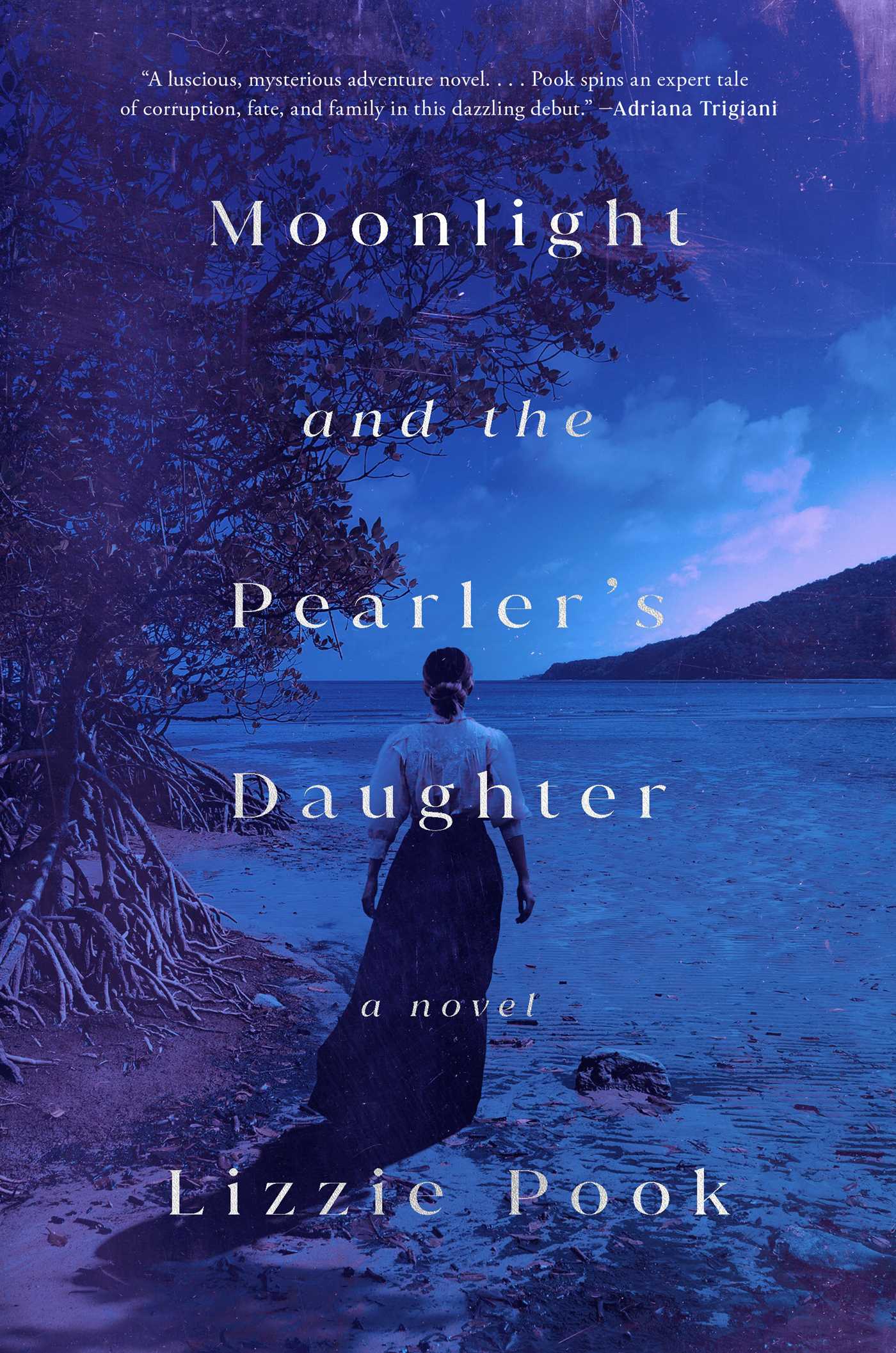
Moonlight and the Pearler's Daughter by Lizzie Pook

An Englishwoman who had relocated to Australia in the late 19th century with her family goes in search of her father a decade later, after an accident at sea during which he, the captain of the pearl-diving boat, had mysteriously disappeared. What really happened?  A friend recommended this to me, and I can't wait to read it. Simon & Schuster, June. [see on Goodreads]


The Marriage Portrait by Maggie O'Farrell

In this suspenseful literary novel, Lucrezia de' Medici, 16th-century Duchess of Ferrara and the tragic subject of a haunting poem by Robert Browning centuries later, is aware that the husband she recently married will try to kill her.  What will she do next?  Look out for my review soon.  Knopf, Sept. 2022.  [see on Goodreads]


Ithaca by Claire North

Tapping into the current reading craze featuring women from classical mythology, North homes in on Penelope and other women left behind in Ithaca after King Odysseus sailed away to the Trojan War.  First in a series.  Redhook, Sept. 2022. [see on Goodreads]


Bronze Drum by Phong Nguyen

Phong Nguyen, in Bronze Drum, presents the story of the legendary Trưng sisters, daughters of a Vietnamese lord, who rose up against the oppressive Han Chinese rulers of the land in the first century CE.  I'm reading this one now (review up soon).  Grand Central, Aug. 2022. [see on Goodreads]


Benevolence by Julie Janson

An Australian Aboriginal author from the Darug nation tells a story of her own people from the early 19th century: a tale of first contact with British settlers, colonialism, and endurance as seen from the viewpoint of a girl, Muraging, just ten years old as the novel begins. HarperVia, Aug. 2022. [see on Goodreads]


We Should Not Be Afraid of the Sky by Emma Hooper

The story of five young women who push back against the restrictions of era: Portugal during the time of the Roman Empire. From the epigraphs in the beginning, it looks to dramatize the lives of early Christian saints. Penguin Canada, Aug. 2022. [see on Goodreads]


The Fire and the Ore by Olivia Hawker

Hawker (who has also written as Libbie Hawker and Libbie Grant) has turned to writing historical fiction about her pioneer ancestors. The Fire and the Ore takes place in mid-19th century Utah Territory and follows three women - each with her own individual story - who become sister-wives to the same Mormon settler. Lake Union, Oct. 2022. [see on Goodreads]


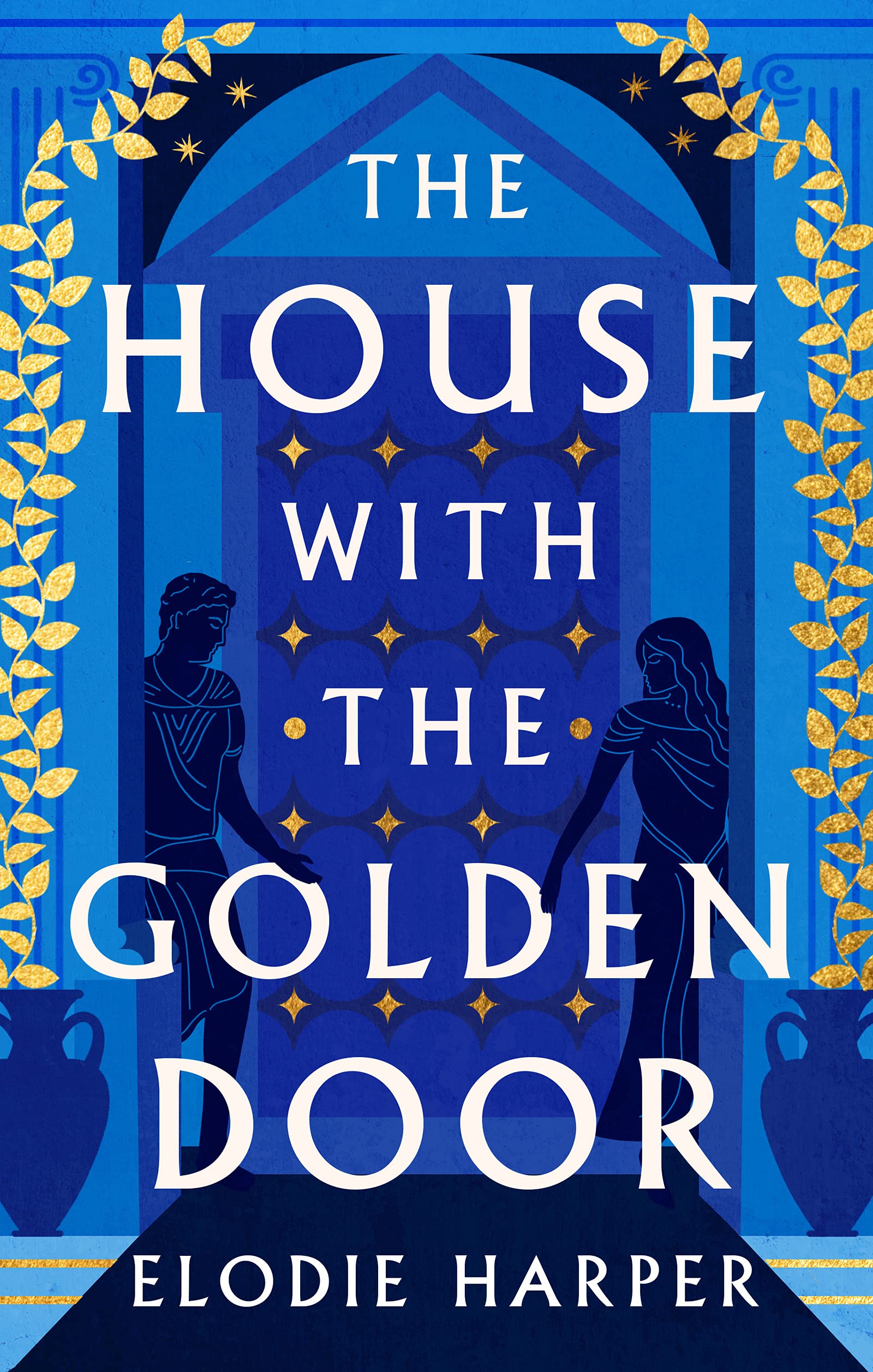
The House with the Golden Door by Elodie Harper

The first book in Elodie Harper's trilogy about the enslaved women in a Pompeii brothel in the first century, The Wolf Den, was a terrific read, so I'm looking forward to this sequel, which follows her heroine Amara as she navigates her way in her new life. The UK edition was published in May. Union Square, Sept. 2022. [see on Goodreads]


The Thread Collectors by Shaunna J. Edwards and Alyson Richman

A growing number of historical novels are co-written by two or more authors. A multilayered story about love and liberty, The Thread Collectors, set in New York and New Orleans during the US Civil War, focuses on two women (one Black, one Jewish) as their paths intertwine. Graydon House, Aug. 2022 [see on Goodreads].

Thursday, August 25, 2022

Beginning Research for Historical Fiction, an essay by Adele Holmes, author of Winter's Reckoning

Please help me welcome debut novelist Adele Holmes, who has a guest post about the steps she took in getting started with research for Winter's Reckoning (She Writes Press, Aug. 9).  There are many good tips and recommended sites included here!

~

Beginning Research for Historical Fiction
Adele Holmes, M.D.

There is so much to consider when writing historical fiction. Where is one to begin with the research? In this post, I will share how I gleaned historical information for my debut novel, Winter’s Reckoning, set in the Southern Appalachians in 1917.

The key takeaway from the first paragraph might be the word “debut.” I’d never written a novel before, so I’d never had to figure how to gather the historical facts. Like most of us, I turned to reading a textbook about it and also taking an online course. The course was through Writers Digest University, and the instructor was Donna Russo Morin. The textbook, recommended by Ms. Morin, was How to Write and Sell Historical Fiction, by Persia Woolley. These were valuable in my process, and I strongly recommend this as a minimum base for other newbies in the field.

The next step I took was to prepare a skeleton outline of the historical information I would need. My novel was set in the rural Appalachians, but it also referred to Boston quite a bit. These are both places I’d visited frequently, so I knew what they were like now—but what about in 1917? I did elaborate web searches on roads, railroads, housing, schools, etc. There’s so much information here that it is not able to be covered adequately in a short writing, but the reader will be familiar with the rabbit holes internet searches can take them into. Remember to leave a trail of breadcrumbs and also use only trusted, well-vetted sites.

After much consideration of my skeletal outline, these were the areas I decided I needed to look into, in no specific order:

1) Utilities. Turns out that electricity was in fact in place in Boston, but not in the rural South. After scrolling through several sites, I decided that this one was best for all things electrical https://www.instituteforenergyresearch.org/history-electricity/ I’ve bookmarked it for future use. And so my stockpile of reliable information was begun. Likewise, for most of my scenes, plumbing was unheard of—though in the cities it was commonplace.

2) Clothing. This is a very easy on-line find, and searching old catalog pictures can get the creative juices flowing. In fact, perusing old photos of-the-time caused me to turn one of my characters into a classic Gibson girl. It will be up to the author to make sure the trend is appropriate for the setting, i.e., country mouse vs city slicker.

3) Literature. As novels are frequently referenced in Winter’s Reckoning, I turned to an old favorite of mine, https://www.abebooks.com. Here I was able to see the covers of Alice’s Adventures in Wonderland, and the very first set of World Books. I even found a copy of the page on Pasteur that I needed to tell about in the story, and used the page number in dialogue in the novel. That’s pretty authentic!

4) Medicine. Being a physician, I was well linked-in to research sites for medicine, including medicine from that era. But I had to refresh myself on things such as when antibiotics were first used, etc. A quick google search of trusted medical sites gave straightforward answers. But finding the herbal substitute for medical treatment was a whole different ballgame. I spent days and weeks reading modern and old books on herbalism, and purchased a book that was very useful to show what plants grow in what areas of the US.

5) Legal issues/amendments to the constitution/laws. https://scholar.google.com led me to all the information I needed. I read, printed, reviewed several articles regarding not only the passage of the pertinent amendments to my novel (13th, 15th, 19th), but also the Jim Crow Laws.

6) Transportation. I like to visit the Smithsonian Museums in D.C. whenever possible. Their historical information for the US is phenomenal, and you get to see so much, making your prose so much more genuine. Most of my transportation research for this novel was gathered at a visit to the National Museum of American History. When a visit is not possible, there is a ton of information shared online through their links at https://www.si.edu. Often world information outside of the US is also available. For example there is currently a Tibetan Buddhist Shrine Room Exhibit that is completely viewable online.

The above list is the overarching information I needed to gather to begin to write my historical novel—yours will be quite different, depending on the setting of your book. I give this as an example only. The point is that I felt I must find out a lot about a few things, then I could fill in the remainder of the research needed as I came across it. For instance, I didn’t even know I was going to have a newspaper as a focus of my book. When one jumped right onto the page, I took a couple of days off to learn about newspaper history, linotype machines, etc. You’ll find areas to stop and research, too.

But don’t get lost in the rabbit holes! And remember: leave a trail of breadcrumbs and visit only trusted, well-vetted sites. After your first novel, you’ll have your own collection to go back to.

~
About the novel:

In the 1917 Southern Appalachians, Maddie’s herbal healing is welcome, though people disagree with her belief in equal rights for all. Then a new preacher arrives, igniting racial tensions and accusing her of witchcraft. Threatened and knowing others are at risk, Maddie hesitates. What does she risk in taking a stand? What does she risk if she doesn’t? 

About the author:

Adele Holmes author photo
Adele Holmes, M.D.
(credit: Lori Sparkman Photography)
Adele Holmes graduated from medical school in 1993. After twenty-plus years in private practice pediatrics, her unquenchable desire to wander the world, write, and give back to the community led her to retire from medicine. Her fun-loving family includes a rollicking crew of her husband Chris, two adult children and their spouses, five grandchildren of diverse ages and talents, a horse, and a Bernedoodle. Winter’s Reckoning, Adele’s debut novel, won Honorable Mention in the 2021 William Faulkner Literary Competition. She is currently at work on her second novel in her resident town of Little Rock, Arkansas.

Find her online at the following:
Instagram: Adele Holmes, MD 

Sunday, August 21, 2022

French Braid by Anne Tyler evokes the ties and idiosyncrasies in a 20th-century Baltimore family

Anne Tyler knows families: the ebb and flow of relationships across decades, the strengths and foibles of individual members, and the ties connecting them even if they don’t particularly like each other. The chance meeting of two cousins in the Philadelphia train station in 2010 invigorates this smoothly paced, emotionally piercing saga of a Baltimore family over three generations. “Even when the Garretts did get together, it never seemed to take, so to speak,” reflects one granddaughter early on, wondering “what makes a family not work.”

The year 1959 marks the first group vacation for parents Robin and Mercy Garrett and their three children, who spend a week together at a cabin on Deep Creek Lake. Reliable Alice, just seventeen, isn’t thrilled about the trip. Lily, two years younger, has a summer romance with a college guy, which her parents are surprisingly blasé about; and David is a sharp-eyed seven-year-old. Mercy’s attitude toward her children and husband is one of distant fondness. After her children grow up and pursue their own lives, she relocates full-time into her art studio, acknowledging only to herself (not to her adoring husband) that the move isn’t temporary.

The Garretts’ actions range from quirkily amusing (Alice’s talent for cooking meals out of random odds and ends) to scandalous to sad and upsetting. Mercy is ironically named, since readers—animal lovers especially—may feel that she deserves very little of it, given her self-centeredness. It’s also fair to recognize that she fulfills the era’s expectations of marriage and motherhood despite being cut out for neither role.

In her wryly observant way, Tyler grants Greta, the older, foreign-born divorcee David marries, to his family’s befuddlement, the wisdom to see her in-laws’ hopes and fears more clearly than anyone. This story shines with grace and compassion as it reflects oft-unspoken truths about human nature.

French Braid was published by Knopf in May, and I reviewed it for August's Historical Novels Review. In the UK, it's published by Chatto & Windus. Most of Anne Tyler's novels are contemporary literary fiction, but some others have historical elements, like The Amateur Marriage (which starts during WWII) and A Spool of Blue Thread (1920s-present).

Tuesday, August 16, 2022

Ten recent and upcoming historical novels set before the 20th century

While the 20th century gets the most attention in historical fiction circles lately, and has for a while, many avid readers of the genre remain hungry for earlier settings. The following ten titles take place much further back in the past.  This is the first of two posts.  The books are in alphabetical order by author surname.


Hester by Laurie Lico Albanese

What, or who, inspired Nathaniel Hawthorne to create his iconic character, Hester Prynne, the protagonist of The Scarlet Letter?  In Albanese's imagined tale, a Scottish immigrant seamstress forms an indelible emotional bond with the young writer in a place haunted by the legacy of slavery and the Salem witch trials. St. Martin's, October 2022. [see on Goodreads]


Prize for the Fire by Rilla Askew

This biographical novel by critically acclaimed author Rilla Askew takes as its focus Anne Askew, a woman who defies political and religious convention in Henry VIII's England and pays a terrible price. Univ. of Oklahoma Press, Oct. 2022. [see on Goodreads]


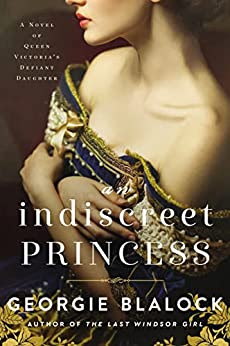
An Indiscreet Princess by Georgie Blalock

The "indiscreet princess" of the title is Louise, fourth daughter of Queen Victoria, trapped between royal duty and her desire to create art... and live life (and find love) on her own terms.  William Morrow, Sept. 2022. (Louise lived well into the 20th century, though her story begins in the mid-19th century.)  [see on Goodreads]


Set in Stone by Stela Brinzeanu

For readers enamored by unique historical fiction locales, how about medieval Moldova? Brinzeanu's latest novel reveals the love story between two women and the difficult challenges they face; it's based on local folklore. Legend Press, Aug. 2022.  [see on Goodreads]


The Hemlock Cure by Joanne Burn

You may recognize the name of Eyam, the Derbyshire village which self-contained against the plague in the mid-17th century, from Geraldine Brooks'  Year of Wonders. For her second novel, Joanne Burn incorporates the same dark setting, but shifting her lens to Eyam's women and the secrets they hold. Pegasus Crime, June 2022.  [see on Goodreads]


The House of Fortune by Jessie Burton

Burton's sequel to her bestselling The Miniaturist, set in the early 18th century, can also be read on its own; it follows the members of a Dutch family, especially a mixed-race young woman and her aunt-by-marriage, in their search for love, belonging, and money to keep themselves afloat. Bloomsbury USA, July 2022. [see on Goodreads | read my review]


Joan by Katherine J. Chen

Joan of Arc is hardly new as a historical fiction subject, but Chen, in her new novel, aims for a different, secular view of the young woman who became a renowned military leader and saint. Hilary Mantel blurbed the book. Random House, July 2022.  [see on Goodreads]


The Color Storm by Damian Dibben

Renaissance-era Venice takes the stage in Dibben's tale of artistic rivalry, marital drama, and a transformative new color.  If you're in the UK, the title is The Colour Storm.  Hanover Square, Sept. 2022. [see on Goodreads]


The Last Queen by Chitra Banerjee Divakaruni

Divakaruni travels to 19th-century India in her fictional portrait of Maharani Jindan Kaur, who rose to become regent of the Sikh Empire -- and who put up a strong resistance to the British. William Morrow, July 2022. [see on Goodreads]


The Portraitist by Susanne Dunlap

Historical novelist Dunlap, who has written many other well-received novels about women and the arts, pens a new work of fiction about Adélaïde Labille-Guiard and her determination to forge a career in 18th-century Paris, amid fierce competition and the coming of the French Revolution.  She Writes, Aug. 2022. [see on Goodreads]

Saturday, August 13, 2022

The Librarian Spy depicts two brave women finding their purpose during WWII

Like her first mainstream historical novel, Madeline Martin’s The Librarian Spy (a title designed to catch attention) is set during WWII. While continuing with her theme of the power of the written word, she moves her locale from London to Lisbon and Lyon, France, in her portrait of two women battling Nazi oppression, as well as the invisible thread that connects them.

In 1943, Ava Harper, though content in her plum job as a rare book librarian at the Library of Congress, finds herself recruited into a higher purpose due to her work ethic and facility with languages. In Lisbon, in neutral Portugal, she becomes responsible for acquiring and microfilming international news sources for shipment back home. As a librarian, it was cool to read a novel in which microfilm (which is becoming an outdated technology) was in such high demand!

While eager to help the Allies, Ava’s used to a more sedate lifestyle and is somewhat unworldly. She gets nervous when her neighbor is arrested and dragged away in the middle of the night; did a careless statement of hers get him in trouble?

One day, while browsing one of the papers she obtains, Ava notices an apparent encoded message that turns out to be a cry for assistance, though few details are given. This note forms the link between Ava and Elaine Rousseau – not her birth name – a Frenchwoman living under the Vichy regime in Lyon who joins the resistance. Through Elaine’s story, which is the more suspenseful of the two, readers view the courage and altruism that drives Elaine and her fellow resistance members to risk their lives. Secrets are prevalent, even amongst couples and families, and the deep love between Elaine and her husband Joseph, who has gone missing, is sensitively revealed.

There are many new novels focusing on resistance activities during WWII, and on this topic, The Librarian Spy didn’t stand out from the pack for me. That said, I appreciated the angle on covert publishing and information transmission during the war and the focus on day-to-day life in the less familiar setting of wartime Lisbon.

I read this from a NetGalley copy. The Librarian Spy was published last month by Hanover Square/HarperCollins.

Monday, August 08, 2022

Review of Trust by Hernan Diaz, an intricate literary puzzle-box set in early 20th-century New York

Pulitzer finalist Diaz’s brilliantly layered epic unfolds through a quartet of accounts, each of which adds new meaning to the ones that have gone before—much in the vein of Iain Pears’ An Instance of the Fingerpost, but set in the world of early 20th-century corporate finance. The authors of the four tales are given up front, but the less said about how they relate to one another, the better. Readers will derive the greatest pleasure if they uncover the revelations themselves.

First is a short novel called Bonds by Harold Vanner, a pointed morality tale about New York stock market whiz Benjamin Rask, who accumulates great wealth while remaining isolated from its impact on others. Rask’s marriage to wife Helen, an intellectual from an old Albany family, is an agreeable if emotionally distant union, and they both like it that way. In a style reminiscent of Edith Wharton, Vanner draws readers into Rask’s money-making ventures and the scandal that befell the couple after the 1929 crash.

Next comes the incomplete autobiography of financier Andrew Bevel, who puts pen to paper—with eye-opening pomposity—to counter rumors about his investments and to honor his late wife, Mildred. Paired with Vanner’s novel, Bevel appears to cover similar ground, which may cause some confusion—but keep reading.

Up third, the memoir of Ida Partenza, an Italian anarchist’s daughter, is hugely satisfying as it brings the first two accounts into focus while leaving some mysteries for the last section to reveal (which it definitely does). Each part feels smoothly calibrated to its author’s personality and historical setting as the story continues to provoke questions about which person’s truth can be relied upon. Not only a powerful commentary on the effects of unfettered capitalism, Trust also exposes the complex art of mythmaking engineered by the rich and powerful, and those erased in the process.

Trust was published by Riverhead in the US in May; the UK publisher is Picador. I read it from a NetGalley copy for August's Historical Novels Review.  I'll just add that corporate finance hasn't ever been a particular fascination of mine, but the story was riveting.  I've seen numerous spoilers in other reviews, so be aware!

Thursday, August 04, 2022

Reading the Past in a Single Document, an essay by Judith Berlowitz, author of Home So Far Away

Historical documents may be inanimate objects, yet they can still speak to us, revealing vital information to novelists writing about their subjects decades later. In the following essay, author Judith Berlowitz (Home So Far Away) explores how she gleaned details about the life of her protagonist, Clara Philipsborn, through a single document from a Spanish archive.

~

Reading the Past in a Single Document
Judith Berlowitz

By the time I retired – as a PhD teaching Spanish language and world cultures – I welcomed the opportunity to concentrate on other interests. Search for my ancestral origins had widened, and tools learned in academic research had led to some dizzying discoveries. At the same time, I was noticing that the standard canon of utilizing sources was also widening, shifting, fluid.

Searching the Internet for my Philipsborn relatives, I came upon an article that mentioned Clara Philipsborn, an anti-fascist volunteer translator in the Spanish Civil War (1936-39). I completed the Philipsborn project, keeping in mind the compelling need to find Clara. I soon contacted people via Facebook who followed various aspects of the Spanish Civil War and was introduced to the concept of Historical Memory, a movement that arose in reaction to the Pacto del Olvido – the Pact to Forget – imposed on the people of Spain at the death of the dictator Franco in 1975.

Clara, 1910 Wildbad
(credit: Gene Dannen,
originally posted
on his website 
)
These friends assisted me in locating documents about Clara in Soviet archives, which were conflicting, as were stories from other relatives I was able to reach. There were grave accusations against which she could not defend herself. I had to give her a voice that would break through the Pacto del Olvido. I would write her diary, as an homage to historical memory. The result is my first novel, Home So Far Away, published by She Writes Press, June 2022.

An institution in Spain called the Centro Documental de la Memoria Histórica found and sent me a precious document, Clara’s identity card from the Fifth Regiment of Popular Militias. Each of the static images on the document served as doors that opened to yet more sources, more material for Clara’s story:

• Clara’s typed name – her surname in all caps, is spelled correctly, in contrast to many other documents about her. This fact adds credibility to the source.
• The number at the top shows me that there were 6835 volunteers to the Fifth Regiment who applied ahead of Clara.
• Clara’s photograph reveals her attention to her appearance. The pressed hair, the tweezed eyebrows: a major departure from the wild look shown in photos from her youth. Clara’s hair plays a significant role in my novel as it connects her to her Jewish identity.
• Clara’s address as typed detracts from the credibility. There is no “Dionisio Cortes” Street in Madrid. But a search revealed the correct name, “Donoso Cortés,” and I was able to visit the location at number eight.
• Clara’s marital status is listed as single. Correct.
• But her age? She was born in Kiel in 1890, according to all German records. Other records from Spain show wildly varying dates, definitely material for my novel!
• Clara’s profession is first typed (with carbon paper) as a registered nurse, with the later addition – entered twice – of her title or degree of practicante, practitioner or PA, rare for women of this time and representing more prestige and more advanced duties.
• The space for the organization Clara belonged to is left blank and replaced by the inserted fragment of the colored stamp of the elite Fifth Regiment. This item opened up hours of research on this renowned unit.
• The date of Clara’s enrollment in the Regiment is added: just three days after the uprising against the elected government of the Spanish Republic. Essential proof of Clara’s eagerness to dedicate her skills to defend her new homeland. And the August date marks the beginning of Clara’s duties.
• Clara’s assignment to La Cabrera opened up research on a tiny town in Madrid’s Sierra Norte. The wartime field hospital was created in a monastery taken over by the Loyalists. Contact with the local high school history teacher informed me that the famed Rosario “la Dinamitera” had been treated there, leading to my placing her under Clara’s care during the necessary amputation. And a Facebook friend provided me with a copy of the surgeon’s report, providing me with that important name and with Rosario’s political affiliation.
• Clara’s clear signature completes the card, as if authorizing me to venture through all the doors it has opened.

~

About the novel:

A fictional diary set in interwar Germany and Spain allows us to peek into the life of Klara Philipsborn, the only Communist in her merchant-class, German-Jewish family.

Klara’s first visit to Seville in 1925 opens her eyes and her spirit to an era in which Spain’s major religions, Judaism, Christianity, and Islam, shared deep cultural connections. At the same time, she is made aware of the harsh injustices that persist in Spanish society. By 1930, she has landed a position with the medical school in Madrid. Though she feels compelled to hide her Jewish identity in her predominantly Christian new home, she finds that she feels less “different” in Spain than she did in Germany, especially as she learns new ways of expressing her opinions and desires. And when the Spanish Civil War erupts in 1936, Klara (now “Clara”) enlists in the Fifth Regiment, a step that transports her across the geography of the embattled peninsula and ultimately endangers a promising relationship and even Clara’s life itself.

A blending of thoroughly researched history and engrossing fiction, Home So Far Away is an epic tale that will sweep readers away.

About the author:

Author Judith Berlowitz at Clara's Madrid home. 
Photo by Armando Mauleón, 2018, with his permission.
Los Angeles–born author Judith Berlowitz had just retired from her Spanish-teaching position at Oakland’s Mills College when her genealogical research uncovered a Gestapo record mentioning a relative, Clara Philipsborn, who was the only woman anti-fascist volunteer in the Spanish Civil War from the German state of Schleswig-Holstein. The few details of the report led to more research, which led to Home So Far Away. In addition to her career teaching Spanish and world cultures, and a stint as a tour guide, Judith is a card-carrying translator and has published in the field of ethnomusicology (Sephardic balladry) and Jewish identity. She sang for years with the Oakland Symphony Chorus and is now a member of the San Francisco Bach Choir. She lives in San Francisco with her husband, not far from her three daughters and three grandsons.

Friday, July 29, 2022

The Crimson Thread by Kate Forsyth tells a multilayered story of WWII Crete

Partway through reading The Crimson Thread, which takes place on Crete during WWII, I exclaimed to myself, This is a retelling of the Greek myth of Ariadne and the labyrinth! I had read the US publisher’s blurb, which didn’t include this, but the Australian publisher does. Kate Forsyth is known for her creative reworkings of ancient tales (she has a PhD in fairytale studies), so I should have figured this out sooner. Knowing the underlying structure added even more dimension to a story I had already been enjoying.

Among the abundance of WWII novels, I seek out those with underexplored characters or settings, and this one qualifies. The story focuses on the underground resistance on Crete and three young people caught in a love triangle while trying to survive and repel the Nazi invaders.

Alenka Klothakis lives near the Ariadne Villa in the village of Knossos and works as a translator for the curator at the archeological site there. With her mother near-mute after past trauma, and her twelve-year-old half-brother Axel, whose father was German, obsessed with Hitler and sympathetic to the Nazis, Alenka’s home life is tense. She is at heart a rebel (“It infuriated her that Greece was the home of democracy, but she was not allowed to vote”), and when her life becomes entwined with two Australian soldiers, she risks much to save them both.

Teddy Lloyd and Jack Hawke were childhood friends and fellow Classics students at the University of Melbourne before deciding to join up. Otherwise, the men are very different; Teddy is dashing and flirtatious, seeing Alenka as a possible conquest, while Jack is thoughtful though no less courageous, and he has a special affinity for the history and stories of the Greek isles—as does Alenka. Their connection ignites Teddy’s jealousy and leads him to lash out against his supposed “best mate.” Meanwhile, Axel moves from bratty adolescent rebellion to actual collaboration with the enemy.

author Kate Forsyth
The novel spans the entirety of the war, beginning with the German invasion and subsequent occupation to the Allied forces’ retreat over the White Mountains and the evacuation from Crete—which Teddy and Jack are unable to join, for separate reasons. The on-the-ground action feels vividly real, but what sets the novel apart is the cultural history and symbolism woven through the story in the form of music, dance, and colorful embroidery.

Jack has a talent for playing the lyra and finds that the stammer he has when speaking disappears when he sings. And Alenka, an experienced needlewoman, employs her skill in her work with the Resistance, literally and figuratively deciding which threads to spin—and which to snip. She is a wonderfully nuanced character, a young woman torn between caring for her family and saving her homeland, and she hates the idea of being any man’s possession.

Steeped in the alluring history of Crete, both ancient and modern, The Crimson Thread can be appreciated on many levels. It is a worthy addition to the author’s oeuvre and to WWII-era historical fiction.

The Crimson Thread is published in the US by Blackstone; it's also out from Penguin Random House in Australia. I reviewed it from a NetGalley copy as part of the blog tour with Historical Fiction Virtual Book Tours.

blog tour banner

Saturday, July 23, 2022

A look at Addison Armstrong's The War Librarian and the courageous American librarians serving in WWI

If one can measure a novel’s success by the emotions it draws from readers, the sophomore work by Armstrong (The Light of Luna Park, 2021) is very effective indeed. The trials her protagonists undergo, while pursuing their dreams and holding onto their integrity, evoke admiration and passionate fury on their behalf.

In 1918, Emmaline Balakin leaves her sedate Dead Letter Office job to serve in France as a hospital librarian. The injured soldiers at Bazoilles-sur-Meuse are truly grateful for the reading material, though Emmaline is aghast at the treatment of Black servicemen and dismayed by the American government’s censorship regulations.

In 1976, Kathleen Carre, granddaughter of Emmaline’s friend Nellie, breaks gender barriers by enrolling in the U.S. Naval Academy. Between ridiculous uniform requirements (three-inch heels!) and torturous hazing from male classmates, the system seems determined to break her, but she persists.

Romance and long-held secrets provide additional intrigue in this increasingly powerful story. The values of intellectual freedom, antiracist activism, and female friendship are illustrated within their historical contexts, yet these themes couldn’t be timelier.

The War Librarian will be published on August 9th by Putnam in the US. I wrote the review above for Booklist's historical fiction issue (dated May 15th). My editor gave me the opportunity to select books from a list of options, and this was one of them. I chose it not only because the subject interested me, being a librarian myself, but also because the personal story of my library's namesake is relevant to the book's subject.

Mary J. Booth in her
WWI uniform
The library where I work, Booth Library at Eastern Illinois University, was named after Mary Josephine Booth (1876-1965). She was head librarian there for 41 years, from 1904-45, aside from the period (1917-19) when she served overseas during WWI as a volunteer with the American Red Cross and, later, the American Library Association.  During her tenure at Eastern, the library was housed in the main administration building, and she campaigned tirelessly for the campus to construct its own freestanding library. Plans were formulated in 1942, and the new Mary J. Booth Library was finally open for business in 1950, five years after her retirement.  

Over my own time at Booth Library, I've given many tours covering different aspects of the building's history, including Miss Booth's wartime service, but I hadn't realized how rare an accomplishment this was until I read The War Librarian. "Very few female librarians were sent to France before the end of the war," Armstrong writes in her author's note.  In Paris, Miss Booth worked to catalog American books shipped overseas for U.S. soldiers, selecting reading material for men in hospitals and in the trenches. She also cataloged the books at General John Pershing's headquarters at Chaumont.

Needless to say, I'll be purchasing a copy of The War Librarian for my library's recreational reading collection once it's published!

Read more at these external sites:

From NPR: When America's Librarians Went to War.
From the Library History Buff Blog: Women Librarians and ALA's Library War Service in WWI (which has a photo of Miss Booth)
From the Daily Eastern News: Booth's name honors former librarian 

Friday, July 15, 2022

Jessie Burton's The House of Fortune continues The Miniaturist in early 18th-century Amsterdam

Burton’s The Miniaturist (2014) was an international bestseller with a subsequent TV miniseries, and this keenly awaited sequel should more than fulfill expectations. Exhibiting the same finely etched atmosphere of historic Amsterdam, it deepens characterizations by bringing the action forward while illuminating the childhood of the original protagonist, Nella.

In 1705, secrets flourish in the Brandt house on the Herengracht canal. Nella’s mixed-race niece, eighteen-year-old Thea, who knows little about her mother or events before her birth, conducts a furtive romance with an unsuitable man. With money tight, Nella hopes to find Thea a rich husband who will improve their fortunes.

Thea’s father, Otto, has his own ideas, and their competing plans clash dramatically. Meanwhile, the miniaturist from the first book, whose designs are unnervingly perceptive, has returned, with gifts for Thea.

With an artistic eye, Burton explores women’s lives, socioeconomic concerns, and the ways they intersect. This volume has few supernatural elements; rather, the story emphasizes the effect of the miniaturist’s creations. Both heroines grow and change in this smartly written tale about family relationships and recognizing truth.

The House of Fortune was published on July 7 in the UK by Bloomsbury. North American readers will have to wait a little longer; it's published here on August 30th, also by Bloomsbury. 

I wrote this review for Booklist's historical fiction issue, which came out on May 15th.  You might notice a pineapple on the US cover, at the top, and (without providing spoilers), this plays a role in the story.

Saturday, July 09, 2022

Hilary Mantel examines her childhood via fiction in Learning to Talk

Two-time Booker winner Mantel explores the haunted landscapes of her childhood in this anthology, first published in Britain in 2003. The six stories, set in 1950s-70s industrial northern England, read like personal essays but sifted through a fictional lens: she calls them “autoscopic” rather than autobiographical.

The narrators closely observe their young lives amidst many adult tensions and secrets, such as marital scandals and class, racial, and religious differences. Children’s playground squabbles become a microcosm of Protestant-Catholic frictions, and two girls’ experience getting lost in a junkyard induces musings on emotional rootedness. Standouts are the title story, about elocution lessons for social mobility, and “The Clean Slate,” which delves into the mutability of historical memory through reflections on a drowned village.

Mantel carves beauty out of bleakness, crafting brilliant metaphors with penetrating human insights. “The country through which they move is older, more intimate than ours,” she writes about children’s innate knowledge of deducing truth about their world. Read this collection alongside her memoir, Giving Up the Ghost (2003), for additional insight into her life and creative process.

Learning to Talk was published in the US by Henry Holt in June and has been receiving a great deal of critical attention for a book nearly two decades old; this marks the first US publication. Can the stories be called historical fiction?  This depends on your definition. Some aspects take place close to 50 years before the time of writing, while other stories are more recent. I wrote this review for Booklist Online (published online on June 30). Mantel wrote a new preface for this latest edition.

Thursday, June 30, 2022

The Research for The Valley: Researching a World That Never Was, an essay by A. M. Linden

Thanks to author A. M. Linden for contributing an essay on creating a plausible historical world for her new novel, The Valley, second book in her Druid Chronicles series set in the British Isles in the 8th century. The Valley was published by She Writes Press on June 28th.

~

The Research for The Valley:
Researching a World That Never Was
A. M. Linden

Book 2 of The Druid Chronicles expands on the premise that the remnants of a once powerful pagan cult have survived into the last years of the eighth century, a time when the conversion to Christianity is all but complete throughout the rest of the British Isles. While the other four books of the series are set in fictional but historically based Anglo-Saxon kingdoms, Llwddawanden, the valley of the book’s title, is entirely hypothetical—a place I conceived of as a lost world where its inhabitants live according to a system of beliefs dating back to the Iron Age. That said, it was always my intention to make this part of my characters’ story at least plausible, and I began my research with a broad review of the relevant academic and popular literature.

Although Druids do not appear in the historical record after the Roman conquest of the Gauls on the European continent, and the Celts in what is now England, they are described by Julius Caesar and others as members of a priestly class of polytheistic Celts that performed functions as bards, oracles, and healers as well as serving as judges and political advisors. Caesar further reported that becoming a Druid required a training period as long as twenty years. With that to go on, I turned to ethnographic studies of societies with comparable social roles and to the works of folklorists who have recorded and studied epics and folktales from around the world—focusing on creation stories, epic poetry, and folktales conveying cultural mores.

By then I knew that one of The Valley’s underlying issues was to be the internal tensions of a persecuted minority struggling to survive and to pass on deeply held beliefs, and I had settled on the three main protagonists—Herrwn, the shrine’s master bard, Ossiam, their oracle, and Olyrrwd, their physician—who shared a collective responsibility as advisors to the shrine’s chief priestess and as judges on its councils.

Herrwn, the novel’s viewpoint character, had his origins in what I’ve learned about bards as the keepers and transmitters of cultural traditions through oral sagas and poetry, Ossiam is more of a mix, part-shaman, part-trickster, while Olyrrwd has his counterparts in non-western healers as well as in pre-nineteenth-century medical practitioners.

From the first, I intended the series’ major conflict to be between my Druid cult’s devotion to the worship of a supreme mother goddess and the paternalistic monotheism of the Christian world outside their secluded sanctuary. There is documentation of goddesses having a significant role in pre-Christian Celtic religions but, to me at least, their function was not as dominant as I had in mind, so again I looked at the larger literature—ranging from speculation about the paleolithic “Venus” figurines found across the Eurasian continent to the views of modern-day Wiccans—blending what I learned into the theology that would govern life in the imaginary valley of Llwddawanden.

ABOUT THE AUTHOR:

Ann Margaret Linden was born in Seattle, Washington, but grew up on the east coast, returning to the Pacific Northwest as a young adult. She has undergraduate degrees in anthropology and in nursing and a master’s degree as a nurse practitioner. After working in a variety of acute care and community health settings, she took a position in a program for children with special health care needs where her responsibilities included writing a variety of program related materials. In a somewhat whimsical decision to write something for fun, she began what was to be a tongue-in-cheek historical murder mystery involving Druids and early medieval Christians. It wasn’t meant to be long or involved, but the characters seemed to acquire lives of their own and their story grew to become The Druid Chronicles. Prior to her retirement, this remained an after-hours endeavor that included taking adult education creative writing courses and researching early British history, and was augmented with travel to England, Scotland, and Wales. Since then, the insistence of those characters on getting themselves into print has prevailed. Currently completing the final draft of the last book, the author lives with her husband and their cat and dog in the northwest corner of Washington state.

For more information, visit the series website.

Saturday, June 25, 2022

In the Face of the Sun takes its characters on a wild road trip through Civil Rights-era America

In late May 1968, when Francine “Frankie” Saunders climbs into her Aunt Daisy’s gorgeous new Ford Mustang, her aim is to flee Chicago and her abusive husband. She fears for her safety and that of the unborn child he doesn’t know about. Frankie barely knows Daisy, an irreverent, weed-smoking woman of nearly sixty who’s been estranged from Frankie’s mother for forty years, but she desperately needs Daisy’s help.

On the wild road trip these two Black women take to Los Angeles, across two thousand miles with many bumps and detours, Frankie hopes to learn what caused the argument between Daisy and her mother. Daisy has another motive in mind for the journey’s end: revenge against someone from her past.

These two characters and their world jump off the page in radiant detail: their contrasting personalities, their distinctive looks (Daisy resembles a film star with her cat-eyed sunglasses, gingham dress, and perfect makeup), and their approaches to navigating America just two months after Martin Luther King’s assassination.

A second narrative, set in 1928, follows twenty-year-old Daisy Washington as she works as a chambermaid for L.A.’s Hotel Somerville, a prestigious facility catering to the Black elite. After her mother suffers a mental and physical breakdown, Daisy, a would-be journalist, aims to keep her younger sister, Henrietta, out of trouble while collecting celebrity gossip for a friend’s newspaper column. Both threads of this propulsive story ultimately lead to the same destination: the revelation of the terrible event that divided the Washington sisters.

In her second novel, Bryce shines light on notable people and events from American history, from civil rights activists Drs. Vada and John Somerville and the actor Stepin Fetchit to the painful wounds of Tulsa. The scenes are cinematically vivid, the language fresh and vibrant, the characters complicated and real.

Denny S. Bryce's In the Face of the Sun was published by Kensington in April (I'd reviewed it for the Historical Novels Review from a NetGalley copy). I also recommend her debut, Wild Women and the Blues.

Saturday, June 18, 2022

Marguerite Poland's A Sin of Omission evokes the repercussions of colonialism in 19th-century South Africa

A heart-wrenching story elevated through luminous writing, Marguerite Poland’s fictional tribute to a historical Black South African missionary was shortlisted for the 2020 Walter Scott Prize in its original edition.

In 1880, Stephen Malusi Mzamane, deacon at Nodyoba, a remote mission in the hills of the Eastern Cape, prepares for a difficult journey to inform his mother about his older brother’s death. Most of the novel, though, looks back to reveal the circumstances leading him to this point. Found in the Donsa bush while foraging for food at age nine, the boy baptized “Stephen” is educated at the Native College in Grahamstown and later sent to the Missionary College in Canterbury, England, as part of the Anglican church’s plans to “Christianise the native.”

Though Stephen excels with his assignments, Poland depicts, in evocative words ringing with truth, how his progress in the Church and life is agonizingly held back by the bitter, systemic effects of colonialism. As a member of the “heathen” Ngqika people granted the rare privilege of a British education, he must simultaneously confront others’ high and low expectations for his conduct.

Readers can’t help but be moved by the internal conflict Stephen feels and his reactions to the burden of gratitude weighing him down. He also feels torn because his parishioners are from a different nation than he, and his superiors assume this doesn’t matter.

All relationships are depicted with nuance: the two friendships Stephen cherishes across great distance; his challenging bond with brother Mzamo, once a promising scholar himself; and his preoccupation with a mysterious woman from a photograph. Respectful of her subject and his culture, Poland highlights the importance of Xhosa names and the language itself in Stephen’s world.

Remarkable on a sentence level and as a fully realized portrait of an honorable man, this is literary historical fiction of a high order.

A Sin of Omission was first published by Penguin Books South Africa in 2019, and the ebook version (which I had purchased) is available on Amazon (US). It was subsequently published by the British publisher EnvelopeBooks last month.  I reviewed it for the Historical Novels Review in May. In addition to the Walter Scott Prize shortlisting, the novel won the 2021 Sunday Times award for fiction.

This story is not quite biographical fiction. Stephen is based on a real person whose history was known to members of the author's family, prompting her interest and further research into his life.  Read more at the Sunday Times (South Africa) as well as Wanda Wyporska's interview with the author at the Historical Novel Society's website.

Monday, June 13, 2022

Sisters of the Sweetwater Fury evokes early 20th-century Great Lakes women's lives, at sea and on land

With a strong sense of verisimilitude, Bryan takes readers into the raging heart of a historic event best experienced through fiction: the devastating Great Lakes Storm of 1913. As November settles in, during what’s been a low-casualty shipping season thus far, three sisters with deep roots in the region quietly endure the weight of marital and family expectations, not realizing how high the stakes will soon be raised for their very survival.

For the last decade, Sunny Colvin has cooked alongside her husband Herb, ship’s steward, aboard the steel freighter Titus Brown as it plies Lake Huron. When she hears a café is for sale in her home of Port Austin, Michigan, she fears disappointing Herb with her yearning to purchase it and leave shipboard life behind. Sunny’s younger sister Cordelia, a newlywed wanting to know her stoic lake-captain husband Edmund better, joins him on his journey across Lake Superior.

Back in Port Austin, a picturesque town on Michigan’s “Thumb,” oldest sister Agnes Inby, a widow of thirty-six, spends her days painting pottery and caring for her difficult mother, not letting herself dream about anything more, such as her unexpected feelings for the lighthouse-keeper’s sister, Lizzie. Adding to the already palpable tension of suppressed words and desires, the storm erupts at sea.

This is a real hang-onto-your-seat read. The action is nonstop intense as Sunny and Cordelia endure howling winds and freezing temperatures as water seeps in and fills their living spaces while the ships pitch from side to side. Inside at the Port Austin Life-Saving Station, where she grew up, Agnes prays the building will continue to hold. Bryan illustrates the interior lives of early 20th-century Great Lakes women as adeptly as she describes a ship’s layout and the visceral experience of this destructive storm.

Sisters of the Sweetwater Fury was independently published last October; I reviewed it for May's Historical Novels Review. An author I know recommended it to me, and the subject intrigued me because part of my family is from Michigan.  It's definitely worth reading! This is the author's debut novel, and it's also received positive mentions from Publishers Weekly and the Blue Ink Review. I look forward to seeing what she writes next.

Thursday, June 09, 2022

Prepare for a TBR explosion with these guides to new and forthcoming historical novels

It's nearly summer in the US, a time when media outlets are recommending novels to read over the warmer months and through the rest of 2022 as well.  Here are links to roundups that center on historical novels.

Library Journal's first historical fiction preview, compiled by Melissa DeWild, includes a whopping 86 upcoming titles, with short blurbs and comments from publishers. They're grouped mostly by category, with considerable focus on the world wars and subgroups thereof, plus others that span a wider range of eras and global settings. If you get paywalled, try registering for a free account with LJ.

Alida Becker's New York Times review roundup with new historical fiction to read this summer includes a good mix of commercial and literary historical fiction.

In Cosmopolitan, check out their choices of best historical fiction for 2022; most of these titles are already out, but not all.

The list at Business Insider mixes classic favorites and past award-winners with brand new selections: 28 in all that, they say, promise to "whisk you away to a different world."

Book Riot's coverage of historical fiction has been particularly strong lately. Last month, writer Kelly Jensen offered a guide to the best historical fiction organized by era, subgenre, age group, and other useful categories.

Historical mysteries are a favorite subgenre of mine. Writing for CrimeReads, novelist Christopher Huang has a piece responding to the question: "How do you decolonize the Golden Age mystery?" He recommends a wealth of new novels that examine the 1920s and '30s from viewpoints other than white and/or European.  I especially liked these comments:

"... diversity is desirable because it represents a larger experience of the world and a fresh take on what we think we know. Especially in the context of historical fiction, an alternate viewpoint gives us a clearer understanding of what the world looked like. And why do we read fiction at all, if not for fresh experiences outside of what we know?"

Back in April, BuzzFeed published a guide to historical romances for Bridgerton fans.

In the Times (London), Antonia Senior has monthly roundups of the best new historical novels out that month (in the UK). Her May column is here, with settings ranging from ancient Greece to the 18th century. You can sign up for a free account to read these columns as they appear.

I'd be remiss if I didn't mention the Historical Novel Society's guides to forthcoming historical novels, compiled by Fiona Sheppard and Susan Firghil Park.  The guide for adult titles goes through March 2023, and the children's/YA list goes through next January; these are regularly updated.

Tuesday, June 07, 2022

Geraldine Brooks' multi-period latest novel, Horse, intertwines horse racing and hidden Black history

With exceptional characterizations, Pulitzer winner Brooks (The Secret Chord, 2015) tells an emotionally impactful tale centering on the life and legacy of Lexington, a bay colt who became a racing champion in mid-19th-century America.

Present at the horse’s birth is Jarret, an enslaved groom on Dr. Elisha Warfield’s vast Kentucky farm, and the pair develop an enduring bond. Jarret’s nuanced conversations with traveling equestrian artist Thomas Scott about the horse are mutually enlightening. Through Jarret and his father, a free Black man and expert horse trainer, readers encounter a wide range of injustices experienced by people of their race.

This perennially relevant theme extends into the 21st century via Theo, a Nigerian American art PhD student. His path intersects with Jess, an Australian-born scientist at the Smithsonian, after Theo saves an old equestrian portrait discarded by his neighbor.

Among the most structurally complex of all Brooks’ acclaimed literary historical novels, the narrative adroitly interlaces multiple eras and perspectives, including that of 1950s New York gallery owner Martha Jackson, who appears midway through.

From rural Kentucky to multicultural New Orleans, renditions of setting are pitch-perfect, and the story brings to life the important roles filled by Black horsemen in America’s past. Brooks also showcases the magnificent beauty and competitive spirit of Lexington himself.

Horse is published next Tuesday (June 14) in the US by Viking, an imprint of Penguin Random House. I submitted this starred review for Booklist, and it was published in the magazine's April 15th issue. 

For those interested in seeing what Lexington looked like, below is a portrait by American painter Edward Troye in 1860, when Lexington was in his tenth year:


This novel is strongly based in history, although the modern-day characters are fictional, and little has come down to us about the real Jarret (meaning Brooks had to invent much about his character). Read more about the novel's historical background in a Q&A at Geraldine Brooks' website.