Friday, May 03, 2019

Uncovering little-known chapters in history through family lore, an essay by Julie Zuckerman, author of The Book of Jeremiah

A warm welcome and happy release day today to Julie Zuckerman, author of the novel-in-stories The Book of Jeremiah.  I read her post avidly since I seek out fiction that's connected to family history research.  Hope you'll appreciate her essay as well.

~

Uncovering Little-Known Chapters in History
Through Family Lore 
Julie Zuckerman


From an early age, I was fascinated by the family tidbits I’d hear from my mother and other relatives. I made elaborate family trees, thrilled I could fill in the names and birthplaces of at least eight of my great-great-great-grandparents. Like most Jews of Eastern European descent, my relatives were born in shtetls, small villages, in the Galicia region of what is now Poland, or in areas of Russia or Lithuania. The migration to the United States of my immediate ancestors began with one set of great-grandparents, who arrived in the 1880s on their honeymoon, and finished in 1929, when my then-17-year-old grandmother and her two younger brothers joined their father and an older sister already in America.

I captured micro-details in hand-written notes or early word processing programs (“He was tall and had a sense of humor” or “Her three children were very bright”). Some bits had slightly more narrative to them, such as this note from a conversation with my great-uncle, who never lost his thick Galician accent: [sic] “There was no problems. We had no problems, but in 1919 there was a pogrom and 22 people died. The pogrom was on a Thursday morning…”

With so many family details and characters filling my head, naturally I used many of them as inspiration for various plotlines and backstories in my new novel-in-stories, The Book of Jeremiah. There is mention of someone dressed as a woman and smuggled out of Russia to avoid the Czar’s army (inspired by my great-grandfather), civil rights volunteers in Mississippi during Freedom Summer (after writing the story, I learned my uncle was one of them); and Jeremiah himself, who serves in the U.S. Signal Corps during World War II (inspired by my grandfather).

The Book of Jeremiah spans eight decades, from the Depression to the modern age, with stories jumping back and forth in time. Conducting research was one of the highlights of the writing. I’d delve into a historical event, or Google things like “Depression-era Bridgeport” to see photographs and get an idea for a detail, and I’d come away with new ideas for characters or the plot.

One example that unfolded this way was the knowledge that my relatives were—and are—Zionists who believed Jews should have a homeland. For example, David Ben-Gurion, who later became Israel’s first Prime Minister, stayed with my great-grandparents on an early fundraising trip to Albany. The need to realize this vision became more acute, of course, once the horrors of the Holocaust were well-known.

Photo of the author's grandfather in the Army

In 1947, the United Nations approved the Partition Plan to create a Jewish homeland in Palestine, but it was clear the surrounding Arab countries were gearing up for war. Shortly after the UN vote, President Truman—urged on by his formidable Secretary of State George Marshall—invoked the Neutrality Act, making it illegal to supply arms to either side of the brewing conflict. Frightened by the prospect of what would happen to the 600,000 Jews in Palestine, not a few of whom had already survived the concentration camps, American Jews mobilized their support behind The Jewish Agency, the highest political body of the Jewish people, and its defense wing, the Haganah. My great-uncle and my cousin, a teenager at the time, became part of network of gunrunners, smuggling arms and supplies to the Haganah.

My uncle and a friend would pack up guns, their wives serving as lookouts, and they’d make deliveries of the packages to somewhere in Queens, with “Hadassah” written on the boxes. My cousin remembers walking through Grand Central Station, nervous as hell, carrying a stash of guns in his gym bag. The gunrunners were helped by dozens of non-Jews as well: Irish-American longshoremen and police officers, even the mayor of New York, who sympathized with their cause.

In researching this chapter of American Jewish history and working this family tidbit into my story “Clandestiny,” the most fascinating character I came across was Adolph “Al” Schwimmer. Schwimmer was a pilot in the U.S. Air Force in World War II and awarded a medal of valor for his service. In 1947, at the request of Ben Gurion, he left his job as a flight engineer at TWA to recruit fellow airmen and buy planes for the Israeli Air Force-in-formation. He headed a vast aircraft smuggling operation, which included purchasing and refurbishing used aircraft, including U.S. military planes, which were flown to Israel via Florida and Czechoslovakia under the guise of a fictious Panamanian airline. Over 30 bombers and cargo planes were acquired in this manner. Schwimmer was nearly arrested several times before fleeing to Canada and then to Israel, where he continued to help the nascent Israeli Air Force during the War of Independence. Schwimmer – Ben Gurion said at the time – was the Diaspora’s single-most important contribution to the young state’s survival.

author Julie Zuckerman
Shortly after his return to the United States in 1949, Schwimmer and five others were tried and convicted of violating the Neutrality Act. The judge stripped Schwimmer of his voting rights and his veteran benefits and slapped him with a $10,000 fine, but he did not sentence him to any jail time. Schwimmer went on to move to Israel, where he founded Israel’s largest aerospace company. Though Schwimmer never asked for a pardon – he worried that a second Holocaust might be perpetrated should Israel lose the war—but President Bill Clinton granted him one in 2001.

A few months after I wrote the first draft “Clandestiny,” in which one of plotlines takes inspiration from Schwimmer’s story, he passed away on his 94th birthday. The full story of how American Jews like Schwimmer and my relatives helped the young Jewish state is too complex for the space allotted, though I remember thinking at the time of my research that if I should ever write a biography, I would be honored to write his. According to one obituary, Schwimmer resisted all appeals to write his memoir, asking, “Who would be interested?” From the small amount that I learned through my research, I can imagine many who would be.

~

Julie Zuckerman’s fiction and nonfiction have appeared in a variety of publications, including The SFWP Quarterly, The MacGuffin, Salt Hill, Sixfold, Crab Orchard Review, Ellipsis, The Coil, and others. The Book of Jeremiah, her debut novel-in-stories, was the runner-up in the 2018 Press 53 Award for Short Fiction, and is due in May 2019. A native of Connecticut, she resides in Modiin, Israel, with her husband and four children. Learn more at https://www.juliezuckerman.com/

Tuesday, April 30, 2019

For medieval enthusiasts: 10 new and upcoming historical novels for 2019

Two months ago, in response to a post about historical novels set before the 20th century, I was chatting with another reader who lamented the small quantity of medieval-set fiction on offer.  It's a favorite period of mine, too, going back to Anya Seton's classic novel Katherine, which I'd read for a 9th-grade English assignment.  While the Middle Ages may not be a current trend (and rarely has been), there are some recent and upcoming releases set during the period if you hunt for them.  The ten novels below were published in the US, UK, and Ireland, by a variety of publishers: the Big Five, small presses, and independent authors. Most of them center on historical figures, some better known than others.


Part 2 of the life journey (after The Greenest Branch) of Hildegard of Bingen, an ambitious female physician, in 12th-century Germany.  Iron Knight, Feb 2019. [see on Goodreads]


The background to the Kilkenny Witch Trial of 14th-century Ireland, and the relationship between two women: Alice Kytler and her servant, Petronelle. Penguin Ireland, April 2019. [see on Goodreads]


The famous love story between Heloise and Abelard in 1100s Paris, juxtaposed with the tale of a modern historical novelist writing about the couple.  Sceptre, March 2019. [see on Goodreads]


First in a projected trilogy, this newest novel from Dunlap (who has written both adult and YA historical fiction) focuses on an orphaned brother and sister at the time of the Cathar heresy in medieval France. [see on Goodreads]


The third and final volume in Hartsuyker's rousing saga of Viking-era Norway.  I'll be reading it next!  Harper, Aug. 2019. [see on Goodreads]


The publicity material promises an intriguing, multi-layered mystery set in 15th-century Tuscany, beginning as a soldier looks into two murders.  Allison & Busby, March 2019. [see on Goodreads]


Drama that examines the heart of the Robin Hood legend, and of legends themselves, set in the shire of Nottingham in 1191, while King Richard is off on Crusade. The Goodreads reviews so far are stellar. Forge, August 2019. [see on Goodreads]


Biographical fiction about Ailenor of Provence, the young, and later controversial, bride of Henry III of England in the mid-13th century.  Accent Press, Sept. 2019. [see on Amazon UK: not on Goodreads yet.]


The latest medieval epic from O'Brien, who has written about women prominent in their time whose stories are little known today. Here her subject is Constance of York, granddaughter of Edward III. HQ, August 2019. [see on Goodreads]


Owen Archer, hero of Robb's long-running series, makes his return to the page in this new mystery set in 14th-century York. Here he investigates the death of a man supposedly killed by wolves. [see on Goodreads]

Friday, April 26, 2019

The Old Drift by Namwali Serpell, a genre-defying epic of Zambian history

Proudly uncategorizable, Serpell’s excellent first novel traverses a shifting genre landscape while delving into Zambia’s tumultuous history in intimate detail.

The Old Drift is a settlement along the Zambezi River where the novel begins in the early twentieth century. It concludes in 2023, covering British colonialism, the Kariba Dam’s construction, Zambian independence, the AIDS epidemic, and more.

“To err is human, that’s your doom and delight,” pronounces the unusual swarm of creatures narrating the story, which emphasizes the circumstantial and genetic chances affecting one’s life. While a genealogical chart reveals people’s connections, the plot remains surprising.

The tale of Sibilla, a hirsute Italian woman, has fairy-tale echoes. Matha, a teenage girl, trains as an astronaut, while other characters play major roles in medical research. From the Shiwa Ng’andu estate to the Kalingalinga compound, the deeply human, ethnically diverse characters fall in love, grieve, betray one another, and make shocking choices.

In this smartly composed epic, magical realism and science fiction interweave with authentic history, and the “colour bar,” the importance of female education, and the consequences of technological change figure strongly. It’s also a unique immigration story showing how people from elsewhere are enfolded into the country’s fabric.

While a bit too lengthy, Serpell’s novel is absorbing, occasionally strange, and entrenched in Zambian culture—in all, an unforgettable original.

I read The Old Dtift last December and wrote this (starred) review for Booklist's Feb 1 issue. The Old Drift was published in March.  It's nearly 600 pages long, an unusual and detailed novel not like anything I've read before!  Originally from Zambia, the author is an English professor at the University of California-Berkeley.

Monday, April 22, 2019

A royal Stuart scandal: The Poison Bed by Elizabeth Fremantle

How does one write a successful thriller about a well-known historical event, in which not only is the outcome known, but most characters once lived? This would seem an unusual challenge, but in The Poison Bed, Elizabeth Fremantle manages it by amping up the psychological tension and keeping readers in suspense about the true nature of her male and female leads.

In the early 17th century, the so-called Overbury Affair agitated the royal court of James I of England. While named after its victim, a minor English poet who met an untimely end in 1613, the scandal surrounding his death spiraled out, two years later, to ensnare prominent personalities, staining the court’s image.

As it begins, the two people at the center, a married couple, sit in separate cells in the Tower of London awaiting trial for Thomas Overbury’s murder. Frances Howard, a noted beauty, tells her story to her baby’s wet-nurse, while her husband Robert Carr shares his own perspective of what happened. The ultimate question: which of them was responsible?

A member of the notorious Howard family, Frances had first been wed to the Earl of Essex, while Robert, the king’s favorite, could use a wife of his own to hide the truth about his own affair with King James. Engineering the annulment of Frances’s marriage and her subsequent union to Robert is her great-uncle, the Earl of Northampton, who has plans to tie his family close to royal power. The couple themselves feel a surprising attraction to one another, but Thomas Overbury, Robert’s good friend and former mentor, stands in his way, since he thinks Frances is an immoral whore (he’s blunt about it, too).

The atmosphere is dark and claustrophobic throughout, as conveyed in the psychologically confining environment, with its glimpses of violence and practitioners of black magic. Fremantle effectively depicts the venal sexual politics of early Jacobean England, with nearly everyone vying for their own preferment at the cost of others. Readers may look in vain for anyone to admire; pity may be the best that one can do. The two accounts, by Robert and Frances, run in unison early on, but differences in their stories creep in. A twist partway through turns their situation on its head.

Personally, I found their personalities so unpleasant, apart from the nursemaid Nelly and the Carrs’ innocent baby--who isn’t named--that I found myself closing the book from time to time as a form of mental escape. There’s no denying the effectiveness of Fremantle’s approach to this toxic historical scandal, though.  It should appeal to those who enjoy The Girl on the Train-style thrillers.

The Poison Bed was published by Pegasus this month; in its UK edition, published by Michael Joseph, the author writes as E. C. Fremantle. Thanks to the publisher for sending me an ARC at my request.

Wednesday, April 17, 2019

The Red Daughter by John Burnham Schwartz, a novel of Svetlana Alliluyeva, Stalin's only daughter

As in The Commoner (2008), modeled on Japan’s empress, Schwartz again demonstrates his adroitness at illustrating the troubled lives of high-profile twentieth-century women.

His new subject is Svetlana Alliluyeva, Stalin’s daughter, whose defection to the U.S. in 1967 drew international attention and furor. Schwartz has a personal connection, since his lawyer father brought Alliluyeva to America under CIA cover, but his personality and role have been fictionalized.

In Schwartz’s variation, in private journals left to her former lawyer, Peter Horvath, Svetlana details her itinerant life, attempts to become Americanized, and feels guilt over abandoning her adult children, whom she had hoped to liberate from her past. An unlikely correspondence leads her to an Arizona-based group of Frank Lloyd Wright acolytes whose repressive commune, ruled by Wright’s widow, feels very Russian.

Strong-willed and needy, Svetlana grows close to Peter, straining his relationship with his wife. What she doesn’t reveal is also illuminating; we learn almost nothing of her earlier marriages.

A perceptive exploration of identity, motherhood, and how one woman valiantly tried to shed the heavy mantle of her father’s infamous legacy.

I reviewed The Red Daughter for the March 1 issue of Booklist, and the novel will be published by Random House on April 29th.

Wednesday, April 10, 2019

Interview with Kris Waldherr, author of the Victorian gothic novel The Lost History of Dreams

Kris Waldherr's accomplished debut novel The Lost History of Dreams, set in Victorian times, is suffused with Gothic atmosphere while playing with genre tropes.  In 1850, Robert Highstead, a post-mortem photographer, is asked to transport the remains of a distant cousin, noted poet Hugh de Bonne, to the stained glass chapel in Shropshire where Hugh's beloved wife, Ada, had been laid to rest years before. Ada's niece Isabelle, however, proves unwilling to unlock the chapel to fulfill Hugh's last wishes unless Robert listens to her account of the couple's  tragic love story. Thus two intertwining storylines are unfurled, each heightening the experience of the other. Kris Waldherr is a talented visual artist, and her skills are reflected in the writing, with its subtle attention to detail and multilayered themes.  Hope you'll enjoy this interview, as well as the novel!


~


I love the Gothic themes and haunted Victorian atmosphere of The Lost History of Dreams. Where does your interest in Gothic literature originate?

It’s hard to recall ever not being fascinated by the Gothic—I was that precocious kid sneaking into the adult section of the library. I’d read the nineteenth century greats, like the Brontes and Victor Hugo, as well as contemporary authors such as Victoria Holt and Daphne du Maurier. Growing up in suburban New Jersey, I yearned for a life on the moors where I’d live in an old house crammed with secrets and ghosts. I was obsessed with the sheer romanticism of it all, especially if there were ghosts involved. The irony is I now live in an old house that’s had its share of ghostly visitations. In particular, there’s a spot on the stairway that seems to be a draw. Members of my family have caught glimpses of shadowy figures there—even our cat seems to sense something. That written, the longer we’ve lived in this house, the quieter they’ve become.

Isabelle tells Robert that while the public venerates Hugh and his poetry, “no one knows about Ada” – and she later reveals the details of a life that’s been hidden from view. It all reads smoothly, but how challenging was this story-within-a-story approach to conceptualize and write?

I’m glad the story-within-a-story reads smoothly because it was incredibly tricky to write! I especially struggled to keep one story from overpowering the other—I spent a lot of time editing for this alone!

I knew from the beginning I wanted The Lost History of Dreams to have a nested story structure akin to novels such as The Thirteenth Tale and Possession. But how to go about writing it? After several experiments, I ended up writing each storyline separately, then combining them into one document using Scrivener. One storyline is written in a close third person, the second in a more omniscient point of view that occasionally breaks the fourth wall. On top of that, I included letters and poems, which were intended to add another layer of commentary, if you will. Finally, I revised the novel for pacing, plot, and tension—I needed to have each storyline hand off to each other in a way that felt organic. I also made a spreadsheet diagramming the the two timelines, to keep all the details straight. When I printed out the spreadsheet, it filled the length of my large worktable!

I was also curious if Ada’s character was modeled on anyone from history. Are there any historical women, muses or partners to their more famous 19th-century husbands, that you feel deserve to be better known?

Ada wasn’t modeled directly on anyone, though her character was definitely informed by Gothic tropes, primarily the one of the orphaned heiress at risk. That written, I couldn’t resist giving Ada the same first name as Ada Lovecraft, Lord Byron’s brilliant mathematician daughter—the name was a wink at Hugh’s Byronesque qualities. As for historical women who deserve to be better known, there are so many! If we’re talking nineteenth century muses and wives, off the top of my head I’d love more people to learn about Elizabeth Siddal’s poetry and paintings, and Jane Morris’s brilliance as a needlewoman. Both remain better known as Pre-Raphaelite adjuncts to Dante Gabriel Rossetti and William Morris than they do as artists in their own right.

Where did you come across the concept of eye portraits and then decide to include them in the novel?

Eye portraits, aka Lover’s Eye jewelry, were fashionable in the 17th and 18th centuries with couples having secret affairs. It was a way to wear a physical representation of your beloved while keeping your involvement on the low down—most people can’t identify who someone is from only an eye. I first learned of eye portraits from an exhibition catalogue a friend had out on her coffee table. I was instantly intrigued by their beauty and history, and knew I had to somehow work them into The Lost History of Dreams. I hadn’t expected an eye portrait to end up on my book cover as a design element, but I’m delighted it did!

During your research trips to England, were there any facts or topics you learned about that you might not have discovered otherwise?

For me, research travel is an essential part of my creative process. I can’t really write in depth until I’ve personally experienced the landscape and architecture surrounding my characters. I especially love walking in their footsteps, getting those sense memories.I was glad to visit Herne Bay, a seaside resort Ada and Hugh visit during their courtship. I’d assumed Herne Bay had a sand beach, but turns out it’s quite rocky—very different from what I’d envisioned even after studying period photographs. I was also surprised by how the water seemed less oceanic than I’d thought, and how close various landmarks were to each other. Herne Bay wasn’t very glamorous, to be honest—more like the Jersey shore than the Cote d’Azur.

One aspect I found especially memorable was the beauty and mystery of the chapel called “Ada’s Folly,” especially the stained-glass windows. How did you come up with the design of the chapel?

Strangely enough, the initial inspiration for Ada’s Folly was a newspaper article about a Paris apartment that hadn’t been opened in seventy years. For some reason, this led to my imagining a glass chapel in the woods that had been locked since its creation; I wondered what might be found inside. From there, I read about Horace Walpole’s Strawberry Hill and other architectural follies. In terms of the design for Ada’s Folly, I was inspired by a photograph of an abandoned chapel in a French forest taken by Romain Veillon; the photograph served as my computer desktop while I wrote Lost History. I also read about neo-Gothic stained glass of the nineteenth century and the history of French stained glass after the Revolution, which is a fascinating story onto itself.

What do you enjoy most about writing historical fiction?

I love the world building that’s involved in writing historical fiction, how richly immersive can be. Though I’m fascinated by all the details, I’m especially intrigued by how history influences character and visa versa. I also love exploring the social constraints of a period, which spurs ideas for plot and character. Sometimes when I’ve finished work for the day, it’s a shock to turn from the nineteenth century back to contemporary Brooklyn!

~

The Lost History of Dreams by Kris Waldherr (Atria; April 9, 2019), is a story about a post-mortem photographer who unearths dark secrets of the past that may hold the key to his future, in the gothic tradition of Wuthering Heights and The Thirteenth Tale. Waldherr effortlessly spins a sweeping, atmospheric gothic mystery about love and loss that blurs the line between the past and the present, truth and fiction, and life and death.

Kris Waldherr is an award-winning author, illustrator, and designer. She is a member of the Historical Novel Society, and her fiction has been awarded with fellowships by the Virginia Center of the Creative Arts and a reading grant by Poets & Writers. Kris Waldherr works and lives in Brooklyn in a Victorian-era house with her husband, the anthropologist-curator Thomas Ross Miller, and their young daughter.  Visit her website at http://www.kriswaldherrbooks.com.

Monday, April 08, 2019

Interview with Edith Maxwell, author of Charity's Burden, a Quaker Midwife mystery set in 1889 Massachusetts

Edith Maxwell is an Agatha-nominated mystery writer with several current series, both contemporary and historical. Charity's Burden, published this week by Midnight Ink, is her latest entry in the Quaker Midwife mysteries; it takes place in Amesbury, Massachusetts, in the winter of 1889. Like the author herself, midwife and sleuth Rose Carroll is a member of the Society of Friends. In this book, Rose looks into the suspicious death of a young mother, perhaps from an illegal abortion. If you'd enjoy spending time in historical small-town New England in the company of a compassionate woman, while picking up details on female health care and Quaker beliefs and practices at the time, this novel is worth investigating. Let me add one more thing that attracted me to the story: the heroine wears spectacles!  I was glad to get the opportunity to ask the author a few questions.

~

Although it’s the fourth in a series, Charity’s Burden stands well on its own. What do you particularly enjoy about writing historical mysteries in a series, and what are the challenges?

Thank you! I always try to make the books accessible to those who haven’t read the preceding installments. In every book, I address a different issue of the times, which entails a new set of research questions. As with my contemporary series, the cast of core actors stays constant but new characters emerge, in the service of the story as well as of the theme of that book. In this book, Madame Restante and Doctor Wallace are both unique to the issue of birth control in 1889.

I liked Rose a lot. She’s a young, single woman with a gentle outward demeanor, but she can be very direct, and she doesn’t take nonsense from anyone. How did you develop her personality?

I am so pleased you like her. I do, too. I based her quiet demeanor and physical traits (tall, dark haired, slim) on a midwife who helped with my first son’s birth thirty-two years ago. Her personality evolved in Delivering the Truth, the first book in the series, and continues to. I want her to be forthright and courageous even as she’s a good listener and caregiver. Above all, she doesn’t abide injustice.

I appreciated all the detail on women’s health care and contraception in late 19th-century America, from techniques for “family spacing” to the subtly coded messaging in newspaper ads to the dangers of “mechanical abortion” at the time. How did you research this? Were there any interesting or surprising things you discovered that you weren’t able to include?

I read Contraception and Abortion in Nineteenth Century America by Janet Farrell Brodie and took lots of notes. I also read My Notorious Life by Kate Manning, a novel based on the life of Madame Restell, a nineteenth-century midwife and provider of abortions in New York City. She was the inspiration for my Madame Restante. I had not known of the highly restrictive Comstock Laws before I researched Charity’s Burden, laws which made even talking about preventing pregnancy a federal crime. I know many details I learned didn’t get into the book, but I was glad I could include a mention of the “water cure” method of avoiding pregnancy. Not sure how effective that one was.

What has the experience been like in setting a historical mystery in the town where you live? Are there geographic aspects of Amesbury that haven’t changed much over the past century and more?

I love living in Amesbury, a city full of history, and walking the streets every day. I imagine setting scenes in the brick mill building near Rose’s house (which is my own home), on Main Street near Pattens Pond, or in front of an impressive mansard-roof house. I own digital versions of aerial maps drawn in 1880 and 1890, which come with churches, public buildings, businesses, and even homes labeled by name. I can zoom in and check whether a particular edifice was built by 1890, what certain places looked like, and where a hospital or school was located. I’ve used real business names in the books.

The Powow River flows right through Amesbury and drops about 90 feet in elevation over a quarter mile, making it a perfect place to harness water energy over the last few centuries. Some of the earlier millraces are gone, but nearly all of the original tall brick mill buildings remain downtown, repurposed into shops, restaurants, yoga studios, and offices. The Powow eventually drains into the wide Merrimack River. The Lowell Boat Shop on the Merrimack has been operating continually since the 1600s, making sturdy and graceful dories.

Can you tell I love my town and the setting for the Quaker Midwife Mysteries? I’m delighted Quaker Midwife Mystery #4 is out, and I am happy to announce the series is moving over to Beyond the Page Publishing. Look for Judge Thee Not to release this fall! There will be at least two more in the series after that.

Good news - thanks very much for taking the time to answer my questions!

~

Book blurb: When Charity Skells dies in winter of 1889 from an apparent early miscarriage, Quaker midwife Rose Carroll wonders about the copious amount of blood. She learns Charity’s husband appears to be up to no good with a young woman, a mysterious Madame Restante appears to offer illegal abortions and herbal birth control, and a disgraced physician in town does the same. Rose once again works with police detective Kevin Donovan to solve the case before another life is taken.

Bio: Edith Maxwell writes the Quaker Midwife Mysteries, the Local Foods Mysteries, and award-winning short crime fiction. As Maddie Day she writes the Country Store Mysteries and the Cozy Capers Book Group Mysteries. Maxwell, with seventeen novels in print and four more completed, has been nominated for an Agatha Award six times. She lives north of Boston with her beau and two elderly cats, and gardens and cooks when she isn’t killing people on the page or wasting time on Facebook. Please find her at edithmaxwell.com, on Instagram, and at the Wicked Authors blog.

Wednesday, April 03, 2019

An uncommon 19th-century marriage: Thomas and Beal in the Midi by Christopher Tilghman

Third in his acclaimed Mason saga, Tilghman’s (The Right-Hand Shore, 2012) beautifully contemplative novel observes his protagonists’ uncommon marriage, showing how each must come into his and her own separately before they can flourish as a couple.

In 1892, since their union is frowned upon in Maryland, Thomas Bayly and his African American bride, Beal, arrive in France to begin a new life together, leaving behind their disapproving families and his substantial inheritance.

Amid Paris’s upper-class art crowd, the sheltered, 19-year-old Beal attracts rival portraitists and the romantic advances of a Senegalese diplomat, while Thomas meets a comely Irish librarian while researching future prospects. He settles on winemaking and purchases an estate in the Languedoc, which obliges Beal to abandon her newly cosmopolitan lifestyle to follow him.

Alongside Beal and Thomas and their skillfully delineated journeys to maturity, many secondary characters also stand out, including a kindly nun and a difficult Jewish painter with unique insight into Beal’s state of mind. Belle Époque Paris and the southern French countryside are described exquisitely, as is the rich terroir that shapes the human heart.

Some notes:

Thomas and Beal in the Midi is published by Farrar, Straus & Giroux this week; I reviewed it for the 3/15/19 issue of Booklist.  The other books in the Mason saga are Mason's Retreat (1996) and The Right-Hand Shore (2012), and I've only read the last two, but I believe they can be read in any order.

While this entry takes place in the 1890s, the first book is set much later, during the Great Depression, and The Right-Hand Shore takes place in both the 1920s, during the last years of Thomas's sister Mary, and the 1850s, during the youth of Mary, Thomas, Beal, and her brother. A focus on race and class, and a strong sense of place, permeates through each of the narratives, particularly the rural countryside of Maryland's eastern shore and France's Languedoc region, in addition to the art scene of 1890s Paris in this newest novel.

Saturday, March 30, 2019

The 2018 Langum Prize in American Historical Fiction - Winner and Finalist

The news recently arrived about the historical novels honored via the Langum Prize in American Historical Fiction, so without further ado...

Louisa Hall's Trinity (Ecco, 2018) is the winner of the 2018 Prize.  

From the press release:  "The novel explores Robert Oppenheimer, father of the atomic bomb, through his interactions with seven imagined characters from 1943 to 1966. Speaking in 'testimonials,' the characters concentrate more on their own lives despite the major world events unfolding around them...  Excellent historical fiction has the power to reveal emotional truths that history cannot, and Trinity does just that through its ingenious form and compelling prose."

And the finalist for 2018 is The Verdun Affair by Nick Dybek (Scribner, 2018).

From the press release:  "Set in Verdun, France and Bologna, Italy in the aftermath of World War I (with a small portion in 1950s Hollywood, California), the chief protagonists are American. A young man works gathering up bones from the former Verdun battlefield for an ossuary when a young woman arrives in search of information about her husband who was reported missing in action... The book is well-written and a page turner. It has numerous elements of interest: a tender affair, the entry of a competing male, a dreadful description of Verdun following the battle, the mysterious amnesiac and the efforts to restore his memory or otherwise identify him, the chaos in Bologna incident to the early years of the Mussolini movement, and the pervasive effects of a significant mistruth spoken by one of the principal characters."

Congratulations to both authors.  I haven't read either book yet, but am looking forward to it!

The Langum Prize celebrates the "best book in American historical fiction that is both excellent fiction and excellent history."  For more information, please see the Langum Charitable Trust website.  

Tuesday, March 26, 2019

The Latecomers by Helen Klein Ross, an American country-house saga with a difference

With understated elegance, The Latecomers braids many coming-of-age stories into one. First, we have Brighid “Bridey” Molloy, an Irish teenager whose fiancé dies on the ship from Liverpool in 1908, leaving her alone, and pregnant, in bustling New York City.

Then there’s Sarah Hollingworth, the privileged daughter of a Connecticut brass-works owner, who becomes Bridey’s employer. Vincent is Sarah’s adopted son, and his view of his world, as he grows from childhood to adolescence and beyond, is realistically evoked as well. These three lives, and others, are linked over generations through a large house and the two secrets it holds.

The story also brilliantly depicts the coming-of-age of the 20th century as new technologies are introduced. The plot moves smoothly across this large swath of time. The book’s first part opens in 1927, at the deathbed of Sarah’s father, Benjamin Hollingworth, as the family doctor quietly drops the late patriarch’s medicine bottle into a hole in the wall of Hollingwood, his elegant estate in small-town northwestern Connecticut. This mysterious act has shocking ramifications that come to light much later.

The novel is a stellar example of how deep, carefully woven research can re-create the world of yesteryear. From old-fashioned pastimes like marbles and Lionel trains, to the wonders of electric lighting, to Vincent’s terrified reaction to seeing Birth of a Nation, the early 20th-century setting feels real. The social mores of each era, such as American-style upstairs-downstairs relations and anti-Irish prejudice, are presented through the characters’ actions and inner lives. And all this without any famous names in the cast (President Taft nearly visits Hollingwood, but his plans take a last-minute detour).

While The Latecomers fits nicely into the country-house saga mold, it doesn’t focus primarily on the suspenseful revelation of secrets. Instead it explores, with great wisdom, the heartfelt reasons why people choose to keep them.

The Latecomers was published in 2018 by Little, Brown, and I reviewed it initially for February's Historical Novels Review.  I like the elegant cover, too.

Saturday, March 23, 2019

A Comedy of Errors: an essay by Alan Bardos, author of The Assassins, a historical novel about the assassination of Archduke Franz Ferdinand

I always get new insights into history and historical fiction writing from authors' guest posts, and the following essay by Alan Bardos is no exception.  He discusses the lesser-known background to a pivotal historical event and how he worked fictional characters into the story.  Thanks to Alan for contributing his essay and photos, and I hope you'll enjoy reading along.

~

A Comedy of Errors
Alan Bardos 

The assassination of Archduke Franz Ferdinand was one of history’s greatest turning points, but it happened by accident. Everyone knows the story ends with the death of the Archduke and his wife, Sophie, putting into play the diplomatic crises that lead to the First World War. It is perhaps less well known that the events leading up to the assassination were a terrible comedy of errors that culminated in a world-changing tragedy.

It was this combination of tragedy and comedy that first drew me to the story and, I hope will draw people to a novel about the assassination, despite knowing the ending! The assassination of Franz Ferdinand happened as a result of a whole series of mistakes and missed opportunities right from the beginning.

When the assassins travelled from Belgrade to Sarajevo, Nedeljko Cabrinovic, the biggest liability of the conspirators, met a police detective from Sarajevo on the train in Bosnia. The detective was a friend of his father's, who was a businessman and pillar of the community, which had created a lot of conflict with his radical son.

The policeman had recently seen Nedeljko’s father and struck up a conversation with Nedeljko to catch him up on family news. This made Gavrilo Princip, who was traveling separately but by accident sitting in the same train carriage, nervous. Cabrinovic’s easygoing nature had already endangered the other assassins during the journey. The policeman noticed and asked Cabrinovic who Gavrilo was and why he was staring at them, but his suspicions were not raised any further. A simple request to see Gavrilo Princip’s papers would have revealed that he was travelling illegally and put pay to the whole plot before the assassins reached Sarajevo.

Lateiner Bridge, Appel Quay (now called Obala Kulina Bana).
The assassination of Archduke Franz Ferdinand happened at this corner,
turning into Franz Joseph Street (now called Zelenih Beretki).

This reflects the Austro-Hungarian Government’s attitude to the threat placed by the nationalist movements in their Balkan provinces. No attempt was made to counter them because the security services did not believe they existed, let alone posed a threat. The repeated warnings of a possible assassination were ignored by the local military governor, General Potiorek, the Archduke himself and the Austro-Hungarian Government. The idea that half-starved schoolboys could be any kind of a threat was too ridiculous to contemplate.

This gave me the opportunity to place my fictional characters at the heart of the story. Specifically the central relationship between my feckless lead character, Johnny Swift, a disgraced British diplomat; and Lazlo Breitner, a methodical Hungarian official, in a marriage of opposites that drives the narrative forward.

Breitner is well aware of the threat from the assassins and does everything he can to stop them, right up to confronting his nemesis, Franz Ferdinand, to beg him not to go to Sarajevo; but he is not believed.

Sarajevo City Hall. Archduke Franz Ferdinand and his wife Sophie left
here for their fateful journey on 28th June 1914.

To try and get evidence of the plot Breitner coerces Johnny into joining the conspirators, embedding him in their boardinghouse. Johnny who has been sent to Bosnia on a fool’s errand to get himself killed after cuckolding his superior, is eventually glad of the opportunity to redeem himself.

He manages to ingratiate himself with the assassins and joins in their reckless behaviour that should have got them caught. He discovers their plans and motivations; but Johnny’s decadent nature ensures that he fails to make use of the information. Realising the enormity of his error, Johnny foils the first assassination attempt that is made.

A bullet hole in the Graf & Stift car which Franz Ferdinand and Sophie were travelling in
when they were shot; the bullet went through the side of the car
and hit Sophie in the abdomen. Museum of Military History in Vienna. 

He replaces the Archduke’s chauffeur in an effort to claim the much deserved credit. Then, as happened on the 28th June 1914, takes a wrong turn, stopping the Archduke’s car in front of Gavrilo Princip when General Potiorek notices the mistake. Princip didn’t even look when he fired two shots that changed the world and propels Johnny on a journey through the major events of the twentieth century.

author Alan Bardos
This was the last in a whole series of errors and bad luck that led to the assassination. They say that the side that makes the least amount of mistakes wins a war. It also seems to be the case for the side who starts them.

~

The Assassins is published by Endeavour Media: Amazon UK | Amazon.com


I'm a graduate of the MA in TV Script Writing at De Montfort University, and I also have a degree in Politics and History from Brunel University. Writing historical fiction combines the great loves of my life.

Please follow me on:  Facebook | Twitter: @Bardosalan | Goodreads

Tuesday, March 19, 2019

Make Me a City by Jonathan Carr, an eclectic fictional portrait of 19th-century Chicago

Carr’s intricately woven debut evokes the history of nineteenth-century Chicago while showcasing important but little-known historical figures and fictional people from different walks of life who contribute to its development.

The chronologically arranged chapters vary in style, from straightforward narrative to spot-on pastiches of news articles and diaries to excerpts from a compiled “alternative history” text whose contents are cleverly self-referential.

In 1800, Jean Baptiste Pointe de Sable, a trader of part-African descent and the marshy land’s first nonindigenous resident, plays a fateful chess game. Other significant characters include schoolteacher Eliza Chappell Porter, developer John Stephen Wright, and engineer Ellis Chesbrough. Their and their descendants’ lives are full of incident, including the Battle of Fort Dearborn and the Great Chicago Fire. While their personalities are colorfully rendered, the depictions of Native Americans aren’t terribly nuanced.

More eclectic than Micheneresque, the novel nonetheless offers a strong sense of place. Ambition, injustice, and opportunity all play roles as Chicago expands outward and upward. Over time, the disparate stories, which span the entire century, intersect in delightfully unexpected ways.

I reviewed Make Me a City for Booklist's March 1 issue, and it's published today by Henry Holt. I had some caveats but was glad to learn more about early Chicago's lesser-known movers and shakers. All of the people named in the review are historical figures, and they mingle with an array of fictional characters.

Thursday, March 14, 2019

Book review: American Princess: A Novel of First Daughter Alice Roosevelt, by Stephanie Marie Thornton

In a novel about a famous presidential daughter who was one of the leading political wits of 20th-century America, the heroine’s narrative voice is critical. Fortunately, in American Princess, author Stephanie Marie Thornton channels Alice Roosevelt’s vibrant, opinionated, sometimes caustic disposition in a thoroughly convincing way, maintaining it across 400-plus pages.

The woman called “Princess Alice” by the Washington scene, and whose occupation was listed as “gadfly” on her death certificate, was born in 1884, the only daughter of Theodore Roosevelt and his first wife, Alice Lee, who died two days after her birth. In addition to evoking her firecracker spirit, the novel explores young Alice’s quest for her father’s affection and approval. She feels he slights her in favor of her younger half-siblings since she reminds him too much of her beautiful, gray-eyed mother (her impression isn’t wrong).

Thornton takes up Alice’s life starting in 1901, as her father takes up the mantle of William McKinley’s presidency after his assassination, and as Roosevelt’s large blended family moves into the White House. Alice’s outsize personality manifests itself in outrageous antics early on: carting a garter snake named “Emily Spinach” in her handbag, for instance, and interrupting her father’s meeting to talk about her society debut. While she never loses her brashness, she transforms into a political force of her own, soaking up knowledge to bolster her father’s (and, later, her brother’s) political career.

For Alice, the personal and political always intertwine, and as such, the story offers both abundant details on both 20th-century American politics and a strong emotional heart. As a young woman, Alice finds it hard to find true friends, and she faces even tougher internal conflict after falling in love with prominent congressman Nick Longworth, marrying him, and worrying about his possible infidelities. The novel also serves as a reminder that while history relies on facts and dates, it’s stories about people that bring it alive. Readers having only a vague idea of the Teapot Dome scandal will get a firsthand impression of how it affected Alice’s family (and how cousins Franklin and Eleanor later used it to further their ambitions), while getting new perspectives on the future President Taft – aka “Uncle Will,” her father’s affable Secretary of War. While accompanying him on his diplomatic mission to Asia in 1905, Alice – by then a global celebrity – steals the show.

Despite occasional tensions, Alice’s love for her family remains paramount, and scenes at the beginning and end with her beloved granddaughter, Joanna, bring the story full circle. Throughout, Alice is an entertaining, irreverent guide to the events in her dramatic, nearly-century-long life.

American Princess was published on Tuesday by Berkley; thanks to the publisher for sending me a print ARC.

Tuesday, March 12, 2019

A Women's History Month gallery: 10 new and upcoming novels about historical women's lives

In celebration of Women's History Month, and the focus on fiction from small and independent publishers on this blog during March, here are 10 recent and upcoming novels about women from history: biographical novels, as they're often called.


Hedy Lamarr, Hollywood screen star and underrated scientist. Sourcebooks, March 2019. [see on Goodreads]


Berthe Morisot, who follows her dreams of becoming an artist in 19th-century Paris. Regal House, March 2019. [see on Goodreads]


Harriet Tubman, the renowned American abolitionist and "conductor" along the Underground Railroad.  Arcade, May 2019. [see on Goodreads]


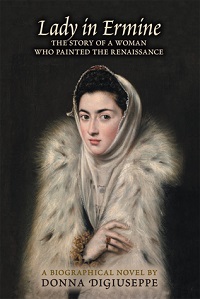
Sofonisba Anguissola, the accomplished Renaissance-era painter.  Bagwyn Books, January 2019. [see on Goodreads]


Elizabeth Stuart, known as the "Winter Queen" of Bohemia, daughter of James I of England and ancestress to today's British royal family. ECW Press, June 2019. [see on Goodreads]


Makeda, the legendary Queen of Sheba. Blank Slate, April 2019. [see on Goodreads]


Lulu Hurst, late 19th-century vaudevillian and stage magician known as the "Georgia Wonder." Hub City Press, May 2019. [see on Goodreads]


Sarah Jacob, a 12-year-old Welsh girl who supposedly lived without food in the mid-19th century.  Bellevue Literary, May 2019. [see on Goodreads]


Maile, a Hawaiian chief's daughter who marries John Harbottle, Captain Cook's translator, in the late 18th century. Shadow Mountain, April 2019. [see on Goodreads]


Lady Virginia Courtauld, an Italian-born glamorous, rule-breaking, progressive socialite in 1950s Rhodesia. Bloomsbury, August 2019. [see on Goodreads]

Tuesday, March 05, 2019

Interview with Gina Marie Guadagnino about her debut novel, The Parting Glass, set in 1830s NYC

Gina Marie Guadagnino's debut novel, The Parting Glass, grabbed my attention immediately. After downloading the e-galley, I'd intended to skim the first few pages to get a sense of the plotline before picking it up again later, but the voice and storyline were so intriguing that I found myself reading it straight through immediately. Set in 1830s New York City, it's narrated by Mary Ballard, a lady's maid with several secrets.  She's an Irish Catholic immigrant whose real name is Maire O’Farren, and her twin brother, Seanin, works as a groom on the same property. Maire reluctantly conceals Seanin's clandestine affair with her upper-class mistress, the beautiful Charlotte Walden, all the while wishing that she herself was the object of Charlotte's desire. During her time off, Maire embarks on her own affair with a prostitute she meets in an Irish tavern. The fast-moving story richly evokes the little-explored world of the Irish working class in early New York while delving into period-appropriate issues also relevant for our own time.  The Parting Glass is published today by Atria/Simon & Schuster.  Thanks to the author for answering my interview questions!

I’m an academic librarian, and so it was great to read that you also work in academia, and that your office is within NYU’s library. I can’t resist asking: what are some ways in which library research contributed to your writing of The Parting Glass?

I love working in a library building, and am definitely a familiar sight at the circulation desk during my lunch breaks. Library research was absolutely instrumental to the composition of The Parting Glass. Through my access to the various collections at Bobst Library, I was able to read first-person accounts of Irish servants working in New York in the 19th century, see maps and find property records for the townhouses on Washington Square North, find source texts detailing Irish secret societies, and read many analyses of New York society in the 1830s. In addition to books, I had access to a number of online databases and journals through my library subscription. And while this has nothing to do with research, I appreciate having access to so many quiet study rooms and lounges in which I can write!

Most novels that I’ve read about the lives of Irish immigrants in America center on the period of the Great Hunger or later in the 19th century, but the era in which you’re writing about is equally fascinating. Why was this an exciting period for you to explore?

The 1830s were an interesting time for the Irish in America, in that it saw the importation of various secret societies to the New World. Various secret societies, largely working for social justice against English and Anglo-Irish landlords by committing agrarian violence, had been flourishing in Ireland since late 17th century. By the 1830s, there were enough Irish Catholics in America that some of these societies had begun to flourish on American soil. I found rich storytelling inspiration in those early years for which there is less documentary evidence; I felt I could take more creative liberties.

I also wanted to explore a point in the history of the Irish diaspora where there was greater integration and collaboration with other ethnic groups than there tended to be during the immigration of the 1840s. This period also represented the height of the era in which New York Society was based around the northern part of Greenwich Village and Washington Square, and it was particularly important to me, as a homesick New Yorker when I began writing this novel, to set the story in the place I missed the most. The conflation of these priorities drew me to explore the late 1830s.

I really enjoyed the depiction of the lives of the working class, including servants, in early NYC. Why did this population interest you?

Many of the classics of English and American literature center on the lives of the leisure class, or on the struggles of those living beyond their means in genteel poverty. While there are notable exceptions (Dickens’ street urchins and mudlarks spring to mind) exploring the underclass of society, I was always struck by the fact that the Dashwood ladies open Sense and Sensibility discussing how many servants they can afford in their reduced circumstances, and even while bewailing how dreadful it is to be poor, the March sisters are still supported by their stalwart (Irish) servant Hannah in Little Women. The heroines of 19th-century fiction so often bemoan the constraints that society has placed upon them; they must make advantageous marriages if they hope to achieve economic comfort. But clearly, behind the scenes, other women were lighting those heroine’s fires and dressing their hair and brewing their tea, obviously dependent on their own labor for financial security.

author Gina Marie Guadagnino
(credit: L. M. Pane)
I kept gravitating toward the idea that, in a way, working-class women experienced more freedom and personal autonomy than their upper-class counterparts. Without the constraints of maintaining one’s social reputation, working-class women had the capacity to make decisions that ranged far beyond who to marry, and, for the creative and ambitious, there were opportunities to break out of the restrictions imposed by an inherently classist society. I wanted my book to focus on members of the immigrant working class who were taking advantage of the opportunities of the New World to remake their lives in their own image. I wanted to show the undercarriage of the gilded world: all the gears and cogs that kept the status quo possible. It was the marriage of these ideas that led me to write The Parting Glass.

I was wondering if you could provide some insight into the Irish characters’ dialogue and how you re-created it–it feels relatable (and occasionally raunchy!) as well as appropriate to their social status and background. I especially appreciated the depiction of how Mary becomes adept at code-switching after learning how it can benefit her socially.

I have to confess that some of the less-savory language is anachronistic. Period appropriate cursing at the time would have consisted largely of blasphemy; sexual and scatological cursing is more of a 20th century development. I suppose that demonstrates how the types of language we consider shocking have evolved over time! The word “crikey,” a contraction meaning “Christ’s teeth” sounds almost quaint to the modern reader, though it would have been thought of as quite profane in the 19th century. I took the liberty of substituting more modern profanity in order to signal to modern readers that the characters were using seriously dirty language - crikey just wasn’t cutting it.

Conversely, there were some words and phrases that I used preserving their 19th century definitions, though they might have evolved over time. Liddie, for example, refers to herself as “a gay girl,” not because of her queer identity, but because this was a common way of referring to sex workers in the 19th century. To strike this balance, I relied on heavy use of the OED, and read numerous primary source accounts of the lives of Irish immigrants in 19th-century New York and Boston. While the resulting dialogue isn’t perfectly period accurate with its modern profanity, I believe it achieves my goal of replicating the overall aesthetic of 19th-century Hiberno-English speech patterns.

What appeals to you about writing historical fiction? Do you have any authors or novels in the genre that you especially admire?

History and historical fiction have always been a great love of mine. I have always been drawn to stories set in the past, whether it be the distant past or something more recent. I’ve already alluded to my attractions as a younger reader to 19th-century authors Jane Austen and Louisa May Alcott, but I also cut my teeth on Mark Twain, Charles Dickens, and the Bronte sisters. Oddly, I didn’t really get into historical fiction until after I was out of college. But well-researched, lushly rendered historical fiction will draw me in every time, and there are probably too many authors and novels I adore to list here.

Lyndsay Faye has a perfectly-tuned ear for period language and dialogue. Nicola Griffith does an incredible job of using meticulous research and bringing historical figures most vividly to life. Madeline Miller and Helene Wecker infuse mythology with historical settings to make the fantastic feel real. Sarah Waters and Emma Donoghue each have eyes for the grittiest bits of period detail to draw the reader in. Diane Setterfield draws from a breadth of viewpoints to render a holistic landscape as she world-builds. I could, of course, go on. I think we’re approaching something of a golden age for literary-caliber historical fiction - or perhaps that’s just my wishful thinking!

~

Gina Marie Guadagnino holds a BA in English from New York University and an MFA in Creative Writing from the New School. Her work has appeared in the Morris-Jumel Mansion Anthology of Fantasy and Paranormal Fiction, Mixed Up: Cocktail Recipes (and Flash Fiction) for the Discerning Drinker (and Reader). She lives in New York City with her family.  For more information, please visit www.GinaMarieGuadagnino.com.

Saturday, March 02, 2019

Radio Underground by Alison Littman, a suspenseful debut about the Hungarian Revolution of 1956 and its aftermath

Based on actual Cold War letters, Littman’s fast-moving debut is infused with a simmering tension reflecting its setting: Budapest, Hungary, on the brink of revolution in 1956, and nine years later, when the secret police patrol the streets and any hints of dissidence are crushed. In the earlier timeline, Eszter Turján, wife of a loyal communist and mother of a teenage daughter, operates an underground newspaper, Realitás, and sneaks out at night to work with other freedom fighters.

“These kids, too young to know failure, didn’t understand their passion was no match for a government trained in killing hope,” she states plainly, and truthfully, about the student demonstrators demanding freedom. Even so, she’s determined to fan the flames of revolution to give the students a fighting chance, undertaking a drastic act involving Radio Free Europe that will shift history’s path.

In alternating segments set in 1965, Dora Turján reads people’s mail as a censor for the communist government. Eszter had neglected her daughter in favor of her political activities, and even after Eszter was carted away and imprisoned, Dora remains resentful. Littman succeeds in depicting the uneasy nuances of their mother-daughter relationship even though they rarely appear in the same scene. By intercepting odd letters in broken English from “Mike,” who writes to a DJ for Radio Free Europe and describes events from his life, Dora reads about the young man’s quest to escape Hungary. Through him, Dora obtains knowledge that leads back to her mother’s fate and forces her into a profound decision.

Some language feels too American (Eszter is often referred to as Dora’s “mom”), but the oppressive atmosphere is deftly handled through many affecting scenes, including one with a group of young people secretly gathered around a small radio and listening to Western music, dancing together, and feeling temporarily fearless.

Radio Underground was published by Last Syllable Books in November 2018, and I reviewed it (from an Edelweiss copy) for February's Historical Novels Review.

This is also the initial post this month in acknowledgment of the contributions of small and independent presses to a vibrant literary marketplace. Small Press Month had used to be a national celebration taking place in March, with official recognition and funding support. That, unfortunately, is no more, but we'll still be having a mini-celebration here on this blog. As in past years, I'll be dedicating some posts during March to historical fiction from small presses (these will be intermixed with some previously arranged posts on books from larger publishers).  Hope you'll enjoy following along.

Monday, February 25, 2019

The Huntress by Kate Quinn, a suspenseful historical novel about WWII's Night Witches and a quest for justice

Quinn follows up her breakout book, The Alice Network (2017), with an impressive historical novel sure to harness WWII-fiction fans’ attention. Each subplot in its triple-stranded structure thrums with tension that intensifies as they braid together.

By 1950, the public’s appetite for tracking war criminals has diminished, but British former war correspondent Ian Graham and his American partner still pursue this painstaking and honorable work. Their ultimate target is die Jägerin (the Huntress), an elusive Nazi murderess, and, for Ian, the mission is personal.

As they follow her trail, along with Nina Markova, the sole person to escape her clutches, Nina’s life story unfolds with tangible realism. A distinctly memorable, prickly, razor-wielding heroine, Nina flees remote Siberia in 1937 and trains as a pilot, eventually joining the sisterhood of female bombers known as the “Night Witches.” Lastly, in 1946 Boston, 17-year-old aspiring photographer Jordan McBride grows suspicious of her father’s elegant new Austrian wife.

The secondary characters, from Nina’s anti-Stalinist father to Jordan’s pilot boyfriend, feel three-dimensional, and the coldhearted Huntress is a complex villain. Laced with Russian folklore allusions and deliciously witty banter, Quinn’s tale refreshingly avoids contrived situations while portraying three touching, unpredictable love stories; the suspenseful quest for justice; and the courage involved in confronting one’s greatest fears.

Kate Quinn's The Huntress is published tomorrow by William Morrow.  I read it last October and reviewed it, as above, for Booklist's Nov 15th issue, giving it a starred review. There's been a lot of advance buzz about this novel, and it's justified, imho - I found the book difficult to put down.

Thursday, February 21, 2019

Charles Finch's The Vanishing Man, a witty prequel to the Lenox mysteries set in Victorian England

In this second in a prequel trilogy to the Charles Lenox detective series (after The Woman in the Water), our protagonist, aged twenty-six, has had some success but struggles to be taken seriously as a private investigator—by his social circle and Scotland Yard, both. It’s June 1853, and Lenox knows solving a case for the Duke of Dorset could make his career.

His Grace wants Lenox to discover who stole a painting of his great-grandfather, the 14th duke, one in a series of portraits in his private study. Oddly, as the duke confides, the portrait alongside the missing one is the real treasure: it’s an oil painting of Shakespeare, done from life. Maybe the thief got it wrong. Getting entangled in the duke’s business leads to social disgrace—high-ranking noblemen are temperamental—and, eventually, to a much more serious case involving murder.

There’s something comforting about stepping into the viewpoint of a cultured Victorian gentleman who observes social niceties and feels a deep sense of integrity. If these values come into conflict, Lenox’s personal honor and justice regularly prevail. To hone his craft, Lenox becomes a student of life, visiting Bedlam to understand the criminal mind, and enlisting the help of an old sailor (a terrific character) with an aptitude for finding things. His dedication is admirable, since many of his peers look down on his pursuit of a vocation in “trade.” The novel is simultaneously a rich evocation of the Victorian class structure and a trenchant critique of it.

Historical crime novels with Shakespearean themes are hardly uncommon, and though the plot turns madcap in places, there’s enough novelty about this case to keep Lenox and readers on their toes. Amidst everything else going on, Lenox’s young cousin Lancelot is staying with him; while he’s an annoying little brat, some of his actions are comedy gold.

The Vanishing Man is published by Minotaur Books this week, and I reviewed it for February's Historical Novels Review. The Woman in the Water (which I reviewed last year) is the previous book in the series, and I've reviewed a few more of the ones set later in time, too.  It's safe to say I'll be reading the next in the series once it's out.