Monday, May 19, 2014

Historical Inspiration for The Lost Catacomb, a guest essay by Shifra Hochberg

Shifra Hochberg, a university professor and debut historical novelist, is my guest here today.  I was impressed by the extensive on-site research she conducted for her new release, The Lost Catacomb (Enigma Press, March).  In the following essay, she intertwines her own background and research journey with information on how she incorporated both of these into her novel.  Set in Italy during three vividly described periods – the present day, the 3rd century AD, and WWII – The Lost Catacomb is a thoughtful and erudite yet fast-moving thriller about archaeological and personal discoveries.  At its center is Nicola Page, an American art historian with Italian roots who is brought to Rome to examine the provenance of a newly uncovered catacomb; at the same time, she hopes to uncover long-buried secrets about her family.  I hope you'll enjoy Shifra's post.

 ~

Historical Inspiration for The Lost Catacomb
Shifra Hochberg

Ever since I can remember, I have been fascinated by Italy—its culture, its rich archaeological heritage, and even its cuisine. And surprisingly, for someone like me who was brought up in an orthodox Jewish home, I have also been fascinated by the Catholic Church—by its power, its wealth, and its prestige. My father was a congregational rabbi in a small Canadian city, and at the time of Vatican II, the revolutionary changes instituted by Pope John XXIII became the subject of Sabbath table talk in our home. Groups of churchgoers suddenly appeared and asked to view our synagogue services in this new atmosphere of ecumenical detente, and my best friend, my Catholic neighbor Janet, no longer had to mention "perfidious Jews" as part of the ritual of mass on Sundays after Vatican II was enacted.

My fascination with Italy and the Vatican, however, explains only one part of the impetus for writing The Lost Catacomb. The other part was inspired by my interest in the Holocaust—with the need to understand how it could have taken place and how differing circumstances in different European countries contributed to such a cataclysmic event. And although I had taken a college course on the history of the Holocaust with Prof. Lucy Davidowicz, author of The War Against the Jews, not much had been written at that point in time on the fate of Italian Jewry.

Vatican Gardens

Thus began my research on the history of the Jewish community of Rome, from the days of Julius Caesar through the time of World War II. Over a period of several years I must have read well over a hundred non-fiction books on the history of Italy and the Catholic Church, as well as untold numbers of Vatican and WWII thrillers, not to mention every literary or romance novel about Italy that I could get my hands on.

Entrance to the Vigna Randanini catacomb network,
estate of the Marchesa Letitzia del Gallo

I visited Italy over a dozen times, interviewing families of Italian Holocaust survivors, some of whose stories appear in fictionalized form in my novel. I also tried to see every catacomb open to the public in churches and along the Via Appia Antica, including those of San Sebastiano and San Callisto, which figure in my novel; and as the plot line for The Lost Catacomb began to take shape, my husband's Italian colleague, Prof. Bruno Bassan of La Sapienza, arranged for us to visit the catacombs of the Vigna Randanini on the estate of the Marchesa Letitzia del Gallo, which are generally closed to the public.

Pagan hypogeum, Vigna Randanini

These catacombs had begun as pagan burial places and were later extended to include a Jewish underground tomb network. Bruno, my husband and I were accompanied there by a retired archaeologist from the Vatican who had been involved in excavations and restoration work at the Vigna Randanini. Like my protagonists, Nicola and Bruno—who was re-named in memory of our friend, who died of a massive heart attack before my novel was finished—we saw pagan burial chambers, Jewish hypogea and kôchim or layered tombs. All of the details of this catacomb network as presented in The Lost Catacomb are authentic—the gloomy passageways, the dank and chilly air, the marble plaques with their Greek writing, the frescoes and iconography—everything except the titular lost catacomb, which is the product of my imagination.

Jewish hypogeum, Menorah detail, Vigna Randanini
Apart from several visits to the Vatican Museums and the Vatican gardens, I was also privileged to view a collection of Jewish tomb artifacts that are not open to the general public. This also required special permission and a private Vatican guide. These artifacts included tomb markers from Jewish catacombs which have collapsed over the years and are either no longer safe to visit or have been "lost" to posterity. In fact, they are the only remnants of the once-flourishing synagogai or communities that were scattered around Rome, apart from the Vigna Randanini and the archaeological site of Ostia Antica on the outskirts of Rome, which includes the ancient synagogue where the fictional Mariamne was mater synagogus.

Memorial to victims of the Ardeatine
Cave massacre, Fosse Ardeatine
To further ensure the authenticity of my setting, I also visited other places that appear in The Lost Catacomb that are not at the top of any must-see list for the average tourist in Rome. These include the Via Rassella, where the Italian Resistenza attacked a group of Nazi soldiers; the Ardeatine caves, where the Nazis executed ten Italians for every German killed in the attack; the Gregorian University, where the fictional Cardinal Rostoni studied; and of course La Sapienza, where the fictional Bruno is a professor in the Archaeology Department.

 Other sites include the ghetto and Tempio Maggiore; Santa Maria in Trastevere, where the kindly Father Donato tended his flock of parishioners; Tiberina Island, with the Fatebenefratelli Hospital where both the real and the fictional Bruno's father hid during the war; and even the street where the Villa Wolkonsky—which housed Nazi headquarters in Rome—was located.

Main artery of the cardo,
excavations in Ostia Antica

Having gathered so much material, the challenge then became how to pare it down and make it readable—that is, how to avoid having it sound like a "dryasdust" treatise on history (to quote the famous 19th-century writer, Thomas Carlyle). The narrative needed complexity, but not the kind of complexity that would be dependent on dense historical detail that might bore the average reader. I wanted the end result to be a novel that would reach a wide reading audience—including lovers of historical fiction, those with a specific interest in the Holocaust, and thriller fans who wanted something more than the usual shallow commercial fare.

So I began by making the narrative itself more multi-layered by having Nicola's search for the provenance of the lost catacomb be paralleled by her search for her family roots in Rome. Excavating the past thus became a dual motif. The next logical step was to make Nicola's love story—her relationship with Bruno—be echoed by two other interfaith love stories, that of Mariamne and the lost pope (a figure I based on the tantalizing gap found in the real Liber Pontificalus) and that of Nicola's grandmother Elena and her Jewish boyfriend Niccolò.

Vatican Gardens, the Pope's personal emblem

The motif of loss referred to in the title of the novel also enters the narrative repeatedly, in the form of more than one lost catacomb, a lost pope, lost manuscripts and treasures, lost identity, and lost lovers. And throughout I tried to add a metaphoric backdrop—namely the stars—symbolizing fate and a preordained historical narrative vs. free will or the extent to which man can alter his fate. I also incorporated the myth of Andromeda, which works ironically at times, symbolizing the possibility of rescue—or the failure to be rescued—from the threat of monstrous evil. Yet another layer of complexity was added through the epigraphs that precede each section of the novel and whose function is to elicit a certain element of suspense or expectation, as well as other, more subtle, literary allusions that appear from time to time in the text, including subtexts from Faulkner, Milton, and Shakespeare.
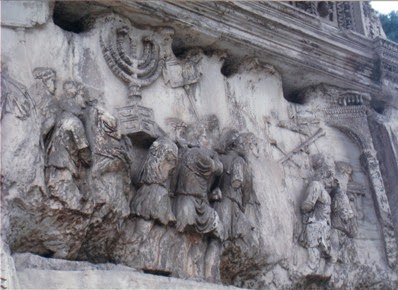
Arch of Titus, relief of Temple treasures being brought to Rome, Foro Romano

The photos accompanying this post were taken by me at the Vigna Randanini, the Vatican Gardens, the Foro Romano, the Ardeatine Caves, and Ostia Antica, and I hope that they will help readers further visualize some of the important elements of setting in The Lost Catacomb.

~

Bio: 

Shifra Hochberg has a Ph.D. in English literature from New York University and has published over 20 academic essays, mainly in the field of nineteenth-century fiction. Her latest essay, on one of John Donne's poems, is forthcoming in Christianity and Literature. Shifra currently teaches at Ariel University in Israel and is working on a new novel, this time set in France.

Visit her website at www.thelostcatacomb.com. 

Friday, May 16, 2014

Book review: The Quick, by Lauren Owen

Owen’s strong debut infuses the classic Victorian-set horror novel with many original, bloody twists. It begins at a decaying Yorkshire mansion, the childhood home of James Norbury and his sister, Charlotte, and later moves over to London. Here James, a new Oxford grad, plans to hone his poetry-writing skills.

Then, suddenly, what seems to be a gothic saga transforms into an intricate, sinister epic involving many unique personalities, immense personal danger, unexpected love, and an unusual pursuit of scientific advancement—all centering on the exclusive Aegolius Club. Revealing any more would be a spoiler.

With her startling plot, Owen proves a master at anticipating readers’ thoughts about future happenings and then crumbling them into dust. Her world building is exceptional, and readers will simultaneously embrace and shrink from the atmosphere’s elegant ghastliness, but the novel’s structure is uneven—it feels overlong in places—and she devotes regrettably little time to her most intriguing characters. It’s an impressive feat, nonetheless, one with the potential to attract a cult (and occult) following this summer.

This review first appeared in Booklist's May 15th issue. The Quick will be published in June by Random House ($27.99, hardcover, 523pp).  The hype surrounding this forthcoming novel has been unavoidable, and I don't think it lives up to it, quite, but The Quick does have a lot going for it. If you've read it already, what did you think? 

Wednesday, May 14, 2014

My Name Is Resolute, by Nancy E. Turner, an adventurous epic about a courageous woman of early America

Turner’s engrossing novels always present hardy, intelligent women who endure challenging historical circumstances, and her fifth book is no exception. As Resolute Catherine Eugenia Talbot spins the tale of her long, eventful life, the story zips along merrily while providing superb attention to detail. It is entrenched in its era – the tumultuous decades leading up to the American Revolution – and lets readers experience the ever-changing scenes alongside the heroine: her terrifying time belowdecks on a pirate ship; her degrading years of slavery to a Puritan family; the thoughtful pride she takes in her handicrafts as she secretly works for the patriot cause. And much more.

In 1729, Resolute and her siblings are torn from their British parents’ Jamaican plantation by Saracen pirates. Only ten, she doesn’t see how her older sister, Patience, protects her innocence. Resolute, “Patey,” and their brother, August, are separated and reunite multiple times, their futures determined by their fates on this forced voyage. As a child, she is feisty yet occasionally naïve; as an adult, she is resourceful and devoted to her loved ones.

Resolute’s perspective matures over time, and she learns from both others’ cruelty and kind treatment. Among the best advice comes from a barmy Scottish widow who helps her when she’s left alone in Lexington, Massachusetts: “You must ha’e a boon… a means to go on if all comes to fail. A woman is a fool that lives from penny to farthing and n’er looks to the possibility of loss.” As Resolute settles into her new American identity, she discovers how to ensure her own livelihood – and teaches others the same.

Although fictional, Resolute represents the diverse women whose strength was woven into the fabric of early America. Full of adventure, romance, and unexpected surprises, her account remains captivating throughout its nearly 600 pages. What a fabulous story; what an inspiring life!

My Name Is Resolute was published by Thomas Dunne/St. Martin's Press in February ($27.99 / $31.99 in Canada, hardcover, 593pp).  This review first appeared in May's Historical Novels Review as an Editors' Choice title.

Monday, May 12, 2014

Iris Anthony's The Miracle Thief, three women's search for salvation in 10th-century France

"Freedom!  Who are you to speak of freedom?  I tell you this: no man on this earth is free.  Every peasant bows to his knight, and every knight to his lord, and every lord to his king, and even the king himself bows to God.  Who are you to want what none of us ever has one hope of having?"

These forthright words, spoken by a knight in Carolingian-era France (then called West Francia) in the year 911 AD, express a major theme of Iris Anthony's second historical novel.  Everyone knows his or her place in this society and has only limited movement within it... and the era's women, whether royalty or peasant, have the most restrictive lives of all.

The Miracle Thief sheds light on women's stories at this dark and distant time through the viewpoints of three protagonists:  a nun, a princess, and a pilgrim.  Sister Juliana, perhaps the most relatable of the three to modern readers, doesn't believe her faith is strong enough to lead Rochemont Abbey after its previous leader's death. A former royal concubine now in charge of guarding a relic of St. Catherine of Alexandria, she struggles between her vocation and her fond memories of her previous relationship.

Gisele, the illegitimate daughter of King Charles the Simple, may have the harshest fate of the three.  Thanks to a truce which her father isn't able to avoid, she's set to be married to Rollo, the pagan chief of the invading Danes. And the plight of Anna may be the loneliest and most desperate.  Born with deformities to her hand and body, she can't escape people's belief that she's been cursed by God.  When her mother dies, Anna takes to the road from Paris with her meager belongings, alone – something unheard of at this place and time – en route to Rochemont Abbey, high in the mountains of Burgundy, to pray to St. Catherine for a miracle.

This is a novel whose power builds slowly but steadily as the three women's stories draw together and they come to grips with the hands that fate has dealt them. The physical details weren't always vivid enough for me to visualize the locales clearly in my mind, although the setting has a basic medieval feel.  A notable exception is Anna's arduous journey on foot – through calm and harsh weather, and with company both congenial and not. These segments also provide darkly humorous insight into the unofficial rules governing pilgrimages.

Anthony delves deeply into the emotional hearts of her characters, showing the small ways in which women could guide their own destinies at a time when society granted them very little.  Another strength is her depiction of religion.  It doesn't have a preachy feel, but faith in God guides everyone's decisions... well, everyone except the Danes, who live to conquer and pillage, and who will agree (like Rollo) to convert to Christianity if it gains them more power. 

In the end, I enjoyed this elegantly written look at an era rarely depicted in fiction.  The detailed character notes and author's note at the end add even more meaning to this thoughtful book.

The Miracle Thief was published by Sourcebooks in April ($14.99, pb, 384pp).  Thanks to the publisher for granting me access via NetGalley.

Saturday, May 10, 2014

Murder at Mullings by Dorothy Cannell, first in a new cozy village mystery series set in '30s England

In this uneven debut entry in a new mystery series set in an English village in the ′20s and early ′30s, the first ominous note sounds at the end of chapter one. The nanny of Lord and Lady Stodmarsh’s orphaned grandson, Ned, is fired for drunkenness and mistreating her charge, and the family worries she’ll take revenge.

Before then and for a good while after, though, background information on the characters and the estate of Mullings is thickly applied while the plot barely shuffles along, making the novel feel as mild-mannered and unexciting as the Stodmarshes, known for centuries in Dovecote Hatch for their “mopish propriety.” When the first death occurs, only Florence Norris, head housekeeper, guesses it was murder, but the lack of firm evidence prevents her from voicing her suspicions. Her loyalty to Ned, whom she had raised since birth, leads to her estrangement from pub owner George Bird, her potential love interest.

The story gains ground as more subplots involving Stodmarsh relatives, the caring and loyal Mullings servants, and their connections are introduced. When the elderly Lord Stodmarsh unwittingly brings a nefarious woman into his household, the resulting scandal really livens things up. Details on the peculiar aristocratic tradition of keeping an ornamental hermit add even more color. Overall, the book is more successful as a period saga than as a crime novel. It’s an enjoyable diversion, but hopefully future volumes will have improved pacing and a less passive sleuth.

Murder at Mullings was published in January by Severn House (£19.99/$28.95, library hardcover, 256pp).  This review appeared in the Historical Novels Review's May issue as an online exclusive.

Thursday, May 08, 2014

Historical fiction picks at BEA 2014

Here's my annual post on the historical fiction picks at BookExpo America (BEA). Unlike last year, when I stayed home and regretted it, I’ll be heading to Manhattan at the end of May to meet up with other book enthusiasts, reacquaint myself with some favorite ethnic restaurants, and make my pilgrimage to the Strand.

The original list of picks was based on BEA's list of autographing sessions, Publishers Weekly's "Galleys to Grab" focus (with a special thanks to my library for their institutional subscription), and publishers’ own BEA announcements. It's been updated with details from Library Journal's BEA galley and signing guide, NetGalley announcements, and even more details from authors and publishers.  Updates welcome. This information is correct as far as I’m aware, but please cross-check these dates/times with the BEA site or program book to avoid possible disappointment.

Last updated: Thursday, 5/22. New entries will be added regularly up until the show date, so please keep checking back!  Look for ~new~ within this post later on to find recent additions.

~Galleys to Grab~

Algonquin (Booth 839)
Lin Enger, The High Divide - a family's physical and emotional journey in the late 19th-century West.

Europa (Booth TM29 - in the Translation Market, at the far back, right side of the hall)
Elena Ferrante, Those Who Leave and Those Who Stay - third installment in her Neapolitan Novels about the lives of two friends in '50s Italy.

Grove Atlantic (Booth 1321)
Malcolm Brooks, Painted Horses - a female archaeologist in '50s Montana.
Lily King, Euphoria - archaeologists in '30s New Guinea, inspired by the life of Margaret Mead.
Audrey Magee, The Undertaking - a marriage of convenience becomes something more in WWII-era Germany. 

Hachette (Booth 2819)
Laird Hunt, Neverhome - a farmer's wife fights for the Union during the US Civil War.

HarperCollins (Booth 2038)
Jessie Burton, The Miniaturist - love, obsession, art, and the secrets found within an unusual miniature house in 17th-century Amsterdam (giveaway 11am Thurs)
Alix Christie, Gutenberg’s Apprentice - dramatizes the printing of the Gutenberg Bible in 15th-century Germany (giveaway 4pm Thurs)
Katy Simpson Smith, The Story of Land and Sea - set in Revolutionary War-era North Carolina.
~new~ Andrew Taylor, The Scent of Death - thriller set in NY during the American Revolution.  (giveaway 10am Sat)


Houghton Mifflin Harcourt (Booth 1657)
~new~ Molly Gloss, Falling from Horses - in 1938, a Western ranch hand sets out for Hollywood to become a stunt rider.

Macmillan (Booth 1738) - special giveaway times noted below.
Kate Forsyth, Bitter Greens – Thursday 5/29, 2:30pm - places the fairy tale Rapunzel in the historical context of Renaissance Italy and interweaves it with the story of Charlotte-Rose de la Force, an early teller of the tale.  [read my interview with Kate, based on the Australian edition]
Jo Walton, My Real Children – Friday 5/30, 10:30am - two different versions of modern history; speculative and historical fiction, both.
Ashley Weaver, Murder at the Brightwell – Friday 5/20, 2pm; also Saturday 5/31, 11:30am.  Historical mystery set in the '30s.

Moody Publishers (Booth 2050)
~new~ Tessa Afshar, In the Field of Grace - author will be at booth all day Thursday to meet readers and sign ARCs of her biblical novel, a retelling of the story of Ruth and Naomi.
~new~ Tessa Afshar, Harvest of Rubies - giveaway Saturday @ 10am. Inspirational fiction set in the ancient Persian empire.

Overlook (Booth 1546)
Rosie Thomas, The Illusionists - set amid the inner workings of the late Victorian world of theatrics and magic.  Really enjoyed this one. 

Penguin (Booth 1521)
~new~ Sarah Jio, Goodnight June - multi-period saga/mystery/romance about the strength of family, the value of reading, and the children's books of Margaret Wise Brown.
~new~ Alyson Richman, The Garden of Letters - a novel of love, tragedy, and war set in German-occupied Italy.
Sarah Waters, The Paying Guests - in '20s London, a widow and her spinster daughter take in lodgers who disrupt their lives.
Naomi Wood, Mrs. Hemingway - biographical fiction imagined from the viewpoints of the four very different women who were known by that name.
~new~ Hazel Woods, This Is How I'd Love You - an independent American woman during WWI.

Perseus Books Group (Booth 1406-07)
~new~ Cecilia Ekbäck, Wolf Winter - a dramatic thriller set in Swedish Lapland in 1717.

Random House (Booth 2839) - per Library Journal, all galley giveaways appear to be tied to book-signings.  See below for signing times.
Amy Bloom, Lucky Us - two friends take a road trip across 1940s America.
Jane Smiley, Some Luck - an Iowa farm family's dreams, achievements, and tragedies, from post-WWI through the 1950s.


Simon & Schuster (Booth 2638-39).  No schedule announced; check at the booth.
~new~ Donald McCaig, Ruth's Story: The Story of Mammy from Gone With the Wind.
Matthew Thomas, We Are Not Ourselves - multi-generational saga of an Irish-American family set in the postwar years.

Sourcebooks (Booth 921)
Allegra Jordan, The End of Innocence - a WWI-era love story featuring two Harvard students.
Greer Macallister, The Magician's Lie - in turn-of-the-century Iowa, a female illusionist is accused of her husband's murder.  ~new~  Galley giveaway is Friday 5/30 at 11am.

Turner (Booth 1168)
Gregg Loomis, The Cathar Secret - multi-period religious thriller.
Barbara Wood, Rainbows on the Moon - a missionary's wife in early 19th-century Hawaii.


WW Norton (Booth 1921)

Ann Hood, An Italian Wife - an Italian immigrant arrives in early 20th-century America in an arranged marriage; her decisions and their consequences.

~ Author Signings ~

Thursday 5/29

~new~  9:15am (Booth 2557, Mystery Writers of America)
Elizabeth Wein

10-11am (Booth 3038, Harlequin)
Pam Jenoff, The Winter Guest - love and family strife in WWII-era rural Poland.

10:30am (Booth 2839, Random House)
~new~ Amy Bloom, Lucky Us - see above under Galleys.

11am (Booth 2839, Random House)
~new~ Jane Smiley, Some Luck - see above under Galleys.

11-11:30am (Table 15)
~new~ Stephanie Feldman, The Angel of Losses - debut novel of family secrets, war, and Yiddish myths.

11-11:30am (Booth 2939, Other Press)
Rupert Thomson, Secrecy - a dark novel of love, art, and intrigue in 17th-century Florence.


11:00–12:00 noon (Booth 839, Algonquin)
Lin Enger, The High Divide - See above under Galleys.

~new~ 1:45pm (Booth 2557, Mystery Writers of America)
Lyndsay Faye (The Gods of Gotham, Seven for a Secret) and Susan Elia MacNeal

4-5pm, Table 13
Jo Walton, My Real Children - See above under Galleys.


Friday 5/30

10-11am (Booth 3038, Harlequin)
Anne Girard, Madame Picasso - the great love story between Eva Gouel and Pablo Picasso in early 20th-century Europe. Girard is the pseudonym for historical novelist Diane Haeger.

10-10:30am (Booth 2946, Soho Press)
~new~ James R. Benn, The Rest Is Silence - 9th volume of the Billy Boyle WWII mystery series.

10:30-11am (Table 19)
Christina Baker Kline, Orphan Train - the bestselling novel about a surprising friendship, set in '30s America and today.


10:30-11am (Booth 1921, WW Norton)
Ann Hood, An Italian Wife - see above under Galleys.

10:45am-11:15am (Booth 2557, Mystery Writers of America)
~new~ James R. Benn, The Rest Is Silence - see above under 10am slot.
~new~ Nancy Bilyeau, The Chalice -16th-century thriller
~new~ Annamaria Alfieri (details on book title TBA)

11-11:30am (Booth 1321, Grove Atlantic)
Malcolm Brooks, Painted Horses - see above under Galleys.


11am-noon (Table 19)
Laird Hunt, Neverhome - see above under Galleys.

~new~ 11am (Booth 839-939, Workman)
Lin Enger, The High Divide - see above under Galleys.

11:30am-noon (Booth 2557, Mystery Writers of America)
~new~ Laura Joh Rowland

12-12:30pm (Table 7)
M.J. Rose, The Collector of Dying Breaths - suspenseful novel of reincarnation, poison and perfume in 16th-century Florence and in the present.


12-1pm (Booth 2917, Hachette)
Susan Jane Gilman, The Ice Cream Queen of Orchard Street - a Russian immigrant becomes a cunning entrepreneur in early 20th-century New York.

1-2pm (Booth 921, Sourcebooks)
Greer Macallister, The Magician’s Lie - See above under Galleys.

2-2:30pm (Table 8)
Lily King, Euphoria - See above under Galleys.

3:15-3:45pm (Booth 2557, Mystery Writers of America)
~new~ M.J. Rose

Saturday 5/31

~new~ 10am (Booth 2839, Random House)
Alan Furst, Midnight in Europe -
pre-WWII spy thriller.

~new~ 10:30am (Penguin book truck, Crystal Palace foyer area of the Javits)
Alyson Richman, The Garden of Letters - see above under Galleys

10:45-11:15am (Booth 3038, Harlequin)
Anne Girard, Madame Picasso - see in Friday's listings.

Wednesday, May 07, 2014

Simon Sebag Montefiore's One Night in Winter, a tense evocation of Stalinist Russia

Sudden, mysterious arrests. Brutal interrogations. The crushing of any hint of antigovernment thought. Constant, stomach-churning terror. 

Such is the reality of Stalinist Russia evoked so convincingly by Montefiore. As an acclaimed biographer and historian of the period, he has the oppressive atmosphere down cold. In his second novel, based on historical incidents, he heightens tension further by focusing on imaginative young people.

In 1945 Moscow, a group of teenagers, sons and daughters of the Bolshevik elite, act out a scene from their favorite romantic poet, Pushkin. When two are shot to death, the rest are accused of subversive activity. Their situation worsens when a velvet-covered notebook from their play-acting club is discovered.

The web of suspicion spirals outward to encompass their teachers and parents, who must feign approval of their children’s incarceration in the Lubyanka prison or face charges of party disloyalty. Stepping back, Montefiore then reveals two passionate affairs the participants have reason to conceal.

Some potentially intriguing individual stories remain underexplored, but overall, this is a gripping, fast-moving tale of love, fear, sacrifice, and survival.

One Night in Winter was published yesterday by Harper ($26.99, hardcover, 480pp).  Century is the UK publisher.  This review first appeared in Booklist's April 15th issue.

Monday, May 05, 2014

A Historical Novelist's Confession, an essay by P.F. Chisholm

I'd like to welcome historical novelist Patricia Finney here today.  Her most recent series includes six (thus far) historical mysteries featuring Elizabethan notable Sir Robert Carey, written under the name P.F. Chisholm.  She has also shown her mastery of the era in a number of earlier novels, including Firedrake's Eye, Unicorn's Blood, and Gloriana's Torch, all exciting works of historical intrigue.  Here she discusses an interpretation for one of her historical characters' lives which proved impossible to resist.

~

A Historical Novelist's Confession
P.F. Chisholm

Anne Morgan, the first Lady Hunsdon, was the mother of my Elizabethan crime novel hero, Sir Robert Carey, and I owe her an apology.

He (and she) really existed. He was tall, dashing and a bit of a dandy, with a nice line in self-deprecating humour in his memoirs (Memoirs of the Earl of Monmouth, ed. F H Mares). And he was also the man who rode from London to Edinburgh in two and a half days to tell James VI of Scotland that he was now James I of England. You may even have read his touching account of Queen Elizabeth's last days. It was love at first sight when I first tripped over him in the wonderful book about the Anglo-Scottish Borders, George Macdonald Fraser's The Steel Bonnets. He was the perfect Elizabethan, and as GMF says, "Later generations of adventure story writers, who had never heard of Robert Carey, found it necessary to invent him." I simply picked him up and let him run.

His most recent adventure, An Air of Treason, has just come out with Poisoned Pen Press and finds him at Elizabeth's court, getting poisoned. This confession, however, is about the book before that, A Murder of Crows.

You see, when I started writing stories about Sir Robert in the 1990s, the Internet was in its infancy, there was no Wikipedia – or it was filled with people who knew that Shakespeare was anybody except Shakespeare – and I found certain things very difficult to research, his mother being one of them. So I maintained a discreet silence.

Flash forward to a few years ago, when I started researching him again, and all was very different. At last I could track down my hero's mother.

There wasn't a lot, but it was an awful lot more than the pitiful listings I'd found in the '90s, usually giving the wrong number of children and occasionally mixing her up with her daughters-in-law.

Anne Morgan was probably born in 1529, making her only 16 at the time of her marriage to Henry Carey on 21st May 1545 when their marriage licence is dated. She was born in Arkestone, Herefordshire, daughter of Sir Thomas Morgan and Anne Whitney, of Welsh descent. She became Baroness Hunsdon on the 13 Jan 1559 when her husband was made Baron Hunsdon and she served the Queen as a Lady of the Privy Chamber. She had, according to the latest count, no fewer than twelve children, which argues an excellent constitution. John Dowland wrote a very pretty piece of music for her called "My Lady Hunsdon's Puffe." And she died on 19 Jan 1607, just over ten years after the death of her husband.

If you go to Westminster Abbey you can also find the splendidly vulgar tomb she organised for her husband in one of the first side chapels you come to: arguably the tomb is as big as the Queen's.

Here is exactly what you would expect: a respectable Elizabethan lady, who gave her husband a large number of children, some of whom died, as they did then, even if you were a Baroness. She served at Court and the rest of the time presumably settled at Hunsdon Hall in Hertfordshire and ran Hunsdon's estates for him.

So far so yawn. Yet I couldn't help noticing that her maiden name was Morgan and her sister married into the Trevannions of Caerhays Castle in Cornwall, within easy visiting distance of Arwenack House, Falmouth and the fascinating, deplorable Killigrews.

The Killigrews were certainly pirates (sorry, privateers) as well as smugglers. Thanks to them, Falmouth was held in roughly the same esteem as the coast of Somalia is today. They appear to have had control of the Cornish Admiralty courts, and could and did flip a fig at anyone who thought they shouldn't menace the shipping all along the Channel and up into the Irish Sea. That's how Falmouth outgrew Penryn, which is a far older town.

There are tantalising legends about a woman called Kate Killigrew who went privateering in her later years. Was there only one or were there several women called Kate of that family? A Jane Killigrew gave Penryn town a loving cup to thank them for looking after her when she ran away from her husband. Any connection?

It was thin but very tempting. I'm a historical novelist, and I generally try to stick to the facts known about somebody. Here was a historical novelist's dilemma: do I go with the probable historical dullness of Anne Carey, Baroness Hunsdon – or do I have some fun with her?

Could I add her to the redoubtable band of post-menopausal ladies like Grainne O'Malley who seem to have gone a-roving in later life, as a sort of hobby? Like, oh, knitting with blood? Could my Anne have got herself a letter of marque to give a figleaf of legality to her raiding? Certainly, she had the contacts at Court to do it. Could she have got herself a ship and used it? Well, yes. A remarkable number of Elizabethan bigwigs made investments in ships. Of course I could. And so was born the redoubtable and appallingly embarrassing mother who turns up with her ship in London in A Murder of Crows and creates havoc.

I know I probably shouldn't have. But I couldn't help it.

~

P.F. Chisholm is a pseudonym for Patricia Finney, a well-known writer of historical thrillers, children's books, and nonfiction blogs and eBooks. Previous titles in the Sir Robert Carey and Sergeant Dodd series are A Famine of Horses, A Season of Knives, A Surfeit of Guns, A Plague of Angels, and A Murder of Crows. After the events in An Air of Treason, Sir Robert and Sergeant Dodd will be heading back to the Anglo-Scottish Border, where trouble is brewing as usual. Visit her website at www.patriciafinney.com.

Saturday, May 03, 2014

The Bitter Trade: London’s Coffeehouses and the Glorious Revolution, essays by Piers Alexander and Dr. Matthew Green

As you sit back with a cup of caffeinated brew this Saturday, let's journey back in time to late 17th-century London, where the humble coffeehouse – a favorite hangout for creative types still today – was the place to be for provocative discussion and subversive activity.  I'm grateful to novelist Piers Alexander and historian Dr. Matthew Green for contributing essays on this fascinating subject.  Their jointly written post (the first of its type that I've published!) drew me into a richly described world I hadn't previously discovered and want to spend more time in.

I've just begun reading The Bitter Trade, Piers' new novel, and am enjoying it very much: its tense atmosphere of religious strife, intriguing characters, and colorful turns of phrase.  His excerpt and essay will give readers a good taste for what's in store.  I also plan to check out Matt's tours of the city's historic coffeehouses next time I'm in London.  Please read on!

~

The Bitter Trade: London’s Coffeehouses
and the Glorious Revolution
Piers Alexander and Dr Matthew Green 


Coffee: A Revolutionary Drink
Piers Alexander

The serving-girl brought my coffee, and I lifted the dish to my nose as I had seen van Stijn do in the Moor’s Head. The smell was of dark earth, its spicy sting mixed with the soft womanly strength of soup on a cold day. It was as good as a lover’s first kiss. Its tendrils climbed under the skin of my face and smoothed out my frowns and aches.

I blew across the foamy brown surface and took a sip. My tongue burst into life. Stars sparkled in my eyes, and I could hear every throat-clearing and chair-scraping in the room.

“One shilling,” demanded the maid. A shilling for a teaspoonful of black dust?
- The Bitter Trade

While researching The Bitter Trade, my novel set in England’s Glorious Revolution of 1688, I became fascinated with the role of coffeehouses in disrupting the pattern of society, thought and commerce. I like stories about underdogs and outsiders, and London in the late seventeenth century was one of the rare places when people could rise up through society if their wits were sharp and their spirits bold. The coffeehouses were central to this: unlicensed, threatening to the establishment (Charles II even briefly closed them all down), hotbeds of discussion and networking.

The Bitter Trade’s protagonist, Calumny Spinks, is a half-Huguenot redhead who is forced to make a fortune quickly to save his father’s life, and is drawn into the murky world of London coffee racketeering. He soon realises that greater forces are at work: coffeehouses in those days were used as an early postal system, and were riddled with spies and gossip. It was a particularly tense time, with the Dutch ruler, William of Orange, threatening to invade at any time and depose the unpopular Catholic King James II.

I am a coffee addict, and I happily followed the trail of coffee back through the Ottoman Empire to its roots as a mild drug used by Yemeni mystics to access the divine. I think it’s no accident that (independent!) coffeehouses are frequented by troublemakers, writers, app developers and trendsetters: coffee is a creative irritant. Brewed properly, it disturbs conventional thinking, brings strangers together, turns its back on consumerism and allows artists and revolutionaries to spend hours huddled over a little table for a tiny fee.

Not to say that all coffee is equal. I was lucky enough to go on one of Dr Matt Green’s walks around London’s lost coffeehouses. He is vehement about the difference between a mass market coffee chain and the kind of free-flowing, organic connections you can make in an independent coffeehouse. It’s a theme I love: that it’s better, like my protagonist Cal, to be poor, under threat, struggling, than to be part of the controlling cynical corporatisation of life. As I wrote the scene when he first enters a coffeehouse in defiance of his hardbitten Dissenting father, it brought back the feeling of coming to London as an eighteen-year-old: high on the stink and jostle and sensuality of it all.

Matt takes us on a whistlestop tour of coffeehouse history below: fuelled like all good stories by sex, lies and money. If the taste grabs you, I highly recommend reading The Lost World of the London Coffeehouse or – even better – joining him on a tour of the city’s coffeehouses and chocolate houses. As eye-opening as a triple espresso.

The Bitter Trade by Piers Alexander is available on all ebook stores.
Paperback editions published June 2014 


Black as Hell, Strong as Death, Sweet as Love
Dr Matthew Green

From the frontispiece of Ned Ward’s satirical poem Vulgus Brittanicus (1710)

London’s coffee craze began in 1652 when Pasqua Rosée, the Greek servant of a coffee-loving British Levant merchant, opened London’s first coffeehouse (or rather, coffee shack) against the stone wall of St Michael’s churchyard in a labyrinth of alleys off Cornhill. Coffee was a smash hit; within a couple of years, Pasqua was selling over 600 dishes of coffee a day, to the horror of the local tavern keepers. For anyone who’s ever tried seventeenth-century style coffee, this can come as something of a shock — unless, that is, you like your brew “black as hell, strong as death, sweet as love”, as an old Turkish proverb recommends, and shot through with grit.

Early coffeehouses were smoky candlelit forums for commercial transactions, spirited debate, and the exchange of information, ideas, and lies. Customers sat around long communal tables strewn with every type of media imaginable listening in to each other’s conversations, interjecting whenever they pleased, and reflecting upon the newspapers. Talking to strangers, an alien concept in most coffee shops today, was actively encouraged. Much of the conversation centred upon news: as each new customer went in, they’d be assailed by cries of “What news have you?” or more formally, “Your servant, sir, what news from Tripoli?” or, if you were in the Latin Coffeehouse, “Quid Novi!” That coffeehouses functioned as post-boxes for many customers reinforced this news-gathering function. This was the Internet of its day, and it fuelled speculative bubbles in a way we’d find all too familiar.

Coffeehouse around 1700

Sex and Caffeine


No respectable women would have been seen dead in a coffeehouse. It wasn’t long before wives became frustrated at the amount of time their husbands were idling away “deposing princes, settling the bounds of kingdoms, and balancing the power of Europe with great justice and impartiality”, as Richard Steele put it in the Tatler, all from the comfort of a fireside bench. In 1674, years of simmering resentment erupted into the volcano of fury that was the Women’s Petition Against Coffee. The fair sex lambasted the “Excessive use of that Newfangled, Abominable, Heathenish Liquor called COFFEE” which, as they saw it, had reduced their virile industrious men into effeminate, babbling, French layabouts. Retaliation was swift and acerbic in the form of the vulgar Men’s Answer to the Women’s Petition Against Coffee, which claimed it was “base adulterate wine” and “muddy ale” that made men impotent. Coffee, in fact, was the Viagra of the day, making “the erection more vigorous, the ejaculation more full, add[ing] a spiritual ascendency to the sperm”.


Hogarth’s depiction of Moll and Tom King’s coffee-shack from The Four Times of Day (1736). Though it is early morning, the night has only just begun for the drunken rakes and prostitutes spilling out of the coffeehouse.

Strangled by transatlantic cables

Many of London’s coffeehouses were ultimately transformed into (less interesting) private members' clubs and were killed off by the twin threats of tea and the telegraph from the early nineteenth century. London's sole surviving eighteenth-century coffeehouse, the Baltic, closed its doors in 1866, a fortnight after a message had been successfully transmitted from London to New York via the transatlantic cable for the first time.

Dr Matthew Green graduated from Oxford University in 2011 with a PhD in the impact of the mass media in 18th-century London. He works as a writer, broadcaster, freelance journalist, and lecturer. He is the co-founder of Unreal City Audio (www.unrealcityaudio.co.uk), which produces immersive, critically-acclaimed tours of London as live events and audio downloads. His limited edition hand-sewn pamphlet, The Lost World of the London Coffeehouse, published by Idler Books, is on sale now: http://www.unrealcityaudio.co.uk/shop

He is currently writing The Time Traveller’s Guide to London, to be published by Penguin in March 2015.

Thursday, May 01, 2014

The Secret Garden, Rapunzel, and The Milky Way: Books and a Tale That Shaped My Characters, an essay by Ann Weisgarber

It's an honor to be hosting Ann Weisgarber on my blog today.  She has written two historical novels that have been garnering accolades: The Promise, shortlisted for the 2014 Walter Scott Prize; and The Personal History of Rachel DuPree (see my earlier interview with Ann), which won the 2010 Langum Prize for Historical Fiction.  Ann has contributed a wonderful essay on a topic that I'm sure will resonate as strongly with you as it did with me: her own and her characters' love of reading.

 ~

The Secret Garden, Rapunzel, and The Milky Way:
Books and a Tale That Shaped My Characters
Ann Weisgarber

I read every chance I get and often carry a book with me. I read while I’m in line at the post office and when running the car through the car wash. Without a book, I’m the proverbial lost lamb desperately looking for something, anything, to read. Instructions on post office forms will do in a pinch. So will the car owner’s manual.

If reading means this much to me, then surely it’s important to my characters.

In my first novel, The Personal History of Rachel DuPree, the narrator, Rachel, lives with her family on an isolated ranch in the South Dakota Badlands. It takes place in 1917 and her life, like many ranch women’s, calls for hard work. Money is tight and books are an extravagant luxury. Yet, while writing the story, I wanted books to be part of Rachel’s life. All I had to do was figure out how she acquired them.

I considered various ideas – second-hand books sold at the general store, a neighbor woman sharing her books with Rachel – but those didn’t push the story forward. Then, one afternoon I picked up my copy of The Secret Garden by Frances Hodgson Burnett. I read the inscription. To Ann with love from Mom. Mom was my grandmother. She gave me the book when I was nine.

Of course. The answer was Rachel’s mother-in-law, Mrs. DuPree, who lived in Chicago. She’d send a book to each of her grandchildren at the time of their births. This allowed me to show Mrs. DuPree’s relationship with her grandchildren, but just as important, I could use the books to say something about Rachel’s situation. Following this reasoning, in Chapter Two, Rachel tucks her children into bed and reads Rapunzel from a book of fairy tales Mrs. DuPree had sent when a child, now deceased, was born. This story about a woman locked in a tower waiting for rescue is a parallel story to Rachel’s life except Rachel eventually realizes she must rescue herself.

Books are also in The Promise, my latest novel that takes place in 1900 in Galveston, Texas. One of the narrators is Catherine Wainwright, a pianist caught in the midst of a scandal. She has a college education so it’s logical that she owns books. It’s also logical that when Catherine is shunned by family and friends, she turns to books for comfort. However, in Chapter Two she says, “I …. tried to read my favorite novels, but the stories that once enthralled now unnerved me.”

Although not stated, in my mind’s eye, these novels include Madame Bovary by Gustave Flaubert and Nathaniel Hawthorne’s The Scarlet Letter. Both remind Catherine what happens to women who break social norms, and her desperation increases.

Later, in Chapter Seven, Nan Ogden, the other narrator, refers to the one book that her employer, Oscar Williams, owns and keeps on a parlor table. The title is The Milky Way and includes illustrations of the galaxy. It’s an actual book published in 1883 that I have on my book shelf. Here’s what Nan says about it.

“I never could see the need for that book of his, not when the stars are right overhead, night after night, easier to look at than all that bitty print in a book. But that was Oscar for you, he liked to read.”

Those sentences, I hope, show something about Nan’s and Oscar’s characters and interests. They also imply why Oscar doesn’t see Nan as a suitable marriage partner even though she’s raising his son and as he puts it, “I am in need of a wife.”

Oscar’s The Milky Way reappears in Chapter Eleven when Catherine reads underlined passages that refer to “the truth.” Realizing this is so important to Oscar that he’s marked the lines, Catherine panics. She hasn’t told him about the scandal. Alarmed, this sets off a chain of behavior that reflects her determination to bury the past. In the last chapter, lives are changed, but Oscar’s and Catherine’s books are saved. They’re kept for the future when times are better. The stories will again enthrall and perhaps unnerve the characters.

I include books in my novels to help reveal character and to push the stories forward. But it’s fair to say that books do the same for those of us who are readers. We connect to specific eras, certain settings, and types of narrators. Stories make us snap to and see something about ourselves. They inspire us, guide us, and yes, sometimes they frighten us. Books help shape us, and that is the enduring gift of the written word.

~

Photo credit: Christine Meeker
Ann Weisgarber's first novel was the critically acclaimed The Personal History of Rachel DuPree. She was nominated for England’s 2009 Orange Prize and for the 2009 Orange Award for New Writers. In the United States, she won the Stephen Turner Award for New Fiction and the Langum Prize for American Historical Fiction. She was shortlisted for the Ohioana Book Award and was a Barnes and Noble Discover New Writer.

Her new novel, The Promise (Skyhorse Publishing, April 2014) is shortlisted for the UK’s Walter Scott Prize in Historical Fiction and is a Spur Award finalist in the United States.  Ann serves on the selection committee for the Langum Prize in American Historical Fiction. She divides her time between Sugar Land, TX and Galveston, TX. Her website is http://annweisgarber.com.

Tuesday, April 29, 2014

A special Downton-themed giveaway for US readers

I'm running a special giveaway for blog readers.  Up for grabs is a brand new hardcover of Judith Lennox's latest novel One Last Dance (Headline, 2014), open to those in the US.  Please fill out the form below for a chance to win.

This is an unusual circumstance because I haven't read the novel myself (yet), but it's described as "for fans of Downton Abbey and My Last Duchess."  It tells the story of Esme Reddaway, whose life spans most of the 20th century, as she tries to uncover secrets dating from the WWI years.  The plot deals with sibling rivalry, revenge, a failed love affair, and a neglected English house called Rosindell.  Some of you may recognize the cover, too.  More on Goodreads here.

Obviously, this is all very trendy, but Judith Lennox has been writing this type of multi-generational English saga for decades, long before the Crawleys were even a whisper of an idea.

Here's the story:  I've been reading and enjoying her novels for a long time, so when I learned she had a new one out, I pounced right on Amazon and ordered a copy from a UK bookseller.  Three weeks and $18 or so later, a brand spanking new trade paperback arrived in the mail. 

Then, two days after that, I was out in Columbus, Ohio, for the semiannual meeting of the Great Lakes Historical Novel Society chapter and stopped by a Half Price Books store.  And, wouldn't you know it, sitting in the clearance section was a spotless hardcover copy of the same book, priced at $2.  It appears to be unread.  What were the chances?  Anyway, this is the copy I'm giving away.  I bought it because it was a rare find in these parts, and because I knew one of you would be able to give it a good home.

Since it's not available for sale in the US and it's a large and heavy book (and with apologies to everyone else), I'm limiting this giveaway to readers in the United States. One entry per person, please.  The deadline will be Friday, May 9th.  Good luck!

~

5/10/14:  This giveaway is over. Congratulations to Lauralee of History from a Woman's Perspective. Thanks for your interest!

Monday, April 28, 2014

An interview with Phyllis T. Smith, author of I Am Livia

I'm excited to bring you this interview with Phyllis T. Smith, whose debut novel releases this Thursday, May 1st.  I Am Livia is a smoothly engaging account of Livia Drusilla, who became the renowned and reviled first empress of Rome as the wife of Caesar Augustus. Speaking in a clear, honest voice, she sets the record straight by revealing her story: her early life as the daughter of the Roman aristocracy, her arranged first marriage to Tiberius Nero, her unexpected attraction to Rome's ambitious young emperor, and much more.  No previous knowledge of the personalities and complex politics of the era is needed, since all of the details are well explained.  Readers who seek out fiction about intelligent, powerful women of the past will find a great deal to enjoy here – I definitely did!

What draws you to ancient Rome as a setting? 

I remember as a child loving Rosemary Sutcliff’s novels set in Roman Britain. Later, I enjoyed I Claudius (both the book and the TV miniseries), which introduced me to Livia as a fictional villain. In college, I took a wonderful classical civilization course that exposed me to Plutarch’s Lives. The high drama of Roman history just spoke to me. Then, too, I’m struck by how in the later years of the Republic the Romans were dealing with problems that might have some parallels today. Reading Cicero’s correspondence, I feel much closer to him than I do to medieval kings when I read primary source material about them. From his letters, he could almost be a modern politician. But of course he wasn’t that. The Romans lived in a world which was similar to ours in some ways, but also profoundly different, which is what makes them so fascinating.

In your author's note, you mention that Livia is thought to be the most powerful woman in the history of ancient Rome. How much did this play into your decision to choose her as a subject?

It was a big part of my decision because I’m interested in women in politics. For most of recorded history, women have been limited to exerting influence through their relationships with powerful men. Now in many places they’re coming into their own and are increasingly holding high public office. I’m gripped by the question of what that means for the world; I certainly hope it means something good. There is evidence that Livia used her influence to make Caesar Octavianus’s rule more benign. She ultimately paid a price, in being defamed by some Roman historians who didn’t like the idea of a powerful woman.

It’s surprising how much Livia acted like a modern first lady, with her charitable activities and her going to comfort disaster victims. She had to project an image of ideal Roman domesticity, while helping to run an empire. The concern with a family-oriented image seems very modern. So in the book I was able to play with this question: What is different now and what is the same?

You present Caesar Octavianus from a viewpoint that readers don't normally see. What more did you discover about him as a character when envisioning him through Livia's eyes?

Caesar Octavianus knew how to be ruthless in public life. But there is no way to make his behavior with Livia psychologically comprehensible unless you assume he was capable of deep human emotions, including love. Looking at him through Livia’s eyes, I could see him as someone plunged as a teenager into a viper’s nest—Roman politics at that time. Not that he deserves a moral pass, but he lived in a harsh world. In the book, Livia sees all the ways in which he is vulnerable, including the fact that when he goes out to fight a battle there’s no guarantee that he’ll win or even survive.

The scene in which Tiberius Nero and his pregnant wife Livia invite Caesar to a dinner party at their home was one of my favorites, not just because it brings so many strong personalities together for a social event but also because it reveals new sides to everyone's character. Was it as enjoyable to write as it was to read?

I love hearing that you liked that scene! It was very enjoyable to write. In particular, I got a kick out of weaving in mythology. I knew that Caesar in later years tried to write a tragic play about Ajax, the warrior in the Iliad. (He decided he had no talent and threw the play away.) I wondered why he picked Ajax of all people as his tragic hero. No biography I read explained that. But in the Iliad I came across Ajax’s prayer for light on the field of battle. This fit in well with Caesar’s recorded reverence for Apollo, god of light and knowledge. In the dinner party scene, Caesar talks about Ajax, and people speak revealingly about their favorite deities. Meanwhile, the attraction between Caesar and Livia begins to sizzle, and that was fun to show.

author Phyllis T. Smith
I thought you did an excellent job bringing a human dimension to many iconic figures from the period. Were any of them more of a challenge to relate to, or to re-create on the page, than others?

Mark Antony was hard to relate to. I just didn’t like him much! Not because his love affair with Cleopatra made his wife Octavia’s life unpleasant, though it certainly did. But because he was gratuitously brutal and did things like ordering Cicero’s head and hands cut off in revenge for his oratory. I found Antony’s indifference to his supporters during the Perusian War repellent, too. His brother, wife, and two small sons (not to mention Livia) were in a besieged city and he did nothing to help them. But I tried hard to look at things from Antony’s viewpoint and also to imagine why Octavia stayed loyal to him, what she found appealing. I didn’t want him to come off as a cartoon villain.

Livia's sister Secunda, who marries a merchant rather than a politician, prefers to avoid the spotlight; she serves as Livia's foil and gives her insight into what the Roman people really think about her. Is Secunda a historical character, and if so, how much is known about her?

Roman historians recorded quite a bit about Livia’s father, but I found only scraps of information about other members of the family she grew up in. We know she did not have a biological brother because her father adopted an adult male relative with the goal of carrying on the family name. Livia may or may not have had a sister or sisters. If she did have one, that person apparently stayed completely out of view.

Roman women in Livia’s time were given the feminine form of the family name. So any sisters she had also would have been called Livia—confusing in a novel! Secunda was a nickname for a second daughter. I gave Livia a younger sister because she seemed like the big sister type to me. It’s not improbable that as a young woman she had some surviving relative around who could link her to her childhood, but we really don’t know if she did. I wanted Secunda to be a reminder of Livia’s past.

It was great to see that I Am Livia had made it as a finalist in the 2011 Amazon Breakthrough Novel Award competition. Can you talk a little bit about what this American Idol-style writing contest was like for you as an author?

The ABNA contest is great for aspiring novelists because breaking in is so challenging and this is a way to get your writing noticed. After the initial pitch stage (entries first compete on the basis of a 300-word book pitch), there are three points at which you receive reviews of your work and may or may not progress in the competition. I think most people feel a certain amount of angst anticipating the reviews. I certainly did—it was a lot like waiting for Simon Cowell’s take on my singing. But the feedback can be valuable and the contest is a learning experience. A community has developed on the contest discussion boards where contestants share information about writing and critique each other’s work. The mutual support and camaraderie are amazing.

I had a fantastic time at the award ceremony in Seattle. The highpoint for me was giving a reading from I Am Livia at the Amazon campus. Being showered with gifts—books and more books, plus a Kindle—was nice, too. The people at Amazon, both those associated with the competition and those at Amazon Publishing—my editor Terry Goodman above all—have been enormously supportive of me as an author, and I’m very grateful.

~

Phyllis T. Smith's I Am Livia will be published on May 1st by Lake Union, an imprint of Amazon Publishing ($8.97 trade paperback, $4.99 ebook, 394pp).

Friday, April 25, 2014

Brendan Malone: The Darker Side of Paternal Love, a guest essay by Marina Julia Neary

I'm pleased to welcome Marina Julia Neary to the blog today.  Marina is a multi-published novelist specializing in Irish history, and in the following essay, she looks beyond traditional motifs from Irish popular culture to reveal a more sobering view of the country's historically patriarchal society.  I was also fascinated to see how she worked with her publisher to present her novel's characters and themes within the cover photo.  Her most recent books center on the Easter Rising of 1916:  Brendan Malone: The Last Fenian; Martyrs & Traitors: A Novel of 1916; and Never Be At Peace, the latter published by Fireship Press in March.

~

Brendan Malone: The Darker Side of Paternal Love
Marina Julia Neary

I wrote the first draft of Brendan Malone: The Last Fenian (All Things That Matter Press, 2011) as a sophomore in college. At the time I was working as a research assistant for an Irish history professor, at the height of Celtic Revival. Remember the Riverdance craze of the late 1990s, when it became glamorous to have Irish roots? Riverdance is just a highly stylicized and distilled expression of Celtic pride. The overall tone is celebratory. Even the segments that reference mass emigration are veiled in heroism and optimism. The tragedy, the negativity, the darkness have been removed, to make the show more marketable.

I understand that the producers did not want to have an Irish equivalent of Schindler's List on stage. Needless to say, Riverdance is not a comprehensive guide to Irish culture. I recall my professor, an incurable purist, being rather annoyed by the explosion of Riverdance. In his opinion, this show was distorting and oversimplifying the conflicted and turbulent heritage of his people. His mission was to educate his students about the painful, tragic, shameful elements of Irish culture. Forget the lame drunk jokes that permeate popular culture. The most horrid things do not happen in a pub. They happen in the privacy of a home. Everyone talks about how abominably the Irish had been treated by the English. Not many are willing to talk about how horrible the Irish can be to each other, the violence and abuse that happened behind the closed doors of seemingly respectable households. And I, with my penchant for morbidity, became his most hungry pupil. My ears tend to perk up at the sound of subdued wailing.


One day my professor shared a blood-chilling story about a landlord in Roscommon who, in a fit of rage, killed his youngest son during a routine hunting expedition and then made his oldest son cover up for him. Apparently, severe physical punishment was used extensively by Irish fathers, even on adult children, and there were several cases of filicide veiled as accidents. That story, told in a most casual tone, made such a profound impact on me that I developed it into a novel by adding a few twists to the plot and a back story. I worked in the myth of Cuchulainn, the mythological Irish hero from the Ulster cycle with whom the title character of Brendan Malone identifies.

In literature there are many stories featuring a conservative, traditional parent, and a rebellious child. In my novel the roles are reversed. You have a revolutionary-minded father and a counter-revolutionary son. Paradoxically, rebels, who allegedly worship freedom, can be rather oppressive towards those in their immediate surrounding, especially their family members who are somewhat in a dependent position. Brendan Malone is both a dreamer and a tyrant. To liberate his country, he is willing to enslave his family. Having established physical dominance over his timid wife and two young sons, he strives to establish ideological dominance as well and convert them to what he perceives to be his Noble Cause, that very thing that gives his life meaning. The protagonist is delusional in a sense that he believes that that a country can run on faith, camaraderie and folklore alone. His oldest son Dylan, a handsome, sturdy, obedient simpleton, echoes the same slogans, but his youngest son, Hugh, sickly and withdraw bookworm, holds a more cynical view of Ireland's prospects of gaining independence. In Hugh's mind, England is a necessary evil, and the only way an ambitious, intellectual young Irishman can succeed in life is by siding with the enemy and embracing the English ethos. Hugh does not vocalize his beliefs around his father, because he knows too well that he won't live to hear the end of the conversation.

Throughout the novel it is implied that Brendan had used violence extensively, especially on his oldest son. Most people have heard of the Stockholm Syndrome. One of my psychologist acquaintances told me that when violence from an authority figure is alternated with praise, it can become an extremely powerful attachment tool. Eventually the battered child can start perceiving physical pain as a rite of initiation into some grandiose cause. He starts believing that Daddy is beating him to make him into an epic warrior. Disturbingly, Daddy believes the same thing, which creates this beautiful tight-knit co-dependence. For this father-son pair, violence is therapeutic and redemptive. In order to maintain a healthy relationship, they must engage in periodic fist fights.

Since my goal was to write a novel that was authentic both historically and psychologically, I consulted as many mental health professionals as I did historians. Within the context of patriarchal culture of rural Ireland, Brendan's behavior is consistent with the norm of the day: beat your sons in public but terrorize your wife behind the closed doors. It's all for the benefit of the country, isn't it? Problem arises when Brendan's youngest son removes himself from the equation. He refuses to participate in these father-son bonding rituals or join the Irish Republican Brotherhood. In fact, Hugh feels rather at home in the scrawny arms of a haughty neurotic Englishwoman.

I remember daydreaming about the characters, envisioning their faces, replaying their dialogues in my head. After a thirteen-year hiatus, I finally mustered the courage to present the manuscript to a few publishers. To my pleasant surprise, I got an offer from a small press in Maine that specialized in transformative fiction with a strong philosophical and political slant. One of the benefits of working with a small publisher is the amount of artistic input the author has over the cover. So when the editor-in-chief gave me the green light to proceed, I was rubbing my hands with excitement. So when the time came to design the cover, I made it my goal to recreate the dysfunctional family in the throes of an ideological rift. Since there were no suitable photographs in the public domain, we decided to artificially create one with some costumes and Photoshop. The poses and the facial expressions of the characters would convey the nature of the conflict.


Having worked in independent theater and film, I have built a network of actors of various ages. I love studying interesting faces and envisioning people in various roles. I picked a local film actor, Joel Vetsch, to portray Brendan. Tall and broad-shouldered, Joel has a terrific presence. His seemingly jovial smile has a sinister undertone. Dylan is portrayed by a traditionally handsome Alex Mair, who has a very open, innocent face. For Hugh, I deliberately picked a child who looked different, who had heavier features and a darker complexion. In the novel, Hugh is an outsider, physically and ideologically. He is standing with his back turned to his father, clutching a book. Last but not least, one of the props is a 19th-century rifle that has been in my husband's family for generations. To paraphrase Anton Chekov, "If there's a hanging rifle on the wall, it better go off at some point." Rest assured, the rifle does go off, and the first man to fall is not an English enemy.

~

A Chernobyl survivor adopted into the world of Anglo-Irish politics, Marina Julia Neary has dedicated her literary career to depicting military and social disasters, from the Charge of the Light Brigade to the Easter Rising in Dublin. Her mission is to tell untold stories, find hidden gems and illuminate the prematurely extinguished stars in history. She explores human suffering through the prism of dark humor, believing that tragedy and comedy go hand in hand.

Her debut novel Wynfield's Kingdom: a Tale of London Slums appeared on the cover of the First Edition Magazine in the UK and earned the praise of the Neo-Victorian Studies Journal. With the centennial of the Easter Rising approaching, she has written a series of novels exploring the hidden conflicts within the revolutionary ranks. Never Be at Peace: A Novel of Irish Rebels is a companion piece to Martyrs & Traitors: A Tale of 1916.

Wednesday, April 23, 2014

Book review: The Shadow Queen, by Sandra Gulland

Those following the popular trend of “royal mistress” novels will find The Shadow Queen, the newest member of this growing category, strikingly different fare.

In her previous excursions into French history, Sandra Gulland had chronicled the stories of two court outsiders – Empress Josephine and Louise de la Vallière – who never expected to capture a monarch’s heart. Her fifth book depicts an even more unlikely entrant to exalted royal circles: Claude des Oeillets, nicknamed Claudette, a tall, attractive woman with stagecraft in her blood. In rich, descriptive language, she recounts her life story from her youth as a poor traveling player, wandering the French countryside outside Poitiers with her parents and mentally disabled brother, through her unwitting involvement in the notorious Affaire des Poisons during the Sun King’s reign.

Claudette’s rise in status is tethered to that of Mademoiselle de Tonnay-Charente, an aristocratic girl whose beauty is as ethereal as the moon, and whose privileged life seems as unattainable. Their lives intersect several times during Claudette’s teen years. In 1660, the desperate quest for work draws her family to Paris, where she glimpses her dazzling counterpart as she passes by in her handsomely appointed carriage, “her golden earlocks adorned with ribbons, a single strand of pearls tied at the back of her neck… she looked like a creature from another world.”

With these incandescent words, Gulland illustrates Claudette’s growing enchantment with the young woman who calls herself Athénaïs – a name that will surely register with devotees of the period. This fervent, almost romantic desire for Athénaïs and her alluring world will cause the otherwise levelheaded Claudette to forsake her old life, and will push her onto a more glamorous and more dangerous stage than the one she knows.

Claudette’s heart – and the novel’s – lies in the bustling world of the 17th-century Parisian theatre. This atmosphere pulses with activity: the designing of sets, the players’ pre-show stresses and magnificent performances, and the fierce rivalry among playwrights Corneille and Molière and that troublesome newcomer, Racine, who has his own agenda. These vivacious characters and scenes beg the question of why more novelists haven’t made use of this fabulous material. As Claudette mends costumes and takes on minor roles, she sees her widowed mother, the fragile yet brilliant Alix, achieve renown as a tragic actress: another hidden-from-history tale which Gulland places before her audience.

There was a downside to the acting life in this time and place, though. Performers were admired while in their element, but elsewhere they were scorned by many, the church included. As such, Claudette and her associates are forbidden the Eucharist, and proper burial when the time comes, unless they renounce the stage. And so when Athénaïs – now married to the unpleasant Marquis de Montespan – has need of someone she can trust, Claudette trades her comfortable place in the theatre for a respectable position as Athénaïs’ confidential maid.

Through the story of Claudette’s role as suivante to the temperamental Athénaïs, Louis XIV’s favorite mistress, both the opulence and hypocrisy of court life are laid bare. The castle at Saint-Germain-en-Laye is furnished with every luxury, and the view from its turrets so breathtaking, with “the frozen Seine unfurled like a silver ribbon in and around the gentle hills, clouded at times by wreaths of smoke,” that readers may find themselves lingering over that scene just to spend more time there.

However, nearly everyone in this wondrous place hides their true selves behind a mask. To her credit, Athénaïs is no snob and is generous to her maid, but her obsession with eliminating competition for the king’s favor leads them into dicey situations – and leaves Claudette to find her own way out.

Claudette is a sympathetic character over the 30-plus years that her tale extends, though her eagerness to please can be overplayed. She spices her narrative with parenthetical asides and interjections (“Ay me”) that are sometimes charming, sometimes cloying. Her servant's role doesn’t give her a front row seat at the royal court, which may dishearten fans looking for juicier intrigue, but she’s a perceptive storyteller nonetheless.

Servants are granted a uniquely close-up view of royalty, and while King Louis intimidates Claudette, through her eyes he's shown in a more human light. One episode in which she and his valet awkwardly wait outside Athénaïs’ rooms during her noisy lovemaking session with the king shows the author’s flair for comedy as well as drama. Likewise, while Claudette describes King Louis as a “handsome, well-made man,” she can’t help but observe that “His Majesty was taller than most, almost as tall as I was.” Both here and elsewhere, Gulland’s heroine proves to be a loyal, valiant woman who can hold her head up high. 

 ~

The Shadow Queen was published in April by Doubleday ($25.95, hb, 336pp).  The Canadian publisher is HarperCollins Canada.  Thanks to the author's publicist for sending me an ARC at my request.

Monday, April 21, 2014

Book review: No Great Mischief, by Alistair MacLeod

Having just gotten word about the death yesterday of acclaimed Canadian writer Alistair MacLeod, I thought I'd use this space today to celebrate his work. Although he had written many short stories, No Great Mischief was his only novel, and it was a significant one, winning the International IMPAC Dublin Literary Award in 2001. I'd highly recommend it if you haven't already read it. Below is the review I wrote back when it was first published.  For more information on MacLeod and his life, see the obituaries in CTV News and Halifax's Chronicle-Herald.

On Cape Breton Island, the Gaelic stronghold of Nova Scotia — a land of windswept crags and rocky shores — memories of years long past still reside in the hearts and minds of the people. Over two hundred years after Culloden, families of Scots descent still reminisce about the brave exploits of their handsome Bonnie Prince Charlie, and still lament the fact that the French did not come to his aid.

In 1779, Calum MacDonald — called Calum Ruadh for his red hair — left the Scottish Highlands with his family, bound for a better life in Nova Scotia. At the end of the twentieth century, his descendant Alexander MacDonald works as an orthodontist in Ontario, though his heart has never left his homeland of Cape Breton. While on a visit to his alcoholic eldest brother, living in squalor in a Toronto apartment, his thoughts turn back to his early days growing up with his grandparents and twin sister on the island. His story is told in flashbacks, including flashbacks nested within each other at multiple levels. In a lesser writer’s hands, this might cause one to lose perspective, but here the reader’s attention is held throughout.

Alexander’s tale twines through various happenings of importance: the early deaths of his parents; the unusual friendship of his two grandfathers, one relaxed and jovial, the other careful and contained; and the wild, violent summer spent with his three elder brothers as miners deep within the Canadian Shield. Wherever he or his siblings venture, they’re identified both to themselves and to outsiders as members of the clann Chalum Ruaidh, the “clan of the red Calum.” In this large extended family where relationships matter more than names, distant relatives in Scotland greet their Canadian kin with open arms, grandparents use Gaelic to recount tales of the old country, and even the family dogs are loyal unto death.

Lyrical and moving, No Great Mischief may not be historical fiction in its usual definition, but one would be hard-pressed to find a novel with a stronger sense of history. A Canadian bestseller of local interest yet truly international appeal, this novel is a highly recommended exploration of the pain of exile, the strength of family, and the inescapable nature of the past.

No Great Mischief was published by WW Norton in 2000 and has been reprinted many times since then.  The photo above comes from the 2011 edition.  This review first appeared in the Historical Novels Review in August 2000.