Wednesday, April 30, 2008

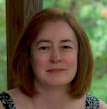
An interview with Linda Proud, Part 2

And now I'll present the remainder of the interview from Monday, in which we discuss religion in historical novels, how newly uncovered historical facts can affect a storyline-in-progress (or not), marketing historical fiction, and more...

You deal with the subject of religion in a way that feels attuned to the time. I found it remarkable because many historical novels don’t adequately address their characters’ religious beliefs, let alone give readers the opportunity to feel what the characters are experiencing. (I found the “Snow” chapter especially poignant, but there are many other evocative scenes as well.) What philosophers, texts, or other sources served as your greatest inspiration in this regard?

The spiritual aspects where they occur mirror my own experiences. I have been a student of practical philosophy for over thirty years now, and this, as well as studies into the Renaissance, has brought me into contact with all manner of useful texts. The greatest inspirations – apart from the contemporary works of Marsilio Ficino and Pico della Mirandola – have been the works of Plato, Epictetus, Plotinus and Hermes Trismegistus, but they have been made intelligible by studying the Vedic scriptures, particularly the Bhagavad Gita and the Upanishads. The ‘holy philosophical tradition’ in the West was forced to become esoteric by politicized Christianity and so it hid its meaning in symbol and allegory. This can make it difficult to unpick. But in the East, the holy tradition is mainstream, so reading Eastern mysticism raises the fog. Theologians tell me that you shouldn’t seek to understand one culture by another, but Pico della Mirandola would have disagreed, and that’s my justification. The West gives us the metaphorical truth, the East, the literal truth, but it’s the same truth.

During the process of completing The Rebirth of Venus, the bodies of Giovanni Pico della Mirandola and Angelo Poliziano were exhumed to find out how they'd died. Can you explain a little about the historical controversy surrounding their deaths? Did you feel the results of this investigation vindicated your research?

I can’t describe to you the plummeting, sinking feeling that came when I heard that news of the exhumation. Venus had been proof-read and was ready to go. Should I pull it? How long would I have to wait for the results? I wrote to the professor at Bologna who was in charge but he did not deign to reply. Meanwhile I remembered that, over the thirty-three years I’d been working on the project, knowledge-by-intuition had been repeatedly tested and had always triumphed. So I said, ‘Go!’, and the book went.

The results came out the same week as Venus was published (please tell me I am not a character in the novel of some higher power) and all that I had written was vindicated. That’s not so remarkable. I’ve only read about this exhumation in the press, so it’s hard to tell, but I have my doubts as to the quality of the scholarship behind it. For instance, no mention was made, at least in the press, of the previous exhumation in 1947, upon which I had based my theory, and the same old silly stuff about Poliziano was being repeated (that he was the lover of Pico and died of syphilis) even though the exhumation findings showed that he died of arsenic poisoning. There was a remarkable paper written in the 50s by a scholar called Juliana Hill Cotton entitled ‘Death and Poliziano’. Everything that has been discovered in recent times validates the extraordinary claim she made in that paper, that the sudden death of several humanists as the French invaded Florence in 1494 was the result of murder.

The general view has always been that Pico was murdered by his secretary while Poliziano died in any one of a variety of ways, all of them colorfully ignoble apart from one, which must be the true one, that he died of a protracted fever. Following Hill Cotton, I had them both as the victims of murder, but I chose to exonerate Pico’s secretary. The recent studies now point at Piero de’ Medici as the culprit, but in the process of writing I’d followed that thread and not found it to lead anywhere. Venus is not a murder mystery. In the end I stayed realistic and Tommaso never finds out who did it, although he receives some powerful clues. It all rests on that previous exhumation, when Pico’s body was found intact. He had been buried in brocade and not in a Dominican habit as reported. That speaks volumes.

Hill Cotton spent her life writing a biography of Poliziano which she never published. She’s now dead and I’ve not been able to trace it. History needs that biography, and I don’t know where it is.

What do you hope readers take away with them after finishing your novels?

Hope. Hope that magic is real, that life is good, that everything has a plan and a purpose. Love is the part of being human which is wholly divine but it is such a hard path to follow since it requires sacrifice, sacrifice ultimately of our desire to control. I have had incredible feedback over the years but the best I heard, second-hand, was that one reader had been prevented from suicide. And I met one woman who told me she’d never owned a book before Tabernacle but now everyone knows what to get her for birthdays and Christmas and she is building a library of books on the Renaissance. Those kind of stories are thrilling, but they are less to do with my novels than with what they are about. The Renaissance was an incredible period and a fountain of inspiration we can still drink from. What I hope readers will gain is a thirst to find out more for themselves.

Life is no longer dull as it was in the 50s; now it is just plain frightening, and we cocoon ourselves and take the opium of consumerism and mass entertainment. But there is another life, accessed by some through the imagination and arts, by others through theology or philosophy. I hope my books open a door to that world and invite the reader to enter.


As a publisher, what do you find to be the greatest challenge in marketing and selling historical fiction?

Oh, how long have we got? In brief, there is a public out there craving serious historical fiction which educates as much as it entertains, and it is being ignored by mainstream publishers. As I said above, I am not a feminist, but I do get angry about certain things, and one of them is the prejudice about historical fiction written by females. I believe the reason I have not found a publisher in the States is not to do with the quality of my books so much as my name being ‘Linda’ – that leads to preconceptions and criteria which my books fail to meet. Books by female authors are given covers that men would not be seen dead reading. That means that authors of the quality of Philippa Gregory have an almost entirely female readership. That’s a crime!
As for the male authors, they are in denial. They pretend they are not writing historical fiction at all, but literary novels ‘set in the past’. It’s salutary to check the categories which are printed on the back of each novel.

It seems impossible these days that a book be judged by its merits rather than its accord with given ‘product profiles’ and categories. So the greatest challenge is to break down the categories and set books free. We have a polarization between popular fiction and literary fiction, with no real middle ground, at least in Britain (justly famed as we are for our snobbery). I want to see books that are as well-written as they are well-plotted. Readers deserve so much more than they are being given!

Publishing is in such a sorry state. You see, there’s no comeback to make the publishers feel or know public response. You can’t return a book to the shop like you can any other product on the basis that it’s rubbish. You just throw it away and wonder why you wasted your time and money. While a publisher is congratulating himself on selling one hundred thousand copies – on the strength of marketing alone – a situation is being created where people no longer trust reviews or puff and, very possibly, are being put off reading altogether. How can you tell if a book is good or not? – read the first page, not the back cover.

We founded Godstow Press out of necessity. My publisher was bought by a bigger concern and the entire staff changed. The new company didn’t want my second novel, and it seemed impossible that any other publisher would take the second part of a trilogy. Furthermore A Tabernacle for the Sun was not going to be reprinted when it sold its first edition. So we had to do it. But we had a broader agenda, for both my husband and I are sick and tired of reading fiction that gives no reward for the effort. We want reading matter that makes us think, wonder and rejoice. That makes us better people. So from the outset we knew we would be publishing others, and now we have a growing list of titles and, just as important, a growing list of dedicated customers, for we deal direct. Marketing and publicity require you to be brash and pushy, and we’re not, so we build slowly, step-by-step, and almost every day in the mail there’s a lovely letter of gratitude from someone we know only by name. That’s our reward.

I’m very cynical about huge advances, great print runs and sales. Many of these books are just shooting stars, never to be seen or heard of again. I like to tell myself that a real publishing phenomenon is a book which, although it only sold a few copies each week on publication, has continued to sell a few copies each week for ten years – and that’s A Tabernacle for the Sun, which we reprinted. At Godstow Press we are dedicated to the ‘trickle factor’ – anathema to big publishers since the cost of storage is so high. Any profits we make are eaten by storage, but we’re determined not only to make but to keep good books available.

You've been giving lectures on Renaissance-era notables to academic audiences, and have written book reviews for history journals. Have scholars generally welcomed your contributions to the field?

The scholars have been amazing. I have very few formal qualifications and never went to university so, naturally, I was in awe of the historians who, as I did my research, I was forced to meet and contact. Everyone I’ve spoken to, including some of the top guys, has confounded my expectations and been kind and supportive. Some of them are now even on our mailing list.
Whenever I’m asked to do one of these talks, I go into a fever of consternation, but so long as I’m clear, and the audience is clear, that I’m just a novelist, it’s all OK. What I then have to show them is that the novelist has a power of intuition which can often spot things the historians missed, or, through deep immersion, can gain psychological insight into a character. I think people enjoy that approach – they find it a bit of a relief.

Yes, my contributions, such as they are, have been welcomed. It’s all too easy in scholarship to become myopic. The work of a novelist is to put Humpty Dumpty back together again, to show a character in the context of his life and times, which often reveals the causes of actions. So I think my work helps scholars to see their specialty in a broader context. But it’s a two-way process, of course, and the contribution of scholarship to my work far outweighs what I’ve given to scholarship. I am entirely indebted to their painstaking labors. What a pity it is that their papers become peer-reading only: we need to revive the middle ground in history books as much as in fiction. It’s all becoming polarized between popular and learned.

There is one particular contribution in Venus which I hope someone will take up. Those murders in 1494 were of men who were at the deathbed of Lorenzo in 1492. That made me wonder about Lorenzo’s death – was it from natural causes as always presumed? Although Venus isn’t a murder mystery, it does revolve on the question, ‘Who killed Lorenzo?’ – and I think the answer I found is very plausible. I hope some historian follows the lead and does the necessary investigation.

What other historical novels do you consider to be the pinnacle of the genre?

Anything by Mary Renault. There are others, of course, who write as well if not better, but Mary’s strength is that she believed in the good and in nobility without any trace of sentimentality. Content has to be as important as style, and content depends ultimately on the content of the author. Other novels: A Man on a Donkey by Hilda Prescott, and A Portrait of Hadrian by Marguerite Youcenar. The star of contemporary writing to my mind is Lindsay Clarke, but his books are more mythological than historical.

Dare I ask, now that your trilogy is complete, what projects – writing, publishing, or otherwise – will you be pursuing next?

Although I do have more than one idea for the next novel – which looks like it will be set in Elizabethan England – I’m not being given the opportunity to do anything about it. For one thing I’m looking after my mother in her extreme old age and what spare time I have is dedicated to teaching creative writing and to various talks and workshops arranged for the next twelve months, each of which requires a lot of preparation. One friend said that this is my jubilee year, when I’m to give back, which is a reassuring idea, if only because a year is a finite unit of time!

I’ve long dreaded this moment, since my path seems to fork, one way leading to continuing with Renaissance study, the other to a new novel, set in another period. The signs are, at the moment, pointing to the former. But I crave that experience of seeing something new, something I have not thought up, appearing on the page, which can only happen in creative fiction.

Anyway, I shall follow my intuition step-by-step. It has never failed in the past. Right this moment, as I’m preparing a talk on Lorenzo de’ Medici – a deeply complex, dualistic character who is utterly wonderful – I would love to do a biography of him. He is meanly represented these days by historians. If we persist in looking at the past through the spectacles of modern cynicism, we shall always fail to see what is there.

As to publishing, at Godstow Press we are working on a collection of lectures by the visionary Sir George Trevelyan and, after that, a reprint of Lindsay Clarke’s amazing novel, Parzival. And that’s another problem with publishing today – even great works are not reprinted if mass sales cannot be anticipated. What we need is a renaissance of integrity and service for the public good. That’s what Godstow Press is all about.

Thank you, Linda, for taking the time to answer questions for this interview!

To recap, The Rebirth of Venus was released in February 2008 (£14.00, pb, ISBN 978-0-9547367-6-7). It may be obtained, along with the first two novels in the trilogy, directly from Godstow Press or from standard sources like Amazon UK.

Monday, April 28, 2008

An interview with Linda Proud, part 1

I'm pleased to be presenting this interview with Linda Proud, author of a trilogy of historical novels set in Renaissance Florence. I'd first read her novel A Tabernacle for the Sun (1st edition Allison & Busby, 1997) ten years ago after spotting the HNR review, which called it "historical fiction at its best." Pallas & the Centaur (Godstow Press, 2003) and The Rebirth of Venus (2008) complete what she terms the Botticelli Trilogy. No other novels I've read about the Renaissance put all the pieces together so well, showing readers the leading personalities of this incredibly creative period in European history as well as delving deeply into the philosophical changes behind it.

The interview is based primarily on the final novel in the trilogy, released in February 2008 by Godstow Press, the publishing company founded by Linda and her husband, David Smith. All three can be read independently, but to absorb the period and storyline more fully, readers may prefer to begin at the beginning, with Tabernacle.

The Rebirth of Venus picks up the story of Tommaso de' Maffei, the protagonist of the first two books, as he approaches middle age. It is now 1505, and Tommaso, a tutor at a London boys' school, finds his heart has grown empty. Disconnected from the principles of philosophy he absorbed in his youth, as a disciple of Florence's famed Platonic Academy, he is unable to interest his students in their lessons. John Colet – Dean of St. Paul's Cathedral, an early proponent of English humanism, and Tommaso's mentor – decides to send him back to Italy to revitalize his spirit. As Tommaso makes the journey back home, he continues writing an account of his earlier life for his traveling companion and friend, Dutch philosopher Desiderius Erasmus, which he first began in A Tabernacle for the Sun.

Tommaso's account of the 1480s and 90s, which alternates with his pensive story of self-discovery years later, places readers into the very heart of the Florentine Renaissance. As Tommaso interacts with and learns from many Renaissance-era notables – philosophers Marsilio Ficino, Giovanni Pico della Mirandola, and Angelo Poliziano, painter Sandro Botticelli, religious reformer Girolamo Savonarola, and of course Lorenzo de' Medici himself – readers will not only absorb but experience what it was like to be an active participant in this exciting, transformative age. The Botticelli Trilogy is an impressive achievement; the novels are refreshingly different from other historical fiction, in terms of the language used, the depth of the philosophical issues discussed (and they are presented as fresh and enlightening, rather than stuffy and dry), and the time period described. I highly recommend them all.

The novels can be obtained directly from the Godstow Press website or from standard sources such as Amazon UK. Linda also blogs about historical fiction and publishing topics at http://lindaproud.blogspot.com/. I hope you enjoy reading this interview; Part 2 will be posted on Wednesday.

-----

Given that you've spent over thirty years studying and writing about Renaissance Florence, what about the period first caught your attention? Why does it continue to fascinate you?

In my early 20s I suffered from agoraphobia, brought on by a series of catastrophes – loss of love, of home, of job – and I became extremely withdrawn. I found solace in looking at Pre-Raphaelite paintings and rather fell in love with Edward Burne Jones. Then one day I asked myself what ‘pre-Raphael’ meant, and this led me to Botticelli. After having read several art historical books on him, I wanted to know more about his life, about where he lived and when. Discovering he lived in the same city at the same time as Leonardo da Vinci, I wondered what they might have said to each other. Novels tend to begin with such questions.

However, what really captivated me was something – someone – else. Reading a book about Lorenzo de’ Medici, ruler of Florence in Botticelli’s time, I came across a couple of lines on the character of the poet, Angelo Poliziano, and knew that they were defamatory. I was so certain of it that I wrote Wrong! in the margin. And then I sat and stared at what I had written, for I had never heard of this man before, so how did I know that I wasn’t reading the truth? It was a sense of simpatico. It seemed to me that he was probably a Cancerian and had been misunderstood. I’m a Cancerian myself and, at that time, felt thoroughly misunderstood. So my first piece of real research involved finding the birth date of Poliziano, and I had to go to a more specialist library for that. Sure enough, he was born in July. That was the first moment of frisson, of knowing things I had no right or reason to know.

There were to be very many more, and just as peculiar. It frightened me at first, but I learned to trust it. For instance, when I decided to write a novel, I thought that I must have a fictional protagonist, one that would not be tied by historical fact but who could move around at my will. The first character I created was called ‘Raphael da Volterra’ but as research deepened, I discovered he had existed. So I created his brother, Tommaso. There’s a possibility that he existed, too, but frankly I don’t want to know.

Most of the research, which took eleven years, was into the life of Poliziano, although he was to become just one character of many and really the novels are about Tommaso, but I hope I have gone some way to redeeming his character. Even five hundred years later, falsehoods put about by his enemies and those who murdered him are still being perpetuated by otherwise sound historians. Lorenzo de’ Medici would not have made a life-long friend of a self-serving pedophile!

Poliziano became my guide and my muse. Just reading the books he had read himself put me in touch with the classics and gave me the education I never received at school or college. Despite all creative writing classes, essentially we teach ourselves how to write, but if you keep good company in your reading, your style develops by osmosis. Poliziano was my best and closest companion.

Most novels about the Italian Renaissance focus on its leading families, artists, and literary notables, but barely touch on the transformative philosophical changes that took place -- the actual looking back to ancient texts for inspiration in art, religion, literature, methods of learning, and so forth. Did you deliberately try to write something different, to tell a story that hadn't previously been told in fiction?

No, there was nothing deliberate about it, it was more personal than that. What appealed to me was that things I was interested in, astrology, natural medicine, magic – things which, in the 70s, were very ‘alternative’ indeed – were real to these characters. In a way, I was following in the footsteps of Mary Renault, whose novels set in ancient Greece had either turned me into a Platonist or brought out a philosophy which until then had been latent. So I was attracted by Marsilio Ficino and the Platonic Academy. Starting the novel just happened to coincide with my going to a school of practical philosophy, and at that point life and imagination began to fuse. As a child in the 50s I had found daily life so incredibly dull that I’d developed a very strong faculty of imagination and a private world closed to others. Now I was coming out into the light like a butterfly from a chrysalis, released by these philosophers and poets of the fifteenth century and the art they inspired. The agoraphobia lifted off not long after the project began.

The characters in your novels clearly belong to their own era, and not to ours. How did you manage to leave behind modern times so completely and inhabit the mindset of a man, a fictional disciple of the Platonic Academy, who lived over five hundred years ago?

It was not a conscious effort. Although my husband would disagree, especially when I’m parking the car, I believe I think like a man. As a child I had always preferred to play with boys rather than girls, was always a cowboy and never a cowgirl, let alone a mother or a nurse, so I wasn’t aware that there was a potential difficulty in crossing genders in writing. I was aware of the difficulty in crossing nationalities but as I began to visit Florence, I discovered that the Tuscans are very akin to the English in character although, of course, more demonstrative in their emotions. And as I say, the mindset of a Platonist was already my own.

To be honest, in my own judgment I thought Tommaso was too emotional and feminine, and that everyone would notice. Instead, something curious happened. I heard from several male readers that the novels made them cry. I wanted to put a banner around Pallas and the Centaur with the legend, ‘The book that makes men cry!’, but my husband dissuaded me.

I had much more trouble with the female characters than the male ones. For some reason in the first drafts the women came out disneyfied. I had an idea about women which every ounce of my own being contradicted. Somehow or other I woke up from this stereotypical and male view of women, looked at myself, studied the women I admired, and started to create some real characters. All historical novels today seem to feature a ‘feisty’ female, but often they are 21st century women in period dress. I had to discover the real strengths in these women of the Renaissance and what I found is that women then, as women now, have a depth of character which is uniquely feminine. Being feminine doesn’t mean looking beautiful and having an empty head: it means having strength and stamina, having wisdom. Being a strong woman is not being a masculine woman, not at all. It is being feminine. We have allowed ourselves to be led astray with regard to gender differences and women fight to slough off an identity which was never true. So there is no point in wanting to be a man – being a woman is great!

Although I’m not a feminist in the accepted sense, I do find it infuriating that no records were kept of these women – the documentary evidence of their lives is shockingly thin. I went all the way to Montepulciano to find out what I could about Maria Poliziana, only to discover that there is nothing to be found. Not so much as a record of birth or death. I’ve no idea where she was buried or when. That’s amazing, that history recorded only half the population. But to think that means that men considered women to be of no account would be a mistake. One only has to read what the men said about them.

As to the difference in time, obviously one has to discover through research what they had then which we don’t have now, and vice versa, and strike out all references to, say, tomatoes, or any metaphor with a modern basis (‘he was galvanized into action’). Among the good companions a writer should keep are literary folk a generation or so older. They have a great sense of language, of what is modern and what isn’t. One had me check the date of every word – every word – against The Shorter Oxford English Dictionary (which is the big one, but not the biggest). She allowed me to use anything up to Shakespeare’s date, but nothing after it. That was a terrific exercise in revision and what sense of authenticity I’ve achieved has been due to that.

One of the joys of writing historical fiction is that you have the opportunity to use an ennobled, heightened form of the language which is denied to us today. Language has changed so much, not just in the last five hundred but in the last fifty years. It’s so thin and denuded these days. I couldn’t bear to write a book set in modern times for that reason. Whenever you read books that have both contemporary and historical sections, the contemporary parts seem to lack all vigor. David Mitchell’s Cloud Atlas charts this decline of language brilliantly, from the gorgeous cadences of the 19th century to the guttural gobbledegook of the future.

How did you decide to frame your novels around three different paintings by Botticelli? Was this the idea from the beginning?

From the beginning I knew that the plot of A Tabernacle for the Sun would be mirrored by his Primavera but as a character, Botticelli was to be a minor one. There’s really not much known about Botticelli’s life and I didn’t want to go making it up. The title of that first book came from a psalm which I just happened upon. I loved the poetry of it, and the multiple implications of its meaning (both the man, the cathedral, the city, the world – each is a tabernacle for the divine light, like Russian dolls). That I didn’t call the book ‘Primavera’ rather shows that, at the time, Botticelli was a subtle inspiration rather than a guiding spirit. I don’t remember how the second one came to be called ‘Pallas and the Centaur’ but I think it happened when I was in the Uffizi and gazing at the painting, which was so obviously set in the period of the novel, the early 1480s. For a long while that novel had had the title ‘The Altar of the Moon’. Each book has worn and discarded several titles until the final one, which becomes the final one only because it’s not replaced by any other! But when it became ‘Pallas and the Centaur’, and the cover was obvious, it was then that I began calling the whole work The Botticelli Trilogy.

One of the original titles for the third was ‘The Birth of Venus’ but, dammit, Sarah Dunant got there first. And I was grateful because my story wasn’t really about the birth of Venus – Tommaso had already been in love once before. So Rebirth, which is the English for Renaissance, became the obvious choice, the Rebirth of Venus.


Each novel has taken roughly ten years to write. It was back in the late 90s, when I was doing the first draft of Venus, that a musician-philosopher I’d been in contact with by email asked me if I knew that all three paintings had once hung together at the Villa Castello. This was one of those numinous, otherworldly moments where I wondered if I were really the author or just a character in the story of some higher power. Because, no, I had not known that. Having been told it, I forgot about it. It only re-emerged in consciousness as I was struggling to find an ending to Venus. And as I followed where it led, I found it was offering more than that: it was tying up the whole trilogy, not something I had thought of having to do.

Another numinous moment was when I discovered that the tabernacle psalm was Ficino’s favorite and he used it as an incantatory Orphic hymn.

You mention that you make every effort to stay true to the historical facts. Can you describe examples when you discovered a fact that had the potential to change your storyline? What did you do?

I can’t remember any specific examples, but it did happen, because I do remember screaming and tearing at my hair. But each time I found that if I stayed with history, no matter what pain it caused in rewriting, the story became deeper and richer and threads started up which became vital later. I really learnt to trust this. But there were just as many occasions when I found that ‘research’ was more a process of ‘verification’. Some of my ‘facts’, I have to say, remain to be verified, but since history does not contradict them at the moment, I let them remain.

There was one thing where I ignored history and stayed with the story, and that was the dating of the Primavera. My novel hinged on it being painted in 1478 and not in the 1480s as thought by art historians. It’s always said that you should give your story its head so, in respect of that, I did. One art historian, however, was so impressed by my reasoning that she went off and did some research, enough to convince herself that I was right, that the painting had been done for Giuliano de’ Medici and not for Lorenzo di Pierfrancesco de’ Medici, who acquired it in the 1480s. It seems now that the idea is meeting general acceptance – I often see it dated ‘1478’ – although to my mind it has yet to be proved.

You present all of your historical characters as multifaceted individuals, rather than promoting a particular angle -- and this is true even for controversial figures such as Savonarola. Today's readers remember him mainly for the Bonfire of the Vanities, but your novel made it possible to understand why Florentines of the time found his reforms so appealing. While writing, did you have to consciously break away from any preconceived notions you had about him, or about any of your characters?

Yes, all the time. I learnt early on that if you have good guys and bad guys what you have is two-dimensional characters. Being my first novel, when A Tabernacle for the Sun kept being rejected, I presumed it was because it was rubbish, but the Arts Council thought otherwise and gave me a grant to spend some concentrated time writing yet another draft. I went back to Volterra, twenty years after my first visit, to find ‘missing factor X’ – that something which was eluding me which would make my book irresistible to publishers. It was in Volterra that I suddenly realized that Tommaso’s brother, Antonio – who was instrumental in the Pazzi Conspiracy and therefore my villain – had had a good side. It was a powerful realization. Everyone wants to be happy; everyone acts for what he/she considers to be the best. ‘Good’ and ‘bad’ are labels which historians slap on. We are all of us both, it’s just a question of degree. The book was accepted within a week of finishing the last draft, by a publisher who had stayed up all night in his office reading it.

Savonarola was exceptionally difficult. My own views about him are more negative than I’ve expressed in the novel, but I was conscious that, for many, he is a candidate for beatification. I wrote the book as a warning to those many friends who, all good souls, would be seduced by such a figure were he to rise again. But, as St Matthew said, you can only tell him by his fruits, which is to say, you can’t tell by looking at him. Another of my good companions was George Eliot, and her view of Savonarola in Romola was very positive. So I allowed myself to see him through her eyes, for the sake of balance. (But if her Tito had been one of my characters, by golly, I would have redeemed him.)

Another character just as difficult was Lorenzo’s wife, Clarice, who I had every reason to deplore. A pallid, pious doormat who set out to destroy Poliziano, and started those ugly rumors which still persist. It took me years to find the Clarice I could love, pity and admire, and the moment I understood her was one of those epiphanies that burns the retina of the memory.

Out of all the historical characters that appear in The Rebirth of Venus, were there any whose personalities you enjoyed re-creating the most?

Well, I think it has to be Botticelli! Having relegated him to a minor character in the first two books, it seemed only fair and just that he play a larger role in the third, and there was more historical information to go on, but it was contradictory. He is usually portrayed as a convert to Savonarola who gave up painting pagan mythologies and turned to Christian works, but according to the records he played host to the young thugs who were seeking Savonarola’s downfall. I love these contradictions: you have to chew and chew until they make sense.

I made myself familiar with Dante, as he was Botticelli’s passion, and I entered that passion and shared it with him. Out of it came this somewhat inscrutable character who becomes withdrawn as life around him grows difficult and finds solace in his art (which, now I think about it, was my own condition when this all began). My favorite passage in the book is when he has become so neglectful of his person, so dirty and stinky, that Tommaso pushes him in the Arno, only to discover that Botticelli can’t swim. I like to do that passage at readings, although my husband says it gives a false impression about Botticelli, which is true enough. It was only a phase. The Botticelli that appears at the end, the truly grumpy old man who’s putting on the act of being mad to amuse himself at the expense of others, and who goes to Castello to see his three paintings hanging together, was never deliberately planned or thought up: he just emerged. That’s what I love most about writing, when what appears on the page is as new to you as to anyone.

Watch for Part 2 of this interview on Wednesday!

Tuesday, April 22, 2008

Your favorite historical fiction websites, please.

I've arrived at the chapter in my manuscript that will list resources on historical fiction for librarians and readers. I'm looking for ideas on what else to include. What websites do you find most valuable in keeping up with historical fiction, letting you know what books are out there, etc?

I'm not looking for blogs (though I'll include some) so much as online bibliographies, lists, guides, discussion forums, and things of that sort.... sites that are fairly extensive and/or comprehensive on a given subject. I include a number of these on this blog's sidebar, and there are some others in v.1 of my book, but what other sites am I missing? "Historical fiction" in my definition includes all the subgenres... historical mystery, sagas, historical romance, historical fantasy, historical adventure, alternate history, etc.

Examples of types of things I'm looking for are Fictional Rome and CrimeThruTime.

If you have a copy of my previous book, this is for Chapter 15, which is, in fact, the last chapter... I'm nowhere near done, however, as I still need to update the intro and the earlier chapters with historical novels published during 2008. But I'm getting there.

Thanks in advance for any suggestions!

Friday, April 18, 2008

Whole lotta shakin' going on

Until I read about the earthquake on the news this morning (5.2 magnitude, with an epicenter 85 miles south of here) I had no idea why I'd woken up at 4:30am wondering why the roof was shaking. Anyone else feel it?

In other news, the Editors' Choice titles from May's Historical Novels Review were posted earlier this week.

From booktrade.info: Hutchinson has acquired three more historical novels from Alison Weir, two about the Tudors and one about the Plantagenets. (The Lady Elizabeth was an Editors' Choice for May.)

Finally, in celebration of National Library Week, I thought I'd share the following video. You have to sit through the intro to get to the funny bits. Now you know what I do all day... and doesn't every campus have its resident ghost? I know ours does.

Saturday, April 12, 2008

Free access to Greenwood databases for National Library Week

This post came from the Fiction_L email list, a discussion list for readers' advisors in libraries. My book Historical Fiction: A Guide to the Genre (from 2005) is online, along with a number of guides to other genres, via Greenwood's Reader's Advisor Online database. If you want to see what it's all about, register for free access throughout National Library Week (which begins tomorrow, 4/13).

---------

Libraries Unlimited is providing free access to the Reader's Advisor Online during National Library Week April 13-19, 2007. (And of course, the Blog is free everyday!)

Simply follow the link to http://libraryweek.greenwood.com/fictionl. You will be asked to register, then simply click the Reader's Advisor Online title on the product list. For subsequent visits during Library Week, just enter your email address.

The Reader's Advisor Online is based on the Genreflecting series published by Libraries Unlimited. More than a database, this sophisticated finding tool gives users multiple ways to browse and find related reading and read-alikes. It includes recreational nonfiction as well as fiction. There are many special features, including the Genre Tree, the Read-Alike Finder, the Read-Alike Quick List, and the saved list for creating handouts for your patrons and flyers for your library.

Laura Calderone
Managing Editor, Electronic Products
Libraries Unlimited
laura.calderone@lu.com
http://www.lu.com/
http://www.readersadvisoronline.com/

Thursday, April 10, 2008

Various historical fiction tidbits

I'll be back to posting book reviews and longer pieces eventually, but for now I'm wrapped up in my final content-intensive book chapter - which is on alternate history - after spending a full three weeks editing and proofreading HNR (and it's not over yet).

There has been some historical fiction-related news coming through, however, so without further ado...

Booklist's April 15th issue contains their annual Spotlight on Historical Fiction. Much of the content is reserved to subscribers of the print magazine or Booklist Online, but there are several pieces freely available to all. Among them is Brad Hooper's article, Core Collection: Historical Sagas, his review of Salman Rushdie's The Enchantress of Florence, his Top 10 Historical Fiction: 2008, Hazel Rochman's Top 10 Historical Fiction for Youth, and Joyce Saricks' article At Leisure: Revisiting Historical Fiction. My review of Philippa Gregory's The Other Queen is also published in this issue; here's a link for those who subscribe.

From the New York Times, via Shelf Awareness: "Kurt Andersen has won the 2007 David J. Langum Sr. Prize in American Historical Fiction for his best-selling novel Heyday (Random House). Mr. Andersen, a columnist for New York magazine and host of Studio 360 on public radio, will receive $1,000."

Yes, there is an annual prize for American historical fiction; this is the first year the Langum Prize was open to commercial trade press publications in addition to university presses and small presses. If you'll be publishing a novel with an American setting during 2008, why not consider entering to win next year's prize? Judging by this and the many other accolades that Heyday has received, mine is a minority opinion; I wish I'd enjoyed it more.

Tehelka, a weekly newspaper from India, interviews Richard Zimler, author of Guardian of the Dawn and other novels of Sephardic Jews. I reviewed Guardian a while ago for HNR and consider it an undiscovered treasure. The review was reprinted on the Loaded Shelf forums.

From The Bookseller (UK): Bernard Cornwell's next novel will be about the Battle of Agincourt.

An interview with Sally Gunning (The Widow's War, Bound) from the Cape Cod Times. If you haven't read these books, historical novels set on Cape Cod in the 18th century, you're missing out.

From the Saskatoon Star-Phoenix, observations on historical fiction as they relate to Mary Swan's The Boys in the Trees, set in small-town Canada in 1888.

Also some deals:

Lorenzo Borghese's THE PRINCESS OF NOWHERE, Antonio Canova's masterpiece sculpture of Pauline Bonaparte lies in the crux of this historical novel which centers on the romance and relationship of Camillo Borghese and Pauline Bonaparte in early 19th century Rome; the statue, presently at Galleria Borghese, depicts the extremely complicated and passionate woman that Canova, who was hired by Camillo, witnessed, to Lucia Macro at Avon, by Ian Kleinert at Objective Entertainment.

One of the recent stars of ABC's The Bachelor has the same name as the author above. I'm assuming they're different people (though likely related to one another) unless someone tells me otherwise.

Conn Iggulden's fifth and sixth untitled books in his historical novel series on Genghis Kahn, to John Flicker at Bantam Dell, in a significant deal, by Kathleen Anderson at Anderson Literary Management, on behalf of Victoria Hobbs at A.M. Heath (US).

For those keeping track, v.2 in the Genghis Khan series was just published. I can't resist keeping the original spelling from the Publishers Marketplace entry, which makes the great Mongol warrior sound like someone's crazy uncle from the Bronx.

Cathy Marie Buchanan's THE DAY THE FALLS STOOD STILL, based on historical events surrounding the life of Niagara's most famous riverman, William Red Hill, a sweeping love story between a privileged daughter of a disgraced family and a working class man whose mysterious ability to predict the whims of the Niagara renders him both a hero and a pawn in the battle for the survival of the falls themselves, to Pamela Dorman at Voice, in a significant deal, in a pre-empt, by Dorian Karchmar of the William Morris Agency. Canadian rights to Iris Tupholme at Harper Canada, by Hyperion. UK rights to Arrow.

Friday, April 04, 2008

How to become a bestselling historical novelist

Publishers Weekly's March 24 issue just hit my desk today (I see them a week late) and I was pleased to note it was their 2007 Facts and Figures issue. Earlier this year, letters went out from PW to publishers asking them to submit sales figures on titles that sold more than 100,000 copies during 2007. Only sales to bookstores, wholesalers, and libraries counted. Book club editions and overseas sales did not.

The complete results are here, but to make things easier for you, I'll be pulling out some info on historical novels that made the list, for the hardcover fiction category at least.

There are no historical novels in spots #1-15 on PW's list. These places are dominated by thrillers, particularly James Patterson (who has a ridiculous 5 titles there), mysteries, Jodi Picoult, and of course Khaled Hosseini's A Thousand Splendid Suns, with 2.2+ million copies sold. But as for the rest of the list, we find the following. The numbers in parentheses indicate total sales as reported to PW.

#16 - Rhett Butler's People, Donald McCaig (606,304)
#19 - World Without End, Ken Follett (552,165)
#21 - The Chase, Clive Cussler (478,195)

Others, all with sales from 250,000 to 100,000 copies, in descending order:

Everlasting, Kathleen E. Woodiwiss
The Yiddish Policeman's Union, Michael Chabon
The Boleyn Inheritance, Philippa Gregory
Mark's Story, Tim LaHaye and Jerry B. Jenkins
The Double Agents, W.E.B. Griffin and William E. Butterworth IV
The Ravenscar Dynasty, Barbara Taylor Bradford
The Bone Garden, Tess Gerritsen
The Heir, Barbara Taylor Bradford
Peony in Love, Lisa See
Loving Frank, Nancy Horan
Pearl Harbor: A Novel of December 8th, Newt Gingrich and William R. Fortschen
The River Knows, Amanda Quick
Tree of Smoke, Denis Johnson
Away, Amy Bloom
Up in Honey's Room, Elmore Leonard
The Lady in Blue, Javier Sierra
The Quest, Wilbur Smith

Based on this information, it would seem that being a bestselling historical novelist (in hardcover) during 2007 required one or more of the following:
  1. Writing a highly anticipated sequel to a beloved historical novel that also happened to be a bestseller.
  2. Having your previous XX novels, historical or not, be bestsellers.
  3. Garnering uniformly stellar reviews and having your publisher back your efforts with a large-scale marketing campaign.
  4. Being (a) a famous political figure or (b) an author of the Left Behind series or (c) an author who died in 2007, leaving behind a manuscript for a final novel.
  5. Writing a very good book that appeals to an awful lot of different people. (Yes, probably self-evident, but...) Extra points if it's so good that it receives award nominations in two or more fiction genres and/or works extremely well with book clubs.

"Veteran novelists and Media Stars Make the Top Grades," reads the article's subtitle, which covers a lot of it. Taking a closer look at the list... there are few commonalities in terms of historical setting, and there's a mix of thrillers, literary titles, romances, sagas, alternate histories, and other things that are hard to categorize. Several are first efforts in historical fiction from bestselling authors known for their work in other genres.

PW compiles separate lists for trade paperbacks and mass market, which you can also read about, but I'll mention a few huge sellers in trade paperback as well, such as Sara Gruen's Water for Elephants, Ken Follett's Pillars of the Earth, Gabriel Garcia Marquez's Love in the Time of Cholera, and Jeffrey Eugenides' Middlesex, with 1.0 to 1.4 million sales apiece in 2007. The last three, of course, were Oprah picks. Philippa Gregory's The Constant Princess had sales of 318,000, while The Boleyn Inheritance added 242,000 sales in trade paperback to its hardcover total of 211,000 (in the same year).

Which ones have I read? Only Rhett Butler's People, which I thoroughly enjoyed (with a few small caveats) and The Boleyn Inheritance (ditto). Among those in trade, I've read Pillars of the Earth and The Constant Princess, both of which I liked, but I wouldn't put either on a list of all-time favorites.

Monday, March 31, 2008

Those old-timey covers

While I was sitting watching Dancing with the Stars tonight, an email came in from my dad, who alerted me to an eBay seller's historical fiction listings. His name looked familiar, so I checked around and remembered I used to get his catalogs when I was in high school and undergrad (Pandora's Books). They were large format, newspaper style, very tiny print.

Anyway, take a look at the listings if you want to see many more examples of 1950s-70s style historical novel covers, such as the one on the left. I own many of the books in other editions, so I'm not really tempted to bid, but it looks like everything starts at 99 cents if you're so inclined.

Thursday, March 27, 2008

On how to pen compelling book reviews

Like many of you, I'm sure, I read about the Seven Deadly Words of Book Reviewing from Tuesday's Paper Cuts (the NYT's book blog). Since reading all that snark puts me in a rather snarky mood, I can't resist pointing out that the phrase "startling predictability" sounds like an oxymoron. And "pen" used in the sense of "write" is a perfectly acceptable verb, and has been for about five centuries. That doesn't mean people shouldn't sometimes eschew it for a simpler word (sorry).

On the other hand, I would be happy if I never saw the word "chthonic" in a book review again. (Of course, now that you know what it means, you may want to use it in a sentence yourself. Right?)

Wednesday, March 26, 2008

Karen Swee, historical mystery novelist

(cross-posted from the HNS e-list, with modifications...)

HNS just received word of the death of Karen Swee, a longtime HNS member. She was the author of Life, Liberty, and the Pursuit of Murder (Bridge Works, 2004), a mystery set in New Jersey during the American Revolution. Some of you may remember her from the Salt Lake conference in 2005… Karen enthusiastically moderated a panel on researching the historical novel.

Here are a photo of Karen and two fellow historical novelists at the event and her obituary from the Newark Star-Ledger.

Karen's husband David emailed with the following remembrance, which I thought I'd share.

Karen H. Swee, author of Life, Liberty and the Pursuit of MURDER, passed away suddenly in March. Karen's first novel was highly regarded by scholars of the American Revolution as well as the general reader, and many of them were eagerly awaiting the sequel she had been working on. Karen was a wonderful addition to the mystery and historical novel communities, enthusiastic and always eager to help her fellow writers. She had that rare gift of empathy--the ability to understand and reflect other people’s feelings. This gift made her not only a fine writer, but also a cherished companion and friend. She will be deeply missed.

Friday, March 21, 2008

Does this look familiar? and other news

The weekend is finally here, after a 6-day work week that included two late-night shifts and one Sunday... My annual evaluation portfolio is done, the book reviews that are in have been edited; I'm hoping I can get back to reading.

My gallery of reusable cover art saw a considerable increase in traffic on Tuesday, after the Smart Bitches linked me; check out the comments on their post, too, for some interesting discussions on the reuse of art (specifically classic paintings) on historical fiction covers. I've added half a dozen new entries to the gallery since then, thanks to some eagle-eyed readers who spotted yet more dupes and emailed me about them. (Thanks, folks!)

A reader from Australia notified me about the reuse of La Grande Odalisque by Jean-Auguste-Dominique Ingres (1814) on two different book covers, but neither one was from a historical novel, so it's not included in the gallery... yet. I swear I've seen this painting before on historical fiction, though. Does it ring a bell with anyone?


If so, let me know and I'll credit you in the gallery.

Other random bits and pieces:

If you've been thinking about joining the HNS but haven't gotten around to it, March may be a good time; readers from North America who join or renew during March will be entered into a drawing to receive either Nicole Galland's Crossed or Tasha Alexander's A Poisoned Season, courtesy of HarperCollins. We have five copies of each to give away.

The next Historical Novel Society conference in North America will take place on June 12-14, 2009, at the Hyatt Regency Woodfield in Schaumburg, IL. Mark your calendars if you plan to attend; speakers and registration info will be announced at a later time.

Kelly Hewitt of Loaded Questions told me she'll be publishing an interview with Judith Merkle Riley in the near future, and holding a giveaway for copies of The Serpent Garden, which I reviewed about a month ago... watch her blog for details.

This year I'm planning on attending BookExpo Canada rather than the usual American show, so I'll be in Toronto from June 12-16, networking with Canadian publishers, attending workshops, and visiting a couple friends. If anyone reading this is also attending or will be in town then, let me know! I'll be back at BEA next year, when it's in NYC.

Now on to some publishing deals.

DeAnna Cameron's THE BELLY DANCER, set during the 1893 Chicago Worlds' Fair, in which a sheltered young woman's marriage and attempts to enter high society are threatened by a scheming widow with designs on her husband and by her fascination with the Fair's scandalous Egyptian dancers and their handsome, mysterious manager, to Jackie Cantor at Berkley, by Ellen Pepus.

Shawna Yang Ryan's LOCKE 1928, which weaves history and mythology around a community of Chinese immigrants in a small California town in 1928, exploring the lives of a beautiful young prostitute in love with the preacher's daughter; a husband and wife mysteriously reunited after ten years; a lovesick brothel owner who can see into the past and the future, and the ghosts haunting them all, to Jane Fleming at Penguin Press, at auction, by Daniel Lazar at Writers House. [HNR covered this in late 2007, based on its original publication by a small press. Very nice review.]

Beth Kery's TEMPTATIONS OF TIME, a present day detective travels back in time to 1906 Chicago in order to save the woman featured in a set of discovered erotic photographs from being murdered, to Leis Pederson at Berkley Heat, in a nice deal, in a two-book deal, by Laura Bradford at Bradford Literary Agency.

John Pipkin's WOODSBURNER, chronicling the lives of a lovesick Norwegian immigrant farm hand, a struggling bookseller, a fire and brimstone preacher, and a pencil maker named Henry David Thoreau as their stories intersect over a fire Thoreau accidentally set which burned 800 acres near Walden Pond, moved with Janet Silver to Nan A. Talese, in a good deal, in a pre-empt, by Marly Rusoff at Marly Rusoff & Associates.

Rory Clements' MARTYR, a first historical thriller pitched as in the vein of CJ Sansom, about John Shakespeare, chief intelligencer to Queen Elizabeth, ordered to protect England's "sea dragon" Francis Drake from an assassination plot, to Kate Miciak at Bantam Dell, by Patty Moosbrugger at Patricia Moosbrugger Literary Agency.

Sunday, March 16, 2008

Bermuda book report

This blog has been silent for the past week and a half because Mark and I took a short vacation to Bermuda -- the first major non-conference-related trip we've taken in four years. Bermuda had pretty much everything we expected: warm temperatures, good food, beautiful beaches...


Colorful houses...


Gorgeous sunsets...


And, of course, a few bookstores here and there.


Directly above is the Bermuda Book Store, on the corner of Front and Queen Streets in downtown Hamilton, and fortunately a short walk from our hotel. Note the mopeds out front (one of the primary modes of transportation). Bermuda isn't exactly a book-hunter's paradise, as the bookstores are pretty small, and there are few bargains to be had. Everything's imported, and American titles that normally sell for $7.99 in the States were marked up to $10 or more.

On the other hand, since Bermuda's a British overseas territory, the shops stock a nice mix of British and American titles. I took advantage of this by doing some shopping, buying the latest historicals (paperbacks) by Kate Tremayne, E.V. Thompson, and Janet Woods. I also bought a giant trade pb of Mary Gentle's Ilario for my airplane reading home. To my disappointment, I couldn't find any British hardcovers at all, probably due to the price.

The Bermuda Book Store is about the size of an airport bookstore. Rather larger was The Bookmart, a couple of blocks away on Front Street, which was more the size of a mall Waldenbooks. We visited a couple of other shops out at the Dockyards and in St. George, but both were on the small side.

To the left is a newspaper clipping of author Terry Tucker doing a signing of Woman Into Wolf, a historical novel about Queen Isabella (you can guess which one) at the Bookmart on July 14, 1968. I only know this because I own a signed copy, and Tucker had written in the date. The purchaser had apparently cut out the related newspaper piece and included it in the book. Sometime in the intervening forty years, that copy made it to an online British bookseller, from whom I bought it several years ago. According to the "about the author" blurb, Terry Tucker, born on the Isle of Wight, married a Bermudian and made the island her permanent home, after which she spent her days writing local books on "every aspect of Bermuda life." As well as historical novels about English queens.


I probably should have made Woman Into Wolf my airplane reading on the trip down, to complete the book's journey back to its home, but I didn't think of it at the time.

Thursday, March 06, 2008

And the winner is...

... Betty, who submitted her entry for the Pinkerton's Secret drawing over email. Betty, I'll be in touch with you shortly to get your mailing address. Hope you enjoy the book, and thanks to all who entered!

This is all I have time to post at the moment, but I'll be back next week with info on forthcoming books, deals, reviews, and more of the usual.

Monday, March 03, 2008

Guest blogger: Eric Lerner, author of Pinkerton's Secret

Today Eric Lerner is visiting Reading the Past to talk about his debut historical novel, Pinkerton's Secret (Henry Holt, $25.00, 317pp) , which will officially be released tomorrow. In it, he gives voice to Allan Pinkerton, a Scots-born detective and spy who relocates to downtown Chicago in the pre-Civil War years and opens America's first private detective agency. No doubt you've heard of it, and him. Pinkerton's good at what he does, and knows it - he'll tell you himself - but nothing prepares him for what happens after Mrs. Kate Warne stops by his agency in response to a help-wanted ad...

The topic of Eric's post - how he created a story out of historical facts, and how he developed his protagonist's narrative voice - is something of potential interest to both historical novelists and readers. We've also got another contest and giveaway opportunity; see the very end of this post for directions on how to enter.
--------


Ten years ago, while browsing the new arrivals shelf at my public library, I spotted a biography of Allan Pinkerton. The name conjured up images of wraiths in long black coats hunting down Butch Cassidy and the Sundance Kid and crushing striking steel workers in Homestead, Pennsylvania. What I discovered instead was a man who contradicted the myths, but whose life created one of those tantalizing historical mysteries that can only be unraveled in the imaginative realm of fiction.

Pinkerton, I learned, was not just America’s original Private Eye, nabbing forgers, railroad thieves, and confidence men, he was a political radical who had fought for the rights of working men and women in his native Scotland, and then became passionately involved in Abolitionism when he arrived in America. In the 1850s his home in Chicago was a station on the Underground Railroad, and he counted John Brown and Frederick Douglass among his close friends. On Abraham Lincoln’s railway journey to his inauguration in 1861, Pinkerton saved the president-elect from an assassination plot in Baltimore. During the Civil War, he established the first Secret Service, hunting down rebel spies in Washington and sending his agents behind Confederate lines.

In all of these adventures, the biographer informed me, Allan Pinkerton was ably assisted by Mrs. Kate Warne, the first female detective, whom he’d hired when he first started his detective agency in 1856. The biographer assured me that despite the rumors at the time, Pinkerton’s relationship to the “attractive widow” was strictly professional.

Strictly professional? When I stopped laughing, I realized I might have a great story.

I read all the other biographies of Pinkerton, as well as Allan’s own autobiographical account of his exploits in the Civil War, “The Spy of the Rebellion.” I obtained a rare copy of Kate Warne’s actual logbooks, recounting how she accompanied Lincoln on the secret train from Philadelphia to thwart the Baltimore assassins. But I couldn’t find any clue to an involvement between Pinkerton and the female detective that wasn’t strictly professional...

Then I came upon a photo of Pinkerton’s grave. Buried on one side is his wife, and on the other, just over his shoulder, Kate Warne rests for all eternity. None of his biographers had mentioned that fact.

I began to wonder if the novelist does not have a better opportunity than the historian does to uncover certain truths that are buried in the available documents known as the historical record. As a writer of fiction I could easily imagine that Allan Pinkerton, a detective by profession who literally invented the modus operandi of investigative disguises, would go to great lengths to disguise himself in order to protect his professional reputation while he was alive as well as for posterity.

As I reread over and over Pinkerton’s accounts of his own exploits, and the biographies that drew strongly on his accounts, I put together a chronology of Allan Pinkerton and Kate Warne’s whereabouts during the period of two years when Pinkerton’s exploits became the stuff of legend. They were side by side for the whole time. Moreover, it was clear to me that Pinkerton faced enormous opposition from clients, many of his male employees, and members of his own family for employing Kate Warne as well as an entire bureau of female detectives under her direction.

The story that emerged in my mind was not just about the nature of the real relationship between Allan and Kate, but the nature of their deception. This was a story that could only be constructed in fiction, because the real life protagonists had constructed a fiction of their own to hide their actions from the world.

Once I had constructed the plot of this story, I was faced with the challenge of how to tell it. For me, every novel is a unique universe whose internal rules don’t have to conform to any other universe, but have to be entirely consistent within itself. For reasons I can’t quite explain, even though the events in Pinkerton’s life are not well known, I found myself bound to the real historical occurrences. If Pinkerton actually got on a train from Baltimore to New York City in February of 1861, accompanied by Kate Warne, to warn Lincoln of the impending attack on his life, then Allan and Kate had to take that train in my novel.

But what occurred between them on that train?

There is no historical account left by either one of them. It is a blank space. The blank spaces I identified were the places where I could construct my characters, where the words, thoughts and motivations of Pinkerton and Kate Warne could take shape.

But there are other characters in this story, and some of them are well known historical personages. The novel wouldn’t be complete in my mind without Abraham Lincoln. Yet Lincoln is such an American icon that the task of re-creating him in fiction was daunting at first.

Before I could deal with Abraham Lincoln, however, I had a bigger problem to solve. While I could see the story, I couldn’t hear it, and every attempt I made to tell it sounded false to me. Then one night I was awakened at three a.m. by the voice of Allan Pinkerton. Late in his life he had suffered a devastating stroke, and here is how he described it to me:
Most people don’t think being paralyzed hurts, because they can stick people pins in you and you don’t feel anything. But as I’ve made abundantly clear, most people are utter morons.
It was the voice I had encountered in his letters and the directives that poured out of the office of The General Superintendent of The Pinkerton National Detective Agency, a voice that brooked no opposition or tolerance for anyone who did not understand, as he did, the difference between right and wrong, and was willing to fight for it.

It was the only voice that could narrate his own story, defend the choices he had made in his battles and his love affair. He would defend his actions to himself as much as to his readers, and to others whose identities would become known only at the end of his story.

Pinkerton the narrator also gave me a free hand to characterize Abraham Lincoln, John Brown, Rose Greenhow—The Wild Rose of the Confederacy, and Frederick Douglass, among others. Allan Pinkerton knew these men women and if he wants to tell the world that Abraham Lincoln was a ninny, he was free to say so, and elaborate. After all, it is his memoir.

It took me a full decade to work through the several versions and many drafts of the novel until I completed the final one with a great editor, Jack Macrae at Henry Holt & Co. If you want to check out an intriguing representation of the novel in words and images, go to the website: http://www.pinkertonssecret.com/.

-----

After graduating from Harvard College with a degree in Sanskrit and Indian Philosophy, Eric Lerner spent several years traveling and living in Buddhist monasteries and communities in Asia and America. He wrote a memoir about his experiences, Journey of Insight Meditation. For several years he edited Zero, a journal that presented Buddhist thinkers alongside original work by Allen Ginsberg, John Cage, and the Pulitzer Prize winning poet John Ashbery, among others. This arcane background served him well during his subsequent twenty year career as a screenwriter and producer in Hollywood. His films include Bird on a Wire, starring Mel Gibson and Goldie Hawn; Kiss The Sky, starring William Petersen and Terrence Stamp; and Augustus, starring Peter O’Toole and Charlotte Rampling. Pinkerton’s Secret is his first novel.

And from Sarah, again: Thanks, Eric, for stopping by!

Eric will be providing an autographed copy of Pinkerton's Secret to a randomly selected reader of the blog. (The drawing's limited to American readers this time.) To enter, either leave a comment on this post, or drop me an email at sljohnson2@eiu.edu with "Pinkerton's Secret" as the subject. Deadline is the end of the day this Thursday, March 6th; I'll notify the winner later that evening. Good luck!

Sunday, March 02, 2008

Not that good of a movie.

Sorry for not blogging more often lately. The usual reasons apply - work, deadlines, other commitments, and I haven't had time to read much, either. And my poor neglected manuscript - good thing I'm ahead of schedule on that.

Mark and I went to see The Other Boleyn Girl last night up in Savoy, something I considered a professional obligation. While I can write a decent book review, I won't even make the attempt to do a full-fledged writeup of a film… besides, I think the NY Times review speaks for itself. So, instead, I'll point out a few thoughts that occurred to me while watching, and since.

Here Be Spoilers, below. You've been warned.

-----------------

While walking into the theater, I was surprised to note how crowded it was (this hardly ever happens with period pieces shown in area cinemas) and how most of the audience consisted of high-school and college-age girls. I was pleased to see so much interest in historical topics (and Gregory's novel in particular) from a younger crowd, although their reactions to certain scenes made it clear they didn't know much about the characters or period, and that most hadn't read the novel. For example, the audience gasped loudly when the suggestion of possible incest between Anne Boleyn and her brother, George, was raised - which anyone who'd read the book would have known.

Despite this supposedly shocking moment, the film does play it safe, more so than Gregory's novel did, and not just in that instance. Johansson's Mary Boleyn = meek, quiet, and biddable; Portman's Anne = outspoken, witty, daring, and ambitious. Making them polar opposites simplifies things, and rendered the movie superficial. Gregory's version of Mary was more well-rounded, and therefore more interesting; I found it hard to root for either sister, despite it being blatantly obvious that their father and uncle were using them to fulfill their own ambitions ("pimping them out" is the phrase the NYT review used, and rather aptly).

The pacing was very uneven; Henry's divorce from Catherine of Aragon flashes by within minutes. The film moves very quickly from Anne's pressuring him into breaking with the church, to Catherine's protests to the Pope, to Anne's being crowned, whereas Mary's life as (and adjustment to being) his mistress takes up the entire first half. Furthermore, what happens to William Carey, Mary's first husband? In one scene, King Henry, while in bed with Mary, asks her teasingly if she'd mind if he sent her husband away from court. Carey's never mentioned again, although one assumes (in the film) that he died, because William Stafford indicates his interest in her not long after. This is reminiscent of soap operas in which a child who's become superfluous to the storyline gets sent off to boarding school, whereupon *poof* he's erased from their universe entirely. Maybe in the director's cut on DVD, we'll find out about William's untold demise, as well as the mysterious third child running around in the English countryside in the final scene (which parallels the three Boleyn siblings, shown running around in the same field in the film's opening). One's Mary's son, presumably; the other's Princess Elizabeth (because Mary Boleyn flees the court with her!). Mary never gives birth to daughter Catherine in the movie, so who knows.

Kristin Scott Thomas (Elizabeth Boleyn) and Ana Torrent (Catherine of Aragon) play their roles with conviction, stealing every scene they're in. Natalie Portman, of the three leads, does the most believable job; Johansson portrays Mary rather limpidly. Bana is attractive enough, but the role doesn't suit him. Elements of foreshadowing (visceral scenes of cleavers chopping meat, just as King Henry first arrives at the Boleyn home for a royal visit) were cheap and silly. Pretty costumes; some stunning imagery of riders along the English coastline at twilight; lots of drama and intrigue, at the expense of character, but about what I expected.

Even considering its own slant on the events, the book was more enjoyable. Perhaps I should have seen The Other Boleyn Film instead, aka the TV miniseries; I understand it was better.

Tuesday, February 19, 2008

Book review: The Serpent Garden, by Judith Merkle Riley

Riley, Judith Merkle. The Serpent Garden. NY: Three Rivers, 2008 (c1996). 449pp. $14.95/C$16.95. Paper, 978-0-307-39536-8.

"… Then I thought, well, maybe this is what happens to people who think unkind thoughts about husbands and then take money for lewd Bible pictures from wicked monks. It all catches up with one." (p.294)

Susanna Dallet's droll, irreverent narration is just one of the reasons to pick up Judith Merkle Riley's The Serpent Garden, even if you read it in its original hardcover release in 1996. I haven’t read one of Riley's novels for the past decade, but in reading this reissue, I'm glad I remedied that omission. It begins in 1514, as Susanna, daughter of a Flemish portraitist living in England, is about to be widowed. After her husband Rowland, a philandering painter who wed her to learn her father's techniques, assists in uncovering a long-buried manuscript, Susanna becomes the unwitting target of dangerous conspirators.

When Dallet is sadly (not really) murdered by the jealous husband of his mistress, Susanna is forced to fend for herself in a land not welcoming to independent women. She finds a lucrative trade in creating, anonymously of course, the hilariously vulgar Bible paintings mentioned above, and, later, becoming a paintrix of miniatures at the court of Henry VIII – which piques the attention of Archbishop Wolsey. At Wolsey’s suggestion, she accompanies Mary Tudor, the king's beautiful, spoiled younger sister, to France, where Mary's arranged marriage to the decrepit Louis XII is vigorously protested by rival claimants to the throne.

While at the French court, Susanna paints miniatures for the French royals and sends others, small cryptograms in watercolor, across the Channel to Wolsey – who uses them to determine their subjects’ true character. Meanwhile, a demon named Belphagor, a creature from hell magically set free during the manuscript’s discovery, manipulates the humans around him into obeying his wishes. His ultimate aim: to eliminate all members of the Valois dynasty, and there are a lot of them around. Because a missing portion of the manuscript may have ended up in Susanna’s unknowing possession, she attracts the attention of said demon, as well as that of other unsavory men.

There's no denying it, the novel has a lot going on. It takes a while to adjust to the multiple plotlines, particularly when the viewpoint switches several times within a chapter. Susanna's first-person narration alternates with third-person accounts of the conspirators (two groups of them); the demon and his imps; and several other parties, including Robert Ashton, Wolsey's guileless young secretary, attracted to Susanna against his better judgment. Furthermore, although the novel boasts a large cast of characters, many of those appearing early on fall by the wayside as the story continues. This lengthy novel is not easily skimmed, especially in the beginning. Yet just as Susanna skillfully paints "portraits in small" without revealing individual brushstrokes, so does Riley develop, with no excess verbiage, her secondary characters. These range from Master Dallet's selfish mistress, to crafty Marguerite d'Alençon, to the angel Hadriel, a heavenly being with a soft spot for Susanna’s predicament.

Riley's wry humor is one of the novel's strong points; it takes skill to elicit grins (even laughs) in readers without it feeling forced. Susanna's chatty, unselfconscious observations about herself and her world are extremely funny, as are Riley's tongue-in-cheek portrayals of the French and English royals and their coterie. Yet there are also many touching moments, such as Susanna's interpretation-in-paints of loyal, sweet-tempered Princess Claude. In addition, there is one distinct advantage to reading the novel now, one which has to do with an ancient secret society hell-bent on destroying the Valois monarchy. If I name this group as the Priory of Sion, as Riley does early on, chances are you'll know exactly where one thread of this novel is heading, but it doesn't matter. Reading The Serpent Garden, on one level, as an alternative to a certain religious thriller (one published eight years later) actually heightened my enjoyment, because Susanna's final pronouncements on the reality of that novel's premise make perfect sense. The earlier novel is also better written, needless to say.

In sum: this is a delightful, intricately written historical novel, with more than a dash of fantasy, which stands out amidst the glut of Tudor-era novels on the market.

Sunday, February 17, 2008

Books I'm watching for in 2008 - UK edition

Since I posted about upcoming historical novels from American publishers last month, I figured it was only fair to look at UK-published titles over the next six months as well. In contrast, I haven't read any of these novels myself, yet, so am relying purely on publisher descriptions and/or past experiences with these authors' books.

Given that I enjoyed Vanora Bennett's Portrait of an Unknown Woman so much, her forthcoming Figures in Silk (May) is high on my wishlist. Like its predecessor, it falls into the realm of fictional biography. This time the protagonists are the two daughters of silk merchant John Lambert: Jane, who became the mistress of Edward IV, and Isabel, who became a silkweaver at court. I'm not familiar enough with the family to have heard about Isabel, but you may recognize Jane's married name (Shore). Among other novels about royalty - one of my main interests - Philippa Gregory's The Other Queen will be out in September in the US, but in April in the UK. Its focus is Mary, Queen of Scots, during the years she spent as a "guest" of the Earl and Countess of Shrewsbury. I have an ARC in my hands and will be reading it next. Margaret Irwin's The Gay Galliard, subtitled "The Love Story of Mary Queen of Scots," originally came out in 1941. I don't think the title of the reissued version, The Galliard (Mar.) has quite the same historical ring to it, but you'll remember the same thing happened with Jean Plaidy's Gay Lord Robert last year.

Looking back further into the past... Gillian Bradshaw's The Sun's Bride (May) takes place off the coast of Lycia (in modern Turkey) in 266 BC. The publisher describes it as a historical adventure that begins as the Rhodian warship Atalanta encounters a pirate ship upon which a beautiful woman, mistress to a king, has been held captive. The US publication date is August, and from past experience, if you want this novel, you should order it early, as it won't be in bookshops and may sell out fast. Severn House is one of those hardcover library publishers we talked about in the comment trail a while back. Paul Waters' Of Merchants and Heroes (Feb.) will be an editors' choice selection in the Feb issue of HNR, which is enough in itself to convince me to read it, but there are also four 5-star reviews on Amazon as of today. It's described as a story of love, loss, and redemption set in Greece and Rome at the end of the 3rd century BC, and is being compared to works by Robert Graves and Mary Renault. Also in the comment trail of a past post, Sarah C pointed out Helen Dunmore's Counting the Stars (Feb.), which she described as "about the Roman poet Catullus and his affair with Lesbia." It's not on the US version of Amazon, which may mean I won't see it locally. Lord Leighton's Flaming June is on the cover, which is not exactly unique, but it's actually appropriate in this case.

Some shorter takes:
I always enjoy out-of-the-way settings in my fiction, so I have my eye on three more: Lesley Downer's The Last Concubine (Feb., an epic love story set during Japan's civil war of 1865); Linda Holeman's In a Far Country (Mar., 3rd in the author's trilogy set in 19th century India and the Middle East); and Betsy Tobin's Ice Land (Feb., a "gripping mythic love story set in Iceland a thousand years ago"). I've read and enjoyed Tobin's Bone House but haven't read anything by her since. Carina Burman's The Streets of Babylon (also Feb.), which from its Amazon description sounds morbidly quirky - click on the link to see why - could be intriguing.

My former editorial colleague Sarah Bower will have a new novel out in early May, The Book of Love, about a young Jewish girl from Isabella and Ferdinand's Spain who joins the court of Ferrara as an attendant to Lucrezia Borgia. I know little about Nerys Jones' Godiva (Jan.) besides the subject matter, which you can guess from the title. No Amazon reviews yet, though a sarcastic reviewer from The Telegraph didn't like it. Oh well. There are so few novels about the American frontier published in the UK that I'm curious about Peggy Elliott's A Small Part of History, especially as it doesn't appear to have a US publisher. It's about Rebecca, the 27-year-old third wife of John Springer, and her experience along the Oregon Trail in 1845. Lastly, the plot of Barbara Erskine's The Warrior's Princess (Jul.) sounds familiar, perhaps because it's a classic time-slip plot - a young teacher from London investigates the story of the Celtic princess Eigon, daughter of Caractacus, and finds that the present and the past begin merging.

I seem to have had an attack of blogorrhea while typing this, so I'll stop now before Blogger quits on me, and before I'm tempted to spend more money at Book Depository.

Saturday, February 09, 2008

Weekend update

An emailed overdue notice reminded me that I still had the 1/28 issue of Publishers Weekly in my tote bag (bad librarian), and that I'd better post some info on new deals while I remembered.

If you want to know more about my exciting Saturday, read more here. Otherwise, on with the book news.

David Robbins is moving to Simon & Schuster from Bantam with his new novel, The Comfort Woman, which is "the story of a 19-year-old Korean girl forced into sexual slavery ... during WWII and her love for a young American internee at Los Banos, the Japanese internment camp in the Philippines." The sale was arranged through agent Tracy Fisher at William Morris.

Lynn Cullen's first two historical novels (for adults, I presume, as she's written for the YA market) were sold to Peternelle van Arsdale at Putnam via agent Emma Sweeney. The first of these, The Black Legend, is a biographical novel of Sofonisba Anguissola (ca 1532-1625), an Italian mannerist painter who joined the Spanish court of Felipe II (the husband of England's Mary I). Cullen has also written the YA historical I Am Rembrandt's Daughter, which I have not read, but am wondering if anyone else has.

While working on my time-slip chapter (done as of this afternoon, yeah!) I browsed through author Julianne Lee's website and noticed that her novel A Question of Guilt: A Novel of Mary Stuart and the Murder of Lord Darnley is listed as being published this fall. I am guessing that Berkley will be the publisher.

From Publishers Marketplace:

International Herald Tribune reporter Doreen Carvajal's SHARP NOTES, chronicling her search for her Sephardic roots in a small Andalusian town whose charming facade hides a history of violence and oppression, probing both her own family's past as well as the larger history of Spanish Jews during the Inquisition, to Jake Morrissey at Riverhead, for six figures, by Todd Shuster and Rachel Sussman at Zachary Shuster Harmsworth Literary Agency (world English).

[This is nonfiction, but I've been interested in the story of the Sephardic Jews ever since reading Kathryn Lasky's Blood Secret, which I highly recommend if you haven't read it.]

Louis Maistros's THE SOUND OF BUILDING COFFINS, a dark, beautifully written tale, shot through with flashes of magic realism, about New Orleans at the birth of the jazz age, to Matthew Miller at Toby Press, for publication in Fall 2009, by Barbara Braun at Barbara Braun Associates (World).

Manuel de Lope's BLOOD OF ANOTHER, in which two women are united and saved by a terrible secret during the Spanish Civil War, to Judith Gurewich at Other Press, in a nice deal, by Gloria Gutierrez at Agencia Literaria Carmen Balcells (World English).

[The Spanish Civil War seems to be a popular setting these days - anyone else noticed?]

Eugenia Kim's NAJIN, following a young woman through the turbulent years of Korea's subjugation by the Japanese and its emergence into the modern world in the first half of the 20th century, to Helen Atsma at Holt, in a very nice deal, for publication in April 2009, by Judith Weber at Sobel Weber Associates (NA).

Author of non-fiction books including A THOUSAND DAYS IN VENICE, A THOUSAND DAYS IN TUSCANY, and A TASTE OF SOUTHERN ITALY Marlena de Blasi's first work of fiction AMANDINE, set in World War II-era France and Poland, about a young orphan girl whose birth has been kept a secret by a grandmother who has arranged for her care who goes in search of the truth, and the unknown mother whom she loves and feels she must protect, to Ballantine, with Pamela Cannon editing, by Rosalie Siegel of Rosalie Siegel, International Literary Agent (world).

And thanks to everyone who participated in the drawing. We'll probably do it again, at a later time, and with a different book, of course.

Friday, February 08, 2008

And the winners are...

Since the sun's gone down here in Charleston, I thought I'd go ahead and draw the winning entries - with the help of a web-based random number generator.

The copies of Harriet and Isabella will go to: blog readers Donna, Lisa, and Troy!

I'll be in touch via email to get your full mailing addresses. Hope you enjoy the novel!

Monday, February 04, 2008

An interview with Patricia O'Brien

Patricia O'Brien's Harriet and Isabella (Touchstone/Simon & Schuster, Jan. 2008, $25.00) dramatizes a sex scandal that preoccupied the nation in the late 19th century. It begins in Brooklyn Heights in 1887, as Henry Ward Beecher, a charismatic preacher known for his oratorical skill, lies on his deathbed. As reporters gathered around his brownstone begin their vigil, two of his sisters, Harriet Beecher Stowe and Isabella Beecher Hooker, are forced to revisit the cause of their long estrangement. Twelve years earlier, Henry had been put on trial for adultery with Elizabeth Tilton, one of his parishioners. While Harriet stood by him, striving to present the Beechers as a strong family unit, Isabella publicly urged him to admit his guilt.

Flashbacks lead readers back to the days of the trial, in 1875, and to earlier moments in both sisters' lives. As Harriet slowly comes to terms with the fame and responsibility that writing Uncle Tom's Cabin has laid at her feet, Isabella forges her own path away from her stiflingly close-knit family, becoming an ardent supporter for women's suffrage. The novel is a dramatic account of how one famous American family's private conflicts played out in a very public sphere, posing questions on the importance of loyalty versus truth. It also provides insight into women's lives, the role of slavery, and the nature of celebrity in the post-Civil War years. (As a sidenote, as a native of the Hartford suburbs, I particularly enjoyed "visiting" with the former residents of Hartford's Nook Farm, a neighborhood I'd often seen on grade school field trips!)

For more information, see the book's website at http://www.harrietandisabella.com/.

I hope you enjoy the following interview with Patricia O'Brien. Also, in Reading the Past's first giveaway, Simon and Schuster will be sending copies of Harriet and Isabella to three randomly selected readers; details are at the end of the post.

How did your interest in the social and political history of 19th-century America originally develop?

Before starting to write historical fiction, much of the 19th century seemed like dusty history to me. When I began exploring the lives of Louisa May Alcott and Clara Barton for my earlier novel, The Glory Cloak, I quickly became immersed in the history of the Civil War. And when I began reading the letters and diaries of Harriet Beecher Stowe and Henry Ward Beecher for Harriet and Isabella, I was drawn even deeper into the color and tumult of the late 19th century. I guess you could say I was led there by the people I was writing about. I hated leaving, even after finishing my book.

Do you have a special interest in illuminating women’s lives from the period?

Yes. The Beecher women, for example, were complex and passionate human beings who lived extraordinary lives, given the strictures of their time. In that period, there were many smart women in long dresses – with rich lives for a novelist to explore.

Despite their feud and their very different personalities, I found myself sympathizing with both protagonists and their dilemmas as I read. When you first began your research, did you identify more strongly with either Harriet or Isabella? How did your feelings change as you learned more about both sisters, or did they?

I identified with Isabella first. She took such a hit from her family when she tried to stand up for her values. I sympathized with her yearnings for achievement and her feelings of being left in the shadow of her famous brother and sisters.

Harriet intimidated me somewhat at the beginning. She felt brisk and unapproachable. But the emotion that poured out in her anguished letters after the death of her child drew me to her. I came to see her as an oh-so-human mix of bravery and timidity, with a generous as well as judgmental nature.

Henry’s deathbed scene, in Brooklyn Heights in 1887, frames the novel. Other major sections look back to the trial itself, and there are shorter flashbacks to earlier periods in the sisters’ lives. Despite the number of time-shifts, I never had trouble figuring out where I was. You must have put an immense amount of effort into structuring the novel so that everything read clearly; how did you accomplish this?

It was tricky. I wanted my characters to be looking back on the past, to evaluate themselves, deal with their thoughts and regrets, but I also wanted the immediacy of the early years that shaped them and the immediacy of the trial. Once I framed it around the time of Henry's dying, the rest seemed to flow. A key decision was to use the present tense for the events in 1887, and past tense for all other time frames.

How did your previous career as a newspaper reporter affect your approach to the story, in terms of the research techniques you used and/or the subject matter itself?

I went after original material, just the way I went after original interviews when I was a reporter. This time, I had the luxury of spending much longer on my research than I ever could with a daily deadline. But I felt right at home doing some of the basic research in the archives of the Brooklyn Eagle, which covered at length every day of the trial. I tried to imagine being the reporters writing those stories, and how the voracious national appetite for detail affected the tone of their coverage.

To me, Victoria Woodhull was one of the most compelling secondary characters; she seems almost larger than life, yet before reading the novel, I hadn’t known about her role in the Beecher adultery trial. How did you approach creating her character?

I wanted to show her contradictions, from her reckless sexuality to her visionary skills that made her – for a short while – the heroine of the suffragist movement. I also wanted to be careful not to let her take the reins and gallop away in a direction I didn’t want to go. Victoria had a powerful and colorful personality, and was, in many ways, a woman before her time.

Along with the galley copy of Harriet and Isabella I received at BEA, you’d provided a sheet detailing a self-guided walking tour of Brooklyn Heights. From the descriptions there, I got the impression that you’d walked this route yourself, and imagined scenes as you stopped at important points along the way. How important do you feel it is for historical novelists to physically visit the places where their characters lived and interacted?

Very important, if at all possible. I particularly remember walking the streets of Brooklyn Heights one night right after a snowfall, when it was easy to imagine horse-drawn carriages maneuvering through the snow and gaslight flickering behind the windows of the brownstone mansions. I could imagine Henry striding these same streets, waving to people in these same houses… it cut the distance between past and present almost to nothing.

I felt the same way when I was allowed into the newly-discovered Civil War office of Clara Barton in Washington while writing The Glory Cloak. I could run my hands over the faded wallpaper and bring it into my story, knowing Clara had sat in that same room and gazed at that same wallpaper as she worked.

Were there any historical tidbits you turned up in your research that you would have liked to use in the novel, but were unable to?

I like this question. Yes, indeed there were. One of the challenges of writing historical fiction is not to let historical detail – no matter how fascinating – divert you from your story. For example, Harriet’s husband, Calvin Stowe, had an imaginary friend (into adulthood) whom he named Harvey. This brought to mind the play and 1950 film in which Jimmy Stewart had an imaginary best friend – a six-foot tall rabbit, also named Harvey. Was Calvin’s pal the inspiration? Hmmmm… couldn’t go anywhere with that.

Another small tidbit I tried to place but finally rejected was a newspaper account describing an older man who showed up almost every day at Henry’s trial with a fine wood cane topped with a polished brass knob. He would sit through the testimony, holding his cane in front of him – and chew on the knob. I couldn’t go anywhere with that either unless I gave him some fleshing out; some identity and reason for being there, which would have been a diversion. But I loved the image.

Thank you, Patricia, for taking the time to answer questions for this interview.

Also, thanks to Simon & Schuster, we have three new hardcover copies of Harriet and Isabella to give away to readers. To enter, either leave a comment on this post, or send an email to me at sljohnson2@eiu.edu with "Harriet and Isabella" as the subject. Three entries will be selected randomly at the end of the day Friday, February 8th, after which I'll contact you for your mailing addresses. Good luck!

(Added, in response to a question - this drawing is open to everyone, not only those readers in the USA.)