By 1830, it’s been 20 years since young Jamie Pyke fled his Virginia plantation home. Now known as James Burton, a respected businessman and ornithologist, he mixes in genteel Philadelphia society. But he holds some dangerous secrets. Despite his fair complexion, his mother was a slave, and he escaped Virginia under violent circumstances.
When the free black man who once saved James’ life begs a favor—to find his son, Pan, who was kidnapped by slave-traders—James feels obligated to act, even though returning to the South could prove deadly. In addition, his world is already crumbling; his relationship with the woman he loves is at risk.
Grissom’s highly anticipated sequel to The Kitchen House (2010) combines a fast-paced rescue mission and James’ journey toward self-acceptance. Although she occasionally relies on tried-and-true character types, Grissom spins a dramatic story line—the suspense never wavers—and captures the racially tense times. The bravery and unanticipated kindnesses James and Pan encounter in their quests for freedom make this an emotionally rewarding novel. Expect strong book club demand.
Glory Over Everything is published by Simon & Schuster in hardcover next Tuesday ($25.99, 384pp). This review first appeared in Booklist's March 1st issue.
I reviewed The Kitchen House in 2010, and it was one of my favorite reads for that year. While I feel the sequel can stand alone, I felt that it didn't quite offer the same level of originality or character development. Still, a good read, and one that should prove popular. The Kitchen House was a NYT bestseller and book club favorite. Published initially as a trade paperback, it was later republished in a hardback gift edition, and you don't see that a lot.
Thursday, March 31, 2016
Thursday, March 24, 2016
A woman reborn: Goddess of Fire by Bharti Kirchner, set in 17th-century India
Many English-language historical novels set in India take place during the British Raj in the 19th and 20th centuries. Bharti Kirchner’s Goddess of Fire, however, looks further back in time to the mid-17th century, when British and Dutch traders were making early incursions into the Indian economy – which set the stage for later colonial rule.
The opening scene is tense and dramatic, and it’s based on a real-life incident. Moorti, a well-educated Bengali woman left a widow at age seventeen, is forced by her late husband’s relatives to ascend his funeral pyre in a ritual known as “sati.” After her last-minute rescue by a tall European man named Job Charnock, a trader with the English East India Company, she’s transported to the distant town of Cossimbazar, renamed “Maria,” and installed at his trading station (called a Factory) as a cook.
This forces her into unfamiliar situations, and the novel details her plight as she adjusts to her new role as a servant working among men who, although friendly, don’t share her Brahmin caste or Hindu religion. As she says: “In order to survive, even in my constricted role, I needed to figure out what really went on here, and as I could already understand, proficiency in English was the key to everything.”
An appealing heroine, Maria is a hopeful dreamer who aims to help ease the transition for her people into a future she sees as inevitable. Her increasing fluency in English puts her at the center of conflicts at the Factory and political negotiations. She greatly admires the man she calls “Job sahib,” though knows she has little chance of winning his heart due to her low position and darker skin tone. However, her cleverness and ingenuity lead him to see her in a new perspective.
The romance between the pair (again, historically-based) feels like a sudden development on his part. In addition, although Maria narrates most of the novel in a lively, open voice, occasional segments break away to show Job’s internal thoughts, which seem awkwardly inserted. Still, it’s refreshing to read a novel focusing on this period of Indian history, and which imagines the life of a historical woman about whom little is known. Her culture and traditions come to life beautifully, as do her struggles and triumphs.
Goddess of Fire was published in hardcover by Severn House in February (288pp). Thanks to the publisher for enabling my NetGalley access.
The opening scene is tense and dramatic, and it’s based on a real-life incident. Moorti, a well-educated Bengali woman left a widow at age seventeen, is forced by her late husband’s relatives to ascend his funeral pyre in a ritual known as “sati.” After her last-minute rescue by a tall European man named Job Charnock, a trader with the English East India Company, she’s transported to the distant town of Cossimbazar, renamed “Maria,” and installed at his trading station (called a Factory) as a cook.
This forces her into unfamiliar situations, and the novel details her plight as she adjusts to her new role as a servant working among men who, although friendly, don’t share her Brahmin caste or Hindu religion. As she says: “In order to survive, even in my constricted role, I needed to figure out what really went on here, and as I could already understand, proficiency in English was the key to everything.”
An appealing heroine, Maria is a hopeful dreamer who aims to help ease the transition for her people into a future she sees as inevitable. Her increasing fluency in English puts her at the center of conflicts at the Factory and political negotiations. She greatly admires the man she calls “Job sahib,” though knows she has little chance of winning his heart due to her low position and darker skin tone. However, her cleverness and ingenuity lead him to see her in a new perspective.
The romance between the pair (again, historically-based) feels like a sudden development on his part. In addition, although Maria narrates most of the novel in a lively, open voice, occasional segments break away to show Job’s internal thoughts, which seem awkwardly inserted. Still, it’s refreshing to read a novel focusing on this period of Indian history, and which imagines the life of a historical woman about whom little is known. Her culture and traditions come to life beautifully, as do her struggles and triumphs.
Goddess of Fire was published in hardcover by Severn House in February (288pp). Thanks to the publisher for enabling my NetGalley access.
Friday, March 18, 2016
Review of Scarpia by Piers Paul Read, a reworking of Puccini's Tosca and its infamous villain
Readers will take away different things from Read’s newest novel, depending on their familiarity with the source material. Newcomers to Puccini’s Tosca will find themselves following a dramatic tale of love, war, honor, and women’s fickleness while learning about the political circumstances of late eighteenth-century Italy, a land where monarchies and Catholicism are threatened by the rising tide of republican thought emanating from revolutionary France. Those with prior knowledge of the opera will also recognize how shrewdly its heartless villain, Baron Scarpia, has been refashioned into a tragic hero.
Vitellio Scarpia is a flawed protagonist, a hotheaded Sicilian adventurer “possessed by the spirit of vendetta.” Following some youthful recklessness, he loses his fortune but later ascends to become a loyal, trusted officer in the pontifical army. Scarpia’s background is richly imagined, and Floria Tosca, a young woman with a glorious singing voice, is mostly a minor character whose story interweaves with his. There are numerous nonfiction digressions from Scarpia’s story, some of which are fairly dry, but they illuminate the context of his turbulent times.
Scarpia was published this month by Bloomsbury USA ($27, hb, 384pp). This review first appeared in Booklist's November 15th issue; I actually read it last September. I'm a reader who wasn't already familiar with Tosca, but I read over a synopsis after finishing this book (not beforehand, as I wanted to avoid spoilers!).
Vitellio Scarpia is a flawed protagonist, a hotheaded Sicilian adventurer “possessed by the spirit of vendetta.” Following some youthful recklessness, he loses his fortune but later ascends to become a loyal, trusted officer in the pontifical army. Scarpia’s background is richly imagined, and Floria Tosca, a young woman with a glorious singing voice, is mostly a minor character whose story interweaves with his. There are numerous nonfiction digressions from Scarpia’s story, some of which are fairly dry, but they illuminate the context of his turbulent times.
Scarpia was published this month by Bloomsbury USA ($27, hb, 384pp). This review first appeared in Booklist's November 15th issue; I actually read it last September. I'm a reader who wasn't already familiar with Tosca, but I read over a synopsis after finishing this book (not beforehand, as I wanted to avoid spoilers!).
Monday, March 14, 2016
An English Rose: an essay by S.K. Rizzolo, author of On a Desert Shore
In today's post, S.K. Rizzolo offers a thought-provoking essay about racial attitudes in early 19th-century English society and the plight of those of mixed race. If you're a fan of the British period film Belle (2013), you'll find her post of particular interest. The 4th and newest volume of Rizzolo's Regency mystery series is On a Desert Shore (Poisoned Pen Press, March 2016).
Readers of Georgette Heyer’s Regency novels are familiar with her references to skin care products such as Denmark Lotion or Olympian Dew. A young lady’s fair and blooming complexion could be just as critical to her success as her dowry and social position. Then, as now, those with unsightly spots sought to avoid embarrassment. But the ideal of complexion went much deeper than that. It was, in fact, tied to anxieties about Britain’s Empire, notions of proper Englishness, and the desire to maintain boundaries of class and race.
In my novel On a Desert Shore, Marina Garrod receives every advantage of the privileged young lady. Rumored to be the heiress to vast wealth, she debuts in Society with the hope of making an eligible alliance. But to bigoted eyes, there’s a problem. All her father’s money cannot make her into a genuine “English Rose” (pink cheeks and red lips with pale skin)—for Marina is the daughter of a Jamaican planter and his slave-housekeeper. My novel is about Marina’s plight in the England of 1813, a time when attitudes toward race were hardening, in part because of growing fears of cultural and racial contamination.
Her experience as a mixed-race heiress in Georgian England was not unique. In his dissertation entitled Children of Uncertain Fortune: Mixed Race Migration from the West Indies to Britain, 1750-1820, Dan Livesay estimates that, by the end of the 18th century, as many as a quarter of rich Jamaicans with children of color sent them home to England to live in a free society. On the whole these children were the lucky ones who had escaped the astoundingly brutal and oppressive sugar island. Still, families sometimes challenged the inheritances of their mixed-race kin, and the position of these young people would have been equivocal. It’s difficult to imagine how they might have felt. While Britain had halted its participation in the slave trade in 1807, slavery itself endured for several more decades in the colonies. Apologists for the institution, like Marina’s father, failed to justify a practice that was increasingly seen, according to the poet S.T. Coleridge, as “blotched all over with one leprosy of evil.” Here Coleridge refers to the arguments of West India merchants and slave owners, calling them “cosmetics” designed to conceal a horrible reality.
Deirdre Coleman asserts that the British public of the day had a “fascination with complexion.” And my research revealed that this was especially true of white Creole women (Creole is an ambiguous term that sometimes meant the Blacks of Jamaica and sometimes a person of any race who had spent a lot of time there). I encountered stories of the white Creole women’s attempts to preserve their complexions so that when they returned to England they could seem like legitimate English roses. They wore elaborate sunshades and even flayed their skin with the caustic oil of the cashew nut! Often they created what even some contemporaries called an artificial and unhealthy pallor.
Why? This was a society in which all-powerful white men exploited black women at their own whim and will, a society in which wives were often confronted with the humiliating results of open infidelity—their husbands’ slave children. It was important to the Creole ladies, whose skin could become tanned or weathered in the tropical climate, to maintain strict boundaries through their complexions. In other words, “whiteness” as a marker of status and breeding. But, ironically in this racially mixed society, it might not be possible to determine someone’s precise background just by looking. There might have been little visible difference between a Creole lady and her husband’s mulatta or quadroon concubine.
When a woman named Janet Schaw traveled to North America and the West Indies between 1774-76, she wrote in her diary about putting on and off her delicacy “like any piece of dress.” To me, this points to the performative aspect of femininity. A woman can don a mask of beauty and gentility to further her ends or play her role in society. This is precisely what Marina cannot do to her tormenters’ satisfaction. And yet she is not afraid to express her fellow feeling with African slaves or her contempt for slavery. You will have to read the book to find out what happens after her failed London season. In essence, she is shipwrecked “on a desert shore” in an alien land, even though she is half English and has been mostly reared in England. She is no true English rose.
There’s an unforgettable scene in another novel, an anonymous abolitionist work of 1808 called The Woman of Colour, which introduces Olivia Fairfield, the natural daughter of a West Indian planter and a slave. Like Marina Garrod, Olivia travels to England. In the scene a curious little boy at a tea party compares his hand to Olivia’s, interrogating her about her skin color. Her response: “The same God that made you made me…[as well as my servant Dido, a] poor black woman—the whole world—and every creature in it! A great part of this world is peopled by creatures with skins as black as Dido’s, and as yellow as mine…”
Which leaves us with one of my favorite Shakespearean sonnets, a satiric poem making the point that, after all, what we deem beauty has nothing to do with outward show. After criticizing his beloved for her varied imperfections, including the lack of “roses” in her cheeks, the speaker says: “And yet, by heaven, I think my love as rare / As any she belied with false compare.”
S.K. Rizzolo earned an MA in literature before becoming a high school English teacher and author. Her Regency mystery series features a trio of crime-solving friends: a Bow Street Runner, an unconventional lady, and a melancholic barrister. On a Desert Shore is the fourth title in the series following The Rose in the Wheel, Blood for Blood, and Die I Will Not. Rizzolo lives in Los Angeles.
About On a Desert Shore:
London, 1813: A wealthy West India merchant's daughter is in danger with a vast fortune at stake. Hired to protect the heiress, Bow Street Runner John Chase copes with a bitter inheritance dispute and vicious murder. Meanwhile, his sleuthing partner, abandoned wife Penelope Wolfe, must decide whether Society's censure is too great a bar to a relationship with barrister Edward Buckler. On a Desert Shore stretches from the brutal colony of Jamaica to the prosperity and apparent peace of suburban London. Here a father’s ambition to transplant a child of mixed blood and create an English dynasty will lead to terrible deeds.
~
An English Rose
by S.K. Rizzolo
Readers of Georgette Heyer’s Regency novels are familiar with her references to skin care products such as Denmark Lotion or Olympian Dew. A young lady’s fair and blooming complexion could be just as critical to her success as her dowry and social position. Then, as now, those with unsightly spots sought to avoid embarrassment. But the ideal of complexion went much deeper than that. It was, in fact, tied to anxieties about Britain’s Empire, notions of proper Englishness, and the desire to maintain boundaries of class and race.
In my novel On a Desert Shore, Marina Garrod receives every advantage of the privileged young lady. Rumored to be the heiress to vast wealth, she debuts in Society with the hope of making an eligible alliance. But to bigoted eyes, there’s a problem. All her father’s money cannot make her into a genuine “English Rose” (pink cheeks and red lips with pale skin)—for Marina is the daughter of a Jamaican planter and his slave-housekeeper. My novel is about Marina’s plight in the England of 1813, a time when attitudes toward race were hardening, in part because of growing fears of cultural and racial contamination.
Her experience as a mixed-race heiress in Georgian England was not unique. In his dissertation entitled Children of Uncertain Fortune: Mixed Race Migration from the West Indies to Britain, 1750-1820, Dan Livesay estimates that, by the end of the 18th century, as many as a quarter of rich Jamaicans with children of color sent them home to England to live in a free society. On the whole these children were the lucky ones who had escaped the astoundingly brutal and oppressive sugar island. Still, families sometimes challenged the inheritances of their mixed-race kin, and the position of these young people would have been equivocal. It’s difficult to imagine how they might have felt. While Britain had halted its participation in the slave trade in 1807, slavery itself endured for several more decades in the colonies. Apologists for the institution, like Marina’s father, failed to justify a practice that was increasingly seen, according to the poet S.T. Coleridge, as “blotched all over with one leprosy of evil.” Here Coleridge refers to the arguments of West India merchants and slave owners, calling them “cosmetics” designed to conceal a horrible reality.
Deirdre Coleman asserts that the British public of the day had a “fascination with complexion.” And my research revealed that this was especially true of white Creole women (Creole is an ambiguous term that sometimes meant the Blacks of Jamaica and sometimes a person of any race who had spent a lot of time there). I encountered stories of the white Creole women’s attempts to preserve their complexions so that when they returned to England they could seem like legitimate English roses. They wore elaborate sunshades and even flayed their skin with the caustic oil of the cashew nut! Often they created what even some contemporaries called an artificial and unhealthy pallor.
Why? This was a society in which all-powerful white men exploited black women at their own whim and will, a society in which wives were often confronted with the humiliating results of open infidelity—their husbands’ slave children. It was important to the Creole ladies, whose skin could become tanned or weathered in the tropical climate, to maintain strict boundaries through their complexions. In other words, “whiteness” as a marker of status and breeding. But, ironically in this racially mixed society, it might not be possible to determine someone’s precise background just by looking. There might have been little visible difference between a Creole lady and her husband’s mulatta or quadroon concubine.
When a woman named Janet Schaw traveled to North America and the West Indies between 1774-76, she wrote in her diary about putting on and off her delicacy “like any piece of dress.” To me, this points to the performative aspect of femininity. A woman can don a mask of beauty and gentility to further her ends or play her role in society. This is precisely what Marina cannot do to her tormenters’ satisfaction. And yet she is not afraid to express her fellow feeling with African slaves or her contempt for slavery. You will have to read the book to find out what happens after her failed London season. In essence, she is shipwrecked “on a desert shore” in an alien land, even though she is half English and has been mostly reared in England. She is no true English rose.
There’s an unforgettable scene in another novel, an anonymous abolitionist work of 1808 called The Woman of Colour, which introduces Olivia Fairfield, the natural daughter of a West Indian planter and a slave. Like Marina Garrod, Olivia travels to England. In the scene a curious little boy at a tea party compares his hand to Olivia’s, interrogating her about her skin color. Her response: “The same God that made you made me…[as well as my servant Dido, a] poor black woman—the whole world—and every creature in it! A great part of this world is peopled by creatures with skins as black as Dido’s, and as yellow as mine…”
Which leaves us with one of my favorite Shakespearean sonnets, a satiric poem making the point that, after all, what we deem beauty has nothing to do with outward show. After criticizing his beloved for her varied imperfections, including the lack of “roses” in her cheeks, the speaker says: “And yet, by heaven, I think my love as rare / As any she belied with false compare.”
~
S.K. Rizzolo earned an MA in literature before becoming a high school English teacher and author. Her Regency mystery series features a trio of crime-solving friends: a Bow Street Runner, an unconventional lady, and a melancholic barrister. On a Desert Shore is the fourth title in the series following The Rose in the Wheel, Blood for Blood, and Die I Will Not. Rizzolo lives in Los Angeles.
About On a Desert Shore:
London, 1813: A wealthy West India merchant's daughter is in danger with a vast fortune at stake. Hired to protect the heiress, Bow Street Runner John Chase copes with a bitter inheritance dispute and vicious murder. Meanwhile, his sleuthing partner, abandoned wife Penelope Wolfe, must decide whether Society's censure is too great a bar to a relationship with barrister Edward Buckler. On a Desert Shore stretches from the brutal colony of Jamaica to the prosperity and apparent peace of suburban London. Here a father’s ambition to transplant a child of mixed blood and create an English dynasty will lead to terrible deeds.
Wednesday, March 09, 2016
Two library displays: the Dust Bowl and Downton Abbey
Historical fiction has been getting a nice showing at my library. I recently put together a couple of book displays: one on fiction about the Dust Bowl, to accompany a national traveling exhibition and program series that we'd hosted ("Dust, Drought, and Dreams Gone Dry"), and another to provide reading suggestions for Downton Abbey fans after Sunday's finale (sob!).
I'd previously written up a post on an earlier Downton-themed display in April 2014. This new one has many of the same titles, plus some more recent publications. It's been going fairly well; although the display isn't quite as popular as last time, about 1/4 of the books were checked out in the first couple of days.
These are two separate exhibits, in different parts of the building, although books from one have occasionally migrated to the other.
For anyone interested in seeing lists of titles included in both displays, along with book cover images and links to publisher blurbs, they're online at my library's website: Dust Bowl Fiction and Downton Abbey Display.
And! I have a new image at the top of the blog, a photo of Bamburgh Castle in Northumberland, taken during our visit there in September 2014. An early name for Bamburgh was Bebbanburg, which fans of Bernard Cornwell's Saxon novels will recognize as the home of Uhtred. Check out my husband's Flickr page for more dramatic pics of Bamburgh.
Saturday, March 05, 2016
My top 10 posts from the past 10 years
#10: The Boer War, Britain's Vietnam, a guest post by the late historical fiction author T. D. (Tim) Griggs about the last days of empire, comparing Britain in the late 1800s with America in the following century.
#9: A visual preview of the winter season: Downton Abbey readalike edition. In November 2012, Downton Abbey's influence on historical novels was emerging. This post contained blurbs for a dozen upcoming novels of interest to fans of the show.
#8: Bestselling historical novels from 2009 looked at the top historical fiction sellers from that year, according to Publishers Weekly. Unfortunately PW is longer producing these annual compilations.
#7: Bestselling historical novels from 2011, the same thing for 2011.
#6: An updated post, which has almost no content in itself, other than a link to my historical fiction picks from BEA 2011. It's odd this one ranks so highly, but it's probably because of the keywords used in it.
#5: A Puritan Maiden's Diary: The Early American Primary Source That Wasn't, an essay about discovering how a diary supposedly written by a teenage girl in 17th-century Rhode Island was actually a piece of historical fiction written in the late 19th century. I reported the error to the Library of Congress, and it's since been taken out of their archive of primary sources recommended to teachers for use in the classroom.
#4: A report on Sarita Mandanna's novel Tiger Hills, which looked at this expansive saga set in Coorg in southern India between 1878 and WWII.
#3: The power of point of view, author Victoria Wilcox's guest essay about how she used different points of view to show the many facets of Doc Holliday's character, even ones that don't agree with our own moral values.
#2: My 1000th blog post, another milestone post, which previews 10 new and upcoming historical novels that caught my interest in October 2014.
and
#1: The Billy Sunday Snowstorm, author Barbara J. Taylor's guest post, written to mark the 100th anniversary (3/1/2014) of the time when charismatic preacher Billy Sunday was snowed in at his tabernacle overnight with many Scranton residents during an unexpected blizzard. The snowstorm was featured in Barbara's debut novel Sing in the Morning, Cry at Night. This post has been read nearly 29,000 times to date.
Tuesday, March 01, 2016
Book review: At the Edge of the Orchard, by Tracy Chevalier
The search for happiness, the complex entanglements of family life, and people’s reactions to trying circumstances: these themes are familiar and universal. What makes Chevalier’s eighth novel distinctive is how she links them to the mid-19th century world of trees and the care she takes with her realistic characters. It also moves beautifully between different styles and viewpoints, and the plot offers many surprises.
By 1838, the Goodenoughs have spent years living amid the muddy wetlands of northwestern Ohio, growing fruit trees as a requirement of their settlement – but not everyone blooms where they’re planted.
For the father, James, apples are sustenance, a delicious reward, a symbol of prosperity, and justification for his family’s continued stay in an inhospitable land. For his neglected wife, Sadie, they’re a hateful obstacle to returning home, and also, through her love for strong applejack, they provide a means of escape. The arduousness of frontier life, which Sadie detests, is illustrated in meticulous detail. The Goodenoughs have lost half their children to fever; the remaining five get embroiled in their parents’ spiteful feud. Their orchard becomes a battleground.
Part Two introduces an unsettling mystery: what drives nine-year-old Robert, the youngest son, to flee his home? Out in California in the 1850s as an adult, following rumors of a grove of giant sequoias, he stumbles into a job working for an eccentric Cornish plant collector. He actively avoids long-term commitments, women included, but later finds his past has followed him there.
Historical figures like John Chapman, aka Johnny Appleseed, are woven credibly into the story. Both Ohio’s Great Swamp and the American frontier itself are long gone, but the novel recaptures these settings through its elegantly written, emotion-filled narrative. One of Chevalier’s strongest novels, it will also leave you pondering the awe-inspiring splendor of nature and people’s connections to it.
This is a preview of a soon-to-be-published title: At the Edge of the Orchard will be published by Viking on March 15th in hardcover ($26.95or C$34.95, 285pp). The UK edition, from The Borough Press, appears on March 10th (£16.99, hb, 304pp). This review first appeared in the Historical Novels Review's February issue.
By 1838, the Goodenoughs have spent years living amid the muddy wetlands of northwestern Ohio, growing fruit trees as a requirement of their settlement – but not everyone blooms where they’re planted.
For the father, James, apples are sustenance, a delicious reward, a symbol of prosperity, and justification for his family’s continued stay in an inhospitable land. For his neglected wife, Sadie, they’re a hateful obstacle to returning home, and also, through her love for strong applejack, they provide a means of escape. The arduousness of frontier life, which Sadie detests, is illustrated in meticulous detail. The Goodenoughs have lost half their children to fever; the remaining five get embroiled in their parents’ spiteful feud. Their orchard becomes a battleground.
Part Two introduces an unsettling mystery: what drives nine-year-old Robert, the youngest son, to flee his home? Out in California in the 1850s as an adult, following rumors of a grove of giant sequoias, he stumbles into a job working for an eccentric Cornish plant collector. He actively avoids long-term commitments, women included, but later finds his past has followed him there.
Historical figures like John Chapman, aka Johnny Appleseed, are woven credibly into the story. Both Ohio’s Great Swamp and the American frontier itself are long gone, but the novel recaptures these settings through its elegantly written, emotion-filled narrative. One of Chevalier’s strongest novels, it will also leave you pondering the awe-inspiring splendor of nature and people’s connections to it.
This is a preview of a soon-to-be-published title: At the Edge of the Orchard will be published by Viking on March 15th in hardcover ($26.95or C$34.95, 285pp). The UK edition, from The Borough Press, appears on March 10th (£16.99, hb, 304pp). This review first appeared in the Historical Novels Review's February issue.
Sunday, February 28, 2016
Some international historical fiction releases coming soon to America
This is a post about the international marketplace, book cravings, and impatience.
I occasionally purchase historical novels from non-US outlets. If I hear about one I think I'd enjoy, either based on a positive review or an intriguing description, I'll add it to my wishlist and proceed to buy if I'm so inclined. But I normally only do this if the book isn't available from an American publisher or distributor, and if I haven't heard anything about a future US release.
There have been times, though – at least nine, if you count what's in the pile above – when a book has found an American publisher sometime after I've bought the original edition. On one hand, this means I own a collector's item of sorts; on the other, maybe I could've saved some money if I'd waited a little longer.
Or maybe it means I'm a good predictor of international historical fiction that will potentially interest American readers? It would be nice to think so, but...
In any case, here are the American covers and release dates for nine historical novels that were first published in other countries: either Canada, the UK, or Australia.
A dual-period story about a decrepit old mansion on an island in Scotland's Outer Hebrides, a century-old mystery, family rivalry, and forbidden love. The UK title was Bhalla Strand, and I had picked up my copy two years ago when visiting England. I recommend it. Atria/Simon & Schuster, August 2016.
A secret love, a mysterious photograph, and delectable pastries, all spun together into a multi-period tale set in Paris of 1909 and Cambridge nearly eighty years later. Thomas Dunne/St. Martin's will publish it in the US in September 2016, with the same cover as the original UK edition.
A young woman named Amy Snow, named such after being found abandoned in a snowdrift as a baby, embarks on a treasure hunt across Victorian England that was set in motion by her dear friend and protector, heiress Aurelia Vennaway, before her early death. I loved this delightful debut novel (reviewed here from its UK edition), and it will appear in June 2016 from Simon & Schuster (US).
In postwar Australia, a young widow, struggling to come to terms with moving forward without her husband, meets a poet who's likewise in search of a new beginning, but events have a way of turning out differently than expected. This literary novel, widely praised in Australia, will appear from Atria/Simon & Schuster in April 2016.
British writer Rachel Hore's novels highlight women's experiences and lingering secrets from the past. Here she applies her successful dual-narrative technique to the story of an aspiring concert pianist in pre-war Paris and a violinist passing through the city on tour a quarter century later. Thomas Dunne/St. Martin's will publish it in hardcover in August 2016.
Queen Anne has been one of the few English queens to be relatively neglected in historical fiction, aside from Jean Plaidy's novels, but that's about to change. Limburg's novel promises to paint a sympathetic portrait of a young woman who survived the Restoration court and numerous political ups and downs to become ruler of her country. Pegasus will publish the book in the US this December.
In Edwardian London, a female trapeze artists disappears mid-performance, spurring a Fleet Street reporter to find answers. Pegasus will release this novel in March 2016 (a week from tomorrow, to be exact).
This is the story of Mary Dyer, a courageous heroine of 17th-century New England who dared to defy the Puritan establishment. I had to buy the hardcover from Amazon.ca last year, but Vintage Canada will release the paperback edition (with this gorgeous new cover) in both Canada and the US in early March 2016.
And the final book in my pile is Dinah Jefferies' The Tea Planter's Wife, about an Englishwoman in 1920s Ceylon who marries a tea merchant who's keeping devastating secrets about his first marriage. The cover design looks similar to the original UK paperback, but with a slightly different color scheme. Crown will publish it in hardcover in September 2016.
Can you think of others? For American readers: how frequently do you buy historical fiction from non-US sources?
Friday, February 26, 2016
A visit to Yorkshire's Bolton Abbey in Frances Brody's Murder on a Summer's Day
Just over two years ago, I reviewed the third novel of Frances Brody's Kate Shackleton mysteries, Murder in the Afternoon, set in 1920s Yorkshire. Since I'm not particular about reading series books in order, I had no problem with picking up book #5, Murder on a Summer's Day, which was published this month in the US (and three years ago in Britain).
It's 1924, and Kate Shackleton has earned respect as a private investigator, so much so that the India Office calls upon her services when a visiting Indian royal, the Maharajah Narayan Halkwaer of Gattiawan, vanishes while on a shooting excursion on the grounds of Bolton Abbey. Kate's cousin James, a high-ranking bureaucrat in the India Office, wakes her out of a sound sleep to request her help in locating him.
Narayan's disappearance has many folks worried. He had brought many valuable jewels with him; Gattiawan is embroiled in a rivalry with a nearby Indian state; and, most scandalous of all, he was enjoying a dalliance with an unsuitable woman, a former Folies Bergère dancer... who claims that he was about to make her his second wife.
Before too long, Kate has fulfilled her task, though the outcome is hardly what she'd hoped. There are not one but two suspicious deaths, but nearly everyone from local villagers to the India Office prefer to call them "tragic accidents." Why? Kate's also puzzled about the reason her help was sought in the first place. Left on her own to investigate possible foul play, Kate is up to the task, of course, with the help of her assistant, former policeman Jim Sykes (whose undercover role as a tourist in search of good fishing leads to some funny moments).
As was the case with Murder in the Afternoon, this entry is both a crime novel and a carefully drawn portrait of 1920s country life in Yorkshire. The pacing is leisurely early on, and it takes the appearance of Lydia Metcalfe, Narayan's supposed fiancée, to liven up the action – something which would undoubtedly please her to know. Lydia is a hoot. Although born into a local farming family, she's always felt she deserved better. If social acceptance isn't within her reach, wealth will suit her just fine. And, as illustrated in the book, the Indian royals (who bring trunks of clothing, jewels, and large entourages wherever they travel) do live very well indeed.
Bolton Abbey is a real place, a 50,000-acre estate owned by the Dukes of Devonshire, and I enjoyed walking the moor and exploring the lands along the River Wharfe (including the treacherous rapids and waterfalls known as the Strid) alongside Kate and her companions. The Duke and Duchess remain in the background in the novel, which I think was a wise decision. Although she may seem to be an unlikely character, Lydia Metcalfe is based on an actual person, and you can read more about her real-life inspiration, Stella Mudge, in Coralie Younger's deliciously named Wicked Women of the Raj.
Murder on a Summer's Day was published by Minotaur in February 2016 ($25.99/C$29.99, hardcover, 401pp).
It's 1924, and Kate Shackleton has earned respect as a private investigator, so much so that the India Office calls upon her services when a visiting Indian royal, the Maharajah Narayan Halkwaer of Gattiawan, vanishes while on a shooting excursion on the grounds of Bolton Abbey. Kate's cousin James, a high-ranking bureaucrat in the India Office, wakes her out of a sound sleep to request her help in locating him.
Narayan's disappearance has many folks worried. He had brought many valuable jewels with him; Gattiawan is embroiled in a rivalry with a nearby Indian state; and, most scandalous of all, he was enjoying a dalliance with an unsuitable woman, a former Folies Bergère dancer... who claims that he was about to make her his second wife.
Before too long, Kate has fulfilled her task, though the outcome is hardly what she'd hoped. There are not one but two suspicious deaths, but nearly everyone from local villagers to the India Office prefer to call them "tragic accidents." Why? Kate's also puzzled about the reason her help was sought in the first place. Left on her own to investigate possible foul play, Kate is up to the task, of course, with the help of her assistant, former policeman Jim Sykes (whose undercover role as a tourist in search of good fishing leads to some funny moments).
As was the case with Murder in the Afternoon, this entry is both a crime novel and a carefully drawn portrait of 1920s country life in Yorkshire. The pacing is leisurely early on, and it takes the appearance of Lydia Metcalfe, Narayan's supposed fiancée, to liven up the action – something which would undoubtedly please her to know. Lydia is a hoot. Although born into a local farming family, she's always felt she deserved better. If social acceptance isn't within her reach, wealth will suit her just fine. And, as illustrated in the book, the Indian royals (who bring trunks of clothing, jewels, and large entourages wherever they travel) do live very well indeed.
![]() |
| Bolton Hall at Bolton Abbey, North Yorkshire, photo by Jonathan Palombo (avail on Wikimedia commons, licensed via CC BY 2.0) |
Bolton Abbey is a real place, a 50,000-acre estate owned by the Dukes of Devonshire, and I enjoyed walking the moor and exploring the lands along the River Wharfe (including the treacherous rapids and waterfalls known as the Strid) alongside Kate and her companions. The Duke and Duchess remain in the background in the novel, which I think was a wise decision. Although she may seem to be an unlikely character, Lydia Metcalfe is based on an actual person, and you can read more about her real-life inspiration, Stella Mudge, in Coralie Younger's deliciously named Wicked Women of the Raj.
Murder on a Summer's Day was published by Minotaur in February 2016 ($25.99/C$29.99, hardcover, 401pp).
Tuesday, February 23, 2016
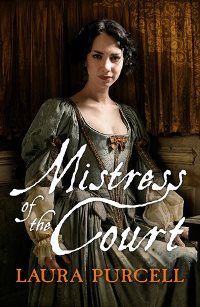
The women behind the Georgian throne: Laura Purcell's Mistress of the Court
In her second entertaining novel about the Georgian royals, Laura Purcell explores the complex interdependencies between two intelligent women and intergenerational strife at the realm’s highest level.
In 1712, Henrietta Howard is in desperate straits. Tied to an abusive husband, and short on funds to raise their son, Henrietta takes the impulsive step to leave England, board a ship to Germany, and throw herself on the mercy of Sophia, Dowager Electress of Hanover, elderly heiress to Britain’s throne. She finds a sympathetic ear not only in Sophia but also in her grandson’s wife, Princess Caroline; the warm rapport between Sophia and Caroline is charming to witness.
When word finally arrives of Queen Anne’s death – alas, six weeks after Sophia’s own death – the royal party heads to London, where Sophia’s haughty son, now George I, is crowned king. However, Caroline’s protection has a price. Caroline’s husband George, Prince of Wales, decides to take a mistress. They have an affectionate marriage, but it’s what princes do. A clever woman with behind-the-scenes influence, Caroline knows of Henrietta’s discretion and agreeable nature. Rather than leave it to chance, she pressures Henrietta to take the role.
Through their alternating viewpoints, Purcell highlights the commonalities the two women share, as well as the shifting tensions in their one-time friendship. Loving mothers, both, they endure long-term separations from their sons and suffer the unfortunate consequences. From architecture to politics to women’s circumscribed roles, Georgian London comes into clear view.
Delightful little details bring the era alive, such as a scene in which Caroline’s hair is blasted with powder-blowers until her “buttery locks were curls of snow.” It all works to serve the storyline; the history-fiction balance is essentially perfect. The writing style is very approachable, too, making this a great read for royalty fans and also for newcomers to historical fiction.
Mistress of the Court was published by Myrmidon (UK) last year (£8.99 paperback, or $4.99 on Kindle, 448pp). The US paperback will be out in May ($14.95). This was a personal purchase – I'd preordered a Kindle copy after enjoying Purcell's Queen of Bedlam two years ago. This review previously appeared in the Historical Novels Review's February issue.
In 1712, Henrietta Howard is in desperate straits. Tied to an abusive husband, and short on funds to raise their son, Henrietta takes the impulsive step to leave England, board a ship to Germany, and throw herself on the mercy of Sophia, Dowager Electress of Hanover, elderly heiress to Britain’s throne. She finds a sympathetic ear not only in Sophia but also in her grandson’s wife, Princess Caroline; the warm rapport between Sophia and Caroline is charming to witness.
When word finally arrives of Queen Anne’s death – alas, six weeks after Sophia’s own death – the royal party heads to London, where Sophia’s haughty son, now George I, is crowned king. However, Caroline’s protection has a price. Caroline’s husband George, Prince of Wales, decides to take a mistress. They have an affectionate marriage, but it’s what princes do. A clever woman with behind-the-scenes influence, Caroline knows of Henrietta’s discretion and agreeable nature. Rather than leave it to chance, she pressures Henrietta to take the role.
Through their alternating viewpoints, Purcell highlights the commonalities the two women share, as well as the shifting tensions in their one-time friendship. Loving mothers, both, they endure long-term separations from their sons and suffer the unfortunate consequences. From architecture to politics to women’s circumscribed roles, Georgian London comes into clear view.
Delightful little details bring the era alive, such as a scene in which Caroline’s hair is blasted with powder-blowers until her “buttery locks were curls of snow.” It all works to serve the storyline; the history-fiction balance is essentially perfect. The writing style is very approachable, too, making this a great read for royalty fans and also for newcomers to historical fiction.
Mistress of the Court was published by Myrmidon (UK) last year (£8.99 paperback, or $4.99 on Kindle, 448pp). The US paperback will be out in May ($14.95). This was a personal purchase – I'd preordered a Kindle copy after enjoying Purcell's Queen of Bedlam two years ago. This review previously appeared in the Historical Novels Review's February issue.
Friday, February 19, 2016
Reassembling the past: The Photographer's Wife by Suzanne Joinson
It was hard to get a handle on the plot of The Photographer’s Wife. For a good long while, I felt like I was glimpsing the characters and their situations through fractured glass. Individual scenes were clear, but the full picture of the characters and motivations remained muddled until close to the end. It made for a distancing reading experience.
On the other hand, the style meshes well with the novel’s themes of dislocation and the resurfacing of the past in unexpected ways.
The heroine isn’t the woman of the title but an 11-year-old British girl, Prue Ashton, sent to live with her father in Jerusalem in 1920, after her mother is placed in a mental institution. Charles Ashton, appointed as a civic adviser, has a plan to redesign the city in orderly English fashion, complete with gardens and trees, and without understanding how disruptive it would be to local culture or religious laws.
Neglected by her father, Prue roams around alone with her Kodak, gets tutored in Arabic by a Turkish man, Ihsan Tameri, and becomes caught up in intrigues beyond her ken which play out among the adults around her. These include the past shared between pilot William Harrington, a shell-shocked veteran hired to survey the city by air, and beautiful Eleanora Rasul, wife of a famous Arab photographer. Prue's also too young to take in the surreptitious plans of the Arab nationalist movement, or Ihsan’s true motives for spending time with the lonely girl.
Seventeen years later, Prue is a sculptor living in a ramshackle environment on England's south coast, a divorcee with a six-year-old son, Skip. She has repeated the pattern set by her own early life, letting Skip run wild while focusing her intense passions on her art. Then a visiting journalist starts asking odd questions – ones not dealing with her profession, but the half-year she spent in Jerusalem as a child.
The story spreads out over multiple periods, and with flashbacks nested inside flashbacks, which feels rather unsettling. Intensifying this feeling are the many characters with unsavory incidents in their pasts, and who are difficult to warm to.
Amid the impressionistic prose are thoughtful and striking meditations on the settings and themes:
Most people – she had discovered – gave it great symbolism, arriving in Jerusalem. They had planned it and read and dreamed and thought about it for such a long time before coming and they all seemed to have such hopes about the city and when they got here they were always rather cross. It was never quite what they were looking for.
I highlighted this phrase, and others, but what kept me reading was the desire to know how everything came together. What transformed Prue from an eager-to-please, precocious girl into a defiantly independent woman? What secrets from the past does she unknowingly hold?
This book is for those who appreciate atmospheric literary fiction and character-centered mysteries, provided they have sufficient patience and don’t mind the company of difficult, selfish people.
The Photographer's Wife was published this month by Bloomsbury USA ($26.00, hb, 352pp). Thanks to the publisher for approving my NetGalley request.
On the other hand, the style meshes well with the novel’s themes of dislocation and the resurfacing of the past in unexpected ways.
The heroine isn’t the woman of the title but an 11-year-old British girl, Prue Ashton, sent to live with her father in Jerusalem in 1920, after her mother is placed in a mental institution. Charles Ashton, appointed as a civic adviser, has a plan to redesign the city in orderly English fashion, complete with gardens and trees, and without understanding how disruptive it would be to local culture or religious laws.
Neglected by her father, Prue roams around alone with her Kodak, gets tutored in Arabic by a Turkish man, Ihsan Tameri, and becomes caught up in intrigues beyond her ken which play out among the adults around her. These include the past shared between pilot William Harrington, a shell-shocked veteran hired to survey the city by air, and beautiful Eleanora Rasul, wife of a famous Arab photographer. Prue's also too young to take in the surreptitious plans of the Arab nationalist movement, or Ihsan’s true motives for spending time with the lonely girl.
Seventeen years later, Prue is a sculptor living in a ramshackle environment on England's south coast, a divorcee with a six-year-old son, Skip. She has repeated the pattern set by her own early life, letting Skip run wild while focusing her intense passions on her art. Then a visiting journalist starts asking odd questions – ones not dealing with her profession, but the half-year she spent in Jerusalem as a child.
The story spreads out over multiple periods, and with flashbacks nested inside flashbacks, which feels rather unsettling. Intensifying this feeling are the many characters with unsavory incidents in their pasts, and who are difficult to warm to.
Amid the impressionistic prose are thoughtful and striking meditations on the settings and themes:
Most people – she had discovered – gave it great symbolism, arriving in Jerusalem. They had planned it and read and dreamed and thought about it for such a long time before coming and they all seemed to have such hopes about the city and when they got here they were always rather cross. It was never quite what they were looking for.
I highlighted this phrase, and others, but what kept me reading was the desire to know how everything came together. What transformed Prue from an eager-to-please, precocious girl into a defiantly independent woman? What secrets from the past does she unknowingly hold?
This book is for those who appreciate atmospheric literary fiction and character-centered mysteries, provided they have sufficient patience and don’t mind the company of difficult, selfish people.
The Photographer's Wife was published this month by Bloomsbury USA ($26.00, hb, 352pp). Thanks to the publisher for approving my NetGalley request.
Sunday, February 14, 2016
Encore, encore: a gallery of second novels (historical, of course) for 2016
Until I looked around online just now, I hadn't realized there was a literary prize for second novels: the Encore Award, which comes with a hefty purse of £10,000. It's currently celebrating its 25th anniversary. What a great idea. As its web page states: "The award fills a niche in the catalogue of literary prizes by
celebrating the achievement of outstanding second novels, often
neglected in comparison to the attention given to promising first books."
Back in January, I'd posted a gallery of 2016 debuts. I'd already been thinking about a new post focusing on authors' second historical novels, so here we go: below are a dozen sophomore works of historical fiction to be published in 2016. They're all by women, not by design, but I didn't come across relevant titles by men in a quick scan through forthcoming titles (let me know what I've missed). If these sound good, you can check out the authors' first efforts also.

Following upon An Appetite for Violets (see review) is a new culinary tale of psychological suspense. Set in early 19th-century Manchester, England, it's about a young wife, her cook, a failing marriage, and a desperate secret. Thomas Dunne, January 2016. The UK title is The Penny Heart.

An artistic young Scotswoman and a French soldier, childhood friends who had stayed in touch for years via letters, are reunited under difficult circumstances in WWI France. Brockmole's debut was the bestselling epistolary novel Letters from Skye (see my interview). Ballantine, May 2016.

Jessie Burton's The Miniaturist, set in 17th-century Amsterdam, was a major bestseller and Waterstones' Book of the Year for 2014. Her second novel moves ahead in time, to Spain of 1936 and London thirty years later, in a tale of two women, art, and deception. I have a galley, but the cover is different than the above, so the art may be changing. Ecco, July 2016.

DiSclafani's second book after The Yonahlossee Riding Camp for Girls, which took place in the '30s, focuses on the vibrant society of 1950s Houston, Texas, and a complicated tale of women's friendship. Riverhead, May 2016.

A tale of glamour, privilege, secrets, and tragedy involving two outcasts, a British journalist and a rich American businessman's wife, who meet and reconnect on the Italian Riviera in the 1950s. Her first novel was The Book of Lost and Found (see review). Little, Brown, August 2016.

Four years after publication of The Snow Child, a magical tale set in 1920s Alaska (which I haven't read yet but which was highly recommended to me), comes Ivey's new novel about the people involved in an expedition deep into the central Alaskan wilderness in 1885. Little, Brown, August 2016.

Second in a duology about 7th-century Empress Wu, China's only female ruler, Randel's novel continues the story begun in The Moon in the Palace, following Mei and her fight to secure China's future – and against her royal lover's murderous wife. I loved book one and am eager to read the sequel. Sourcebooks Landmark, April 2016.

Rindell's next novel after The Other Typist, a novel of obsession and secrets in Prohibition-era NYC, stars three ambitious individuals aiming to succeed in the cutthroat world of book publishing in late '50s Greenwich Village. Putnam, April 2016.

Phyllis T. Smith's first novel I Am Livia (see my interview) was an enjoyable take on Livia Drusilla, wife of Emperor Augustus. Daughters of Palatine Hill, as you can assume from the title, remains in imperial Rome, recounting the intrigue-filled story of Selene, Cleopatra's daughter; Julia, Augustus' only child; and Livia, in her later life. Lake Union, February 2016.

The lives of two women -- a Jewish socialite who had abandoned her child, and the working-class Irish Catholic woman who took the baby in -- become intertwined in post-WWI coastal Massachusetts. Solomon's first novel was The Little Bride, literary fiction set in the 19th-century West. Viking, July 2016.

Continuing the poignant story of the Morgan family of Scranton, Pennsylvania, sixteen years after the first book (the excellent Sing in the Morning, Cry at Night), All Waiting Is Long, set in the '30s, recounts the complex relationship between Violet Morgan and her younger sister, Lily, in a world full of social strife. Akashic/Kaylie Jones, July 2016.

A young woman, newly arrived in small-town Illinois in 1874, is forced to accede to her mother's deceptive behavior while struggling to find a place for herself in an environment of political intrigue and the fight for women's rights. Volmer's first novel was Crown of Dust, set during the California Gold Rush. Soho, May 2016.
Back in January, I'd posted a gallery of 2016 debuts. I'd already been thinking about a new post focusing on authors' second historical novels, so here we go: below are a dozen sophomore works of historical fiction to be published in 2016. They're all by women, not by design, but I didn't come across relevant titles by men in a quick scan through forthcoming titles (let me know what I've missed). If these sound good, you can check out the authors' first efforts also.
Following upon An Appetite for Violets (see review) is a new culinary tale of psychological suspense. Set in early 19th-century Manchester, England, it's about a young wife, her cook, a failing marriage, and a desperate secret. Thomas Dunne, January 2016. The UK title is The Penny Heart.
An artistic young Scotswoman and a French soldier, childhood friends who had stayed in touch for years via letters, are reunited under difficult circumstances in WWI France. Brockmole's debut was the bestselling epistolary novel Letters from Skye (see my interview). Ballantine, May 2016.
Jessie Burton's The Miniaturist, set in 17th-century Amsterdam, was a major bestseller and Waterstones' Book of the Year for 2014. Her second novel moves ahead in time, to Spain of 1936 and London thirty years later, in a tale of two women, art, and deception. I have a galley, but the cover is different than the above, so the art may be changing. Ecco, July 2016.
DiSclafani's second book after The Yonahlossee Riding Camp for Girls, which took place in the '30s, focuses on the vibrant society of 1950s Houston, Texas, and a complicated tale of women's friendship. Riverhead, May 2016.
A tale of glamour, privilege, secrets, and tragedy involving two outcasts, a British journalist and a rich American businessman's wife, who meet and reconnect on the Italian Riviera in the 1950s. Her first novel was The Book of Lost and Found (see review). Little, Brown, August 2016.
Four years after publication of The Snow Child, a magical tale set in 1920s Alaska (which I haven't read yet but which was highly recommended to me), comes Ivey's new novel about the people involved in an expedition deep into the central Alaskan wilderness in 1885. Little, Brown, August 2016.
Second in a duology about 7th-century Empress Wu, China's only female ruler, Randel's novel continues the story begun in The Moon in the Palace, following Mei and her fight to secure China's future – and against her royal lover's murderous wife. I loved book one and am eager to read the sequel. Sourcebooks Landmark, April 2016.
Rindell's next novel after The Other Typist, a novel of obsession and secrets in Prohibition-era NYC, stars three ambitious individuals aiming to succeed in the cutthroat world of book publishing in late '50s Greenwich Village. Putnam, April 2016.
Phyllis T. Smith's first novel I Am Livia (see my interview) was an enjoyable take on Livia Drusilla, wife of Emperor Augustus. Daughters of Palatine Hill, as you can assume from the title, remains in imperial Rome, recounting the intrigue-filled story of Selene, Cleopatra's daughter; Julia, Augustus' only child; and Livia, in her later life. Lake Union, February 2016.
The lives of two women -- a Jewish socialite who had abandoned her child, and the working-class Irish Catholic woman who took the baby in -- become intertwined in post-WWI coastal Massachusetts. Solomon's first novel was The Little Bride, literary fiction set in the 19th-century West. Viking, July 2016.
Continuing the poignant story of the Morgan family of Scranton, Pennsylvania, sixteen years after the first book (the excellent Sing in the Morning, Cry at Night), All Waiting Is Long, set in the '30s, recounts the complex relationship between Violet Morgan and her younger sister, Lily, in a world full of social strife. Akashic/Kaylie Jones, July 2016.
A young woman, newly arrived in small-town Illinois in 1874, is forced to accede to her mother's deceptive behavior while struggling to find a place for herself in an environment of political intrigue and the fight for women's rights. Volmer's first novel was Crown of Dust, set during the California Gold Rush. Soho, May 2016.

Wednesday, February 10, 2016
Out of step with the century: a review of Sanctuary, a moody YA ghost story
In this moody historical ghost story, nearly everything – the house at its center, the characters, their relationships – feels slightly out of step with the real world. McKissack has successfully infused her debut novel with the Gothic-ness the genre requires.
Cecilia Cross, an introspective 17-year-old, tells us her former classmates found her odd: “Maybe the sea, something to do with being from an island… you seem like you’re from someplace else.” After her boarding school tuition is abruptly cut off following her Aunt Laura’s death, Cecilia returns home to Sanctuary, an immense 18th-century mansion on a windswept Maine isle. Ten years earlier, following the ’29 crash, Cecilia’s father committed suicide; five years afterward, her older sister and grandmother died in a fire, and her mother was placed in an asylum. Numerous misfortunes are piled upon our heroine’s shoulders.
Cecilia finds herself dependent on her unstable, cruel uncle, who wants her gone. Eli Bauer, a young professor on site to study Sanctuary’s extensive book collection, seems her only hope, and they spend time exploring the island’s graveyards and wild regions, slowly falling in love in the process. There are many unsettling presences, though, ones that Cecilia can sense. They draw her into a whirlwind of mystery and tragedy involving the Acadians’ expulsion from Nova Scotia two centuries earlier.
This sorrowful episode, and Cecilia’s ties to it, is fascinating to explore, but it takes a long time for the plot strands to come together. The larger issue, though? Cecilia’s nearly an adult, in 1939, with no apparent plans for her future nor means to support herself. She wanders around a lot while others handle the daily chores. And the family supposedly isn’t wealthy anymore; one wonders how a mansion of Sanctuary’s size stays running. Recommended for YA and adult readers wanting to indulge in Gothic atmosphere without worrying about practicalities.
Jennifer McKissack's Sanctuary was published by Scholastic last September in hardcover ($17.99, 306pp), and this review also appears in the Historical Novels Review's February reviews. The novel shows promise, although I had been hoping for more complete world-building. Judging by other reviews I've read, my reaction is unusual. This is a Gothic tale that, for me, would have worked better if set in an earlier time when finding a worthy husband was a young woman's single-minded goal. But, set in 1939, the story didn't work for me as much as I'd hoped. Like Da Vinci's Tiger, this is also a YA historical novel, and the pair make for a study in contrasts.
Cecilia Cross, an introspective 17-year-old, tells us her former classmates found her odd: “Maybe the sea, something to do with being from an island… you seem like you’re from someplace else.” After her boarding school tuition is abruptly cut off following her Aunt Laura’s death, Cecilia returns home to Sanctuary, an immense 18th-century mansion on a windswept Maine isle. Ten years earlier, following the ’29 crash, Cecilia’s father committed suicide; five years afterward, her older sister and grandmother died in a fire, and her mother was placed in an asylum. Numerous misfortunes are piled upon our heroine’s shoulders.
Cecilia finds herself dependent on her unstable, cruel uncle, who wants her gone. Eli Bauer, a young professor on site to study Sanctuary’s extensive book collection, seems her only hope, and they spend time exploring the island’s graveyards and wild regions, slowly falling in love in the process. There are many unsettling presences, though, ones that Cecilia can sense. They draw her into a whirlwind of mystery and tragedy involving the Acadians’ expulsion from Nova Scotia two centuries earlier.
This sorrowful episode, and Cecilia’s ties to it, is fascinating to explore, but it takes a long time for the plot strands to come together. The larger issue, though? Cecilia’s nearly an adult, in 1939, with no apparent plans for her future nor means to support herself. She wanders around a lot while others handle the daily chores. And the family supposedly isn’t wealthy anymore; one wonders how a mansion of Sanctuary’s size stays running. Recommended for YA and adult readers wanting to indulge in Gothic atmosphere without worrying about practicalities.
~
Jennifer McKissack's Sanctuary was published by Scholastic last September in hardcover ($17.99, 306pp), and this review also appears in the Historical Novels Review's February reviews. The novel shows promise, although I had been hoping for more complete world-building. Judging by other reviews I've read, my reaction is unusual. This is a Gothic tale that, for me, would have worked better if set in an earlier time when finding a worthy husband was a young woman's single-minded goal. But, set in 1939, the story didn't work for me as much as I'd hoped. Like Da Vinci's Tiger, this is also a YA historical novel, and the pair make for a study in contrasts.
Saturday, February 06, 2016
The voice of a Renaissance heroine: a review of L. M. Elliott's Da Vinci's Tiger
When there are gems like this to be found, it’s no wonder adults get in the habit of raiding bookstores’ YA sections. This lyrical character-driven novel is narrated by 17-year-old Ginevra de’ Benci Niccolini, daughter of a banking family in 15th-century Florence, who was one of Leonardo da Vinci’s early subjects. His painting of her is groundbreaking for its forward-facing gaze and backdrop of the natural world. Ginevra was also a poet, although only one line remains of her writing (the book’s title derives from this).*
Ginevra is the wife of a kind but distant wool merchant twice her age. Her marriage was arranged by her uncle and Lorenzo de’ Medici, and despite her convent education and spirited wit, she’s used to having little say in her life. However, when Venetian ambassador Bernardo Bembo decides to make her his Platonic lover and commissions her portrait, it pushes her to consider delicate matters of the heart, especially when Bembo seems to want more than idolizing her from afar. Her sympathetic mentor, Abbess Scolastica, gives her wise advice on how she can retain her virtue and make her own voice heard.
Ginevra’s movements around the city create a richly detailed tour of Florentine history and culture, from an exciting joust at the Piazza di Santa Croce to the peace of the Le Murate convent – famous for its sisters’ gold-thread embroidery – to a fancy dinner party at the Palazzo Medici, where the strange new table fork is introduced. Elliott also brings readers into the studio with Leonardo, imagining the artistic decisions behind Ginevra’s portrait. Her research is thorough and enthusiastic, so much so that Ginevra’s story sometimes fades into the background, but anyone fascinated by the setting won’t mind. Speaking to the theme of women’s agency in restrictive times, this is a beautiful and thoughtful read for teenagers on up.
~
Da Vinci's Tiger by L. M. Elliott was published by Katherine Tegen Books, an imprint of HarperCollins, in late 2015 ($17.99, hardcover, 304pp). I had been pre-approved for this title on Edelweiss and had some free time over the Christmas holidays, so I started reading it and got into the story quickly. This review also appeared in February's Historical Novels Review.
Although you'll find this novel categorized as Young Adult, it can be read and enjoyed as an adult title just as easily. Are there other YA historical novels you can think of that feature heroines who are already married as the book opens? That aspect was new for me, and I appreciated the author's adherence to historical accuracy in that respect, and others.
Read more about Leonardo da Vinci's portrait of Ginevra (above), the only painting of his on display in the Americas, at the National Gallery of Art website.
* The one line of poetry by Ginevra de' Benci that's come down to us is: "I beg your pardon, I am a mountain tiger."
Ginevra is the wife of a kind but distant wool merchant twice her age. Her marriage was arranged by her uncle and Lorenzo de’ Medici, and despite her convent education and spirited wit, she’s used to having little say in her life. However, when Venetian ambassador Bernardo Bembo decides to make her his Platonic lover and commissions her portrait, it pushes her to consider delicate matters of the heart, especially when Bembo seems to want more than idolizing her from afar. Her sympathetic mentor, Abbess Scolastica, gives her wise advice on how she can retain her virtue and make her own voice heard.
Ginevra’s movements around the city create a richly detailed tour of Florentine history and culture, from an exciting joust at the Piazza di Santa Croce to the peace of the Le Murate convent – famous for its sisters’ gold-thread embroidery – to a fancy dinner party at the Palazzo Medici, where the strange new table fork is introduced. Elliott also brings readers into the studio with Leonardo, imagining the artistic decisions behind Ginevra’s portrait. Her research is thorough and enthusiastic, so much so that Ginevra’s story sometimes fades into the background, but anyone fascinated by the setting won’t mind. Speaking to the theme of women’s agency in restrictive times, this is a beautiful and thoughtful read for teenagers on up.
~
Da Vinci's Tiger by L. M. Elliott was published by Katherine Tegen Books, an imprint of HarperCollins, in late 2015 ($17.99, hardcover, 304pp). I had been pre-approved for this title on Edelweiss and had some free time over the Christmas holidays, so I started reading it and got into the story quickly. This review also appeared in February's Historical Novels Review.
Although you'll find this novel categorized as Young Adult, it can be read and enjoyed as an adult title just as easily. Are there other YA historical novels you can think of that feature heroines who are already married as the book opens? That aspect was new for me, and I appreciated the author's adherence to historical accuracy in that respect, and others.
Read more about Leonardo da Vinci's portrait of Ginevra (above), the only painting of his on display in the Americas, at the National Gallery of Art website.
* The one line of poetry by Ginevra de' Benci that's come down to us is: "I beg your pardon, I am a mountain tiger."
Tuesday, February 02, 2016
Book review: The Forgotten Room by Karen White, Beatriz Williams, and Lauren Willig
This multi-generational novel, set between 1892 and 1944, is jointly written by three people, all bestselling authors (and good friends), but the smooth writing style makes it hard to tell it’s a collaborative effort. That said, I had fun guessing who wrote what.
The three heroines are introduced one after the other. During WWII, while on duty at a private hospital on East 69th St. in Manhattan, Dr. Kate Schuyler is surprised by her attraction to a new patient, Captain Cooper Ravenel, and his possession of a miniature portrait that resembles her greatly. At the height of the Gilded Age, gentle Olive Van Alan goes into service at the elegant Pratt Mansion, concealing her identity, and planning revenge on the rich family that ruined her father. Lastly, in 1920, Lucy Young, a German baker’s spirited daughter, takes up residence at a women’s boardinghouse, hoping to uncover her mother’s connection to the place.
The house in all three stories is the same. By the time the second iteration of Kate’s narrative came around, I was hooked, wondering how each woman’s story would turn out, and curious about the origins of the portrait and Kate’s ruby necklace.
Genealogy buffs will appreciate the unfolding mystery; I found myself sketching a family tree as relationships slowly fell into place. With its themes of lost grandeur, poignant romance, and the elusiveness of the past, the plot has a grand emotional sweep. It also addresses social barriers and the challenges women face in the working world. Through the role the house plays in each era, too – a status symbol, a respectable residence, and a utilitarian building – it symbolizes the changes transforming American society. This is an absorbing standalone novel, but fans of the authors’ previous books will notice some references left just for them.
The Forgotten Room was published by NAL in January ($25.95/C$33.95, hb, 371pp). This review first appeared in February's Historical Novels Review.
The three heroines are introduced one after the other. During WWII, while on duty at a private hospital on East 69th St. in Manhattan, Dr. Kate Schuyler is surprised by her attraction to a new patient, Captain Cooper Ravenel, and his possession of a miniature portrait that resembles her greatly. At the height of the Gilded Age, gentle Olive Van Alan goes into service at the elegant Pratt Mansion, concealing her identity, and planning revenge on the rich family that ruined her father. Lastly, in 1920, Lucy Young, a German baker’s spirited daughter, takes up residence at a women’s boardinghouse, hoping to uncover her mother’s connection to the place.
The house in all three stories is the same. By the time the second iteration of Kate’s narrative came around, I was hooked, wondering how each woman’s story would turn out, and curious about the origins of the portrait and Kate’s ruby necklace.
Genealogy buffs will appreciate the unfolding mystery; I found myself sketching a family tree as relationships slowly fell into place. With its themes of lost grandeur, poignant romance, and the elusiveness of the past, the plot has a grand emotional sweep. It also addresses social barriers and the challenges women face in the working world. Through the role the house plays in each era, too – a status symbol, a respectable residence, and a utilitarian building – it symbolizes the changes transforming American society. This is an absorbing standalone novel, but fans of the authors’ previous books will notice some references left just for them.
The Forgotten Room was published by NAL in January ($25.95/C$33.95, hb, 371pp). This review first appeared in February's Historical Novels Review.
Friday, January 29, 2016
Midnight in St. Petersburg by Vanora Bennett - review and giveaway
Opening in Russia in 1911, Midnight in St. Petersburg features a young woman seeking refuge, a tense love triangle, the dangerous stirrings of revolution, and the subsequent destruction of ideals. Music plays a part, too. In her newest historical novel to reach an American audience, Vanora Bennett takes an understated, thought-provoking approach to what could have been a dramatically over-the-top plotline.
The heroine, Inna Feldman, is a sympathetic figure, at least to start. Alarmed by the growing anti-Jewish sentiment in Kiev, and having nowhere else to go after the distant cousins with whom she lived flee the country, Inna boards a train to St. Petersburg with stolen papers. She plans to take refuge with Yasha Kagan, her relatives’ son, whom she’s never met.
En route, she meets up with a kind peasant who knows the capital city and guides her to her destination. It’s not difficult to guess the identity of “Father Grigori” – Rasputin has a way of inserting himself into historical novels of the period – but his is a different depiction than the usual, and his transformation over time fits the themes Bennett aims to convey.
Taken in by the boisterous Leman family of violin-makers, Yasha’s landlords and employers, Inna finds a tentative home in St. Petersburg. Attracted to Yasha despite his strong socialist leanings and hot-and-cold attitude towards her, Inna also feels drawn to Horace Wallick, an Englishman twice her age who crafts elaborate Faberge eggs and has members of the Russian nobility as customers. Some of the decisions Inna makes with regard to her two suitors won’t endear her to readers, and may discourage further reading through the novel’s long middle section, but her full character arc proves rewarding to follow in the end.
In this literary novel, expressive symbolism is found in minute details. One scene in which Yasha aims to restore Inna’s pride in her Jewish heritage through his violin, “trying to play away her fear,” is deeply moving in its insight – as is her reaction. Many aspects of life in revolutionary Russia turn out differently than its people intend.
Bennett puts her extensive knowledge of the place and period (she lived in Russia for seven years and is fluent in the language) to excellent use in her tale of ordinary people altered by treacherous, uncontrollable circumstances and discovering what matters most to them.
Midnight in St. Petersburg is published by Thomas Dunne/St. Martin's Press this month ($25.99, hb, 371pp, plus an informative author's afterword explaining Bennett's connection to the material; Horace Wallick was a relative). Thanks to the publisher for sending a review copy.
The heroine, Inna Feldman, is a sympathetic figure, at least to start. Alarmed by the growing anti-Jewish sentiment in Kiev, and having nowhere else to go after the distant cousins with whom she lived flee the country, Inna boards a train to St. Petersburg with stolen papers. She plans to take refuge with Yasha Kagan, her relatives’ son, whom she’s never met.
En route, she meets up with a kind peasant who knows the capital city and guides her to her destination. It’s not difficult to guess the identity of “Father Grigori” – Rasputin has a way of inserting himself into historical novels of the period – but his is a different depiction than the usual, and his transformation over time fits the themes Bennett aims to convey.
Taken in by the boisterous Leman family of violin-makers, Yasha’s landlords and employers, Inna finds a tentative home in St. Petersburg. Attracted to Yasha despite his strong socialist leanings and hot-and-cold attitude towards her, Inna also feels drawn to Horace Wallick, an Englishman twice her age who crafts elaborate Faberge eggs and has members of the Russian nobility as customers. Some of the decisions Inna makes with regard to her two suitors won’t endear her to readers, and may discourage further reading through the novel’s long middle section, but her full character arc proves rewarding to follow in the end.
In this literary novel, expressive symbolism is found in minute details. One scene in which Yasha aims to restore Inna’s pride in her Jewish heritage through his violin, “trying to play away her fear,” is deeply moving in its insight – as is her reaction. Many aspects of life in revolutionary Russia turn out differently than its people intend.
Bennett puts her extensive knowledge of the place and period (she lived in Russia for seven years and is fluent in the language) to excellent use in her tale of ordinary people altered by treacherous, uncontrollable circumstances and discovering what matters most to them.
Midnight in St. Petersburg is published by Thomas Dunne/St. Martin's Press this month ($25.99, hb, 371pp, plus an informative author's afterword explaining Bennett's connection to the material; Horace Wallick was a relative). Thanks to the publisher for sending a review copy.
Update, 2/6/16: The giveaway has closed; it was one of my more popular contests! Congratulations to Brett C., and thanks to all who entered.
Sunday, January 24, 2016
Peter Golden's Wherever There Is Light, a panoramic tale of romance and social change
Tinted with melancholy and yearning, Golden’s decades-spanning literary romance follows two individuals whose enduring love is tested by their personal histories and their tumultuous times.
Kendall Wakefield and Julian Rose are an unlikely couple, especially in South Florida of 1938: she’s the artistically minded daughter of an African-American college’s female president, while he’s a German-Jewish man who became wealthy via bootlegging during Prohibition.
While Julian’s personality can be disconcerting—his enemies soon discover his expertise in Mafia-style intimidation, and his thoughts about his lover occasionally feel clichéd—Kendall is captivating, and her resolve to push past racial discrimination and succeed on her own terms feels piercingly real. Both have uneasy relationships with their family members, who are all vivid characters.
Each setting is re-created with a socially conscious eye, from the horrifying racism of the Jim Crow South to the Greenwich Village art scene to postwar Paris, whose residents’ emotional suffering hasn’t dimmed their appreciation for beauty. Julian and Kendall are independent, courageous people who grow over time, and their story feels undeniably romantic.
Wherever There Is Light was published by Atria, an imprint of Simon & Schuster, in November (hb, $25.00, 368pp). This review first appeared in Booklist's October issue. Read more in an interview with the author for the Gaston (NC) Gazette, where he discusses his inspiration for his work and the little-known story of how historically Black colleges gave refuge to Jewish academics fleeing Europe (such as Julian's father in the novel) in the 1930s.
Kendall Wakefield and Julian Rose are an unlikely couple, especially in South Florida of 1938: she’s the artistically minded daughter of an African-American college’s female president, while he’s a German-Jewish man who became wealthy via bootlegging during Prohibition.
While Julian’s personality can be disconcerting—his enemies soon discover his expertise in Mafia-style intimidation, and his thoughts about his lover occasionally feel clichéd—Kendall is captivating, and her resolve to push past racial discrimination and succeed on her own terms feels piercingly real. Both have uneasy relationships with their family members, who are all vivid characters.
Each setting is re-created with a socially conscious eye, from the horrifying racism of the Jim Crow South to the Greenwich Village art scene to postwar Paris, whose residents’ emotional suffering hasn’t dimmed their appreciation for beauty. Julian and Kendall are independent, courageous people who grow over time, and their story feels undeniably romantic.
Wherever There Is Light was published by Atria, an imprint of Simon & Schuster, in November (hb, $25.00, 368pp). This review first appeared in Booklist's October issue. Read more in an interview with the author for the Gaston (NC) Gazette, where he discusses his inspiration for his work and the little-known story of how historically Black colleges gave refuge to Jewish academics fleeing Europe (such as Julian's father in the novel) in the 1930s.
Wednesday, January 20, 2016
Book review: Stephen Harrigan's A Friend of Mr. Lincoln
Harrigan’s newest epic adds to his reputation as a stellar historical novelist. Set mostly in Illinois in the 1830s and '40s, it takes a powerfully astute look at the public and private sides of the young Abraham Lincoln and the agonizing struggles he endured trying to reconcile the two.
Paralleling his character development is that of Springfield, the prospective state capital, where hogs roam the dirty streets while speculators and political men muscle in, all seeking to “live a life of consequence.” Among the most prominent is Lincoln, a lanky and popular member of the General Assembly with a talent for off-color jokes and capturing a crowd’s attention.
The events are seen from the perspective of fictional poet Cage Weatherby, who becomes his close friend. This works well, for Cage also has a riveting personal story and can hold his own in scenes with Lincoln.
Full of wild ambition, yet awkward around women and prone to depression, Lincoln takes his time working out his approaches to the polarizing issue of slavery and to the ebullient and refined Mary Todd. In addition to fine character depictions, readers get a firsthand glimpse of early Illinois politics, a physically dangerous and occasionally bloody affair, while experiencing a tale about ethics, morality, and the nature of courage that feels as vital as today’s news.
A Friend of Mr. Lincoln will be published in early February by Knopf ($27.95, hb, 415pp). This is the version of a starred review that I'd submitted to Booklist for their January issue. I was so pleased to be asked to review this book; I had been seriously impressed by the author's earlier Remember Ben Clayton, plus this new novel takes place close to home. And for those familiar with the current state of Illinois politics, you'll want to read what it was like in Lincoln's time.
Paralleling his character development is that of Springfield, the prospective state capital, where hogs roam the dirty streets while speculators and political men muscle in, all seeking to “live a life of consequence.” Among the most prominent is Lincoln, a lanky and popular member of the General Assembly with a talent for off-color jokes and capturing a crowd’s attention.
The events are seen from the perspective of fictional poet Cage Weatherby, who becomes his close friend. This works well, for Cage also has a riveting personal story and can hold his own in scenes with Lincoln.
Full of wild ambition, yet awkward around women and prone to depression, Lincoln takes his time working out his approaches to the polarizing issue of slavery and to the ebullient and refined Mary Todd. In addition to fine character depictions, readers get a firsthand glimpse of early Illinois politics, a physically dangerous and occasionally bloody affair, while experiencing a tale about ethics, morality, and the nature of courage that feels as vital as today’s news.
A Friend of Mr. Lincoln will be published in early February by Knopf ($27.95, hb, 415pp). This is the version of a starred review that I'd submitted to Booklist for their January issue. I was so pleased to be asked to review this book; I had been seriously impressed by the author's earlier Remember Ben Clayton, plus this new novel takes place close to home. And for those familiar with the current state of Illinois politics, you'll want to read what it was like in Lincoln's time.
Wednesday, January 13, 2016
Historical fiction award winners: ALA Reading List, Langum Prize, Scott O'Dell Award
'Tis the season for book prize announcements. The American Library Association's Midwinter conference wraps up today, and many book award winners were made public at the event. In addition, two additional prizes for historical novels were announced in recent days.
First comes the ALA's Reading List award, which covers eight genre fiction categories, including Historical Fiction. The 2016 winner is Lissa Evans' Crooked Heart, published by Harper.
From the press release: "Raised by his eccentric ex-suffragette godmother to be a free-thinker, young Noel is thrown into chaos when the London Blitz forces him into the home of a scam artist loyal only to her layabout son. Thrust together, the two oddballs are forced to find a way through the wartime landscape."
The short list is as follows:
Jam on the Vine, LaShonda Katrice Barnett. Grove Press.
The Nightingale, Kristin Hannah. St. Martin’s Press.
Paradise Sky, Joe R. Lansdale. Mulholland Books.
The Truth According to Us, Annie Barrows. The Dial Press.
Girl Waits with Gun, Amy Stewart. Houghton Mifflin Harcourt.
I didn't see any historical novels among the winners in the other seven categories (although some appeared in the shortlists, like Kate Alcott's A Touch of Stardust, set in 1930s Hollywood, in the Women's Fiction category). For more, see the ALA press release.
Also announced at ALA:
The Sophie Brody Medal for Achievement in Jewish Literature went to: The Book of Aron by Jim Shepard (the Warsaw Ghetto, through a child's eyes)
The Book of Aron was also named to the 2016 Notable Books List.
The winner of the 2015 Langum Prize for American Historical Fiction was announced as Faith Sullivan's Good Night, Mr. Wodehouse, from Milkweed Editions.
From the press release: "Good Night, Mr. Wodehouse is an exquisite gem. Nell Stillman, the protagonist, is an Everywoman. She lived almost her entire adult life in an apartment above a meat market in the small town of Harvester, Minnesota ... The time of Nell's adult life, c. 1900-1961, saw many historical changes of significant character, for example, numerous improvements in appliances and other implements of women's work, W.W.I, women's suffrage, electrification, prohibition, W.W.II, and so on. The book does not neglect these historical events but presents then from the satisfying perspective of what they meant to this little town, and what they meant to Nell Stillman. Highly recommend."
Receiving an Honorary Mention for 2015 is Meg Waite Clayton's The Race for Paris, about American female war correspondents on the front lines overseas during WWII.
Finally, the winner of the 2016 Scott O'Dell Award for Historical Fiction, which covers titles for children and young adults set in the Americas, is Laura Amy Schlitz's The Hired Girl, about a 14-year-old Catholic girl sent to work for a Jewish family in Baltimore in 1911. More at the Horn Book site.
First comes the ALA's Reading List award, which covers eight genre fiction categories, including Historical Fiction. The 2016 winner is Lissa Evans' Crooked Heart, published by Harper.
From the press release: "Raised by his eccentric ex-suffragette godmother to be a free-thinker, young Noel is thrown into chaos when the London Blitz forces him into the home of a scam artist loyal only to her layabout son. Thrust together, the two oddballs are forced to find a way through the wartime landscape."
The short list is as follows:
Jam on the Vine, LaShonda Katrice Barnett. Grove Press.
The Nightingale, Kristin Hannah. St. Martin’s Press.
Paradise Sky, Joe R. Lansdale. Mulholland Books.
The Truth According to Us, Annie Barrows. The Dial Press.
Girl Waits with Gun, Amy Stewart. Houghton Mifflin Harcourt.
I didn't see any historical novels among the winners in the other seven categories (although some appeared in the shortlists, like Kate Alcott's A Touch of Stardust, set in 1930s Hollywood, in the Women's Fiction category). For more, see the ALA press release.
Also announced at ALA:
The Sophie Brody Medal for Achievement in Jewish Literature went to: The Book of Aron by Jim Shepard (the Warsaw Ghetto, through a child's eyes)
The Book of Aron was also named to the 2016 Notable Books List.
The winner of the 2015 Langum Prize for American Historical Fiction was announced as Faith Sullivan's Good Night, Mr. Wodehouse, from Milkweed Editions.
From the press release: "Good Night, Mr. Wodehouse is an exquisite gem. Nell Stillman, the protagonist, is an Everywoman. She lived almost her entire adult life in an apartment above a meat market in the small town of Harvester, Minnesota ... The time of Nell's adult life, c. 1900-1961, saw many historical changes of significant character, for example, numerous improvements in appliances and other implements of women's work, W.W.I, women's suffrage, electrification, prohibition, W.W.II, and so on. The book does not neglect these historical events but presents then from the satisfying perspective of what they meant to this little town, and what they meant to Nell Stillman. Highly recommend."
Receiving an Honorary Mention for 2015 is Meg Waite Clayton's The Race for Paris, about American female war correspondents on the front lines overseas during WWII.
Finally, the winner of the 2016 Scott O'Dell Award for Historical Fiction, which covers titles for children and young adults set in the Americas, is Laura Amy Schlitz's The Hired Girl, about a 14-year-old Catholic girl sent to work for a Jewish family in Baltimore in 1911. More at the Horn Book site.
Sunday, January 10, 2016
Faith and balance: Nicole Dweck's The Debt of Tamar
Set in the 16th century and in modern times, The Debt of Tamar isn’t your standard multi-period novel. Rather than alternating between eras, Nicole Dweck breaks the story into two parts – earlier and later – with an arching connection between them. Its appealing New Agey premise, that a debt incurred by one generation must be discharged by another to achieve karmic balance, is illustrated through her novel’s characters.
Apart from a few fantastic touches, the plot is grounded in real-world issues, both historic and contemporary, and hinges on how Jews were forced to conceal their faith to survive. In Portugal in 1544, José Mendez, raised as a devout Catholic by his wealthy aunt, Dona Antonia, is told about his true heritage as a Sephardic Jew after experiencing a tragic shock. Later circumstances force his family, including his beautiful cousin Reyna, to flee Lisbon for the enlightened city of Istanbul, whose sultan, Suleiman, lets his Jewish subjects live and worship in peace. However, for saving not only their lives but those of his future progeny, José owes Suleiman a great obligation, one which affects the life of his cherished daughter, Tamar.
Four centuries later, in 2002, it’s up to descendants of both families to set things right, although neither is aware that the debt exists. The protagonists here are Selim Osman, the “sole living descendant of the last Ottoman sultan” (an invented scenario) and Hannah Herzikova, daughter of a man rescued from the Holocaust as a baby by a French Christian family. The descriptions of Istanbul, richly ornamented and cosmopolitan in its past and present, are worth savoring, and to the author’s credit, the setting isn’t idealized; it’s not an idyllic paradise in either era.
However, the novel’s premise and fixed structure poses problems for character development. Some of their stories, like that of David Herzikova, Hannah’s father, are cut off abruptly, and the romantic connections between others aren’t fully explored. The story is emotionally gripping regardless, and all ends on a satisfying note. Anyone who enjoyed Naomi Ragen’s The Ghost of Hannah Mendes, about the brave historical figure on whom Dona Antonia is based, will want to dive in, too.
The Debt of Tamar was published in September by Thomas Dunne/St. Martin's Press ($25.99/hb/304pp). Thanks to the publisher for sending me a copy.
Apart from a few fantastic touches, the plot is grounded in real-world issues, both historic and contemporary, and hinges on how Jews were forced to conceal their faith to survive. In Portugal in 1544, José Mendez, raised as a devout Catholic by his wealthy aunt, Dona Antonia, is told about his true heritage as a Sephardic Jew after experiencing a tragic shock. Later circumstances force his family, including his beautiful cousin Reyna, to flee Lisbon for the enlightened city of Istanbul, whose sultan, Suleiman, lets his Jewish subjects live and worship in peace. However, for saving not only their lives but those of his future progeny, José owes Suleiman a great obligation, one which affects the life of his cherished daughter, Tamar.
Four centuries later, in 2002, it’s up to descendants of both families to set things right, although neither is aware that the debt exists. The protagonists here are Selim Osman, the “sole living descendant of the last Ottoman sultan” (an invented scenario) and Hannah Herzikova, daughter of a man rescued from the Holocaust as a baby by a French Christian family. The descriptions of Istanbul, richly ornamented and cosmopolitan in its past and present, are worth savoring, and to the author’s credit, the setting isn’t idealized; it’s not an idyllic paradise in either era.
However, the novel’s premise and fixed structure poses problems for character development. Some of their stories, like that of David Herzikova, Hannah’s father, are cut off abruptly, and the romantic connections between others aren’t fully explored. The story is emotionally gripping regardless, and all ends on a satisfying note. Anyone who enjoyed Naomi Ragen’s The Ghost of Hannah Mendes, about the brave historical figure on whom Dona Antonia is based, will want to dive in, too.
The Debt of Tamar was published in September by Thomas Dunne/St. Martin's Press ($25.99/hb/304pp). Thanks to the publisher for sending me a copy.
Subscribe to:
Posts (Atom)