Tuesday, February 25, 2025

Which promotional blurbs matter the most to historical fiction readers?

The literary world has been having a long-overdue conversation about the practice of blurbing, that is, writers providing promotional endorsements for each other’s books. This was spurred by Sean Manning, publisher at Simon & Schuster’s imprint of the same name, who wrote an essay for Publishers Weekly explaining why they’d no longer expect their writers to obtain blurbs. “Trying to get blurbs is not a good use of anyone’s time,” he writes, among many other good points. “Instead, authors who are soliciting them could be writing their next book… worse, this kind of favor trading creates an incestuous and unmeritocratic literary ecosystem that often rewards connections over talent.”

 Others in the industry have shared their own takes:

From NPR Books' newsletter: Hey, would you mind blurbing my book? 

From Elisabeth Egan in the New York Times: What are book blurbs, and how much do they matter in publishing? (gift article) 

Publicist Kathleen Schmidt, from her Substack: Let's Talk About Blurbs... Again

Author Rebecca Makkai: Blurb No More - written before Sean Manning's essay came out.


Four books with a multitude of blurbs
Blurbs, blurbs, and more blurbs


Blurbs from peers can provide encouragement for authors, especially debuts, and contribute to a sense of belonging in the literary sphere. But since presumably the goal of all involved – publishers, authors, and agents – is to sell books, it should matter if readers find blurbs useful or not. And the consensus is that they don’t – or, at best, “we don’t know.”

As a book critic and avid reader, blurbs come across my desk and inbox all the time but usually don't, in themselves, encourage me to take a closer look. Blurbs are good at demonstrating their writers’ connections in the industry: fellow authors within the same category (like historical women’s fiction); authors who share the same publisher or literary agent; or writers and faculty from the same MFA program.

Some novels include a voluminous list of blurbs that go on for pages. Why so many? Nobody's going to read them all, and all I can think is how many total hours were spent on that exercise. It's not easy to provide a nice précis while extolling the book’s appeal in an original way. Just like reviewing, blurbing takes time and skill.

I know this personally, since I’ve been on the receiving end of blurb requests a handful of times. I was pleased to be asked and enjoyed the books but have decided to stick with reviewing. Also, several instances after I spent time reading a book and crafting a blurb, the author’s publisher decided it wasn’t valuable enough to use (the unspoken message is that I lack name recognition!). This wasn’t the author’s fault, but it was discouraging.

Blurbs' strongest asset is their ability to provide clues, in a readers’ advisory sense, about what type of book you'll be getting. This only works if readers recognize the names of the authors providing the quotes, and are familiar with what they write.

Some blurbs can be confusing if not outright detrimental, with regard to helping a book find its audience. I’ve seen works of commercial historical fiction arrive with blurbs by authors of literary short story anthologies – a big disconnect. I’ve also seen blurbs for historical novels written by professionals in unrelated fields who may have been personal friends. Best to skip soliciting those.

Here are specific instances when, as a reader and reviewer, blurbs have piqued my interest:

- Novels by new-to-me writers, especially those with small or indie presses, blurbed by well-known authors whose works I admire.

Some examples. I had recently seen the Publishers Marketplace deal for Esperanza Hope Snyder’s Orange Wine and made a mental note to watch for it, since it’s set in early 20th-century Colombia and had an intriguing plot. It appeared on NetGalley last week with a blurb from Margot Livesey, whose The Road from Belhaven I loved. I put in a request for it. For another: C. F. Dunn’s Wheel of Fortune has a cover endorsement from Elizabeth Chadwick, who calls it “the best Wars of the Roses novel I have ever read.” This doesn’t guarantee I’ll love either book, but were these blurbs effective? Yes. 

- When a major author in the genre praises any book. The late Hilary Mantel was known for her generosity towards other writers, as well as her discernment. If she praised a book, I paid attention.  Her comments were always brilliantly phrased, too.

Katherine J. Chen's Joan and Hilary Mantel blurb
The book cover, and a close-up.
What do you think... is this blurb persuasive?


- Novels in which the author’s moving to a new genre or subgenre and seeking to expand their audience. If the blurbers and blurbs don’t match this new direction, it sends a mixed message.

-  Recommendations from representatives of historical societies, well-known academics, or others with a personal relationship with the novel’s subject. These are uncommon and totally not necessary for fictional works, but when done appropriately, they stand out. While this isn’t a blurb per se, the endorsement that Nedra Farwell Brown, great-granddaughter of the subject of Kathleen Grissom’s Crow Mary, provided for the book via her foreword is noteworthy. How do I know this? Because so many reviewers mentioned it in their reviews. I dare say her words carried even more weight because Grissom was writing outside her culture.

The absence of these or any other blurbs isn’t meaningful to me, however, and it’s the rare endorsement that would persuade me to read a book I didn't already want to read.

I would be interested in hearing from other readers about whether blurbs/endorsements encouraged you to pick up a book.

Friday, February 21, 2025

Competition and sisterhood in Elyse Durham's Maya & Natasha, set in the world of ballet in Cold War Russia

What do people owe a repressive government that originally nurtured them? Durham offers an attention-grabbing debut about the closeness and rivalry between twin sisters in Cold War Russia as they navigate their individual ambitions alongside the pressures of the Soviet state.

Orphaned as newborns during the Siege of Leningrad, thoughtful Maya and the more dynamic Natasha grow up with their fellow students at the Vaganova academy, undergoing rigorous training and hoping for a career with the prestigious Kirov Ballet. However, per a new Kremlin law, only one of them can join the company, which spurs intense competition and the first of several high-stakes plot twists.

The insider view of the dancer’s life is enthralling, and even non-balletomanes will be pulled along by the women’s stories, which include an international tour, love affairs, choreography, and acting. The omniscient perspective creates a truly cinematic experience as it swoops among the sisters and many fictional and historical characters, including filmmaker Sergei Bondarchuk and even Khrushchev, in this riveting novel about sisterhood and the purpose of art.

Elyse Durham's Maya & Natasha was published by Mariner this week; I wrote this review for the February issue of Booklist.  I definitely recommend this one! I learned a lot about the technical aspects of ballet, and the author draws readers closely into the characters' specialized world.

Monday, February 17, 2025

The Great Depression on the Farm, a guest post by Charlotte Whitney, author of A Tiny Piece of Blue

Today I'm welcoming author Charlotte Whitney, who has a guest essay about the historical background to her new novel, A Tiny Piece of Blue.

~

The Great Depression on the Farm
Charlotte Whitney

At its best historical fiction is totally immersive. Readers become so involved in the story that they feel they are right there in the same room with the characters, mentally encouraging them to take a certain path or, conversely, discouraging flawed characters from decisions with disastrous consequences. My readers expect this from me, and I attempt to delight  as well as educate readers regarding a particular period of history.

However, I mentioned the reader being in the same “room” with the characters. Many of the settings in my books are not rooms but a variety of farm locations. A section or chapter might take place in a barn, field, silo, chicken house,  milk house, or hay loft--or a one-room country school, barn dance, or the midway of a county fair. All of these locations have been settings in one or another of my novels which are set in the rural farmland of south-central Michigan during the Great Depression. 


A Tiny Piece of Blue, February 2025


Many readers enjoy the familiarity of the dust storms of the Great Depression touchingly depicted by John Steinbeck’s Grapes of Wrath (1939) and more recently by Kristin Hannah in The Four Winds (2021). These are amazing books, and I encourage you to read them. However, because the devastating dust storms didn’t hit southern Michigan with the same ferocity of other plains states, readers tend to be less familiar with my settings. Nevertheless, Michigan was not immune from the vagaries of weather and economics during the depression. Droughts, along with plummeting dairy, beef, pork, and egg prices caused many farm foreclosures. Farmers found themselves homeless and unless they had family willing to take them in, they joined the minions setting out for a better life, often California-bound.


My Childhood Family Farm with Red Barns


I grew up on a farm in Calhoun County, Michigan as did my parents, and both sets of grandparents. Before them were immigrants from England, Ireland, and Germany who all had dreams of a better life. Calhoun County encompasses Battle Creek, Marshall, Albion and some smaller towns and villages. But it was farmland when the immigrants settled, and all my grandparents and great-grandparents were indigent family farmers. My mother remembered the log cabin that was originally the family homestead, long since replaced not once, but subsequently by two houses on the same site. The family stories are rich with both fact and emotion. However, not all stories were passed down, particularly those of failure and heartbreak. No letters were kept, save the missives home from two great-great uncles who were Union soldiers in the Civil War. Nevertheless, when starting my research, I chose to start with those stories closest to my heart—those of my family.


My mother Mary Whitney with her sister and her pet lamb


When a child, my mother had a pet lamb that she loved. It was soft, cuddly and tagged along with her wherever she went. Ironically, my mother’s name was Mary. However, one year during the Depression my grandparents struggled to have enough to eat, and my mom’s precious lamb was slaughtered. From that day on my mother would eat anything that was on the table—some days squirrel, rabbit, or wild boar, but she NEVER ever ate lamb.


Fair Lake


Photos of Calhoun County Fair in the 1930s
(courtesy of the Calhoun County Agricultural and Industrial Society)

A Tiny Piece of Blue contains several dramatic scenes from the 1935 Calhoun County Fair. Vernon passes by members of the Pottawatomi tribe selling quill baskets at the entrance to the fair and experiences a wave of regret he never purchased one for Edna. Similarly thirteen-year-old Silstice finds herself at the top of the Ferris Wheel and looks down to see her two younger brothers held hostage and struggling to pull free from their captors. Likewise Vernon observes families picnicking at Fair Lake, formerly named The Duck Pond. The places are authentic and make colorful, dramatic settings.

In one scene of A Tiny Piece of Blue Vernon surprises Silstice and her sister Alberta with a Saturday night barn dance. He mentions that barn dances only happen in June when haylofts are cleared out and before they are filled up again at hay-baling time, usually around the 4th of July. This, of course, is true for Calhoun County, Michigan. The hay season farther south would be earlier and farther north would be later.

I’ve heard from a great number of older Midwestern readers who comment on the “authentic” nature of my historical novels. I strive for that plus a superb story which keeps the reader turning pages, desperate to reach the end, yet never wanting the book to ever end. That paradox remains my goal.

~   

Charlotte Whitney’s next book, A Tiny Piece of Blue, will be released February 18, 2025. It can be pre-ordered here: https://charlottewhitney.com/pre-order

Wednesday, February 12, 2025

A tangled web of mysteries in Candace Robb's medieval-set A Snake in the Barley

Tom Merchet, brewer of some of the finest ale in York in 1377, has failed to return home for days, and his beloved wife, Bess, can’t hide her concern. Tom’s disappearance is out of character for the kindly taverner, but he had been acting perturbed for weeks beforehand. He spoke little about his life before his marriage, even to Bess herself, and she wasn’t one to pry.

A Snake in the Barley, 15th of Robb’s Owen Archer books, delves into the troubled history of this recurrent series figure, exploring where he came from and how it shaped him, especially now that it seems shady characters from his past have resurfaced.

Owen Archer—the captain of the City of York and spy for Joan of Kent, widow of King Edward’s eldest son—is determined to find what happened to his close friend. Owen’s first lead has him investigating the real identity of the “Widow Cobb,” a disabled woman living in a tenement that Tom had been seen entering. It’s unlikely Tom would have been unfaithful, but what was she to him? Owen also receives visits from two of the Duke of Lancaster’s men who traveled north to find two men who incited violence in London.

The atmosphere is tense and dark, the plot complicated and winding, with every solution opening up more mysteries. The loving relationship between Owen and wife Lucie, and the interactions among their children and friends, warms up the otherwise somber tone of this well-researched medieval crime novel, which offers vivid scenes across York and the nearby sanctuary town of Beverley. One caveat: readers who haven’t followed this series in order may feel like outsiders looking in on the many characters and their relationships, since some of the plot builds on backstory from earlier volumes.

Candace Robb's A Snake in the Barley appeared from Severn House in December (I reviewed it for the Historical Novels Review originally). The first in the Owen Archer series, The Apothecary Rose, was first published by St. Martin's Press in 1993, which is when I read it. Midway through the series, it moved over to a new publisher, Severn House, which republished all the earlier volumes with beautiful new covers in 2024.  Having twice visited York, I highly recommend a trip there, in either contemporary or medieval times via this series (preferably both!).

Saturday, February 08, 2025

Takeaways from Day 1 of The History Quill's 2025 convention, covering the state of historical fiction today

I spent yesterday at The History Quill’s 2025 virtual convention, which I first heard about on Instagram. It’s a writers’ conference for historical novelists and, although I don’t write fiction, the program was of great interest to me. Day 1 was all about the state of historical fiction in 2025: trends, marketing tips, career planning for authors amidst industry changes, and so forth. The day – it was a very long day – was planned well for attendees across various time zones, spanning from 5am to 8pm in US Central Time, and the sessions were mostly spaced at least an hour apart. This was incredibly helpful in preventing Zoom fatigue and allowing time for meals and breaks. The conference continues today and tomorrow with workshops on writing craft, and I didn’t sign up for those.

My day began at 7am with four British historical novelists (moderator Louise Hare, Louise Fein, Eleni Kyriacou, and Frances Quinn), who have at least three books out apiece, on maintaining a career in historical fiction. This was excellent, a very friendly, open conversation about the practicalities of writing historicals today, with the following points made and often agreed upon by panelists:

- Editors and agents agree that authors should write what they like, but not all ideas are saleable, so it’s good to have multiple concepts in mind.

- For your first published novel, make sure it’s in a style or period you want to stick with, because readers/editors will want “the same, but different” for future books.

- The panelists named writers whose work they especially admired: Sarah Waters, Kate Quinn, Kate Atkinson, and Kate Mosse. Even though they move between settings and styles, their books share commonalities, such as high writing quality (Atkinson) and themes of female agency and friendship (Quinn), for example. Sarah Waters' Fingersmith was praised for having the best plot twist ever.

- Historical novels are getting shorter. Where 120K words was possible once, editors now expect closer to 100K.

- Writing courses are good for establishing discipline and forming a community, but after a point, having a reliable writing group to bounce problems/ideas off of is more helpful.

At 9am, one US literary agent, one UK agent, and a UK-based commissioning editor spoke about the HF book market in 2025. Jane Chun (Transatlantic Agency), Olivia Davies (United Agents), and Craig Lye (Canelo) had a wide-ranging discussion about trending subgenres, reader preferences, and the like. Some takeaways:

- Currently popular are genre-blends (R. F. Kuang’s Babel), since they have a crossover readership; this includes historical mysteries, thrillers, and horror. Over a third of current NYT bestsellers are historicals (Jane Chun). This was echoed by Olivia Davies, who spoke about the growth of historical horror and speculative HF, citing Kaliane Bradley’s The Ministry of Time, which “uses the past to open up the present.” Craig Lye mentioned the 80th anniversary of the end of WWII in 2025 and that other anniversary tie-ins lead to increased interest in the public psyche. He saw an interest in historical crime featuring famous figures, Greek myth retellings (ongoing), and Arctic exploration. 

- Since the WWII market is saturated, we need new perspectives and less familiar settings (Chun). I think readers would agree with this too.

- On the political climate’s impact on the genre: readers are looking for escapism, but also novels that engage with political unrest in historical times (Davies); Chun agreed, saying children’s lit was more responsive to current events but was also subject to calls for banning. Lye said that politically focused novels needed to be backed by strong research and insight. One recent acquisition about the Ukraine war did well, but direct tie-ins to today’s politics can be a gamble. 

- Multiple-timeline novels require extra work by their authors and need justification for why this format is needed (Chun). She receives many manuscripts of this type, some of which have so many characters and timelines that they’re hard to follow. I found this interesting since I often hear that adding a contemporary narrative to a historical novel can increase its audience. However, readers do notice if the parallel storylines aren’t well integrated and don’t carry equal weight, so Chun’s remarks are apt. 

- Interest in unheard voices and underrepresented viewpoints continues to be strong. There was a (very predictable) question in the chat relating to cultural appropriation. Every time this question comes up in a panel discussion, which is a lot, the answer is the same, but the panelists made their points well. The consensus: authors have the freedom to write what they want, but make sure the research is sound, and ask themselves if they’re the right people to be telling the story. 

- Ferdia Lennon’s Glorious Exploits, set during the Peloponnesian War but told in contemporary Irish vernacular, was mentioned both in this session (by Davies) and another one as noteworthy due to its strong voice and how well the mashup worked.

For the keynote session at noon, Amy Durant (co-founder and editorial director at Sapere Books), Vaseem Khan (historical crime novelist and Chair, Crime Writers’ Association), and Orna Ross (novelist and founder, Alliance of Independent Authors) spoke about the current state and future of historical fiction. Another valuable session. Some highlights:

- The increasing importance of publishing in multiple formats simultaneously (Durant), the growth of audiobooks, especially among indie authors (Ross), and comments on how the experience of reading dictates the format chosen; Khan explained how listening to Wolf Hall on audio was a completely different experience than reading the text. Ross spoke about the growth of deluxe hardback editions, even if readers had previously purchased a book in a different format. 

- Author newsletters are important since while social media platforms change, email isn’t going away. It’s critical not to overpromote on social media.

- Specific niches are where authors are finding success (Ross), and these can be hard to predict. The romantasy trend was originally indie-led. 

- It’s hard to chase trends because publishing lead-time is so long that trends can be over by the time a new book comes out (Durant). She is seeing the rise of fantastical elements in historical fiction – a point made on the earlier panel – plus mid-century settings.

- Per Khan, authors should build relationships with readers that go “beyond the book,” such as newsletter and blogs, both of which he maintains. Blogging is back, and authors should bring their storytelling skills to their blogs (Ross). 

- AI can provide affordable options but is ethically controversial. The use of AI for audiobooks is an individual decision (Ross), and authors should be aware that many readers are against AI-created cover designs (Durant). There was a later session on AI in storytelling and publishing which I did not attend, but I may watch the recording.

I attended Sandra Beckwith’s “How to Market Historical Fiction in 2025,” which was a mixed bag. Maybe those who are newbies to marketing and promotion got more out of it. Much of the content was more broadly focused than just the HF genre, and I found the suggestions about the usefulness of generative AI for world-building and research assistance questionable (going by comments in the chat, I’m not alone). I’ve tested ChatGPT extensively for research questions and found the results inconsistent and unreliable. She did have useful tips for getting an Amazon author page up to speed before starting to promote a novel, and the importance of keeping an email list rather than relying on specific social media platforms.

Debra Borchert’s evening presentation, “Making Authentic Connections with Readers in Today’s Market,” was very good. Like many of you, I’ve watched countless author presentations, and I appreciate seeing new and unique content. Borchert writes a series about women during the French Revolutionary period, but this session wasn’t a self-promotion exercise. Instead, she spoke about how authors can discover new marketing opportunities and readerships by introducing themselves to venues based around their novels’ topics and themes. As an example, she has a passion for cooking soups and includes this within her storylines, along with recipes within her books; this has led to articles and other mentions in national publications and TV appearances. Not all pitches are successful, and the impact on sales wasn’t always directly observed, but they help establish personal branding and authority on a subject. By the end, the audience was very curious to learn more about her books, so it worked.

Lola Jaye’s session on weaving contemporary issues into historical novels was too early for me (5am!), so I’ll watch from the recording. I recommend her novel Orphan Sisters, which I reviewed in 2017.

In all, Day 1 of The History Quill convention was a worthwhile event, and I’m glad I took the day off work to attend. If you're interested in keeping up with the genre, I recommend checking it out next year.

Wednesday, February 05, 2025

Sisterhood, ghosts, and the meaning of freedom in Erin Crosby Eckstine's Junie, set in 1860s Alabama

The narrative voice in Junie sounds so assured that you wouldn’t realize it was a debut. The title character, just sixteen in 1860, has lived her whole life on Bellereine Plantation in rural central Alabama, as “property” of the McQueen family. Junie has hopes and dreams like any young woman, and her interior life is fully and richly described.

Although she shares household duties with her family—including her loving grandparents, Auntie Marilla, and cousin Bess—she primarily acts as companion to her white master’s daughter, Violet, who taught her to read. The teenagers share confidences and thoughts on literature; Junie has a fondness for British poetry, while her relatives worry that her head’s too much in the clouds.

Junie’s world is about to change. Already in financial distress due to the master’s alcoholism and irresponsibility, the McQueens are becoming nervous about potential war. When Mr. Beauregard Taylor, a wealthy suitor for Violet’s hand, arrives to stay at Bellereine, Junie—fearful of what Violet’s marriage will mean for her—undertakes a daring nighttime excursion that awakens the spirit of her late sister, Minnie, who had died after saving Junie from drowning. Minnie has several demands for Junie to accomplish on her behalf, and fulfilling them unearths terrible truths about life at Bellereine.

The eeriness of the ghostly visitations stands in effective contrast with the verdant beauty of the woods that Junie loves. The plotting is superb, with many unforeseen twists, and Junie is a compelling creation. Her growing closeness to the Taylors’ coachman, Caleb, is depicted with tender realism. Knowing that enslaved people’s futures aren’t their own, both hesitate to become too close. Still innocent in many ways as the novel begins, Junie is repeatedly tested, and she recalibrates the meaning of friendship, freedom, and sisterhood with every shocking revelation.

Erin Crosby Eckstine's Junie was published yesterday by Ballantine. This review was written for the Historical Novels Review's February issue. I was glad to see online, afterward, that Junie was picked up for the Good Morning America book club; it's their February pick.

Friday, January 31, 2025

Historical fiction winners from the 2025 American Library Association Book and Media Awards

Some of the historical fiction award winners.

The American Library Association and its RUSA division recently announced the winners in their annual Book and Media Awards. I always like hearing about these because the judging is done by librarians, and there are few national awards just for historical fiction. And because historical novels cross over into other genres (you’ve heard me discuss this before), the winners fall into multiple categories as well. This post focuses on fiction for adults.

On the Reading List, the ALA's annual awards in eight genre fiction categories, the award for Historical Fiction was won by The Lion Women of Tehran by Marjan Kamali, about women’s friendship in the politically volatile world of 1950s Iran.

The shortlist of Honor Titles for historical fiction includes:

All We Were Promised by Ashton Lattimore (1830s Philadelphia)
The Briar Club by Kate Quinn (1950s Washington, DC)
The Frozen River by Ariel Lawhon (18th-century Maine)
Masquerade by O.O. Sangoyomi (15th-century West Africa)

Leigh Bardugo’s The Familiar, Jewish-themed historical fantasy set in Renaissance-era Madrid, won in the Fantasy category, and the multi-period Kristin Perrin’s How to Solve Your Own Murder was rated tops in the Mystery category. The Romance category winner was Cat Sebastian’s You Should Be So Lucky, a gay sports-themed romance set in 1960s NYC.

The 2025 Andrew Carnegie Medal for Excellence in Fiction went to Percival Everett’s James, his retelling of Huckleberry Finn from the character Jim’s perspective.

On the Listen List for excellence in audiobook narration:

The Bullet Swallower by Elizabeth Gonzalez James. Narrated by Lee Osorio. A “magic realism western.”
The Frozen River by Ariel Lawhon. Narrated by Jane Oppenheimer.
James by Percival Everett. Narrated by Dominic Hoffman.

On the Notable Books List, which includes nonfiction and literary fiction, we have:

James by Percival Everett
Wandering Stars by Tommy Orange (multigenerational epic about trauma inflicted on Native Americans)
Whale Fall by Elizabeth O’Connor (coming of age on a Welsh island in the 1930s)
Wolf at the Table by Adam Rapp (a decades-spanning story about an American family’s proximity to violence)

Congrats to the winners!

Sunday, January 26, 2025

The Diamond and the Duke, a Napoleonic-era romance with a Beauty-and-the-Beast subplot

Lady Eleanor “Ellie” Balfour has loved Wesley Audley, illegitimate son of the Duke of Bentley, ever since he saw her practicing swordplay on her family’s Leeds estate as a teenager. He won her heart with his honesty, a refreshing change from her older brothers’ platitudes and her late father’s physical cruelty.

Several years later, Captain Audley returns from the Belgian battlefields injured and broken, not realizing that the lovingly supportive letters he’d received overseas had secretly been penned by Ellie, rather than the old girlfriend whose name Ellie had carefully signed. When Ellie looks at Wesley, she sees a kindred spirit and strives to heal him, if only he can bring his walls down. In truth, she’s in desperate need of healing herself.

This emotionally rich mixture of "Beauty and the Beast," Cyrano, and Bridgerton-style saga, set in the early 19th century, offers a multiplicity of romance tropes, which feels overcrowded at times, especially when the fake-relationship subplot appears. But Caldwell strikes a good balance between the serious theme of abuse recovery and the flirtatious hubbub of a pre-Regency London Season, and the couple’s visit to a female bonesetter adds originality. It’s a complicated road, but these wounded characters well deserve their happy ending.

The Diamond and the Duke was published by Berkley in 2024, and I covered it for the Historical Novels Review initially.

Caldwell is an impressively prolific Regency author. I receive many pitches for reviewing historical romances, and it's been interesting to see, in recent years, how readers and publishers have been leaning into romance tropes and denoting the specific plot pattern(s) the novel fits into. Examples include forced proximity, enemies-to-lovers, fake relationships, and so forth. One Amazon review describes this book as a "wounded warrior" romance, so there's another trope right there. Then, knowing what to expect, readers get to look forward to how these scenarios play out with each couple and setting. When an author tries to squeeze many of these tropes into a single book, as happened here, it gets to be a little much, but I did appreciate the original touches Caldwell added.

Saturday, January 18, 2025

The past echoes through the present in Charmaine Wilkerson's multi-period Good Dirt

Ranging across time and distance, Charmaine Wilkerson’s second novel (after the highly acclaimed Black Cake) stitches together a meaningful collection of stories about a proud American family and their most cherished heirloom, an oversized stone jar crafted by an enslaved potter in the early 19th century.

The premise reminded me of Tiya Miles’ All That She Carried, the National Book Award-winning historical narrative that traces the journey from slavery to freedom through a cotton sack passed down through generations, and I mentally nodded to see it mentioned as an influence in Wilkerson’s afterword.

In 2019, after her white fiancé fails to show at their wedding, Ebby Freeman takes off to rural France for a respite stay as caretaker for a friend’s rental cottage. The Freemans, well-off African Americans from New England, have a long, storied history involving the Tuskegee airmen and an early female physician, among others. The tragic and shocking murder of Ebby’s older brother Baz during a home invasion in 2000, which ten-year-old Ebby witnessed, turned an uncomfortable spotlight on the family during their grieving. The stone jug, called “Old Mo” for the initials (MO) carved into its side, had been broken during the crime.

Ebby’s failed relationship feels like an addition to their horrible luck, and when her ex, Henry, turns up to rent the French cottage (not as coincidental as this makes it sound) with his new girlfriend, Ebby has an overwhelming urge to run – but she doesn’t. Episodes from Old Mo’s history reveal themselves as Ebby turns her writing talents to retelling the “jug stories” she learned in childhood.

Good Dirt is mostly contemporary and offers the strongest narrative continuity in these sections. The historical segments, which grow more prominent after the midpoint, introduce a collection of important figures from the Freemans’ past: their foremother Kandia, captured in Africa; her son Moses, who inherits her pottery talents; and his artisan brother-in-law Willis, who flees the South Carolina backcountry for Massachusetts and adopts a new name; and a diversity of other people, Black, Native, and white.

The plot has ample surprises, including an unfolding mystery. It all adds up to a multi-voiced journey into American history, the forces that bend and shape us, and the courage in embarking on a new life.

Good Dirt will be published by Ballantine next week, and I read it from a NetGalley copy.

Tuesday, January 14, 2025

Review of Darry Fraser's The Night on the Darling River, set in late 19th-century Australia

On an evening in late August 1894, a mob of union sheepshearers boarded the paddle-steamer Rodney at its mooring along the Darling River in New South Wales, intent on overtaking the non-union workers heading upriver in defiance of a long-running strike. Darry Fraser deftly incorporates the burning and sinking of the Rodney, a pivotal event in Australian labor history, into a storyline about a host of worn-down characters desperate to improve their lives.

Tess Hawthorn, Alby Slattery, Bram Kempster, and Harry Goodwin grew up as farmers’ children in the river town of Echuca in Victoria, more thrown together by circumstance than friends. Now adults in their early thirties, the four have a convoluted history behind them, and more yet to come.

Tess ends up on the Rodney by accident. Fifteen years married to the abusive Alby, she courageously dons a disguise and flees their home but gets caught up in violence at the wharf and is forced onto the wrong boat. Also aboard are Bram, a reserved man who’s always loved Tess unrequitedly, as well as Alby – each for different reasons. Once Alby discovers Tess there, his anger is swift and irrevocable.

Their interactions move the story forward as their circumstances and environments change, including the rising floodwaters around Echuca. Fraser clearly adores rural Australia and powerfully re-creates it on the page, and her multifaceted characters feel like they belong there. Can Tess overcome her pride and self-protectiveness to accept the help she needs, and will she ever appreciate Bram for himself? After years of rejection and his own losses, does he even still want her? There’s also Harry, Tess’s dashing former crush, always caught up in a new scheme or three.

Into this tangled mix of personalities, Fraser drops in a zippy new character, Miss Eugenia Osborne. Her viewpoint is fabulous. Unlike Tess, “Jeanie” is a confident, wealthy, spoiled woman with a lusty appetite for burly men. Can she really be as superficial as she appears?

While Tess’s journey shows the author’s skill and sensitivity in depicting recovery from domestic abuse, Jeanie’s viewpoint adds unexpected humor. The odds are stacked against women in these depressed times, as evoked so convincingly by Fraser, and she and Tess, equally determined, have different ways of pushing through and surviving.


The Night on the Darling River was published by HQ Fiction (Australia) in December, and it's available for sale in the US on Kindle. Thanks to the publisher for the review copy via Austenprose; this review is part of the blog tour for the book.

Read more about the PS Rodney, whose shipwreck is now a heritage site in New South Wales, at ABC News Australia.

Monday, January 06, 2025

Haunting family secrets across three generations in Ireland and America in Catherine Airey's Confessions

Airey’s intoxicating debut is much more than a saga following young women of Irish heritage across three generations.

Sixteen-year-old Cora Brady, orphaned after her accountant father’s death in 9/11, roams restlessly through Manhattan and her own memories of her artist mother’s suicide years earlier. A letter from an unknown aunt in Burtonport, County Donegal, which Cora recognizes as the setting of a choose-your-own-adventure computer game from her childhood, leads her to her parents’ Irish homeland and an unusual house. Text from the game acts as a framing device, an inspired authorial choice that increasingly deepens in meaning.

Beginning in 1974, in Ireland and New York, sisters Máire and Róisín Dooley come of age, finding romance and enduring displacement and emotional trauma. Much later, Cora’s daughter Lyca seeks out her family’s missing pieces.

Each narrative, conversationally yet eloquently phrased, has a bracing openness that transfixes one’s attention. Women seeking outlets for their tumbling emotions—via writing, art, and more—weave through this polyphonic story, as do the secrets and interpersonal connections that invisibly scaffold their lives. 

This title is also recommended for YA readers, about which I wrote: Mature teens will be drawn into the honest storytelling and eager to discover how all the tales link up.

Confessions will be published by Mariner/HarperCollins next week; Viking Books (UK) is the British publisher. I wrote this draft review for the November 1 issue of Booklist.

There's so much more that can be said, beyond what a 175-word review can offer. The computer game from Cora's childhood is called "Scream School," which is also the novel's original title from when it went out on submission. However, it was changed on the advice of the US publisher, so as not to be misleading (it isn't horror fiction).  The game features two Irish sisters who need to race against time to save the residents of a boarding school before they disappear. The 1970s-era setting comes through vividly in the storyline, which reflects the social attitudes of the time. Curious yet?  Read more about the author's personal and writing background at EchoLive.ie.

Wednesday, January 01, 2025

Short reviews of four historical novels about uncommon women

Happy New Year!  This is my 1900th blog post, with brief reviews of four recommended historical novels I've read over the past month or so. If you've read any or would like to, please comment.

With my best wishes for good reading for everyone in 2025!

City of Silk cover
Elena Morandi has unusual ambitions for a young woman in Bologna of 1575: to become a tailor, an occupation forbidden to females, and to expose the powerful, depraved nobleman who had abused her and the other girls living in the Baraccano Orphanage. Elena’s spirited narration sees her through several missteps as she finds an unofficial family of supporters in the growing Renaissance city.

From the hustle and bustle of a master tailor’s workshop to the studio of the yet-to-be-famous Carracci painters, Bologna proves to be as alluring as the better-known Rome and Florence. The cast is realistically diverse, including a Black seamstress who becomes Elena’s friend (she’s depicted in Annibale Carracci’s Portrait of a Woman Holding a Clock). Debut novelist Virgo is herself a talented craftswoman as she works elegant solutions out of complex plotting dilemmas in City of Silk.

Even if you’re a devoted reader of Victorian gothics, you won’t have encountered anything quite like Fayne. A unique masterpiece of the genre, Ann-Marie MacDonald’s novel is a 700-plus page brick of a book that, once past the elaborate opening chapters, was near-impossible for me to put down. Charlotte Bell’s father has always encouraged her scientific inquisitiveness, and when he invites a male tutor to his sprawling, remote estate in the English-Scottish borderlands to continue his motherless twelve-year-old daughter’s education, countless secrets – including the unspoken medical condition that keeps her isolated – begin unraveling.
Fayne cover

The less you know at the outset, the more surprises await. Fayne left me pondering established gender roles and admiring the witty language (one dinner party scene is utterly magnificent), but I especially loved the author’s ability to build up layers of mystery and reshape gothic tropes with every reveal. What a shame it wasn't published in the US (although it's available for sale here).

Alice Kyteler, daughter of a prosperous innkeeper and moneylender in Kilkenny in 1279, is an outspoken and haughty young woman who developed a thick skin out of self-preservation against those who covet her beauty and power: “I am sixteen years alone in this skin, and with each season, their hunger for me increases.” Alice has the dubious renown of being the first woman condemned for witchcraft in Ireland, but in Molly Aitken’s fierce portrait, Bright I Burn, this false accusation by a malicious bishop is just one part of her extraordinary story.

Bright I Burn cover
Unlike the stereotypical independently-minded female in medieval-set fiction, Alice knows she must marry – “Few would choose a woman banker if she were unwed” – and has a succession of rich husbands. Whispers follow when they die under suspicious circumstances. The novel has been critiqued for its lack of large-scale worldbuilding, but I found the scene-setting well-drawn, with a close focus fitting its subject. While not guilty of the satanic crimes she was tried for, this bold, earthy Alice, with her uncompromising determination to exist on her own terms, is the defiant opposite of innocent.

Lucy Holland’s historical fantasy Song of the Huntress has a complex setup that takes extended verbiage to explain, just like in the novel itself. When she’s offered enough power to vanquish Queen Boudica’s Roman enemies in the 1st century CE, her lover, Herla, foolishly grabs it. Problem is, Herla’s benefactor was Gwyn ap Nudd, lord of the Otherworld, who condemns her to lead the Wild Hunt through the ages, killing with uncontrollable bloodlust whenever the moon is old.

Song of the Huntress cover
Centuries pass. When Herla reappears in the time of King Ine and Queen Æthelburg of Wessex, she somehow finds the ability to resist her murderous urges – temporarily – and she and Æthelburg, warrior women both, feel a slow-burning mutual attraction. Besides ongoing tensions with other Saxon kingdoms and native Britons, Æthelburg is angered that only Ine takes her abilities seriously, even as he remains romantically distant.

The novel’s premise is a super-creative mashup of eras, and the storyline of dark magic re-emerging in 8th-century England makes an entertaining blend of history and the supernatural. But I found the pace very slow at times, and for a feminist novel, it's curious that Ine’s storyline held my attention the most. Ine loves his wife but isn’t attracted to her, he daringly prefers alliances to fighting, and his coming to terms with a vein of reawakened power is truly compelling.

Publishing details:

Glennis Virgo, City of Silk, Allison & Busby (Nov. 2024)
Ann-Marie MacDonald, Fayne, Vintage Canada (March 2024)
Molly Aitken, Bright I Burn, Knopf (Sept. 2024)
Lucy Holland, Song of the Huntress, Redhook (March 2024)

Thursday, December 26, 2024

The Instrumentalist reinterprets the life of an orphaned girl turned master violinist in 18th-century Venice

In 1696, a Venetian sex worker deposits her newborn in a small hole in the wall of the Ospedale della Pietà, an orphanage where nuns shelter unwanted girls who may otherwise have been drowned in the canals. The Pietà has a music school, and the baby, named Anna Maria, grows up to become its orchestra’s star violinist under the tutelage of maestro Antonio Vivaldi.

Constable’s debut is a passionate reimagining of Anna Maria’s story—and much of it must necessarily be reimagined. As with other artistic women from history, her work remains shadowy, and although Vivaldi wrote concertos for her, her specific contributions to his oeuvre are unknown.

Anna Maria burns with ambition. At eight, she knows she’s “destined for greatness,” and insists that her teacher guide her in honing her ferocious talents. She develops close friendships with other girls but casts them aside; her music demands full attention. In short, she’s a diva-in-training, and Constable urges readers to consider not only what it takes for women to succeed in a repressive era, but also what this single-minded drive takes away from them. Anna Maria is a synesthete who sees music in color, and these passages (“it trembles and fragments before her eyes… a thousand shades of gold and auburn and maroon”) immerse the reader in swirls of brilliant sound and images.

As Anna Maria uses Vivaldi (who’s never named as such) to pursue her goals, her teacher is also using her. “I am a composer. Instrumentalists are forgotten,” he tells her, and her original compositions are stolen and subsumed into his. The story over-relies on binary extremes such as this, and her petulance and self-entitlement feel very modern. Fortunately, the concluding chapters show greater emotional subtlety. You may come away from this novel unsure if you’ve met the real Anna Maria, but it has a sweep and urgency that’s hard to resist.

The Instrumentalist was published by Simon & Schuster (US) and Bloomsbury (UK), and I reviewed it initially for November's Historical Novels Review.  This isn't the first novel about Vivaldi and the violin school at the Ospedale della Pietà; others include Laurel Corona's The Four Seasons, Barbara Quick's Vivaldi's Virgins, and Alyssa Palombo's The Violinist of Venice. Read more about the author's writing process in her article for The Guardian.

Friday, December 20, 2024

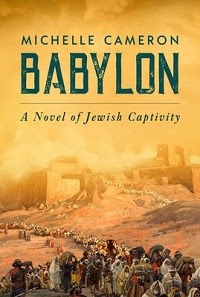
Michelle Cameron's Babylon illuminates life during the Jewish exile in ancient Babylon

Babylon is engrossing from start to finish. Michelle Cameron’s novels illustrate the lives of the Jewish people (especially women) at times and places rarely explored in fiction. I’ve enjoyed The Fruit of Her Hands (13th-century Europe) and Beyond the Ghetto Gates (Napoleonic-era Italy), and this one is even better.

The story begins in 586 BCE, as Chaldean soldiers in the army of Nebuchadnezzar, Babylon’s mighty ruler, overtake the prosperous farm outside Jerusalem where a young woman named Sarah lives with her parents, brother, and cousin. After her other relatives are killed, Sarah and her cousin Reuven are forcibly marched, along with numerous other captives, on the lengthy journey to Babylon. Some of the enslaved Judeans are chosen to be servants at the royal palace; others are settled on farms, with orders to grow specific crops. The characters undergo difficult ordeals, presented unflinchingly yet with great compassion. Sarah always yearns for the day she’ll see her farm again and keeps faith that the Judeans will be allowed to return. However, while they preserve their customs and faith in this very foreign land, there’s no denying the allure of the dazzling riches at court.

Babylon spans over eighty years and three generations, with genealogical charts in the opening pages for the novel’s three principal families: Sarah and her lineage, the Babylonian royals, and the people who take up residence on the farm Sarah was forced to abandon. While I love that the charts exist, I didn’t consult them until I was done, since I didn’t want to know in advance which relationships would be forming. This is an epic novel, and Cameron has mastered the art of moving through a wide swath of time without choppiness and without losing readers’ emotional connection to the characters. And the characters themselves are a colorful and interesting bunch, including vain and power-hungry princesses, farmers, talented musicians, Biblical prophets, and a dedicated scribe who chronicles happenings for posterity.

Individual Judeans and the people as a whole work through questions relating to assimilation – intermarriage, adoption of a new land’s customs and religious rituals, and more – but don’t find simple answers. It’s altogether an immersive tale, told with an underlying sense of warmth, about resilience during adversity, family, faith, and how people instill the meaning of home in their daily lives even while far away.

Babylon was published last year by Wicked Son/Post Hill Press; I read it from a personal copy.

Friday, December 13, 2024

Ten more recent indie-published historical novels to check out

Here are ten more indie-published historical novels worth investigating. It was great to see so much interest in my initial list of ten titles - thanks for all the feedback and shares.  Because of a Blogger quirk, the cover images below got uploaded in reverse alphabetical order by author, which I'm keeping in order to switch things up a bit. These novels feature many historical settings you'd be hard-pressed to find elsewhere in fiction.


The Schoolmaster by Jessica Tvordi

Peter Young, the title character in Tvordi's debut, was a highly respected scholar who sounds like he was a decent overall fellow, too. As tutor to the young Scottish king, James VI, Peter's political skills and patience are tested when James's attractive French cousin, Esmé Stewart, arrives at court. June 2024. 


Agony in Amethyst by A. M. Stuart

Australian writer A. M. Stuart's Harriet Gordon mystery series, set in early 20th-century Singapore, began with Berkley and is continuing via indie publishing. This fifth entry has her looking into a schoolgirl's death, complicating her relationship with her beau, a police inspector. Oct. 2024.


The King's Intelligencer by Elizabeth St.John

I've read and reviewed all of Elizabeth St.John's full-length historical novels, so I preordered The King's Intelligencer as soon as it went online. They're all well-researched, beautifully told stories based on people from her own family tree; many of the St.Johns played prominent roles in English history, though you may not recognize their names. This entry, standalone but connected to her earlier The Godmother's Secret, takes place in the 1670s as bones of young children (the lost princes?) are discovered in the Tower. October 2024.


Safe in Death by S. K. Rizzolo

S. K. Rizzolo has contributed guest essays here before, so you may recognize her name from that as well as from her Regency mystery series from Poisoned Pen Press. Safe in Death begins a new series featuring Esther Hardy, who turns amateur sleuth in Victorian England after a young woman's terrible murder. November 2024.


The Pirate's Physician by Amy Maroney
 

The Pirate's Physician is a companion standalone novella to Maroney's Sea and Stone Chronicles, set in the 15th-century Mediterranean world. A female medical student boards a ship to escape an unwanted marriage. Pirates and romantic intrigue in a setting you don't often see in fiction. I first discovered Maroney's work via the Historical Stories of Exile anthology. September 2024.


Battle Annie by Trish MacEnulty

Described as "Gangs of New York for women," Battle Annie is based on Annie Walsh, a brick-hurler and gang leader active in the gritty world of railroad strikes on the streets of NYC's Hell's Kitchen in the late 19th century. She sounds like quite a character!  Annie and her ward, an orphaned guttersnipe, go on the run after a false murder accusation. I'd interviewed the author about her excellent novel Cinnamon Girl last year. Sept. 2024.


The Queen of the Platform by Susan Higginbotham

Susan Higginbotham always chooses interesting subjects for her biographical novels, and her research is thorough; so much so that in this case, a peer-reviewed journal article resulted from her new discoveries about the title character and her family. The Queen of the Platform stars Ernestine Rose, a Polish woman of Jewish heritage whose surprising path led her to become a noted public speaker and early women's rights activist in early America. I've read it and recommend it.  March 2024.


American Harlot by Rebecca Flynt

Any Hamilton fans here?  American Harlot reveals the backstory of Maria Reynolds, whose affair with Alexander Hamilton became early America's first major political sex scandal. Her tale is one of resilience and survival. I first read about this novel in Stephanie Dray's author newsletter. Sept. 2024.


The Greatest Thing by Patti Flinn

Opening in France in 1793, The Greatest Thing evokes the first-person voice of a historical person who deserves more attention. Louis-Benoît Zamor was enslaved as a child and given as a "gift" to Madame du Barry, the last official mistress of Louis XV, King of France. This is the first in a trilogy; one additional novel has been published so far. November 2023.


The Business of Blandyce by Lexie Conyngham

Lexie Conyngham is an indie author from the Scottish Highlands whose books have been recommended on the CrimeThruTime e-list often. She has multiple historical mystery series, set between early medieval times and the 20th century, incorporating detailed research and dry wit. This first series entry follows Dr. Robert Wilson on his travels throughout Europe during the Regency era, where he encounters crimes. November 2023.

Monday, December 09, 2024

Jennifer S. Brown's The Whisper Sister is a fabulous tale of Prohibition-era NYC

In flapper-speak, a “whisper sister” was a female barkeep during Prohibition, a daring woman who kept booze flowing for eager customers in underground establishments. A more unlikely career choice could hardly be imagined for ten-year-old Malka Soffer when she arrives at Ellis Island in 1920 with her Mama and older brother, having traveled from Ukraine to join her father in New York after a long separation.

Her Papa seems barely recognizable without his long beard and yarmulke, and at school she gets a new American name: Minnie. Remarkably, her story of transformation, assimilation, and blood and chosen family never loses its believability through many sudden plot twists.

As with her debut, Modern Girls, Brown has a confident hand with character, and Minnie has vulnerabilities and a deep emotional strength. Young Minnie soon learns that her Papa has mysterious sources of power through connections to organized crime (though that phrase is never uttered), and when he buys a soda shop, she gleans it’s a front for a bar. She’s right – and rapidly falls in love with the unprepossessing joint on Baxter Street. Some years later, awful circumstances compel her to take over the place herself, leading her ever deeper into excitement and danger, to her brother Max’s dismay.

Minnie’s two spheres of existence feel immediate and real: the strong Jewish traditions her Yiddish-speaking Mama upholds at home, versus the alluring world of the speakeasy, where Minnie crafts original drinks and socializes with an affable trio of regulars. Brown pulls no punches in illustrating the era’s prejudices and violence, which was brutal and often premeditated. The prologue generates instant intrigue with a magnificent (and suspenseful) opening scene that repeats later on. A bravura performance, led by an original heroine who takes risks in bending rules.

The Whisper Sister (a phrase I'd never heard before and makes for a great title) was published by Lake Union in September, and I covered it initially for November's Historical Novels Review.  I also enjoyed the author's interview for Lilith Magazine, in which she discusses the novel's background and themes, Jewish identity, and more.

Wednesday, December 04, 2024

Signe Pike's The Shadowed Land delves into the possible Scottish roots of Arthurian legend

Personal transformations echo throughout Pike’s intensely felt third novel (following The Forgotten Kingdom, 2020) in an ongoing series about sixth-century Scotland’s political and religious conflicts. Grounded in intriguing new research, it brings to life the little-known stories of Languoreth of Strathclyde, a powerful early medieval queen, and Artúr mac Aedan, a war leader and prince of Dalriada—potentially the true, historic King Arthur behind the legends.

After the Battle of the Caledonian Wood, where the brutal Angles were defeated, the characters endure separate tests of fortitude. Languoreth, a pagan follower of the Old Way, grudgingly endures a treacherous former bishop’s presence in her lands while Artúr returns to Dalriada at his father’s behest.

The book’s title references the Pictish kingdom, where Languoreth’s daughter Angharad travels to hopefully apprentice herself to the druid Briochan. A valiant young woman with deep emotional reserves, Angharad undergoes physical and mystical trials during her quest.

There are perhaps too many viewpoints, but Pike enthusiastically transfers her affinity for ancient Celtic cultures to readers, and her interpretation of the Arthurian canon exudes originality.

The Shadowed Land was published this week by Atria/Simon & Schuster, and I reviewed it initially for Booklist. I had previously reviewed book one, The Lost Queen, and book two, The Forgotten Kingdom, but since the previous book came out over four years ago, it took some time to reacquaint myself with where the characters left off.  You really don't want to start with this book. Originally the series was planned as a trilogy, but the story doesn't end here.  There will be one more book to come.

Saturday, November 30, 2024

Critics pick their favorite historical novels of 2024


It's not even December, and media outlets have been proclaiming their Best Books recommendations for 2024. I feel a bit sorry for those novels slated to come out next month! (Although to be fair, these may be included in roundups by pre-publication review sources.)

Here are the lists I've come across thus far.

As always, NPR's Books We Love crosses subgenres, age categories, and time periods (even ranging up through the 1980s) to present their annual collage of favorite historical novels: 44 of them.  If you prefer to see a list rather than a cover gallery, that's available too.

Writing for The Times (London), critics Nick Rennison and Antonia Senior pick the 10 best historical novels for 2024. This is paywalled, sorry, though if you have Apple News, you can read the article through the app. Some books included here that I haven't seen on other lists are Irish writer Kevin Barry's The Heart in Winter (set in 1890s Montana), Mary Horlock's The Stranger's Companion (1930s on the Channel Island of Sark), Hesse Phillips' Lightborne (Christopher Marlowe), and Rosanna Pike's A Little Trickerie (Tudor times).

The Washington Post (gift link) makes their picks, including Leonard Pitts, Jr.'s 54 Miles, Ashton Lattimore's All We Were Promised, and The Phoenix Crown by Kate Quinn and Janie Chang, which is on NPR's list too.

The top 10 list in The Independent has been out for a few weeks, and is very different from that in the compilation above. Overlapping titles include Robert Harris's Precipice (which I also read and enjoyed, though it wasn't my favorite of his) and Tracy Chevalier's The Glassmaker.

The final round of Readers' Choice Awards at Goodreads is out, with ten books vying for the title (in theory). Voting is only open for the next day and a half. Just because I'm curious how closely popularity will correlate with the ultimate rankings, here they are, listed by the # of reviews posted in the system as of today:

The Women by Kristin Hannah - over 90K reviews
The Frozen River by Ariel Lawhon - 19,400+ reviews
James by Percival Everett - 13,800+ reviews
The Briar Club by Kate Quinn - 6700+ reviews
By Any Other Name by Jodi Picoult - 5300+ reviews
Husbands and Lovers by Beatriz Williams - 4600+ reviews
Anita del Monte Laughs Last by Xóchitl González - 3800+ reviews
The Lion Women of Tehran by Marjan Kamali - 3600+ reviews
The Seventh Veil of Salome by Silvia Moreno-Garcia - 1200+ reviews
The Booklover's Library by Madeline Martin - 800+ reviews

Some books with higher #s of reviews were eliminated after the semifinals, so we'll see how this ends up.

Still to come: the New York Times list, which should be out in mid-December, and Library Journal's lists, out in their December issue.

Sunday, November 24, 2024

Ten recent indie-published historical novels to check out

If you aren't paying attention to indie-published historical fiction, you don't have a full picture of what the genre has to offer to readers today. You're also missing out on some wonderful stories. The best of these novels, as with those from mainstream publishers, have excellent writing and editing as well as professional cover art. And with indies, authors are organizing all this on their own, plus handling their own publicity and marketing.

How did I go about choosing these? Some are by authors who have had previous novels out with big presses, so I've been following their writing paths for years. The historical fiction market is so focused on specific eras and trends that when I hear about a new novel by a writer who turned to self-publishing after a successful career with bigger presses, my ears perk up. (While not the focus for this post, this holds true for small presses too.)  These books frequently incorporate less familiar topics, settings, and approaches, and as a reader, I appreciate greater variety.  Others listed below came to my attention through reviews and recommendations from trusted sources, or because I've read and enjoyed previous books by their writers. This is the first of two (at least) posts.

Someone Always Nearby by Susan Wittig AlbertSusan Wittig Albert has published a great many novels (mysteries) with NY presses, both on her own and co-written with her husband. Most of the books in her Hidden Women series of biographical novels, though, have been indie-published, including Loving Eleanor. Her latest, Someone Always Nearby, centers on Maria Chabot, a prominent promoter of Native American art, and a good friend to Georgia O'Keeffe. (November 2023)

Sleight of Hand by Elizabeth R. AndersenThe first novel in Elizabeth R. Andersen's Alewives of Colmar series was great fun. In Sleight of Hand, the followup to The Alewives, the three women brewers from 14th-century Alsace have another mystery on their hands when an unfortunate item shows up in one of their cooking pots.  (April 2024)

A Parcel of Rogues by Pamela BellePamela Belle's 17th-century Herons of Goldhayes saga, written in the '80s, still holds a treasured place on my bookshelf. The books in her Wintercombe series, following a Puritan woman and her family during the English Civil War, are also longtime favorites. A Parcel of Rogues, her first new novel in over 25 years, incorporates a different style and setting: the decadent, dangerous world of London and other English cities in the early 18th century. (June 2024)

The Lost Women of Mill Street by Kinley BryanKinley Bryan's debut Sisters of the Sweetwater Fury opened my eyes to little-known Great Lakes history and the roles of women at the time. For her second novel, she moves back in time to the Civil War, following two millworker sisters forced to begin new lives far away from their Southern home. (May 2024)

The Lioness by Gigi GriffisThe Lioness is biographical fiction about Jeanne de Clisson, known as the Lion of Brittany, a 14th-century privateer seeking justice for her late husband. The author has also written The Empress, a tie-in to the Netflix series of the same name about Empress Elisabeth of Austria, plus novels for younger readers. (November 2024)

The Baku Inheritance by Anne M. KennedyAnne M. Kennedy's debut is historical adventure/suspense. Based on its first three chapters, it took home the silver medal in the Adventure category of the Historical Novel Society's First Chapters competition earlier this year. Opening in 1890 in the oil-rich capital of Azerbaijan, it follows a man's quest to solve a mystery involving his family, a jeweled artifact, and an encoded message. (September 2024)

The Night the Light Went Out by A. M. ReadeThird and latest in her Cape May Historical Mystery series of standalone novels, The Night the Light Went Out is a locked room mystery of sorts set within a lighthouse during a violent storm along the New Jersey coast in the 1820s. The author also writes cozy mysteries and gothic suspense as Amy M. Reade. (August 2024)

The Longest Exile by Tana RebellisAfter author Michelle Moran recommended this novel on social media, I had to go look it up. Tana Rebellis' novel is first in a duology about Julia the Younger, a Roman noblewoman and Emperor Augustus' granddaughter, who finds herself sent into exile after becoming pregnant with an illegitimate child.  (June 2024)

Love's Knife by Tracey WarrTracey Warr specializes in historical fiction set in medieval times; previously published by Impress Books (UK), she has reissued her earlier novels under her own imprint along with new material, including this new book. Love's Knife, first in a series, introduces a female troubadour (trobairitz) who investigates a murder at the court of 11th-century Toulouse. (September 2024)

Anny in Love by Barbara WrightThe Anny of the title is Anne Thackeray, oldest daughter of Vanity Fair's author, as she begins finding her own place in the world, amid family obligations and her own love affairs, after her father's death. Barbara Wright won the Spur award from Western Writers of America for her 2003 novel Plain Language. (June 2024)