Saturday, September 30, 2023

A dozen intriguing historical novels published in fall 2023

This is a post I'd meant to finish before now, but time got away from me. Below are twelve historical novels appearing in the fall 2023 season. The upside is many of these novels are out now, or will be soon, so if they intrigue you  as they did me  you can get your hands on them sooner rather than later.  Attractive cover designs, atypical settings, original plots... I plan to check them out!
 
Babylon by Michelle CameronMichelle Cameron's Babylon, her third historical novel, is a multigenerational saga focusing on one woman of the Judean people, Sarah, exiled from Jerusalem and held in captivity in Babylon in the sixth century BCE. I've enjoyed the author's previous two historicals, and this one promises a setting rarely covered in fiction. Wicked Son, September 2023. [see on Goodreads]

The Golden Gate by Amy ChuaAmy Chua's first novel is a historical thriller set in California's Bay Area during WWII, involving the backdrop to a Presidential candidate's assassination, a mystery involving a wealthy family, and the complex social and racial environment at the time. Minotaur, September 2023. [see on Goodreads]
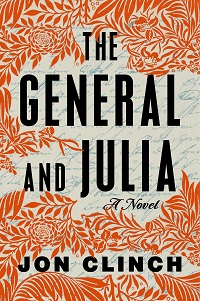
The General and Julia by Jon Clinch
Ulysses S. Grant, America's 18th President, looks back on his eventful life, long marriage, and evolving moral code in this multifaceted literary novel, which I loved (review to come). Atria, November 2023. [see on Goodreads]

Anything but Yes by Joie Davidow
Joie Davidow's (see An Unofficial Marriage, 2021) latest novel is subtitled "A Novel of Anna Del Monte, Jewish Citizen of Rome, 1749." It relates the true story of Anna, a young Roman Jewish woman, who was held captive in a convent while being pressured to convert to Catholicism; she kept a diary of her experiences. Monkfish, October 2023. [see on Goodreads]

The Prospectors by Ariel DjanikianThe Yukon Gold Rush looms large in both timelines (19th century and 2015) about a young woman who sees her family become immensely wealthy from mining operations, and her 21st-century descendant, who seeks to right the wrongs her ancestors created by acknowledging the pain caused to the First Nations people a century earlier and establishing restitution.  William Morrow, October 2023. [see on Goodreads]
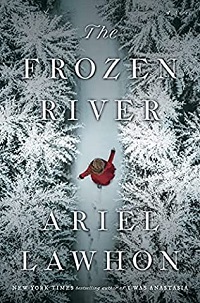
The Frozen River by Ariel LawhonMartha Ballard, a historical woman who kept a daily journal about her household duties and midwifery practice, narrates this entrancing tale of murder and the difficult quest for justice in late 18th-century Maine; review to come. Doubleday, November 2023. [see on Goodreads]

A Beautiful Rival by Gill PaulThe glamorous business rivals in Paul's latest atmospheric novel are cosmetic entrepreneurs Helena Rubenstein and Elizabeth Arden, millionaires determined to succeed and triumph over the other in their quest to enhance female beauty. William Morrow, September 2023. [see on Goodreads]
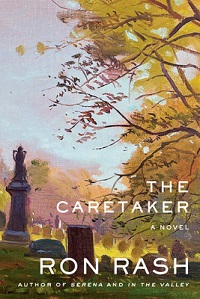
The Caretaker by Ron RashLiterary fiction set in early 1950s Appalachia, at the time of the Korean War, and focusing on the state of being an outsider in a small community, the demands of family, friendship, and love. Doubleday, September 2023. [see on Goodreads]

The Village Healer's Book of Cures by Jennifer Sherman RobertsA traditional healer, or "cunning woman," in a 17th-century English village channels her true power after her skills attract the negative attention of witchfinder Matthew Hopkins, and a man dies mysteriously.  This suspenseful historical novel has overtones of mystery and is written by an author with a PhD in Renaissance literature.  Lake Union, November 2023. [see on Goodreads]


Hazardous Spirits by Anbara Salam

Life for a young housewife in early 20th-century Scotland suddenly becomes more intriguing and uneasy when her husband tells her he can communicate with the spirit world.  Is it true?  Tin House, October 2023. [see on Goodreads]


Queen Hereafter by Isabelle SchulerYou might guess the subject of this biographical novel from the title: the bold and determined Gruoch, better known as Lady Macbeth, a historical woman from the 11th century. Harper Perennial, October 2023.  The UK title is Lady MacBethad. [See on Goodreads]

The Fraud by Zadie SmithZadie Smith's first historical novel centers on the nature of authenticity vs. pretense via the intertwined stories of real people and events from 19th-century Britain: Mrs. Eliza Touchet, longtime housekeeper to author William Harrison Ainsworth, and the infamous court case involving the "Tichborne claimant," in which a man purported to be the lost heir to a vast estate. Penguin Press, September 2023. [see on Goodreads]

Thursday, September 21, 2023

Chris Nickson wraps up his Tom Harper series with a tightly woven novel of post-WWI Leeds

Chris Nickson brings his Tom Harper series to a satisfying, very moving close in this 11th in the series, which has followed his protagonist, his family, and fellow policemen from late Victorian times to the post-WWI era. But even if this is your first acquaintance with the recurring cast, you won’t be lost. Everyone’s role is made clear by way of deep characterizations and sufficient backstory.

In March 1920, Harper, Chief Constable of Leeds City Police, approaches the future with guarded optimism. The Great War is over, although memories of the countless losses and suffering remain fresh. Likewise, the presence of fewer gauze masks indicates that Spanish flu cases are dropping. After a distinguished forty-year career that saw him rise to the top rank in his profession, retirement is in sight, a mere six weeks away. But getting there won’t be easy. In fact, it becomes a personal and professional mission for Harper to wrap up three brand new, unlinked cases before he exits his Town Hall office for good.

The first crime is one he needs to keep secret: Alderman Thompson, the city council head who’d recommended Harper for his current post, is in hot water after letting himself be “distracted by a lass” and getting blackmailed for the indiscreet love letters he wrote her, which were subsequently stolen. As Harper arranges to talk with Thompson’s former mistress, a new mystery lands: an elusive team of thieves holding up jewelry stores. Lastly, police in other cities are troubled by organized groups of female pickpockets wreaking havoc on local businesses, and word is that they’re heading for Leeds soon. At home, Harper’s wife, Annabelle, is sinking progressively deeper into senility; on good days, she speaks with him, and her original personality briefly surfaces. Other times, she remains silently lost in her own world.

There are multiple cases to untangle alongside the wrapping-up of character arcs, and no words are wasted in the process. The suspense revs up throughout, keeping readers guessing about what will happen next with each case. Alongside the tight plot, we get immersed in the postwar atmosphere of Leeds. Harper’s daughter, Mary, who lost her fiancé overseas, has a close bond with her father – they meet for lunch regularly – and is working through her feelings of loss, planning a visit to the battlefield while choosing to dress again in brighter colors. Nickson’s portrait of Annabelle’s dementia is entirely realistic and affecting, as is Tom’s emotional reaction to the heartbreaking changes he sees in his beloved partner.

This novel is highly recommended, though if you wish to start at the very beginning of Tom’s story, pick up volume 1, Gods of Gold.

Rusted Souls appears from Severn House this month; I reviewed it from a NetGalley copy.

Monday, September 18, 2023

Night Watch by Jayne Anne Phillips offers a unique take on recovery from the U.S. Civil War

Phillips (Quiet Dell, 2013) excels in crafting original takes on human circumstances, like mother-daughter relationships and women’s vulnerabilities and resilience. Her setting here is equally striking: the Trans-Allegheny Lunatic Asylum in rural West Virginia.

In 1874, 12-year-old ConaLee and her mother, Eliza, whom trauma has rendered mute, are dropped off there by a man ConaLee calls Papa, although he isn’t her father. They are brought inside by the night watchman, one of many characters with a hidden past.

Contrary to reader expectations, the facility (an actual place) provides humane treatment for mental illness. Posing as her mother’s maid, ConaLee sees her make improvements under the compassionate doctor’s care.

The story unflinchingly reveals the tragedy that befell them after Eliza’s husband never returned from the Civil War, and how a wandering con man invaded their isolated mountain sanctuary. We also learn about Eliza’s and her husband’s origins. From vivid battle scenes to the asylum’s social refinements, the historical milieu comes alive in all its facets as Phillips evokes the enduring bonds of both blood and chosen families.

Night Watch is published by Knopf on September 19th; I wrote this review for Booklist's July 2023 issue. The novel was recently longlisted for the National Book Award in Fiction.  I first read Jayne Anne Phillips's work as a judge for the first Massachusetts Book Award in 2001; her novel Motherkind (not historical fiction) was the winner that year.

Want to read more about the history of the Trans-Allegheny Lunatic Asylum?  If you visit in person, you can attend a historic/heritage tour or a ghost tour of the site.

Monday, September 11, 2023

Katharine Beutner's Alcestis puts a feminist spin on the tale of a princess from ancient Greek myth

In Greek mythology, Alcestis is known for her great love for her husband, choosing to take his place when death came for him. Her story isn’t one I knew before, though my ignorance didn’t prevent my  enjoyment of Katharine Beutner’s feminist retelling. 

Alcestis 
mixes elements of Mycenaean culture with the fantastic in its sensitive portrait of a woman too rarely given credit for her heroism. 

Alcestis, the youngest daughter of the King of Iolcus, comes into the world as her mother dies. Neglected by her father, she forms a tight bond with her next oldest sister, Hippothoe, a sickly girl who dies young. Alcestis never gets over the loss. She hopes for better things from her marriage to Admetus, King of Pherae, especially since he invokes the help of Apollo in his desire to win her hand, but the reality of their union proves disappointing.

Reimaginings of old stories continue to gain reader interest, and this one certainly leaves room for imaginative interpretation. How did Alcestis spend those three days in the underworld, anyway? In Beutner’s version, it’s not devotion to her husband that prompts her choice but a yearning to reunite with her beloved sister and the desire to avoid shame.

The novel’s first half reads like a traditional retelling, though one enhanced with well-placed details on ancient Greek customs and rituals and the occasional presence of capricious gods. When Alcestis arrives in the underworld, however, her journey becomes truly otherworldly. In this seasonless place of shifting landscapes, thousands of shades are condemned to perpetual wandering, their dull, gray faces displaying their fading memories of their former lives.

Alcestis is the granddaughter of Poseidon – only two generations separate her from divinity – though only in the underworld does she discover the truth behind myths she’d grown up believing, and the feminine power she never knew she possessed. She also falls in love with the goddess Persephone, raising questions about whether a divine creature is truly capable of such a human emotion. The tale is rendered with strength and delicacy, a rare combination of qualities also found in Alcestis herself.

Alcestis, Beutner's debut novel, was originally published in 2010, and I read it from my own copy.  With myth-based historicals proving so popular, the time is right for a re-release; it also has a brand new cover. The author's second novel, Killingly, about a real-life unsolved crime from late 19th-century New England, was published in June, and I hope to read it in the coming months.

Friday, September 08, 2023

Interview with Trish MacEnulty, author of Cinnamon Girl, a 15-year-old girl's picaresque journey through the tumultuous early '70s

Trish MacEnulty's Cinnamon Girl takes its heroine, 15-year-old Eli Burnes, on a wild, wide-ranging ride through the social and political atmosphere of her era. The story opens in Augusta, Georgia in 1970. After her step-grandmother Mattie dies, Eli hops a ride north with her best friend's brother, who's running away from the Vietnam War draft. Her adventures continue from there. Eli's father Billy, a DJ in St. Louis, had remarried and has another family but eventually re-enters the picture; he comes to serve as a role model in ways Eli doesn't expect. The book is a fantastic read: fast-moving, full of smoothly woven historical detail and rich characterizations, all told in Eli's appealing voice. I know Trish through the Historical Novel Society and was glad for the opportunity to speak with her about her latest release, which is out today from Livingston Press of the Univ. of West Alabama.

You’ve written other works of historical fiction, but did you find the process any different for this one, since the era is more recent? Did your own memories from having lived through the early ‘70s help as far as researching the historical backdrop to Cinnamon Girl?

Also, you’d mentioned in an interview with the HNS that Cinnamon Girl is a rewritten version of an earlier novel of yours. What did the rewriting process involve, as far as what you felt needed updating?


I've combined your two questions. I wrote a version of this book at least ten years before I wrote my historical fiction. And so it was a very different process. Much of Eli's life is rooted in my own experiences—first love, running away from home, going to rock festivals and concerts, hanging out in headshops.

In my earlier version of the book, I didn't set the historical context as well as I could have. But after writing several historical mysteries and learning how important history is to the narrative, I went back and did the research—searching out news stories about the Weathermen, Vietnam, and racial oppression. I also learned a lot about the advent of FM radio! I actually looked up the set lists and venues for various rock concerts that are in the book. And yes, having lived through the era definitely informed my choices as to which historical events to include. For example, I remembered the Kent State killings, which became an important event in the background of Eli's story. The killing of those four students by the National Guard was so emblematic of what the counterculture faced at the time.

Eli’s narrative voice is really appealing. She’s adventurous and spirited but still naïve in some ways, and she has an infectious sense of humor. How did her voice come to you?


I used to teach creative writing at a summer arts camp in Rock Hill, South Carolina. And each year as I wrote the book, I would read chapters to the kids. I think being surrounded by teenagers and raising one while I was writing the book helped me get in the right mindset. Eli also embodies a lot of my own naiveté from that age. It was a more innocent era, for sure.

I do like to include a thread of humor in all of my writing.

You’ve included a quote from Jack Kerouac’s On the Road to introduce the novel, and the book itself makes some appearances—plus, Eli spends a good amount of time on the road herself in early '70s America. How have Kerouac and his novel influenced your work?

(At first I had a quote from Neil Young's song "Cinnamon Girl" as an epigraph but then I found out how much the rights would cost so I changed it.) But yes, Kerouac was the perfect choice because On the Road is almost quintessentially picaresquea sort of plotless, episodic story of the adventures of ne'er-do-wells. I think of this book as a picaresque as well.

I'll never forget when I first read On the Road. I was in college, and my life wasn't exactly going smoothly. I was living the darker side of the 1970s by then. My future didn't look all bright and shiny. I had this vague idea of being a writer, and then reading that book ignited the internal catalyst. I knew that I had to be a writer after that. It didn't matter if my life wasn't pretty and perfect because someday I'd write my stories. I just had to survive long enough to get there.

So when Eli is on the road herself, of course someone comes along and gives her a copy. In a way, it will be her talisman.

Eli gets a front-and-center view of many important cultural moments during a key year in her life. What were some of the most memorable parts of the research process along these lines?


The most memorable part of the research was when I learned about the riots in Augusta that occurred in 1970. I actually grew up in Jacksonville, Florida, and I remember several riots. I never witnessed a killing but I heard about them and I knew they happened. I set Eli's early story in Augusta because I wanted that smaller city feel and because it has a river. (Rivers seem to show up in everything I write.) It was only after I had chosen that locale, that I learned about the riot, in which six Black men were gunned down by law enforcement. I knew that event would have to inform the rest of the book. It would make an impression.

Some research came about by happenstance. Several years ago I got the chance to interview a woman who had been in the Weather Underground, and her experiences helped me understand — and sympathize with—their motivations. That led me to read about the Days of Rage and other actions during the anti-war protests. Another episode I learned about years ago was the murder of Freddy Hampton in Chicago, again by law enforcement, while his pregnant wife lay in bed next to him. The killing of that brilliant young leader haunts me.

I loved the character of Billy, who’s an atypical father figure in many ways, but he and Eli come to develop a natural rapport. Is he based on anyone? How did you develop his character?

Billy is very loosely based on my older brother, who was a symphony musician in St. Louis, Missouri. I lived with him and his wife and two kids (a boy and a girl) for a year. He was adamantly opposed to the war in Vietnam, and his wife was a proponent of La Leche League, an organization that promotes breastfeeding. He wasn't involved with the Weatherman organization, but he did attend protests and worked with the Student Nonviolent Coordination Committee (SNCC). Some of my other brother's experiences are also part of Billy's past. I didn't have a good relationship with my own father, so both of my brothers fulfilled that role in my life.

If Cinnamon Girl had an accompanying soundtrack, which songs would be on it?

This answer almost writes itself. Of course, Neil Young's "Cinnamon Girl," and Moody Blues' "Nights in White Satin," Elton John's "Your Song" as well as the Dead and the Allman Brothers, and B.B. King. When I was that age, most of the concerts we attended were those in which the band members were all young guys, and it's too bad that I don't have any concerts with women performers in the book. But Grace Slick's "White Rabbit" would have to be one of the major songs on the soundtrack and also Janis Joplin's "Me and Bobby McGee." Now, there would also have to be some opera. Definitely Mimi. Maybe something from Carmen as well.

Thanks very much, Trish!

Visit Trish MacEnulty's website for more information on all of her books, which include standalone novels, short stories, a memoir, and a four-book historical mystery series set in early 20th-century Manhattan.

Tuesday, September 05, 2023

Interview with Kathleen B. Jones, author of Cities of Women, her multi-period debut about women's creativity and medieval art

In this first of two interviews this week, I'm speaking with Kathleen B. Jones about her debut novel, Cities of Women, which interweaves two stories, centuries apart.  In 2018, history professor Verity Frazier shifts the course of her research to focus on the manuscripts of 14th/15th-century writer Christine de Pizan, with the goal of proving that the beautiful illuminations accompanying the text were painted by a woman named Anastasia.

Alongside Verity's pursuit, the long-forgotten life story and career of a medieval artist named Béatrice (later called Anastasia) are revealed. The novel is itself vividly detailed, with reflections on women's determined pursuits throughout the ages and a well-researched atmosphere of medieval France.  And as a researcher myself, I enjoyed following where Verity's discoveries led her, both academically and emotionally, as she begins a new relationship with a woman whose scholarly interests in the Middle Ages intersect with hers. Thanks to Kathy for her responses to my questions! Cities of Women is published today by Keylight Books/Turner Publishing.

What inspired you to begin writing historical fiction? Had it been an interest of yours during your academic career, or did the subject pique your attention afterward?

Academic historians often begin their academic essays and books with a story. That style of writing has been less prominent in my academic field—political theory. During the decades I taught about women’s political movements, I learned students connected with the past much more and saw its relevance to the present when I brought historical conflicts into focus through narratives, stories filled with flawed though relatable characters struggling against the odds to achieve personal and political change. I began to experiment with a different kind of writing in my own academic publications and finally moved into creative nonfiction and then fiction to be able to fully express the complexity of what I wanted to say about the human condition.

I’ve always been a reader of fiction and gravitated toward writing historical fiction because it satisfied two loves of mine at once—doing deep research and letting one’s imagination visit and try to understand unfamiliar times, people and places. In this regard, the political theorist Hannah Arendt has been a major influence in all my writing. Storytelling was a key element in her work.

So, for me, there’s been a kind of parallel trajectory between the progression of my academic writing and the urgency I’ve felt to write fiction set in the past that still resonates with the present.

I hadn’t been familiar with Anastasia, the historical manuscript illuminator about whom little is known, and appreciated the narrative you created for her. She seems to have been very well known in artistic circles in her time. How did you get into the mindset of a female artist from medieval times?

I’m excited you found the medieval Anastasia both a convincing and intriguing character because we don’t really know whether she actually existed or was merely someone Christine de Pizan invented to call attention to the work of female artists in the Middle Ages.

With no more of a clue than a name found in Christine’s Book of the City of Ladies, I invented the character of Béatrice/Anastasia and the entirety of her storyline. Since Christine had written City of Ladies as a defense of women’s worldly contributions and was known to oversee very closely the production of her books, I speculated she would have chosen a woman artist to illuminate images of her imagined city. Research into the medieval Parisian book trade identified the existence of women artists of the book, giving me a factual basis for my speculation, though only in the most general sense. I gave this speculation to Verity, in the modern timeline, to drive forward her quest to document Anastasia’s role in Christine’s work.

Kouky Fianu, a Canadian historian who researched medieval book production in Paris, pointed me in the direction of a GIS map of medieval Paris available online that located the ateliers of various artists, including women who illuminated manuscripts. That visual, combined with all the books and articles I read about medieval women’s lives, helped me imagine what it might have been like for a young woman in fourteenth-century France who’d been exposed to art as a girl and then had experienced her family’s life and livelihood being decimated by the plague, become driven to become an artist. Her determination to create something luminous in the face of looming disaster drives her to overcome all odds and make it to Paris.

How did you decide on the parallel narrative structure for the book, with both medieval and contemporary timelines?

I wanted to generate a plot illuminating linkages between past and present. As Faulkner once wrote in Requiem for a Nun, “the past is never dead; it’s not even past.”

On the deepest level, I wanted the novel to explore the human experience of time, how we mortals live in a world that persists beyond our life span. But, because we can produce things—stories, both written and oral, works of art, etc.—we leave behind traces of who we were and what we did. Remembrance gives us a kind of immortality.

Verity’s effort to document Anastasia’s work as an artist memorializes her. Her quest transforms Verity in the present as much as it dignifies Anastasia’s life in the past.

Related to the human experience of time is how we understand history, whether on a grand scale or at the level of an individual life. In my novel, historical events, both personal and political, appear to drive the plot of Christine’s story. Yet, Verity’s quest intersects the story of Anastasia, a fictional character, with the story of Christine, a factual character, and changes what we think we know about the past. If there was an artist named Anastasia with whom Christine worked on her manuscripts, how does that relationship affect each woman’s life, how we make sense of their lives, and how we understand the broader history in which these women lived?

I especially enjoyed the descriptions of the illuminated manuscripts and the process by which they were created. In the acknowledgments, you credit the assistance of librarians in the British Library’s manuscript reading room, and in the novel, Verity strives to see the manuscripts of Christine de Pizan’s work in person. Were you able to view any original manuscripts, and if so, what did you take away from the experience?

I wasn’t able to view “in person” Harley 4431, the collection of Christine’s writings known as The Queen’s Book that features so prominently in the novel. The entire manuscript is available online. Like Verity, I spent hours and hours staring at its folios. But I was able to touch several other copies of Christine’s books, which are held in the Manuscript Reading Room of the British library. I also attended a workshop on manuscript making at the Morgan Library in New York, similar to the one in the novel that Verity takes part in. In that workshop, I learned about parchment making, about medieval inks, and the work of scribes and illuminators. I also got to touch several rare manuscripts held in the Morgan’s collection, which were on display during the workshop. That tactile experience deeply affected my writing about the creation of those amazing illuminated manuscripts. I actually wrote an essay about this for LitHub.

What were some of the most memorable parts of the research or writing process for you?

Besides wandering the streets of medieval Paris via the GPS maps I mentioned earlier, some of the most memorable parts of the research never made it into the novel! I cut three chapters I’d written about fourteenth-century Venice, where Christine was born when he father worked as advisor to the Doge. In the course of researching that period of Venetian history, I came across information about prostitution in Venice that surprised me: because there had been so much corruption when men ran the brothels, the leaders of the city changed the law and put women in charge of the trade.

I might go back to that research and resurrect those characters and their stories for another novel. For the moment, though, I’m halfway through my second novel, stimulated by what I learned about another medieval manuscript, a Book of Hours the Nazis stole during World War II from the collection of the Parisian Rothschilds. The book was later recovered under mysterious circumstances and donated to the Bibliotheque Nationale.

As for the writing process, most memorable was becoming so deeply immersed in the story that by the time I finished writing I wasn’t exactly sure any more where the boundary was between what I had invented and what was historical fact.

One remark made by Béatrice/Anastasia in the novel, in relation to her paintings, struck me as especially poignant with regard to writing as well: “How far would my imagination be allowed to stretch composition to reveal things not yet known about women’s lives?” How do you see the role of historical fiction as it relates to the hidden history of women?

That’s such a great question, Sarah! Archives and artifacts can tell us a lot about women’s lives that traditional history has kept hidden or distorted. Tiya Miles’s All That She Carried: The Journey of Ashley’s Sack, a Black Family Keepsake, is a remarkable example of the hidden history that one artifact can reveal. Miles writes how that sack, now displayed in the Smithsonian National Museum of African American History and Culture, “filters a light of remembrance on the viewer’s own familial bonds, leading any one of us to ask what things our own families possess that connect us to our past and wonder what we might gain from contemplation of that connection.”

I think fiction set in the past filters a similar “light of remembrance” but amplified by the powers of imagination. Fiction can take the reader on a more embodied and emotionally resonant journey into the history of yet unknown or lesser-documented experiences. Nonfiction tells us about the past; fiction—at least the kind I’m writing— invites us to experience the textures, smells, tastes, sounds of the past more viscerally by empathizing with characters’ conflicts, whether those characters, likeable or not, are human or non-human or even inanimate objects or historical events in women’s history.

~

Born and educated in New York City, Kathleen B. Jones taught feminist theory for twenty-four years at San Diego State University. In addition to many scholarly books, she penned two memoirs: Living Between Danger and Love (Rutgers University Press, 2000) and the award-winning Diving for Pearls: A Thinking Journey with Hannah Arendt (Thinking Women Books, 2015). Her essays and short fiction have appeared in Fiction International, Humanities Magazine, and The Los Angeles Review of Books, and elsewhere. Among numerous awards, she received multiple grants from the National Endowment of the Humanities, writers’ grants to the Vermont Studio Center, an honorary doctorate from Örebro University, Sweden, and a distinguished alumni award from CUNY Graduate Center. She lives in Stonington, Connecticut. Visit her website at https://www.kbjoneswrites.com.

Thursday, August 31, 2023

Man of Sorrows by M.N. Stroh details an unusual romance from early medieval Ireland

This first in a four-part series takes place in a scrupulously researched mid-10th century Ireland amid warring clans and Danish invaders. Subtitled “a medieval Christian romance,” Man of Sorrows centers several families and two different love stories, each of which is daring for its time and for the genre.

Mara, a fifteen-year-old shepherdess, receives divine visitations that predict the future (like her late mother’s demise) and direct her to marry a man who will “humble himself by the sign of the cross.” After she sees a sign that her proposed husband is her best friend Áine’s brother, Marcan, she knows she’ll have trouble convincing him: Marcan is a pious monk at the Cill Dálua community who transforms vellum into beautiful, illuminated manuscripts.

Because he thinks he unwittingly caused his mother’s and brother’s deaths, Marcan accepts the abbot’s harsh rule. His father, needing Marcan to tend flocks at home, had waited to give him to the church, as he was duty-bound to do with his firstborn, and Marcan feels God is punishing him for the delay. The second romance involves the cross-class relationship between Áine and Davan, nephew of Chief Cennedigh of the Dal Cais, in a subplot that offers multiple surprises.

In this short novel, Stroh proficiently interweaves multiple viewpoints and plot threads without losing the reader’s attention. The characters and their religious beliefs feel period-appropriate. Mara’s steadfastness is admirable, and Marcan’s internal pain is evident as he struggles to determine God’s purpose for his life. The writing style ranges from smooth to overly formal and cumbersome (“I exist but to guard his means so that he might dote upon you”). The novel also needs a stronger copyedit. With the trials they undergo, Mara and Marcan deserve a happy ending, and it’s rewarding to see how they achieve it.

Man of Sorrows was published by Olivia Kimbrell Press in 2022; I wrote this review for the Historical Novels Review's August 2023 issue. The next three books in the series, which feature different characters from this book and are set two decades later, in the 960s, are Rise of Betrayal, Lord of Vengeance, and Stone of Division. Cill Dálua is now known as Killaloe, a town and parish in County Clare.

Saturday, August 26, 2023

The Island of Doves sweeps readers away to historic Mackinac Island

My father’s family are Michiganders, going back to the state’s rustic pioneer days in the mid-19th century. When I was growing up, we spent many summer weeks visiting my grandmother and other relatives, and some of these excursions involved trips to Mackinac (pronounced “Mackinaw”) Island, a picturesque isle sitting in the middle of Lake Huron, between Michigan’s Lower and Upper Peninsulas. The romantic time-travel film Somewhere in Time, set in 1912 and decades later, took place there.

Kelly O’Connor McNees’ The Island of Doves is also set on Mackinac, quite a bit earlier – in the 1830s, when the small piece of land was loosely populated by Odawa Indians, French settlers and traders, Métis families who were the descendants of both, and white Presbyterians relocating to Michigan from the east. One of its main attractions are the beautiful images of Mackinac’s unspoiled wilderness and waterscapes, and the depictions of life on the frontier: tending gardens, producing maple syrup, sewing moccasins, traveling by sled dog and canoe.

McNees’ two heroines are easy to warm to. As the wife of one of Buffalo’s leading business moguls, Susannah Fraser has no material wants. Her husband Edward is physically and emotionally abusive, though, and Susannah, being a proud woman, tries to endure the pain on her own, preferring to spend her days tending plants in her greenhouse. Magdelaine Fonteneau, an adventurous widow in her forties of part-Odawa, part-French heritage, lives permanently on Mackinac but has amassed a small fortune as a fur trader. Having lost both her younger and older sisters decades earlier – in particular, young Josette had been killed by a jealous suitor – she opens her home to Susannah when she needs a safe haven. Susannah’s maid and a kindly nun in Buffalo arrange for her escape via steamboat. The trials on the voyage force Susannah (who now uses the last name Dove) to confront life’s unsavory side but also go far in teaching her self-sufficiency.

The plot centers on relationships and character growth, as Susannah gains independence and Magdelaine learns to accept that her adult son, Jean-Henri, has a calmer personality than that of his ambitious, risk-taking late father. The story dwells more on religious differences, particularly those between Protestants and Catholics, than race relations at the time. I had hoped for something deeper in that respect. The story is rewarding, though, with the writing as smooth and clear as the pristine waters near Magdelaine’s home. It’s a pleasant journey into a little-known aspect of America’s past. The author’s notes reveal that Magdelaine is closely based on a historical figure, and her story is also worth knowing.

The Island of Doves was published by Berkley in 2014. I read this book (from my own collection) at the start of the pandemic, wrote a review, then got distracted and forgot I hadn’t posted it! So I thought I would do so now. 

Saturday, August 19, 2023

Alys Clare's mystery The Cargo from Neira leads its physician protagonist into the 17th-century spice trade

The bustling, cutthroat spice trade forms the enticing backdrop for the fifth volume in Clare’s mystery series featuring country doctor Gabriel Taverner in early 17th-century Devon. If you haven’t read the previous four books, no need to worry, since it stands alone well. Banda Neira, the place of the title, is a remote Indonesian island that was the world’s main source for nutmeg, a spice in high demand in Europe for its food preservation and reputed medicinal properties.

In February 1605, Gabriel gets drawn into a mystery when the coroner’s manservant fetches him to view a body on the banks of the river Tavy, with the hopes he’ll conceal it was a suicide since these victims would be damned for eternity and their family penalized. The poor soul is a woman, single and six months pregnant, which could explain her desperate circumstances.

To Gabriel’s shock, the woman soon revives. Gabriel tends to her at Rosewyke, his home, but she’s petrified, unhappy to be alive, and unwilling to talk. Then a second body, a man’s, turns up in a cesspit in a seedy quayside alley of Plymouth with several costly nutmegs in his mouth. Gabriel feels the two incidents must be connected, especially after an attempted break-in at Rosewyke that terrifies his patient and gets him firmly into sleuthing mode.

The principal cast are a congenial bunch whose close-knit relationships contrast nicely with the danger stalking them. Gabriel’s sister, Celia, is a sharp-witted young widow, while housekeeper Sallie prepares comforting meals at a moment’s notice. Most intriguing are the changes within Gabriel as his investigation proceeds. A former ship’s surgeon now living shoreside after an injury, he starts feeling a strong pull to return. While abrupt, the viewpoint switches prove enlightening, and the mystery’s resolution, which offers surprises for Gabriel and the reader, is admirably well-plotted.

The Cargo from Neira was published in May by Severn House, and this review also appears on the Historical Novel Society website. I'm looking forward to reading both the earlier volumes in this series, and later ones as they appear.

Wednesday, August 16, 2023

How I wrote a true story as a novel, a guest post by Julia Park Tracey, author of The Bereaved

Historical fiction and historical nonfiction are interrelated and can be based on the same material. But when an author gets an idea for a new project, how do they decide which route to take?  Read about Julia Park Tracey's experience below, and many thanks to the author for her thought-provoking essay!

~

How I Wrote a True Story as a Novel
Julia Park Tracey

I first started writing The Bereaved (a novel) as nonfiction. I'm a journalist by trade, and that means I look for facts and figures and actual quotes and information. I had just finished editing the second of two books called The Doris Diaries, about a teenager flapper in the Roaring Twenties. They were my great aunt’s diaries that I had inherited after she died. I had done a ton of background research, everything from teenagers in society, what were they eating and drinking, cars and technology, social upheaval, medical practices, clothes and fashion, and so on. I wrote a long introduction, several appendices, and indexed both books.

As a journalist and a part-time scholar of women’s history, I fully intended to take the story of The Bereaved—the true story of my third great grandmother and how she lost four of her children to the Orphan Trains, and how she tried to get them back—and tell it as nonfiction. In fact, I was excited at becoming known as a writer of women's history and telling untold stories.

I knew all of the facts of this story. But I wasn't quite sure how I was going to tell it. I laid it out chronologically and looked at the details, and I read several books of creative nonfiction about historical events. I took my outline with me to the Community of Writers at the Olympic Valley in Lake Tahoe and shared it with my group. The other writers gave me a lot of great ideas—for how to write a novel. So did the male leader of my group in my one-on-one meeting.

I was outraged. Are they saying that women should write novels instead of serious history? I spent a lot of time in the next two months raging internally about the misogyny inherent in that idea. But at the same time, I wanted to know what it was like to be Martha Seybolt Lozier.

Ad for orphans

So I bought some fabric and I bought a pattern for a Civil War dress; I cut it out and started sewing by hand. I sat in that wicker chair by the window and stitched lace and facings and top-stitched. I continued my hand sewing, between bouts of further research into her days and her era, while thinking about Martha and her children.

And as I sewed, I started thinking about all the things that Martha knew.

She knew how a pound of butter felt in the hand. How an old hen’s pulse beat against her fingers before she twisted its neck. How the feathers made a thin wet pop as she pulled them from the cooling skin.

That was the first paragraph that I wrote: Some of the things that Martha would know from living on a farm. And I knew that the language of living on a farm was what informed her character. I kept hearing Martha in my thoughts—what she might think about things and what she might have to do.

Managing the eggs: They need to be wiped but not washed. They’ll keep for weeks, but store them away from onions, fish, the smokehouse.

Ducks rose from the water loud with their honking voices, their clumsy splashing, the rapid beat of wings. How did Canada geese make flight so graceful, while ducks just seemed late and worried and fatigued? Like herself.

I kept writing what I was thinking about. And then when November rolled around and it was time for NaNoWriMo, I took advantage of the thirty days of enforced writing and coughed up a 50,000-word draft. Later, I went back through and wrote it again, adding another 40,000 words. Martha took shape, and so did her children, and so, too, The Bereaved.

Home for the Friendless image

Instead of writing in a journalistic style, I was writing a close third person, telling Martha’s story and (gasp) filling in the details that I imagined, that I invented: The color of her hair, her eyes. Her relationship with her in-laws. The terrible thing that made her flee from the farm. And so on—breaking the sacred journalism rule that Everything Must Be True.

I reality, there are many facts I don’t know about Martha. I have not yet seen a photo, if any exist. I found her burial site but not when she died. I have seen her signature but I don’t know her voice or anything she might have said directly. All of my quotes are imagined.

For a journalist like me, that was hard to do—but Martha and her story are worth it.

The Bereaved: A Novel—Historical fiction by Julia Park Tracey; Sibylline Press, August 2023; 270 pages; ISBN 9781736795422. $18.

Julia Park Tracey, a journalist of 40 years, is the author of seven books. Her latest is The Bereaved, historical fiction about a destitute widow who takes her children to an aid society in New York City for safekeeping, but the agency sends them out on the Orphan Train, and the bereaved mother must find her children again (based on the story of her third great grandmother). Find her online, any platform, @juliaparktracey.

Sunday, August 13, 2023

Mona Susan Power's A Council of Dolls evokes Dakota women's survival across three generations

Power, an enrolled Standing Rock Sioux tribal member, has penned an original saga detailing how forced colonization impacts three generations of Dakhóta women. She writes sensitively from each young protagonist’s viewpoint while also showing how their childhood ordeals affect them and their families over time.

In the 1960s, Sissy grows up in Chicago with her loving father and troubled mother, Lillian. We then learn Lillian’s history in 1930s North Dakota as she and her sister, Blanche, are sent to an Indian boarding school in Bismarck, where their cruel assimilation into white culture leads to a tragedy Lillian can’t recover from. In the 1900s, Lillian’s mother, Cora, travels to the Carlisle Indian Industrial School in Pennsylvania and survives the attempted stripping of her heritage.

Each girl has a doll who feels fully alive to her, serving as her confidant and protector. The final account, where an adult Sissy analyzes the dolls’ roles, processes her ancestors’ pain, and reclaims their power is beautifully healing and hopeful. This heart-wrenching account of inherited trauma and resilience is perceptively told.

A Council of Dolls was published by Mariner/HarperCollins on August 8; I wrote this review for Booklist. Not easy to encapsulate four separate stories into a 175-word review! There's much I had to leave out or only hint at.  As Susan Power, the author has also written several other novels, including The Grass Dancer (1997), a saga spanning generations that's set on a reservation in North Dakota and likewise reflects her Sioux heritage.

Tuesday, August 08, 2023

Isabel Allende's The Wind Knows My Name draws parallels between stories of child migrants in modern history

In her compassionate novel, Allende draws powerful parallels between child migrants in 1938 Austria and at America’s southern border in 2019, evoking the tragic universality of war’s innocent young victims.

Samuel Adler is only five when his desperate mother, her home and world destroyed during Kristallnacht in Vienna, places him on a Kindertransport train to England. The antisemitic violence his family experiences feels visceral and immediate on the page.

Decades later, in 1981, Leticia Cordero arrives in the United States with her father, the sole survivors of their immediate family after a massacre in their El Salvadoran village. Later, in 2019, seven-year-old Anita Díaz and her mother, Marisol, are victims of the Trump administration’s family separation policies after they cross from Mexico into Arizona, fleeing a threatening home environment in El Salvador.

All these stories converge during the pandemic, starting when social worker Selena Durán gets lawyer Frank Angileri to take Anita’s case pro bono and help reunite her with Marisol, who may have been deported. By then, Samuel is an 86-year-old widower in San Francisco, and if anyone can relate to Anita’s plight firsthand, he can.

Frank’s rapid transformation from suave would-be seducer (he finds Selena very attractive) to conscientious human rights defender is too convenient, and their conversations about immigration policies seem designed to feed readers background information. But all the viewpoints alternate smoothly, and Allende has a particularly delicate touch in depicting children.

Samuel’s journey from Austria to England to America intertwines with his love for music, while young Anita, who is blind, retreats into an imaginary world to cope. Not only does Allende depict the heroic acts people undertake to help underage migrants, but she underscores the courage of those who do so at great risk to themselves.

The Wind Knows My Name was published by Ballantine (US/Can) and Bloomsbury (UK/Australia). It was translated into English by Frances Riddle. This review was cross-posted to the Historical Novel Society's website.

Wednesday, August 02, 2023

The View from Half Dome, set in the 1930s, evokes the splendor of Yosemite National Park

This lovely tale of coming-of-age and intergenerational friendship takes place against the spectacular natural backdrop of Yosemite National Park during the Depression.

Isabel Dickinson’s dreary life provokes immediate empathy: just sixteen in 1934, she attends high school, cooks, cleans her dingy San Francisco apartment, and watches over her nine-year-old sister while her overworked mother struggles to support the family after Isabel’s dad’s unexpected death. Isabel envies the freedom of her older brother, James, who took a job with the CCC at Yosemite and sends money back to help them pay bills.

After Isabel’s attempt to claim some personal independence ends terribly, she asks a friend to drive her the long distance to James’s campsite, desperate for a new start. This creates some awkwardness – the CCC doesn’t permit visitors – but Enid Michael, the park’s only female ranger and naturalist, offers her a room in the small apartment she shares with her husband, the assistant postmaster.

Enid, a historical figure, led an extraordinary life cultivating Yosemite’s public wildflower garden, writing countless articles about the park that shaped its public perception, and leading popular tourist walks, all under the eye of a sexist supervisor who looked for excuses to fire her. In this novel, Enid’s in her early fifties, an active mountain-climber who shares her considerable knowledge with Isabel.

Enid’s personal story is so interesting that readers may find their attention drawn away from Isabel, but Caugherty sets up a good dynamic between them. While Isabel admires the older woman’s spirit and determination, she dislikes her habit of lavishing food on birds when people elsewhere are starving.

Isabel’s steady path to emotional maturity feels convincing, and the scenes evoking Yosemite’s beauty are poetically described and spiritually invigorating. Young adults will especially enjoy The View from Half Dome, and so will any reader who thirsts for the great outdoors.

This novel was published by Black Rose Writing in April, and I reviewed it for the Historical Novel Society, where it's cross-posted to the HNS website.  

Read more about Enid Michael in an article from Backpacker: "The Story of Enid Michael, Yosemite's First Female Naturalist." I'm glad to have had the chance to meet her in the course of reading this novel. And if you'd like to travel-by-novel to Yosemite of nearly a century ago, you'd do well to pick up this book!

Wednesday, July 26, 2023

In I, Julian, Claire Gilbert creates a fictional autobiography for medieval English mystic Julian of Norwich

What would motivate an ordinary medieval woman to withdraw from the world and become an anchoress, vowing to live out her remaining years in a small cell attached to a church and devote her time to spiritual contemplation?

In her first novel, I, Julian, Claire Gilbert re-creates the spiritually rich, life-affirming voice of Julian of Norwich, the 14th-15th century mystic whose writings are the first known works by a woman in English. Little is known about the particulars of her life, including her birth name, and Gilbert has filled in the gaps with this marvelous historical reconstruction.

At age 30, having narrowly survived a bout of severe illness, Julian began seeing visions of the Passion of Christ and dedicated her remaining days to soul-searching, prayer, and the sharing of what she glimpsed, realizing the importance of her knowledge for others.

Gilbert imagines a plausible autobiography for Julian, from her quiet childhood with her loving parents in a smallholding outside Norwich, through the tragic years of the Black Plague, the steady encouragement of her mother and others, the terrible grief and guilt she endures, and the transformative experience of her visions, or “showings.” Her words are taken down by a trusted Benedictine monk called Thomas.

It becomes an interesting paradox (addressed in full in the story) that Julian’s physical retreat from the world means complete reliance on others to provide for her needs: food, medical help, and the regular supply of writing materials. The author writes beautifully about Julian's religious life as well as her humanity. Through a window from her anchorhold into the church, she gives her confession and participates in religious services; through a curtained window to the outdoors, she converses with spiritual seekers, friends, her maid, and others whose purpose is less benevolent.

In the late 14th century, the followers of John Wycliffe are amassing, seeking to make the Bible more accessible via English translation, and Julian must tread carefully so as not to be associated with the controversial movement (even while quietly pondering its merits). Throughout her long life, both enclosed and not, Julian remains curious and eager to learn more about God’s feelings toward humankind, which she comes to learn is eternally loving.

Readers of Mary Sharratt’s Illuminations and Revelations (about Hildegard of Bingen and Margery Kempe, respectively) will especially want to pick up I, Julian, and it’s also recommended for anyone interested in the lives of accomplished historical women.

I, Julian was published by Hodder Faith in April in the UK; it will be released next month in the US.  You can read more about how the author came to write the book in her interview for Jesus College, Cambridge.

Coincidentally, this morning I received Mary Sharratt's latest newsletter in my email; Julian of Norwich is a character in her novel Revelations.  Mary will be participating in the Julian650 lecture series on September 2, presenting a Zoom session (free) on "how her research into women’s hidden histories inspired her to showcase Julian and Margery in her acclaimed novel."  See more and register here.

Saturday, July 22, 2023

Alison Weir's The King's Pleasure looks at Henry VIII's life story from his own viewpoint

He was a ginger-haired second son, the athletic, charismatic “spare” to his overly serious elder brother. Henry VIII wasn’t born to be king, but he has come down in history as a larger-than-life monarch, known for his marriages and role in the English Reformation.

In her mammoth biographical novel, royal expert Weir explores the viewpoint of this towering figure, beginning with the passing of his beloved mother, subject of her previous The Last White Rose (2022). The youth nicknamed Harry inherits a wealthy kingdom and indulges in tourneys, feasts, and luxurious clothing, evoked in detailed scenes of jaw-dropping extravagance.

In well-paced fashion, readers view his transformation from fun-loving Renaissance man consumed with his glorious image to an aging, tyrannical king desperate to ensure the succession. Weir meticulously illustrates his significant relationships, not just with his six wives but also his political allies and rivals and his shrewd advisers, like Wolsey and Cromwell.

Readers of her Six Tudor Queens series won’t find unexpected revelations here, but this believable tale is a solid choice for historical-fiction devotees.

The King's Pleasure was published in May by Ballantine, and I wrote this review for Booklist. The novel's called Henry VIII: The Heart and the Crown in the UK and is published by Headline Review. It's second in the Tudor Rose series, after The Last White Rose; a third novel, about Mary I, is forthcoming.

Doesn't the fellow on the cover resemble Prince Harry considerably? The similarities in the backgrounds of the two Harrys are clear early on, but quickly diverge once the novel gets going. 

Decades ago, Norah Lofts wrote her own novel called The King's Pleasure, and its focus was Katharine of Aragon, Henry's first queen. Prolific royal chronicler Jean Plaidy also wrote a novel with this title, focused on Anne Boleyn and Catherine Howard; it was later retitled Murder Most Royal.

Saturday, July 15, 2023

Murder Under a Red Moon mixes family and detection in a mystery set in 1921 Bangalore

Even with a devoted husband and a police captain ally, establishing yourself as an amateur detective in 1921 South India isn’t easy when your socially conservative, grumpy mother-in-law—who resides in your home—disapproves. Fresh from her crime-solving success in the series opener, The Bangalore Detectives Club, Kaveri Murthy has been finding new clients and increased name recognition in Bangalore. To say she’s surprised when her athe (mother-in-law), Bhargavi, requests her help is an understatement, but Kaveri welcomes the opportunity for them to develop a stronger relationship.

But this new case is complicated. Bhargavi’s cousin, Mrs. Shanthi Sharma, and her husband, who own a large mill, are losing money and suspect embezzlement, potentially by their future son-in-law. Kaveri finds herself trapped in a giant family mess, and one terrible night, tensions escalate into murder.

Despite the seemingly limited list of potential killers, the plotting is even stronger in this second book. Besides her obligations to Bhargavi and the increasing danger for her personally, Kaveri has members of the Sharma household pointing fingers at each other while worrying that Bhargavi is being taken in by a charismatic swami. The presence of a particularly ugly stray dog lightens the mood, although Bhargavi thinks canines are dirty, so there’s stress there too. Kaveri has an analytical mind (and studies math in secret) but misses one clue that readers should catch onto more quickly.

The story offers abundant color, literally so, like Kaveri’s beautiful saris and the rangoli peacock design she creates on her doorstep from different hues of rice flour. Full of details on customs, tempting recipes, and social expectations for women, which Kaveri works around in her own shrewdly gentle way, this series is recommended for fans of Sujata Massey and historical mysteries in general.

Murder Under a Red Moon was published in late March by Pegasus; I wrote this review for the Historical Novels Review's May issue. The link for "rangoli" takes you out to a New York Times article showing some of the beautiful designs of this "ornate floor art."

Tuesday, July 11, 2023

Paris, Marseille, Banyuls-sur-mer—Scenes from a Novel, a guest post by Linda Joy Myers

Linda Joy Myers, author of The Forger of Marseille, is here with an essay about her on-site research for her novel—which is published today by She Writes Press. 

~

Paris, Marseille, Banyuls-sur-mer—Scenes from a Novel
Linda Joy Myers

There’s nothing like the thrill of approaching Paris on the train and seeing the Eiffel Tower rising into the sky. Finally, I’ve arrived to “research” my book in the City of Light. This is work? I chide myself as I pay the driver who stopped at my hotel in the Marais. Yes, I need to see and feel and smell Paris, and imagine it eighty years earlier. Paris is a city that speaks of history and centuries of traditions on every block, and I’m all in. Three locations are on my list to research my book The Forger of Marseille: Paris, Marseille, and a coastal village at the edge of the world, Banyuls-sur-mer, near the border of France and Spain where the shoulders of the Pyrenees rise from the sea into the sky.

My story is about three characters who find their way to Paris in 1938-39 as WWII ticks up toward conflagration. Cesar, a Spanish Republican, knows the gritty ways of survival having escaped over the border into France dodging machine guns wielded by Franco’s soldiers.

Sarah, a young Jewish art student and her father figure, Mr. Lieb, escaped Berlin just before Kristallnacht and feels safe in Paris. But the threat of war means they’re in danger again. In August 1939, France rounded up all “enemy aliens,” refugees who were from enemy countries, to be herded into internment camps.

Because of a chance meeting in a Paris café between Cesar and Sarah, he’s able to help them avoid that fate. Cesar knew that roundups were imminent and gave them forged identities just before war was declared. In May 1940 when the Germans threatened to occupy Paris, the three fled to Marseille located in the “Free Zone.” But nothing is free in Vichy France.

Linda Joy Myers
(credit: Reenie Raschke)
Through my research, I learned about the terrible danger to refugees, especially Jews, in the collaborationist Vichy government run by Phillippe Petain. And I learned there were heroes who risked their lives to save the refugees. One of those men was an American, Varian Fry. He arrived in Marseille with $3000 taped to his leg and a list in his pocket. His job was to save the crème de la crème of European intellects, artists, and writers, but once he arrived, thousands of desperate refugees lined up outside his hotel. Most were “stateless” and had no papers, in danger of arrest and internment. The underground and the rescuers were trying to save refugees, which meant they needed forgers to produce papers. The best forgers were artists who knew how to render and wield a pen.

As a fiction writer, on-site research invites me to enrich the story. I explored cobblestone back streets of the left Bank and felt the spiritual balm of the Notre Dame cathedral. Watched the sun set on the Seine. Ate baguettes and drank wine at Le Deux Magots café as an accordion played nearby.

Paris was the site of Part I of my book, then Marseille, and finally, the village of Banyuls-sur-mer. There, in the early part of the war, courageous rescuers risked their lives to guide refugees over the Pyrenees and out of France.

St. Charles train station, Marseille


Another thrill was arriving in the Marseille train station and looking out over the city. The Mediterranean sparkled shimmery blue beyond the Vieux Port at the bottom of the main street, the Canabiere. From my research I knew how frightening it must have been to arrive in Marseille where passport control and police were on the lookout for anyone whose papers were not in order. Even if they were able to get into Marseille, how would they escape France? Soon after France fell, all the ports were closed, but people still clung to hope that at the edge of the world in Marseille, they’d find a way to escape. The underground helped them get the necessary papers, and Varian Fry, among others, provided safe houses, money, and food. Guides would lead the refugees over the Pyrenees, and in Lisbon they’d eventually get a ship to America.

My heart beat hard as I stood on the sidewalk in front of the Hotel Splendide where Varian Fry first set up his rescue operation. A few months later he moved to offices at 62 Rue Grignon. Tears came to my eyes as I witnessed this place. I stood at the doorway where crowds of desperate refugees had begged for help.

The train to Banyuls-sur-mer follows the same route it did in 1940. With stops at Montpellier and Perpignan, I imagined how the breath caught in the throats of refugees, knowing that at any moment the police could haul them off the train. Finally, we arrived at the village, with its quiet winding one lane road that led to a safe house in the foothills. It was raining that day, and the slate was shiny, which meant the rocks climbing to the top of the Pyrenees would be slippery.

Safe house at the foot of the Pyrenees


I shuttered my eyelids and imagined the refugees wearing rope soled shoes, following the vignerons as they went up early in the morning to avoid being spotted by the Gestapo or the Vichy police. The wine workers would tend the vines as they had for hundreds of years, and quietly protect the refugees whose lives were being saved. I experienced a moment of reverence and gratitude that there were so many who risked their lives to save others in peril. In that same place where I stood. Witnessing history.

~

Linda Joy Myers has always been deliciously haunted by the power of the past to affect people in the stream of time. She has integrated her passion for history and her own struggles with intergenerational trauma into her work as a therapist and writer. The power of the truth to educate current generations about the past led Linda Joy to explore the little-known history of WWII in the weeks following the fall of France—which in turn led her to write The Forger of Marseille. She is the author of two memoirs, Don’t Call Me Mother and Song of the Plains, and four books on memoir writing. She’s also the founder of the National Association of Memoir Writers. You can learn more about Linda Joy’s work at www.namw.org and www.lindajoymyersauthor.com. She lives in Berkeley, CA.

Sunday, July 09, 2023

The Beasts of Paris by Stef Penney presents a wide-ranging portrait of war-torn 1870s Paris

Despite its significance for the European balance of power, the Franco-Prussian War of 1870-71 is a neglected historical fiction setting. For her fourth novel, Penney illustrates its impact on Parisian residents.
The story itself isn’t overtly political, instead focusing on daily life amid the chaos and deprivations of war, the humiliating French defeat, and the subsequent rise and fall of the Paris Commune.

Canadian photographer Lawrence Harper works at the portrait studio of the Lamy family while wondering if an intriguing male artist returns his affection. Anne Petitjean, a half-Haitian ward girl at the Salpêtrière hospital, finds respite at the Paris zoo, where assistant veterinarian Victor Calmette cares for the menagerie. The privileged Ellis Butterfield, former U.S. Civil War surgeon, is a realistic mix of bravado and vulnerability.

Journeys of self-discovery and survival unfold alongside a heartfelt love story. Penney presents a sweeping look at Paris under siege while showing how innocents, human and animal alike, suffer during wartime. Well-rounded characters and brisk pacing are strong points in this involving tale about a volatile time.

The Beasts of Paris was published by Pegasus in the US in July 2023; I wrote this review for Booklist, and it was published in the March 1 issue.  The UK publisher is Quercus.

Scottish writer Stef Penney has chosen many intriguing settings for her historical fiction, including the 19th-century Arctic for Under a Pole Star [see my review].  Her first novel The Tenderness of Wolves takes place in 1867 Canada, while The Invisible Ones is a contemporary private eye novel. In an interview for Amazon, she wrote: "I definitely do feel a pull toward people and places that are far from my own life." 

She's currently writing an as-yet-untitled novel nicknamed "The Book of Nordland," which will  commemorate the city of Bodø in northern Norway being named a European Capital of Culture in 2024. Residents of the county of Nordland are asked to contribute stories that could be incorporated into her writing process.  Fascinating!  The book is slated to be published next year, and you can read more about it on the author's website.

Sunday, July 02, 2023

Shelley Read's Go As a River, a poignant coming-of-age story set in wild, rustic 20th-century Colorado

Read creates an alluring sense of place in her coming-of-age story for protagonist Victoria “Torie” Nash, whose life takes a detour after a chance meeting with a handsome boy.

In 1948, Torie is seventeen, a young woman who had assumed her late mother’s household chores after a tragic accident five years earlier. Her family has a farm in the ranch town of Iola in western Colorado, along the Gunnison River, where they’ve grown the region’s finest peaches for generations. I lingered over these scenes: the rocky inclines and deep valleys, the bright yellow aspens, the cool mountain air scented with sage and ripening fruit.

The downside is the human element. Prejudice against nonwhites is pervasive, and Wilson Moon, the dark-eyed drifter who becomes Torie’s rescuer and lover, is Native American. While he cares for her, Torie’s undemonstrative father keeps his distance. Her Uncle Og, disabled from his WWII injuries, is a sour presence, and her younger brother, Seth, is actively hostile.

When Torie’s romance with Wil turns heartbreaking, she’s forced into a drastic form of independence. Through much adversity and hard-won acumen, Torie finds a way to thrive economically, but her personal pain stays with her.

Despite the stunning atmosphere, some plot elements felt not-quite real to me. A small circle of stones Torie creates, in remembrance of a life-changing moment, remains undisturbed outdoors for years; some metaphors try too hard; and there are several other contrivances.

The novel’s principal truths lie in people’s relationships with the land and each other, and Torie’s realization of the courage needed for approaching life’s unknowns, which arrive “mapless and without invitation.” America’s wars play a larger role than one might expect initially, and the actual history of Iola, flooded in 1966 to build a reservoir, adds poignancy. While not completely immersive, this is an eloquent debut.

Shelley Read's Go As a River was published in March by Spiegel & Grau, and by Doubleday in the UK. It's been compared to Delia Owens' Where the Crawdads Sing for its lyrical style and focus on the main character's immersion in the natural world. The novel was based on the true history of the forgotten small town of Iola, which re-emerged into sight during a drought several years ago. 

This review is cross-posted to the Historical Novel Society website. This is my 1800th blog post!