Sunday, April 30, 2023

A short trip to the Holy Island of Lindisfarne in the early 18th century

There’s a strange magic to Holy Island, to Lindisfarne; a strange magic that sustains her.  
(quote from In Darkened Corners)

In 2014, as part of a driving trip from London up to Northumberland and back, my husband and I spent a day on Lindisfarne, an island off England’s northeast coast which is accessible by causeway from the mainland at low tide. We visited the ruins of Lindisfarne Priory, the site of an ancient monastery attacked by Vikings in the late 8th century, as well as the 16th-century castle.

It's a place steeped in historic atmosphere. We did a lot of walking and looking out at the sea, and we’ve always wanted to go back. In the photo below, you can see Bamburgh Castle in the distance: another landmark perched at the edge of the water, further down the coastline.

Holy Island, looking at Bamburgh Castle
On Lindisfarne, looking out to Bamburgh Castle in center 
(Photo by Mark Johnson, 2014)

So when I read about Johanna Craven’s new historical fiction series set on Holy Island, as it’s called, I knew I had to read it, and the author recently offered a prequel short story, In Darkened Corners, as a free download. I read it in between longer novels.

Lindisfarne’s proximity to Scotland is important in the story, which takes place just prior to the 1715 Jacobite Rebellion. Julia Mitchell (her surname isn’t mentioned until halfway through) runs a curiosity shop on Lindisfarne while raising her young son, Bobby, the product of a brief liaison with a Scotsman. Her father had disowned her after discovering her pregnancy, but Julia has made ends meet with her brothers’ support, by selling unusual vintage items, and by taking in a lodger. But when her three brothers reach a political tipping point – now that there’s a German-born monarch on the English throne – and leave the island to join the Jacobite cause, Julia refuses to get involved. Events quickly make it clear to her, however, that she may not have a choice.

The author packs considerable character development and setting details into this shorter format, evoking the sounds of the sea, the majestic patterns of light and shadow in the sky, and the overwhelming sense of remoteness. The deliberate pacing and secretive atmosphere add to the sense of foreboding. One caveat: when Julia finds herself in uncomfortable circumstances, she doesn’t put up much resistance. The situation resolves too quickly, and I would have liked more explanation.

Lindisfarne Castle
Lindisfarne Castle (photo by Mark Johnson, 2014)

During the story, Julia comes across Highfield House, the abandoned home of the wealthy Blake family, gone now for twenty years. According to the blurb for Firelight Rising, the first full-length book in the series, which comes out in June, the Blakes return to Holy Island and get caught up in new conflicts. I have the book preordered and hope to see Julia again there too, if only as a secondary character.

You can download In Darkened Corners for free via the author’s website (PDF) or via BookFunnel (various other formats). Both books have beautifully designed covers, too.

Tuesday, April 25, 2023

Writing and researching a novel inspired by Irish family history, a guest post by Marian O'Shea Wernicke

Please join me in welcoming novelist Marian O'Shea Wernicke, who has a guest post about the research (including travel!) necessary for her to create her newest work of historical fiction, Out of Ireland, which is published today.

~

Writing and researching a novel inspired by 
Irish family history
Marian O'Shea Wernicke

Authors of historical fiction usually enjoy doing the research for their novels. After all, one is reading about a place and time she has never seen or experienced and is not writing yet! So authors may spend months, even years, reading history, novels, examining photos, newsreels, if possible, looking at films set in the period until they feel they have a grasp of the time period as well as the setting.

But research shows that readers do not read historical fiction to learn history; they read to be entertained! A second reason they read is to be immersed into a time and place not their own by means of a story. So the trick for the writer is to weave the knowledge gained by research ever so delicately into the fabric of the story one is telling.

When I set out to write a novel inspired by the few facts I knew of my great-grandmother, Ellen Hickey Sullivan Jewett, an Irish immigrant born around 1850 in Bantry, Ireland, and who died in St. Louis, Missouri, in 1933, I realized quickly that I had to do a ton of research before I could even begin to tell the story. My most important source of knowledge about her early life in Ireland came from two letters exchanged between her daughters, my grandmother and her sister, my great aunt.

Photo of the author's great-grandfather

Written when they were in their 80s, the letters revealed what my grandmother remembered “about Mama’s life in Ireland.” She said she thought her mother had been born in Bantry, near the sea, that at times they had only fish and black bread to eat, that she had been forced to marry an older man she did not know or love, that they’d had a child and decided to emigrate to America. Even closer to me, my mother had known her, this Irish grandmother who’d lived with them until she died at the age of 87 when my mother was thirteen, and my mother told me stories of jumping into bed with her grandmother during fierce thunderstorms when she was a child. Her grandmother was her best friend as she was growing up in a house full of older brothers. Her real name was Ellen, but in the novel she is Eileen.

My next area of research was life in Bantry, Ireland, in the late 1860s. I am fairly well-versed in Irish literature and history, but now I began serious research into the Irish struggle for independence from the British at that time and place. My second main character is Eileen’s brother Michael, who would be involved in the Irish Republican Brotherhood, an outlawed group of Irish dedicated to the overthrow of British rule in Ireland. I decided I needed to go to Bantry, so in June of 2017 my husband and I flew to Shannon Airport, rented a car, and drove the winding, lonely road south to Bantry, where we had splurged and booked ourselves into two nights at Bantry House, the ancestral home of the Earls of Bantry.

Bantry House, seat of the Earls  of Bantry
Bantry House, seat of the Earls of Bantry


Our stay there gave me the idea of having Eileen’s family, poor Irish Catholics who were forbidden to vote or attend a university, working on such a grand estate both in the fields as tenant farmers and in the house itself as a servant. As the guide showed us the beautiful house and explained its long history, I was imagining Eileen in such a house as a maid. Later we explored the lovely small town, and I could see Eileen being baptized and married at St. Finbarr’s Catholic Church.

Doing research at mouth of Bantry Bay

Next I had to study the whole process of immigration in 1870 as many Irish were fleeing poverty and lack of opportunity in Ireland for America. People left from what is today Cobh although at the time under the British it was called Queenstown, and my characters would make the voyage on a steamship which also would have sails. I scoured the internet for the price of tickets, the supplies the steerage passengers were asked to bring, for the conditions in steerage versus in salon class on these ships, and the diseases rampant in such close quarters. I also read Joseph O’Connor’s powerful novel Star of the Sea for a wonderful fictional treatment of life at sea for immigrants. Drawings of the time, often in newspapers, were another important resource in picturing anguished scenes at the docks as families left, usually forever, all that they knew and loved for a murky future in America or Canada.

In Bantry town facing St. Brendan’s Church

In my novel, Eileen and her husband land in Holyoke, Massachusetts, after a brief stop in Manhattan. I had lived and taught high school in Holyoke, so I was familiar with its history of Irish immigrants, many of whom worked in the mills along the river. In poking around the visitor center there on another research trip, I discovered a newspaper story of a terrible accident at a dam there and was able to use this as an important plot point.

Finally my research led to St. Louis, Missouri, my hometown, and the actual place my great-grandmother and one of her brothers ended up. My research there was most surprising. I had never heard of the Irish gangs active in the city in the late 1800s and early 1900s. Some of these gangs justified their illegal activities with the claim that they were raising money to send to the rebels in Ireland who were gearing up to fight for their freedom. In the novel, Michael is involved in one such gang, so I read several accounts such as Paddy Whacked: The Untold Story of the Irish-American Gangster for background. I examined maps of the city in the 1870s, and even found and photographed the house on St. Louis Avenue in North St. Louis where my grandmother was born. It is battered and worn, but it is still standing 139 years later!

After at least three years of research which I greatly enjoyed, it was time to start writing. Now I had the much harder task of weaving just enough of what I had learned into a story of young people that would entertain readers today as well as immerse them in a place and time they would never know except in the pages of a story.

Author Bio

Born and raised in an Irish Catholic family in St. Louis, Missouri, Marian O’Shea Wernicke is the author of the novel Toward That Which Is Beautiful, a finalist in both Literary Fiction and Romance Fiction in the 2021 Independent Book Awards, and a finalist in Multi-Cultural Fiction in the 2021 American Book Awards. The Catholic Press Association awarded the novel Honorable Mention in Fiction in 2021. She is also the author of a memoir about her father, called Tom O’Shea: A Twentieth Century Man.

A nun for eleven years, Wernicke worked in Lima, Peru for three years. After leaving the convent, Wernicke taught English as a Second Language in Madrid, and later became a professor of English and Creative Writing at Pensacola Junior College. Marian married Michael Wernicke, and they are the parents of three children. After living in Pensacola for many years, the couple moved to Austin, Texas, to be near their children and grandson. Michael died this past December, but he lives on in their children and grandchildren.


Saturday, April 22, 2023

The Weeds unveils fascinating lost history in a feminist multi-period tale set around Rome's Colosseum

In centuries past, Rome’s Colosseum was home to abundant varieties of plant life. Returning to the Eternal City with another multi-period novel, Smith (The Everlasting, 2020) takes a creative approach, organizing her chapters by botanical family, with narrative sections introduced by plant species.

Two unnamed young women alternate viewpoints. In 1854, an assistant to Richard Deakin, an English botanist who cataloged the Colosseum’s flora, surveys the greenery while recalling her penchant for thievery and missing her female lover, who married a man.

In 2018, an American graduate student with an unsupportive advisor investigates which plants from Deakin’s book still remain on site. Through their observant, witty accounts, the protagonists contend with potential romantic partnerships and family pressures while pursuing achievements in male-dominated spaces.

One might worry that the structural concept would overshadow the plot, but this doesn’t happen; in fact, the novel exemplifies the importance of storytelling in science. The tale diverges from history in places. Erudite, playful, and filled with fury about gender inequality, it’s recommended for readers of cli-fi and feminist literary fiction.

Katy Simpson Smith's The Weeds was published by FSG last week. This is the review I contributed for Booklist, and an edited version appeared in the magazine's March 1 issue.

Some other notes:

The history behind this novel is absolutely fascinating!  Read more in Paul Cooper's article for The Atlantic, "Rome's Colosseum Was Once a Wild, Tangled Garden."  Also read more in Paul Cooper's Twitter thread from 2017, which has images from Deakin's catalog of flora and paintings of the Colosseum over the centuries. Many rare species were found there.  Deakin had hypothesized they'd been carried in seed form within the fur of the African animals transported to fight in the arena in Roman times, since the plants weren't recorded anywhere else in Europe.


View of the interior of the Colosseum, by C. W. Eckersberg (1815)
View of the interior of the Colosseum, by C.W. Eckersberg (1815).
P
ublic domain, via Wikimedia Commons

Richard Deakin is a historical physician and botanist who compiled Flora of the Colosseum of Rome (1855). The book has been digitized at the Public Domain Review, where you can also learn about the background to the "charming volume," as it's called there. Deakin's presence in The Weeds has been fictionalized. It's easy to disappear down a rabbit hole for hours in researching the background to this book.

The structure for The Weeds is ingenious. Among the joys of reading is anticipating how each plant will fit into its section. Some are examined directly, with physical descriptions and details on their use, others metaphorically or tangentially.

Because there are no section headings indicating whose viewpoint is being shown, you have to pay close attention at first so that you're not lost. Between that and the women's lack of names, at times they feel interchangeable, which is probably deliberate on the author's part; the marginalization and diminishment of women persists over time.

One line in my original review ("The tale diverges from history in places") was edited out, maybe for space reasons, but it's nonetheless important in my overall take on the book; it would have been too spoilery to give more details.  

The Weeds definitely offers much to reflect upon, from a variety of perspectives: feminist, literary, historical, and more, and it's not one I'll easily forget (I read it last October).

Sunday, April 16, 2023

Review of Katie Lumsden's The Secrets of Hartwood Hall, an innovative Victorian gothic novel

Please pardon the blog silence from the last week and more. Things have been extremely chaotic at my workplace (the EIU faculty union went on strike for six days), and reading was close to impossible under the circumstances. A tentative agreement has since been reached, and classes began again last Friday, so everyone’s taking this weekend to relax, though the situation is not yet fully resolved.

I picked up and abandoned several books over this time and finished another, but with a lesser focus than usual. Eventually I turned to a new book in a subgenre –  gothic mystery – which I’ve found to be a reliable distraction from real life, and it got the job done.

You’ll know the pattern: in Victorian England, a young woman without prospects travels to a large, remote mansion to become governess for a family with a mysterious history. Servants and local villagers whisper about ghostly sightings late at night. Our heroine falls for a handsome man, but can he be trusted?

All this holds true. But the heroine of Katie Lumsden’s debut, The Secrets of Hartwood Hall, set in 1850s Somerset, isn’t a wide-eyed innocent but a 29-year-old widow, and this isn’t her first posting. Margaret Lennox had worked as a governess before wedding a clergyman who died three years into their marriage. Their union was unhappy. Margaret admits in an aside, “… but it was not as though I had ever been a good wife” – one among several hints of scandal in her past. She’s also deaf in one ear, which has made her search for a new job a challenge.

Margaret’s employer is also atypical: Mrs. Eversham, herself a widow, travels to London often on business. Margaret is directed to never let her pupil, 10-year-old Louis Eversham, out of her sight, and her mistress panics after learning Margaret took Louis, a curious and lonely child, to church in the village. Why?

To write in this subgenre, authors must know the tropes: when to incorporate them, how to invert them, and Lumsden does both very well. The novel presents an enticing mix of familiarity and the unexpected, all encased in a well-rendered Victorian milieu. As a governess, Margaret occupies an uneasy social space between servant and family member and searches for an understanding ear. She finds that – and more – in the arms of gardener Paul Carter, who adores Hartwood Hall and reassures her that there’s nothing to be frightened of. She wonders how he can possibly know that. The abandoned east wing sure sounds creepy, though, and Margaret gets a sense she’s being watched.

With so many secrets pervading all the characters’ lives, there are revelations aplenty, all brought forth at the appropriate time. My only complaint deals with one aspect of the ending, although I did understand why the author chose that route.

The Secrets of Hartwood Hall was published in the US by Dutton in late February.  Michael Joseph is the publisher in the UK.  Thanks to the publisher for approving my access on NetGalley.

Thursday, April 06, 2023

Anywhere You Run by Wanda Morris is a tense thriller of the 1960s South

Whether you’re seeking a cracking thriller, an empowering portrait of sisterhood, or a story steeped in the Black experience in the 1960s Deep South, Morris’s second novel delivers. Violet and Marigold Richards, women in their twenties, both need to flee their hometown of Jackson, Mississippi, for different reasons.

After shooting the white man who assaulted her, Violet knows justice won’t take her side, so she grabs her late mother’s carpetbag, a .38 pistol, and her white boyfriend’s wallet and escapes by bus, landing in the small town of Chillicothe, Georgia, where her cousin lives.

Forced to defer her law school dreams after an unwanted pregnancy, Marigold, who works with the Mississippi Summer Project to register Black voters, feels she has no choice but to marry her longtime admirer and move with him to Cleveland, where African Americans are supposedly treated better. She comes to regret it.

Plus, there’s someone on their trail: a man with escalating determination who pursues one sister to track down the other and reclaim an item belonging to the person who hired him. He isn’t a cardboard villain—he’s lured by money to help his wife and ill son—and this multidimensional view heightens tension.

Like all skilled historical novelists, Morris creates an immediately graspable period atmosphere while illustrating its impact on her characters. Despite the Civil Rights Act’s recent passage, Violet (who calls herself Vera to hide her identity) sees for herself how little has changed. Chillicothe does have its problems, but Violet finds a home there.

While telling a galvanizing story with present-day relevance, Morris slows the pace down when needed to explore the sisters’ quest to flee their pasts—and the men who don’t deserve them—and claim their rightful place in the world.

Anywhere You Run was published by William Morrow in 2022; I reviewed it initially for the Historical Novels Review.  It was named one of the year's best crime novels by the NY Times.

Thursday, March 30, 2023

The Vanishing at Castle Moreau takes a gothic excursion to small-town Wisconsin in three different eras

Jaime Jo Wright has carved out an original niche in the genre landscape. Her award-winning novels are multi-period Midwestern horror with a twist of inspirational romance; how’s that for an intriguing amalgamation?

True to the gothic tradition, The Vanishing at Castle Moreau takes place at an isolated stone monstrosity – one built by an early 19th-century French émigré in small-town Wisconsin. Numerous women have vanished behind its walls over the years, so the stories go. Some generations of the Moreau-Tremblay family have capitalized on their home’s horrific legend, but its present-day owners have grown weary of the bad publicity.

Fleeing a guilty conscience over past troubles, Cleo Clemmons, who adopts a new surname to hide her identity, takes a last-chance job at Castle Moreau that requires her to organize and clear out an elderly widow’s belongings. Virgie Tremblay is a hoarder, and her loving grandson, Deacon, a sexy celebrity, is wealthy enough to pay for Cleo’s employment – and secretive enough to want his grandmother’s condition kept quiet.

Problem is, someone’s alert to Cleo’s presence. When she finds a mysterious cassette recording on her parked car, one relating to a young woman’s disappearance forty years earlier, she checks it out – and other townies get agitated once they hear it. Plus, eerie nighttime happenings have Cleo believing that the castle’s hauntings are real. (Which they are.)

Cleo’s story has a smart contemporary vibe, a contrast that plays well against the more formal Victorian style of the earlier-set tale. In 1870, Daisy François, an orphan who escaped abusive foster parents, takes a housemaid’s job at Castle Moreau out of desperation. Here, too, an elderly matriarch rules the roost: Ora (Moreau) Tremblay is a bestselling authoress of horror fiction à la Poe, and she revels in (and lives surrounded by) the atmosphere she evokes. Looking even further back, a few chapters set in 1801 introduce the chateau’s ghost, a woman with a crooked hand.

The opening chapters at Castle Moreau pull out all the stops in Gothic-ness – an eccentric male servant, beds drenched in spiderwebs, a maze of abandoned rooms, just to start – and I kept reading to see where this was all going. The mystery in the modern section is cleverly arranged with a neat twist at the end, and the story’s paranormal happenings will have you avoiding dark corners and empty hallways. The romances in Daisy’s and Cleo’s timelines are a bit sudden, but for those seeking out paranormal creepiness and mystery, this novel has both in spades.

The Vanishing at Castle Moreau is published by Bethany House on April 4th, 2023. This review forms part of the novel's blog tour via Austenprose PR.

PURCHASE LINKS

AMAZON | BARNES & NOBLE | BOOK DEPOSITORY | BOOKSHOP | GOODREADS

AUTHOR BIO

Jaime Jo Wright is the author of eight novels, including Christy Award and Daphne du Maurier Award-winner The House on Foster Hill and Carol Award winner The Reckoning at Gossamer Pond. She's also the Publishers Weekly and ECPA bestselling author of two novellas. Jaime lives in Wisconsin with her cat named Foo; her husband, Cap'n Hook; and their two mini-adults, Peter Pan and CoCo.

WEBSITE | INSTAGRAM | FACEBOOK | TWITTER | BOOKBUB | GOODREADS


Monday, March 27, 2023

Ten upcoming historical novels for 2023 with memorable cover designs

So many novels set to appear in the coming months have cover designs that entice me to buy the book for that alone. The stories within sound just as intriguing.  Here are ten examples that caught my attention.


The First Ladies by Marie Benedict and Victoria Christopher Murray

The blossoming cherry trees of Washington, DC, are the backdrop for this collaborative novel by the authors of The Personal Librarian. The two heroines are First Lady Eleanor Roosevelt and her friend and ally Mary McLeod Bethune. Berkley, June 2023. [see on Goodreads]


California Golden by Melanie Benjamin

The colorful cover of Benjamin's latest novel, centered on a pair of sisters trying to succeed in the world of surfing in 1960s southern California, brims with nostalgia for this not-so-long-ago time. Dell, August 2023. [see on Goodreads]


The Orchid Hour by Nancy Bilyeau

Beautiful illustrations of the title flower grace the latest novel by Bilyeau, which promises to take readers into the dark world of organized crime and a clandestine speakeasy in Jazz Age NYC. Lume, August 2023. [see on Goodreads]


The Other Princess by Denny S. Bryce

Peach and purple skies glow behind the figure of Sarah Forbes Bonetta, an African princess who became Queen Victoria's goddaughter. The author's first biographical novel is out from William Morrow in October. [see on Goodreads]


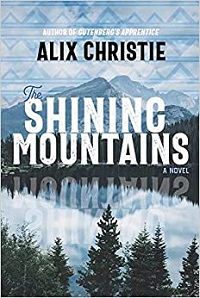
The Shining Mountains by Alix Christie

I loved Christie's first novel, Gutenberg's Apprentice; her second novel reflects her in-depth research into a character from her family history, Angus McDonald, a Scotsman who marries and raises a family with a Nez Perce woman in the 19th-century Rocky Mountains... and the cover showcases the region. High Road/Univ. of New Mexico Press, April 2023. [see on Goodreads]


The Red Bird Sings by Aoife Fitzpatrick

What a cover!  I think this is my favorite of them all: the images of nature and dramatic color contrast, which hints at a story of dark violence. Irish debut novelist Fitzpatrick pens a chilling novel about a young woman's mysterious death and justice in late 19th-century West Virginia. Virago, April 2023; no US edition yet, but Americans can preorder it on Kindle. [see on Goodreads]


Disobedient by Elizabeth Fremantle
Elizabeth Fremantle's newest historical has a jacket design with the look of Elodie Harper's Wolf Den. This one examines the life and strength of 17th-century Italian painter Artemisia Gentileschi, a survivor of sexual violence who refused to stay silent. Michael Joseph, July 2023; this is the UK cover. It will also be out in the US from Pegasus the same month. [see on Goodreads]


I, Julian, by Claire Gilbert

As stunning as stained glass in a cathedral window, Claire Gilbert's novel, I, Julian, is written as a first-person account by medieval anchoress and visionary Julian of Norwich.  Hodder & Stoughton, April 2023. [see on Goodreads]

Cities of Women by Kathleen B. Jones

The illustrated medieval-style design with its deep blue background entices readers into a novel centering on the era that gave birth to Christine de Pizan (b.1364), an Italian-born French poet described as "the first woman to support herself as a writer." This dual-period literary novel will focus, per the publisher's blurb, on illuminated manuscripts, feminine creativity, and self-discovery. Turner, September 2023. [see on Goodreads]


The Company by J. M. Varese

I find this cover both attractive and creepy, which must be the intended effect. I had never heard of the "arsenic wallpaper controversy of the late 19th century" before. Varese's The Company centers on a young Victorian-era wallpaper heiress at odds with a rising company employee with malevolent designs (literally). John Murray/Baskerville, March 2023. [see on Goodreads]

Friday, March 24, 2023

Songs in Ursa Major looks back to the folk scene of 1960s-70s America

Has anyone else been watching Daisy Jones & the Six on Amazon Prime? I haven’t read the novel (by Taylor Jenkins Reid), about the tumultuous relationship between the two lead singers in a ‘70s rock band, but I’ve been glued to the show, which has been dropping several new episodes each week. The final two remain unwatched as of now, and I’m anxious to see how the series ends.

When I went in search of a readalike novel, I found Emma Brodie’s Songs in Ursa Major, which has been hiding in my NetGalley queue for too long. Jane Quinn, the 19-year-old lead singer and guitarist for a band called The Breakers in 1969, isn’t Daisy Jones – while Jane has plenty of moxie and can party with the best of them, she’s more even-keeled. Plus her genre is more folk than rock.

A lifelong resident of Bayleen Island off the Massachusetts coast, Jane gets her big break at their summer folk festival, which attracts fans and tourists from across America. When the famous blue-eyed singer-songwriter Jesse Reid wrecks his car and misses his slot on the festival stage, Jane steps in, singing Jesse’s own song – and the rest is history. She seems destined for stardom, but a sexist record executive, Jane’s growing relationship with Jesse, and her own lack of songwriting confidence get in her way.

The novel, the author’s debut, is reportedly based on the affair between Joni Mitchell and James Taylor. It’s marketed as a love story, but I found it more of a celebration of feminine freedom. Jane comes from a generations-long line of unmarried, independent women.  A young woman with long, golden hair and a peasant blouse, Jane takes advantage of her opportunity on stage in a “bold as f-ck” way.  She thrives in the spotlight, and the opening scene puts you in her shimmering presence and makes you wish her performance existed on YouTube. She and Jesse have undeniable chemistry, though their relationship conceals some secrets, which of course are bound to come out eventually.

Through many ups and downs, musically and professionally, Brodie weaves the narrative around Jane's character, letting us see her from within and without – sweeping from center stage out to the audience and back. Following the great opening, it took me a while to be fully drawn into the story, and I would have liked more context. Folk music of the era spoke of politics and social change, but we don’t see much of the historical background that birthed these songs. As a portrait of a woman’s bumpy path to lasting fame, it’s much more successful, and the ending is perfect, providing a satisfying outcome for these creative characters.

Songs in Ursa Major was first published by Knopf. The cover images above come from the hardback (2021) and the paperback (2022).

Monday, March 20, 2023

The Trackers by Charles Frazier takes a propulsive journey across Depression-era America

Following Varina (2018), Frazier is in top form for his fifth novel, which traverses America in its portrait of contrasting Depression-era lives.

“The Trackers” is the name that New Deal artist Valentine “Val” Welch gives the mural he’s commissioned to paint in the post office of Dawes, Wyoming. He aims to inspire small-town pride by showcasing regional highlights.

While lodging at the expansive ranch of aspiring politician John Long and his younger wife, Eve, Val gets pulled into their drama. Not long after a stressful dinner party, Eve takes off, a small Renoir from Long’s collection in hand, and doesn’t return. Long asks Val to find her. Events turn more dangerous and puzzling than expected.

From an exhausting trip to wild rural Florida to the newly constructed, cinnabar-hued Golden Gate Bridge, the locales feel period-authentic, and the writing hums with spectacular word-images. While Val narrates, using a light folksy style that Frazier’s fans will recognize, the novel’s primary hero is Eve. An inscrutably captivating woman from impoverished origins who became a teenage hobo and sang in cowboy bands, she has reasons for fleeing wealthy married life, and the mystery ignites the plot.

The Old West still lingers in this propulsive tale of individualistic characters striving to beat the odds.

The Trackers will be published by Ecco/HarperCollins on April 11th, and this review was originally written for Booklist's Feb. 15th issue. You can find my review of Varina in an earlier blog post.  Read more about the background to The Trackers  and the author's long writing career, in his interview with Publishers Weekly. I love the illustration on the cover, too, which suits the material.

Monday, March 13, 2023

Review of T. Greenwood's Such a Pretty Girl, a daring novel of childhood fame, responsibility, and family in 1970s NYC

Click. Ryan Flannigan still flinches at the sound of a camera shutter, since it recalls her formative years as a child model and actress and the unwelcome attention she received from adults wanting to exploit her pre-teen prettiness. Now, in 2019, Ryan is a single mother in her early fifties living in rural Vermont, where she’s helped run a summer stock theater and quietly raised her daughter.

When an old friend alerts her to a news article with a risqué portrait from the worst night of her life, one taken during the New York City blackout of 1977, Ryan is shocked and confused. How did the photo come to resurface in the Paris apartment of billionaire Zev Brenner, a man recently unmasked as a pedophile? And why does it bear an affectionate inscription from Ryan’s mother, Fiona, on the back?

The subsequent suicide of Henri Dubois, an elderly photographer who’d been a father figure to young Ryan, draws her back to Greenwich Village for his memorial and in search of answers. Ryan never knew Brenner, but now she wonders how much her mother knew about his crimes. Fiona, however, has disappeared.

As the story shifts between eras, tension keeps this question open as Greenwood explores the fraught relationship between Ryan and Fiona, a would-be actress who moved the pair to New York in 1976 and lived through her daughter when her own auditions led nowhere. Adult novels with child narrators can be tricky, but Greenwood mostly stays within 10-year-old Ryan’s worldview in the 1970s sections. Introverted and anxiety-prone, Ryan adjusts well to the Westbeth complex, a real-life artists’ community, where she lives with a Hispanic American family who cares for her during Fiona’s too-frequent absences.

Ryan takes joy in doing kid things, and we feel her disconnect with the roles some adults manipulate her into, alongside her reluctance to disappoint. Alternately loving, neglectful, protective, and jealous of her daughter, Fiona herself is multifaceted and disturbingly drawn, a woman whose “need was like a balloon, stretched to its limits.”

Several elements distract from the mystery, like the adult Ryan’s unwillingness to read a note left for her by Fiona, thus delaying some revelations for plot convenience. Also, the name Ryan was almost never used for girls born in ’66, and I wish Greenwood had let Ryan ponder some of Henri’s actions in greater depth.

Other cultural references to a ‘70s childhood – decorating shoeboxes for school Valentine’s Day activities, the Hall of Gems at the American Museum of Natural History, watching American Bandstand on Saturdays – all check out. It wasn’t surprising to learn the author is my age and lived through the time she re-creates.

With Jeffrey Epstein’s crimes and Brooke Shields’ painful childhood experiences still circulating in the news, the novel’s theme of the “battle against a world in which girls are still often in peril” continues to strongly resonate. The novel offers much to ponder about what it means to be complicit.

T. Greenwood's Such a Pretty Girl was published by Kensington in October 2022; this was a personal purchase.

Wednesday, March 08, 2023

In the Upper Country reveals aspects of Black and Indigenous histories on both sides of the Canadian border

In 1859, in an all-Black town in Canada West (now called Ontario), a hub for the Underground Railroad, a female journalist agrees to interview an old woman who was imprisoned after killing a white slave catcher on her trail. Their conversation reveals much in the way of unexpected history.

A writer for The Coloured Canadian, Lensinda “Sinda” Martin doesn’t know what to make of the woman, who speaks in riddles, or her perplexing situation. The old woman and her companion, a young seamstress named Emma, had been hiding at a farmer’s cabin when a white man and his Indian partner showed up, claiming the pair were fugitive slaves from Lincoln County, Kentucky. Strangely, the woman was seen talking to the Indian and somehow convinced him to back off.

Profoundly frustrated (“Would I ever get anything of value from this woman?” she wonders), Sinda proposes a “tale for a tale,” bartering her own stories for the woman’s revelations about the past. These tales involve love, family, painful separation, and multiple quests for freedom—and the drastic lengths people will go to obtain it.

Stretching from 1795 Montreal through the pivotal War of 1812 to the characters’ present day, this debut novel paves a previously uncharted path through North America, uncovering deep affinities between Black and Indigenous peoples, who shared the pain of bondage and “quietly celebrated each escape; it mattered not whence they fled.”

The writing isn’t uniformly fluid. Some pages move speedily, while others require careful, slow perusal in order to make connections with earlier events. Many of the secondary characters—including Sinda’s employer and landlady, an abolitionist speaker; the seamstress Emma; and Sinda’s father, Dred, who can “talk Indian”—are intriguing enough to potentially carry their own novel.

While In the Upper Country isn’t an effortless read, it makes an original and valuable contribution to the historical fiction genre.

Kai Thomas's In the Upper Country was published by Viking in January; I reviewed it initially for the Historical Novels Review.

Saturday, March 04, 2023

Being female is treacherous in these ten new and upcoming novels about historical witchery

Witches are an increasingly popular subject in historical fiction. Incorporating themes of misogyny and women's power, strength, and wisdom, these ten new and upcoming historical novels are set at various times in history. Many dramatize actual events. In some of them, the women's magic is real.


The Witches of Vardo by Anya Bergman

To secure her own liberty from the fortress on Vardø Island in remote northern Norway, the disgraced former mistress of Denmark's king agrees to help identify suspected witches... but the accused women won't make it easy for her. Set in the 1660s, about historical events. Bonnier, Jan. 2023.  [see on Goodreads]


The Weaver and the Witch Queen by Genevieve Gornichec

The two main characters here are Gunnhild, soon to be Queen of Norway in the 10th century, and Oddny, her childhood friend, in this novel of spells, sisterhood, and survival in the dangerous Viking age. Ace, July 2023. [see on Goodreads]


The Devil's Glove by Lucretia Grindle

Set in what's now Maine in the late 17th century, The Devil's Glove looks at the historical events that led up to the Salem Witch trials from the viewpoint of a young woman caught between the worlds of the Puritans and local Native American tribes. Casa Croce, May 2023. [see on Goodreads]


Weyward by Emilia Hart

Three Englishwomen are linked by the gendered violence they've faced, and perhaps by something else. This multi-period tale spanning five centuries takes place in 2019, 1619, and during the WWII years.  St. Martin's, March 2023. [see on Goodreads]


The Burnings by Naomi Kelsey

This debut novel dramatizes the North Berwick witch trials of late 16th-century Scotland through the story of two women, one Scots and one Danish, and the quest for power during a time of fear and superstition. HarperNorth, June 2023. [see on Goodreads]


The Witch of Tin Mountain by Paulette Kennedy

In the Ozarks during the Great Depression, three women are linked by family connections and an evil presence that threatens to overshadow them all.  Lake Union, Feb. 2023. [see on Goodreads]


The Witching Tide by Margaret Meyer

Fictionalizing the witch trials of mid-17th-century East Anglia, this debut centers on a village healer, a woman unable to speak, who gets drawn into assisting a traveling witchfinder and who must search her own conscience for a path forward. Scribner, July 2023. [see on Goodreads]


The Last Witch of Scotland by Philip Paris

Two newcomers to a remote locale in the 18th-century Scottish Highlands, a mother and daughter, face unpleasant scrutiny and worse in a novel about the last person put to death for witchcraft in Britain. Black & White, April 2023. [see on Goodreads]


Solstice by Helen Steadman

This third novel in a trilogy, all of which deal with historical events, looks at the Riding Mill witch trials of 1673 Northumberland, in which a young servant girl gave testimony about suspected witches. One of the accused, in this version, is a woman whose family members had been executed for witchcraft. Bell Jar, Sept. 2023. [see on Goodreads]


The Scandalous Confessions of Lydia Bennet, Witch, by Melinda Taub

Even Jane Austen's characters are dabbling in witchcraft. The youngest Bennet sister from Pride & Prejudice, Lydia, is a witch and gets entangled in an entirely different sort of trouble. Mr. Wickham, for example, is a demon (literally). Grand Central, Oct. 2023. [see on Goodreads]

Saturday, February 25, 2023

Dark Waters Rising reveals a complex web of mysteries in atmospheric 14th-century Yorkshire

In Clark’s twelfth and last mystery in the Hildegard of Meaux series, set in 1394 Yorkshire, tensions are nigh at breaking point.

The novices at Swyne Priory, where Hildegard is a Cistercian nun, are unhappy, and Hildegard can’t settle them down. A young royal minstrel, Master Leonin, appears on the convent’s doorstep in a terrible state, alleging his life is threatened—and he refuses to say much more. Richard II has just lost his beloved queen, and the nuns worry his barons are agitating again. Even more troublesome is the unnatural death of a lay sister.

Events in the natural world mirror the turmoil within: the rain is incessant, and the eccentric, bookish Sister Josiana predicts the Humber will break its banks, flooding the land. The priory is on high ground, but can they prepare in time, and will Hildegard solve the crimes?

It feels odd to describe a medieval mystery involving nuns as frenetic, but there’s so much physical movement that the plot gets muddled at times. Hildegard spends considerable time on the road, riding to and fro among Swyne, the monastery at Meaux, and nearby Haltemprice Priory during her investigations.

The Prioress suggests she wants Hildegard to succeed her, but it’s unclear why, since Hildegard is rarely there; plus, there are unresolved romantic tensions between her and Hubert, lord abbot at Meaux. The story and characters hold interest, though, and it comes through clearly that with limited options for women, many found homes in convents regardless of vocation (or willingness).

The sense of place is superb and appropriately eerie, with a full moon overhead as waters begin rising. Superstitions are rife, and many folks “trust portents more than facts,” but when Josiana’s measurements prove accurate—not really a spoiler—it’s a triumphant moment for all women of science.

Dark Waters Rising by Cassandra Clark was published in 2022 by Severn House, and I'd reviewed it initially for the Historical Novels Review. Unlike many readers, I don't mind beginning a series in the middle if the setting and storyline intrigue me, or at the end in this case, and this one stands alone well enough. Although Hildegard's sleuthing has wrapped up, Clark is continuing to explore medieval crime through her Brother Chandler mysteries.

Tuesday, February 21, 2023

The Thread Collectors interweaves Black and Jewish perspectives on the U.S. Civil War

A collaboration between two longtime friends has resulted in a unique historical novel about two couples – one Black and one Jewish – whose stories come together during the chaos and destruction of the U.S. Civil War.

The feminine cover is somewhat misleading, since The Thread Collectors gives equal time to the male perspective. In 1863, Private Jacob Kling, a Jewish cornet player in the Union army stationed at Camp Parapet in Jefferson, Louisiana, is ordered to help with the intake of Black recruits for the Louisiana Native Guards. It’s in this role that he first meets William, a gifted flutist who took considerable risks fleeing enslavement to join the Union forces. Their fellow soldiers disparage interracial mingling, but the two form a bond over their passion for music.

Both men have left behind the women they love for the cause. Jacob’s wife, the former Lily Kahn, is the daughter of a German Jewish immigrant who made his fortune selling sheet music. From her Fifth Avenue apartment, Lily writes tender letters to Jacob expressing her pride in his service and recounting her work supporting abolition and the war effort. William’s beloved is Stella, a mixed-race free woman forced to become the mistress of a white Confederate officer – the same man who bought William and brought him to Louisiana from his home on Georgia’s Sapelo Island as a child.

With four viewpoints and many flashbacks to the recent past, the novel is a detailed collage of Civil War experiences, ranging from the domestic arena to battlefield courage and carnage. All are stitched together tightly into a coherent narrative, although since Lily’s viewpoint is shown through letters initially, it feels a touch unbalanced. A young woman of conviction, Lily finds a strong role model in suffragist Ernestine Rose, among others, though her stated admiration for Isabella of Castile feels odd, given her religion.

In addition to portraying the characters’ survival skills relative to gender and race, the novel exposes the racial prejudice they endure, some of which may be surprising – like General Grant’s anti-Semitic views and the slurs against Jews that pervade the army camps, as well as the Union army’s cruelly unequal treatment of the Black soldiers in its ranks.

Without losing sight of the big picture, the story emphasizes the varied means of communication that draw the characters together. These include Jacob and William’s shared love of music; Lily’s mailing of letters and new tunes, which boosts morale at the camp; Jacob saying Kaddish (the Jewish mourner’s prayer) for the souls of Black men; and, most of all, Stella’s dexterity in stitching maps with colored threads, unpicking stitches from other fabrics to create visual guides pointing the way to freedom.

Civil War-era novels are common, but this isn’t a story that’s been told before. In all, this book speaks to the courage to trust and how the ties of friendship can make people stronger.

The Thread Collectors by Shaunna J. Edwards and Alyson Richman was published last August by Graydon House (I read it from a NetGalley copy).

Wednesday, February 15, 2023

Stealing by Margaret Verble, set in the 1950s, introduces a courageous, unforgettable young Cherokee heroine

This short, compassionately written, and powerful novel is told in the unquenchable voice of Karen “Kit” Crockett, who is raised by her white father in the 1950s South after her Cherokee mother’s death. At nine, Kit spends much time alone, fishing in the bayou and eagerly awaiting each bookmobile visit; she has an abundance of sorrows but knows her family loves her.

When she spies an unfamiliar car at her late Uncle Joe’s cabin, Kit grows intrigued. Her attractive new neighbor, Bella, is divorced and has two “boyfriends” she doesn’t much like (“Kit, you won’t understand this yet, but they pay the bills,” Bella says). Despite the age difference and the hostility of a reclusive old woman down the lane, the pair become good friends.

It isn’t to last. From the beginning, Kit makes clear that she’s no longer home and is setting her thoughts to paper years later, after being taken (stolen) from her family and enrolled in a religious boarding school, where other schoolkids are cruel, and teachers lecture them about original sin. Even worse, the director, Mr. Hodges, is an unctuous hypocrite who saves his worst punishments (sexual abuse) for the Indian students.

An enrolled member of the Cherokee Nation and a Pulitzer finalist, Verble is a magnetic storyteller – the book is difficult to put down – who has created an indelible heroine in Kit, who gradually unspools the tragic backstory of how she landed in such a despised place. The themes of prejudice and of religion as a controlling force are strongly felt.

Kit’s personality bursts through every line: vulnerable, traumatized, honest, scrappy, and resolved to survive and escape. While she’s raised to be respectful to adults and doesn’t always understand their world, she can tell in a second if they’re lying. You won’t forget meeting her.

Stealing was published by Mariner/HarperCollins this month; I reviewed it from an Edelweiss e-copy for February's Historical Novels Review.

Margaret Verble is the author of three previous historical novels: Maud's Line (a Pulitzer finalist in 2016), Cherokee America (a Spur Award winner for Best Western), and When Two Feathers Fell from the Sky.

Saturday, February 11, 2023

A monster reenvisioned: Natalie Haynes' feminist retelling of Medusa's story

Feminist retellings of Greek myths are all the rage, and Haynes stands among the foremost authors in this area. Her third such novel melds her grounding in the classics with a conversational style and biting humor.

With snakes for hair and a petrifying gaze, Medusa has been considered a horrible monster, but Haynes makes us rethink this belief. 

The only mortal among the Gorgons along Libya’s shores, Medusa is an attractive, curious young woman growing up under her loving older sisters’ care. Her rape by Poseidon in Athene’s temple traumatizes her; so does Athene’s act of revenge. Perseus, the supposed hero seeking to decapitate a Gorgon, is an incompetent adventurer without the sense to ask for directions.

Seen from multiple perspectives, including Perseus’s mother, Danaë; prickly goddesses; and the Gorgoneion (Medusa’s head), which speaks with candor, the tale evokes passionate fury on behalf of its heroine, a tragic victim of male violence. Her death scene is utterly heartbreaking. It all begs the question: how could we have gotten Medusa’s story so wrong?

Stone Blind was published this past week in the US by Harper.  Mantle published it in the UK last September. I wrote this review for Booklist's Jan. 1 issue.

Genre-wise, this novel could be considered historical fantasy. Several other novelists have recently turned their own gaze to Medusa's story. Claire Heywood's forthcoming The Shadow of Perseus, from what I understand, removes the supernatural elements and recasts the tale as historical fiction, as seen from a trio of women's viewpoints, including Medusa's.  The Miniaturist author Jessie Burton's Medusa is a YA retelling. Lauren J. A. Bear's upcoming Medusa's Sisters (Ace, Aug. 2023) centers on Stheno and Euryale, Medusa's immortal Gorgon sisters, who are often left out of the myth (they do play significant roles in Natalie Haynes' version, too).  

Monday, February 06, 2023

The Magic Kingdom by Russell Banks, his elegiac novel about early Florida

The quest for a perfect society is woven into the American experience. Through his bittersweet novel, Banks explores the flaws in the design of an early 20th-century utopia—and by extension, perhaps all utopias—through one man’s mournful regrets.

The premise is that the author discovered a collection of reel-to-reel tapes in a dingy Florida library basement and transcribed and edited their forgotten narrative: the confession and catharsis of Harley Mann, an elderly real estate investor, who speaks in 1971 about his long-ago past.

As a twelve-year-old boy in 1902, Harley is eager to please but has an independent mind. After his father dies, his mother moves the family from their secular Georgia commune to a plantation whose cruelty becomes apparent. Rescued by the charismatic Elder John, the Manns head south to abide with the Shakers in his community, New Bethany, in central Florida.

The children, too young to formally become Shakers, all learn the ways of the oddly compelling religion. Harley trains in beekeeping and becomes Elder John’s protégé, though his obsession with Sadie Pratt, a tuberculosis patient seven years his elder, threatens his devotion to his Shaker family—who are celibate—and the group’s very stability.

The Shakers are industrious, but their focus is neither charitable nor commercial, and the plot evokes these tensions. While The Magic Kingdom is an engrossing morality tale, Banks is equally concerned with how the characters live day-to-day alongside their beliefs and nature. The land and waters—which intermingle in this swampy country—are gloriously described, as are the native birds and other animals.

Contrasts with the profitable artifice of the Walt Disney Company, which we’re told eventually purchased the Shakers’ land, quietly underlie the entire novel. It all leaves the reader, like Harley, yearning to return to this unspoiled, vanished paradise, imperfect as it was.

I wrote this review for February's Historical Novels Review, and it was published by Knopf last fall (and No Exit Press in the UK). The Magic Kingdom is Russell Banks' final novel. Several days after I finished it, I read online that he had passed away at age 82.  Read the obituary at NPR, which describes him as a writer who "found the mythical in marginal lives."

Wednesday, February 01, 2023

Historical fiction award winners announced at the 2023 ALA LibLearnX conference

The 2023 Book and Media Award announcements from the American Library Association's LibLearnX conference in New Orleans were broadcast on Sunday afternoon, so I'm behind in getting this news posted.  It's been a busy week with a lot of meetings, and there are more to come.  I watched the ceremony via the Reference & User Services Association's Facebook page. Many adult-level historical novels received accolades.

Here are the details:

On the Reading List, the ALA's annual awards in eight genre fiction categories, the award for Historical Fiction award went to By Her Own Design by Piper Huguley, a biographical novel about Black designer Ann Lowe, who designed Jackie Kennedy's wedding gown, among other exquisite creations.


The Forty Elephants by Erin Bledsoe (1920s London, about an all-female criminal gang)
The Good Wife of Bath: A (Mostly) True Story by Karen Brooks (Chaucer's bawdy heroine reveals her story)
The Swift and the Harrier by Minette Walters (female-centered adventure during the English Civil War)
Two Storm Wood by Philip Gray (WWI thriller about a woman seeking her missing fiancé)

On the Listen List for excellence in audiobook narration:

The Bangalore Detectives Club by Harini Nagendra, narrated by Soneela Nankani. (mystery of 1920s Bangalore, India)
The Diamond Eye by Kate Quinn, narrated by Saskia Maarleveld.  (thriller about a real-life Ukrainian woman who became a celebrated WWII sniper)
A Lady’s Guide to Fortune-Hunting by Sophie Irwin, narrated by Eleanor Tomlinson (aka Demelza from the most recent Poldark TV adaptation; this is a witty Regency romance)
Take My Hand by Dolen Perkins-Valdez, narrated by Lauren J. Daggett. (a terrible injustice perpetrated on Black girls in '70s Alabama, based on a true story)

On the Notable Books List are these two historical novels:

Horse by Geraldine Brooks (about a champion race horse, a painting, and racial injustice across time)
Trust by Hernan Diaz (four alternating tales create a puzzle set in 20th-century NYC)

Congrats to all the winners!

Friday, January 27, 2023

What we can learn about historical fiction reading (and reviewing) from an AI chatbot


Example book review from chatgpt

Over the past several weeks, I’ve been fascinated by ChatGPT, the artificial intelligence chatbot that responds to prompts in a conversational style which mimics human writing. Educators have raised concerns about students using it to plagiarize essays; technical writers (and others) are worried about an AI agent putting them out of work. The applications and ethical ramifications of this program are just beginning to be studied.

When it comes to requests for basic information on a topic, ChatGPT returns text that's logically organized, easily readable, and mostly accurate (it does make mistakes). It’s also scary fast. When I asked it to write a sonnet about historical fiction, the results were impressive but flawed. People on the Historical Novel Society’s Facebook group had an interesting mix of responses to it.

I wanted to explore the output created by ChatGPT so I could see its strengths and defects firsthand – and so I could better recognize AI-generated writing when I came across it in other circumstances. (There are new programs out there to detect whether content was written by a robot.) ChatGPT isn’t going away and will only improve over time, so it’s to our benefit to become familiar with its capabilities. So I prompted it with some requests to see what could be gleaned from the experience.

How good is ChatGPT at writing book reviews, I wondered. The system’s knowledge base ends with 2021, so this exercise won’t work for new releases, but I was curious what information it knew about older titles, and about historical fiction in general.

First, I asked it to write a sample book review for a novel about pilots during WWII (I didn’t specify a particular book). The result was:

Example 1:

Flyboys: A Novel of WWII by John Smith is a powerful and moving historical novel set during World War II. The story follows a group of young pilots as they train to become fighter pilots and then head off to fight in the Pacific Theater.

One of the strengths of this novel is the way it brings to life the personal stories of the pilots. Through their eyes, we see the horrors of war and the sacrifices they made for their country. Smith does an excellent job of capturing the camaraderie and sense of brotherhood that developed among the pilots, as well as the fear and uncertainty they faced on a daily basis.

The novel also explores the moral and ethical dilemmas that the pilots faced, including the question of whether or not to shoot down enemy pilots who have bailed out of their planes. The characters are well-developed and feel authentic to the time period. The main protagonist, a young pilot named Jack, is a relatable and sympathetic character who the reader can't help but root for.

The novel is also historically accurate and provides a great deal of information about the air battles that took place during World War II, which makes it a great novel for readers who are interested in the history of WWII and the role of pilots in the war.

The writing is engaging and evocative, and the pacing of the novel keeps the reader on the edge of their seat. The ending is bittersweet, but it leaves the reader with a sense of the human cost of war.

Overall, "Flyboys: A Novel of WWII" is a must-read for fans of historical fiction and World War II enthusiasts. It is well-written, well-researched, and filled with relatable characters and a compelling storyline that will keep readers engaged until the very end. It is a highly recommended novel for anyone interested in the history of WWII, the role of pilots, and the human cost of war.

--

Does this sound like a novel you’d want to read? Or maybe you’ve already read something very close to it?

Since I gave it a generic request, it provided a generic review. Still, it picked up on a basic plotline for a book with this focus, reflected these common elements within the review (the fact that many are stories of camaraderie and coming-of-age journeys for their male protagonist), and provided commentary on positive qualities readers expect to find in historical fiction. That is: well-developed and authentic characters, historical accuracy, a moving and powerful storyline, and interesting background details.

Next – several days later – I asked ChatGPT for a review on a novel about a young woman growing up in medieval England. The result named a specific book, but the plotline doesn't fit that book, aside from getting the era right.

Example 2:

The Rose of York: Love and War is a captivating historical novel set in medieval England during the Wars of the Roses. The story follows the life of a young woman named Rose as she navigates the complexities of medieval society, from her childhood in a small village to her eventual rise as a powerful and influential woman.

One of the strengths of this novel is the way it brings to life the rich and complex world of medieval England. The author does an excellent job of capturing the political and social landscape of the time, from the power struggles between the different noble houses to the everyday lives of the common people. The novel also explores the role of women in medieval society and how Rose's determination and strength of character allows her to transcend the limitations placed on her as a woman.

The characters are well-developed and feel authentic to the time period. The main protagonist, Rose, is a strong and relatable character who the reader can't help but root for. The love story that develops throughout the novel is also engaging and adds an emotional depth to the story.

The writing is evocative, and the pacing of the novel keeps the reader engaged throughout. The ending is satisfying and leaves the reader with a sense of the human cost of war and the strength of the human spirit.

Overall, "The Rose of York: Love and War" is a must-read for fans of historical fiction. It is well-written, well-researched, and filled with richly drawn characters and a compelling storyline that will keep readers engaged until the very end. It is a highly recommended novel for anyone interested in the Middle Ages, the Wars of the Roses, and the role of women in history.

--

This second review has elements worth noting. It draws on tropes for women’s fiction set in medieval times (the heroine’s personal growth journey, how she reacts to the restrictions placed on women in past eras, and the fact that there’s a love story – not mentioned at all in the sample review about WWII pilots). Taken together with the first review, we see how these AI-generated reviews are structured. The underlined sections show the text repeated in both reviews. It seems there’s an underlying template that ChatGPT is following, while filling in the blanks with material appropriate to the subject and era.

Thirdly, I requested a critical review of a WWII novel. (I initially asked for a snarky review, just for fun, but it tsked at me and told me it wouldn’t do that.)

Example 3:

The War Diaries: A Novel of WWII by John Doe is a historical novel set during the Second World War. The story follows a group of soldiers as they fight their way through Europe, and the struggles they face both on and off the battlefield.

One of the weaknesses of this novel is that it lacks historical accuracy. There are several inaccuracies in the descriptions of battles and settings, which undermines the credibility of the story. Additionally, the characters are not well-developed, and their actions and motivations are not always clear.

The author's writing style is also problematic. The dialogue is often clunky and unrealistic, and the author's attempts at humor fall flat. The pacing of the novel is also uneven, with long stretches of slow-moving action interspersed with brief bursts of action.

Overall, "The War Diaries: A Novel of WWII" falls short in providing a credible and engaging story. The lack of historical accuracy and the poor writing style make it hard for the reader to fully immerse in the story. It's not a bad book, but it's not a must-read for fans of historical fiction set during WWII, and readers might want to look for other options.

--

Again, we can learn more about reader expectations from this review of a fictional novel. (ChatGPT made up the title and author.) It’s a coherently organized review that shows multiple reasons why a historical novel can fail to resonate with readers.

Lastly, I got out of generic mode and asked: Can you write a book review for All the Light We Cannot See? Surely it would do better with a highly acclaimed, bestselling historical novel.

Example 4:

"All The Light We Cannot See" is a historical fiction novel written by Anthony Doerr. The novel takes place in Europe during World War II and follows the parallel stories of two main characters: Marie-Laure, a blind French girl, and Werner, a German boy. The story is beautifully written, with a powerful and evocative prose that draws the reader into the characters' lives and experiences.

The novel is about the impact of war on the lives of ordinary people, and how it can change them. The author does an excellent job of capturing the fear, uncertainty, and hope that people felt during the war. Doerr's descriptions of the war-torn cities and the devastation caused by bombing are particularly powerful, and they help to convey the scale of the destruction and suffering caused by the war.

The author also explores themes of love, family, and sacrifice, with the characters learning to overcome their fears and biases. The relationship between Marie-Laure and Werner is particularly well-done, as the author explores the different paths their lives take, and how they are ultimately brought together.

The author's writing style is evocative, poetic and he is able to create a powerful atmosphere, it is a book that is not only informative but also emotionally engaging. The book is a beautifully written, thought-provoking novel that is sure to stay with the reader long after they have finished reading it.

Overall, "All the Light We Cannot See" is a must-read for fans of historical fiction, war literature, and for anyone who is interested in exploring the human experience during one of the most devastating conflicts in human history.

--

So what do you think?

On the plus side, it’s structured like a standard book review, and if you’ve read the novel (and I have), you’ll notice it gets some things right. It’s mostly grammatically correct, too.

But as a review of Doerr’s novel, which has been analyzed in detail in many corners of the web, it’s bland and superficial. Not only does it lack style and artistry – typical in AI-generated text – but there’s almost no information about the characters, plot, or setting. When I read reviews, I appreciate perceptive examples of what worked well, what didn’t, and why, preferably with originality of expression. This review reads like someone ran out of time and was phoning it in, or that they briefly glanced at the publisher’s blurb but didn’t actually read the book. Also, despite its emphasis on themes, it doesn’t really capture what All the Light We Cannot See is about.

I’ve repeated this same prompt multiple times, with only a slight variation in the AI responses.

In writing reviews, I know how tempting it can be to fall back on clichés and familiar phrases. Everyone uses them to some degree, and they can pass unnoticed if the reviewer points out specific examples and demonstrates original insight. The reviews written by the chatbot, especially in the fourth entry, focus on historical fiction tropes while omitting details on an author’s unique accomplishments. Would any of the AI-generated reviews convince you to read the book described (if it existed)?

In the end – and thanks for reading this lengthy post – we can learn numerous things from these AI-written reviews, but the takeaways have more to do with genre and reviewing conventions than the books themselves. I welcome additional thoughts, as well as details on your own explorations with this new tool.