This is a lovely read about the little-known wife of a famous man. It’s also an illuminating portrait of their marriage, showing how a clever woman of independent spirit navigates her relationship with a husband who controls the purse-strings and makes all major decisions… and whose wishes she must frequently heed.
In addition, The Woman in the Shadows presents a detail-rich portrait of a merchant household in Henry VIII’s England. Two years ago on this blog, I wrote a post entitled Tudor Fiction Without the Famous, and this novel fits (even though it does have one very well-known character).
The heroine is Elizabeth Williams, nee Wykes, a 23-year-old widow in London of 1513. Following her husband’s untimely death, she decides to take over his cloth business – it was her father’s trade as well – but runs into obstacles, for her fellow tradespeople and even her own servants, at least at first, resent her taking a prominent role in a man’s world. Her father wants to see her return home and remarry, but Elizabeth has other plans – like traveling up to the Northampton Cloth Fair and running a stall there herself.
Readers will find themselves absorbing significant detail on the cloth trade, including fabric types, arrangements to import materials from the continent, and the sumptuary laws regulating the colors and apparel types that different classes are permitted to wear.
Elizabeth’s life changes after she reconnects with a childhood acquaintance, Thomas Cromwell, a lawyer who had served as her father’s middleman overseas. In contrast to another, less pleasant suitor, Elizabeth finds Thomas kind and protective, a reliable potential husband. For the sake of love, something Elizabeth doesn’t really expect in a marriage, she gives up her role as solo businesswoman. Although their relationship is warm and loving, for the most part, Elizabeth sometimes chafes at the sacrifices she must make as the wife of an upwardly mobile man whose increasing political prominence makes her uneasy. The novel’s focus is domestic; none of it takes place at court. Elizabeth sometimes comments on royal happenings and worries that Thomas’s attachment to statesman Thomas Wolsey will lead to danger.
As Elizabeth’s family grows, dramatic subplots involve the repercussions of a secret from her first marriage, another housewife’s spiteful jealousy, the growing influence of the “new learning,” and a surprising revelation about Thomas himself. Although the novel intimates what Thomas Cromwell’s family life may have been like, this isn’t just a “woman behind the famous man” novel; the author shows us that Elizabeth’s story is noteworthy in itself.
The Woman in the Shadows was published by Accent Press in August in trade paperback and ebook. Thanks to the publisher for sending me an advance copy. For more information on how the author crafted the novel out of the limited facts about Elizabeth and her family, see Carol McGrath's article "The Woman in the Shadows."
Wednesday, August 30, 2017
Saturday, August 26, 2017
Women's power through the ages: A Secret History of Witches by Louisa Morgan
Fans of Gothic historical sagas should be drawn to this multi-generational novel about a family of Breton witches whose talents descend through the female line.
Of the six granddaughters of Ursule Orchière, a Romani woman who dies saving her clan from witch-hunters, only Nanette, the youngest, proves to have inherited her magic. In 1821, Nanette and her sisters flee France for a farm in Cornwall, where they work the land and live in seclusion to avoid unwanted attention.
The story tumbles down through the next hundred years, covering the journeys of Nanette’s daughter, also named Ursule, then Irène, Morwen, and finally Veronica as they come into their heritage in adolescence and carve out paths in a world that would shun them, or worse, if their secrets became known.
In the beginning, the historical backdrop is lightly sketched, while the male characters serve little purpose other than to act as vicious antagonists or, alternately, father the women’s children. As the story continues, the plotlines become stronger, likewise the romantic tension; the history also becomes more paramount. (Even so, the story involving Veronica’s wartime contributions is over the top.) Not all the women are sympathetic, which keeps things fresh and unpredictable.
Although most of the manifestations of their power, like spell-casting and scrying, aren’t unusual for fantasy fiction, Morgan incorporates some creative touches, such as their diverse animal familiars, and the grimoire written in a version of French so archaic it requires translation.
Even more compelling than the magic are the five heroines’ differing reactions to their abilities and their relationships with those from earlier generations. Morgan also depicts with visceral impact the roles of women in a male-centered world, and the dangers faced by anyone who doesn’t adhere to prevailing religious beliefs.
A Secret History of Witches will be published on September 5th by RedHook; thanks to the publisher for approving my NetGalley access. Louisa Morgan is a pseudonym for Louise Marley, who writes historical fantasy and science fiction under her own name; she has also written a series of historical sagas set in early 20th-century Seattle as Cate Campbell.
Of the six granddaughters of Ursule Orchière, a Romani woman who dies saving her clan from witch-hunters, only Nanette, the youngest, proves to have inherited her magic. In 1821, Nanette and her sisters flee France for a farm in Cornwall, where they work the land and live in seclusion to avoid unwanted attention.
The story tumbles down through the next hundred years, covering the journeys of Nanette’s daughter, also named Ursule, then Irène, Morwen, and finally Veronica as they come into their heritage in adolescence and carve out paths in a world that would shun them, or worse, if their secrets became known.
In the beginning, the historical backdrop is lightly sketched, while the male characters serve little purpose other than to act as vicious antagonists or, alternately, father the women’s children. As the story continues, the plotlines become stronger, likewise the romantic tension; the history also becomes more paramount. (Even so, the story involving Veronica’s wartime contributions is over the top.) Not all the women are sympathetic, which keeps things fresh and unpredictable.
Although most of the manifestations of their power, like spell-casting and scrying, aren’t unusual for fantasy fiction, Morgan incorporates some creative touches, such as their diverse animal familiars, and the grimoire written in a version of French so archaic it requires translation.
Even more compelling than the magic are the five heroines’ differing reactions to their abilities and their relationships with those from earlier generations. Morgan also depicts with visceral impact the roles of women in a male-centered world, and the dangers faced by anyone who doesn’t adhere to prevailing religious beliefs.
A Secret History of Witches will be published on September 5th by RedHook; thanks to the publisher for approving my NetGalley access. Louisa Morgan is a pseudonym for Louise Marley, who writes historical fantasy and science fiction under her own name; she has also written a series of historical sagas set in early 20th-century Seattle as Cate Campbell.
Tuesday, August 22, 2017
Beyond Absolution by Cora Harrison, a mystery of Ireland in 1923
In the politically roiled Irish city of Cork in 1923, Reverend Mother Aquinas’s latest investigation is tragically personal. An old childhood friend, the elderly Father Dominic of the Capuchin Brothers, has been found murdered in his confessional stall at Holy Trinity Church, pierced through the ear with a sharp, narrow blade. In many historical mysteries, the victims have numerous enemies, but this case is more puzzling: nobody can imagine who’d want to kill such a gentle man.
For the sake of Dominic’s grieving brother, Prior Lawrence, the Reverend Mother wants to discover the truth. She contributes information based on her personal connections and extensive knowledge of Cork’s citizenry while her former pupil, Inspector Patrick Cashman of the Civic Guards, examines the crime from an official standpoint. Strangely, on the day before his death, the unworldly priest had been seen visiting an antique shop on Morrison’s Island, upset about a damaged ceramic hawk for sale there.
Every volume in this exceptional series (Beyond Absolution is the third) adds to readers’ understanding about the geography and political history of Cork, and Ireland itself, during the 1920s. Although the IRA is blamed for most killings, Dominic’s murder doesn’t bear their signature, especially since his kindness extended even to Republican sympathizers. The mystery about the hawk is revealed midway through, but the killer’s identity remains unknown until the end. Looking back afterward, however, it’s clear Harrison had been dropping periodic clues to lead to the correct conclusion.
With their shared childhood and contrasting life experiences, the heroine and her elegant cousin Lucy make a wonderful team. Understandably, the Reverend Mother appears noticeably aged and tired in this entry, which shows how anguish can take a heavy physical toll. Let’s hope she and her partners can rally sufficiently to play roles in future books.
Beyond Absolution was published by Severn House on August 1st. By now it should be clear that I'm a fan of this series, which begins with A Shameful Murder and continues next with A Shocking Assassination. I reviewed the last two for the Historical Novels Review, and the first one for this site. Cora Harrison also writes mysteries set in 16th-century Ireland (the Burren Mysteries) and has recently started a new series about an Irish lawyer in the Tudor court of 1522; the first entry is The Cardinal's Court.
For the sake of Dominic’s grieving brother, Prior Lawrence, the Reverend Mother wants to discover the truth. She contributes information based on her personal connections and extensive knowledge of Cork’s citizenry while her former pupil, Inspector Patrick Cashman of the Civic Guards, examines the crime from an official standpoint. Strangely, on the day before his death, the unworldly priest had been seen visiting an antique shop on Morrison’s Island, upset about a damaged ceramic hawk for sale there.
Every volume in this exceptional series (Beyond Absolution is the third) adds to readers’ understanding about the geography and political history of Cork, and Ireland itself, during the 1920s. Although the IRA is blamed for most killings, Dominic’s murder doesn’t bear their signature, especially since his kindness extended even to Republican sympathizers. The mystery about the hawk is revealed midway through, but the killer’s identity remains unknown until the end. Looking back afterward, however, it’s clear Harrison had been dropping periodic clues to lead to the correct conclusion.
With their shared childhood and contrasting life experiences, the heroine and her elegant cousin Lucy make a wonderful team. Understandably, the Reverend Mother appears noticeably aged and tired in this entry, which shows how anguish can take a heavy physical toll. Let’s hope she and her partners can rally sufficiently to play roles in future books.
Beyond Absolution was published by Severn House on August 1st. By now it should be clear that I'm a fan of this series, which begins with A Shameful Murder and continues next with A Shocking Assassination. I reviewed the last two for the Historical Novels Review, and the first one for this site. Cora Harrison also writes mysteries set in 16th-century Ireland (the Burren Mysteries) and has recently started a new series about an Irish lawyer in the Tudor court of 1522; the first entry is The Cardinal's Court.
Tuesday, August 15, 2017
The Lost Diaries of Susanna Moodie by Cecily Ross, biographical fiction about an early Canadian settler
One might say Susanna Moodie is to Canada what Laura Ingalls Wilder is to the United States: both were early pioneers who gained renown for books about their experiences. Moodie’s Roughing It in the Bush (1852), recounting the first seven years she spent in Upper Canada as a young wife and mother in the 1830s, is considered a classic.
With her debut, Cecily Ross imagines Susanna’s personal journal. It’s convincing as a period diary while fulfilling expectations for a satisfying, well-researched historical novel. Notably, it goes where an account published for public consumption simply couldn’t: into the intimate reaches of a woman’s heart. The tone is warm, honest, and spiced with wit.
Ross gives eloquent voice to Susanna’s frustrations with the husband she loves, John Dunbar Moodie, an Orcadian dreamer whose “unquenchable thirst for adventure” leads them into a life full of hardships. She also provides details on the help Susanna receives from indigenous women, and her close relationship with sister Kate (fellow settler Catharine Parr Traill), whose sunny optimism contrasts with Susanna’s somber disposition. We feel Susanna’s confusion and heartbreak as they grow apart.
Susanna begins her diary at age twelve, growing up in Regency-era Suffolk as the non-conformist youngest daughter in the poverty-stricken Strickland family, many of whom have literary aspirations. The considerable time devoted to her English years lets us see firsthand why Susanna, raising a large family amid terrible poverty on their wilderness farm—often without John’s presence—yearned so much for home.
Her story also movingly speaks to the ways women reacted to gender limitations. As Ross illustrates, Canada offers scenes of breathtaking beauty, and there are moments of joy and humor, but pioneer life is consistently hard. “This land is erasing me and beginning to remake me in ways I never anticipated,” Susanna writes, and we’re with her every moment on this transformative and ultimately triumphant journey.
The Lost Diaries of Susanna Moodie by Cecily Ross was published in April by HarperAvenue, an imprint of HarperCollins Canada; the book is also available from US outlets ($16.99, or $22.99 in Canada, 381pp). This review also appears in August's Historical Novels Review.
Some additional notes:
- A Celebration of Women Writers, hosted by UPenn's digital library, has the complete text of the 2nd edition of Roughing It in the Bush.
- Susanna Moodie isn't well known in the US; the main reason I'd been aware of her before this novel is because I used to be the subject bibliographer for Canadian Studies at my previous library job. Her story is worth knowing.
- Readers of Jean Plaidy's novels should recognize the name of Agnes Strickland, whose multi-volume Lives of the Queens of England was often listed as a source in Plaidy's bibliographies. Agnes and her sister Elizabeth (her uncredited, publicity-shy co-author) were also sisters to Susanna and Catharine. They stayed behind in England and created literary careers for themselves. All appear in Ross's novel.
With her debut, Cecily Ross imagines Susanna’s personal journal. It’s convincing as a period diary while fulfilling expectations for a satisfying, well-researched historical novel. Notably, it goes where an account published for public consumption simply couldn’t: into the intimate reaches of a woman’s heart. The tone is warm, honest, and spiced with wit.
Ross gives eloquent voice to Susanna’s frustrations with the husband she loves, John Dunbar Moodie, an Orcadian dreamer whose “unquenchable thirst for adventure” leads them into a life full of hardships. She also provides details on the help Susanna receives from indigenous women, and her close relationship with sister Kate (fellow settler Catharine Parr Traill), whose sunny optimism contrasts with Susanna’s somber disposition. We feel Susanna’s confusion and heartbreak as they grow apart.
Susanna begins her diary at age twelve, growing up in Regency-era Suffolk as the non-conformist youngest daughter in the poverty-stricken Strickland family, many of whom have literary aspirations. The considerable time devoted to her English years lets us see firsthand why Susanna, raising a large family amid terrible poverty on their wilderness farm—often without John’s presence—yearned so much for home.
Her story also movingly speaks to the ways women reacted to gender limitations. As Ross illustrates, Canada offers scenes of breathtaking beauty, and there are moments of joy and humor, but pioneer life is consistently hard. “This land is erasing me and beginning to remake me in ways I never anticipated,” Susanna writes, and we’re with her every moment on this transformative and ultimately triumphant journey.
The Lost Diaries of Susanna Moodie by Cecily Ross was published in April by HarperAvenue, an imprint of HarperCollins Canada; the book is also available from US outlets ($16.99, or $22.99 in Canada, 381pp). This review also appears in August's Historical Novels Review.
Some additional notes:
- A Celebration of Women Writers, hosted by UPenn's digital library, has the complete text of the 2nd edition of Roughing It in the Bush.
- Susanna Moodie isn't well known in the US; the main reason I'd been aware of her before this novel is because I used to be the subject bibliographer for Canadian Studies at my previous library job. Her story is worth knowing.
- Readers of Jean Plaidy's novels should recognize the name of Agnes Strickland, whose multi-volume Lives of the Queens of England was often listed as a source in Plaidy's bibliographies. Agnes and her sister Elizabeth (her uncredited, publicity-shy co-author) were also sisters to Susanna and Catharine. They stayed behind in England and created literary careers for themselves. All appear in Ross's novel.
Friday, August 11, 2017
Amy Myers' Dancing with Death, a humorous country house mystery set in the Roaring Twenties
Crackling cauliflowers and suffering stockfish! The heroine of Amy Myers’ diverting new country house mystery is a feisty young woman known for her culinary delights and colorful expressions.
In 1925, Nell Drury is the chef at Wychbourne Court, a stately home in the Kentish countryside where the upper-class Ansley family has lived for centuries. The manor has its share of resident ghosts, and Lord Ansley’s sister, Lady Clarice, claims to communicate with them.
A fancy-dress ball brings many of London’s Bright Young Things to Wychbourne, including friends and frenemies of Lord and Lady Ansley’s grown-up children. Nell’s preparations for the evening get complicated when she’s asked to serve a leader for a late-night “ghost hunt.” She’s also caught off guard by an old flame’s reappearance.
When Nell comes upon the stabbed body of a houseguest during the spook-catching exercise, Scotland Yard gets called in, and Lady Ansley, rightly concerned about her family’s reputation, asks Nell to go sleuthing on her own in case the police mess things up.
Nell is entertaining company. Born within the sound of Bow Bells, Nell had trained as the apprentice of a renowned French chef at a fine London establishment. She now occupies a unique position in the household (she’s a chef, not a cook, and will correct anyone who gets it wrong). This helps with her investigations.
The plot and cast list feel overcrowded, and some people’s personalities don’t seem to extend beyond their eccentricities. However, the story picks up steam once the victim’s secrets come to light. Myers does a good job depicting the reckless jubilance of the Roaring Twenties and the darkness lurking beneath the surface gleam. The crime is also resolved more realistically than is typical in mysteries with amateur sleuths.
Dancing with Death, first in a new series, was published by Severn House in May. Amy Myers has written many crime novels, both historical and contemporary, as well as sagas under her own name and as Harriet Hudson (see her website for more). This review also appears in May's HNR.
In 1925, Nell Drury is the chef at Wychbourne Court, a stately home in the Kentish countryside where the upper-class Ansley family has lived for centuries. The manor has its share of resident ghosts, and Lord Ansley’s sister, Lady Clarice, claims to communicate with them.
A fancy-dress ball brings many of London’s Bright Young Things to Wychbourne, including friends and frenemies of Lord and Lady Ansley’s grown-up children. Nell’s preparations for the evening get complicated when she’s asked to serve a leader for a late-night “ghost hunt.” She’s also caught off guard by an old flame’s reappearance.
When Nell comes upon the stabbed body of a houseguest during the spook-catching exercise, Scotland Yard gets called in, and Lady Ansley, rightly concerned about her family’s reputation, asks Nell to go sleuthing on her own in case the police mess things up.
Nell is entertaining company. Born within the sound of Bow Bells, Nell had trained as the apprentice of a renowned French chef at a fine London establishment. She now occupies a unique position in the household (she’s a chef, not a cook, and will correct anyone who gets it wrong). This helps with her investigations.
The plot and cast list feel overcrowded, and some people’s personalities don’t seem to extend beyond their eccentricities. However, the story picks up steam once the victim’s secrets come to light. Myers does a good job depicting the reckless jubilance of the Roaring Twenties and the darkness lurking beneath the surface gleam. The crime is also resolved more realistically than is typical in mysteries with amateur sleuths.
Dancing with Death, first in a new series, was published by Severn House in May. Amy Myers has written many crime novels, both historical and contemporary, as well as sagas under her own name and as Harriet Hudson (see her website for more). This review also appears in May's HNR.
Wednesday, August 09, 2017
Book review: The Sisters of Alameda Street by Lorena Hughes
Which of the four Platas sisters of Alameda Street is Malena’s mother? Lorena Hughes’ debut novel is nonstop entertainment with a warmhearted touch, and the plot moves fast as secrets upon secrets come to light.
In 1962 Ecuador, just after her father’s suicide, Malena Sevilla discovers a shocking note among his things. Malena’s mother had supposedly died in childbirth, but the letter, addressed to Malena’s late grandmother, was written by a woman heartbroken about having given Malena up as a baby—and it’s signed only “A.” Seeing this, Malena abandons her nursing coursework and boards a bus from Guayaquil to the small Andes community of San Isidro, the place of the note’s origin, to find answers.
Arriving at the Platas home on Calle Alameda, she finds her task simultaneously easier (the family affectionately welcomes her, mistaking her for the daughter of a family friend) and more difficult (the sisters’ names all start with A).
Trapped into an unintentional impersonation, Malena gets pulled into numerous dramas and spats as she searches for clues. All four women—motherly Ana, quiet and artistic Alejandra, glamorous widow Amanda, and fragile Abigail, who had died young—had hidden romances in their past, which are movingly revealed in flashbacks. Amanda’s plans to open a nightclub scandalize her conservative community and, seeing this, Malena worries how the revelation of an illegitimate child would affect the family. She also feels attracted to a darkly handsome man who’s already taken, and no good can come from that.
This book is great fun. Scenes involving clandestine late-night excursions, visits to a seedy motel, and Malena’s unexpected tango performances demonstrate the author’s skills in writing comedy—such a rare treat in historical fiction. The many threads are carefully untangled, and the strength of family wins the day. Heartily recommended to saga readers.
Lorena Hughes' The Sisters of Alameda Street was published last month by Skyhorse, and I reviewed it from an Edelweiss e-copy for August's Historical Novels Review. If you're looking for a fun historical novel with an original setting, this is a good choice.
In 1962 Ecuador, just after her father’s suicide, Malena Sevilla discovers a shocking note among his things. Malena’s mother had supposedly died in childbirth, but the letter, addressed to Malena’s late grandmother, was written by a woman heartbroken about having given Malena up as a baby—and it’s signed only “A.” Seeing this, Malena abandons her nursing coursework and boards a bus from Guayaquil to the small Andes community of San Isidro, the place of the note’s origin, to find answers.
Arriving at the Platas home on Calle Alameda, she finds her task simultaneously easier (the family affectionately welcomes her, mistaking her for the daughter of a family friend) and more difficult (the sisters’ names all start with A).
Trapped into an unintentional impersonation, Malena gets pulled into numerous dramas and spats as she searches for clues. All four women—motherly Ana, quiet and artistic Alejandra, glamorous widow Amanda, and fragile Abigail, who had died young—had hidden romances in their past, which are movingly revealed in flashbacks. Amanda’s plans to open a nightclub scandalize her conservative community and, seeing this, Malena worries how the revelation of an illegitimate child would affect the family. She also feels attracted to a darkly handsome man who’s already taken, and no good can come from that.
This book is great fun. Scenes involving clandestine late-night excursions, visits to a seedy motel, and Malena’s unexpected tango performances demonstrate the author’s skills in writing comedy—such a rare treat in historical fiction. The many threads are carefully untangled, and the strength of family wins the day. Heartily recommended to saga readers.
Lorena Hughes' The Sisters of Alameda Street was published last month by Skyhorse, and I reviewed it from an Edelweiss e-copy for August's Historical Novels Review. If you're looking for a fun historical novel with an original setting, this is a good choice.
Saturday, August 05, 2017
Birdcage Walk by Helen Dunmore, a tense literary novel about revolution, liberty, and legacy
Historical atmosphere and characterization are top-notch in Dunmore’s (Exposure, 2016) newest work of literary historical fiction. Although there’s little action, considerable tension develops as Lizzie Fawkes awakens to the truth about the man she married and his first wife’s fate—details that readers know from the start.
The setting is 1790s Bristol, England. Revolution is erupting in Europe, and Lizzie’s mother, Julia Fawkes, a writer who “attacked the majesty of kings,” belongs to a group of radicals watching their beliefs take form in nearby France. Lizzie’s husband, building-developer Diner Tredevant, knows that war will crush his ambitions to build a terrace high above the Avon Gorge. Diner has always resented Lizzie’s family and their free-thinking ways, and as money grows tight, Diner’s controlling behavior and paranoia become evident.
The graveyard scene from the novel’s modern-day prelude isn’t picked up again but pays homage to the many women’s lives lost to history. Knowledge of Dunmore’s recent passing, added to her theme of the legacies people leave behind, lends a sad poignancy to the reading experience.
Birdcage Walk, Helen Dunmore's final novel, is published this month in the US by Atlantic Monthly (it's been out in the UK since March). Originally it was slated to be published in November, but the release date was moved forward after the author sadly passed away from cancer in June. This review was submitted for publication in Booklist's August issue, which is just out. It's my first experience reading one of Dunmore's novels, and I'm glad it was assigned to me. For those who've read her earlier work, I'd be interested to hear about your favorite(s).
The setting is 1790s Bristol, England. Revolution is erupting in Europe, and Lizzie’s mother, Julia Fawkes, a writer who “attacked the majesty of kings,” belongs to a group of radicals watching their beliefs take form in nearby France. Lizzie’s husband, building-developer Diner Tredevant, knows that war will crush his ambitions to build a terrace high above the Avon Gorge. Diner has always resented Lizzie’s family and their free-thinking ways, and as money grows tight, Diner’s controlling behavior and paranoia become evident.
The graveyard scene from the novel’s modern-day prelude isn’t picked up again but pays homage to the many women’s lives lost to history. Knowledge of Dunmore’s recent passing, added to her theme of the legacies people leave behind, lends a sad poignancy to the reading experience.
Birdcage Walk, Helen Dunmore's final novel, is published this month in the US by Atlantic Monthly (it's been out in the UK since March). Originally it was slated to be published in November, but the release date was moved forward after the author sadly passed away from cancer in June. This review was submitted for publication in Booklist's August issue, which is just out. It's my first experience reading one of Dunmore's novels, and I'm glad it was assigned to me. For those who've read her earlier work, I'd be interested to hear about your favorite(s).
Wednesday, August 02, 2017
Love and Gravity: a quirky time-slip novel about music, love, and Isaac Newton
Eminent 17th-century scientist Sir Isaac Newton never married, and he reportedly wasn’t romantically involved with anyone. What if that wasn’t true? Sotto, author of Before Ever After, delivers another time-bending romantic adventure with her latest, which imagines a love story between Newton and a modern woman, a gifted cellist, who manages to bridge the 300-plus years through music. The premise is fanciful, but Sotto is reliably good at traveling along life’s offbeat paths.
Andrea Louviere first sees Newton when she’s seven, after a crack in her bedroom wall opens wide enough for her to glimpse a boy about her age. The only person she dares tell is her school friend, Nate, who doesn’t believe her. As Andrea grows up, and her relationship with Nate turns romantic, she and Isaac develop a mysterious bond. When Andrea is seventeen, she begins receiving Isaac’s letters via an elderly messenger who somehow has contact with them both. She determines to unlock the mystery of the shared future Isaac speaks of, but this seems impossible, since the objects they exchange through the time-portal all turn to dust.
Most of the novel is set in the present, with lengthy sections showing Newton’s childhood in Woolsthorpe in Lincolnshire and his later years at grammar school and at Cambridge. The novel isn’t as substantive historically as it could be, and the secondary characters are mostly vague shadows. Someone like Nate deserves better than the second place to which he’s relegated, too. The time-travel mechanism is clever, though, one that takes into account both parties’ talents, and the story grows significantly poignant in the last third or so. This isn’t The Time Traveler’s Wife, which it clearly emulates, but it’s an entertaining diversion for romance fans open to something different.
Love and Gravity was published as an ebook original ($6.99) in February by Ballantine; this review was written for February's Historical Novels Review. It's available in paperback in the Philippines, where the author resides.
Back in 2011, I'd reviewed the author's debut novel, Before Ever After, and recommend it.
Andrea Louviere first sees Newton when she’s seven, after a crack in her bedroom wall opens wide enough for her to glimpse a boy about her age. The only person she dares tell is her school friend, Nate, who doesn’t believe her. As Andrea grows up, and her relationship with Nate turns romantic, she and Isaac develop a mysterious bond. When Andrea is seventeen, she begins receiving Isaac’s letters via an elderly messenger who somehow has contact with them both. She determines to unlock the mystery of the shared future Isaac speaks of, but this seems impossible, since the objects they exchange through the time-portal all turn to dust.
Most of the novel is set in the present, with lengthy sections showing Newton’s childhood in Woolsthorpe in Lincolnshire and his later years at grammar school and at Cambridge. The novel isn’t as substantive historically as it could be, and the secondary characters are mostly vague shadows. Someone like Nate deserves better than the second place to which he’s relegated, too. The time-travel mechanism is clever, though, one that takes into account both parties’ talents, and the story grows significantly poignant in the last third or so. This isn’t The Time Traveler’s Wife, which it clearly emulates, but it’s an entertaining diversion for romance fans open to something different.
Love and Gravity was published as an ebook original ($6.99) in February by Ballantine; this review was written for February's Historical Novels Review. It's available in paperback in the Philippines, where the author resides.
Back in 2011, I'd reviewed the author's debut novel, Before Ever After, and recommend it.
Saturday, July 29, 2017
Jennifer Delamere's The Captain's Daughter, an in-depth look at Victorian theatre life
Despite one’s initial impression, this novel isn’t a seafaring yarn. The heroine of Jennifer Delamere’s Victorian inspirational romance is the daughter of a ship’s captain who went missing at sea years earlier. The title also refers to a character from the Gilbert & Sullivan operetta H.M.S. Pinafore, a popular musical production that opened on the London stage in 1878. By a fortunate chance, Rosalyn Bernay gets the opportunity to work backstage at the theatre, where she does odd jobs and develops her singing skills… and becomes intrigued by two different men.
Her story begins in different circumstances, though. Rosalyn and her two younger sisters had grown up in a Bristol orphanage founded by Prussian evangelist George Müller. At eighteen, as expected of her, Rosalyn had left to go into service. Seven years later, after being falsely accused of theft by her mistress’s unscrupulous husband, she flees in desperation and finds herself on London’s streets, destitute, alone, and desperate for food and shelter. Although injured soldier Nate Moran sees the danger she’s in and tries to save her, Rosalyn’s natural wariness prevents her from trusting him. He later runs into her again at the theatre where he’s temporarily working as a stagehand.
The Captain’s Daughter presents angles on several little-known aspects of Victorian life, from roles during a Gilbert & Sullivan production – props, lighting, acting, singing, and more – to Müller’s clean, efficiently run orphan houses, which defy the Dickensian stereotype. (History says that Dickens himself went to investigate these orphanages personally and had a positive report.) One interesting fact included in the plotline, about the necessity of staging the followup production The Pirates of Penzance in a small coastal Devon town to preserve its copyright in Britain, is accurate.
Rosalyn is enterprising, courageous, yet somewhat naïve, especially when it comes to a handsome actor named Tony. There are many rags-to-riches sagas that see poverty-stricken young women rise high in their chosen profession, but this novel takes a more realistic approach. Also, through Rosalyn’s experiences on the job, she comes to a new understanding about the performing life, which she’d always been taught was immoral and wicked.
In addition to all the details on the London theatre, other highlights are Rosalyn’s relationship with her sister, Julia, a skilled nurse who’s a bit of a firecracker (her confident outspokenness will make her a great heroine in the sequel); and Nate’s difficult journey toward accepting his broken engagement to another woman. The characters sometimes quote from Biblical passages, but the novel's Christian elements are most clearly shown in their' principles and their kindness towards others in need.
Recommended for inspirational fiction fans interested in career women, Victoriana, and London theatre life.
The Captain's Daughter was published by Bethany House in June; thanks to the author and publisher for sending me a review copy.
Her story begins in different circumstances, though. Rosalyn and her two younger sisters had grown up in a Bristol orphanage founded by Prussian evangelist George Müller. At eighteen, as expected of her, Rosalyn had left to go into service. Seven years later, after being falsely accused of theft by her mistress’s unscrupulous husband, she flees in desperation and finds herself on London’s streets, destitute, alone, and desperate for food and shelter. Although injured soldier Nate Moran sees the danger she’s in and tries to save her, Rosalyn’s natural wariness prevents her from trusting him. He later runs into her again at the theatre where he’s temporarily working as a stagehand.
The Captain’s Daughter presents angles on several little-known aspects of Victorian life, from roles during a Gilbert & Sullivan production – props, lighting, acting, singing, and more – to Müller’s clean, efficiently run orphan houses, which defy the Dickensian stereotype. (History says that Dickens himself went to investigate these orphanages personally and had a positive report.) One interesting fact included in the plotline, about the necessity of staging the followup production The Pirates of Penzance in a small coastal Devon town to preserve its copyright in Britain, is accurate.
Rosalyn is enterprising, courageous, yet somewhat naïve, especially when it comes to a handsome actor named Tony. There are many rags-to-riches sagas that see poverty-stricken young women rise high in their chosen profession, but this novel takes a more realistic approach. Also, through Rosalyn’s experiences on the job, she comes to a new understanding about the performing life, which she’d always been taught was immoral and wicked.
In addition to all the details on the London theatre, other highlights are Rosalyn’s relationship with her sister, Julia, a skilled nurse who’s a bit of a firecracker (her confident outspokenness will make her a great heroine in the sequel); and Nate’s difficult journey toward accepting his broken engagement to another woman. The characters sometimes quote from Biblical passages, but the novel's Christian elements are most clearly shown in their' principles and their kindness towards others in need.
Recommended for inspirational fiction fans interested in career women, Victoriana, and London theatre life.
The Captain's Daughter was published by Bethany House in June; thanks to the author and publisher for sending me a review copy.
Monday, July 24, 2017
Reading internationally: 15 new & forthcoming historical novels in translation
It's been reported that only three percent of all books published in the United States are works in translation. (The University of Rochester's blog Three Percent, which is named accordingly, is dedicated to improving their visibility.) Of all of the works that fall into this regrettably small category, an even smaller percentage are historical novels, but this is an area I find both fascinating and deserving of attention.
Historical fiction readers, by definition, are interested in exploring time periods and places other than their own. So why not expand your horizons, discover a new author, and increase your awareness of another culture and literary tradition while staying within your favorite genre? Below are 15 new and upcoming historical novels, both literary and commercially oriented, that will help you do just that.
For insight into the relationship between the author, translator, and editor who acquires translated novels for publication, see Porter Anderson's article for Publishing Perspectives about Smadar Herzfeld's Trail of Miracles and AmazonCrossing's overall publishing program, which is celebrating its 7th anniversary.
Another note: searching for historical novels in translation isn't easy! Ideally, I would have liked to offer even more variety in terms of publishers and countries of origin in the gallery below. Please let me know what recent titles I've missed, and if any of these books has found a place on your TBR.
Tyranny, misogyny, and generational conflict are addressed in this family saga set in Athens of 411 BC. Translated from Italian by Antony Shugaar. Europa, Jan. 2018. [see on Goodreads]
Those who enjoy fiction about little-known women from European history may appreciate this novel about Eleanora de Moura, a 17th-century Sicilian noblewoman who very briefly held power in her city of Palermo. Translated from Italian by Stephen Sartarelli. Europa, April 2017. [see on Goodreads]
This sweeping epic of late 19th-century Mexico, Cuba, and Spain tells the story of an ambitious man, the equally passionate woman whose heart he hopes to win, and a legendary vineyard in Andalusia. Translated from Spanish by Nick Caistor and Lorenza Garcia. Atria, Nov. 2017. [see on Goodreads]
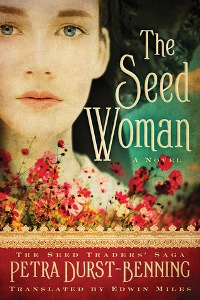
Durst-Benning begins a new trilogy with this novel set in a 19th-century German village, and about a love triangle that develops between a seed merchant, his fiancee, and the woman pregnant with his child. Translated from German by Edwin Miles. AmazonCrossing, Oct. 2017. [see on Goodreads]
This philosophical literary novel features a Dutch student in late 17th-century Estonia gets drawn into metaphysical writings in the process of learning about possible cures for his depression. Translated from Estonian by Matthew Hyde. Pushkin Press, Jan. 2017. [see on Goodreads]
A story of reincarnation set in the Spanish Pyrenees, this multi-period saga follows Brianda, a Spanish engineer who uncovers the hidden history of a 16th-century woman of the same name who was accused of witchcraft. Translated from Spanish by Noel Hughes. AmazonCrossing, Aug. 2017. [see on Goodreads]
Spanning three centuries in a rural Norwegian village, this short literary novel explores the dynamics in an unusual family. Translated from Norwegian by Nadia Christensen. Graywolf, Sept. 2017. [see on Goodreads]
A short, lyrical novel about Gittel, a young Jewish woman from Ukraine, who makes a courageous solo journey to Jerusalem after the death of her husband, a coldly devout rabbi. Translated from Hebrew by Aloma Halter. AmazonCrossing, May 2017. [see on Goodreads, and see my earlier review]
Joubert's latest novel traverses the length of physician Lettie Louw's life, from her adolescence in WWII-era South Africa up through contemporary times. Translated from Afrikaans by Elsa Silke. Thomas Nelson, Nov. 2017. [see on Goodreads]
In early 20th-century Sudan, a Lebanese adventurer joins the British colonial administration and, in the course of his travels, comes across another Lebanese man who's dismantling a palace and trying to transport it across the desert. Translated from French by Edward Gauvin. New Vessel, April 2017. [see on Goodreads]
Combining historical, contemporary, and speculative fiction, Lunde's debut is about the lives of beekeepers from three different eras and their relationships with nature. Translated from Norwegian by Diane Oatley. This week, the German edition is #1 on Germany's fiction bestseller list. Touchstone, Aug. 2017. [see on Goodreads]
In this lengthy, multi-period epic, five sisters who grew up in a small Greek village come to terms with the meaning of home and their relationship with their mother, who grew up during WWII. Translated from Greek by Gail Holst-Warhaft. AmazonCrossing, Nov. 2017. [see on Goodreads]
A female artist invited to paint the gardens of a beautiful villa in 19th-century Italy grows intrigued by secrets surrounding its owner's family. Translated from Italian by Oonagh Stransky and Clarissa Ghelli. Pan Macmillan/Trafalgar Square, Aug. 2017. [see on Goodreads]
A newlywed couple in early 20th-century Tehran observe the dramatic changes in power occurring within their country. Publishers Weekly named it a Best Book of 2016. Translated from French by Adriana Hunter. Europa, Dec. 2016. [see on Goodreads]
On the island of Sylt in the North Sea in 1764, an independent-minded young woman finds herself torn between an obligation to a powerful sea captain and her desire to stay true to the poor young man she loves. Translated from German by Kate Northrup. AmazonCrossing, Sept. 2017. [see on Goodreads]
Historical fiction readers, by definition, are interested in exploring time periods and places other than their own. So why not expand your horizons, discover a new author, and increase your awareness of another culture and literary tradition while staying within your favorite genre? Below are 15 new and upcoming historical novels, both literary and commercially oriented, that will help you do just that.
For insight into the relationship between the author, translator, and editor who acquires translated novels for publication, see Porter Anderson's article for Publishing Perspectives about Smadar Herzfeld's Trail of Miracles and AmazonCrossing's overall publishing program, which is celebrating its 7th anniversary.
Another note: searching for historical novels in translation isn't easy! Ideally, I would have liked to offer even more variety in terms of publishers and countries of origin in the gallery below. Please let me know what recent titles I've missed, and if any of these books has found a place on your TBR.
Tyranny, misogyny, and generational conflict are addressed in this family saga set in Athens of 411 BC. Translated from Italian by Antony Shugaar. Europa, Jan. 2018. [see on Goodreads]
Those who enjoy fiction about little-known women from European history may appreciate this novel about Eleanora de Moura, a 17th-century Sicilian noblewoman who very briefly held power in her city of Palermo. Translated from Italian by Stephen Sartarelli. Europa, April 2017. [see on Goodreads]
This sweeping epic of late 19th-century Mexico, Cuba, and Spain tells the story of an ambitious man, the equally passionate woman whose heart he hopes to win, and a legendary vineyard in Andalusia. Translated from Spanish by Nick Caistor and Lorenza Garcia. Atria, Nov. 2017. [see on Goodreads]
Durst-Benning begins a new trilogy with this novel set in a 19th-century German village, and about a love triangle that develops between a seed merchant, his fiancee, and the woman pregnant with his child. Translated from German by Edwin Miles. AmazonCrossing, Oct. 2017. [see on Goodreads]
This philosophical literary novel features a Dutch student in late 17th-century Estonia gets drawn into metaphysical writings in the process of learning about possible cures for his depression. Translated from Estonian by Matthew Hyde. Pushkin Press, Jan. 2017. [see on Goodreads]
A story of reincarnation set in the Spanish Pyrenees, this multi-period saga follows Brianda, a Spanish engineer who uncovers the hidden history of a 16th-century woman of the same name who was accused of witchcraft. Translated from Spanish by Noel Hughes. AmazonCrossing, Aug. 2017. [see on Goodreads]
Spanning three centuries in a rural Norwegian village, this short literary novel explores the dynamics in an unusual family. Translated from Norwegian by Nadia Christensen. Graywolf, Sept. 2017. [see on Goodreads]
A short, lyrical novel about Gittel, a young Jewish woman from Ukraine, who makes a courageous solo journey to Jerusalem after the death of her husband, a coldly devout rabbi. Translated from Hebrew by Aloma Halter. AmazonCrossing, May 2017. [see on Goodreads, and see my earlier review]
Joubert's latest novel traverses the length of physician Lettie Louw's life, from her adolescence in WWII-era South Africa up through contemporary times. Translated from Afrikaans by Elsa Silke. Thomas Nelson, Nov. 2017. [see on Goodreads]
In early 20th-century Sudan, a Lebanese adventurer joins the British colonial administration and, in the course of his travels, comes across another Lebanese man who's dismantling a palace and trying to transport it across the desert. Translated from French by Edward Gauvin. New Vessel, April 2017. [see on Goodreads]
Combining historical, contemporary, and speculative fiction, Lunde's debut is about the lives of beekeepers from three different eras and their relationships with nature. Translated from Norwegian by Diane Oatley. This week, the German edition is #1 on Germany's fiction bestseller list. Touchstone, Aug. 2017. [see on Goodreads]
In this lengthy, multi-period epic, five sisters who grew up in a small Greek village come to terms with the meaning of home and their relationship with their mother, who grew up during WWII. Translated from Greek by Gail Holst-Warhaft. AmazonCrossing, Nov. 2017. [see on Goodreads]
A female artist invited to paint the gardens of a beautiful villa in 19th-century Italy grows intrigued by secrets surrounding its owner's family. Translated from Italian by Oonagh Stransky and Clarissa Ghelli. Pan Macmillan/Trafalgar Square, Aug. 2017. [see on Goodreads]
A newlywed couple in early 20th-century Tehran observe the dramatic changes in power occurring within their country. Publishers Weekly named it a Best Book of 2016. Translated from French by Adriana Hunter. Europa, Dec. 2016. [see on Goodreads]
On the island of Sylt in the North Sea in 1764, an independent-minded young woman finds herself torn between an obligation to a powerful sea captain and her desire to stay true to the poor young man she loves. Translated from German by Kate Northrup. AmazonCrossing, Sept. 2017. [see on Goodreads]
Thursday, July 20, 2017
The power of a legend: James Wilde's Pendragon
The women laughed among themselves, a musical sound that seemed to tinkle on too long. ‘Words change the world,’ the mother said when they were done. ‘Tell a man he will be a king, and a king he may well be.’
James Wilde’s latest novel is billed on the cover as an “epic new historical adventure." Although it has the requisite elements of the genre (gritty action, intense physical danger, and an honorable hero you’ll be rooting for), it’s also a remarkably thoughtful example of its kind. Drawing on Roman, Celtic, Christian, and even older belief systems, Pendragon speaks to the ways religions supplant one another, and the motifs they all share. It explores how people create and communicate myths, and how these myths, in turn, can spur people into action.
Looking at the title, you’ll guess (rightly) that it’s has Arthurian themes, but you won’t see most of the usual suspects in these pages. There’s no Lancelot, no Guinevere, no Uther, no Igraine. Arthur himself, the “bear king” who’ll supposedly unite Britain’s people at the time of greatest need, is the subject of a prophecy that may come to fruition, several generations down the road, but only if forces align to make it happen.
Pendragon takes place mostly in Britannia in the mid-4th century, an era that very few authors are writing about. At the far reaches of the empire, soldiers of the fort of Vercovicium along Hadrian’s Wall have gotten used to slow communication with Rome, whose leaders are preoccupied with attacks by Germanic tribes and political infighting. Lucanus, one of a group of five scouts patrolling the northern wilderness occupied by barbarians, comes across the bodies of some compatriots who died in a particularly savage manner. So he’s less than eager to return there, but after the eight-year-old son of the woman he loves disappears, and a witness says the boy was taken into barbarian territory, Lucanus has no choice but to search for him, even at terrible risk to himself.
Deadly culture clashes and earthy mysticism (complete with witchcraft and visions fueled by magic mushrooms) combine in this exciting saga about a dark time in European history. The plot doesn’t go where you’d expect, and there are more than a few fierce, stereotype-defying women characters.
However, it wasn’t a perfect read for me. One character makes a dumb decision purely to generate drama (or so it seems), and Wilde draws back from showing readers two key scenes. Also, a parallel storyline set in Gaul and Rome felt fragmented in comparison, although I did like the way the two threads were slowly brought together – their connection wasn’t obvious.
Overall, recommended for anyone interested in the Roman Empire or who’s entranced by the power the Arthurian legend exerts.
Pendragon was published by Bantam in the UK on July 13; thanks to the publisher for sending me a review copy.
Monday, July 17, 2017
Love in the time of peril, a guest post by Anne Cleeland, author of The Barbary Mark
Today novelist Anne Cleeland is contributing an essay about the type of historical novel she enjoys writing. Read more below...
~
Love in the Time of Peril
Anne Cleeland
I love writing historical fiction, because history is a great plot-generator. Pick any era where the world is in turmoil, and you’ll find larger-than-life people, having larger-than-life adventures.
For example, I write a series of historicals that are set in 1814—a year that’s so rich with potential story plots that it’s hard to decide which way to go. After eight miserable years of war, Napoleon’s in exile on Elba—but he’s about to escape, get the old gang back together, and march on Paris to stage the Hundred Days’ War. Meanwhile, Europe’s in disarray, the old orders are crumbling, and everyone’s broke from Napoleon’s last attempt at world conquest.
So, my heroines are swept up in these unlikely events—some willingly, and some not-so-willingly—but always because there’s a treasure at stake, and the forces of good are battling the forces of evil in order to get to it first.
Meanwhile, some man is driving her to distraction, and her budding romance fuels the plot as much as the historical events. I always write couples, because it makes the heroine’s adventure both epic and personal at the same time, which—when you think about it—is true for real-life historical figures, too. You can’t write about Henry VIII without a heavy dose of Anne Boleyn. Or Napoleon without his Josephine. Or Cleopatra without her Marc Antony. Why? Because although these people were larger-than-life in terms of history, they were also human beings who fell in love—often with someone completely unsuitable. (I’m looking at you, Admiral Lord Nelson.)
And there’s nothing like the conflict that arises when our doughty heroine has to choose between the fate of the world and her fondness for this fine man, who may or may not be what he seems. Can she trust him? Would it matter, even if she couldn’t?
In my mind, if you mix a tumultuous time in history with classic themes of love and betrayal, then I think you have the makings of a riveting story—which is why we can never seem to get enough of the Tudors, the gift that keeps on giving.
So please join my heroines as they try to navigate a dangerous world whilst fighting their attraction to dangerous men—I promise you won’t be disappointed.
About The Barbary Mark: After a shipwreck, Nonie Rafferty washes up on the shore of Algiers, where the slave traders look to sell the pretty Irishwoman—or worse. She must come up with a tale to save herself—and fast—before anyone discovers the true reason she sailed to this misbegotten corner of the world, or the true reason she was wearing a priceless strand of pearls, when she was rescued. Fortunately, the Dey’s mysterious necromancer appears willing to come to her aid, and what follows is a cat-and-mouse game of deception, attraction, and above all, redemption. Visit the author's website at www.annecleeland.com.
Thursday, July 13, 2017
After Anatevka by Alexandra Silber, a stand-alone sequel to Fiddler on the Roof
Grammy-nominated singer and actress Silber’s fiction debut is a sequel to Fiddler on the Roof, a show whose characters she has interpreted on the international stage. Notably, it’s a fully realized, thoughtful literary novel that can also stand alone.
The story follows Hodel, a young woman imprisoned in Omsk while attempting to reunite with her fiancé, Perchik, a Socialist activist who was taken to a Siberian labor camp. Each of the book’s three parts contains a well-developed character arc, and, like Fiddler itself, it contrasts the warmth of Old World traditions with the harsh treatment endured by the Jewish people.
The settings have a you-are-there feel, from Hodel’s memories of sisterhood and braiding challah back home in Anatevka; to salt-encrusted, remote Siberia, which has its own stark beauty; to the brutality of prison life as the couple’s world grows increasingly dark. The strength of their deep romantic bond is emphasized throughout.
Fans of the musical and anyone interested in the plight of the Jews in czarist Russia will appreciate this multitalented author’s work.
After Anatevka was published last Tuesday by Pegasus (336pp). This review first appeared in the June issue of Booklist. It's in the review, but it's worth restating: you don't have to be familiar with Fiddler on the Roof to appreciate this novel, as sufficient back-story for the characters is provided.
Read more about the novel's own back-story in the New York Times, which discusses the author's reasons for writing the novel and some of her research.
The story follows Hodel, a young woman imprisoned in Omsk while attempting to reunite with her fiancé, Perchik, a Socialist activist who was taken to a Siberian labor camp. Each of the book’s three parts contains a well-developed character arc, and, like Fiddler itself, it contrasts the warmth of Old World traditions with the harsh treatment endured by the Jewish people.
The settings have a you-are-there feel, from Hodel’s memories of sisterhood and braiding challah back home in Anatevka; to salt-encrusted, remote Siberia, which has its own stark beauty; to the brutality of prison life as the couple’s world grows increasingly dark. The strength of their deep romantic bond is emphasized throughout.
Fans of the musical and anyone interested in the plight of the Jews in czarist Russia will appreciate this multitalented author’s work.
After Anatevka was published last Tuesday by Pegasus (336pp). This review first appeared in the June issue of Booklist. It's in the review, but it's worth restating: you don't have to be familiar with Fiddler on the Roof to appreciate this novel, as sufficient back-story for the characters is provided.
Read more about the novel's own back-story in the New York Times, which discusses the author's reasons for writing the novel and some of her research.
Tuesday, July 11, 2017
On researching The Velveteen Daughter, a guest post by Laurel Davis Huber
Following my review of The Velveteen Daughter from last week, I'm happy to welcome Laurel Davis Huber to the blog today -- her publication day -- with an essay about her research into primary sources from the lives of her two heroines: writer Margery Williams Bianco and her artist daughter, Pamela Bianco.
Researching The Velveteen Daughter was, I admit, an obsession. I imagine this must be true of any writer of historical fiction. Still, each author’s journey is unique.
Here are just a few of the stops I made along the way: The archives of the Museum of Modern Art in Queens and the Smithsonian in Washington, both of which held many of Pamela Bianco’s forgotten paintings; the Tate Library and Archive in London (via the postal service only, alas), which provided a poignant letter written by Margery Bianco expressing concern over her daughter finding fame so early in life; Vassar College, where I unearthed Bianco family letters and hand-drawn Christmas cards; and the Lilly Library in Indiana, home to boxes and boxes of letters and photographs from Wales and England and New York in the Richard Hughes collection.
Every discovery was fascinating. However, three stand out as my “Indiana Jones” moments: treasures unburied, the Holy Grail found!
The first was the discovery that just before I began my research, an art historian in London had happened upon a Pamela Bianco drawing and, like me, was immediately entranced. Her interest had led to writing the catalogue essay for a retrospective exhibition in 2004. This essay provided a chronology of Pamela’s life and art. Voila! My guessing about the sequence of events was over. Not only that, but information in the catalogue also led me to a woman in Brooklyn who had known Pamela—a delightful lunch conversation provided personal details I could never have found elsewhere.
The second was finding, online, a reference to New Yorker memos about Pamela. But I had to request copies before I could read them. One day a plain brown envelope arrived. The return address: Room 222, The New York Public Library. Instantly I envisioned a mysterious room at the end of a long dark hall, full of wonderful secrets. When I tore open the envelope, I was not disappointed. Inside were memos dated 1935-36 describing interviews with Pamela when she was no longer famous. She was struggling to “to get on her feet again.” These memos became a critical piece of the novel.
The third was perhaps the most thrilling. The character of Robert Schlick (Pamela’s first husband) was difficult to write, as very little is known about him. One day I found online an entry from a rare book dealer in California, a book of poems by Robert published in 1930. At the end of the scholarly description were these enticing words: “Tipped into the back of the book is a pocket with a label reading 'Letters.'”

The book dealer kindly sent me copies of these papers, which turned out to be vivid descriptions of Pamela’s wedding in Harlem. The music, the attendees, the clothes, the conversation! The result, I’m happy to report, is that the wedding scene in The Velveteen Daughter is quite authentic.
And now I can’t wait to lose myself researching my next book (which may or may not take place in New York City in the 1830s)…
Laurel Davis Huber grew up in Rhode Island and Oklahoma. She is a graduate of Smith College. She has worked as a corporate newsletter editor, communications director for a botanical garden, high school English teacher, and senior development officer for both New Canaan Country School and Amherst College. She has studied with the novelist and short-story writer Leslie Pietrzyk (the 2015 Drue Heinz Literature Prize winner for This Angel on My Chest) and has participated in several writing residencies at the Vermont Studio Center. She and her husband split their time between New Jersey and Maine. Visit the author's website at www.laureldavishuber.com.
~
On Researching The Velveteen Daughter
Laurel Davis Huber
Researching The Velveteen Daughter was, I admit, an obsession. I imagine this must be true of any writer of historical fiction. Still, each author’s journey is unique.
Here are just a few of the stops I made along the way: The archives of the Museum of Modern Art in Queens and the Smithsonian in Washington, both of which held many of Pamela Bianco’s forgotten paintings; the Tate Library and Archive in London (via the postal service only, alas), which provided a poignant letter written by Margery Bianco expressing concern over her daughter finding fame so early in life; Vassar College, where I unearthed Bianco family letters and hand-drawn Christmas cards; and the Lilly Library in Indiana, home to boxes and boxes of letters and photographs from Wales and England and New York in the Richard Hughes collection.
Every discovery was fascinating. However, three stand out as my “Indiana Jones” moments: treasures unburied, the Holy Grail found!
The first was the discovery that just before I began my research, an art historian in London had happened upon a Pamela Bianco drawing and, like me, was immediately entranced. Her interest had led to writing the catalogue essay for a retrospective exhibition in 2004. This essay provided a chronology of Pamela’s life and art. Voila! My guessing about the sequence of events was over. Not only that, but information in the catalogue also led me to a woman in Brooklyn who had known Pamela—a delightful lunch conversation provided personal details I could never have found elsewhere.
![]() |
| The author's research bookshelf. |
The third was perhaps the most thrilling. The character of Robert Schlick (Pamela’s first husband) was difficult to write, as very little is known about him. One day I found online an entry from a rare book dealer in California, a book of poems by Robert published in 1930. At the end of the scholarly description were these enticing words: “Tipped into the back of the book is a pocket with a label reading 'Letters.'”

The book dealer kindly sent me copies of these papers, which turned out to be vivid descriptions of Pamela’s wedding in Harlem. The music, the attendees, the clothes, the conversation! The result, I’m happy to report, is that the wedding scene in The Velveteen Daughter is quite authentic.
And now I can’t wait to lose myself researching my next book (which may or may not take place in New York City in the 1830s)…
~
Laurel Davis Huber grew up in Rhode Island and Oklahoma. She is a graduate of Smith College. She has worked as a corporate newsletter editor, communications director for a botanical garden, high school English teacher, and senior development officer for both New Canaan Country School and Amherst College. She has studied with the novelist and short-story writer Leslie Pietrzyk (the 2015 Drue Heinz Literature Prize winner for This Angel on My Chest) and has participated in several writing residencies at the Vermont Studio Center. She and her husband split their time between New Jersey and Maine. Visit the author's website at www.laureldavishuber.com.
Wednesday, July 05, 2017
Laurel Davis Huber's The Velveteen Daughter, a mother-daughter story about art, family, and fame
Debut novelist Huber brings psychological acuity and tender empathy to her portraits of Margery Williams, the English-American author of the children’s literature classic The Velveteen Rabbit, and her artist daughter, Pamela Bianco. Huber knits their viewpoints together in short alternating chapters, a perfect structure for characters whose lives are so intertwined that it would be difficult to tell their stories separately.
Growing up in early twentieth-century Turin, Pamela displays such uncanny artistic talent that her Italian-born father puts her under the spotlight, arranging exhibitions that gain her international attention. This childhood fame has dire repercussions. As a young woman in New York’s art scene, Pamela endures melancholic episodes and suffers intense, unrequited love for a family friend, while lively, warmhearted Margery constantly worries about her fragile daughter’s stability.
Huber excels in depicting these complex family dynamics, and her subject is strikingly original. Combining the elegance of literary fiction with realistic period atmosphere and an emotional openness reminiscent of personal memoirs, the prose is entirely immersive. A compelling read for art- and women’s-history enthusiasts as well as historical fiction fans.
Laurel Davis Huber's The Velveteen Daughter will be published by She Writes Press on July 11th ($16.95 pb/$9.95 ebook). This review first appeared in the 5/15 issue of Booklist. Once you read this novel, you'll wonder why the story had been hidden from history for so long.
On release day next Tuesday, I'll be publishing a guest post by the author in which she discusses her research discoveries.
Growing up in early twentieth-century Turin, Pamela displays such uncanny artistic talent that her Italian-born father puts her under the spotlight, arranging exhibitions that gain her international attention. This childhood fame has dire repercussions. As a young woman in New York’s art scene, Pamela endures melancholic episodes and suffers intense, unrequited love for a family friend, while lively, warmhearted Margery constantly worries about her fragile daughter’s stability.
Huber excels in depicting these complex family dynamics, and her subject is strikingly original. Combining the elegance of literary fiction with realistic period atmosphere and an emotional openness reminiscent of personal memoirs, the prose is entirely immersive. A compelling read for art- and women’s-history enthusiasts as well as historical fiction fans.
Laurel Davis Huber's The Velveteen Daughter will be published by She Writes Press on July 11th ($16.95 pb/$9.95 ebook). This review first appeared in the 5/15 issue of Booklist. Once you read this novel, you'll wonder why the story had been hidden from history for so long.
On release day next Tuesday, I'll be publishing a guest post by the author in which she discusses her research discoveries.
Monday, July 03, 2017
From #HNS2017: the Book Reviewers Tell All panel, with details on the Historical Novels Review
Last Saturday, June 24th, I participated in a panel entitled Book Reviewers Tell All: Advice for Authors and Readers at the Historical Novel Society conference in Portland, Oregon. My fellow panelists were book bloggers extraordinaire Jenny Quinlan of Let Them Read Books and Historical Editorial and Meg Wessell from A Bookish Affair. We had a standing room only crowd of nearly 100 people – a nice surprise!
Thanks to everyone who attended. It was great to see so much interest in reviewing historical fiction.
Here’s a narrative version of my part of our presentation, for those who weren’t able to attend (or for those that did but would like a recap). My part dealt with my role as book review editor for the Historical Novels Review.
Please stop by and read Meg's and Jenny's parts of the presentation as well! Meg spoke first, discussing what authors should know about book blogs, and then Jenny spoke about reviewing: how to write reviews, reviewing ethics, approaches to negative reviews, and more.
Background on the Historical Novels Review
This year, the HNS turns twenty, and May’s HNR is the 20th anniversary issue. A quarterly magazine published in print since 1997, it contains reviews of historical fiction from the US and UK, with additional content from Canada, Australia, and New Zealand. It offers a wide variety of historical fiction, from all subgenres (including historical romance, mystery, and fantasy) and from all types of publishers, from the Big 5 to small and university presses to indie books. It’s the only print magazine for historical fiction, with over 300 reviews published each quarter; most appear in print, but due to space limitations (HNR is 64pp long), some reviews appear a “online exclusives.”
The HNS website has a large database with over 16,000 reviews, all searchable by keyword as well as time period and subgenre. In the past, the HNR aimed for comprehensive review coverage, but that’s no longer possible, since so many historical novels are being published. Rather, HNR is selective, and the overall acceptance rate is about 50%, a greater ratio than many other review magazines have.
What do the reviews editors do?
I work with a great team of 11 reviews editors based in the US and UK. Each of us has publisher liaison assignments. This system is a little unusual for a review publication, but we’ve set things up this way because we have to make many requests for review copies from publishers ourselves. Some books arrive without our having to ask for them, but it’s not the majority. Publishers don’t tend to have mailing lists of historical fiction reviewers like they do for genres like romance or mystery. So: each of the reviews editors makes requests for review copies, decides on reviewer assignments (in the US, this job is rotated among all of us), mails the books out, edits the completed reviews, and emails review links to the publishers or authors who sent us the books in the first place. For example, I work with Penguin Random House, HarperCollins, Bethany House, and some university presses.
The books solicited by the reviews editors include historical novels with settings in the 1960s and earlier, as well as multi-period books with significant historical content. We make a point of seeking out review copies from publishers who may not have heard of the magazine, and we also handle incoming queries that arrive via email or the HNS website. Indie editor Richard Lee (HNS’s founder/publisher) and his team respond to incoming queries for indie-published historical novels.
Why review for the Historical Novels Review?
The HNR relies on the contributions of over 150 reviewers, each with different areas of specialty or interest – from ancient Egypt to Regency romances, the US Civil War, and WWII military history. Not everyone has a specialty, which is fine. Reviewers regularly receive long lists of books to select from over email and send in their choices for books they’d like to review – those that they’re personally interested in. Because reviewers are volunteers (as are the editors), we felt this was important. In the US, the editors collate who wants what. We create an enormous spreadsheet with people’s choices, making assignments based on that and the genre/time period preferences that reviewers had given to us initially.
Reviewers aren’t sent books unsolicited, although we sometimes ask for people able to review “orphans” (those that go unclaimed in the first round of selections). The fact that a book is an “orphan” doesn’t say anything about a book’s quality, but some books are harder to place for various reasons. Many reviewers look forward to getting the lists and use them to add books to their TBRs. Reviewers get to keep the books they review and have the opportunity to share their thoughts with readers of an international magazine.
As with other review publications, HNR has a set of guidelines for reviewers to follow. While there isn’t a “house style,” there are some things we look for:
The reviews editors take an active role and provide feedback to help strengthen reviews when appropriate.
For anyone interested in joining the review team, please email me! Send details on your reading interests and, if I’m not familiar with your writing, I’ll request a sample review from you, or a link to one. Please don’t be offended by this; I’ll want to get an idea of your writing/reviewing style before mailing books out. If you’re new to reviewing, consider writing up a sample review of a novel you’ve recently read, and I’ll read it over and provide feedback.
What authors should know about the review process
Here are some points for authors to be aware of:
Other promotional opportunities offered in the HNR
Thanks to everyone who attended. It was great to see so much interest in reviewing historical fiction.
Here’s a narrative version of my part of our presentation, for those who weren’t able to attend (or for those that did but would like a recap). My part dealt with my role as book review editor for the Historical Novels Review.
Please stop by and read Meg's and Jenny's parts of the presentation as well! Meg spoke first, discussing what authors should know about book blogs, and then Jenny spoke about reviewing: how to write reviews, reviewing ethics, approaches to negative reviews, and more.
Background on the Historical Novels Review
This year, the HNS turns twenty, and May’s HNR is the 20th anniversary issue. A quarterly magazine published in print since 1997, it contains reviews of historical fiction from the US and UK, with additional content from Canada, Australia, and New Zealand. It offers a wide variety of historical fiction, from all subgenres (including historical romance, mystery, and fantasy) and from all types of publishers, from the Big 5 to small and university presses to indie books. It’s the only print magazine for historical fiction, with over 300 reviews published each quarter; most appear in print, but due to space limitations (HNR is 64pp long), some reviews appear a “online exclusives.”
The HNS website has a large database with over 16,000 reviews, all searchable by keyword as well as time period and subgenre. In the past, the HNR aimed for comprehensive review coverage, but that’s no longer possible, since so many historical novels are being published. Rather, HNR is selective, and the overall acceptance rate is about 50%, a greater ratio than many other review magazines have.
What do the reviews editors do?
I work with a great team of 11 reviews editors based in the US and UK. Each of us has publisher liaison assignments. This system is a little unusual for a review publication, but we’ve set things up this way because we have to make many requests for review copies from publishers ourselves. Some books arrive without our having to ask for them, but it’s not the majority. Publishers don’t tend to have mailing lists of historical fiction reviewers like they do for genres like romance or mystery. So: each of the reviews editors makes requests for review copies, decides on reviewer assignments (in the US, this job is rotated among all of us), mails the books out, edits the completed reviews, and emails review links to the publishers or authors who sent us the books in the first place. For example, I work with Penguin Random House, HarperCollins, Bethany House, and some university presses.
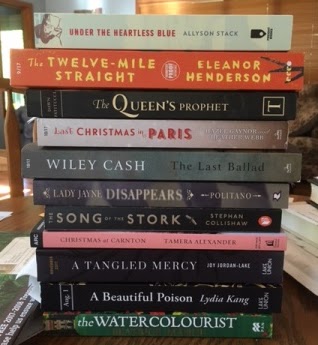
![]() |
| a pile of books waiting to be assigned to reviewers |
The books solicited by the reviews editors include historical novels with settings in the 1960s and earlier, as well as multi-period books with significant historical content. We make a point of seeking out review copies from publishers who may not have heard of the magazine, and we also handle incoming queries that arrive via email or the HNS website. Indie editor Richard Lee (HNS’s founder/publisher) and his team respond to incoming queries for indie-published historical novels.
Why review for the Historical Novels Review?
The HNR relies on the contributions of over 150 reviewers, each with different areas of specialty or interest – from ancient Egypt to Regency romances, the US Civil War, and WWII military history. Not everyone has a specialty, which is fine. Reviewers regularly receive long lists of books to select from over email and send in their choices for books they’d like to review – those that they’re personally interested in. Because reviewers are volunteers (as are the editors), we felt this was important. In the US, the editors collate who wants what. We create an enormous spreadsheet with people’s choices, making assignments based on that and the genre/time period preferences that reviewers had given to us initially.
Reviewers aren’t sent books unsolicited, although we sometimes ask for people able to review “orphans” (those that go unclaimed in the first round of selections). The fact that a book is an “orphan” doesn’t say anything about a book’s quality, but some books are harder to place for various reasons. Many reviewers look forward to getting the lists and use them to add books to their TBRs. Reviewers get to keep the books they review and have the opportunity to share their thoughts with readers of an international magazine.
![]() |
| May's Historical Novels Review, the 20th anniversary issue! |
As with other review publications, HNR has a set of guidelines for reviewers to follow. While there isn’t a “house style,” there are some things we look for:
- Unlike with blog reviews, HNR reviews have a set word limit. Most reviews must be 200-300 words long (there’s a shorter word count for nonfiction and some shorter genre titles). It’s a useful exercise in writing concisely and clearly. Every word counts, and you have to decide what aspects of a book are most important to describe or analyze in this relatively short space.
- Reviews must have a balance of plot recap and critical reaction. If a review is nearly all about the plot, with only a short sentence of opinion at the end, we’ll return the review for revision. HNR reviews are written for other readers who can use them to judge whether the book might interest them (or not).
- Opinions (both positive and not) should be backed up with reasons or examples to help readers. This is particularly true when reviewers find what they believe are anachronisms.
- Reviews should be written in an engaging style.
- The HNR has quarterly reviewer deadlines, and reviewers have anywhere from 30-90 days to turn in their reviews.
- No spoilers! Reviewers should avoid giving away major plot twists; readers should be left to discover these on their own.
- Readers may find the idea of reviewing historical fiction intimidating, because they feel they need to be an expert on a novel’s historical period in order to evaluate its accuracy. However, HNR isn’t an academic publication in which the historical contents of novels are analyzed in great detail. The reviews are written for general readers who are historical fiction fans. If reviewers know a historical period well and can comment on a novel’s accuracy (or not), that’s fine, but it isn’t a requirement.
The reviews editors take an active role and provide feedback to help strengthen reviews when appropriate.
For anyone interested in joining the review team, please email me! Send details on your reading interests and, if I’m not familiar with your writing, I’ll request a sample review from you, or a link to one. Please don’t be offended by this; I’ll want to get an idea of your writing/reviewing style before mailing books out. If you’re new to reviewing, consider writing up a sample review of a novel you’ve recently read, and I’ll read it over and provide feedback.
What authors should know about the review process
Here are some points for authors to be aware of:
- HNR doesn’t charge for reviews.
- Read the submission guidelines first to learn more about HNR and the review process. This is a good idea for any review publication you want to submit to.
- Since HNR is a quarterly magazine, it has a lead time of 2-5 months. (The “lead time” is an estimate for how long the review process takes, from book submission to the publication of a review.) Both print copies and e-copies are accepted.
- Our scope is limited to books published within the last 12 months. HNR accepts historical novels and selected historical nonfiction only; modern novels about the past, such as The Da Vinci Code, aren't covered.
- Requests are accepted from both publicists and authors. You can email the appropriate reviews editor directly; email addresses and publisher liaison assignments are listed on the magazine’s masthead. Additionally, you can fill out the HNS’s online review request form, and an editor will reply if they’d like to request a copy of your book.
- Although the editors request review copies from publishers, please reach out, or have your publicist reach out, if you want to be sure your book is being considered.
- Realize that although we appreciate the opportunity to consider all submissions, not everything submitted will be reviewed. Also, HNS reviews can’t be purchased via membership. HNS members and non-members are treated equally in the review process.
Other promotional opportunities offered in the HNR
- Myfanwy Cook compiles a quarterly column, New Voices, which profiles four debut historical novelists in each issue.
- Feature articles (which include interviews, profiles, and other pieces) are published both in the HNR and on the HNS website. Lucinda Byatt is the features editor for the print magazine, while Claire Morris is the web features editor. Have an idea for a piece you want to write? Contact Lucinda and/or Claire – use the HNS’s contact form, or email me at sarah dot readingthepast dot com for their contact details. Many articles & interviews are based on queries from publicists or individual authors.
- Articles are more likely to be accepted if the focus is not explicitly self-promotional.
- Effective with the May 2017 issue, I’ve started compiling a list entitled New Books by HNS Members as part of my Market News column in the print magazine. This is for HNS members only; if you’d like to be included, send me the details! The submission deadline for August’s HNR (covering novels published Jan-Sept 2017) is the first week of July.
Thursday, June 29, 2017
Emilia Bassano Lanyer’s Family: Court Musicians and Secret Jews, a guest post by Charlene Ball
Today Charlene Ball, author of the debut novel Dark Lady, is stopping by with a post on the family background and heritage of her heroine, Emilia Bassano Lanyer. Dark Lady was published on Tuesday by She Writes Press, and I'm looking forward to reading it. Welcome, Charlene!
~
Emilia Bassano Lanyer’s Family: Court Musicians and Secret Jews
By Charlene Ball
Emilia Bassano Lanyer, the main character in my novel Dark Lady, was a member of the Venetian Bassano family of Court musicians and instrument makers who came to England from Venice at the invitation of King Henry VIII. They moved from the small Italian town of Bassano de Grappa to Venice, where they became musicians for the Doge.
Emilia’s father Baptista Bassano was the youngest of six brothers who emigrated from Venice (an older brother remained in Italy). The Bassanos lived at first in the Charterhouse in London (it still stands off Aldersgate Street north of the Barbican). The Charterhouse was emptied of its monks when Henry VIII took over the monasteries. Emilia’s mother was Margaret Johnson, possibly related to the Robert Johnson who composed some songs for Shakespeare’s plays. Baptista and Margaret had four children, but two boys died in childhood, and Angela, Emilia’s older sister, married Joseph Holland in her teens and disappeared from the records.
The Bassanos may have been conversos, or secret Jews, who converted to Christianity and outwardly conformed to the Church of England while observing their religion in secret. If they were secret Jews, they may have come originally from Spain or Portugal when the Jews were expelled in 1492. Officially no Jews had lived in England since they were expelled by Edward I in 1290. But there were Jewish families living in London before, during, and after the reign of Elizabeth I.
Being from a family of musicians, Emilia would have been surrounded by music from birth. She would have learned to play the lute, as many gentlewomen and ladies did, and probably also the recorder, since her family was known for the Court recorder consort (a consort is a small band made up of the same kind of instruments) and for making recorders and other wind instruments.
Emilia married her cousin, Alfonso Lanyer (alternative spelling Lanier). His mother was Emilia’s first cousin, and his father was from a French Huguenot family of musicians. The most famous member of this family is Nicholas Lanier, the 17th-century composer. Nicholas is a child in Dark Lady.
The historical Alfonso could have been either older or younger than Emilia. I have made him younger and given him the nickname of “Alfi.” Alfonso became a member of the Bassano Consort, either because his mother, Lucretia, was a Bassano or because of his marriage to Emilia.
Music, therefore, would have pervaded Emilia Bassano Lanyer’s life. And so would ties to her family. Her Jewish heritage would likely have been both a bond with her Bassano family and a source of struggle, since she was brought up a Protestant and was bound by ties of love and friendship with her Protestant mentors Suzan Bertie, Countess of Kent, and Margaret Clifford, Countess of Cumberland. Dark Lady portrays how a woman with such conflicting loyalties manages to negotiate her way among those she loves.
If you’d like to learn more, here are some resources I used:
Katz, David S. The Jews in the History of England: 1485-1850. Oxford: Clarendon: 1984.
Lasocki, David, with Roger Prior. The Bassanos: Venetian Musicians and Instrument Makers in England, 1531-1665. Aldershot, England: Scolar, 1995.
Prior, Roger. “A Second Jewish Community in Tudor London.” Jewish Historical Studies 31 (1988-90): 137-152.
Ruffatti, Alessio. “Italian Musicians at the Tudor Court – Were They Really Jews?” Jewish Historical Studies 35 (1996-1998): 1-14.
~
Charlene Ball holds a Ph.D. in comparative literature and has taught English and women’s studies at colleges and universities. Although she has written nonfiction, reviews, and academic articles, writing fiction has always been her first love. She has published fiction and nonfiction in The North Atlantic Review, Concho River Review, The NWSA Journal, and other journals. She is a Fellow of the Hambidge Center for the Arts and held a residency at the Wurlitzer Foundation of New Mexico. She retired from the Women’s Studies Institute (now the Institute for Women’s, Gender, and Sexuality Studies) at Georgia State University in 2009. She lives in Atlanta with her wife, author and bookseller Libby Ware. Visit her online at her website or Facebook.
Monday, June 19, 2017
Leslie Shimotakahara's After the Bloom, a thoughtful novel about the Japanese internment camps and their aftermath
In her contemplative first novel, Shimotakahara explores the long-lasting aftereffects of a disgraceful historical episode: the incarceration of people of Japanese ancestry during WWII. As she explains in an introduction, Lily Takemitsu is partly based on her paternal grandmother, who denied this part of her past.
In Toronto in 1984, Lily’s daughter Rita, a high-school art teacher and single mother, panics when she learns Lily has vanished. Her mother has the tendency to wander, but she’s never gone missing for days before. As Rita pursues leads to Lily’s whereabouts, she uncovers fragments of her hidden family history, including secrets about her father, Kaz, who she never met, and the time he and Lily spent in a place where “the sand blew so fiercely that stepping outside was like standing under a shower of pinpricks.”
The novel devotes equal time to Lily, a young woman once runner-up in the Cherry Blossom Pageant, who has been forced from one troubled living situation into another. The author paints a meticulous portrait of the dreary geography and fiery internal politics at the camp at Matanzas in California in the 1940s. Rescued by a rebellious photographer named Kaz after a fainting spell, Lily gets drawn into the ongoing animosity between Kaz and his father, the camp doctor.
Awareness of this novel’s topic is necessary for anyone living in today’s world. After the Bloom presents an affecting inside view of what Japanese-Americans endured, both within the camps and afterward. Indecisive and easily manipulated, Lily is an atypical heroine. While she loves her mother, Rita also feels frustrated by her silences and eccentricities. However, Lily’s character feels real, and her disconnections from reality are understood in the context of what she’s survived. Slow-moving at first, the story gains momentum as it continues, and the conclusion is especially satisfying.
After the Bloom was published by Canada's Dundurn Press last month (pb, 328pp). This review also appears in May's Historical Novels Review and is based on my reading of a NetGalley copy.
In Toronto in 1984, Lily’s daughter Rita, a high-school art teacher and single mother, panics when she learns Lily has vanished. Her mother has the tendency to wander, but she’s never gone missing for days before. As Rita pursues leads to Lily’s whereabouts, she uncovers fragments of her hidden family history, including secrets about her father, Kaz, who she never met, and the time he and Lily spent in a place where “the sand blew so fiercely that stepping outside was like standing under a shower of pinpricks.”
The novel devotes equal time to Lily, a young woman once runner-up in the Cherry Blossom Pageant, who has been forced from one troubled living situation into another. The author paints a meticulous portrait of the dreary geography and fiery internal politics at the camp at Matanzas in California in the 1940s. Rescued by a rebellious photographer named Kaz after a fainting spell, Lily gets drawn into the ongoing animosity between Kaz and his father, the camp doctor.
Awareness of this novel’s topic is necessary for anyone living in today’s world. After the Bloom presents an affecting inside view of what Japanese-Americans endured, both within the camps and afterward. Indecisive and easily manipulated, Lily is an atypical heroine. While she loves her mother, Rita also feels frustrated by her silences and eccentricities. However, Lily’s character feels real, and her disconnections from reality are understood in the context of what she’s survived. Slow-moving at first, the story gains momentum as it continues, and the conclusion is especially satisfying.
After the Bloom was published by Canada's Dundurn Press last month (pb, 328pp). This review also appears in May's Historical Novels Review and is based on my reading of a NetGalley copy.
Thursday, June 15, 2017
The Half-Drowned King by Linnea Hartsuyker, a terrific historical epic of 9th-century Norway
In mid-ninth-century Norway, power was dispersed among many petty kingdoms, while sea-kings gained wealth and status through plunder. Chronicling the time that saw Harald Fairhair’s rise as eventual king of a united Norway, Hartsuyker’s terrific historical epic, first in a projected trilogy, beautifully evokes the period and the mind-set of its warring peoples.
After his stepfather’s attempt on his life fails, Ragnvald Eysteinsson pursues revenge and a plan to regain his hereditary lands while finding his place amid the Norse kings’ shifting alliances and blood feuds. Meanwhile, his teenage sister, Svanhild, too strong-minded to be a peace-weaver bride, moves through challenging emotional territory after evading an unwanted marriage.
Posing thoughtful questions about the nature of honor and heroism, and devoting significant attention to women’s lives, the novel takes a fresh approach to the Viking-adventure genre. Hartsuyker also shows how the glorious deeds in skaldic songs can differ from their subjects’ lived experiences.
The multifaceted characters are believable products of their era yet relatable to modern readers; the rugged beauty of Norway’s farmlands and coastal landscapes likewise comes alive. The language is clear and eloquent, and the action scenes will have the blood humming in your veins. This is how tales from the old sagas should be told.
The Half-Drowned King will be published by Harper in August; the (starred) review above appears in Booklist's June 1 and 15 issue. I read this ARC in February and have been eager to share the review of this book, which is among the best I've read this year. Historical adventure novels aren't always my thing, but this one has me anxiously anticipating the second and third installments. And it was a story I hadn't previously known; even better.
The UK publisher is Little Brown, which gave it a cover design that strongly resembles those for Maurice Druon's Accursed Kings saga (check out the images and you'll see what I mean).
After his stepfather’s attempt on his life fails, Ragnvald Eysteinsson pursues revenge and a plan to regain his hereditary lands while finding his place amid the Norse kings’ shifting alliances and blood feuds. Meanwhile, his teenage sister, Svanhild, too strong-minded to be a peace-weaver bride, moves through challenging emotional territory after evading an unwanted marriage.
Posing thoughtful questions about the nature of honor and heroism, and devoting significant attention to women’s lives, the novel takes a fresh approach to the Viking-adventure genre. Hartsuyker also shows how the glorious deeds in skaldic songs can differ from their subjects’ lived experiences.
The multifaceted characters are believable products of their era yet relatable to modern readers; the rugged beauty of Norway’s farmlands and coastal landscapes likewise comes alive. The language is clear and eloquent, and the action scenes will have the blood humming in your veins. This is how tales from the old sagas should be told.
The Half-Drowned King will be published by Harper in August; the (starred) review above appears in Booklist's June 1 and 15 issue. I read this ARC in February and have been eager to share the review of this book, which is among the best I've read this year. Historical adventure novels aren't always my thing, but this one has me anxiously anticipating the second and third installments. And it was a story I hadn't previously known; even better.
The UK publisher is Little Brown, which gave it a cover design that strongly resembles those for Maurice Druon's Accursed Kings saga (check out the images and you'll see what I mean).
Friday, June 09, 2017
Alyssa Palombo's The Most Beautiful Woman in Florence, a novel of 15th-century noblewoman Simonetta Vespucci
“Are you going to speak to me, signore, or merely gaze at me all evening as though I were a painting? I wondered crossly.”
When Simonetta Cattaneo walks into a room, conversations cease, and people turn to gaze in her direction. Love-struck swains gather in the streets beneath her window, hoping she’ll make an appearance. When first introduced to her, men pay her compliments so ridiculously flowery that she can’t help but stifle laughter.
Known as the most beautiful woman in late 15th-century Florence, Simonetta has gotten used to these and other reactions. She occasionally uses her looks to her advantage – who wouldn’t? – but, as a lover of poetry and literature in general, she yearns to be noticed for her mind.
Alyssa Palombo’s sensitively written second novel imagines the perspective of the stunning young woman depicted in multiple Renaissance-era paintings. It’s subtitled “a story of Botticelli,” but make no mistake, this is Simonetta’s tale. She comes from a minor noble family from Genoa, and at sixteen, she marries banker Marco Vespucci of Florence, and moves into his parents’ home. (Curiously, the senior Vespuccis are mostly absent.) Simonetta’s marriage gives her entrance into a world she longs to join: the intellectual circles of the powerful Medici family.
In Florence, which is presented in its gilded splendor, Simonetta befriends Lorenzo de’Medici and his wife, Clarice, and loves browsing the volumes in their palazzo’s library. Palombo paints Simonetta as a gentle personality eager to embrace the world opening up before her – and to fall in love with her kind, handsome husband. Still, she becomes intrigued by Sandro Botticelli, an artist who acknowledges her beauty but doesn’t flatter her.
Clever and level-headed, Simonetta is aware of the dangerous temptations Florence holds, and comes to learn that her beauty can’t protect her from deceptive behavior or, sadly, ill health – but she refuses to be a victim. Instead, she takes a bold step towards independence and passion that results in the glorious painting known as The Birth of Venus.
Little is known of the historical Simonetta, and Palombo fills in the blanks with a romantic story about women’s agency, the consequences of beauty, and the communicative power of art. In keeping with its focus, the larger political issues of the day remain mostly in the background. It’s smoothly written from start to finish, and the inevitable finale will have you thinking about the life of this inspiring young woman for days afterward.
Alyssa Palombo's The Most Beautiful Woman in Florence was published in April by St. Martin's Griffin ($15.99, 320pp). Thanks to the publisher for sending a review copy earlier this spring.
When Simonetta Cattaneo walks into a room, conversations cease, and people turn to gaze in her direction. Love-struck swains gather in the streets beneath her window, hoping she’ll make an appearance. When first introduced to her, men pay her compliments so ridiculously flowery that she can’t help but stifle laughter.
Known as the most beautiful woman in late 15th-century Florence, Simonetta has gotten used to these and other reactions. She occasionally uses her looks to her advantage – who wouldn’t? – but, as a lover of poetry and literature in general, she yearns to be noticed for her mind.
Alyssa Palombo’s sensitively written second novel imagines the perspective of the stunning young woman depicted in multiple Renaissance-era paintings. It’s subtitled “a story of Botticelli,” but make no mistake, this is Simonetta’s tale. She comes from a minor noble family from Genoa, and at sixteen, she marries banker Marco Vespucci of Florence, and moves into his parents’ home. (Curiously, the senior Vespuccis are mostly absent.) Simonetta’s marriage gives her entrance into a world she longs to join: the intellectual circles of the powerful Medici family.
In Florence, which is presented in its gilded splendor, Simonetta befriends Lorenzo de’Medici and his wife, Clarice, and loves browsing the volumes in their palazzo’s library. Palombo paints Simonetta as a gentle personality eager to embrace the world opening up before her – and to fall in love with her kind, handsome husband. Still, she becomes intrigued by Sandro Botticelli, an artist who acknowledges her beauty but doesn’t flatter her.
Clever and level-headed, Simonetta is aware of the dangerous temptations Florence holds, and comes to learn that her beauty can’t protect her from deceptive behavior or, sadly, ill health – but she refuses to be a victim. Instead, she takes a bold step towards independence and passion that results in the glorious painting known as The Birth of Venus.
![]() |
| The Birth of Venus (close view), Botticelli, ca. 1484-86 |
Little is known of the historical Simonetta, and Palombo fills in the blanks with a romantic story about women’s agency, the consequences of beauty, and the communicative power of art. In keeping with its focus, the larger political issues of the day remain mostly in the background. It’s smoothly written from start to finish, and the inevitable finale will have you thinking about the life of this inspiring young woman for days afterward.
Alyssa Palombo's The Most Beautiful Woman in Florence was published in April by St. Martin's Griffin ($15.99, 320pp). Thanks to the publisher for sending a review copy earlier this spring.
Subscribe to:
Posts (Atom)