Wednesday, February 29, 2012

Guest post + giveaway from Christine Blevins: "Following an Army"

Today I'd like to welcome Christine Blevins back to Reading the Past.  Back in 2008, I interviewed her about her debut, Midwife of the Blue Ridge, about a Scottish midwife who becomes an indentured servant in the wilds of frontier Virginia in the mid-18th century.  She returned the following year with a guest post discussing things she unexpectedly discovered during the research process.

Her newest historical adventure, The Turning of Anne Merrick (Berkley, Feb., $15), shows readers a different side of colonial America.  The novel opens as Anne, a fervent Patriot, and her friend Sally go on campaign with British general John Burgoyne as he and his army advance down the Hudson Valley in 1777.  As one of Washington's spies, Anne obeys the requests of her superiors even if it means her separation from Jack Hampton, the man she loves.  The novel can be read as a sequel to The Tory Widow or on its own.

Christine has an informative guest post today - complete with many illustrations! - about what it meant to be a "camp follower" during the American Revolution.  At the end, you'll have an opportunity to win one of two sets of historically-themed goodies.

Following an Army

“Would ye just look at the amount of linen they have flaffin’ on the breeze!” Sally noted. “The campwives are the true workhorses of any army.”
...from THE TURNING OF ANNE MERRICK

It was not unusual for armies in the 18th century to go on campaign with a large contingent of “campwives” or “camp followers”. These women marched along with their armies, doing the laundry, cooking the meals, nursing the sick and wounded, and all the while carrying and bearing children along the way.


For some reason, the term “camp follower” is often thought to only refer to prostitutes, or women of ill fame who followed after armies to peddle their easy virtue and spread disease to lonely soldiers desperate for companionship. In the broadest sense, a camp follower was anyone, man or woman, not enlisted in the army, but who traveled along to provide vital services. It seems as long as there have been armies, there have been camp followers. Non-combatant lixae followed the Roman legions providing food and drink for the soldiers. Vivandières and marketender were the French and German terms used for the wives who served as cooks, wash women and sutlers for the French and Prussian troops. Even today camp followers AKA “independent contractors” perform services and tasks helpful to the well being of the American troops abroad.

During the American Revolution the armies on both sides of the conflict hired teamsters and wagoneers to transport baggage. Sutlers and peddlers sold food, drink, and sundries like tobacco, wig powder, writing paper and ink. Slaves like General Washington’s manservant Billy Lee, followed their masters into the army to serve as valets and groomsman. The wives and children of soldiers and officers who followed the armies also fall under the category camp followers.

In The Turning of Anne Merrick, using the guise of a peddler, Anne Merrick and her best friend Sally Tucker infiltrate the Burgoyne’s “Canada Army” in order to gather intelligence for the Patriot army. While researching this “Saratoga” portion of the novel, I became fascinated with the lives of the wives and children who "belonged to the army" and lived "on the strength of the regiment."  No matter their social rank, these women all chose to face danger, discomfort and hardship in order to be with their men. The more I read about Burgoyne’s 8,000-man army making its way down into the Hudson River Valley, building roads and waging war along the way, the more amazed and determined I became to learn all I could about the women who trailed behind with the baggage train with children in tow, ready and willing to do what they could in support of their men and their regiment.


Anne Merrick and her best friend Sally Tucker joined these women in Burgoyne’s army— from the infrantryman’s wives working as wash women and cooks, to the titled and privileged officer wives, such as the very pregnant Lady Harriet Ackland, General Burgoyne’s “ammunition wife” Fannie Loescher, and the wife of a Brunswicker General, Baroness Frederika von Riedesel.


The 31-year old Baroness von Riedesel crossed an ocean with three young daughters—the youngest an infant in arms—with the sole intent of being a help to her husband. She eventually published an account of her experience— Letters and Journals relating to the War of the American Revolution and the Capture of the German Troops at Saratoga. This memoir is a fantastic primary source, and gives insight into the lives of these women. I’ve picked just a few short excerpts to quickly illustrate the Baroness’s odyssey as a camp follower, beginning in Germany where she so earnestly begged her husband’s permission to travel, to the horror of battle, besiegement, retreat and ultimate surrender.

“I therefore wrote and urged and implored my husband to allow me to come with him. I told him I had sufficient health and pluck to undertake it, and that no matter what happened he would never hear me murmur, but on the contrary, I hoped to make myself very useful to him on many occasions.”

“It was a terrible cannonade, and I was more dead than alive. About three o’clock in the afternoon, in place of the guests who were to have dined with me, they brought in to me, upon a litter, poor General Fraser (one of my expected guests) mortally wounded. Our dining table, which was already spread, was taken away, and its place they fixed up a bed for the general.”

“As the great scarcity of water continued, we at last found a soldier’s wife who had the courage to bring water from the river, for no one else would undertake it, as the enemy shot at the head of every man who approached the river.”

“The greatest silence had been enjoined; fires had been kindled in every direction; and many tents lest standing, to make the enemy believe that the camp was still there. We traveled continually the whole night. Little Frederika was afraid, and would often begin to cry. I was, therefore obliged to hold a pocket handkerchief over her mouth, lest our whereabouts should be discovered.”

“Often my husband wished to withdraw me from danger by sending me to the Americans; but I remonstrated with him on the ground, that to be with people whom I would be obliged to treat with courtesy, while, perhaps, my husband was being killed by them, would be even yet more painful than all I was now forced to suffer.”


So yep—the record does show that prostitutes did indeed follow the Patriot and the British armies, but the record also shows these bigger and better stories about the many courageous women—Patriot and Loyalist—who willingly went to war, and fought as best they could for their cause. These are the truelife experiences I love weaving into my fiction.


Giveaway #1: A copy of The Turning of Anne Merrick and a Bayberry Candle Bundle – The perfect candles to light your tent while on campaign, and their pleasant scent will help to keep biting mosquitoes at bay.


Giveaway #2: A copy of The Turning of Anne Merrick and a Stationery Bundle – just the sort of sundry Anne Merrick peddled to those bloodyback scoundrels in Burgoyne’s camp. Decorated with a quill pen and wrapped for convenient stowing amidst your gear, these sheets and envelopes are perfect for scrieving all manner of secret messages – invisible ink not included.


Author Christine Blevins writes what she loves to read – historical adventure stories. The Turning of Anne Merrick is the second in a 3-book series set during the American Revolution, and the companion book to The Tory Widow. A native Chicagoan, Christine lives in Elmhurst, Illinois, along with her husband Brian, and The Dude, a very silly golden-doodle. She is at work finishing the third novel inspired by a lifelong fascination with the foundations of American history and the revolutionary spirit.

Visit Christine’s website for more details.

~

And for the giveaway info... we have two fun opportunities this time, thanks to the generosity of the author.  Please fill out the form below for a chance to win either one of the book + goody bundles above.  This contest is open internationally.  Deadline Friday, March 9th.  Best of luck!


Sunday, February 26, 2012

Bits and pieces

The Historical Novel Society's 2012 conference in London is shaping up nicely.  The conference website is taking early bookings for the HNS's largest UK event so far, a 3-day (including optional excursions) gathering of historical fiction enthusiasts on September 28-30, 2012. Editors and agents will be taking pitches from prospective authors, and the international line-up of novelists who will be speaking is impressive.  The guests of honor are Lindsey Davis and Margaret George.

I'll be there, too, speaking about something historical fiction-related - the full program hasn't been posted yet - so keep your eye on the site for additional information.  Better yet, sign up for email updates via the link at the bottom of any conference page.

Fancy traveling to historical sites of major importance in the lives of the Tudor monarchs - Westminster Abbey, Hampton Court Palace, Hatfield House, Shakespeare's birthplace, and more - in the company of a bestselling historical novelist and fellow enthusiasts?  Margaret George will be leading a 10-day tour of England this October, "The Lives of Henry VIII and Elizabeth I," via Academic Travel.  See also an interview with Margaret about the tour via that link (see end of page).

Four years ago, I interviewed novelist Patricia O'Brien about Harriet and Isabella, an excellent dramatization of rock star preacher Henry Ward Beecher, his equally famous sisters, and the sex scandal involving Beecher that preoccupied late 19th-century America.  I was surprised to learn that O'Brien has a new historical novel out, but it's written under another name.

The New York Times broke the story about how O'Brien's agent, unsuccessful at selling her new novel under her real name due to a poor sales record, shopped The Dressmaker under a pseudonym - Kate Alcott - and sold the manuscript to Doubleday within three days.  The Dressmaker, about a plucky seamstress who survives the Titanic (a nice centennial tie-in there), was published last month.

Lastly, I was thrilled to read on her website that Kate Morton will have a new novel out later this year.  That's all that's posted for now, so I'll be on the lookout for more details later on.

Wednesday, February 22, 2012

Book review: The Book of Lost Fragrances, by M.J. Rose

M.J. Rose’s time-slip thrillers always pull me into fascinating corners of the world, and of history, where I never knew I wanted to travel. The Book of Lost Fragrances, the fourth entry in an ongoing series, can stand on its own without problems, but longtime readers will recognize one recurring character and several themes: the uncovering of past lives, soul mates’ connections through time, and the transformative power of art.

Here, the art takes the form of an ancient fragrance that people are prepared to kill for.

With Rose’s skillful construction, these elements are wrapped up in a multi-period plotline that branches out from one talented family’s concerns to include the perfume studio of Cleopatra, Napoleon’s campaign in Egypt, the aftereffects of the French Revolution, and the political turmoil of modern Tibet.

Most of the novel takes place in modern-day Paris, heroine Jac L’Etoile’s home city. While Jac’s brother Robbie is a dedicated Buddhist, Jac has always denied her spiritual side despite having hallucinations of unfamiliar traumatic events.

Readers will quickly recognize these for what they are: past-life memories. There's an unwritten rule that any declarations of cynicism in the start of a book must be transformed into belief by the end, and I won’t give away what happens, but Jac’s adjustment to what’s going on in her head takes a realistic path.

Jac and Robbie come from a line of celebrated Parisian perfumers, but the House of L’Etoile is in dire financial straits. Robbie’s unexpected discovery of pottery shards with hieroglyphic writing brings him into the company of Griffin North, an archaeologist with whom Jac shares a painful romantic history, and Malachai Samuels, head of the Phoenix Foundation, the famous reincarnation research institute. Although he remains a crafty schemer, Malachai presents a more subdued version of himself in this volume.

According to family legend, the shards carry a fragrance that triggers recollection of past lives, and the siblings have different ideas on how they should be handled. Desperate to obtain them as a “memory tool,” Malachai is willing to pay big bucks for them, and Jac agrees with this plan, as it will keep their company afloat. Robbie, on the other hand, believes that with the Chinese government’s crackdown on reincarnation (a stunning real-life fact), the Tibetans will find them useful for their cause.

The shards’ reappearance attracts unwanted attention from the Chinese mafia. When an unidentified body turns up chez L’Etoile, and Robbie vanishes, the plot turns into a high-stakes pursuit through the dark Parisian catacombs and their caverns of carefully stacked bones – one of many dramatic examples of death and art intertwining.

This intellectual thriller proceeds at a steady clip, but the eloquent writing and thought-provoking observations prevented me from racing along at top speed. That was all to the good, because the concepts presented are worth lingering over. Few episodes actually take place in historical times, but those that do are significant.

The concept of scent pervades the book. We learn how perfume is created from individual botanical essences, and how only the most talented of noses – like Jac’s – can separate out the strands again. Fragrance also becomes very personal, a natural result of its ability to spark recall. One of Jac’s rituals involving cologne feels a little excessive, even for a perfumer, but overall, it shows an unusual and creative approach to the world. The romantic scenes are intimate and powerful, with love, scent, and memory all linked.

With a multiplicity of characters and settings, and many scene-shifts among them, The Book of Lost Fragrances demands concentration, but it’s a fairly compact book for all the ground it covers. Although it has a slower pace than the other novels in the series I’ve read, its well-researched mélange of history, perfume, and mystery makes for a potent reading experience.


The Book of Lost Fragrances will be published by Atria at $24.00, or $27.99 in Canada, on March 13th (hardcover, 352pp).  This is the 3rd day of the author's lengthy blog tour; click here to view the other stops.

Tuesday, February 14, 2012

An interview with Taylor Polites, author of The Rebel Wife

Augusta Branson, the heroine of Taylor Polites' debut novel The Rebel Wife, isn't a stereotypically feisty Southern belle far from it. She had lost her friends and social standing when her mother forced her to marry a scalawag 25 years her senior, but now that Eli is dead, she finds herself even more alone and powerless.  Her cousin Judge, who claims to be Eli's sole trustee, tells Augusta that her fortune is gone and that she and her young son must depend on him to look out for her interests.  Completely ignorant of her late husband's business affairs, she knows nothing different... at least at first.

In this starkly realistic vision of 1870s Alabama, the stifling summer air is thick with racist sentiment.  Desperate for someone to trust, Augusta finds a surprising ally in Simon, her black servant, who tells her that some funds belonging to Eli have suspiciously gone missing.  The brooding atmosphere of this character-driven Gothic tale never lifts, from the deadly blood fever in the opening scene to the shocking finale. As Augusta struggles to regain what's hers, her impressions of the world around her shift, and we begin seeing everyone she knows in a new light – including Eli, even though he dies at the end of chapter one.

The Rebel Wife is suspenseful, impeccably detailed, and thought-provoking, with Augusta awakening to her own freedom just as her estate's former slaves are adjusting to theirs.  Taylor Polites was kind enough to answer my questions for this interview.  Visit his entertaining blog for research snippets, his observations on the writing life, and pics of his little chihuahua, Clovis, who's been accompanying him on his book tour.

The Rebel Wife was published by Simon & Schuster on February 7th (hardcover, 294pp, $25.00).  Additional stops on the blog tour can be found at http://therebelwife.blogspot.com.


You mention in your author's note that the diary of a woman named Mary Chesnut was one of your most worthwhile sources on the period. How did she influence your depiction of Augusta?

I looked to many voices from the period through letters, diaries and memoirs, but Mary Chesnut’s diary was definitely one of the most important. Chesnut was the wife of a senator from South Carolina, both before the war in Washington, DC and during the war in Richmond. She was from a wealthy family and married into one. She was educated, smart, witty and ambitious—and frustrated by the constraints a very male-dominated society put on women.

The eminent Southern historian C. Vann Woodward edited and reconstructed her diary, which had been published originally in 1905. Woodward, through the use of her original remaining journals, was able to piece together her unedited, intimate thoughts. Like with letters, a diary offers a portal into the mind of a person. Between the gossip and tumultuous events of the war, there were moments of clarity. One such moment was in the midst of the war when Texas Senator Wigfall came to call. He stayed very late talking with Mary. Her husband pulled her aside and scolded her for entertaining him and talking politics with him so late. She could not respond, but only laughed at him almost to tears. That frustration verging on a sort of wordless hysteria really struck me. It found its way into The Rebel Wife and Augusta’s feeling of imprisonment.

Augusta approaches mourning practically as an art form; the funerals she organizes are major social events complete with all the (morbid) trimmings. How typical is she of Southern women at the time?

For all American women who lived through the Civil War, the rituals of mourning were extremely important. Nearly everyone was touched by death in a war where over 3,000,000 men fought and about 620,000 men died, about 1 in 5. The etiquette of mourning ritualized grief, providing a guide for behavior and expectations. It also created an external form for an internal emotion. The proper dress was a part of that process—to show respect for the deceased and to represent the powerful feelings of loss.

As Drew Gilpin Faust details in her wonderful book (and great resource), This Republic of Suffering, women went to great lengths, even with hardships and shortages, to wear mourning and follow the proper protocols. Godey’s Lady’s Book was a big resource for me, as well, not only for insights into daily life, but also for the prescriptions for proper mourning dress and its changing fashions. Godey’s was an immensely popular fashion magazine in the 19th century. One anecdote tells of a blockade runner sneaking a couple copies of Godey’s into Richmond in 1864 where women lined up around the block to pay a quarter for the opportunity to flip through its pages and see what women were wearing in New York and Paris.

Augusta’s relationship to mourning is probably more demonstrative than the norm, given what she is trying to accomplish, both at her mother’s funeral and her husband’s. But everyone would have been familiar with the restrictions of behavior and dress that proper mourning required.

As you discuss in your author's note, Gone with the Wind has an inescapable presence in Southern literature, and in fiction about the Civil War's aftermath in particular. Could you talk a little about your relationship with that book - how you were first introduced to it, whether your opinion of it changed over time, and so forth?

I first read Gone With the Wind in the seventh grade. We had a choice of books, but Gone With the Wind called to me. I played sick for most of that week so I could stay home and read it. I read it all the way through and then started it again, I was so bowled over. I read it again and again as I went through high school, at least fourteen times. It led me to read other books about the period, whether they were John Jakes’ North and South or Lonnie Coleman’s Beulah Land. I turned to original sources, too, like Mary Chesnut’s diary and the memoirs of Fanny Kemble from her stay on her husband’s Georgia Plantation, the memoirs of Susan Dabney Smedes of Mississippi and Sarah Morgan’s Louisiana diary.

In college, I continued reading, but pursued a more academic research into the South. There, I began to understand the disconnect between the “Old South” in many novels and the “Old South” as it really existed. That disconnect was initially difficult for me to reconcile. I didn’t want to know the truth, but it was undeniable. That is the pull of a romance, isn’t it? There is so much beauty to the daydream that you don’t want to let it go. There is something of that in Augusta, too.

Today, I respect Gone With the Wind as a great piece of storytelling and a very influential book, but I regret its representations of African-Americans and the sentimentalist viewpoint Mitchell takes (and can’t help but take). I will always be attached to Gone With the Wind, but I like the idea of having a counterpoint to read with it, like Alice Randall’s wonderful The Wind Done Gone.

Tight-knit communities and strong family units are often found in historical novels set in the South, and they're there in The Rebel Wife as well, but with an ironic twist. Why were these themes important ones for you to revisit and rework in your novel?

Family and community, particularly in the South, held powerful places in the life of a 19th century individual. Today’s person can get a job, housing and support him or herself without relying on kinship networks, but most people in the agricultural South of the 19th century could not and would not want to. Family and society in the period were subtly drawn by Edith Wharton in The Age of Innocence, where a sort of secret police of family slowly tightened the constraints around Newland Archer. If it was difficult for Newland, a woman was even more heavily constrained (viz. poor Regina Beaufort). That was certainly an element I wanted to highlight, the ability of Augusta’s family and friends not only to support her, to welcome her “back”, but to constrain her in material and physical ways. Augusta, too, could speak of that sense of being an insider and an outsider at once. She was a member of the ruling class, so to speak, but unclassed herself by her marriage. When her husband dies, she is welcomed back to her place, but she herself still feels like an outsider—and she is able to bring her outsider’s perspective to the people and events around her. She is torn between her sense of loyalty and must figure out with whom she most identifies.

Simon is an especially intriguing character; Augusta is suspicious of him at first, but he turns out to be one of her greatest allies. How did you come up with his personality?

Simon was a character that developed slowly, the gravely serious and ambitious man who suffered from the constraints of the Reconstruction South much more physically than Augusta. But that kinship develops between them. Simon first served as a bridge between Augusta and her dead husband—he is the secret-keeper, the man who can answer her questions. But he has his own ambitions, like many of the freed people after the war. 


James T. Rapier was an important African-American political figure in Reconstruction Alabama, and I drew on some of his experiences to flesh out Simon’s political ambitions. Rapier was born free (unlike Simon) in Florence, Alabama in 1837, and attended school in Nashville and in a fugitive community in Buxton, Canada. After the war, he returned to Alabama, became a journalist, cotton farmer and entered politics. He was elected a representative to the United States Congress from Alabama in 1872, spoke in favor of the Civil Rights Bill and ran a Republican newspaper in Montgomery. He was also threatened by the Ku Klux Klan and lost his seat in the violent elections of 1874. By the end of the decade, Rapier, like another emigrationist ‘Pap’ Singleton, became a proponent of the Exoduster movement, believing African-Americans had to establish their own communities outside the South to find true opportunity and freedom.

Did you intend from the start for the novel to have a strong mystery/suspense element?

I always intended for there to be a heavy atmosphere, a Gothic quality that is born from that first deathbed scene. The suspense developed as a component of that atmosphere. Augusta does not know whom she can trust. She is not certain if anyone is telling the truth. She is competing against the people who should be her allies, and she is working against herself. That all grew with the writing and rewriting, bit by bit.

Your editor's introduction letter within my ARC mentions that you first got interested in your subject through volunteering at a historic home in Alabama. What was it about the experience there that caught your attention?

I do not know when I first started to love museum-houses, but it is something I am still passionate about. On a recent trip to Charleston for a book conference, I was able to squeeze in four house tours! Nashville, Tennessee is another great house-museum city. Gone With the Wind certainly gave a huge push to my interest in the history of the South, and what better way to feel that history than in the spaces where it occurred? That is what the best of these museums do, make you feel transported to the period, give you a truer sense of how life was lived 150 years ago.

The Weeden House Museum is where I volunteered when I was fifteen, doing general garden work and getting to spend time in an 1819 house in Huntsville’s beautiful antebellum historic district. The house (I just visited it again on my last trip to Huntsville a few weeks ago!) has the most amazing leaded glass fanlight, wide pine floors and high ceilings. But it is not a mansion, three rooms downstairs and three rooms upstairs. Maria Howard Weeden lived there—she was a very talented artist and poet. Much of her artwork focused on sensitive and beautiful portraits of newly freed African-Americans. Her family finances were ruined by the war and her poetry and artwork supported her and her sister. I learned recently that in the late nineteenth century, her work was very popular in Europe and was the subject of solo shows in Berlin, Germany. I am always surprised by the reach of people in Huntsville, Alabama!

Did living in New England and elsewhere up North during the writing process make the book any more challenging to write, or, on the other hand, did the distance give you any new insight into your chosen time and place?

One good thing about writing is that all you need to transport yourself to a time or place is good mental telepathy. I have many memories of Huntsville to help create environment. I had also done so much reading that my physical location became irrelevant. But I will say that living in New England helped contribute a great deal to my ability to time travel. In Provincetown on Cape Cod, I found a group of people who are passionate about history and I was able to share and learn from them. There are not only many museums that specialize in 19th century America in New England, each community has archives stretching back centuries. I was very proud to participate in the digitization of the town archives in Provincetown know as the Provincetown History Preservation Project. Through the project, hundreds of documents and images and collections, otherwise stored in boxes in an attic, were scanned and made available to anyone with an internet connection. A researcher’s dream. Learning about the people of 19th century Provincetown was a huge help in thinking about my characters and the world they inhabited.

~
Taylor M. Polites is a novelist living in Providence, Rhode Island with his small Chihuahua, Clovis. Polites’ first novel, The Rebel Wife, is due out in February 2012 from Simon & Schuster. He graduated in June 2010 with his MFA in Creative Writing from Wilkes University. He has lived in Provincetown, Massachusetts, New York City, St. Louis and the Deep South. He graduated from Washington University in St. Louis with a BA in History and French and spent a year studying in Caen, France. He has covered arts and news for a variety of local newspapers and magazines, including the Cape Codder, InNewsWeekly, Bird’s Eye View (the in-flight magazine of CapeAir), artscope Magazine and Provincetown Arts Magazine.

Friday, February 10, 2012

Book review: The Settlers of Catan, by Rebecca Gablé

Can a novel with a mythical setting still be classed as historical fiction? When speaking of The Settlers of Catan, the answer – perhaps surprisingly – is yes. Rebecca Gablé’s English-language debut is based on the popular board game about the colonization of a fictional island. It also stands confidently on its own with a fast-paced adventure plotline and characters whose outlook reflects their time.

The beginning takes the form of a classic emigration story transposed to the 9th-century Viking age. With its harsh coastal climate, devastation caused by marauding rivals, and impending famine as winter approaches, the Scandinavian village of Elasund is suffering. The uprooting of its sacred ash tree is a sign that something needs to change.

Foster brothers and best friends Candamir and Osmund believe their only hope for survival is to establish a new home elsewhere, and their forward-thinking attitude spreads. Five ships of people and animals head out a traumatic journey, and a nasty storm dumps them, at last, near a green island somewhere southwest of the Franks. They name the place Catan, which means “land of starlight” in one of their favorite myths about Odin, and indeed the place seems blessed by the gods.

With its arable soil, mild climate, and abundant water and forests, the once-seafaring community decides to settle inland and build houses there. This is where the novel’s game-based origin is most obvious, and it requires some suspension of disbelief for fans of realistic fiction. The large island is conveniently uninhabited, and the native livestock are so docile they’re easily captured and put to use, though not all resources (iron, seeds for cultivating crops) are as simple to find, or to negotiate for.

The traditional social order prevails despite this new beginning, which sets off a violent tug of war between old ways and new. Candamir’s Christian slave, a former monk, begins winning new converts, a dangerous prospect in a place thought to be Odin’s creation. Squabbles and romantic rivalries arise. Most troubling is the long-held custom of blood vengeance, which caused unnecessary suffering in Candamir’s family and which he wants to see abolished. Others disagree. Gablé skillfully develops these and other disputes into full-blown rivalries over the course of the book.

The pagan villagers are a practical people; after they sacrifice an animal, they cook it up and eat it, as outsiders are bemused to note. Everyone has an assigned task in this well-ordered culture, from shipbuilders and smiths to the elderly high priestess and her mysterious white ravens. When people take on different roles, shifts in power start to happen, and that’s when things really get interesting. Seen from the outside, the novel is an intriguing exercise in societal development. It’s fun to read, too.

German friends and bloggers have been telling me about Rebecca Gablé’s historical novels for years, so I opened the book with eagerness. Ably translated by Lee Chadeayne, her writing is reminiscent of Ken Follett’s: transparent and easygoing, with well-paced drama and animated descriptions that don’t impede the story’s flow. She also has the same ability to keep readers' attention over a saga of 600-plus pages.

The length is the book’s most demanding aspect. It takes no effort at all to read, but by the end I felt like I’d lived through a substantial part of the settlers’ lives along with them. Give The Settlers of Catan a try for a different approach to Viking-era fiction, whether or not you’ve played or even heard of the game.

The Settlers of Catan was published by AmazonCrossing, Amazon's imprint for translated fiction, in November in paperback at $14.95 (trade paperback, a nice chunkster at 604pp).

Tuesday, February 07, 2012

An earth-shaking anniversary

As many of you will know by now, today is the 200th birthday of Charles Dickens, the celebrated English novelist.  This event has been noted by countless newspapers, libraries around the world, Prince Charles, and even Google.

As it happens, today is also the 200th anniversary of an event that sits a little closer to home.  The most devastating of the four earthquakes to hit New Madrid, Missouri – the most powerful quakes in the history of the contiguous United States – struck on February 7, 1812.  Some of the administrative departments on my campus held an earthquake drill today at 10:30am as part of the "Great Central U.S. ShakeOut" that focuses on earthquake preparedness.

In contrast to Dickens, the commemoration of the New Madrid earthquakes probably won't drive you to bookstores in search of reading material, but here I am with a recommendation just in case.

Jonis Agee's The River Wife, a literary saga in the best Southern Gothic tradition, was one of my favorite novels of 2007.  I've posted about it here a long time ago, but it's worth mentioning again.  Set in the isolated Bootheel region of southeastern Missouri, it crosses back and forth over 120 years of Midwestern history, from 1811 through 1930.

When pregnant Hedie Rails moves to Jacques Landing, Missouri, in 1930 to become Clement Ducharme's bride, she doesn't know she's also marrying into his disturbing family legacy.  As Hedie reads the diaries of Annie Lark, crippled in the New Madrid earthquake and rescued from Mississippi River flooding by French fur trapper Jacques Ducharme, she begins noticing eerie parallels between Annie's life and hers. Annie is only the first of several "river wives," women associated with Jacques over the next century and more. These include Omah, a freed slave who joins him as a river pirate; Laura, his fortune-hunting second wife; and her daughter, Little Maddie, who becomes Clement's mother.

I found The River Wife to be an all-consuming reading experience, with sharp depictions of its Missouri frontier setting and a sense of tragedy always lingering in the background.  It was published by Random House in 2007.

New Madrid, by the way, is said as "New MADrid," thanks to the quirkiness of American pronunciation.

Monday, February 06, 2012

Guest post from Margaret Wurtele, author of The Golden Hour

Today Margaret Wurtele is stopping by with a guest post about using diaries and memoirs as background material.  Her debut novel, The Golden Hour, takes place in Italy during World War II.  I'm happy to have the opportunity to feature her here, as I enjoyed her book very much when I reviewed it last month. 

When Nazi soldiers take over their villa, 17-year-old Giovanna Bellini and her parents must relocate to five small rooms in the back of the house. It’s 1944, and after Italy makes peace with the Allies, Tuscany is overrun by German occupiers. This smoothly written debut presents Giovanna’s coming-of-age as she breaks away from her family’s protectiveness and finds a noble calling in aiding Italy’s partisan fighters, including her brother, Giorgio.

Wurtele captures the innocence and impetuousness of youth as Giovanna explores her attraction to a handsome Nazi lieutenant and later falls in love with Mario, a Jewish man who was badly wounded in the resistance movement. While she risks her life to keep Mario safe, her stubborn father veers between his original Fascist loyalties and his hopes for an Allied victory.

The novel is narrated by an older, wiser Giovanna, and her periodic commentary on the dangerous situations unnoticed by her younger self contributes to the suspense. Wurtele carefully looks beyond religious and cultural stereotypes, and her heroine’s character growth is moving and realistic.  (Review first published in the January 1st issue of Booklist)

The Golden Hour will officially be published by NAL tomorrow ($15.00, trade pb, 320pp). 

~

From Margaret Wurtele:

When I think of the phrase “reading the past,” it occurs to me how important diaries, journals and memoirs are to us, as readers and as writers. My novel The Golden Hour was originally sparked on a visit to Italy about six years ago. At lunch on the grounds of a Tuscan villa near Lucca, our host recounted a fragment of his family history that lodged in my head and would not let go. My character, the young Giovanna, was born that afternoon, when I was introduced to our host’s mother, then in her 80s. As I wrote, in the years following that brief encounter, the story evolved and changed, becoming my story, not theirs.

When I began to research World War II in Italy, I found all sorts of narratives of the war, military chronicles, and descriptions of life in Italy in the early forties – all fact-filled and a bit dry. But what truly drew me in and excited my imagination were first-person narratives – journals, diaries and memoirs rooted both in the time and place of my story.

I discovered, for example, Iris Origo’s absorbing War in Val d’Orcia: An Italian War Diary. This erudite Anglo-America woman, living on the opposite side of the Italian peninsula from Lucca, wrote vividly about operating a shelter on the grounds of her estate for refugee children, protecting them from the ravages of war. Her courage and generous spirit moved me, and she became the inspiration for my own character, Marchesa Lily Falconieri.

Another first-person account provided me with precious details of both time and place. Tullio Bruno Bertini’s Trapped in Tuscany is a memoir written by an American, the son of Italian immigrants. At nine years old, attempting to repatriate to their home country, his family found themselves trapped in northern Italy under German occupation. They spent the years of the war in Diecimo, a small village in the Serchio River valley, a few kilometers from where my novel is set. From him I got a feel for the hardships of the occupation, for the sequence of the Allies’ liberation of the area, for the details of day-to-day village life in those difficult times.

In Italy I found a copy of A Farm in Chianti by Maria Bianca Viviani della Robbia. It is an enthralling memoir, written a decade or so after World War II, that offered a rich and colorful description of the rural Tuscan landscape. Though much of the sense of place in The Golden Hour was informed by my own life in the vineyards and olive groves of California’s Napa Valley, this Chianti-based journal grounded me in the particulars of Tuscan agricultural life.

The Golden Hour is my first novel, but both of my earlier published memoirs drew almost exclusively on my own journals for their raw material. Taking Root is both a gardening journal and a year of spiritual reflection that chronicles an awakening in my early forties. Touching the Edge, a reflection on my son’s death on Mount Rainier, was written a couple of years after his accident, but it drew upon the raw immediacy of three volumes of diaries in which I originally recorded my horrific loss.

I, like so many people, have always kept journals, ever since I was in high school – some years more actively than others. Will all of our private notations and confidences, this accumulation of worn paper and stained leather, I wonder, be relegated to the trash heap? Or might a page or two some day be unearthed and become a source of inspiration for a 22nd century historical novel?

~

Margaret Wurtele is the author of two memoirs. She and her husband split their time between Minnesota and Napa Valley, where they are owners of Terra Valentine Winery. Visit her online at www.margaretwurtele.com.

Tuesday, January 31, 2012

A visual preview of the spring season

Here we are again with another collage of historical novel covers and descriptions.  As usual, I'm running slightly behind, which means a summer preview will be posted very soon.  In alphabetical order by author, below, are previews for 15 novels set to appear between February and May 2012, chosen out of personal interest.   Realistically speaking, I'll only get to a fraction of these in the immediate future, although I don't like to admit it. I want to read them all.

In addition to these, the Historical Novel Society's forthcoming books page lists titles set to be published between now and August.  I'll be reviewing yet more spring titles here, later - stay tuned!


Jane Borodale's excellent Book of Fires, about a young woman, pregnancy, and pyrotechny in 1750s London, was the first book I reviewed in 2010.  The Knot steps back two centuries and continues its focus on ordinary people from English history.  In its story of one man's life, it looks at love, gardening, and the translation of an Herbal in rural Somerset during the Elizabethan era. HarperPress, May.


I am undoubtedly one of the few people who hasn't read Sarah's Key; I've read quite a bit of fiction about World War II lately, but not that one. (You all can tell me if I'm missing anything.)  De Rosnay's third novel in English takes place in 1860s Paris as a woman fights to save her beloved family home from destruction during the city's renovation. St. Martin's, Feb.


There's nothing like the premise of Blue Asylum to make women grateful that they're living in the 21st century.  During the Civil War, a Southern plantation owner's wife is put away in a mental hospital for daring to express abolitionist tendencies.  The story doesn't end there, of course. HMH, April.


I enjoyed Johnson's The Salt Road (it of the gorgeous UK cover) well enough to want to pick up her third mainstream historical, this one moving from 17th-century Morocco to the more familiar court of England's Charles II.  Viking UK and Doubleday Canada, Feb.


A murder mystery set in an 18th-century Shaker community?  That seems like such an incongruous notion that despite the title, I doubt there's anything simple about this storyline.  Eleanor Kuhns' A Simple Murder, taking place in 1796 Maine, was the winner of Mystery Writers of America's First Crime Novel Competition, and the author is a librarian in upstate New York.  Minotaur, May.


I posted the US publishing deal for this title last March (it's forthcoming from Amy Einhorn Books, who also published The Help and Sarah Blake's The Postmistress, among others, so we'll be hearing plenty more about it).  I've been looking forward to it since.  Americans will have to wait a bit, as this is the UK edition.  As you might guess from the spectacular cover, it takes place in Africa: the diamond fields of 1870s South Africa, to be specific.  A self-involved young Englishwoman arrives there to marry an ambitious doctor and joins him on his smallpox station on the isolated Karoo plains, where she gets caught up in local drama.  Viking UK, March.


The Song of Achilles has been out in the UK since the autumn, and reviews have been outstanding overall. An epic of love, war, and fate in ancient Greece and a retelling of events from Homer's Iliad, it focuses on the growing relationship between Patroclus and Achilles. The legendary warrior from the Trojan War is depicted here as a romantic hero.  Ecco, March.


You all may be weary of my singing Jude Morgan's praises by now, but I couldn't resist posting the cover of his soon-to-be-released biographical novel about the Bard.  I've read many novels about Shakespeare, but have high hopes that this one will show a new side to his character.  Morgan specializes in insightful fictional portraits of famously creative men and women from history, and I expect no less from this volume.  Headline, April.


Sophie Perinot's debut novel centers on two royal women you won't have read much about before in fiction: Marguerite of Provence, who married Louis IX of France, and Eleanor of Provence, who married England's Henry III.  Sisters, close friends, and occasional rivals, their relationship endures despite the distance that separates them for most of their long lives.  For my fellow chunksterers: this one will count too.  NAL, March.


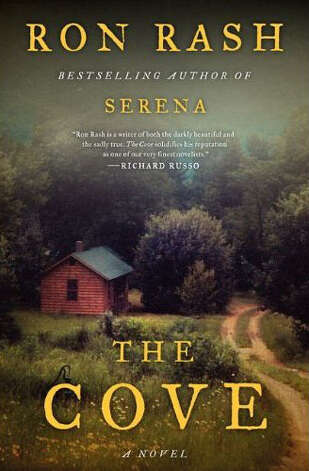
This gothic-tinged cover is so different from the pastoral scene that appeared on the ARC that I did a double take.  As with his previous novel, Serena (see news on the film version), we're back in the dark, gorgeous landscape of early 20th-century Appalachia. A novel about a mysterious stranger, a woman thought to be a witch, and a secret with dangerous repercussions in WWI-era North Carolina.  Ecco, April.


Gothic romantic suspense (with ghosts) set in an England already haunted by war... sounds like my type of book.  In the years after World War I, a young woman is charged with helping a ghost-hunter dispel the angry spirit of Maddy Clare, who died by suicide. NAL, March.


A saga about immigration to America in the mid-19th century; not an uncommon subject, but what makes this one different is the author's choice to tell it in the voices of four characters with very different cultural perspectives: a young Irishman, a Spanish society girl, and a man and a woman who are slaves.  The American Civil War forms the eventual backdrop to their stories.  Doubleday, March.


Here we have a saga of a different sort, one that explores the bonds between mothers and daughters over a century, from the 1830s to the World War II years, in the mountains of rural north Georgia.  The ongoing evolution (or not) of race relations involving African Americans and the Cherokee weaves in and out of the tale, along with elements of magical realism.  Viking, March.


Turner Publishing has been around for a while, per their website, but they're new to me... and they've been buying up a number of novels from Barbara Wood's backlist, as well as some newer titles. Wood is one of the rare historical novelists who can adapt her skills to numerous settings and eras.  This Golden Land is a saga about a female healer who travels from 19th-century England to Melbourne to pursue her calling as a midwife.  (Per Amazon, it was previously published with iUniverse.)  Turner, May.


And one more by Wood with the same release date (and an awesome cover):  The story of a Germanic-Roman woman with second sight during Christianity's early years.  Turner, May.

Saturday, January 28, 2012

A look at Rosie Thomas's The Kashmir Shawl

Multi-period novels with parallel stories linked by family connections are among my favorite types of books.  While the parts set in an earlier time take me away from everyday concerns via unfamiliar settings and period-appropriate situations, the modern sections bring everything back home again, showing how people are more connected to history than they might have thought.

A transporting story that begins in present-day North Wales and wends through the remote towns of India's Kashmir Valley during World War II, Rosie Thomas's The Kashmir Shawl offers enjoyable armchair escapism. I got it as a Christmas present and decided to read it in between the chunksters I had for review.  Partway through I realized that, at 468 pages, it qualified as a chunkster as well.

Mair Ellis never knew her grandmother, Nerys Watkins, who died before she was born.  After the death of their beloved father, Mair and her siblings discover a gorgeously patterned shawl hidden in an old chest of drawers.  Made of the softest Indian wool, and full of wonderful colors and intricate detail, the shawl also conceals an envelope with a curl of dark brown hair that doesn't match anyone in their family.

This mystery proves an irresistible opportunity for Mair, who never knew much about her grandparents' time in India.  Evan Watkins had been sent there as a Presbyterian missionary in the early '40s, and Nerys had willingly followed him there. In the hopes of uncovering their hidden history, Mair travels to the town of Leh, high in northwestern India's Himalayas.  Her investigations into her grandmother's past and the shawl's origins eventually lead her to Srinigar, the summer capital of nearby Kashmir.

Mair and Nerys, whose journeys are revealed in alternating timelines, are independent, courageous, and also lonelier than they'd like to admit.  Romantic, yet tempered with a good amount of realism, The Kashmir Shawl takes an honest look at many different aspects of love.  This may sound trite, but one of the most impressive aspects of the novel is how its unstereotypical characters react to what's expected of them.  While I never really warmed to Mair, I especially liked Nerys, who's left to fend for herself while her husband is off doing his godly work (and neither minds their separation as much as they should).  She manages to balance her role as a proper clergyman's wife with a streak of unconventionality.  Not all of her women friends fare as well.

And as you can imagine, this is one of those epics where geography has a strong and vital presence.  Srinigar, home to Dal Lake and its elaborate wooden houseboats, offers both beauty and conflict.  In the 1940s, women of the British expatriate community hold social gatherings while their men are off at war, while the calm atmosphere of the modern-day town, as seen from Mair's viewpoint, is occasionally engulfed by Muslim-Hindu violence. 

Long-held traditions endure as well.  In this age of mass production, it can be hard to fathom the years of effort that the novel's Kashmiri villagers pour into the weaving of a single shawl, but as Mair and Nerys discover, the end result is exquisite.

How the Kashmir shawl came to be in Nerys' possession isn't revealed until the book is nearly over, and it requires the introduction of a good many new characters, but the plot doesn't feel needlessly drawn out.  I won't give more away than that, because getting there is an engrossing experience, and all of the strands pull together well at the end.

The Kashmir Shawl was published by HarperCollins UK in 2011 at £12.99 in trade paperback.

Thursday, January 26, 2012

And the Scott O'Dell winner is...

I confess I was paying so much attention to the Newberys and other ALA book awards that the announcement of the Scott O'Dell Award for Historical Fiction passed me by.  This is an annual prize for a meritorious book for children or young adults (see the sponsor's website), and it comes with an award of $5000.

As revealed on January 17th, the winner for 2012 is Jack Gantos' Dead End in Norvelt (FSG, 2011), which yes also took home the 2012 Newbery Medal.  Read more at School Library Journal

This morning, I opened up my issue of Shelf Awareness and found a fantastic, very funny interview with Gantos that you can find here (scroll 2/3 down the page).  The novel's set during the summer of 1962, in Gantos's home town of Norvelt, Pennsylvania, a federally planned New Deal town named after Eleanor Roosevelt.  The Q&A has some great discussion points on the nature of historical fiction, homestead communities, and using real people as characters.

A short quote from Jennifer M. Brown's interview:

JB:  When you won the Scott O'Dell Award for Historical Fiction last week, we had to pause before realizing--ah yes, the setting is the summer of 1962, and it is historical fiction!

JG:  That's, let's see, exactly 50 years ago. I think you can get antique license plates for a 1962 car. Somebody said, "How does it feel to be given an award for a historical novel where you're the main character?" When you put it that way, I'm feeling a little crusty.
Did you realize that if you go by the (somewhat arbitrary) definition that historical novels are set 50+ years in the past, that this now includes the early '60s?  When I first started getting interested in the field, I remember talking to some readers my grandmother's age who were taken aback that WWII-era fiction was considered "historical."  They lived through that era and remembered it well.  Now that date range has moved ahead by a couple of decades.

There are advantages to working in a library with a curriculum materials center.  After reading about both awards, I searched in our online catalog to see whether we had a copy of Dead End in Norvelt - and we did!  And it was available and on display with other award winners.  So I grabbed it.

Tuesday, January 24, 2012

Award-winning historical novels at ALA Midwinter, 2012

The American Library Association's 2012 Midwinter conference just wrapped up in Dallas, and a number of literary awards were announced there.  Once again (see last year's list), historical fiction made a good showing.


Relevant winners include:

The Newbery Medal and Newbery Honor books, recognizing the best in American children's literature.

- The winner: Jack Gantos' Dead End in Norvelt, an off-the-wall adventure set in small-town America in 1962;
- The Honor books: Thanhha Lai's Inside Out and Back Again, about a Vietnamese refugee family in the American South; and Eugene Yelchin's Breaking Stalin's Nose, middle-grade fiction set in Stalinist Russia.

The 2012 Reading List Awards, which recognize the best books in eight genres.

- For Historical Fiction:  Mary Doria Russell's Doc, a reinterpretation of the life of Doc Holliday.
- On the Historical Fiction shortlist:  Dominic Smith's Bright and Distant Shores, Amor Towles' Rules of Civility, Sharon Kay Penman's Lionheart, and Beth Powning's The Sea-Captain's Wife.  [links to my reviews]
- For Fantasy, Erin Morgenstern's The Night Circus, a magical tale of lovers in a mysterious late 19th-century circus.
- For Romance, Loretta Chase's Silk is for Seduction, set in 1830s England.

ALA Notable Books, honoring excellent, important fiction for the adult reader.  (Understood to be literary fiction; the Reading List looks at genre fiction.)

- Patrick deWitt, The Sisters Brothers, a darkly comic Western; and Michael Ondaatje's The Cat's Table, in which a young boy comes of age aboard ship in the 1950s.  These were the only historical novels on the list; see the full slate for other honorees (including nonfiction and poetry).

~

On a personal note, I was notified of some very exciting news last Friday that was formally announced at ALA on Sunday night.  The awards chair phoned me to say I'd been selected as the winner of the 2012 Louis Shores Award from the Reference & User Services Association, which is given for excellence in book reviewing for libraries.  This blog was mentioned in the press release (how cool to have a press release of my own!).

Unfortunately I wasn't able to be at the conference in person I got word just after I'd finished up my afternoon reference desk shift at the library ‒ but there'll be an awards reception at the ALA Annual convention in Anaheim this summer, and I plan on being there.  No big speeches here, but I was completely surprised and thrilled, and still am.  A huge thanks to the librarian who nominated me and to the members of the award committee.

Monday, January 23, 2012

An interview with Anne Clinard Barnhill, author of At the Mercy of the Queen


How far does family loyalty extend? If the relative to whom you owed your social position asked you a favor that required you to give up your innocence and a possible chance at love, would you do it?

In Anne Clinard Barnhill's first novel, Lady Margaret (Madge) Shelton, a young lady-in-waiting, is presented with this wrenching dilemma.  Although she's in love with Arthur Brandon, a handsome courtier, Madge acquiesces when her cousin and queen, Anne Boleyn, asks her to catch the eye of Henry VIII.  If King Henry is determined to take a mistress, Queen Anne thinks, best that it be someone loyal to her.

At the Mercy of the Queen follows Madge's transformation from a quiet and pretty country girl to a young woman who is considerably wiser in the ways of the world.  Lady Margaret Shelton is a historical character, one of the three acknowledged mistresses of Henry VIII, and Anne Barnhill's perspective on her originated in an unexpected place: her own family tree.  In a genre filled with novels about the scandalous Tudor court, Barnhill's novel stands out for its fresh viewpoint, its sumptuous descriptions of food and fashion, and a portrayal of the Anne Boleyn-Henry VIII relationship that felt especially realistic to this historical fiction reader.

I'd like to thank Anne for her willingness to do this interview and hope you'll enjoy it as well.  As one of the more fun parts of her research, she's in the process of having a Tudor gown made.  Pictures below!

Madge first makes an appearance as a young, sheltered girl from the country who isn't thrilled to leave her home and become lady-in-waiting to her cousin Anne. How did you sort through the few known facts about Madge's life to come up with her character?

I've been reading about Madge for about 30 years, since I first discovered my connection to her. She is mentioned in most books about Henry VIII and Anne Boleyn. I also checked online and in a family history book I have (from my grandmother) which has about a paragraph about her. I found her family was involved in raising sheep for the wool industry and were somewhat prominent in Norfolk. Her father was sheriff and her ancestors built Shelton Hall. I began to imagine what things might have been like for her. As for her birth date, there is none I have been able to find. She was probably not quite as young as I have made her in the book, but she was younger than Anne Boleyn. I think the whole thing began when I started to consider what it would be like to have an affair with your cousin's husband. And, even more interesting, what if your cousin set the whole thing up? Why might she have done that and why might you agree?

In the novel, you portray Anne Boleyn sympathetically; she's ambitious and occasionally bad-tempered, but also gracious, dignified, and of a religious bent. She loves her husband and desperately wants her marriage to succeed. You mention that when you were 15, Anne Boleyn first captured your attention via Norah Lofts' The Concubine. What other sources, fiction or nonfiction, most influenced your portrayal of Queen Anne? Did The Concubine lead you to any other historical fiction discoveries?

I read mostly nonfiction for the first 20 years or so of my secret obsession. Eric Ives' work is wonderful. David Starkey, Alison Weir, Antonia Fraser, Warnicke, Dunn, just lots really. Then, I read all of Jean Plaidy, who I love. Philippa Gregory's The Other Boleyn Girl helped me out of the closet as I realized lots of people share my Tudor fascination. Online sources have been invaluable, though more for the second book than the first: the Anne Boleyn Files and On the Tudor Trail are great sources. I have not read as much historical fiction as I would like I've discovered it rather late in my reading life. But I intend to change that and devour as much as I can find!

I especially loved your descriptions of the diversions and delicacies at the Tudor court: the dances, card games, sumptuous feasts, and so forth. Did you personally try out any of these things during the writing process? Which were the most enjoyable to write about?

Oh, I love to write about food and fashion! I'm having a Tudor outfit made and thus far, I have the undergarments and a French hood to match the stomacher. I've selected material for the outer wear and hope to have that completed by the time the next book comes out. So, yes, I've experienced the clothing. As for the food, it's a little rich for my taste, though I may try some recipes this year, especially for drinks such as mulled wine. I will NOT try the dove stuffed into a duck stuffed into a goose stuffed into a peacock! That sounds really awful to me!

Were there any scenes in the novel you found more challenging to write than others?

Well, I had pulled the curtain on most of the sex scenes and my agent wanted me to be more graphic. I loved writing them but they make me nervous when I think of people reading them. Really, I had fun writing the whole book I started it to entertain myself... I really hadn't thought of trying to get it published. So I was very free to have fun!

Madge's nurse and friend, Cate, describes London as having the "scent of life." How do you get into the mindset for tuning out your current surroundings and writing about the bustle and intrigue of 16th-century London?

I go away so I can have solitude and then I read constantly from nonfiction books about the time and the people. I do have to dive in deep to get there and, once I get in, I really do not want to come out. That's why I go away I'm not fit company for man nor beast. And I hope by surrounding myself with the books (I actually sleep with them piled across the bed, hoping to learn by osmosis I guess) I will get as real as possible.


You mention in the preface that you've wanted to tell this story for thirty years. How did the idea of your novel change over time? Were there any new tidbits you discovered that took your story in a new direction from the way you initially imagined it?

I have always had the shape of the novel in my mind, pretty much as it is now. Madge turned out to be a little younger than I expected early on. I remember being a young teen and admiring older women, copying their mannerisms, their style all of this as I was developing my own style. Young girls can almost worship an older woman they admire I see this in my 9-year-old granddaughter as she encounters teens and young women in their 20's. I thought that would make the whole plot work better having the relationship between Anne and Madge the primary relationship, thought there is a love interest for Madge, Arthur Brandon. He was a surprise--just turned up on the page cocky as you please. He definitely took the story in a different direction.

Your family connection to the Sheltons intrigues me, as it gives you a unique tie to your subject. Are you a descendant of Madge herself, or of one of her siblings? How did the Shelton Family History you mention as a source aid in your research?

I'm a descendant of Ralph Shelton, Madge's brother. The book is helpful in that it gives little paragraphs about those family members who have interesting stories or roles in history. For example, there are some Sheltons who married the Founding Fathers of the U.S. and that was interesting. Another relative led the Patriots at the Battle of King's Mountain I just love all that stuff!


How have your experiences in evaluating other authors' work, as a writing tutor and book reviewer, influenced your own fiction writing?

Hmmm. I have slowly come to the idea that I want the writing to be as smooth as possible, so that the 'writer' never gets in the way of the story. I have not mastered that yet, and probably never will, but I want the story to flow, the dream to continue uninterrupted, as John Gardner puts it. It's easy to see mistakes in someone else's work, but incredibly hard to see it in your own. I think I've become a pretty good critic over the years but it's still hard to find my own stories--to get to the heart of the story. So, it definitely helps to look at what other folks are doing--and often, I am inspired by other writers. It's easy to stay in your own head until someone comes along and shakes you up. Then, you say, oh yeah! I could try that. Reading and writing go hand in hand.
~


At the Mercy of the Queen was published by St. Martin's Griffin in January ($14.99/Can $16.99, trade paperback, 432pp + special reading group guide). This interview forms part of the Virtual Book Tour for At the Mercy of the Queen. For more information, see Anne Clinard Barnhill's website.

Thursday, January 19, 2012

Why I'm taking up the Chunkster Challenge


Did you ever notice that many historical novels are really, really long?

Above at left, we have over 4100 pages' worth of the latest in historical fiction; the shortest one - Madame Tussaud - barely qualifies for the challenge at 455 pages.  And on the right we have Oliver, who insisted on being included in the pic. If he knew I'd be including him in a Chunkster Challenge post, he might have reconsidered (he's got a bit of a belly on him).

I seem to have accepted an awful lot of epics for review, so you'll be seeing them featured here over the next few months.  Two books in the bunch are being cleverly hidden from view for now, because I've committed to reviewing them for other publications, but their identities will be revealed in time. 

So this year, while I'm trying to work off a few extra pounds on the NordicTrack, I'll also be piling on the pages.  I'm aiming for Plump Primer level (at least six chunksters) although I expect to surpass it.  Let's not forget that the new Ken Follett, The Winter of the World, is set to be published in mid-September and is technically long enough to count as two chunksters (too bad it doesn't work that way).

I guess I'd better get reading.

In which I give a tell-all interview

Okay, it's not quite that dramatic, but earlier this week, blogger and historical fiction fan Jane Steen asked me some good questions about the story behind my blog, trends in historical fiction, and other fun bookish and bloggish stuff.  You can find it at:  A Historical Fiction Book Blogger Tells All.  Thanks, Jane, for the opportunity!

Tuesday, January 17, 2012

Guest post from Julie Rose, author of Oleanna: Norway and Sweden in 1905

Today I'm welcoming Julie K. Rose to the blog to discuss the backdrop to her new historical novel, Oleanna, which takes place during the separation of Norway from Sweden in 1905.  Oleanna, published this month, is based on people from her own family history.  More details are available at oleannanovel.com.  I'll be conducting an interview with Julie in a future post.

~

When you think of Norway (if you think of it at all), what comes to mind? Stunning scenery? Vikings? A successful socially liberal society? Hot blondes?

I expect the political separation of Norway and Sweden in 1905 wasn't high on your list. It hasn't exactly been a hot-button topic for historians, or for historical fiction authors. In fact, I'll wager most readers didn't realize that Norway and Sweden were ever joined, let alone separated. Here is a brief history of how the Dissolution of 1905 came to be.

Due to the geography of the area (tall mountains, deep fjords, a dearth of arable land, and over 25,000km of coastlines running from 58°N to more than 71°N) it was difficult to create a stable, agriculture-based economy and political structure beyond small kingdoms scattered throughout the country. The Viking Age saw increased wealth and the first attempts at a unified Norway under King Harald Fairhair. Later, the (often violent) promulgation of Christianity under King Olaf Haraldsson (St. Olav) from 1015-1028 allowed him to spread his political influence, unifying most of what we know as modern Norway. Despite a brief period under the dominion of Denmark's King Knut, Norway was ruled by Norwegians, including Harald Hardrada, Olaf's nephew (yes, the same Harald who died at Stamford Bridge in 1066), until 1299.In that year King Haakon V moved the capital to Oslo; upon his death, he had no sons, so the throne of Norway went to his daughter's son, King Magnus Eriksson of Sweden. King Magnus abdicated, and his son Haakon became king—he was married to Margrethe, the daughter of the Danish king, and so their son Olaf became king of Denmark in 1376 and Norway in 1380 as King Olav IV. (Got all that?)

Life continued on in Norway for hundreds of years, as the elite in Denmark ruled over Norway, and the Norwegian nobles couldn't seem to get their act together to make a run at independence. And then a strange thing happened.

In 1814, Denmark-Norway was defeated during the Napoleonic wars, and the king was forced to cede Norway to Sweden in the Treaty of Kiel. In an attempt to retain control, the Viceroy and hereditary prince of Denmark-Norway, Christian Frederik, encouraged the burgeoning independence movement ,and a constitutional convention and declaration of independence was made on May 17, 1814. This day is still celebrated in Norway as Syttende Mai (Seventeen May) or Constitution Day.

Rosemaling decorated with floral paintings
(source: Wikipedia)
Sweden, of course, was having none of it and declared war on Norway. To keep the peace, Prince Christian Frederik relinquished his claims to the throne of Norway in return for a democratic Norwegian constitution. In return, the Norwegian parliament elected the Swedish king as King of Norway.

Suffice to say, the 91-year marriage of Norway and Sweden was not a particularly happy one; Norway tended to be liberal, parliamentary, and affiliated with the United Kingdom, while Sweden tended to be conservative, monarchial, and affiliated with Germany. Norway largely had political independence, but being yoked to rival Sweden was galling.

But one interesting thing did happen during this unhappy union: the reclamation of native folk art by the political movers and shakers. Folk art, like the graceful rosemaling, had never really died. Until well into the 20th century, many villages in Norway were extremely difficult to reach, and folk ways and art continued on as they always had.

As part of the general romantic nationalist movement in Europe during the 19th century, Norwegians rediscovered their art—the most famous examples of which are bunad, the traditional folk dress for each region of the country (which of course had never died out in most of the remote villages); and the folk tale collections of Asbjornson and Moe. Throughout the 19th century, Norwegians actively promoted pride in their country, in their art, in their culture—a useful fuel to fire what came next.

Matters came to a head in the 1890s, when Norway began to insist on its own consular offices abroad rather than common consuls appointed by Sweden. The Swedish government and king rejected this, which set in motion the events that would lead to the dissolution.

Propaganda poster from the summer of 1905:
"We love our country!"
(Line from the national anthem, written in 1814)
A coalition government was formed in 1905 to establish the separate Norwegian corps of consuls; the law was passed by the Storthing, but King Oscar II of Sweden refused to accept it, and the Norwegian coalition government resigned on June 7, 1905, declaring a dissolution of the union.

The Swedish government insisted on a Norwegian referendum to understand the citizen's view; it was held on August 13, and 99.95% of Norwegians voted in favor of dissolution. Though suffrage was not extended to women in national elections until 1913, Norwegian women still collected more than 200,000 signatures in favor of dissolution.

And so, Norwegians finally regained their independence for the first time since the 14th century. Or did they? In November another plebiscite was held in which 79% of Norwegians voted in favor of a monarchy and not a republic. This proved to be a challenge, because the hereditary lines of Norwegian kings were MIA. Who did Norway choose for its king? Oh, the irony: Prince Carl of Denmark. Carl took the name Haakon VII and, alongside his wife Maud of England, was sworn in as king on November 27, 1905. (Fun fact: the current King, Harald V, married commoner Sonja Haraldsen in 1968, the first Norwegian-born queen since Margrete Skulesdotter in 1225.)

So, what did it all mean for the people of Norway, this dissolution of the union? Norway emerged into the 20th century as an economic force to be reckoned with, growing wealthy through North Sea oil; the dissolution also brought Norway fully onto the world stage when it joined the League of Nations in 1920, and it solidified the alignment of Norway with Great Britain (which unfortunately would have terrible consequences for Norway during the world wars). Above all, though, the dissolution of 1905 gave the Norwegian people a renewed sense of pride, a fresh start in a new century. Their country had become an independent entity for the first time in 700 years. They were once again truly free.

~

Set during the separation of Norway from Sweden in 1905, Oleanna is a richly detailed novel of love and loss inspired by the life of the author's great-great-aunts.

Oleanna and her sister Elisabeth are the last of their family working their farm deep in the western fjordland. A new century has begun, and the world outside is changing, but in the Sunnfjord their world is as small and secluded as the verdant banks of a high mountain lake. With their parents dead and their brothers all gone to America, the sisters have resigned themselves to a simple life tied to the land and to the ghosts of those who have departed.

The arrival of Anders, a cotter living just across the farm's border, unsettles Oleanna's peaceful but isolated existence. Sharing a common bond of loneliness and grief, Anders stirs within her the wildness and wanderlust she has worked so hard to tame. When she is confronted with another crippling loss, Oleanna must decide once and for all how to face her past, claim her future, and find her place in a wide new world.

Julie K. Rose is an author of historical and mainstream fiction with a touch of the fantastic. She lives in the Bay Area and loves reading (especially Patrick O'Brian), watching episodes of Doctor Who, and enjoying the amazing natural beauty of Northern California. Oleanna is her second novel.