Saturday, April 30, 2011

A look at Priya Parmar's Exit the Actress

Like its vivacious heroine, Priya Parmar’s Exit the Actress arrives with none of the trappings normally associated with royal mistresses. The title and cover suggest a career woman most at home at the theatre, a description that suits Ellen Gwyn very well.

Twelve years old in 1662, Ellen grows up with an alcoholic mother in Coal Yard Alley on London’s Drury Lane, and narrowly avoids sinking into prostitution like her older sister, Rose. First an oyster girl and then an orange seller at the Theatre Royal, Ellen’s liveliness and skill in dancing are noted by members of the company, who devote time to nurturing her gifts.

Through their tutelage, Ellen develops from an uncultured girl into a talented actress. Her unfashionable red hair and bubbly outlook give her the common touch that audiences adore, especially when she’s given roles that fit her personality. Her inner circle includes the famous names of the day – John Dryden, the Earl of Rochester, Peg Hughes – and she has liaisons with two suitors. However, no man seems worthy of her until she attracts the notice of Charles II. Like Ellen, he keeps his most private self offstage.

Interspersed with Ellen’s diary entries are short sections that replicate primary sources of the day: personal notes, recipes, broadsheet columns, memoranda, and other announcements. Taken together they form a sweeping portrait of the Restoration era, from the playhouses to the intrigue-filled royal court, and from the Second Anglo-Dutch War through the Great Fire and after. Through Ellen’s eyes, we get her gossipy impressions of Barbara Castlemaine, the king’s grasping longtime mistress, and of his barren Portuguese queen, who she comes to admire rather than pity.

Ellen’s early life couldn’t be more distant from that of Queen Henrietta Maria, writing advice-filled letters to her son and daughter, but her world and the royal family’s world gradually intersect. Parmar lets us observe Ellen’s transformation through her narration, which adjusts as she grows in sophistication and confidence. Her famous wit may seem lacking early on, but it emerges later in the story.

Some of the middle sections move more slowly than the rest, and some of the fonts used in the book are too small or ornate to invite close reading, but all in all it’s a most enjoyable novel. Whether or not you believe the real Nell Gwyn would have been a devoted journal writer, it’s an imaginative re-creation, an engaging portrait of a vibrant young woman and the age in which she lived.

Exit the Actress was published by Touchstone/Simon & Schuster in February at $16.00 ($18.99 in Canada).  Trade pb, 446pp.

Thursday, April 28, 2011

Daughters of Summer

Or, a visual preview of the spring/summer season, part one...


This debut romantic novel set in Restoration London, a glorious city about to be invaded by the plague, stars Susannah Leyton, daughter of a Fleet Street apothecary. A surprising marriage proposal rescues her from an unpleasant family situation but causes other problems.  Piatkus (UK), August.


Does 1968 count as historical for you?  I wasn't around then, so it does for me.  This debut novel by a prizewinning short story writer takes place at a New England prep school which, through a clerical mistake, enrolls its first female student - a brilliant black teenager. Knopf, June.


The title of Dennis's 18th-century romantic adventure derives from Alfred Noyes's poem "The Highwayman," and the plot retells the story in epic fashion.  The heroine, Elizabeth "Bess" Wyndham, is a writer of Gothic novels who meets a man remarkably like one of her books' characters.  First pb release of a novel previously published for the library market. Sourcebooks, August.


This debut novel by a Midwestern academic takes me back to my old stomping grounds of southern New England.  In Warwick, Rhode Island, in the summer of 1934, Anne Dodge comes face to face with her Portuguese heritage and the truth about her parents' marriage.  Overlook, July.


This lengthy saga is the product of AmazonEncore, a bookseller imprint specializing in identifying highly-rated self-published works and reissuing them for a wider market.  It spans four generations of Vietnamese women - a royal concubine and her descendants - throughout the 20th century.  A copy arrived in my mail last week. AmazonEncore, April.


Fiorato writes lyrical historical fiction about strong women from Italian history.  Her latest takes place (per the title) in Siena in the early 18th century, at the time of the Palio - the city's famous horse race.  Can I just say I want this gown for myself (the color is perfect) and the book itself is gorgeous - it's on my pile to review. St. Martin's Griffin, May.


Green's Daughters of War is first in a new trilogy about nurses during WWI; in the Balkans, two young women render aid on the battlefield and discover unexpected romance.  Severn House, August.


From the title, you'll have guessed this YA historical novel centers around witches. In 16th-century Somerset, a servant girl at Montacute House is accused of witchcraft following the disappearance of several boys from her village.  Hyperion, April.


The story of Abigail Lovell, a young woman in Revolutionary-era Boston, who goes to great lengths (even defying her Loyalist father) to aid the American rebellion.  The blurb compares it to Sally Gunning's Bound, which is enough to get me to pay attention.  Pegasus, September.


The girl in the green dress is Bertha, orphaned daughter of Emma Bovary, who leaves her grandmother's farm in the French countryside to make a new life for herself in high-society Paris, as the apprentice to fashion designer Charles Frederick Worth.  Bantam, August.

Saturday, April 23, 2011

Book review: The Bride's House, by Sandra Dallas

Sandra Dallas is a bestselling novelist whose works, puzzlingly, always seemed to have greater appeal to mainstream readers than to fans of her chosen genre of historical fiction. When I saw her latest novel come up for review on LibraryThing, I figured it was time I picked up one of her books and learned what I’d been missing.

A sweeping novel of family ties, long-held secrets, and the continuing search for love, The Bride’s House tells of three women linked by blood, circumstance, and the large white Victorian house in Georgetown, Colorado, that becomes home for each in turn. Though very different personality-wise, all are plain-spoken, tenacious, and eager to please, and all struggle to find happiness.

For Nealie Bent, a 17-year-old runaway whose striking looks and vibrant personality attract the eye of local miners, the newly built residence symbolizes her desire to rise above her status as a hired girl at a Georgetown boardinghouse in 1880. She has her choice of men, preferring sophisticated engineer Will Spaulding over uncouth yet reliable Charlie Dumas (and who wouldn’t, at seventeen?). Her choice, combined with Will’s subsequent betrayal of her, is the novel’s most predictable aspect.

Pearl, a shy and plain spinster of 30 in the year 1912, is adored by her wealthy father, who relies on her so heavily that he chases away potential suitors. Her decision to pursue a romance with a handsome businessman sets father and daughter against one another and transforms her life – not necessarily for the better.

And for 18-year-old Susan, an heiress growing up in 1950s-era Chicago, the Bride’s House brings back memories of childhood summers in the mountains, a time of intense peer pressure and her growing love for a neighborhood boy with big dreams. Outside politics don't play a strong role except in this section, which is set against the backdrop of the Korean War.

While the characters are recognizable types, and sometimes behave in frustrating ways – the devoted family housekeeper despairs of Pearl’s excessive timidity, too – they still have many surprises in store. The flowing style drew me in, and the emotional shifts in the plot had a way of raising my spirits then filling them with sorrow moments later.

The women’s choices are driven not just by their temperament but also by their social and financial situations and the prevailing mores of the time. “Georgetown doesn’t seem like a place where conventions matter much,” Will tells Nealie early on, but that’s never exactly true. Over the next 70 years, as rough-and-tumble shacks give way to elegant homes, the demand for silver rises and falls, and mining towns become ghost towns and then tourist attractions, attitudes loosen in some ways but not others.

As Dallas reveals in the acknowledgments, the novel’s centerpiece is based on a house that the she and her husband bought as a derelict and restored to its former glory. Her affection for it and for the region as a whole is ever-present; Georgetown, with its distinctive mountain charm, is not just a haven for fortune-seekers but also for dreamers and anyone looking to start anew.

With all three strands woven together, The Bride’s House became a more complex story than I expected from such a straightforward telling. A comfortable novel about women’s lives, it will resonate strongly with female readers, who will take away from it the pervading theme of how we’re all shaped by our circumstances but shouldn’t be defined by them.

The Bride's House will be published by St. Martin's Press on April 26th (this coming Tuesday) in hardcover at $24.99/$28.99 in Canada (352pp).

Friday, April 15, 2011

Book review: The Bonus, by Georgia Lowe

Georgia Lowe's debut novel The Bonus shines light on a pivotal and regrettably obscure event from the Depression era. In 1932, over 20,000 destitute and desperate WWI veterans banded together to persuade the government to pay their wartime service bonuses early. Calling themselves the Bonus Expeditionary Force, they arrived from all over the U.S. to converge on the nation’s capital and sway public opinion in their favor.

Lowe incorporates multiple viewpoints, primarily that of Will Hardy, a reporter assigned to cover the story for the Los Angeles Herald Express, and his girlfriend Bonnie, a statuesque red-headed starlet. Because the LA-based contingent to Washington is led by disabled actor Royal Robertson, Will wonders if their cause is a publicity stunt, but he’s soon persuaded of the rightness of their journey – even though going along with them as a journalist makes him uneasy. A veteran hit with occasional shell-shock, Will doesn't want any reminders of his army days. Bonnie returns to her career after Will leaves, but she misses him terribly, even though she’s confused about his feelings for her. Disillusioned with Hollywood, and eager to help her friend Myrna leave a bad situation, the women set out to find him - and find help along the way.

DC police superintendent Pelham Glassford gets his tale told, too. Based on past experience, he expects President Hoover to be sympathetic to the marchers, but he isn't. As thousands of hungry, determined, and unkempt veterans and their families settle into Washington, a “ragtag army invasion from a forgotten war,” Glassford does what he can to ensure they're given shelter and fed, though the feds aren't on his side. The Senate rejects the Bonus Bill passed by the House, rumors are spread about the veterans’ Communist beliefs (mostly untrue), and Hoover calls in the army – under General MacArthur – to clear out their makeshift campsites. It’s not a pretty scene.

Not just a vivid portrait of the unrest stirring in Washington, The Bonus also invites readers to take a firsthand look at the hopeless conditions throughout Depression-era America. Lowe re-creates the times with a sure hand: the blistering heat as the caravan of dying vehicles passes through Arizona in June, farm families evicted from their land in Dust Bowl Oklahoma, and veterans living in railway boxcars since they have nowhere else to go. The poverty hasn't affected downtown LA nearly as much, although the traffic there is horrendous.  Some things never change.

The dialogue is pulpy and casual, peppered with coarse and authentic slang. (Newspapers are “Hoover blankets,” for one, which pretty well shows what people thought of Hoover.) As the plot breezes along, readers get to absorb the plight of female vets and Americans of mixed race through the clever placement of minor characters. A sweet love story, a wrenching social drama, and a vigorous defense of First Amendment rights, The Bonus is especially good at showing the strong bonds that develop between people when their luck is down. These downtrodden citizens epitomize the spirit of America better than their elected government does.

Toward the end, the main plotline sometimes gets buried in the mechanics of the political machine Glassford has to push through.  Overall, however, Lowe successfully transforms scenes from faded black and white photographs into living, breathing color. Will and Bonnie are based on her parents, who were Bonus Marchers, and with her entertaining and enlightening novel, she has done justice to their story.

The Bonus was published by Lucky Dime Press in Oct 2010 at $18.95 (pb, 398pp).

Monday, April 11, 2011

International book pile

I'm taking a break from the controlled chaos known as National Library Week to finish writing up a post I've had in draft since mid-March (ack).

Over the last little while, I've had some book purchases arrive at my door, and I hope to showcase more of these in upcoming posts.  The historical novels in the pile below come from around the world, five of them via English translations. I didn't have to travel far to get them, though; all were bought from Amazon US with the exception of the Haasse and Falcones, which came from Book Depository.


Sally Armstrong's The Nine Lives of Charlotte Taylor (Vintage Canada, 2008) is historically-based fiction written by the title character's 3x-great granddaughter.  Armstrong imagines her ancestor's life, tracing her journey from 1775 England to the West Indies to northern New Brunswick, where she takes refuge with the Mi'kmaq.  The cover says "national bestseller," so Canadian readers will likely know it already, though I just discovered it recently.

I finished Oliver Pötzsch's The Hangman's Daughter (AmazonCrossing, 2010) two days ago.  Who'd have thought a 400-page historical mystery set in a small town in 17th-c Bavaria would be a bestseller in America?  It's published by AmazonCrossing, Amazon's new imprint for translated fiction, and I understand they've been advertising it to Kindle readers... so the word has spread quickly.  It's proved so popular that Houghton Mifflin Harcourt has snapped up print rights to it and its three sequels, for publication beginning this August. In his tale of serial murder and supposed witchcraft in 1659 Schongau, the author keeps a steady balance between the setting's grim reality and the warm-hearted humanity of his main characters.  First published in Germany in 2008.

Margaret Sweatman's The Players (Goose Lane, 2009) is another Canadian find, "a voyage of discovery straddling libertine Restoration England and Canada's northern wilds" that follows actress Lilly Cole from the English stage across the Atlantic. The 17th-century is one of my favorite periods to read about, and this looked like a new perspective on the era.

We're moving into doorstop territory now.  Lin Zhe's Old Town (AmazonCrossing, 2010) is another book from the online bookseller's translation imprint.  To select titles for its catalog, Amazon looks at bestselling titles from its international stores and, based on their contents and ratings, decides which are likely to succeed as English translations.  Lin Zhe is described as "one of China's foremost authors," and this is her saga covering a century of change in that country over three generations.  I love long novels with family trees, and based on the two printed in the first few pages, Old Town looks to have a lot of personality.  There's an "Eldest Sister" who marries a guy named "Rotten Egg" Zhang, and under the name of "Second Son," there's a note that says "ran off with prostitute."  I look forward to reading their stories.

It's been over ten years since I've had the pleasure of reading one of Hella Haasse's novels; unfortunately I'm not fluent in Dutch.  Her In a Dark Wood Wandering, set in 15th-c France, is a favorite, though I admit I never got on well with her Threshold of Fire (5th-c Rome).  The Tea Lords (Portobello, 2010) is set amidst the Dutch colonial experience in the East Indies in the early years of the 20th century.  First published in Dutch in 1992. That's a very long time to wait for a translation, though at least we got one.

Dalene Matthee was a well-known South African writer, and her Pieternella, Daughter of Eva (Penguin  South Africa, 2008) tells the story of the first white settlement in the Cape of Good Hope.  Pieternella was a mixed-race child, the daughter of a Dutch surgeon and a woman of the Hottentot tribe, and Matthee's novel is based on a true story.  See the author's website for more. This is a translation from Afrikaans.

The nearly 900-page The Hand of Fatima (Doubleday UK, 2011) is Spanish writer Ildefonso Falcones's latest novel, following his bestseller Cathedral of the Sea.  I'm probably crazy buying a novel this long, given my growing TBR pile, but I couldn't resist a novel set in the Kingdom of Granada in 1564, about the extended conflict between the Moors and Christians.  I had this on preorder from Book Depository for nearly a year, and it finally arrived last week.

Sorry if you're seeing a duplicate post in your RSS reader.  This posted once before I was done writing!

Sunday, April 10, 2011

Beloved Dead giveaway winner

I have a longer post in the works, but without further delay, it's time to announce the winner of the latest giveaway.

Congratulations to Heather, winner of Tony Hays's The Beloved Dead and the two previous books in the series.  Happy reading -- I hope you'll enjoy them!

Monday, April 04, 2011

Book review: The Confession of Katherine Howard, by Suzannah Dunn

Suzannah Dunn’s The Confession of Katherine Howard, a swift-moving story of friends-turned-frenemies in Tudor England, looks at Henry VIII’s fifth wife from the viewpoint of her companion and lady-in-waiting, Cat Tilney.

The story of Katherine’s downfall is widely known. There are a few reasons to consider reading a novel with a familiar plotline: if it offers intriguing characterizations, presents a fresh perspective, or is written in a way that strikes an authentic note. Dunn accomplishes two out of the three, resulting in a lively and rich tale that still ends up feeling hollow.

Framed by Cat’s account of how Katherine’s indiscretions are discovered, in November 1541, the bulk of the novel looks back on their shared adolescence. Fittingly for Katherine’s personality, it’s divided into three sections – each corresponding to one of her sexual conquests. These are Henry Madox, her music teacher; Francis Dereham, a family friend who becomes her first real lover; and Thomas Culpeper, a handsome, snobbish nobleman.

With her breezy style, Dunn captures the lax atmosphere of their years spent in the household of Agnes Howard, Dowager Duchess of Norfolk, a rich distant relative of Cat’s, and the step-grandmother of Katherine (or Kate, as she’s called). Kate is a mature girl of twelve whose worldly attitude is assumed, but it makes her the unofficial leader of their little group. At Horsham in Sussex, they live in giddy isolation and ignorance, spending their days gossiping rather than in book learning, and forming liaisons with attractive men.

Eventually they’re relocated to Lambeth Palace, across the river from the king’s residence at Whitehall – the perfect launch point for the ambitious Howards, who are eager to return to power following the disgrace of their late niece, Anne Boleyn. Kate is quick to dump Francis after her family secures a place for her as one of Anne of Cleves’s ladies, whereupon Cat takes up with him herself. (Their relationship is fictional.)

Cat’s narration is casual and modern, full of would’ve and should’ve and d’you think?, much as you'd find in a contemporary YA novel. It suits these characters well. Gorgeous as they are, the lush descriptions in the first few pages – “England: firelight and fireblush; wine-dark, winking gemstones and a frost of pearls… satins glossy like a midsummer midnight or opalescent like winter sunrise” – feel out of place in contrast.

Kate, for all her claims to wisdom, is rather dim, convinced that the king’s infatuation with her will continue – even going so far as to sleep with Culpeper (with bed-thumping intensity) in her rooms at the palace. Cat, for her part, keeps insisting that “Little Kate Howard” was “just a girl” and “nobody much”… a typical nineteen-year-old who was doing a “perfect job” as queen until she was unlucky enough to get caught. The reader knows better. Kate, after all, is someone who describes the king as “good fun” after their first meeting, even knowing he had her cousin executed. And when tensions run high, Cat and Kate look to save themselves and their lovers rather than each other… such is what passes for friendship in the ruthless Tudor era, it seems.

Nobody comes out a winner here, except perhaps master manipulator Archbishop Cranmer – something everyone knows from the beginning. The problem is that the girls’ naiveté makes them more pitiable than sympathetic, and Kate’s bitchiness – which could have livened up the action – is seen only from the sidelines. It's plenty entertaining, and as a portrait of the times, it feels depressingly realistic, but don’t look for characters to admire or care about. As a result, rather than a heartrending tragedy about a wronged woman, the novel reads like a sad account of the inevitable.

The Confession of Katherine Howard is published April 5th by Harper Paperbacks at $14.99 (307pp).  It was previously published by HarperCollins UK.

Saturday, April 02, 2011

Historical fiction award news

A few historical fiction award winners and nominees have been announced in recent days.

Lucia St. Clair Robson's Last Train from Cuernavaca (Forge, 2010) is the winner of the 2010 Spur Award for Best Western Long Novel.  Last Train tells the story of two women, one Mexican and one English, caught up in the Mexican Revolution of 1910-20.

For Best Western Short Novel, the winner was Richard S. Wheeler's Snowbound (Forge, 2010), biographical fiction about John Charles Frémont and his fourth expedition, when he was trapped in the Colorado mountains during the winter of 1848-49.

The Spurs are awarded for excellence in Western writing by Western Writers of America.  See their site for more information as well as the finalists.

The winner of the Bruce Alexander Memorial Historical Mystery award was announced last week at the Left Coast Crime convention.  Kudos to Jacqueline Winspear, who took home the prize with her seventh Maisie Dobbs mystery, The Mapping of Love and Death (Harper, 2010). This award is given to the best historical mystery novel (pre-1950 setting).

Finally, the shortlist for the 2nd Walter Scott Prize for Historical Fiction was announced yesterday:

Andrea Levy, The Long Song (Headline Review and FSG)
Tom McCarthy, C (Jonathan Cape and Knopf)
David Mitchell, The Thousand Autumns of Jacob de Zoet (Sceptre and Random House)
Joseph O'Connor, Ghost Light (Harvill Secker and FSG)
C J Sansom, Heartstone (Mantle and Viking)
Andrew Williams, To Kill a Tsar (John Murray - no US publisher).

More details at The Bookseller. The winner will be announced on June 18th, as part of the Borders Book Festival in Melrose, Scotland. (Melrose is a town in the Scottish Borders; the festival has nothing to do with the ill-fated bookseller.)

Wednesday, March 30, 2011

Book review/giveaway: The Beloved Dead, by Tony Hays

Tony Hays’s third Arthurian mystery, set in a bleak 5th-century Britain, is the most gripping entry yet in an already strong series.

Having lost one arm in battle, Malgwyn ap Cuneglas has reinvented himself as King Arthur’s scribe and advisor. The Beloved Dead is set at a time he calls “a season of ill omens, among the worst of my long life.” Malgwyn is an honorable man, loyal to the Rigotamos and his vision of a united kingdom, though he remains cynical about Arthur’s Christian faith – and most everything else besides. He’s also close to his cousin, Guinevere, the former nun whom Arthur loves but says he cannot marry.

And so Malgwyn chafes at two tasks he considers shameful and unwise: accompanying Arthur as he removes the head of Bran, an icon sacred to the Druids, from its burial spot near Londinium; and arranging a marriage between Arthur and Gwyneira, the teenage daughter of a Christian nobleman with whom Arthur wants an alliance.

The roads Malgwyn is asked to follow are marked by peril and death. Along both of his journeys, young women are found killed, brutalized in a horrific manner. The motive is puzzling – the girls and their families had no enemies – which makes Malgwyn ponder a possible conspiracy to shake up Arthur’s reign. Or has Arthur tempted fate by stealing a Druid relic? Remembering his own wife’s death at the hands of the Saxons, Malgwyn is affected by the killings; he grieves for the innocent lives lost and wishes he had time to investigate. His assignment of bringing Gwyneira south to marry Arthur forces him to set his feelings aside.

Fans of Arthurian legend will appreciate how Hays reinterprets oft-told stories from the canon and deftly works them into a mystery plotline. There is a large cast of characters, some familiar and some new, who have discrete and memorable personalities. Women play a greater role here than in books one and two. Guinevere is a standout heroine; courageous even in the face of abandonment and danger, she deserves a place as Arthur’s consort. Succinct recaps of events from The Killing Way and The Divine Sacrifice are included, but because of possible spoilers, anyone intent on reading those novels should do so first.

Although Latin is rarely spoken, and the Romans themselves are long gone, Arthur’s plan for consolidating and governing his realm has a decidedly Roman bent to it. Fifth-century Britain is depicted as a land in transition, with Christian, Roman, and pagan influences both warring and intermingling. The dark uncertainty of the atmosphere adds to the growing tension.

By book three, Malgwyn has started to settle down.  He’s cut out the drinking (mostly), has found a good woman (his brother’s widow, Ygerne), and has formed a strong relationship with his daughter. In fact, he has become a seasoned diplomat – he’d probably hate that description – and worries that he’s lost his edge. He hasn’t. In fact, his sensitivity to the political and emotional minefields around him makes him a force to be reckoned with. Though determined to serve justice even when it pains him, he’s not immune to stress. He’s also amusingly baffled when it comes to women. Female readers in particular will discern the reasons for Ygerne’s anger long before he does.

As Malgwyn proceeds with fierce resolve along the path to finding a serial killer, he remains true to himself, yet his crime-solving abilities cleverly defy readers’ expectations. Most importantly, he knows that each successive murder is more than a plot twist or opportunity to prove himself – rather, each is a tragedy that should have been prevented. So while the aptly-titled The Beloved Dead has an optimistic and satisfying ending, as all good mysteries do, it would be hard to call it a truly happy one.

---

The Beloved Dead was published on March 29th by Forge at $25.99 in hardcover ($29.99 in Canada, £18.99 UK). See my earlier interview with Tony Hays for details on the first two books, The Killing Way and The Divine Sacrifice, as well as background on the writing process.  See also the author's website at www.tonyhays.com.

Interested in a copy of The Beloved Dead?  Or how about all three in the series?  Thanks to Forge, we have a giveaway opportunity... to win the three-book set, please leave a comment on this post.  Deadline for entry is April 8th.

Monday, March 28, 2011

Contest winner, and a note on longevity

Things have been quiet here this past week:  I've been getting over a cold (one that lasted close to three months and is finally almost gone); I've been taking care of another stray kitten that's somehow worked her way into our house; and I've had so many other deadlines that I haven't felt much like posting.

But without further delay, the winner of Chelsea Quinn Yarbro's An Embarrassment of Riches is Ashley.  Congratulations - I'll be in touch via email, and I hope you'll enjoy the book!

(There were two anonymous entries, which I was unable to count, for obvious reasons... but I appreciate your stopping by!)

Also, on another personal note, last Friday was my 5th blogiversary.  Originally I had plans to do a bigger celebration for it, maybe a contest or something, but then Real Life got in the way.  So I'll simply say thanks to all of you for reading my site, commenting, linking, even lurking.  Getting to set down my thoughts about books and having people read and react to what I write - what blogger could ask for more than that?

Monday, March 21, 2011

Bestselling historical novels of 2010

Publishers Weekly has just come out with its list of the hottest selling novels in the US from the previous year, so it's time to look at which historical novels made the cut.  This is my 4th annual post on the subject (see writeups from 2009, 2008, and 2007), and per my blog stats, these posts are pretty popular.  Everyone wants to know what a bestselling historical novel looks like, or maybe is wondering if such a thing exists. 

PW's original list is here - from their annual Facts & Figures coverage - and all I'm doing is summarizing and commenting on the historical novels on it.  I'd recommend visiting the original article by Daisy Maryles for the comprehensive stats as well as info on changing trends.

Earlier this year, PW asked publishers to submit sales figures on titles that sold more than 100,000 copies during 2010. Only print sales of new books counted -- those shipped and billed. Returns were supposedly taken into account.

Among the top 15 hardcover fiction bestsellers we have:

#3 - Kathryn Stockett, The Help (1,317,397 copies)
#12 - Ken Follett, Fall of Giants (621,562 copies)

It's notable that The Help was #3 on last year's chart as well, with 1,104,617 copies sold in '09.  I still own a copy and still haven't read it!  Blame the publishers/authors/editors/bloggers who keep urging new books on me.  The rest of the top 15 is dominated by Stieg Larsson, a predictable crop of thrillers (Grisham, Patricia Cornwell, James Patterson and his coauthors), plus Nicholas Sparks, a couple of mysteries, and Franzen's Freedom.

Others that sold more than 100,000 copies, in descending order of sales:

Seth Grahame-Smith, Abraham Lincoln: Vampire Hunter (ok, I'm not sure if this really counts as a historical novel, but with eye-opening sales of 230K+, it's worth mentioning)
Danielle Steel, Legacy
Karl Marlantes, Matterhorn: A Novel of the Vietnam War
Francine Rivers, Her Mother's Hope
Philippa Gregory, The Red Queen
Francine Rivers, Her Daughter's Dream (sequel to Her Mother's Hope)
Elizabeth Kostova, The Swan Thieves
Francine Rivers, Redeeming Love (reprint of a classic)
David Mitchell, The Thousand Autumns of Jacob de Zoet
Catherine Coulter, The Valcourt Heiress
Newt Gingrich and William R. Fortschen, Valley Forge
Sarah Blake, The Postmistress


...And that's it.  This isn't to say that there aren't other definitions of "bestseller" we could use, but when you look at sales of this magnitude, this is what we have.  The two debut novels on the list are the Stockett and Marlantes.  With the exception of the Sarah Blake, the remainder are subsequent novels by authors whose previous books were bestsellers.  I've read Fall of Giants, Red Queen, and Thousand Autumns and enjoyed all three, especially the first and last.  Which ones have you read?

On the trade paperback side, heavy hitters were the reliable sales of Robert Goolrick's A Reliable Wife (658,000 copies!); Jeannette Walls' Half-Broke Horses; Kate Morton's The Forgotten Garden; Sara Gruen's perennial favorite Water for Elephants; the Guernsey Literary & Potato Peel Pie book; more Philippa Gregory, Lisa See, and Francine Rivers; and Leila Meacham's Roses.  Also, for the first time, PW has put together a list of e-book bestsellers, and some historicals did quite well.

Sunday, March 20, 2011

Book review: The Midwife of Venice, by Roberta Rich

Historical novels can open windows onto the past, shedding light on parts of society previously hidden from view. Already segregated because of their religion, and with their influence kept to the private sphere, the lives of Jewish women in Renaissance Venice were more concealed than many.

In her debut novel, Roberta Rich introduces a unique heroine, and her wry humour leavens a serious subject. Not wholly an intense social drama or an over-the-top adventure, The Midwife of Venice is a quirky yet diverting blend of both.

The year is 1575. Word about Hannah Levi's expert skills in midwifery has spread even to the Venetian nobility, which prompts a late-night visit to her apartment in the Ghetto Nuovo. The Conte di Padovani's wife, Lucia, lies close to death in childbirth, and he desperately needs Hannah's help.

Hannah's decision to accompany the Conte to his palazzo goes against her rabbi's wishes as well as a papal edict. Jews are forbidden to treat Christian patients, and if either the mother or the child dies, she will bring the wrath of Christian Venice down on everyone in the ghetto. And should anyone in the Conte's household discover her birthing spoons, the forbidden tool she invented to assist with deliveries, she could be charged with witchcraft.

In return for this high-risk endeavour, she strikes a bargain: As payment, she asks for enough money to rescue her husband. While on a trading voyage, Isaac was captured by mercenaries in the pay of the Knights of St. John, men “reeking of drink and sweat and religion,” and languishes in prison on Malta.

So begins a lively tale involving love, blackmail, family, murder, plague, intercultural compassion, dramatic last-minute rescues and some very creative disguises. There is a lot going on, and the brisk pacing ensures ever-changing action.

Rich skips back and forth between the couple's stories, demonstrating her talent in writing cliffhanger endings. Hannah helps Lucia give birth to a healthy son, Matteo, then safeguards the infant from his wicked uncles in his parents' absence. Isaac is sold into slavery, passed from owner to owner, keeping himself alive through his writing skills and quick wit. He and Hannah hold fast to their faith and mutual devotion, even at great risk to themselves.

By definition, novels set in Venice must exude atmosphere, and this one positively drips with it. Rather than a glittering city overflowing with sensual decadence, readers are presented with a darker vision of greasy canal waters, pavements slick with refuse and a luxuriously appointed bedchamber “scented with the coppery odour of blood.” The traumatic birth scene holds nothing back. Through the experiences of Hannah, Lucia and Jessica – Hannah's estranged sister, a courtesan and New Christian – Rich capably depicts the strength of women and the precariousness of their lives, regardless of status or religion. She also makes clear the plight of the Jews, forced to make their way in a world that views them with suspicion and hatred.

The characters are broadly drawn, and the plot can be as porous as the spongy ground near the Grand Canal. Why doesn't the Conte realize that his brothers are a threat to Matteo? If the Knights of St. John intend to hold Isaac for ransom, why sell him into a situation sure to kill him?

For those looking for a meaty historical novel that leaves no loose ends, this may not be the best book to choose. But if you might like seeing Jewish folklore and Mediterranean history wrapped into a rousing story, suspend your disbelief for a time and follow along with Hannah and Isaac as they fight their way back to one another.

----

Roberta Rich's The Midwife of Venice was published by Doubleday Canada in February at $22.95 Canadian (trade pb, 329pp).  The novel was also recently sold to Simon & Schuster/Gallery in the US.  This review was first published in The Globe and Mail (Toronto) on Feb 25th. I've left in the Canadian spelling!

Tuesday, March 15, 2011

Book review: Deliverance from Evil, by Frances Hill

The Salem witch trials have become such a fixture in American history that most readers will already know the who, what, when, and where about the subject. What's missing is the how and the why. In this fictional dramatization by Frances Hill, a British historian who has written several nonfiction books about the events, the cause isn’t mass hysteria or ergot poisoning, as others have posited, but vengeance and simple malice.

The novel opens not in Massachusetts proper but on the Maine frontier, a “devilish region full of Baptists and Quakers,” a place where departures from Puritan doctrine are tolerated but whose villages are being burned and destroyed in Indian raids. George Burroughs, the Harvard-educated former pastor of Salem Village and the beloved father of seven children, barely escapes the attack on the settlement at York with a young woman, Mary Cheever, who loses her father to the violence.

Once they reach Wells, the surviving settlers regroup and decide whether to move back south for safety. Meanwhile, in Salem Village, a children’s fortune-telling game inspired by “slave magic” spirals out of control, with young Betty Parris’s terrified fits and nightmares motivating others less innocent to pretend the same. Village leader Thomas Putnam sees his chance to even old scores, inciting the “afflicted girls” to point fingers and claim they’re being harmed by witches. Grudges over lost inheritances, land disputes, long-standing jealousies… all of these things fuel Putnam’s ruthless plan to take revenge on those who wronged him and his supporters.

Women (and a few men) accused by the girls of devilish harm are seized, examined, and imprisoned. The witch-hunting frenzy so obsesses the people that even pious, respected matrons like elderly Rebecca Nurse are charged based on “spectral evidence.” The long arm of the law, such as it is, even extends north to George Burroughs, whose money disputes with the men of Salem Village still fester, years after his departure.

The plot proceeds methodically, laying out events from January through August of 1692 as they occurred, and the deliberate pacing takes a while to catch at the emotions. The scope is vast, moving from the Putnam household to Judge Hathorne’s merciless courtroom to the Burroughs clan in Maine. While the events are terrifying, it’s difficult at first to feel attachment to the characters, most of whom are cruel, cold-hearted people. Eventually the focus zooms in more closely on George and Mary, who fall in love and wed, and they emerge as worthy protagonists. Mary’s hopeless quest to convince Salem’s leaders of her husband’s lack of guilt is commendable yet heartbreaking.

Hill’s expertise enhances her account; nearly all of the characters are based in history. Most importantly, her interpretation is convincing, providing food for thought on how a deadly mob mentality can overtake reason and cause irreparable harm. The executions of blameless victims could have been prevented at several steps along the way, but those in charge ensured that they weren’t. In contrast to the frontier wilderness of Maine and Massachusetts, which is vividly described, the village setting is accurate but utilitarian, serving merely as background for the tragedies on center stage.

Although it takes time to gain traction, this chilling account, unflinching in its telling, is a quality addition to the collection of novels about the injustice done at Salem.

Deliverance from Evil was published by Overlook in March in hardcover at $25.95, or $32.50 in Canada (320pp, including two-page author’s note). The UK publisher is Duckworth (£6.99, paperback, forthcoming in June).

Saturday, March 12, 2011

An interview with Chelsea Quinn Yarbro, author of An Embarrassment of Riches - plus giveaway

Chelsea Quinn Yarbro's An Embarrassment of Riches, the newest volume of her Saint-Germain cycle of historical fantasy novels, takes place in the Kingdom of Bohemia in 1269-70.  The Count of St. Germain, also known as Rakoczy Ferancsi, has been forced into exile by Bela, King of Hungary, and obeys his will to secure the safety of his fiefdom's people.

Sent to Prague to create jewels for Bela's granddaughter, Queen Kunigunde of Bohemia, while her husband is off fighting to expand his realm, Rakoczy hopes to live a quiet life at his mansion.  Unfortunately, he finds himself the object of unwanted attention.  His obvious wealth, good looks, and bachelor status attract the notice of several of Kunigunde's lonely, ambitious ladies-in-waiting, who seek to manipulate him to their own ends. 

This is the first entry I've read in Yarbro's long-running series this is the 24th volume and it won't be the last.  Traditional vampire stories tend not to entice me (did I mention that St. Germain was a vampire?) but I couldn't resist picking up a book set in such an intriguing locale as medieval Prague. For readers who aren't especially attracted by blood, however, there's no reason to be concerned.  The fearsome aspect of the novel derives not from St. Germain's actions but from the milieu where he finds himself.

In An Embarrassment of Riches, Rakoczy faces threats from Rozsa of Borzod, a noblewoman who blackmails him into a sexual liaison; from powerful churchmen wary of his alchemical skills; and from King Bela, whose spies will denounce him if he violates his terms of exile.  The richly described setting of 13th-century Bohemia comes alive with its elegance and dark undercurrents of danger, and St. Germain is a cultured and compelling hero.  Each of the books can stand alone, so if you find yourself yearning to explore settings as diverse as 6th-century Shanghai, 14th-century India, or Peter the Great's Russia, give this series a try.  The author's website has a historical chronology as well as background on St. Germain himself and details on how she's managed to subvert the vampire stereotype.

There's a giveaway opportunity at the end, so please read on...

What drew you into setting your new novel in 13th-century Bohemia?

It was a place I'd written relatively little about, and it wasn't like the highly romanticized view of Medieval France and England so often found in historical fiction.

Interspersed within the main storyline, you include the text of many letters sent to parties mentioned in the book, listing who the scribe was, the language, medium, the time took it time the letters to arrive, and even whether they arrived at all. How did you decide upon using this technique in your novels?

I used it in Hotel Transylvania as a means of avoiding the dreaded expository lump. I found it provided a great way to build characters as well, and it's been in every Saint-Germain book since.

Many historical writers – some at their editors' suggestions – use terms more familiar to English-speaking readers when it comes to lesser known settings, but refreshingly, you've made a point of using those found in contemporary records: Konig and Konige (for King and Queen), Comes (Count), Episcopus (Bishop), even Praha (Prague), etc. How do you strike a balance between the desire for authenticity and accessibility to your readers?

Not all the editors who have worked on the series over the years have been enchanted with my determination to use as much period language as possible, but I feel it is a good way to keep the reader in the period and in the story. In An Embarrassment of Riches this was made more complicated than in some other novels in the series because of the constant intermix of Bohemian, German, and Hungarian. By opting for mainly Bohemian usage, I hoped to keep the sense of place a strong element in the book.

The outfits worn by the characters are vividly presented; when they appear in a scene, you describe the color and fabric of their bleihaut, chainse, braccae, etc. Do you take a special interest in historical costume?

Yes, I do, for several reasons: clothes tend to be a statement of class in the Medieval world – and still is, to some degree. Also, everyone reading knows about clothes, so connecting with the experience with the characters through clothes seems to be easier for most readers than trying to connect through table utensils or window coverings. Most of the time I use modern terminology for things like horse gear, furniture, and household equipment because if I didn't, I'd have to explain so much, the action would slow and the reader wouldn't stay hooked in the story.

I found it fascinating that St. Germain's wealth and attractiveness to women caused more problems for him at court than his ability to create jewels via alchemical means. Could you describe more about the beliefs in alchemy at the time?

That's a topic that could fill several volumes, but to thumbnail it – alchemy is the ancestor of chemistry (it's in the name: Alchemy means the Egyptian study, and so does chemistry, Khem being the ancient Egyptian name for Egypt), but over time it also became tangential to metallurgy. Alchemy was concerned with transformation – of base metals to noble ones: gold, silver, and electrum; the transformation of earth into jewels; the transformation of moldy bread to the sovereign remedy; and the transformation of an ordinary man or woman into something more. Since the historical Comte de Saint-Germain was an alchemist, it was irresistible to include his study of alchemy in his fictional character.

The three women who pursue St. Germain – Rozsa, Imbolya, and Iliska – are different personality-wise and in terms of how they emotionally respond to him. Is there any whose character you enjoyed writing more than the others?

When I'm working on a book, I love them all. Ask me in a year or two, and maybe I can tell you more about them. I can say that Rozsa was the most exhausting to write about of the three.

In a past interview I saw on your website (from Stealth, from 2000), you mentioned that St. Germain prefers to take female lovers, because they're less apt to confuse power and sex. In An Embarrassment of Riches, I wouldn’t say Konige Kunigunde’s ladies in waiting confuse the two exactly, but they manipulate one to obtain the other, and it gets him in trouble. What inspired you to choose this as one of the themes for this book?

The tendency to think of Medieval noblewomen as having more rights and privileges than they did has been a mainstay of historical fiction for decades, when in fact, even noblewomen were little more than property in most of the contexts of their lives. One of the few places they had a bit of liberty was a Queen's Court, where the Queen had some real authority – in the case of eastern Europe, even the queens were severely constrained in the expression of that autonomy. The two ways women could gain a little leverage in their lives was through sex and position; the three women in this novel each take advantage of it in their own way.

Given the form of nourishment that St. Germain takes, do you find yourself working around writing scenes where it might look odd for him to avoid eating or drinking in public?

In some of the books, yes, in others, no. It all has to do with the attitude of the society in which he finds himself has toward strangers. Occasionally it gets him into trouble, as when he encountered Peter the Great in A Dangerous Climate.

Creating a period mindset is so important in historical fiction of any type. How do you achieve this while keeping St. Germain’s character consistent over a span of two-plus millennia?

Actually, it's four millennia and counting, and, in fact, he does change over time. The way he is in his recollections in Out of the House of Life is different than he is in Midnight Harvest, and not just because he drives cars and uses the telephone. That's an aspect of the character I leave up to him, and so far he's never played me false, though he keeps a lot of secrets. I do tend to treat setting as a tertiary character in the story, and that helps to keep the focus of the period on plumb.

----

[I don't believe I forgot the pub details earlier, so I'm adding them in...]  An Embarrassment of Riches was published in March by Forge at $29.99/$34.50 in Canada, hardbound, 384pp.  To enter to win a copy, please leave a comment on this post.  Deadline Friday, March 25th.  Good luck!

Monday, March 07, 2011

Bits and pieces

Moon in Leo, Kathleen Herbert's fourth and final novel, has recently been published by Trifolium Books, a company set up by her good friend Connie Jensen.  Last September, I'd reposted a comment which Connie left on my site after seeing a mention about the Georgette Heyer Historical Novel Prize, which Ms. Herbert won in 1983.  Moon in Leo is set not in Anglo-Saxon times but during the Restoration, in northwest England close to the Lake District.  Here's the description:

A vivid and scholarly portrait of England in the reign of Charles II. The joy of the Restoration is a fading memory, and conflicts of land ownership and religious toleration are raging. The story is set on the Furness Peninsula in Northern England, now part of Cumbria, and concerns how ordinary folks survive, live and love in times of political upheaval and social conflict. There is a feisty heroine who keeps an eye on how her very own Restoration bawdy comedy is progressing, a chilling villain, a proto-Darcy hero, and a gallery of characters from real history. This is Kathleen Herbert at her rich best: a book which is intelligent, full of humour and above all, deeply humane.

I'll be doing a more detailed writeup once I have the chance to read it myself.  It's available on Amazon UK and US and from the Book Depository (£11.99, 410pp, trade pb), and you can also read an article from the Cumberland News on how the book came to be published.

Yesterday I saw a review of the book posted on the right, Meg Clothier's The Girl King, and immediately ordered a copy.  It's royalty fiction - still one of my favorite topics - but set in medieval Georgia.  That's the country, not the Peach State. How refreshing!

The protagonist is Tamar of Georgia, the first woman to rule said country in her own right.  I'll link to the Wikipedia article even though I haven't read it; it probably has spoilers.

There are entries about Queen (or King, as she was also known) Tamar in two of my favorite reference books, Vicki Leon's Uppity Women of Medieval Times and Guida M. Jackson's Women Who Ruled.  Any would-be historical novelist in need of a subject should delve through these books for ideas.  Both contain lively biographies of hundreds of strong, powerful women from around the world, many of whose stories have never been told in fiction.  So there's no need to write a novel about Eleanor of Aquitaine unless you have a burning desire to do so.  (And I know some authors do; just sayin'.)   

The Girl King is published by Century (Random House UK) at £12.99.

From the Daily Mail, reviews of three new historical novels: Anthony Quinn's  Half of the Human Race, Stewart Binns's Conquest, and Samuel Black's The Ground is Burning.

There have been many historical novel deals rotating through Publishers Marketplace over the last few weeks.  Here's a sampling of them.

Jean Zimmerman's first novel THE ORPHANMASTER, centered around a serial killer who is preying on young orphans in 1663-64 in the Dutch colony of New Amsterdam, and starring a fiercely independent 22-year-old Dutch woman who is herself an orphan, and a dashing British spy who becomes her lover, to Paul Slovak at Viking, for publication in Summer 2012, by Betsy Lerner at Dunow, Carlson & Lerner.

Filmmaker Duncan Jepson's ALL THE FLOWERS IN SHANGHAI, about a young Chinese woman caught between tradition and personal desires in 1930s Shanghai, pitched as reminiscent of THE PIANO TEACHER and MEMOIRS OF A GEISHA, to Wendy Lee at Harper, by Marysia Juszczakiewicz at Peony Literary Agency (world).

Oxford classical-historian Harry Sidebottom's THE CASPIAN GATES, in the "Warrior of Rome" series, pitched in the tradition of Patrick O'Brian and Mary Renault, to Alex Clarke at Michael Joseph, in a major deal, in a three-book deal, for publication in 2011, 2012, and 2013, by James Gill at United Agents.

Nelle Davy's OF BLOOD AND DUST, pitched as reimagining I, Claudius in the rural Midwest of the 1930s; the last generation of a farming clan must retrace the family's mottled history to put their legacy to rest, to Krista Stroever at Mira, in a two-book deal, for publication in February 2012, by Beth Davey at Davey Literary & Media (World).

Jennifer McVeigh's THE FEVER TREE, set against the raw backdrop of nineteenth-century diamond fields in Colonial South Africa, its deprivation and beauty alive in equal measure, to Amy Einhorn for Amy Einhorn Books, in a two-book deal, at auction, by Stephanie Cabot of The Gernert Company on behalf of Araminta Whitley at LAW.

Some terrific, underutilized settings there.  And along those lines: this weekend I finished Chelsea Quinn Yarbro's An Embarrassment of Riches, set in 13th-century Bohemia, as a precursor to an interview with the author.  Before that, I found myself glued to Deborah Harkness's A Discovery of Witches, which, I just noticed, has a weird rhyming thing going on with the other title.  Both excellent reads, both with vampires in them, but how they're depicted is very different.  I really don't think I'm developing a taste for blood, but there you have it.

Thursday, March 03, 2011

An interview with Elizabeth Loupas, author of The Second Duchess

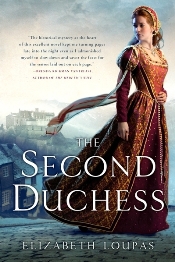
The Second Duchess is a book I was eager to read even before it found a publisher, thanks to a note posted by Elizabeth Loupas on an email discussion list several years ago. Fresh off a re-read of "My Last Duchess," I thought the concept behind it was brilliant.  Loupas's tale is much more than a recasting of the themes from Robert Browning's famously enigmatic poem, however.  The Second Duchess situates us in the heart of Renaissance-era Ferrara, a setting fleshed out in lush, decadent detail, and the author delves into the poem's background by imagining the personalities and motivations of its characters, who were all based in history.  She also allows Barbara of Austria, a shadowy figure mentioned at the end of Browning's work, to come into her own as a powerful heroine.

By the time of her wedding day in December of 1565, Barbara has already heard countless rumors that Alfonso, Duke of Ferrara, murdered his beautiful, young first wife, Lucrezia de' Medici.  Nonetheless, by her marriage to Alfonso, Barbara seizes an opportunity to begin a new life away from her brother's rigid imperial court.  Intelligent and curious, though not conventionally attractive, Barbara grows determined to discover the truth behind her predecessor's death despite Alfonso's objections.

As she finds her way through the dangers lurking at court in Ferrara, she establishes a sensual bond with her new husband even as she wonders if the whispers about him are true.  In intervening sections, Lucrezia's childlike and resentful spirit, unable to leave its surroundings, observes Barbara's actions (with occasional catty remarks) and reveals her own feelings about her former life - and toward her former husband.  Dark, romantic, and mysterious, The Second Duchess is a richly detailed historical novel that compels as it keeps you guessing.

I'd like to thank Elizabeth for agreeing to this interview, and for the pleasures of reading her debut novel, which fulfilled my expectations and then some.

Where did you first come across Robert Browning's "My Last Duchess"? Why do you think it's captured your imagination to such a degree?

I don't even remember the first time I read it, it's so much a part of me. It was in high school, possibly even junior high. The odd thing is that I always found the duke fascinating, even while I dutifully wrote school papers about how he was insane and a megalomaniac and callously murdered his beautiful and innocent young wife. It may have been the combination of the precisely elegant voice and the life-or-death power of the Renaissance prince. It was not either the first duchess or the barely-mentioned figure of the second duchess that fascinated me in the beginning: it was the duke.

I appreciated how you gave voice to two women who were of paramount importance to Browning's poem but who were denied the chance to speak for themselves. Whose narrative voice came to you first, Barbara's or Lucrezia's?

Barbara came first. I started the story in a third-person point of view, focused through Barbara's eyes, but found I wanted to get even closer to her, inside her skin. I started over in the first person and it was perfect. Lucrezia--well, Lucrezia just happened. She was not planned at all. At first I thought of using flashbacks to tell her story, but she not only wanted to tell her own story, but to express her opinion of Barbara and what Barbara was doing. That's how she became the immobila.


You write in your author's note that re-fictionalizing material that Browning had himself fictionalized (great way of putting it!) sometimes gave you an eerie feeling. How did you move past that in order to create your story?

When I began I didn't even realize Browning had based his poem on actual historical personages--I thought it was entirely fictional. I had some crazy ideas about the backstory I was going to invent and what was going to happen. But as I read about Browning and the poem itself I realized that these were real people, and deserved better. Browning had taken a few sixteenth-century rumors about Lucrezia de' Medici's death and woven the dramatic tale of the duke stopping her smiles; I started from the beginning with everything I could find about these three people--Alfonso, Barbara and Lucrezia--and wrote my own version of what might have happened, while at the same time trying to strike most of the same notes that Browning struck. The cherries, for example, that figure strongly in the book--Browning described one of the young duchess's pleasures as "...The bough of cherries some officious fool/Broke in the orchard for her...." I simply expanded that.

The lines from the poem that were at the heart of my characterization of Lucrezia are: "...and if she let/Herself be lessoned so, nor plainly set/Her wits to yours, forsooth, and made excuse..." So the beautiful young wife was not perfect! She would not let herself be lessoned, and set her wits against his, and made excuses. I loved that. It changed the entire power dynamic of the poem for me.

Did you know from the beginning that you wanted to incorporate a mystery subplot - having Barbara investigate her predecessor's death - as opposed to writing a more straightforward biographical novel?

Yes, I wanted it to be a mystery from the beginning. The story was always intended to address the question: "What did the second wife think of all this?" And so of course the second wife--Barbara--would have to find out what happened to the first wife. For a while I considered allowing Lucrezia to actually communicate with Barbara, but somehow that seemed too pat, like the fictionalized stories where Elizabeth I and Mary Queen of Scots meet. So I made one of the characteristics of the immobila the fact that she cannot communicate with the living in any way.

Alfonso occasionally praises Barbara's political acumen, but because of his arrogance, it's hard to tell if he's being honest or patronizing (or both). I liked how the novel left it ambiguous, but it made me wonder: as the daughter and sister of Habsburg emperors, how exposed would Barbara have been to international affairs and other intrigues at the imperial court?

I think Barbara's political acumen is mostly innate rather than learned. She and her sisters were brought up in a very plain, almost monastic style (and three of her sisters did eventually become nuns) and not much exposed to the court. However, once Barbara arrived in Ferrara she took up the reins of the court there with every appearance of ease. She was well-liked. She managed to maintain excellent personal relations with the pope and at the same time befriend, via correspondence, Alfonso's mother Renee of France, who had been forced to leave Ferrara and return to France because of her Calvinism. So the real Barbara had the sensitivity and tact that makes good politics.

I think Alfonso is being both honest and patronizing. He's intelligent enough to see Barbara's understanding of people and motivations, but arrogant enough (and enough a man of his times) to consider it something rather unusual in a woman.

The lush descriptions you've included provide wonderful illustrations of upper-class life in the Italian Renaissance: from interior design and fashion to cuisine, fine art, dance, women's hairstyles and more. What parts did you enjoy researching the most?

Oh, all of them! I loved the physical objects I came across--I have folders crammed with examples, furniture and tapestries and clothing from museums. The chess set is real... it's in a museum in the Netherlands. Alfonso's poignard d’oreilles is real, and really belonged to Henri II... it's now in the Metropolitan Museum of Art. (The real one never belonged to Alfonso, although Alfonso and Henri II were cousins and good friends.) Lucrezia's rock crystal flask is real... it's in Topkapi Palace. I did love the food as well, and tried out many of the recipes myself... the pampepato, the ciupeta, the torta di tagliarini. I listened to the music and tried out the dance steps. (Fortunately in private.) I could never choose one favorite.

I see you have a degree in library and information science and used to work as a reference librarian. As a reference librarian myself, I can't resist asking: can you reveal any more about your library career? Do you feel your training came in handy when writing The Second Duchess?

My actual work as a librarian was in what's called a special library, a corporate library. Not much opportunity, I'm afraid, to revel in Renaissance delights. But my training as a librarian was indispensable to my research. It taught me how to find things, how to track down sources, how to choose and combine search terms. Searching is an art unto itself, as elegant and complex as any sixteenth-century dance.

----

The Second Duchess (isn't the cover gorgeous?) was published by NAL in March at $15.00.  For more information, visit the author's website; her agent, Diana Fox, has also posted the original query and submission letters that led to the novel's publication.

Sunday, February 27, 2011

Book review: Daughter of Xanadu, by Dori Jones Yang

In Dori Jones Yang's Daughter of Xanadu, an exciting blend of cross-cultural exploration and female adventure, a resolute young woman’s coming of age at the height of the Mongol Empire combines with her surprising attraction to a foreigner.

In the year 1275, Emmajin, the sixteen-year-old eldest granddaughter of Khubilai Khan, wants to achieve glory on the battlefield, a feat unlikely for a woman. Physically agile, serious-minded, and dedicated to improving her skills, she scorns the soft living of the women at court and sneaks away to join her male cousins in an archery contest. She’s determined to prove to her grandfather that she has what it takes to join his army.

Intrigued by her bravery, the Khan charges her with a different task. After an arduous three-year journey east, a trio of Venetian merchants has arrived in his capital city of Khanbalik, bearing goods for trade and a message from their pope. Emmajin is asked to befriend Marco Polo, the youngest among them at twenty-one, and report back with any knowledge that would help the Mongols conquer his homeland.

Marco’s odd appearance startles her – his red beard and green eyes mark him as an outsider – and his demeanor and values present a challenge to her worldview. A talented storyteller with no interest in the “manly arts,” he's the opposite of what Emmajin would normally find appealing, but they grow close as she shows him around the beautiful grounds of the Khan’s summer palace at Xanadu. What will he think if he learns of her betrayal, and will she ever achieve her dream of becoming a Mongolian warrior?

Thirteenth-century China is a setting not often explored in fiction, and even more uncommonly from a woman’s viewpoint. Although Emmajin (a fictional character) may seem like she’s far ahead of her time, she has ample role models to emulate: not only her female ancestors, the fierce women of the grasslands who supported the rise to power of the great Chinggis Khan, but also the legendary Ai-Jaruk, a champion female wrestler whose story is told by Marco.

Seen through Emmajin’s eyes, the cultural differences in the novel become even more striking to note. She and her grandfather are amused by Marco’s ignorance in bowing down to the women of the Khan’s household. Although she was “raised to have disdain for merchants, who live off the labor of others,” her travels through the vast empire – and her growing bond with Marco – open her mind to unfamiliar ways.

Mongolia expands its borders by conquering foreign lands and subjugating their peoples, but after seeing Marco’s love for Venice and experiencing the high cost of war herself, Emmajin wonders if conquest is the only answer. Her gradual shift in perspective is realistically and sensitively rendered. The conclusion – satisfying, if a bit fanciful – leaves the door open for a sequel.

With its gripping combat scenes, subtle romance, and tangible, full-bodied descriptions of court and military life in Yuan Dynasty China, Daughter of Xanadu will appeal to the international adventurer in all of us. A dynamic and enlightening read for young adults and adults alike.

Daughter of Xanadu was published by Delacorte at $17.99 ($19.99 in Canada) in January.  Hardcover, 336pp, including a glossary, map, family tree, and a foreword that explains the historical context.

This is my first entry for the YA Historical Fiction challenge, and one of the first YA novels I've read since I was a YA myself!

Tuesday, February 22, 2011

Book review: The Sea Captain's Wife, by Beth Powning

With a name like Azuba Galloway, one would expect the heroine of Beth Powning's The Sea Captain's Wife to be anything but ordinary. A young woman growing up in Whelan's Cove, New Brunswick, in the 1860s, Azuba yearns to leave her quiet village and its society women behind and sail around the world on the open ocean.

At nineteen, Azuba falls in love with and marries Captain Nathaniel Bradstock, and they share dreams of spending their lives together on his ship, Traveller.  To her dismay, he refuses to entertain the idea after she falls pregnant.  She raises their daughter, Carrie, with the help of her family and servants, and she doesn't like what she sees as her future: her life unfurling alone, constantly worried about her husband's safety, his picture becoming more real to her and Carrie than the man himself.  She tells her understanding grandmother, "I don't live to fill my rooms with silver tea sets and satin cushions, delivered to me by my husband from Paris or Bombay," and determines to accompany him on his next voyage.

Azuba gets her wish, but the reason turns out differently than she expects.  After an indiscretion causes rumors about her to fly in Whelan's Cove, Nathaniel is forced to bring her and Carrie on board against his will, their new togetherness as a family marred by resentment and fear.

With clear and poetic language and a sharp eye for period detail, Powning charts the shifting patterns in the Bradstocks' unusual marriage. Although Azuba longs to be treated as Nathaniel's equal, she remains a woman of her time, quickly learning that on board Traveller, his position as her captain takes precedence.  The meaning of freedom begins to change for her, too.  While she delights in exploring foreign port cities from London to San Francisco, her home has shrunk to the dimensions of their cabins. The dangers of the journey force her and her family into situations that shake their composure and threaten their lives.

Although Carrie doesn't get many lines, she is one of the novel's most original creations.  A curious, observant, and intelligent child, her trust and devotion capture Nathaniel's heart, and she becomes the only one who can connect with him during the voyage's most stressful moments. Even minor characters are brought to life with a brief flourish of words.  Of one of Azuba's seafaring equals, the tactless wife of Captain Lattimer, Powning writes: "Her permanent state of displeasure suggested that within herself she was but temporarily lodged."  The normally smooth writing becomes choppy in one major dramatic scene; rather than speeding up the action, it slows it down, but the abrupt shift in style demonstrates the suddenness with which trouble can hit.

Reflective, occasionally bleak, and filled with the invigorating spirit of adventure, The Sea Captain's Wife is nautical fiction on the distaff side. Well worth reading for anyone curious about the lives of the brave 19th-century women who followed their husbands when they went to sea.

The Sea Captain's Wife is published by Plume on February 22nd in trade paperback ($15.00, 374pp, with glossary of nautical terms at the end).  It was previously published by Knopf Canada in 2010.  For more information, see the book's official website.

Saturday, February 19, 2011

Guest post from C.W. Gortner: Birth of a Spymaster

I'm happy to welcome historical novelist C.W. Gortner back to the blog today.  He's written an enlightening guest post about the Elizabethan intelligence network begun by Francis Walsingham, and Walsingham's complex working relationship with the queen herself during a time of intense political activity and religious strife. 

Christopher's latest novel, The Tudor Secret, first in a series of historical mysteries, was published by St. Martin's Griffin in February ($14.99/$16.99 Canada) and by Hodder & Stoughton in the UK.  Welcome, Christopher!

Birth of a Spymaster: Francis Walsingham and Tudor Espionage

Spies have intrigued us ever since we started telling stories. I imagine that even cavemen told tales of those who infiltrated rival tribes to ferret out secrets and report back on potentially damaging plans. The clandestine act of obtaining information for a cause, while risking one’s life, carries with it an undeniable glamour and adrenaline rush that many of us find irresistible.

The Chinese and the Mongols used spies; feudal Japan relied on ninjas to gather valuable information. In Elizabethan England, Francis Walsingham is credited with giving rise to the modern notion of intelligence gathering, creating a vast organization dedicated to protecting the queen. Walsingham’s targets were Catholic agitators, such as Jesuit priests, assassins and other recusants who might subvert or otherwise damage the established order. Whether or not it was right to hunt down those who opposed a particular religious view was beside the point. So iconic has Elizabeth become in our eyes, so gloriously do we view her realm, in comparison to the brutal suppressions of Spain, that protecting her seems like the right, indeed, the only, thing to do.

While Elizabeth herself was known to dislike Walsingham’s methodology— which included torture— dubbing him her "Moor" because of his complexion or preference for dark clothes or perhaps his infamously somber personality, she contended with his brusque manner. She understood that he was the right man for a nasty job, unparalleled in his competence and fervor, his penetrating insight into foreign affairs, and his devotion to her safety. To him, she was England—the heart and soul of the Protestant movement. She faced a formidable foe in the Catholic king of Spain and legions of dedicated counter-reformation fanatics whom Philip unleashed. Papal dispensation guaranteed passage to Heaven to whoever managed to murder the queen of England. Walsingham was determined that no Catholic on his watch would ever win that prize.

Since time began, there have been men willing to die for a cause; we only need to look at our world today to see that. Some also put themselves at the service of a charismatic leader; and Elizabeth was indeed that. She promised tolerance in an intolerant age; she wanted peace and prosperity for her subjects, above all else. While the latter days of her reign were plagued by upheavals and a savage persecution, she had been literally yanked into that stance by the advent of the Armada and the very real threat of another on the horizon. Walsingham drew upon Elizabeth’s charisma and the threat posed by the Counter Reformation to conscript men of both noble and ordinary birth, who decided they had to do something to safeguard their way of life.

In The Tudor Secret, we meet Francis Walsingham before he becomes Elizabeth’s trusted spymaster. Here, he is still a hireling of the princess’s secret protector, William Cecil, but he’s already converted to the reformed faith upheld by Elizabeth and her brother, King Edward. Dark and enigmatic, Walsingham abducts Brendan Prescott, the book’s lead character, who as a squire to the Dudley family, is drawn into Cecil’s burgeoning spy network in order to uncover a conspiracy against the princess. Walsingham trails Brendan; lurking in shadows, he is a panther with a knife, disapproving of the callow youth whom Cecil has seen fit to hire. Is he friend or foe? Will he help or hinder Brendan’s mission?

It is the beginning of the grand era of Tudor espionage and of Brendan’s, and his rival Walsingham’s, service to an embattled future queen.

Thank you so much for spending this time with me. To learn more about me and my books, as well as access special features, please visit me at: http://www.cwgortner.com. Happy reading!

Friday, February 11, 2011

Book review: Lily of the Nile, by Stephanie Dray

Although it features an adolescent heroine, Stephanie Dray’s riveting Lily of the Nile is less about coming of age than it is about coming into power – and in more ways than one. Cleopatra Selene is the product of the illustrious union between Cleopatra of Egypt and her Roman consort, Mark Antony. As the novel begins, ten-year-old Selene is asked to carry a basket of figs with asps concealed beneath, and her unwitting role in her mother’s death haunts her. Before Queen Cleopatra commits suicide, she tells her daughter potent words that it takes her years to understand.

Captured and transported from Alexandria to Rome by soldiers loyal to Octavian, Selene and her brothers Helios and Philadelphus are paraded in chains before cheering crowds. Despite the siblings' initial treatment, Dray’s portrait of Selene’s new Roman family isn’t completely unsympathetic. Lady Octavia, Octavian's kind and devoted sister (and Mark Antony's former wife), takes them into her household, a dwelling whose simple and plain décor contrasts with the lavish comfort of their Egyptian palace. Selene spends her days sewing, playing, and learning from her tutor, the exiled Numidian prince, Juba; she also befriends Octavian’s neglected daughter, Julia.

It’s left to Selene, an enemy in a foreign land, to navigate her way through the political intrigue surrounding her. She must demonstrate her loyalty to Octavian and Rome while remembering her status as a Ptolemy, the daughter of the most influential woman of her age. Will Selene follow in her mother’s rebellious footsteps or find a way to help Egypt through other means? When messages in hieroglyphics magically appear on her arms, carved out in her blood, her hereditary role as leader of the Isiac faith becomes harder for her and her Roman guardians to ignore.

Even in death, Cleopatra’s presence looms so large in Lily of the Nile that it starts off feeling like a sequel, but enough context is provided for readers to pick up the background details on Egypt’s subjugation by the Roman Republic. Selene’s honest and open voice is inviting, and the clean writing style keeps the pages turning rapidly. Although she chooses a different path than her mother, Selene proves that she’s cut from the same cloth. Even as a teenager, her skillful understanding of political stratagems means she has the potential to become Octavian’s most trustworthy subject or most formidable adversary – all depending on how he plays his part. As she comes fully into her own, so does her triumphant narrative.

This informative and enjoyable novel is recommended for fans of historical fiction and fantasy, including young adult readers. This is the projected first in a trilogy, and I’ll be on board for book two.

Lily of the Nile was published by Berkley in January at $15.00 ($18.50 in Canada), 351pp, including an author's note and readers' guide. Visit the author's website for background information as well as details on the sequel, Song of the Nile, out this autumn.  Also, for more on Selene and the Isiac faith, see her guest post from last November, How Cleopatra Selene Saved Isis.